---
title: 古代中國
author: Joshua J. Mark
translator: 晚生姓高
source: https://www.worldhistory.org/trans/zh/1-467/
format: machine-readable-alternate
license: Creative Commons Attribution-NonCommercial-ShareAlike (https://creativecommons.org/licenses/by-nc-sa/4.0/)
updated: 2023-02-24
---
# 古代中國
_作者: [Joshua J. Mark](https://www.worldhistory.org/user/JPryst/)_
_译者: [晚生姓高](https://www.worldhistory.org/user/ezswvyqf)_
[](https://www.worldhistory.org/trans/zh/1-22386/)[](https://www.worldhistory.org/trans/zh/2-2409/)古代中國產生,世界上現存最古老的文化。 “中國”這個名字來自梵文 Cina(源自中國秦朝的名稱,發音為“Chin”),波斯人將其翻譯為“Cin”,似乎是通過絲綢之路,沿線貿易而流行起來。
羅馬人和希臘人稱這個國家為“Seres”,“絲綢的產地”。 直到公元 1516 年,“中國”名稱才出現,西方印刷品中,巴博薩日記講述,他在東方的旅行(儘管歐洲人早就通過絲綢之路貿易,了解中國)。 公元 13 世紀將中國介紹給歐洲的著名探險家,[馬可波羅](https://www.worldhistory.org/trans/zh/1-17877/)將這片土地稱為“Cathay”。 在普通話,這個國家稱為“中國”,意思是“中央國家”或“中央帝國”。
### 史前史
遠在該地區公認的文明出現之前,這片土地被原始人佔據。 北京人是1927年在北京附近發現的頭骨化石,生活在距今70萬至30萬年之間,元謀人的遺骸,1965年在元謀發現,距今已有170萬年。 這些發現揭示證據表明,這些早期居民,知道如何製作石器和使用火。
雖然普遍認為,人類起源於非洲,然後遷移到全球其他地方,但中國的古人類學家“支持人類起源的'區域進化'理論”(中國網)。,該理論聲稱有獨立的基礎 人類的誕生。 “蜀猿是一種靈長類動物,體重只有100到150克,體型與老鼠相似,生活在\[中國\],中始新世4.5到4百萬年前。發現對非洲學說提出巨大挑戰。 人類起源”(中國網)。 由於蜀猿化石與高級和低級靈長類動物之間的遺傳聯繫,這一挑戰被認為是合理的,因此,作為進化過程中的“缺失環節”。
無論如何解釋這一數據(中國的結論,一直受到國際社會質疑),其他發現提供的確鑿證據,證實了中國存在非常古老的原始人和智人血統以及早期文化的高度複雜性。 1953 年發現的西安附近的,[半坡村](https://www.worldhistory.org/trans/zh/1-13957/)就是其中一個例子。 半坡是一個新石器時代的村莊,在公元前 4500 至 3750 年之間,有人居住,包括 45 間房屋,其地板沉入地下,以提高穩定性。 環繞村莊的溝渠既提供了保護,免受攻擊和排水(同時也有助於圍欄飼養家畜),而在地下挖掘的人造洞穴被用來儲存食物。 村莊的設計,和在那裡發現的手工藝品(如陶器和工具)證明了它在建造時,具有非常先進的文化。
[  中國西安的半坡村 Ian Armstrong (CC BY-SA) ](https://www.worldhistory.org/image/4052/banpo-village-xian-china/ "Banpo Village, Xi'an, China")普遍認為,中國的“文明搖籃”是黃河流域,大約在公元前 5000 年左右出現了村莊。 雖然這一直存在爭議,也有人提出要更廣泛地發展社區,但毫無疑問,位於黃河流域的河南省,是許多早期村莊和農業社區的所在地。
公元2001年,考古學家在“倒塌的房子裡發現了兩具骨骼”,上面覆蓋著厚厚的黃河淤泥沉積物。在沉積物層中,又發現20多具骨骼,一個祭壇,一個方形陶器 , 以及石器和玉器” (中國網)。 該遺址只是該地區眾多史前村莊之一。
### 首個王朝
從這些小村莊和農業社區發展出,中央集權政府; 第一個是史前夏朝(約公元前 2070-1600 年)。 多年來,夏朝一直被認為是神話多於史實,直到公元 1960 年代和 70 年代的發掘發現了,強烈支持其存在的遺址。 青銅器和墓葬清楚表明,不同的石器時代村莊,和公認的凝聚力文明之間,的進化發展時期。
這個王朝是由傳說中的大禹建立的,他堅持不懈地工作了 13 年,以控制經常摧毀,農民莊稼的黃河洪水。 他非常專注工作,據說這些年來他沒有回家過一次,儘管他似乎至少有三過不入其家,這種奉獻精神激勵著他人追隨。
在他控制洪水之後,禹征服了三苗部,落並任命為繼任者(由當時的統治者舜),一直統治到他死。 大禹建立世襲封建制,王朝的概念也因此而廣為人知。 統治階級和精英居住在城中,而支持精英生活,的農民仍生活在農村。 禹的兒子齊在他之後統治,權力一直掌握在家族手中,直到夏朝最後一位統治者桀被建立商朝(公元前 1600-1046 年)的唐湯朝推翻。
湯是商國人。 普遍指定給他的日期(公元前 1675 年至 1646 年)與他參加的已知事件沒有任何對應關係,必須被認為是錯誤的。 眾所周知,他是商朝的統治者,或者至少是一個非常重要的人物,他在公元前 1600 年左右領導了一場反抗桀的叛亂,並在鳴條之戰中擊敗桀的軍隊。
人們認為,夏朝宮廷奢侈,和由此給民眾帶來沉重的負擔,導致這次起義。 湯隨後接管土地,降低稅收,暫停了桀開始的宏偉建築項目(耗盡了王國的資源),並以如此智慧和高效的方式進行統治,使藝術和文化得以蓬勃發展。文字在商代以及青銅冶金、建築和宗教下得到發展。
[  商湯王 Ma Lin (Public Domain) ](https://www.worldhistory.org/image/4501/king-tang-of-shang/ "King Tang of Shang")在商代之前,人們崇拜許多神靈,其中一位至高無上的神靈上帝,是萬神殿的首領(其他文化也有同樣的模式)。 上帝是主持戰爭、農業、天氣和良好政府的勝利的“偉大的祖先”。 然而,由於他是如此遙遠和忙碌,人們似乎需要更直接的代禱者,來滿足他們的需要,因此開始了祖先崇拜的習俗。
人們認為,當某人死去時,他們獲得了神力,可在需要時尋求幫助(類似於羅馬人對父母的信仰)。 這種做法導致了高度複雜的儀式,致力於安撫祖先的靈魂,最終包括在宏偉的墓葬中進行華麗的葬禮,墓葬中安放著享受舒適的來世所需的一切。
國王除了他的世俗職責外,還擔任生者與死者之間的首席中介和調解人,他的統治是由神聖的法律規定的。 雖然著名的“天命”是後周發展起來的,但將君主與天命聯繫起來的思想,其根源在於商代的信仰。
[  中國王朝的列表一覽 Simeon Netchev (CC BY-NC-ND) ](https://www.worldhistory.org/image/16125/imperial-dynasties-of-china-visual-timeline/ "Imperial Dynasties of China Visual Timeline")### 周朝
大約在公元前 1046 年,周郡的武王(公元前 1046-1043 年在位)反抗商紂王,並在牧野之戰中擊敗他的軍隊,建立了周王朝(公元前 1046-256 年)。 公元前 1046-771 年標誌著西周時期,而公元前 771-256 年標誌著東周時期。 商王冤殺其兄後,武王反叛商朝。 武王和他家人援引天命使叛亂合法,因為他覺得商朝,不再為人民利益行事,因此喪失了君主制與法律、秩序和正義之神之間的天命,
因此,天命定義為眾神對公正統治者,的祝福和神聖授權的統治。 當政府不再服從眾神的意誌時,政府會被推翻。 此外,還規定中國祇能有一個合法的統治者,他的統治應該通過,他作為上天賦予他的土地的管家,的正當行為而合法化。 統治可以從父傳子,但前提是子具備,統治所必需的美德。 這一授權後來經常被各種統治者操縱,將繼承權委託,給不配的後代。
[ 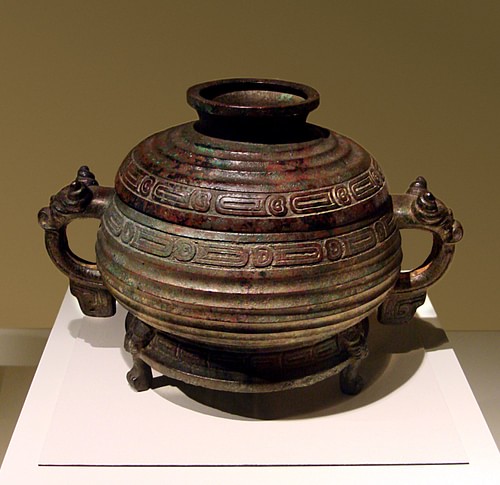 周朝青銅烹飪器 Editor at Large (CC BY-SA) ](https://www.worldhistory.org/image/3045/bronze-zhou-cooking-vessel/ "Bronze Zhou Cooking Vessel")周朝文化繁榮,文明傳播。 文字編纂成法典,鋼鐵冶金變得越來越複雜。 最偉大和最著名的哲學家,孔子、孟子、墨子(墨祖)、老子、陶謙和軍事家孫子(如果他如所描述的那樣存在),都來自周朝時百家爭鳴的時代。
[商代](https://www.worldhistory.org/trans/zh/1-14355/)引入的戰車,在周代得到了更充分的發展。 應該指出的是,這些時期和王朝的開始和結束,並不像歷史書上那麼整齊,周朝與商朝有許多共同之處(包括語言和宗教)。 雖然歷史學家發現有必要,為了清楚起見,將事件分成幾個時期,但周朝在以下公認的時期仍然存在,即春秋和戰國。
### 春秋戰國
在春秋時期(約公元前 772-476 年,《春秋》是當時國家的官方編年史,也是提到孫子的早期資料來源),周政府在他們的權力下放 遷都洛陽,標誌著“西周”時代的結束和“東周”時代的開始。 這是哲學、詩歌和藝術進步最為著名的時期,見證了儒家、道家和墨家的興起。
然而與此同時,各州都在脫離洛陽的中央統治,並宣稱自己擁有主權。 然後,這導致了所謂的戰國時期(約公元前 481-221 年),其中七個國家相互爭奪控制權。 這七國是齊、楚、燕、韓、趙,魏、秦、它們都認為自己是主權國家,但沒有一個國家,有信心繼承洛陽週仍掌握的天命。 七個國家都使用相同的策略,並遵守相同的戰鬥規則,因此沒有一個國家能夠占到優勢。
[  公元前250年,戰國和秦的交戰 Simeon Netchev (CC BY-NC-ND) ](https://www.worldhistory.org/image/16124/map-of-the-warring-states-of-china--qin-conquest/ "Map of the Warring States of China & Qin Conquest")這種情況被和平主義哲學家墨翟利用,他是技術嫻熟的工程師,使命是為每國,提供防禦工事和攻城梯知識,以期抵消任何一國的優勢,從而結束戰爭。 然而,努力沒有成功,在公元前 262 年至公元前 260 年之間,秦國取得趙國的霸權,最終在長平之戰中擊敗他們。
商鞅(卒於公元前 338 年),秦國政治家,堅信效率和法律,重塑秦國對戰爭的理解,不惜一切代價專注勝利。 中國軍事禮儀和戰略的改革,是孫子還是商鞅,取決於一個人是否接受孫子的歷史。 然而,孫子是否如人們所說的那樣存在,商鞅很可能熟悉名著《孫子兵法》。(譯者評:孫子兵法出土竹簡本) 。
在這些改革之前,中國戰爭,認為是貴族的技能遊戲,有非常固定的規則,由道德和感知的天意決定。 不攻擊弱者或毫無準備的人,一個人推遲交戰,直到對手動員起來,並在戰場上形成隊伍。 商主張全面戰爭以求勝利,並建議不擇手段地,奪取敵人的力量。 商的原則在秦國廣為人知,並在昌平(戰鬥結束後,處決超過 450,000 名被俘的趙兵)為秦國帶來一直等待的優勢。
然而,直到秦王嬴政崛起,才進一步有效地運用這些戰術。 公元前 221 年,嬴政憑藉商朝的指示,擁有相當規模的軍隊,使用鐵器和駕駛戰車,從戰國衝突中脫穎而出,征服並統一其他六國,並自封為始皇——“始皇帝” ' 。
### 秦朝
始皇由此建立秦朝(公元前 221-206 年),開啟了中國帝王時代(公元前 221 年-公元 1912 年)的王朝統治。 他下令摧毀各國的城牆防禦工事,並在北部邊界修建長城。 雖然始皇的原始城牆,如今已所剩無幾,但長城是在他的統治下開始建造。
> 它橫跨丘陵和平原綿延 5,000 多公里(3,000 英里),東起朝鮮邊境,西至麻煩不斷的鄂爾多斯沙漠。 這是一項艱鉅的後勤工作,儘管在其大部分過程中,它結合了早期中國各國在四世紀和三世紀為保衛其北部邊境而建造的城牆。 (Scarre 和 Fagan,382)
始皇帝還修路,加強基礎設施,這有助便利旅行,增加貿易。
> 有五條幹道從帝都咸陽引出,每條幹道都設有捕快和驛站。 這些道路大部分為泥土,寬 15 米(50 英尺)。 最長的一條向西南延伸了 7,500 多公里(4,500 英里),一直延伸到雲南邊境地區。 鄉村如此險峻,以至於部分道路,必須從突出的木棧道上,垂直懸崖造出。 (Scarre 和 Fagan,382)
始皇還擴大帝國版圖,在南方修建大運河,重新分配土地,最初是個公平公正的統治者。
[  秦始皇 Dennis Jarvis (CC BY-SA) ](https://www.worldhistory.org/image/988/shi-huangdi/ "Shi Huangdi")雖然他在建設和軍事,取得了長足進步,但他的統治越來越以強硬內政。 他奉天命,鎮壓除商鞅法家外的學說,並聽從他的丞相李斯的意見,下令銷毀任何與法家不符,不利他的家族,秦國,或者他自己的書籍。
> 由於那時的書是寫竹簡上,非常重,他下令焚書; 傳統上說,他們中的許多讀書人被派建長城,坑儒有四百六十人。 儘管如此,一些文人還背誦孔子全集,並口耳相傳,記憶猶新。 (杜蘭特,697)
這一行動,加上始皇壓制自由,使他越來越不受歡迎。 對祖先崇拜和永生樂土,開始感興趣,而不是百姓死活,越來越全神貫注,長生世界,以及他如何渡往。 他似乎怕死產生痴迷,對自身安全越來越偏執,並熱切追求永生。
[  兵馬俑全景 Bernd Thaller (CC BY-NC-SA) ](https://www.worldhistory.org/image/7542/the-terracotta-army-panorama/ "The Terracotta Army Panorama")他希望為己提供,與現實生活相稱的來世,這促使為他,建造一座宏偉宮殿皇陵,並一支 八千多個兵馬俑軍隊,為他永恆服務。 這支與他同葬的還包括陶俑戰車、騎兵、統帥,以及各種鳥類和動物。 據說他死於公元前 210 年,當時他正在尋找長生不老藥,而李斯希望控制朝政,一直保密他的死訊,直到他能改變遺囑,為他順從的兒子胡亥 ,作為繼承人。
然而,這個計劃是站不住腳,因為年輕的王子表現出自己非常不穩定,處決了許多人,並在這片土地上發起了廣泛的叛亂。 始皇帝死後不久,由於胡亥、李斯和另位謀士趙高等人的陰謀和無能,秦朝迅速崩潰,漢朝(公元前 202 年 - 公元 220 年) 劉邦登基 。
### 楚漢之爭
隨著秦朝的衰落,中國陷入楚漢之爭(公元前 206-202 年)。 反秦勢力中出現了兩位將軍:漢劉邦(公元前 256-195 年)和楚項羽將軍(公元前 232-202 年),他們為控制而戰。 證明是秦國最強大對手的,項羽授予劉邦“漢王”稱號,以表彰劉邦在首都咸陽大敗秦軍。
[  楚漢之爭圖 SY (CC BY-SA) ](https://www.worldhistory.org/image/9887/chu-han-contention-map/ "Chu-Han Contention Map")然而,這兩個昔日的盟友,很快就變成了對手,在楚漢爭奪的權力鬥爭中,直到項羽談判簽訂了《洪渠條約》並帶來了暫時的和平。 項羽建議在東方楚國和西方漢族統治下劃分中國,但劉邦希望在漢人統治下統一中國,並違反條約,恢復敵對行動。 在公元前 202 年的垓下之戰中,劉邦的大將韓信圍困,並擊敗項羽麾下的楚軍,劉邦稱帝(後世稱為漢高祖)。 項羽自殺,但他的家人可以活下去,甚至擔任政府職務。
新皇帝高祖尊重他前對手,並統一這片土地。 他擊退了一直在入侵,游牧匈奴部落,並與因反抗秦朝起義的其他國家講和。 從公元前 202 年到公元 220 年,漢朝(得名於劉邦在漢中省的故鄉)在接下來的 400 年里統治中國。 漢分為兩個時期:西漢 - 202 BCE-9 CE 和東漢 - 25 -220 CE。
### 漢代
高祖和平帶來了文化,再次繁榮發展所必需的穩定。 與西方的貿易開始,藝術和技術,也有所提高。 漢朝是首個,將歷史記錄下來的朝代,但由於始皇焚書,因此這種說法經常受到爭議。 然而,毫無疑問,漢朝在文化的各個領域,取得了巨大進步。
《黃帝內經》是中國最早的醫學文字記載,成書於漢代。 紙是在這個時候發明,書寫變得更加複雜。 高祖信奉儒學,將其作為政府的專屬哲學,樹立了一個延續至今的榜樣。
儘管如此,與始皇不同,他並沒獨家專寵。 對其他學說,持寬容態度,因此在他的統治下文學和教育蓬勃發展。 他減少了稅收,並解散軍隊,儘管如此,軍隊還在接到號召時,毫不拖延集結起來。
在他於公元前 195 年去世後,他的妻子魯智皇后(公元前 241-180 年)任命了一系列傀儡國王,首先是太子劉盈(惠帝,公元前 195-188 年在位),他擔任 她的利益,但仍然繼續他的政策。 這些計劃保持了穩定和文化,使最偉大的漢武帝(也稱為大武帝,公元前 141-87 年在位)能夠開展他的擴張、公共工程和文化活動。 公元前138年,他派張騫出使西域,絲綢之路於公元前130年正式開通。
儒學進一步,成為官方學說,武帝在各地建立學校,以培養識字率和教授儒家。 他還改革了交通、道路和貿易,並頒布了許多其他公共項目,僱用數百萬政府官員。 武帝之後,繼任者多少,保持對中國眼光,享同樣成効。
[  漢朝農場模型 Mark Cartwright (CC BY-NC-SA) ](https://www.worldhistory.org/image/4040/han-dynasty-farm-model/ "Han Dynasty Farm Model")財富增加,導致大莊園的興起,和普遍繁榮,但對於耕種土地的農民,生活越來越難苦。 公元 9 年,代理攝政王王莽(公元前 45 年 - 公元 23 年)篡奪政權,聲稱自己擁有天命,並宣布漢朝結束。 王莽在廣泛的土地改革,和財富再分配上,建立了新朝(公元 9-23 年)。
他最初得到農民的大力支持,遭到地主的反對。 然而,他的計劃構思和執行不當,導致廣泛的失業和怨恨。 起義和黃河氾濫,進一步動搖王莽的統治,他被憤怒的農民暴民暗殺,他表面上代表他們奪取了政府,並開始了他的改革。
### 漢亡與新朝興盛
新朝的興起結束了西漢時期,滅亡導致了東漢時期。 光武帝(公元 25-57 年在位)將土地,歸還給富有莊園主,並恢復土地秩序,維持了早期西漢統治的政策。 光武在收復新朝失地的過程中,被迫將大部分時間,花在平息叛亂,和重建在,現代朝鮮和越南地區的統治。
公元 39 年,由兩姐妹領導的越南 Trung 姐妹起義,需要“十多萬名男子”(根據漢朝官方記錄)和四年的時間才能平息。 儘管如此,皇帝還是鞏固了統治,甚至擴大疆域,提供穩定,從而增加貿易和繁榮。 到章帝(公元 75-88 年在位)時期,中國已經繁榮昌盛,與當時所有主要國家,都有貿易往來,並在他死後繼續。 公元 166 年,馬庫斯·奧勒留 (Marcus Aurelius) 領導下的羅馬人,認為中國絲綢比黃金更珍貴,無論中國要多少價錢,他們都願意支付。
然而,地主與農民之間的糾紛,繼續給政府帶來麻煩,例如五斗米之亂(公元 142 年)和黃巾之亂(公元 184 年)。 雖然五斗米起義,最初是宗教運動,但它涉及大量與政府和精英的儒家理想,背道而馳的農民階級。 這兩次起義都是,政府忽視人民的回應,隨著漢朝後期,日益腐敗和無效,情況更加惡化。 兩次叛亂領導人,都聲稱漢已經失天命,應該退位。
政府控制人民的權力,開始瓦解,直到隨著黃巾勢頭,在全國爆發起義。 漢將領派去鎮壓叛亂,但是,一旦一地被鎮壓,另一地就會出現。 叛亂最終被將軍曹操(公元 155-220 年)鎮壓。 [曹操](https://www.worldhistory.org/trans/zh/1-16217/)和他的前盟友袁紹(卒於公元 202 年)隨後為爭奪控制權,互相爭鬥,曹操在北方取得勝利。
曹操試圖入侵南方,來完全統一中國,但在公元 208 年的赤壁之戰中,被擊敗,使中國分裂為三國——曹魏、東吳和蜀漢——每個國家都聲稱擁有天命 . 這個時代被稱為三國時期(公元 220-280 年),這是個暴力、動盪和不安定的時代,後來激發了中國文學中一些最偉大的創作。
[ 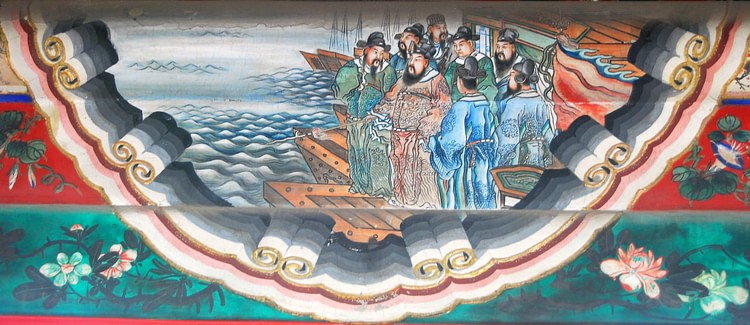 曹操赤壁之戰 Shizhao (CC BY-SA) ](https://www.worldhistory.org/image/6931/cao-cao-battle-of-red-cliffs/ "Cao Cao, Battle of Red Cliffs")漢朝已成為歷史,其他較短命的朝代(如魏晉、南北朝和隋朝)依次控制了政府,並在大約公元 208 年至 618 年期間,建立了自己的政綱。 [隋朝](https://www.worldhistory.org/trans/zh/1-15273/)(公元 589-618 年)終於在公元 589 年統一中國。 隋朝的重要,在於實施,高效的官僚機構,簡化政府的運作,使維護帝國,更加容易。 在文帝和他兒子楊安澤,統治下,大運河建成,長城擴建並部分重建,軍隊增加到當時世上最大軍隊,全國鑄幣標準化。
文學蓬勃發展,認為著名的《花木蘭傳奇》講述了一個年輕女孩,代父從軍救國的故事,就是在這個時候發展起來的(儘管原詩被認為是在北方創作的) 魏時期,公元 386-535 年)。 不幸的是,文和楊都不滿足於國內的穩定,並組織了對朝鮮半島的大規模遠征。 文已經通過他的建築工程和軍事行動使國庫破產,而楊則效仿他父親的榜樣,在他的軍事征服中同樣失敗。 楊在公元 618 年被暗殺,隨後引發了控制,並自稱為唐高宗(公元 618-626 年在位)的李淵起義。
### 唐朝
唐朝(公元 618-907 年)被認為是中華文明的“黃金時代”。 高宗謹慎地維護和改進了隋朝開創的官僚制度,同時放棄了奢侈的軍事行動和建設工程。 唐朝的官僚政策,經過細微修改,在現代政府仍用。
儘管統治有效,高宗是在公元 626 年被兒子李世民廢黜。 李世民刺殺了他的父親,然後殺死了他兄弟和家族多人,並稱太宗(公元 626-649 年在位)。 然而,血腥政變後,太宗下令在戰地,建造佛寺,並紀念陣亡將士。
延續在祖先崇拜和天命的概念之上,太宗在他的行動中宣稱神的旨意,並暗示他所殺的人,是他來世的內閣。 事實證明,他是一位非常有效率的統治者,也是一位技術嫻熟的軍事戰略家和戰士,他的政變沒有受到挑戰,他開始著手管理他龐大帝國的任務。
太宗遵循他父親的戒律,保留了隋朝的許多優點並加以改進。 這在太宗的法典中尤為明顯,它大量借鑒了隋的概念,但為了罪刑的特殊,而對其進行擴展。 然而,他無視他父親的外交政策,開始了一系列成功的軍事行動,擴大和鞏固了他的帝國,也有助於傳播他的法典和中國文化。
太宗由他的兒子高宗(公元 649-683 年在位)繼位,高宗的妻子武則天將成為中國第一位,也是唯一女君主。 武則天女皇(公元 690-704 年在位)制定了多項政策,改善生活條件,並鞏固皇帝的地位。 她還充分利用秘密警察,和高效的溝通渠道,始終領先國內外敵人一步。
[  唐三彩駱駝 James Blake Wiener (CC BY-NC-SA) ](https://www.worldhistory.org/image/4101/glazed-tang-dynasty-camel/ "Glazed Tang Dynasty Camel")帝國內部以及絲綢之路沿線與西方的貿易蓬勃發展。 羅馬淪陷後,拜占庭帝國成為中國絲綢的主要買家。 到玄宗統治時期(公元 712-756 年在位),中國是世界上面積最大、人口最多、最繁榮的國家。 由於人口眾多,可以徵召數千人的軍隊服役,針對土耳其游牧民族,或國內叛亂分子的軍事行動迅速而成功。 藝術、技術和科學在唐朝時期都蓬勃發展(儘管科學的鼎盛時期被認為是公元 960-1234 年的晚宋朝),一些最令人印象深刻的中國雕塑和銀器作品來自這時期 .
### 盛唐盛宋
儘管如此,中央政府並沒有得到普遍的尊重,地方起義也經常引起關注。 其中最重要的是公元 755 年的安史之亂(也稱為安祿山之亂)。 朝廷的寵臣安祿山,反對政府過度鋪張浪費。 以十萬餘兵造反,奉天命稱帝。
儘管他的叛亂在公元 763 年被鎮壓,但叛亂原因和軍事行動,在公元 779 年繼續困擾著政府。 安祿山叛亂,最明顯後果是,中國人口急劇減少。 據估計,有近 3600 萬人死於叛亂,無論是戰鬥、報復,還是疾病和資源匱乏。
貿易受到影響,稅款沒有徵收,叛亂開始時,逃離長安政府,無力維持任何形式的重要存在。 唐朝繼續遭受國內叛亂,在黃巢叛亂(公元 874-884 年)之後,再也沒有恢復過來。 這個國家分裂成所謂的五代十國時期(公元 907-960 年),每個政權都聲稱自己合法,直到宋朝崛起。
[ 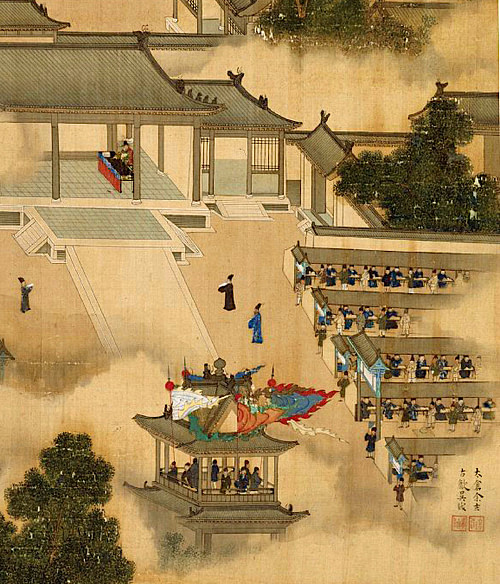 考生參加科舉試 Yu Ren, Wu Yue (Public Domain) ](https://www.worldhistory.org/image/10034/chinese-students-taking-civil-service-exams/ "Chinese Students Taking Civil Service Exams")宋代之後,中國再次穩定,制度、法律和習俗進一步編纂並融入文化。 新儒學成為最受歡迎的哲學,影響了法律和習俗,並塑造了現代可識別的中國文化。 儘管如此,儘管文明和文化的各個領域都取得了進步,但富裕的地主和在這片土地上耕作的農民之間,由來已久的衝突,在接下來幾個世紀仍繼續。
週期性的農民起義被盡快鎮壓,但從來沒有為人民的不滿,提供任何補救措施,每次軍事行動,治標不治本。 公元 1949 年,毛澤東領導的人民革命,推翻政府,並建立了中華人民共和國,前提是最終每個人都將平等富裕。
#### Editorial Review
This human-authored definition has been reviewed by our editorial team before publication to ensure accuracy, reliability and adherence to academic standards in accordance with our [editorial policy](https://www.worldhistory.org/static/editorial-policy/).
## 参考文献
- [Ancient Archeological Sites](http://www.chinapage.org/archeology/ancient-site.html "Ancient Archeological Sites"), accessed 1 Dec 2016.
- [Benn, C. *Daily Life in Traditional China: The Tang Dynasty.* Greenwood, 2001.](https://www.worldhistory.org/books/0313309558/)
- [Chinese Archaeology](http://www.ibiblio.org/chinesehistory/contents/02cul/c03s05.html "Chinese Archaeology"), accessed 1 Dec 2016.
- [Davis, P.K. *100 Decisive Battles.* Oxford University Press, USA, 2001.](https://www.worldhistory.org/books/0195143663/)
- [Durant, W. *Our Oriental Heritage.* Simon & Schuster, 1954.](https://www.worldhistory.org/books/B00005WJGO/)
- [Ebrey, P. B. *The Cambridge Illustrated History of China.* Cambridge University Press, 2010.](https://www.worldhistory.org/books/0521124336/)
- [Formation of the Chinese Civilization](http://www.china.org.cn/e-gudai/index.htm "Formation of the Chinese Civilization"), accessed 1 Dec 2016.
- [Rothschild, N. H. *Wu Zhao: China's Only Woman Emperor.* Pearson-Longman, 2008.](https://www.worldhistory.org/books/B004HP06K8/)
- [Scarre, C. and Fagan, B.F. *Ancient Civilizations \[Paperback\].* Pearson, 2011.](https://www.worldhistory.org/books/B00A08DXY2/)
- [Sima Qian. *Records of the Grand Historian.* Columbia University Press, 1995.](https://www.worldhistory.org/books/0231081693/)
- [Tanner, H. M. *China: A History, From Neolithic Cultures through the Great Qing Empire.* Hackett Publishing Company, Inc., 2010.](https://www.worldhistory.org/books/1603842020/)
- [Treistman, J. M. *The Prehistory of China: An Archaeological Exploration.* Doubleday & Company, 1972.](https://www.worldhistory.org/books/0858850125/)
## 关于作者
约书亚·J·马克(Joshua J. Mark)是世界历史百科全书的联合创始人兼内容总监。他曾在纽约马里斯特学院(Marist College)担任教授,教授历史、哲学、文学和写作课程。他游历广泛,曾在希腊和德国生活。
- [Linkedin Profile](https://www.linkedin.com/pub/joshua-j-mark/38/614/339)
## 时间轴
- **c. 6500 BCE**: Rice cultivation begins in the Yangtze River valley in [China](https://www.worldhistory.org/china/).
- **c. 5000 BCE**: Dead buried with [grave](https://www.worldhistory.org/burial/) goods at [Banpo Village](https://www.worldhistory.org/Banpo_Village/), [China](https://www.worldhistory.org/china/).
- **5000 BCE**: Evidence of the surgical procedure of [trephination](https://www.worldhistory.org/Trephination/) found in [China](https://www.worldhistory.org/china/).
- **5000 BCE**: Villages arise in [China](https://www.worldhistory.org/china/) around the Yellow River. Terraced farming begins and rice is cultivated.
- **c. 4800 BCE**: [Neolithic](https://www.worldhistory.org/Neolithic/) village of Banpo in [China](https://www.worldhistory.org/china/) built.
- **c. 4500 BCE - c. 3750 BCE**: The [Neolithic](https://www.worldhistory.org/Neolithic/) village of Banpo is inhabited.
- **4500 BCE - 3000 BCE**: The Hongshan [culture](https://www.worldhistory.org/disambiguation/culture/) in [China](https://www.worldhistory.org/china/) produces a jade figurine which is the oldest known depiction of a dragon.
- **c. 3600 BCE**: First appearance of [silk](https://www.worldhistory.org/Silk/) in [China](https://www.worldhistory.org/china/).
- **c. 3000 BCE - c. 1700 BCE**: The [Longshan culture](https://www.worldhistory.org/Longshan_Culture/) flourishes in north-east [China](https://www.worldhistory.org/china/).
- **c. 2700 BCE**: The earliest known examples of woven [silk](https://www.worldhistory.org/Silk/) from Qianshanyang, [China](https://www.worldhistory.org/china/).
- **c. 2070 BCE - c. 1600 BCE**: The [Xia Dynasty](https://www.worldhistory.org/Xia_Dynasty/) rules in [China](https://www.worldhistory.org/china/).
- **c. 1789 BCE - 1758 BCE**: Kong Jia of the [Xia Dynasty](https://www.worldhistory.org/Xia_Dynasty/) rules in [China](https://www.worldhistory.org/china/).
- **1728 BCE - 1675 BCE**: Jie is the last ruler of the [Xia Dynasty](https://www.worldhistory.org/Xia_Dynasty/) in [China](https://www.worldhistory.org/china/).
- **1600 BCE - 1046 BCE**: [Writing](https://www.worldhistory.org/writing/) develops in [China](https://www.worldhistory.org/china/) during the [Shang Dynasty](https://www.worldhistory.org/Shang_Dynasty/).
- **1600 BCE - 1046 BCE**: [Shang Dynasty](https://www.worldhistory.org/Shang_Dynasty/) in [China](https://www.worldhistory.org/china/).
- **c. 1300 BCE**: The Chinese [Shang dynasty](https://www.worldhistory.org/Shang_Dynasty/) moves its capital to [Yin](https://www.worldhistory.org/Yin_and_Yang/) (modern Anyang).
- **c. 1300 BCE**: The [chariot](https://www.worldhistory.org/chariot/) is introduced to [China](https://www.worldhistory.org/china/) from the northwest.
- **1250 BCE - 1192 BCE**: Reign of the great Emperor Wu Ding of the [Shang Dynasty](https://www.worldhistory.org/Shang_Dynasty/) in [China](https://www.worldhistory.org/china/).
- **c. 1250 BCE - c. 1150 BCE**: The I-Ching, the Book of Changes, is written.
- **c. 1050 BCE**: King Wen of [Zhou](https://www.worldhistory.org/Zhou_Dynasty/) is the first Chinese ruler to claim a [Mandate of Heaven](https://www.worldhistory.org/Mandate_of_Heaven/).
- **1046 BCE - 771 BCE**: Western [Zhou dynasty](https://www.worldhistory.org/Zhou_Dynasty/) replaces the [Shang Dynasty](https://www.worldhistory.org/Shang_Dynasty/) in [China](https://www.worldhistory.org/china/).
- **772 BCE - 476 BCE**: The Spring and Autumn Period in [China](https://www.worldhistory.org/china/).
- **771 BCE**: Following nomadic attacks in the west, the Chinese [Zhou dynasty](https://www.worldhistory.org/Zhou_Dynasty/) moves its capital east to [Luoyang](https://www.worldhistory.org/Luoyang/). Beginning of Eastern [Zhou](https://www.worldhistory.org/Zhou_Dynasty/) Period.
- **771 BCE - 256 BCE**: Eastern [Zhou Dynasty](https://www.worldhistory.org/Zhou_Dynasty/) in [China](https://www.worldhistory.org/china/).
- **551 BCE - 479 BCE**: Life of [Confucius](https://www.worldhistory.org/Confucius/).
- **512 BCE - 506 BCE**: The Wu Chu wars in [China](https://www.worldhistory.org/china/) between the States of Wu and Chu.
- **506 BCE**: The [Battle](https://www.worldhistory.org/disambiguation/battle/) of Boju at which the Wu forces under [Sun-Tzu](https://www.worldhistory.org/Sun-Tzu/) defeated the Chu.
- **c. 500 BCE**: Life of the Chinese Relativist Philosopher [Teng Shih](https://www.worldhistory.org/Teng_Shih/) (probable date of [death](https://www.worldhistory.org/disambiguation/Death/) 522 or 502 BCE).
- **c. 500 BCE**: Probable life of the Chinese philosopher [Lao-Tzu](https://www.worldhistory.org/Lao-Tzu/), founder of [Taoism](https://www.worldhistory.org/Taoism/) and author of the Tao-Te-Ching.
- **c. 500 BCE**: Probable life of [Sun-Tzu](https://www.worldhistory.org/Sun-Tzu/), Military Strategist, author of [The Art of War](https://www.worldhistory.org/The_Art_of_War/).
- **c. 481 BCE - 221 BCE**: [Warring States Period](https://www.worldhistory.org/Warring_States_Period/) in [China](https://www.worldhistory.org/china/).
- **470 BCE - 391 BCE**: Life of the Chinese pacifist philosopher [Mo Ti](https://www.worldhistory.org/Mo_Ti/), founder of Mohism.
- **440 BCE - 360 BCE**: Life of Chinese Hedonist Philosopher [Yang Zhu](https://www.worldhistory.org/Yang_Zhu/).
- **372 BCE - 289 BCE**: Life of the Confucian philosopher [Mencius](https://www.worldhistory.org/Mencius/) (Mang-Tze).
- **364 BCE**: Duke Xin, ruler of Qin, is awarded the title of Hegemon by the [Zhou](https://www.worldhistory.org/Zhou_Dynasty/) state.
- **343 BCE**: Xiao, ruler of Qin, is awarded the title of Hegemon by the [Zhou](https://www.worldhistory.org/Zhou_Dynasty/) state.
- **328 BCE - 308 BCE**: Rise of the Chinese state of Qin.
- **326 BCE**: Huiwen, ruler of Qin, is awarded royal status by the [Zhou](https://www.worldhistory.org/Zhou_Dynasty/) state.
- **c. 280 BCE - c. 233 BCE**: Life of [Han](https://www.worldhistory.org/Han_Dynasty/) Feizi who developed [Legalism](https://www.worldhistory.org/Legalism/) in [China](https://www.worldhistory.org/china/).
- **278 BCE**: The Qin state captures Ying, the capital of the Chu state.
- **262 BCE - 260 BCE**: The [Battle](https://www.worldhistory.org/disambiguation/battle/) of Changping, one of the most important battles in the [Warring States Period](https://www.worldhistory.org/Warring_States_Period/) in [China](https://www.worldhistory.org/china/) between Zhao and Qin.
- **259 BCE - 210 BCE**: Life of Ying Zheng of Qin, [Shi Huangdi](https://www.worldhistory.org/Shi_Huangdi/), First Emperor of [China](https://www.worldhistory.org/china/).
- **256 BCE**: The army of the state of Qin captures the [city](https://www.worldhistory.org/city/) of Chengzhou and the last [Zhou](https://www.worldhistory.org/Zhou_Dynasty/) ruler, King Nan, is killed. End of the [Zhou Dynasty](https://www.worldhistory.org/Zhou_Dynasty/).
- **256 BCE**: The Qin absorbs the remains of the [Zhou](https://www.worldhistory.org/Zhou_Dynasty/) state.
- **230 BCE**: The Qin state defeats the [Han](https://www.worldhistory.org/Han_Dynasty/) state during the [Warring States Period](https://www.worldhistory.org/Warring_States_Period/).
- **225 BCE**: The Qin state defeats the Wei state during the [Warring States Period](https://www.worldhistory.org/Warring_States_Period/).
- **223 BCE**: The Qin state absorbs the Chu state during the [Warring States Period](https://www.worldhistory.org/Warring_States_Period/).
- **221 BCE**: The Qin state defeats the Yan and Qi states during the [Warring States Period](https://www.worldhistory.org/Warring_States_Period/).
- **221 BCE - 210 BCE**: First emperor of a united [China](https://www.worldhistory.org/china/), [Shi Huangti](https://www.worldhistory.org/Shi_Huangdi/), rules.
- **221 BCE - 206 BCE**: The [Qin Dynasty](https://www.worldhistory.org/Qin_Dynasty/) in [China](https://www.worldhistory.org/china/).
- **220 BCE - 210 BCE**: Emperor [Shi Huangti](https://www.worldhistory.org/Shi_Huangdi/) initiates building the [Great Wall of China](https://www.worldhistory.org/Great_Wall_of_China/) and the Grand Canal.
- **c. 218 BCE**: Construction of the [Great Wall of China](https://www.worldhistory.org/Great_Wall_of_China/) is initiated.
- **213 BCE**: The Burning of the Books and the Burying of Philosophers Period in [China](https://www.worldhistory.org/china/).
- **213 BCE - 206 BCE**: [Qin Dynasty](https://www.worldhistory.org/Qin_Dynasty/) elevates [Legalism](https://www.worldhistory.org/Legalism/) as state [philosophy](https://www.worldhistory.org/philosophy/) and bans all others.
- **210 BCE - 206 BCE**: [China](https://www.worldhistory.org/china/) rises in rebellion against crumbling [Qin Dynasty](https://www.worldhistory.org/Qin_Dynasty/).
- **206 BCE**: Chinese Qin [empire](https://www.worldhistory.org/empire/) collapses following the [death](https://www.worldhistory.org/disambiguation/Death/) of emperor [Shi Huangti](https://www.worldhistory.org/Shi_Huangdi/). Civil [War](https://www.worldhistory.org/disambiguation/War/) begins.
- **206 BCE**: The Emperor [Shi Huangti](https://www.worldhistory.org/Shi_Huangdi/) is buried with a [terracotta army](https://www.worldhistory.org/Terracotta_Army/) of more than 8,000 soldiers in a [palace](https://www.worldhistory.org/disambiguation/palace/) [tomb](https://www.worldhistory.org/tomb/).
- **206 BCE - 9 CE**: The Western [Han dynasty](https://www.worldhistory.org/Han_Dynasty/) rules [China](https://www.worldhistory.org/china/) from their capital in [Chang'an](https://www.worldhistory.org/Chang'an/).
- **202 BCE**: The [Battle of Gaixia](https://www.worldhistory.org/Battle_of_Gaixia/) in which the [Han](https://www.worldhistory.org/Han_Dynasty/) forces defeat the Chu.
- **202 BCE**: Liu-Bang of [Han](https://www.worldhistory.org/Han_Dynasty/) establishes the [Han Dynasty](https://www.worldhistory.org/Han_Dynasty/) in [China](https://www.worldhistory.org/china/).
- **202 BCE**: Liu Bang is proclaimed emperor of [China](https://www.worldhistory.org/china/) after defeating the rival general Xiang Yu.
- **Mar 202 BCE**: Emperor Gaozu (Liu Bang) becomes the first [Han](https://www.worldhistory.org/Han_Dynasty/) ruler.
- **195 BCE**: Liu Bang dies. His empress Lü Zhi (also known as Lü Hou) rules through puppet kings for her own benefit for the next fifteen years.
- **141 BCE - 87 BCE**: [Han](https://www.worldhistory.org/Han_Dynasty/) Emperor Wu abandons [Legalism](https://www.worldhistory.org/Legalism/) in favor of [Confucianism](https://www.worldhistory.org/Confucianism/).
- **141 BCE - 87 BCE**: Reign of Emperor Wu (Wu the Great), the most effective and influential of the [Han](https://www.worldhistory.org/Han_Dynasty/) monarchs.
- **140 BCE - 87 BCE**: [Han](https://www.worldhistory.org/Han_Dynasty/) emperor Wu rules and expands Han territory in [China](https://www.worldhistory.org/china/).
- **138 BCE - 126 BCE**: Zhang Qian, as envoy of Emperor Wu, opens up the '[Silk Road](https://www.worldhistory.org/Silk_Road/)' trading route between [China](https://www.worldhistory.org/china/) and central Asia.
- **117 BCE - 100 BCE**: [Han](https://www.worldhistory.org/Han_Dynasty/) emperors extend the western part of the [Great Wall of China](https://www.worldhistory.org/Great_Wall_of_China/).
- **111 BCE**: Kingdom of Nan-Yueh (northern Vietnam) comes under Chinese administration.
- **109 BCE**: Chinese [Han](https://www.worldhistory.org/Han_Dynasty/) [Empire](https://www.worldhistory.org/empire/) conquers the kingdom of Tien.
- **104 BCE - 101 BCE**: The [War](https://www.worldhistory.org/disambiguation/War/) of the Heavenly Horses, general Li Guangli forces the [city](https://www.worldhistory.org/city/) of Da Yuan ([Alexandria](https://www.worldhistory.org/alexandria/) Eschate) into tributary status.
- **2 CE**: [Chang'an](https://www.worldhistory.org/Chang'an/), the imperial capital of [China](https://www.worldhistory.org/china/), had a population of nearly 250 thousand people.
- **9 CE**: Wang Mang takes control of the [empire](https://www.worldhistory.org/empire/) by usurping the throne and proclaiming his innovative dynasty called Xin ("new").
- **9 CE - 23 CE**: Emperor Wang Mang, known as a reformist, reigns in [China](https://www.worldhistory.org/china/), founds Xin Dynasty.
- **23 CE**: The sack of [Chang'an](https://www.worldhistory.org/Chang'an/), imperial capital of [China](https://www.worldhistory.org/china/).
- **c. 23 CE**: After the sack of [Chang'an](https://www.worldhistory.org/Chang'an/), Liu Xiu led his loyal officials to the [city](https://www.worldhistory.org/city/) of [Luoyang](https://www.worldhistory.org/Luoyang/), where the Chinese imperial capital was relocated.
- **25 CE - 220 CE**: The Eastern [Han dynasty](https://www.worldhistory.org/Han_Dynasty/) rules [China](https://www.worldhistory.org/china/).
- **91 CE**: The [Han dynasty](https://www.worldhistory.org/Han_Dynasty/) of [China](https://www.worldhistory.org/china/) invades Mongolia.
- **c. 155 CE - 220 CE**: Life of [Cao Cao](https://www.worldhistory.org/Cao_Cao/), Chinese military dictator and founder of the Wei state.
- **160 CE**: Chinese [Han](https://www.worldhistory.org/Han_Dynasty/) [empire](https://www.worldhistory.org/empire/) in decline.
- **168 CE - 189 CE**: Ling is emperor in [China](https://www.worldhistory.org/china/).
- **184 CE**: The Yellow Turban rebellion breaks out when local government offices are attacked across [China](https://www.worldhistory.org/china/).
- **184 CE**: A large peasant uprising known as the Yellow Turban Rebellion (sometimes referred to as the Yellow Scarves Rebellion) threatened the [city](https://www.worldhistory.org/city/) of [Luoyang](https://www.worldhistory.org/Luoyang/).
- **184 CE - 192 CE**: The 'Yellow Turban' rebellion is quashed by the [Han](https://www.worldhistory.org/Han_Dynasty/) in [China](https://www.worldhistory.org/china/).
- **189 CE**: [Luoyang](https://www.worldhistory.org/Luoyang/), the [Han](https://www.worldhistory.org/Han_Dynasty/) capital, is sacked by the Chinese warlord Dong Zhuo.
- **190 CE**: [Luoyang](https://www.worldhistory.org/Luoyang/), the [Han](https://www.worldhistory.org/Han_Dynasty/) capital in [China](https://www.worldhistory.org/china/), is burned.
- **190 CE**: Dong [Zhou](https://www.worldhistory.org/Zhou_Dynasty/) seized control of the Chinese imperial capital and placed a child, Liu Xie, as the new ruler.
- **205 CE**: [Cao Cao](https://www.worldhistory.org/Cao_Cao/) takes over the former [Han](https://www.worldhistory.org/Han_Dynasty/) government and appoints himself chancellor, in effect, a military dictator.
- **208 CE**: [China](https://www.worldhistory.org/china/) is divided into three regional kingdoms.
- **215 CE**: [Cao Cao](https://www.worldhistory.org/Cao_Cao/) represses for good the Yellow Turban rebellion in [China](https://www.worldhistory.org/china/).
- **220 CE**: Liu Xie abdicated the throne. Wars between warlords and states continued and [China](https://www.worldhistory.org/china/) would have to wait about 350 years to be unified again.
- **220 CE**: [Death](https://www.worldhistory.org/disambiguation/Death/) of the North [China](https://www.worldhistory.org/china/) military dictator [Cao Cao](https://www.worldhistory.org/Cao_Cao/).
- **304 CE**: The nomadic Xiongu break through the [Great Wall of China](https://www.worldhistory.org/Great_Wall_of_China/).
- **342 CE**: Murong Huang invades [Korea](https://www.worldhistory.org/Korea/) from [China](https://www.worldhistory.org/china/) and sacks the [Goguryeo](https://www.worldhistory.org/Goguryeo/) capital of Gungnae, taking 50,000 inhabitants prisoner.
- **413 CE - 478 CE**: Japanese kings send ambassadors and tribute to [China](https://www.worldhistory.org/china/).
- **c. 494 CE**: The first [Buddhist](https://www.worldhistory.org/buddhism/) caves are carved at [Longmen Grottoes](https://www.worldhistory.org/Longmen_Grottoes/), [China](https://www.worldhistory.org/china/).
- **494 CE**: The Northern Wei select [Luoyang](https://www.worldhistory.org/Luoyang/) as their capital in [China](https://www.worldhistory.org/china/).
- **528 CE**: Steppe hordes attack the Chinese capital [Luoyang](https://www.worldhistory.org/Luoyang/).
- **581 CE - 601 CE**: Reign of Wen (aka Wendi), first [Sui](https://www.worldhistory.org/Sui_Dynasty/) emperor in [China](https://www.worldhistory.org/china/).
- **581 CE - 618 CE**: [Sui Dynasty](https://www.worldhistory.org/Sui_Dynasty/) in [China](https://www.worldhistory.org/china/).
- **604 CE - 618 CE**: Reign of [Yang](https://www.worldhistory.org/Yin_and_Yang/) (aka Yangdi), second and last [Sui](https://www.worldhistory.org/Sui_Dynasty/) emperor in [China](https://www.worldhistory.org/china/).
- **618 CE - 626 CE**: Reign of Gaozu, 1st Emperor of [Tang Dynasty](https://www.worldhistory.org/Tang_Dynasty/) in [China](https://www.worldhistory.org/china/).
- **618 CE - 907 CE**: The [Tang Dynasty](https://www.worldhistory.org/Tang_Dynasty/) in [China](https://www.worldhistory.org/china/).
- **626 CE - 649 CE**: Reign of Emperor [Taizong](https://www.worldhistory.org/disambiguation/Taizong/) in [China](https://www.worldhistory.org/china/).
- **634 CE**: [Taizong](https://www.worldhistory.org/disambiguation/Taizong/) signs peace treaty between Tibet and [China](https://www.worldhistory.org/china/).
- **649 CE - 683 CE**: Reign of Emperor Gaozong in [China](https://www.worldhistory.org/china/).
- **668 CE**: The [Goguryeo](https://www.worldhistory.org/Goguryeo/) kingdom of northern [Korea](https://www.worldhistory.org/Korea/) collapses following an attack by the [Tang Dynasty](https://www.worldhistory.org/Tang_Dynasty/) of [China](https://www.worldhistory.org/china/).
- **683 CE - 704 CE**: Reign of Empress [Wu Zetian](https://www.worldhistory.org/Wu_Zetian/), only female monarch of [China](https://www.worldhistory.org/china/).
- **690 CE - 704 CE**: Reign of Empress [Wu Zetian](https://www.worldhistory.org/Wu_Zetian/) in [China](https://www.worldhistory.org/china/).
- **712 CE - 756 CE**: [Taoism](https://www.worldhistory.org/Taoism/) becomes official [religion](https://www.worldhistory.org/religion/) of [China](https://www.worldhistory.org/china/) under the Emperor [Xuanzong](https://www.worldhistory.org/disambiguation/Xuanzong/).
- **768 CE - 824 CE**: Life of [Han](https://www.worldhistory.org/Han_Dynasty/) Yu, "the Shakespeare of [China](https://www.worldhistory.org/china/)".
- **842 CE - 845 CE**: The Chinese state persecutes [Buddhist](https://www.worldhistory.org/buddhism/) monks and their monasteries.
- **843 CE**: The [Tang](https://www.worldhistory.org/Tang_Dynasty/) [empire](https://www.worldhistory.org/empire/) attacks and kills 10,000 Uyghur tribespeople in Inner Mongolia.
- **907 CE**: Zhu Wen establish Later Liang Dynasty in [China](https://www.worldhistory.org/china/). The start of the Five Dynasties.
- **907 CE - 960 CE**: The Five Dynasties and Ten Kingdoms Period in [China](https://www.worldhistory.org/china/).
- **907 CE - 1125 CE**: The [Khitan](https://www.worldhistory.org/Khitan/) tribes form the [Liao dynasty](https://www.worldhistory.org/Khitan/) and rule parts of Mongolia, Manchuria and northern [China](https://www.worldhistory.org/china/).
- **937 CE - 975 CE**: First mention of [foot-binding](https://www.worldhistory.org/Foot-Binding/) in Chinese texts.
- **938 CE**: The [Khitan](https://www.worldhistory.org/Khitan/) [Liao dynasty](https://www.worldhistory.org/Khitan/) invades northern [China](https://www.worldhistory.org/china/).
- **960 CE - 976 CE**: Reign of Emperor Taizu, founder of the [Song dynasty](https://www.worldhistory.org/Song_Dynasty/) in [China](https://www.worldhistory.org/china/).
- **960 CE - 1125 CE**: The Northern [Song Dynasty](https://www.worldhistory.org/Song_Dynasty/) in [China](https://www.worldhistory.org/china/).
- **960 CE - 1279 CE**: [Song Dynasty](https://www.worldhistory.org/Song_Dynasty/) in [China](https://www.worldhistory.org/china/).
- **976 CE - 997 CE**: Reign of Emperor [Taizong](https://www.worldhistory.org/disambiguation/Taizong/) of the [Song dynasty](https://www.worldhistory.org/Song_Dynasty/) in [China](https://www.worldhistory.org/china/).
- **c. 990 CE - 1030 CE**: Life of Chinese painter Fan Kuan.
- **997 CE - 1022 CE**: Reign of Emperor Zhenzong of the [Song dynasty](https://www.worldhistory.org/Song_Dynasty/) in [China](https://www.worldhistory.org/china/).
- **1004 CE**: Treaty of Shanyuan which brings peace between the [Liao dynasty](https://www.worldhistory.org/Khitan/) and [Song dynasty](https://www.worldhistory.org/Song_Dynasty/) of [China](https://www.worldhistory.org/china/) with the latter compelled to pay annual tribute.
- **1022 CE - 1063 CE**: Reign of Emperor Renzong of the [Song dynasty](https://www.worldhistory.org/Song_Dynasty/) in [China](https://www.worldhistory.org/china/).
- **1044 CE**: Defeat to the Xia state results in [China](https://www.worldhistory.org/china/)'s [Song dynasty](https://www.worldhistory.org/Song_Dynasty/) paying tribute.
- **1063 CE - 1067 CE**: Reign of Emperor Yingzong of the [Song dynasty](https://www.worldhistory.org/Song_Dynasty/) in [China](https://www.worldhistory.org/china/).
- **1067 CE - 1085 CE**: Reign of Emperor Shenzong of the [Song dynasty](https://www.worldhistory.org/Song_Dynasty/) in [China](https://www.worldhistory.org/china/).
- **1085 CE - 1100 CE**: Reign of Emperor Zhizong of the [Song dynasty](https://www.worldhistory.org/Song_Dynasty/) in [China](https://www.worldhistory.org/china/).
- **1100 CE - 1126 CE**: Reign of Emperor Huizong of the [Song dynasty](https://www.worldhistory.org/Song_Dynasty/) in [China](https://www.worldhistory.org/china/).
- **1115 CE**: The Jurchen (Jin state) attack the Liao state in northern [China](https://www.worldhistory.org/china/).
- **1115 CE - 1123 CE**: Reign of Emperor Taizu, founder of the [Jurchen Jin state](https://www.worldhistory.org/Jurchen_Jin_Dynasty/).
- **1115 CE - 1234 CE**: The [Jurchen Jin state](https://www.worldhistory.org/Jurchen_Jin_Dynasty/) rules in Mongolia and northern [China](https://www.worldhistory.org/china/).
- **1125 CE**: The Jin state attacks Song [China](https://www.worldhistory.org/china/).
- **1125 CE**: The [Jurchen Jin state](https://www.worldhistory.org/Jurchen_Jin_Dynasty/) invades Song [China](https://www.worldhistory.org/china/) necessitating the latter to move south and form the Southern [Song dynasty](https://www.worldhistory.org/Song_Dynasty/).
- **1125 CE - 1279 CE**: The Southern [Song Dynasty](https://www.worldhistory.org/Song_Dynasty/) in [China](https://www.worldhistory.org/china/).
- **1127 CE - 1162 CE**: Reign of Emperor Gaozong of the [Song dynasty](https://www.worldhistory.org/Song_Dynasty/) in [China](https://www.worldhistory.org/china/).
- **1138 CE**: Hangzhou (aka Linan) is made the capital of the [Song Dynasty](https://www.worldhistory.org/Song_Dynasty/), now known as the Southern Song.
- **1141 CE**: A peace treaty is signed betwwen the (southern) [Song Dynasty](https://www.worldhistory.org/Song_Dynasty/) and Jin state.
- **1142 CE**: The [Jurchen Jin dynasty](https://www.worldhistory.org/Jurchen_Jin_Dynasty/) and Southern [Song dynasty](https://www.worldhistory.org/Song_Dynasty/) sign a formal peace treaty.
- **1153 CE**: The [Jurchen Jin state](https://www.worldhistory.org/Jurchen_Jin_Dynasty/) capital is moved from Shangjing (Harbin) to Yanjing (Beijing).
- **1162 CE - 1189 CE**: Reign of Emperor Xiaozong of the [Song dynasty](https://www.worldhistory.org/Song_Dynasty/) in [China](https://www.worldhistory.org/china/).
- **1189 CE - 1194 CE**: Reign of Emperor Guangzong of the [Song dynasty](https://www.worldhistory.org/Song_Dynasty/) in [China](https://www.worldhistory.org/china/).
- **1194 CE - 1224 CE**: Reign of Emperor Ningzong of the [Song dynasty](https://www.worldhistory.org/Song_Dynasty/) in [China](https://www.worldhistory.org/china/).
- **1205 CE**: The [Mongols](https://www.worldhistory.org/Mongol_Empire/) attack the [Jurchen Jin state](https://www.worldhistory.org/Jurchen_Jin_Dynasty/) in northern [China](https://www.worldhistory.org/china/).
- **1209 CE**: The [Mongols](https://www.worldhistory.org/Mongol_Empire/) attack the [Jurchen Jin state](https://www.worldhistory.org/Jurchen_Jin_Dynasty/) in northern [China](https://www.worldhistory.org/china/).
- **1211 CE**: The [Mongols](https://www.worldhistory.org/Mongol_Empire/) attack the [Jurchen Jin state](https://www.worldhistory.org/Jurchen_Jin_Dynasty/) in northern [China](https://www.worldhistory.org/china/).
- **1215 CE**: The [Mongols](https://www.worldhistory.org/Mongol_Empire/) attack the [Jurchen Jin state](https://www.worldhistory.org/Jurchen_Jin_Dynasty/) in northern [China](https://www.worldhistory.org/china/).
- **1224 CE - 1264 CE**: Reign of Emperor Lizong of the [Song dynasty](https://www.worldhistory.org/Song_Dynasty/) in [China](https://www.worldhistory.org/china/).
- **Feb 1234 CE**: The [Mongols](https://www.worldhistory.org/Mongol_Empire/) attack and [conquer](https://www.worldhistory.org/warfare/) the [Jurchen Jin State](https://www.worldhistory.org/Jurchen_Jin_Dynasty/) in northern [China](https://www.worldhistory.org/china/).
- **1264 CE - 1274 CE**: Reign of Emperor Duzong of the [Song dynasty](https://www.worldhistory.org/Song_Dynasty/) in [China](https://www.worldhistory.org/china/).
- **1271 CE - 1368 CE**: The [Mongol](https://www.worldhistory.org/Mongol_Empire/) [Yuan Dynasty](https://www.worldhistory.org/Yuan_Dynasty/), founded by [Kublai Khan](https://www.worldhistory.org/Kublai_Khan/), rules [China](https://www.worldhistory.org/china/).
- **1273 CE**: Xiangyang falls into [Mongol](https://www.worldhistory.org/Mongol_Empire/) hands.
- **1274 CE - 1275 CE**: Reign of Emperor Gongzong of the [Song dynasty](https://www.worldhistory.org/Song_Dynasty/) in southern [China](https://www.worldhistory.org/china/).
- **1275 CE - 1277 CE**: Reign of Emperor Duanzong of the [Song dynasty](https://www.worldhistory.org/Song_Dynasty/) in southern [China](https://www.worldhistory.org/china/).
- **1275 CE - 1279 CE**: The [Mongols](https://www.worldhistory.org/Mongol_Empire/) led by [Kublai Khan](https://www.worldhistory.org/Kublai_Khan/) attack and [conquer](https://www.worldhistory.org/warfare/) the last remnants of Song [China](https://www.worldhistory.org/china/).
- **1278 CE - 1279 CE**: Reign of Emperor Dibing of the [Song dynasty](https://www.worldhistory.org/Song_Dynasty/) in southern [China](https://www.worldhistory.org/china/).
- **1368 CE - 1644 CE**: Reign of the [Ming Dynasty](https://www.worldhistory.org/Ming_Dynasty/) in [China](https://www.worldhistory.org/china/).
## 外部链接
- [Ancient Chinese History for Kids](http://www.historyforkids.net/ancient-china.html)
- [5 Things You May Not Know About the Terra Cotta Army](http://www.history.com/news/5-things-you-may-not-know-about-the-terra-cotta-army)
- [Terracotta Army, Terra Cotta Warriors and Horses Museum, Xi'an](http://www.travelchinaguide.com/attraction/shaanxi/xian/terra_cotta_army/)
- [What makes the Great Wall of China so extraordinary - Megan Campisi and Pen-Pen Chen](http://ed.ted.com/lessons/what-makes-the-great-wall-of-china-so-extraordinary-megan-campisi-and-pen-pen-chen)
- [The incredible history of China's terracotta warriors - Megan Campisi and Pen-Pen Chen](http://ed.ted.com/lessons/the-incredible-history-of-china-s-terracotta-warriors-megan-campisi-and-pen-pen-chen)
- [The myth behind the Chinese zodiac - Megan Campisi and Pen-Pen Chen](https://ed.ted.com/lessons/the-myth-behind-the-chinese-zodiac-megan-campisi-and-pen-pen-chen)
- [How the Terracotta Army Works](https://www.missedinhistory.com/podcasts/how-the-terracotta-army-works.htm)
- [How the Great Wall of China Works](https://www.missedinhistory.com/podcasts/how-the-great-wall-of-china-works.htm)
- [Meet Hua Mulan — The Legendary Warrior Behind The Disney Classic](https://allthatsinteresting.com/hua-mulan)
- [Timeline of Chinese Dynasty](https://www.chinafetching.com/timeline-of-chinese-dynasty)
- [Battle of Gaixia, January 202 BC](http://www.historyofwar.org/articles/battles_gaixia.html)
- [The British Museum](http://www.ancientchina.co.uk/menu.html)
- [Ancient China for Kids and Teachers - Ancient China for Kids](https://china.mrdonn.org/)
- [Chinese History](https://www.mrdowling.com/613chinesehistory.html)
- [Ancient China](https://www.crystalinks.com/china.html)
- [The Advanced Technology of Ancient China](http://www.sjsu.edu/faculty/watkins/ancientchina.htm)
- [Ancient Dynasties](http://www.chaos.umd.edu/history/ancient1.html)
- [China](http://besthistorysites.net/ancient-biblical-history/china/)
- [Chu-Han Contention, 206-202 BC](http://www.historyofwar.org/articles/wars_chu_han_contention.html)
- [The Warring States Period of Ancient China](http://www.sjsu.edu/faculty/watkins/warringstates.htm)
- [Temple and Cemetery of Confucius and the Kong Family Mansion in Qufu](http://whc.unesco.org/en/list/704)
- [Exploring Chinese History :: Culture :: Archaeology :: Archaeological Sites](http://www.ibiblio.org/chinesehistory/contents/02cul/c03s05.html)
- [Ancient Scripts: Chinese](http://www.ancientscripts.com/chinese.html)
- [List of Rulers of China | Lists of Rulers | Heilbrunn Timeline of Art History | The Metropolitan Museum of Art](https://www.metmuseum.org/toah/hd/chem/hd_chem.htm)
- [Shang and Zhou Dynasties: The Bronze Age of China | Essay | The Metropolitan Museum of Art | Heilbrunn Timeline of Art History](https://www.metmuseum.org/toah/hd/shzh/hd_shzh.htm)
## 引用本文
### APA
Mark, J. J. (2023, February 24). 古代中國. (. 晚生姓高, 翻译). *World History Encyclopedia*.
### Chicago
Mark, Joshua J.. "古代中國." 翻译: 晚生姓高. *World History Encyclopedia*, February 24, 2023. .
### MLA
Mark, Joshua J.. "古代中國." 翻译: 晚生姓高. *World History Encyclopedia*, 24 Feb 2023, .
## 许可与版权
提交人: [晚生姓高](https://www.worldhistory.org/user/ezswvyqf/ "User Page: 晚生姓高"), 发表于 24 February 2023. 请查阅原始来源以获取版权信息。 请注意,从本页面链接的内容可能具有不同的许可条款。