---
title: 絲綢之路
author: Joshua J. Mark
translator: 晚生姓高
source: https://www.worldhistory.org/trans/zh/1-466/
format: machine-readable-alternate
license: Creative Commons Attribution-NonCommercial-ShareAlike (https://creativecommons.org/licenses/by-nc-sa/4.0/)
updated: 2023-07-20
---
# 絲綢之路
_作者: [Joshua J. Mark](https://www.worldhistory.org/user/JPryst/)_
_译者: [晚生姓高](https://www.worldhistory.org/user/ezswvyqf)_
[](https://www.worldhistory.org/trans/zh/1-22386/)[](https://www.worldhistory.org/trans/zh/2-2409/)絲綢之路是一個古老的貿易路線網絡,在公元前 130 年,中國漢朝時期正式建立,在公元前 130 年至公元 1453 年間通過商業,將古代世界地區,聯繫起來。 絲綢之路不是一條從東到西的單一路線,因此歷史學家喜歡使用“絲綢之路”這個名稱,儘管“絲綢之路”是常用的名稱。
歐洲探險家馬可波羅(公元 1254-1324 年)曾在這些路線上旅行,並在其著名著作中對這些路線,進行深入描述,但並沒有為這些路線命名。 這個道路網絡的兩個術語 - 絲綢之路 - 由德國地理學家和旅行家,費迪南德馮里希特霍芬於 1877 年創造,他將它們命名為“Seidenstrasse”(絲綢之路)。 [馬可波羅](https://www.worldhistory.org/trans/zh/1-17877/)和後來的 von Richthofen 都提到了,在絲綢之路上來回運輸的貨物。
**從西方到東方,商品包括:**
- 馬匹
- 馬鞍和馬俱
- 消息和葡萄
- 寵物和家畜
- 動物毛皮
- 蜂蜜
- 水果
- 玻璃器皿
- 羊毛毯子、墊子、地毯
- 紡織品(如窗簾)
- 黃金和白銀
- 駱駝
- 奴隸
- 武器和盔甲
**從東方到西方,貨物包括:**
- 絲綢
- 茶
- 染料
- 寶石
- 中國(盤子、碗、杯子、花瓶)
- 瓷器
- 香料(如肉桂和生薑)
- 青銅器和金器
- 藥品
- 香水
- 象牙
- 米
- 紙
- 火藥
從公元前 130 年漢朝(公元前 202 年 - 公元 220 年)正式開放與西方的貿易到公元 1453 年,當奧斯曼帝國,抵制與西方的貿易,並關閉航線時,該網絡經常使用。 此時,歐洲人已經習慣,來自東方的商品,絲綢之路關閉後,商人需要尋找新的貿易路線,來滿足商品的需求。
[  駱駝與嚮導,唐代 Jan van der Crabben (CC BY-NC-SA) ](https://www.worldhistory.org/image/9722/camel-with-guide-tang-dynasty/ "Camel with Guide, Tang Dynasty")絲綢之路的關閉,開啟地理大發現時代(也稱為探索時代,公元 1453-1660 年),歐洲探險家出海,並繪製新的水路,取代陸上貿易。 大航海時代將影響世界各地的文化,因為歐洲船隻,以神和國家的名義佔領土地,並引入西方文化和宗教,影響其他國家,與此同時,這些其他國家也影響了歐洲的文化傳統。 絲綢之路——從開通到關閉——對世界文明的發展,產生瞭如此巨大的影響,很難想像沒有它的現代世界。
### 波斯王道
絲綢之路的歷史,實際上早於漢朝,然而,作為絲綢之路主要幹線之一的波斯皇家之路,始建於阿契美尼德帝國時期(約 公元前550- 330 年)。 波斯皇家公路從波斯北部(今伊朗)的蘇薩一直延伸到小亞細亞(今土耳其)的地中海,沿途設有郵站,配備新鮮馬匹,供使節在整個帝國快速傳遞信息。 希羅多德 (Herodotus) 在描寫波斯使者的速度和效率時說:
> 世界上沒有什麼,比波斯信使的旅行速度更快的。 無論是下雪、下雨、炎熱還是黑夜,都無法阻止這些信使,以最快的速度完成指定的階段。 (歷史 VIII.98)
幾個世紀後,這些範例成為美國郵局的信條。 波斯人小心翼翼地維護皇家大道,並及時將其擴建為較小的支路。 這些路徑最終向下,進入印度次大陸,穿過美索不達米亞,最後進入埃及。
[  波斯王道 Fabienkhan (CC BY-SA) ](https://www.worldhistory.org/image/5515/persian-royal-road/ "Persian Royal Road")### 中國與西方
亞歷山大大帝征服波斯人後,於公元前 339 年在內布(今塔吉克斯坦)的費爾幹納山谷,建立了亞歷山大埃斯卡特城(後來的希臘王國)。 亞歷山大將受傷的老兵留在城裡,繼續前行。 隨著時間的推移,這些馬其頓戰士與當地居民通婚,創造了希臘-巴克特里亞文化,這種文化在亞歷山大死後在塞琉古帝國統治下蓬勃發展。
在 Greco-Bactrians 國王 Euthydemus I(公元前 260-195 年在位)的領導下,Greco-Bactrians 擴大了他們的領土。 根據希臘歷史學家斯特拉波(公元 63-24 年)的說法,希臘人“將他們的帝國擴展到塞雷斯”(地理學 XI.ii.i)。 “賽瑞斯”是希臘人和羅馬人對中國的稱呼,意為東亞“絲綢之鄉”。 人們認為,中國與西方的第一次接觸大約發生在公元前 200 年左右。
中國的漢朝在其北部和西部邊界,經常受到匈奴游牧部落的騷擾。 公元前138年,武帝派遣使者張騫西行,與月氏人談判,求助打敗匈奴。
張騫的遠征,接觸中亞許多不同的文化和文明,其中他稱為“大宛”、“偉大的愛奧尼亞人”,即亞歷山大大帝軍隊的後裔希臘雙峰人。 大宛有強壯的馬匹,張騫報告說,可以有效地用來對付掠奪的匈奴。
張騫此行,不僅是中國與西方的進一步接觸,而且在整個土地上開展了有組織、高效的馬匹養殖計劃,以裝備騎兵。 馬在中國早已為人所知,早在商朝(公元前 1600 年至 1046 年)就已用於騎兵和戰車的戰爭,但中國人欽佩西方大宛馬的體型和速度。 憑藉大宛良馬,漢朝打敗了匈奴。 激發了武帝,思考通過與西方貿易還能獲得什麼,絲綢之路於公元前 130 年開通。
公元前 171-138 年間,帕提亞的米特里達梯一世 (Mithridates I) 為擴大和鞏固,在美索不達米亞的王國而征戰。 塞琉古國王安條克七世西德特斯(公元前 138-129 年在位)反對擴張,並且還希望,為他的兄弟德米特里烏斯的死報仇,對米特里達梯的繼任者,弗拉泰斯二世的帕提亞軍隊發動戰爭。 隨著安提阿古斯的失敗,美索不達米亞落入帕提亞人的統治,並隨之控制了絲綢之路。 帕提亞人隨後成為中國與西方之間的中央中介。
[ 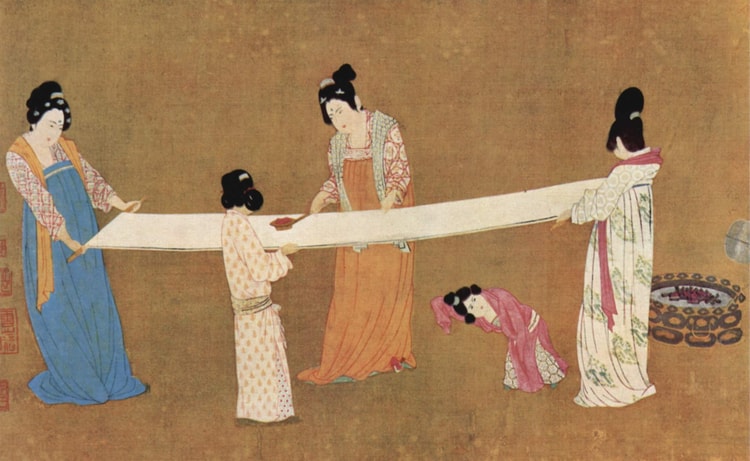 宋代檢查絲綢的婦女。 Unknown Artist (Public Domain) ](https://www.worldhistory.org/image/6920/women-checking-silk-song-china/ "Women Checking Silk, Song China.")### 通過絲綢之路交易的商品
雖然許多不同種類的商品,沿著絲綢之路的貿易流通,但這個名字來源於中國絲綢,流行西方尤其是羅馬。 絲綢之路從中國經印度、小亞細亞、美索不達米亞、埃及、非洲大陸、希臘、羅馬和英國延伸。
北部美索不達米亞地區(今伊朗)成為中國最親密的貿易夥伴,作為帕提亞帝國的一部分,開啟了重要的文化交流。 中國人在漢代發明的紙和火藥對文化的影響比絲綢大得多。 東方豐富的香料的貢獻,也超過了絲綢業發展起來的時尚。 即便如此,到羅馬皇帝奧古斯都(公元前 27 年至公元 14 年在位)時代,中國與西方之間的貿易已經牢固建立起來,絲綢是埃及、希臘,尤其是羅馬最搶手的商品。
[  羅馬帝國與東方之間的貿易聯繫(1 至 3 世紀) Simeon Netchev (CC BY-NC-ND) ](https://www.worldhistory.org/image/15772/map-of-the-trade-links-between-rome--the-east/ "Map of the Trade Links between Rome & the East")### 羅馬人對絲綢的熱愛
在成為奧古斯都皇帝之前,屋大維·凱撒 (Octavian Caesar) 抓住了絲綢服裝這個有爭議的話題,譴責他的對手馬克·安東尼 (l. 83-30 BCE) 和克利奧帕特拉七世 (l. 69-30 BCE) 是不道德的。 由於他們都喜歡越來越多地與放蕩,聯繫在一起的中國絲綢,屋大維利用這種聯繫來貶低他的敵人。 屋大維將戰勝安東尼和克利奧帕特拉; 然而,他無法阻止絲綢的普及。
歷史學家威爾杜蘭特寫道:
> 羅馬人認為 \[絲綢\] 是一種從樹上梳理出來的植物產品,並以其黃金重量來估價。 大部分絲綢運到科斯島,在那裡被織成供羅馬和其他城市的女士們穿的衣服; 公元 91 年,相對貧窮的麥西尼亞州不得不禁止婦女在宗教儀式上穿透明的絲綢連衣裙。 (329)
到小塞內卡(公元前 4 年 - 公元 65 年)時代,保守的羅馬人比奧古斯都更熱心地譴責中國絲綢,是女性不道德的服飾和男性柔弱的服飾。 然而,這些批評並沒有阻止與羅馬的絲綢貿易,科斯島通過製造絲綢服裝變得富裕和奢華。
正如杜蘭特所寫,“意大利享受‘不利’的貿易平衡——高興地 \[買\] 多於她賣的”,但仍然向中國出口豐富的商品,如“地毯、珠寶、琥珀、金屬、染料、藥物和玻璃”( 328-329). 一直到皇帝 Marcus Aurelius(公元 161-180 年在位)的時代,絲綢是羅馬最有價值的商品,再多的保守批評,似乎也無法減緩貿易或阻止時尚。
[  查理曼大帝泰爾紫色裹屍布 Unknown Artist (Public Domain) ](https://www.worldhistory.org/image/5393/tyrian-purple-shroud-of-charlemagne/ "Tyrian Purple Shroud of Charlemagne")即使在 Aurelius 之後,絲綢仍然很受歡迎,儘管價格越來越高,直到公元 476 年羅馬帝國沒落為止。 羅馬的東半部倖存下來,後來被稱為拜占庭帝國,並繼承了羅馬對絲綢的迷戀。 大約在公元 60 年,西方已經意識到絲綢並不是在中國的樹上長出來的,而實際上是由蠶吐出來的。 中國人非常有意地對絲綢的來源保密,一旦它出來,就會小心翼翼地保護他們的蠶和收割絲綢的過程。
拜占庭皇帝查士丁尼(公元 527-565 年在位)厭倦了支付中國人對絲綢的高價要求,派了兩名偽裝成僧侶的使者,到中國偷蠶,並將它們走私回西方。 該計劃成功並啟動了拜占庭絲綢業。 當拜占庭帝國於公元 1453 年落入土耳其人之手時,奧斯曼帝國關閉了絲綢之路的古老路線,並切斷了與西方的所有聯繫。
### 絲綢之路遺產
絲綢之路最大的價值,在於文化交流。 藝術、宗教、哲學、技術、語言、科學、建築以及文明的所有其他元素,都沿著這些路線進行交換,並與商人從一個國家交易,到另一個國家的商品一起進行。 疾病也沿著網絡傳播,公元 542 年的腺鼠疫傳播就證明了這一點,人們認為它是通過絲綢之路,到達君士坦丁堡,並摧毀了拜占庭帝國。
絲綢之路的關閉,迫使商人出海貿易,從而開啟了大航海時代,導致了世界範圍的互動,和全球社區的開始。 在那個時代,絲綢之路拓寬了人們對他們所生活世界的理解; 它的關閉將推動,歐洲人跨越大洋探索,並最終征服所謂的美洲新世界,啟動所謂的哥倫比亞交易,商品和價值通過交易在舊世界和新世界之間傳遞, 普遍損害新世界的土著人民。 這樣,絲綢之路可以說為現代世界的發展奠定了基礎。
#### Editorial Review
This human-authored definition has been reviewed by our editorial team before publication to ensure accuracy, reliability and adherence to academic standards in accordance with our [editorial policy](https://www.worldhistory.org/static/editorial-policy/).
## 参考文献
- [Bauer, S. W. *The History of the Ancient World.* W. W. Norton & Company, 2007.](https://www.worldhistory.org/books/039305974X/)
- [Beckwith, C. I. *Empires of the Silk Road.* Princeton University Press, 2011.](https://www.worldhistory.org/books/0691150346/)
- [Durant, W. *Caesar and Christ.* Simon and Schuster, 1972.](https://www.worldhistory.org/books/B000TK5PNI/)
- [Ebrey, P. B. *The Cambridge Illustrated History of China.* Cambridge University Press, 2010.](https://www.worldhistory.org/books/0521124336/)
- [Grant, M. *The Climax of Rome.* Weidenfeld, 1993.](https://www.worldhistory.org/books/0297813919/)
- [Hansen, V. *The Silk Road.* Oxford University Press, USA, 2012.](https://www.worldhistory.org/books/0195159314/)
- [Rodgers, N. *The Illustrated Encyclopedia of the Roman Empire.* Anness, 2008.](https://www.worldhistory.org/books/B008Q3M5YC/)
- [Strassler R. B. *The Landmark Herodotus.* Anchor Books, 2009.](https://www.worldhistory.org/books/1400031141/)
## 关于作者
约书亚·J·马克(Joshua J. Mark)是世界历史百科全书的联合创始人兼内容总监。他曾在纽约马里斯特学院(Marist College)担任教授,教授历史、哲学、文学和写作课程。他游历广泛,曾在希腊和德国生活。
- [Linkedin Profile](https://www.linkedin.com/pub/joshua-j-mark/38/614/339)
## 时间轴
- **500 BCE - 330 BCE**: The [Achaemenid Empire](https://www.worldhistory.org/Achaemenid_Empire/) rules in [Mesopotamia](https://www.worldhistory.org/Mesopotamia/), Persian Royal Road in use.
- **334 BCE - 323 BCE**: Period of the conquests of [Alexander the Great](https://www.worldhistory.org/Alexander_the_Great/).
- **c. Jul 329 BCE**: [Alexander the Great](https://www.worldhistory.org/Alexander_the_Great/) founds [Alexandria](https://www.worldhistory.org/alexandria/)-Eschate on the [Iaxartes](https://www.worldhistory.org/Iaxartes/) and destroys Cyropolis.
- **260 BCE - 195 BCE**: King Euthydemus I of the [Greco-Bactrian Kingdom](https://www.worldhistory.org/Greco-Bactria/) rules in Central Asia.
- **202 BCE - 220 CE**: The [Han Dynasty](https://www.worldhistory.org/Han_Dynasty/) rules in [China](https://www.worldhistory.org/china/).
- **c. 200 BCE**: First contact between [China](https://www.worldhistory.org/china/) and the Greco-Bactrian descendents of [Alexander the Great](https://www.worldhistory.org/Alexander_the_Great/)'s army.
- **171 BCE - 138 BCE**: Reign of Mithridates I of [Parthia](https://www.worldhistory.org/disambiguation/Parthia/).
- **138 BCE**: [Han](https://www.worldhistory.org/Han_Dynasty/) Emperor Wu the Great sends his emissary Zhang Qian to the west, initiating commerce.
- **130 BCE**: The [Silk Road](https://www.worldhistory.org/Silk_Road/) is officially opened.
- **129 BCE**: Parthians [conquer](https://www.worldhistory.org/warfare/) [Mesopotamia](https://www.worldhistory.org/Mesopotamia/). The [Silk Road](https://www.worldhistory.org/Silk_Road/) to [China](https://www.worldhistory.org/china/) is now controlled by the Parthians.
- **27 BCE - 14 CE**: Reign of [Augustus](https://www.worldhistory.org/augustus/) [Caesar](https://www.worldhistory.org/disambiguation/caesar/) in [Rome](https://www.worldhistory.org/Rome/), Chinese [silk](https://www.worldhistory.org/Silk/) is very popular.
- **161 CE - 180 CE**: Reign of Emperor [Marcus Aurelius](https://www.worldhistory.org/Marcus_Aurelius/) in [Rome](https://www.worldhistory.org/Rome/), Chinese [silk](https://www.worldhistory.org/Silk/) popularity endures.
- **476 CE**: The [fall of the western Roman Empire](https://www.worldhistory.org/article/835/fall-of-the-western-roman-empire/).
- **527 CE - 565 CE**: Reign of Emperor Julian of the Eastern [Roman](https://www.worldhistory.org/disambiguation/Roman/) ([Byzantine](https://www.worldhistory.org/disambiguation/Byzantine/)) [Empire](https://www.worldhistory.org/empire/). Beginning of Byzantine [silk](https://www.worldhistory.org/Silk/) industry.
- **542 CE**: The bubonic [plague](https://www.worldhistory.org/disambiguation/plague/), thought to have been brought through the [Silk Road](https://www.worldhistory.org/Silk_Road/), decimates [Constantinople](https://www.worldhistory.org/Constantinople/).
## 外部链接
- [The Silk Road: Connecting the ancient world through trade - Shannon Harris Castelo](http://ed.ted.com/lessons/the-silk-road-history-s-first-world-wide-web-shannon-harris-castelo)
- [Tea if by sea, cha if by land: Why the world only has two words for tea](https://qz.com/1176962/map-how-the-word-tea-spread-over-land-and-sea-to-conquer-the-world/)
- [Digital Resources for the Silk Road in World History](https://worldhistoryconnected.press.uillinois.edu/13.3/forum_02_maunu.html)
- [Trade Routes between Europe and Asia during Antiquity | Essay | The Metropolitan Museum of Art | Heilbrunn Timeline of Art History](https://www.metmuseum.org/toah/hd/trade/hd_trade.htm)
- [Exploring the Silk Roads | British Museum](https://www.britishmuseum.org/collection/china/exploring-silk-roads)
## 引用本文
### APA
Mark, J. J. (2023, April 28). 絲綢之路. (. 晚生姓高, 翻译). *World History Encyclopedia*.
### Chicago
Mark, Joshua J.. "絲綢之路." 翻译: 晚生姓高. *World History Encyclopedia*, April 28, 2023. .
### MLA
Mark, Joshua J.. "絲綢之路." 翻译: 晚生姓高. *World History Encyclopedia*, 28 Apr 2023, .
## 许可与版权
提交人: [晚生姓高](https://www.worldhistory.org/user/ezswvyqf/ "User Page: 晚生姓高"), 发表于 28 April 2023. 请查阅原始来源以获取版权信息。 请注意,从本页面链接的内容可能具有不同的许可条款。