---
title: 墳墓
author: Joshua J. Mark
translator: 晚生姓高
source: https://www.worldhistory.org/trans/zh/1-40/
format: machine-readable-alternate
license: Creative Commons Attribution-NonCommercial-ShareAlike (https://creativecommons.org/licenses/by-nc-sa/4.0/)
updated: 2023-08-15
---
# 墳墓
_作者: [Joshua J. Mark](https://www.worldhistory.org/user/JPryst/)_
_译者: [晚生姓高](https://www.worldhistory.org/user/ezswvyqf)_
[](https://www.worldhistory.org/trans/zh/1-22386/)[](https://www.worldhistory.org/trans/zh/2-2409/)墳墓是一個封閉的空間,用於存放死者的遺骸。 傳統上,墳墓位於洞穴、地下或專門為容納死者遺骸而設計的結構中,通常還有他們的財產、親人、護身符或神聖物品,以保護或引導靈魂。
在烏爾城廢墟中發現的被稱為“大死亡坑”的古美索不達米亞古墓中,其歷史可追溯至早期王朝時期(公元前2900-2334 年),皇室僕人與國王一起埋葬,為國王服務。來世和其他地方也觀察到了同樣的做法。 墳墓中經常藏有所謂的“隨葬品”——死者來世需要的物品,但也包括死者特別依戀的任何東西。 以色列的納圖夫墳墓,可追溯至, 公元前 12,000 年,其中埋藏著一名男子和他的狗的遺骸。
墳墓一直被認為是死者的家,每一座墳墓的建造都是考慮到這一概念的。 墳墓是死者的最後安息之地,但死者的靈魂將在另一個世界繼續生存。 墳墓的建造也反映了埋葬在那裡的人的地位,以及某種文化對來世的信仰。 從美索不達米亞到羅馬的古代文化都認為,死者死後會繼續存在,而有關鬼魂的故事(例如羅馬作家小普林尼,在公元100 年左右,講述的著名故事)與死者埋葬不當造成的鬧鬼有關。
來自美索不達米亞、中國、希臘和瑪雅等不同文化,的古代銘文,提到了尊重死者的埋葬,和紀念的重要,以及不這樣做的可怕後果。 因此,墳墓被認為是喪葬儀式的一個重要方面,並且已有 5000 多年的歷史。
### [古埃及](https://www.worldhistory.org/trans/zh/1-74/)的墳墓
古代最精緻的墳墓,是埃及人為他們的國王法老,建造的墳墓。 在早期王朝時期(約公元前 3150 年至公元前 2613 年),埃及人建造了馬斯塔巴,即用乾粘土磚製成的墳墓,然後用這些磚來支撐在地下挖的豎井和墓室。 每個馬斯塔巴都有一個大房間,用於紀念死者靈魂的儀式,還有一個相鄰的較小房間,裡面放置死者的雕像,以便靈魂可以見證和享受儀式。 馬斯塔巴 - 埃及最古老的墳墓形式 - 繼續為普通百姓使用,但對於皇室來說,它在古王國時期(約公元前 2613-2181 年)被稱為金字塔的結構所取代。
從薩卡拉的階梯金字塔開始,皇家金字塔在吉薩大金字塔(為胡夫國王建造,公元前 2589-2566 年在位)的建造中達到了輝煌的高度。 皇家金字塔上裝飾著描繪已故,國王的生活和成就的繪畫,並充滿了靈魂在埃及天堂,蘆葦地來世所需的所有必需品。 君主也被埋葬在被稱為帝王谷的地區,他們的墳墓是精緻的永恆家園,裝飾精美,反映了他們作為神聖統治者的地位。
### 美索不達米亞古墓
在古代美索不達米亞,墳墓通常類似於馬斯塔巴,但與埃及一樣,皇室的墳墓更加華麗。 查爾斯·倫納德·伍利(Charles Leonard Wooley) 爵士在1920 年代進行的考古發掘發現了烏爾皇家陵墓,被認為是美索不達米亞最古老的陵墓,其中發現了許多精美的黃金、青金石和紅玉髓作品(最著名的是普阿比女王的王冠)。 在伍利一處被稱為“大死亡坑”的墳墓中,發現了六名守衛和六十八名宮女的屍體。 人們認為這些是國王的寵兒,被選擇陪伴他到來世。
美索不達米亞人,無論是南部的蘇美爾地區還是北部的阿卡德,都非常關心死者的正確埋葬,他們經常在自己的房屋內或旁邊建造墳墓,這樣他們就可以繼續照顧死者並防止死者死亡。鬧鬼所引起的問題(瑪雅文化也觀察到了同樣的做法,該文化也對鬼魂有著根深蒂固的恐懼)。 古代美索不達米亞的鬼魂,被認為是生活中的一個事實,雖然有些鬼魂受到同情對待,但人們通常更願意避免死者的降臨。
為了防止這種鬧鬼的情況,必須仔細遵守喪葬儀式,並為死者的靈魂配備適當的墳墓。 這些墳墓中總是包含,人財產以及禮物,甚至是最不起眼的禮物,死者在到達那裡時將這些禮物獻給冥界之神。 當然,國王們的安息之所是為諸神準備的更精美的禮物,從美索不達米亞各地墳墓中,挖掘出來的陪葬品,就證明了這一點。
[ 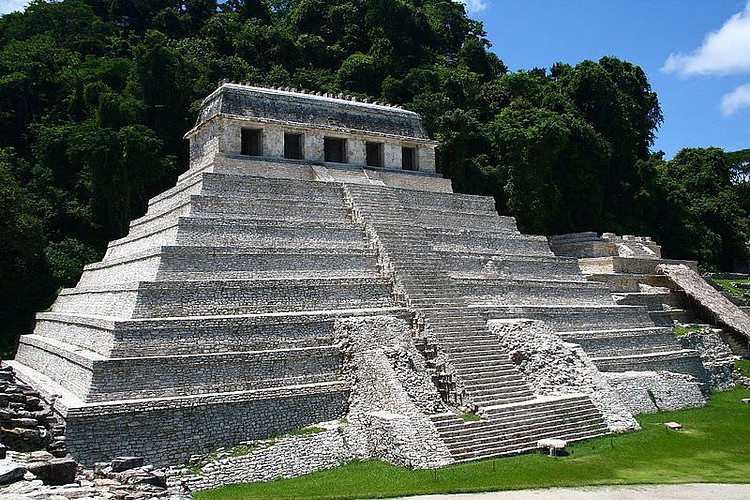 帕伦克铭文神庙 Jan Harenburg (CC BY) ](https://www.worldhistory.org/image/3097/temple-of-the-inscriptions-palenque/ "Temple of the Inscriptions, Palenque")### 瑪雅人和帕卡爾國王的墳墓
瑪雅統治者的陵墓的建造方式,與其他文化的國王的陵墓大致相同,因為它們的風格和結構都很華麗,並且充滿了來世可能需要的所有必需品。 帕倫克國王 K'inich Janaab Pakal(公元 603-683 年在位)的墳墓牆壁上裝飾著 ,從塵世生活過渡到神的王國的圖像,他被埋葬在精心雕刻的石棺中,反映了相同的主題。
儘管一些作家聲稱這些雕刻描繪了帕卡爾騎著火箭的樣子,因此是古代外星人與瑪雅人互動的證據,但學術界認為這一理論站不住腳。 石棺上的雕刻在一些人看來是一枚火箭,被學者們認為是帕卡爾升入天堂的生命之樹。 帕卡爾國王和其他統治者一樣,被授予了一座與他的地位和成就相稱的墳墓,人們認為這座墳墓是由他的臣民建造的,他們認為他配得上這一榮譽。 然而,中國第一位皇帝的陵墓是在他去世前開始建造的,由來自全國各省的工人徵召勞動建造。
### 中國陵墓和始皇陵
中國始皇帝(公元前 221-210 年)的陵墓裡藏有 8,000 多個兵馬俑及其武器、戰車和馬匹,以便皇帝在來世擁有一支常備軍隊,聽從他的指揮。 這座陵墓高 141 英尺(43 米),於 1974 年在西安市首次發現,由於擔心始皇帝設計的各種陷阱而尚未被挖掘。他陪葬的巨大寶藏
超過 70 萬工人被徵召建造這座陵墓,這座陵墓本應象徵著始皇帝所統治的世界,並將在來世繼續統治。 中國的其他墳墓,在規模或範圍上遠沒有那麼宏偉,也反映出這樣一種信念,即死者將繼續以某種形式,存在於另一個領域,並可以繼續對生者產生影響,無論是好是壞,這取決於他們的行為方式。遺骸得到了尊重,他們的記憶也繼續得到紀念。 在中國古代,狗經常與主人的屍體一起埋葬或埋葬,以服務、保護和引導死者的靈魂來世。
### 希臘的墳墓
在希臘,富人的墳墓在建築上與現代陵墓密切相關,因為它們通常是裝飾華麗的石頭建築,裡面安置著斜躺的死者。 由於希臘人相信,為了靈魂在來世繼續存在,紀念死者是必要的,因此希臘墳墓經常描繪死者在熟悉的環境中——坐下來吃晚飯,享受朋友和家人的陪伴,閱讀,或與家人一起放鬆。他們的狗 - 為了提醒生者,這個人生前是誰,以及他們死後如何仍然存在。
希臘人通過參觀親人的墳墓並與他們交談來紀念親人的去世週年紀念日,並且總是確保說出他們的名字,以向死者表明他們被記住。 在雅典衛城下方,普通公民的墳墓描繪了與較富裕的人相同的場景,並且始終強調紀念的重要性。 在行動中陣亡的士兵,通常被埋葬在戰場上的集體墳墓中,下面有一個單一的標記(通常是一個命名戰鬥和日期的紀念碑),以紀念陣亡者。 然而,要讓死者的記憶永存,這取決於活著的人,為此目的,一個人的家人經常會豎起一個標記,並在一個人的周年紀念儀式上代替真正的墳墓。
邁錫尼時期(約公元前 1700-1100 年)的墳墓被稱為 tholos 或蜂巢墳墓,人們認為這些墳墓源自克里特島早期米諾斯建築的進步。 這些托洛斯墳墓中最著名的之一是阿特柔斯的寶庫(也稱為阿伽門農墳墓,如上圖所示),建於公元 100 年。 公元前 1250 年。 與其他文化一樣,這些墳墓被認為是死者的最後安息之地,因此需要不斷維護,通過記住他們在地球上的時光來紀念死者來世的靈魂。
[  克拉瓦的巴爾努阿蘭 Dave Conner (CC BY-NC-SA) ](https://www.worldhistory.org/image/937/balnuaran-of-clava/ "Balnuaran of Clava")### 蘇格蘭和愛爾蘭的新石器時代墓葬
蘇格蘭的墳墓,例如奧克尼群島的梅肖韋墳墓通道墓,與古希臘的墳墓,特別是索洛斯墳墓,顯示出驚人的相似之處。 老鷹墓(也在奧克尼群島)的歷史可以追溯到公元前 3000 年,人們發現裡面埋藏著 300 多人的骸骨。 人類遺骸中有 700 多具白尾鷹的遺骸,該墓因此而得名。
在這兩座墳墓中都沒有發現任何個人物品,但這種缺失被歸因,於古代對墳墓的掠奪。 與其他文化一樣,整個蘇格蘭的新石器時代墳墓,都是經過精心設計的,作為死者通往地獄來世的家園。 例如,在梅肖韋,要進入墳墓,人們需要移開一塊大石頭,然後下降到代表陰間的房間裡。
在愛爾蘭著名的紐格蘭奇通道墓中,也可以看到同樣的建築和意識形態,該墓是世界上最古老的墓葬之一(早於吉薩金字塔和邁錫尼文明),建於公元1700 年。 公元前 3200 年。 紐格蘭奇莊園和梅肖威一樣,經過精心建造,在冬至時允許一束光線進入黑暗的內室,人們認為這象徵著死者的永生。
愛爾蘭最古老的通道墓位於斯萊戈縣,最大的巨石墓地位於卡羅莫爾。 愛爾蘭各地的其他墳墓(稱為支石墓)的建造方式與卡羅莫爾墳墓大致相同。 卡洛郡的布朗希爾支石墓,沿襲了地下墓室的習俗,但其特點是其頂石,位於重達100 噸的直立巨石(被認為是歐洲最重的石頭)上,以及被稱為“人質土堆”的墳墓位於米斯的墓室與紐格蘭奇墓相似,它的建造(約公元前3000 年)是為了讓初升的太陽,在某些日子照亮內部墓室,象徵重生和生命之光。
### [古印度](https://www.worldhistory.org/trans/zh/1-328/)的墳墓
這一概念在印度的墳墓中也同樣明顯,最初的墳墓是洞穴或刻在岩石懸崖上的,但最終演變成陵墓,慶祝死者的一生,並通過生者的紀念來確保他們的不朽。 火葬是印度處理死者遺骸的最常見方法,因此,墳墓的使用程度與其他文化不同。
印度教宗教信仰鼓勵火葬和散佈骨灰,但隨著伊斯蘭教傳入該國,死者遺骸的重要性得到強調,墳墓作為紀念和紀念死者的一種方式變得更加普遍。 最著名的例子是沙賈汗 (Shah Jahan) 於公元 1631 年為他的妻子建造的泰姬陵 (Taj Majal),儘管不是古老的例子。
[ 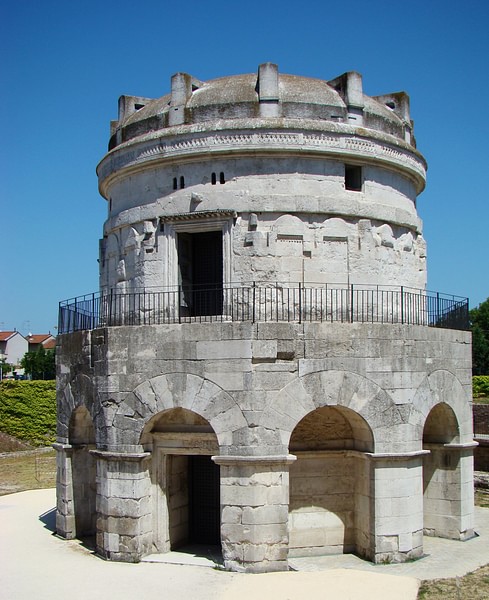 狄奧多里克陵墓,拉文納 F. Tronchin (CC BY-NC-SA) ](https://www.worldhistory.org/image/3091/mausoleum-of-theodoric-ravenna/ "Mausoleum of Theodoric, Ravenna")### 羅馬墳墓和地下墓穴
古羅馬的墳墓遵循與埃及,和其他地方相同的發展歷程,從埋葬在地下或洞穴中開始,逐漸發展成更複雜的結構來容納死者。 羅馬墳墓也慶祝個人的一生,但與希臘或印度的墳墓不同,羅馬墳墓通常以銘文,而不是雕塑或浮雕為特色,以便可以閱讀和背誦死者的事蹟。
羅馬人被埋葬在城外的墓地中,以標記生者土地和死者土地之間的界限。 就像在美索不達米亞一樣,羅馬人擔心死者會以鬼魂的形式回歸,除非他們是為了特定目的通過占卜而被召喚出來的,或者是來傳遞信息的,否則幽靈訪客被認為是一種潛在的邪惡。 與其他文化一樣,對墳墓的建造和裝備的適當關注,被認為可以防止此類鬧鬼。
富有的羅馬人被埋葬在精心設計的墳墓中,而那些收入較低的人則被埋葬在城外的洞穴中或被火葬。 火葬死者是最流行的處理屍體的方式,然後,骨灰被保存在一個骨灰盒中,並放置在家庭的榮譽位置。 然而,基督教的興起,以及對死者身體復活的新信仰,導致火葬數量減少,墓地缺乏容納死者的空間,在地下挖了墓穴,牆上有放屍體的架子,成為古羅馬最常見的墳墓形式。
#### Editorial Review
This human-authored definition has been reviewed by our editorial team before publication to ensure accuracy, reliability and adherence to academic standards in accordance with our [editorial policy](https://www.worldhistory.org/static/editorial-policy/).
## 参考文献
- [Bunson, M. *Encyclopedia of Ancient Egypt.* Gramercy, 2008.](https://www.worldhistory.org/books/0517203804/)
- [Durant, W. *Caesar and Christ.* Simon & Schuster, 2000.](https://www.worldhistory.org/books/0671115006/)
- [Durant, W. *Our Oriental Heritage.* Simon & Schuster, 2000.](https://www.worldhistory.org/books/B00005WJGO/)
- [Durant, W. *The Life of Greece.* Simon & Schuster, 2000.](https://www.worldhistory.org/books/B004ZZS4YA/)
- [Hadingham, E. *Circles and Standing Stones.* Heinemann, 1977.](https://www.worldhistory.org/books/B0007C8YIQ/)
- [Hamilton, E. *The Roman Way.* W. W. Norton & Company, 2002.](https://www.worldhistory.org/books/0393310787/)
- [Ikram, S. *Death and Burial in Ancient Egypt.* Longman, 2003.](https://www.worldhistory.org/books/0582772168/)
- [Kramer, S. N. *The Sumerians.* University of Chicago Press, 1971.](https://www.worldhistory.org/books/0226452387/)
- [Leick, G. *Mesopotamia.* Penguin (Non-Classics), 2003.](https://www.worldhistory.org/books/0140265740/)
- [Scarre, C. & Fagan, B.F. *Ancient Civilizations.* Pearson, 2007.](https://www.worldhistory.org/books/0131928783/)
- [Stuart, G.S. *Lost Kingdoms of the Maya.* National Geographic Society, 1993.](https://www.worldhistory.org/books/0870449281/)
- [Zhang Lin. *The Qin Dynasty Terra-cotta Army of Dreams.* Xi An Press, 2005.](https://www.worldhistory.org/books/780712184X/)
## 关于作者
约书亚·J·马克(Joshua J. Mark)是世界历史百科全书的联合创始人兼内容总监。他曾在纽约马里斯特学院(Marist College)担任教授,教授历史、哲学、文学和写作课程。他游历广泛,曾在希腊和德国生活。
- [Linkedin Profile](https://www.linkedin.com/pub/joshua-j-mark/38/614/339)
## 时间轴
- **c. 6000 BCE**: [Burial](https://www.worldhistory.org/burial/) of the dead in [Egypt](https://www.worldhistory.org/egypt/).
- **c. 6000 BCE**: Earliest [Egyptian](https://www.worldhistory.org/disambiguation/Egyptian/) mastabas dug at Saqqara.
- **c. 5000 BCE**: Dead buried with [grave](https://www.worldhistory.org/burial/) goods at [Banpo Village](https://www.worldhistory.org/Banpo_Village/), [China](https://www.worldhistory.org/china/).
- **4300 BCE**: First [megalithic](https://www.worldhistory.org/disambiguation/megalithic/) tombs in [Europe](https://www.worldhistory.org/europe/).
- **c. 4000 BCE**: Carrowmore [Megalithic](https://www.worldhistory.org/disambiguation/megalithic/) Cemetery begins in Sligo, [Ireland](https://www.worldhistory.org/disambiguation/Ireland/).
- **c. 3300 BCE**: Early Harappan [Civilization](https://www.worldhistory.org/civilization/) of [India](https://www.worldhistory.org/india/) practices [burial](https://www.worldhistory.org/burial/) of the dead.
- **3300 BCE**: [Newgrange](https://www.worldhistory.org/Newgrange/) [Burial](https://www.worldhistory.org/burial/) Mound constructed in [Ireland](https://www.worldhistory.org/disambiguation/Ireland/).
- **3000 BCE**: Stone tombs on [Crete](https://www.worldhistory.org/crete/).
- **3000 BCE**: [Tomb](https://www.worldhistory.org/tomb/) of the Eagles created in [Scotland](https://www.worldhistory.org/disambiguation/Scotland/).
- **c. 3000 BCE - c. 2800 BCE**: [Maeshowe](https://www.worldhistory.org/Maeshowe/) Passage [Grave](https://www.worldhistory.org/burial/) completed in [Scotland](https://www.worldhistory.org/disambiguation/Scotland/).
- **3000 BCE - 2000 BCE**: First rock-cut [burial](https://www.worldhistory.org/burial/) chambers at [Akrotiri](https://www.worldhistory.org/thera/).
- **c. 2600 BCE**: Mayan [Culture](https://www.worldhistory.org/disambiguation/culture/) buries their dead individually under homes.
- **c. 2600 BCE - c. 2000 BCE**: The Royal Graves of [Ur](https://www.worldhistory.org/ur/) used in [Sumer](https://www.worldhistory.org/sumer/).
- **c. 2560 BCE**: The [Great Pyramid of Giza](https://www.worldhistory.org/Great_Pyramid_of_Giza/) is constructed by [Pharaoh](https://www.worldhistory.org/pharaoh/) Khufu (Cheops).
- **c. 2500 BCE - c. 2000 BCE**: The Balnuaran of Clava ([Clava Cairns](https://www.worldhistory.org/Clava_Cairns/)) is built.
- **c. 1700 BCE - c. 1600 BCE**: First shaft graves constructed at [Mycenae](https://www.worldhistory.org/mycenae/).
- **c. 1500 BCE**: First tholos tombs built at [Mycenae](https://www.worldhistory.org/mycenae/).
- **1250 BCE - 1200 BCE**: [Mycenaean](https://www.worldhistory.org/Mycenaean_Civilization/) chamber tombs constructed at [Thebes](https://www.worldhistory.org/disambiguation/Thebes/).
- **c. 1100 BCE**: Greeks implement use of individual tombs and graves.
- **c. 700 BCE**: [Tomb](https://www.worldhistory.org/tomb/) of Mayan King K'utz Chman of Retalhuleu constructed in Guatemala.
- **c. 680 BCE - c. 660 BCE**: The [Etruscan](https://www.worldhistory.org/Etruscan_Civilization/) [Regolini-Galassi Tomb](https://www.worldhistory.org/article/1020/regolini-galassi-tomb/) is constructed at [Cerveteri](https://www.worldhistory.org/Cerveteri/).
- **530 BCE - 520 BCE**: The [Etruscan](https://www.worldhistory.org/Etruscan_Civilization/) [Tomb](https://www.worldhistory.org/tomb/) of the Lionesses is constructed at [Tarquinia](https://www.worldhistory.org/Tarquinia/).
- **210 BCE**: First Emperor of [China](https://www.worldhistory.org/china/) [Shi Huangdi](https://www.worldhistory.org/Shi_Huangdi/) dies, buried with army of 8,000 terracotta warriors in [palace](https://www.worldhistory.org/disambiguation/palace/) [tomb](https://www.worldhistory.org/tomb/).
- **206 BCE**: The Emperor [Shi Huangti](https://www.worldhistory.org/Shi_Huangdi/) is buried with a [terracotta army](https://www.worldhistory.org/Terracotta_Army/) of more than 8,000 soldiers in a [palace](https://www.worldhistory.org/disambiguation/palace/) [tomb](https://www.worldhistory.org/tomb/).
- **c. 750 CE - 800 CE**: The subterranean llama-shaped royal [tomb](https://www.worldhistory.org/tomb/) is constructed at the [Wari](https://www.worldhistory.org/Wari_Civilization/) [city](https://www.worldhistory.org/city/) of Pikllacta.
- **770 CE**: Last recorded use of [Clava Cairns](https://www.worldhistory.org/Clava_Cairns/) site in antiquity.
## 问答
### 什麼是墳墓?
墳墓通常被理解為死者的封閉空間,被視為他們最後的安息之地。
### 古墓為何建在地下?
墳墓建在地下,因為在古代文化中,來世被理解為存在於地下的世界。 人們認為在地下建造一座墳墓,可以讓死者的靈魂更容易進入那個世界。
### 古埃及最早的墳墓有哪些?
最早的古埃及墳墓是馬斯塔巴,最早建於早王朝時期,大約 公元前 3150--公元前 2613 年。
### 為什麼墳墓被認為很重要?
墳墓被認為是紀念死者、保持他們的記憶、為他們提供進入來世的途徑,以及防止他們以鬼魂的形式,回歸的重要方式。
## 外部链接
- [King Herod's Tomb](https://www.missedinhistory.com/podcasts/king-herods-tomb.htm)
- [Seven Wonder of the Ancient World: Khufu's Great Pyramid](http://www.unmuseum.org/kpyramid.htm)
- [Pyramids](http://www.ancientegypt.co.uk/pyramids/home.html)
- [Mausoleum of the First Qin Emperor](http://whc.unesco.org/en/list/441)
- [Ancient Tombs and Mausoleums](http://www.china.org.cn/english/features/atam/114512.htm)
- [Tombs of Ancient Egypt](https://www.osirisnet.net/e_centrale.htm)
- [Hany Farid](https://www.cs.dartmouth.edu/~farid/egypt.html)
- [Capital Cities and Tombs of the Ancient Koguryo Kingdom](http://whc.unesco.org/en/list/1135)
- [The Death Pit](https://www.penn.museum/sites/iraq/?page_id=208)
- [Tombs explore](http://www.mesopotamia.co.uk/tombs/explore/exp_set.html)
- [Lesson: Mesopotamia (Women in World History Curriculum)](http://www.womeninworldhistory.com/lesson2.html)
- [Treasures from the Royal Tombs of Ur](https://mcclungmuseum.utk.edu/exhibits/treasures-from-the-royal-tombs-of-ur/)
- [Maeshowe, a spectacular neolithic chambered cairn in Orkney](http://www.maeshowe.co.uk/maeshoweabout.html)
- [Newgrange Stone Age Passage Tomb](http://www.newgrange.com/)
- [Taj Mahal](http://whc.unesco.org/en/list/252)
- [Palenque: Pakal's Tomb](http://www.mesoweb.com/palenque/features/sarcophagus/pakals_tomb.html)
- [Tomb of the Vulture Lord](https://www.archaeology.org/issues/102-1309/features/1145-maya-king-burial-guatemala-takalik-abaj)
## 引用本文
### APA
Mark, J. J. (2023, August 15). 墳墓. (. 晚生姓高, 翻译). *World History Encyclopedia*.
### Chicago
Mark, Joshua J.. "墳墓." 翻译: 晚生姓高. *World History Encyclopedia*, August 15, 2023. .
### MLA
Mark, Joshua J.. "墳墓." 翻译: 晚生姓高. *World History Encyclopedia*, 15 Aug 2023, .
## 许可与版权
提交人: [晚生姓高](https://www.worldhistory.org/user/ezswvyqf/ "User Page: 晚生姓高"), 发表于 15 August 2023. 请查阅原始来源以获取版权信息。 请注意,从本页面链接的内容可能具有不同的许可条款。