---
title: 阿契美尼德帝国
author: Jan van der Crabben
translator: Shanxu Wang
source: https://www.worldhistory.org/trans/zh/1-322/
format: machine-readable-alternate
updated: 2025-08-12
---
# 阿契美尼德帝国
_作者: [Jan van der Crabben](https://www.worldhistory.org/user/jvdc/)_
_译者: [Shanxu Wang](https://www.worldhistory.org/user/shanxuwang)_
[](https://www.worldhistory.org/trans/zh/1-22386/)[](https://www.worldhistory.org/trans/zh/2-2409/)在扎格罗斯(Zagros)山脉的东边,一片高原绵延至印度地界。当埃及人在起义反抗希克索斯人(Hyksos)的统治时,一群游牧部落从里海之北来到此地,一直延伸至印度。当亚述人 (Assyrians)建成了他们新的帝国之时,第二群游牧部落已经从札格罗斯山脉覆盖到了兴都库什(Hindu Kush)山脉。一些部落就此定居,其他的仍保持着游牧的生活, 伊朗人便由此而来。
### 游牧部落
伊朗的部落和其他游牧文明一样,普遍缺乏督察和司法机构,他们的信仰也不同于农耕文明,而荣誉则是他们的核心准则。当埃及和美索不达米亚的农民把自然神演化成了城市保护神,伊朗人已经把这些神明转化成了一些万物的准则。生活在大约公元前1000年的琐罗亚斯德(Zoroaster)加快了这一进程,他认为世间只有一个创世神阿胡玛兹达(Ahura Mazada),是光明、秩序和真理的化身,是这个世界的源头和根基。即使那些并不信仰琐罗亚斯德教(Zoroastrainism, 又称拜火教)的人们也从小培养起了像说实话这样的道德准则。
#### Book Extract
[](https://www.worldhistory.org/books/162008287X/ "Atlas of Empires")### Atlas of Empires
by Peter Davidson This article is an extract from the book *Atlas of Empires*, republished with permission. This book tells the story of how and why the great empires of history came into being, operated and ultimately declined, and discusses the future of the empire in today's globalized world. [Buy on Amazon](https://amzn.to/2x9l3u3) [Buy on Bookdepository](https://www.bookdepository.com/Atlas-Empires-Peter-Davidson/9781620082874?a_aid=ahe)
.sponsor.book img.key_art {
box-shadow: none !important;
}
.button_container {
margin-top: 1em;
}
.sponsor.book h3 {
text-transform: none;
margin-top: 0px;
margin-bottom: 15px;
font-family: "Libre Baskerville", "Palatino Linotype", "Book Antiqua", Palatino, serif;
}
.sponsor_message {
margin-left: 190px;
font-family: Karla, Arial, Helvetica, sans-serif;
line-height: 140%;
min-height: 200px;
}
.sponsor.book {
padding: 20px;
margin: 25px 0px;
background-color: #f3f3f3;
}
.sponsor.book .key_art {
margin-top: 0px;
margin-bottom: 10px;
float: left;
}
.sponsor h4 {
font-weight: bold;
text-transform: uppercase;
color: #000;
margin-bottom: 10px;
margin-top: 0px;
font-family: Karla,Arial,Helvetica,sans-serif;
font-size: 13px;
padding: 0;
}
.sponsor_book_author {
color: #999;
margin: -10px 0px 20px;
}
@media (max-width: 1199px) {
.sponsor.book .key_art {
float: none;
width: 100%;
}
.sponsor.book .sponsor_message {
margin-left: 0px;
}
.sponsor.book h3 {
margin-top: 20px;
margin-bottom: 10px;
}
}
@media (max-width: 767px) {
}
在有些地区,一个部落会脱颖而出,统领其它的部落,米底人(Medes)便是如此。他们扩张了自己的领地,在札格罗斯山脉东边的埃克巴坦纳(Ecbatana,意为会议之地) 建立首都。公元前612年,米底国王基亚克萨雷斯(Cyaxares)统领迦勒底人(Chaldeans)占领了尼尼微,然后往西北一路扩张。公元前585年,米底人在哈里斯河畔与吕底亚人(Lydians)交战,天狗食日,双方惊恐不已,退兵言和。不久之后,基亚克萨雷斯去世,他的儿子阿斯提阿格斯(Astyages,公元前585-550年)继承了这个初具规模的王国。
波斯的部落是众多给米底人进贡的部落之一,他们位于埃克巴坦纳的东南方向,埃兰(Elam)开外。当时帕萨尔加德(Pasargadae)是波斯地区10到15个部落之一,而他们的首领总是选自阿契美尼德氏族。公元前559年,一位新的首领诞生了,他就是居鲁士二世(又称居鲁士大帝)。
### 居鲁士二世
据传居鲁士是阿斯提阿格斯的外孙,但他一直试图挣脱米底人的枷锁。公元前552年,他统一了波斯的部落,并开始了一系列的起义。到公元前550年,居鲁士准备和他的祖父一绝生死,米底人也纷纷倒戈,在他的带领下一同进军埃克巴坦纳。
居鲁士自称波斯之王(Shah of Persia),并在他胜利之地建立了都城,并以他的部族,命名都城为帕萨尔加德(Pasargadae)。征服米底人后,居鲁士成就了一个疆域辽阔、民族众多的大一统帝国,但他也面临着众多文化的差异、分歧和敌意。吕底亚和巴比伦的迦勒底人曾都与米底人有协约,而他们对于波斯人的统治皆有不满。
[ 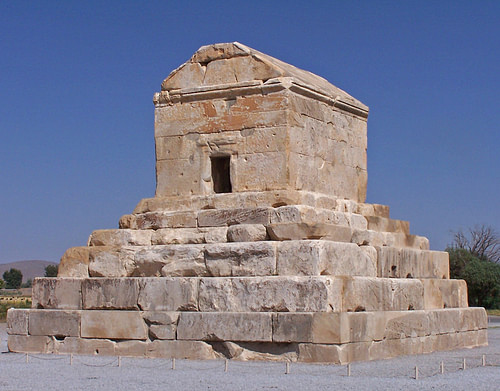 居鲁士大帝之墓 Sebastià Giralt (CC BY-SA) ](https://www.worldhistory.org/image/264/tomb-of-cyrus/ "Tomb of Cyrus")居鲁士不守成规,出其不意,拿下了吕底亚。一年秋,哈利斯河畔,一场犹豫不决的战斗后,吕底亚国王克雷兹(Croesus,大约公元前560-546年在位)返回了萨迪斯(Sardis),准备根据传统第二年春天再战。居鲁士却一路尾随,最终攻占了吕底亚的都城萨迪斯,爱奥尼亚最富裕的城市。一个世纪前,吕底亚铸造了第一批铜钱,爱奥尼亚一跃成为商业中枢,而如今这一切都落入居鲁士手中。
至于克雷兹,居鲁士可能史无前例的饶了他的性命。居鲁士以宽恕被征服的统治者而闻名,这样他就能寻求他们的意见去治理他们的国土。这种名声的真实性难以知晓,但不管怎样在此之前没人会这么做,并会被人视作软弱之举。
### 多民族帝国
居鲁士与此相反,视合作为力量,尤其是为了稳固那最宝贵的战利品——巴比伦城。居鲁士并没有用武力强行夺取这个世界上最伟大的城市,而是利用巴比伦王那波尼德已失去民心,展开了一场宣传运动,声称巴比伦的传统会在居鲁士统治下下更好得延续下去。最终,巴比伦敞开城门,铺下棕榈叶,迎接他的进城。
入巴比伦城后,居鲁士立刻恢复了之前被那波尼德漠视的宗教仪式,并把没收的圣像归还给了全国上下的寺庙。这些举措合法化了居鲁士在巴比伦的统治,并受到巴比伦众神的庇佑。此后他解释了他的帝国的运作方式,他的帝国会建立在各个民族和他的合约之上。各个民族将按时进贡,而他则会确保他们能不受拘束,遵循各自传统生活,崇拜自己的神明。
[ 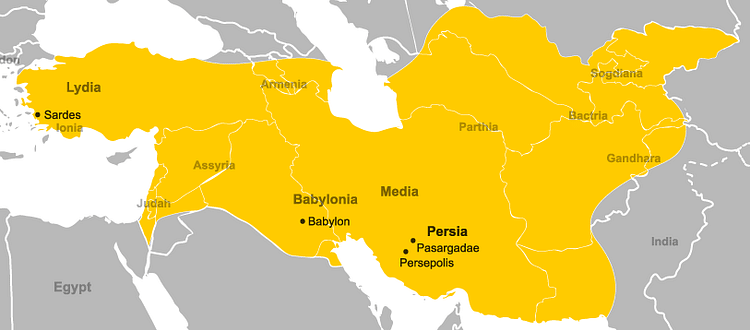 居鲁士大帝的帝国 SG (CC BY-SA) ](https://www.worldhistory.org/image/265/empire-of-cyrus-the-great/ "Empire of Cyrus the Great")流放的犹太人受许回到了他们的家乡,并获得资助,在耶路撒冷建起新的寺庙。此举让居鲁士在旧约里留下了浓墨重彩的一笔,而犹太地区也成为了波斯帝国与埃及之间重要的缓冲地带。居鲁士让众多文化兼容并存,实现了帝国的稳定长远的统治,也成为后世效仿的榜样。为了稳固他的统治,这样的策略对于居鲁士而言显而易见。但他的高瞻远瞩对于那些生活在文明的河谷、强烈依附于当地神明的人们而言,则是不可想象的。
### 万王之王
居鲁士的儿子冈比西斯二世(Cambyses II,公元前529-522年在位)继位,把埃及纳入了波斯帝国的版图,但与此同时帝国腹地发生了反叛。一个米底人祭司伪装成冈比西斯的弟弟试图夺权,而冈比西斯真正的弟弟已经被他秘密谋害了。冈比西斯着急归还,却死在了回程途中,他的将军也是他的远亲大流士(Darius)上任。大流士一世(又称大流士大帝)杀了这个冒牌货,赢得了皇位,但此时全国境内已叛乱四起,而他需要重新开始居鲁士那样的征伐。所幸大流士有着军队和波斯贵族的支持,他重新建立起帝国,甚至还把版图扩张到印度河流域,而印度河流域的价值可是巴比伦的进贡不可比拟的。
大流士意识到帝国需要行之有效的管理制度来维系,他把整个国家划分为20个行省(satrapy),每个行省固定给波斯上贡。每个行省由一个中央指定的省督管理,而这些省督通常是大流士的亲戚。为了预防省督有过大的权力,大流士会派另一个人统领地方的军队,而他只受大流士一人差遣。当时帝国已经建立起道路网络,信使可以沿路在相隔一天行程的驿站换马。而被称为“国王之耳”的皇室眼线会在暗中监视这两个地方最高统领,并通过信使报告给大流士。
大流士很大程度上只是大规模地挪用了亚述人的管理结构,但是他对待进贡采取了新的策略。以往朝贡只是变相收取保护费来规避麻烦,而大流士把进贡当成赋税,用来建立海军,并投入大规模的公共项目中,如灌溉工程、开采矿石、修建道路以及在尼罗河和红海之间挖掘运河。
[  不死军的列次 dynamosquito (CC BY-SA) ](https://www.worldhistory.org/image/85/ranks-of-immortals/ "Ranks of Immortals")大流士也统一了货币,便携了远离家乡工作的人们。在波斯建筑师的指引下,大流士召集了全国各地的工匠来建造帝都波斯波利斯(Persepolis)。在这他把金银财宝囤在一个巨大的国库里(但很快就放不下了),炫耀着他多民族帝国的远大宏图。波斯波利斯成为了一个由波斯规划的艺术展,展览着来自每种文化的艺术品。这也是居鲁士理想中帝国的缩影。
但是大流士却从未认可居鲁士,他似乎对于自己在阿契美尼德家族中不属于居鲁士的嫡系子孙颇有微词。在超越了居鲁士的成就后,他愈发膨胀,放弃了国王(Shah)的称号,而改称为万王之王(Shahanshah)。但就像波斯波利斯,这同样直接来自居鲁士的愿景。当居鲁士入城巴比伦后,他成为了巴比伦王,但是在他的理解中一个帝国需要一个超越国王的统治者来稳固所有民族,而这个统治者就是万王之王。
### 羞辱和衰弱
大流士后期的统治在地中海地区遇到了一些麻烦。公元前449年,希腊人在爱奥尼亚(Ionia)地区发动反叛。大流士的舰队最终镇压住了他们,然后向雅典进发,去惩罚雅典人对反叛军的支持,但是却意外落败。如果不是波斯的行政结构变得太脆弱,希腊人本应该被狠狠地教训一番。但当大流士加重赋税来重整军备时,像埃及这样更重要的地区开始了动乱。
平叛埃及和解决希腊冲突的重担落在了大流士的儿子薛西斯一世(Xerxes I, 公元前486-465年)的头上。薛西斯比大流士更高傲,他接过两位帝国缔造者的衣钵,有着更远大的抱负,但他缺乏对多元文化的敏锐。公元前482年,日益沉重的赋税激起了巴比伦的反叛,薛西斯掠夺了巴比伦,烧毁了寺庙,熔了马杜克(Marduk,巴比伦太阳神)的金像。从此巴比伦的辉煌一去不再。
公元前480年,薛西斯用熔炼马杜克的黄金组建军队去惩罚希腊人。但是他操之过急,早早强迫军队上战场,得到的却是比他父亲更严重的羞辱。此后,他流连于朝廷和后宫的奢靡,夜夜笙歌,不再出战。之后的的阿契美尼德统治者退入奢靡,闭关不出,混合着宫廷里的勾心斗角和暗杀,出演了花里胡哨的一场戏。
[ 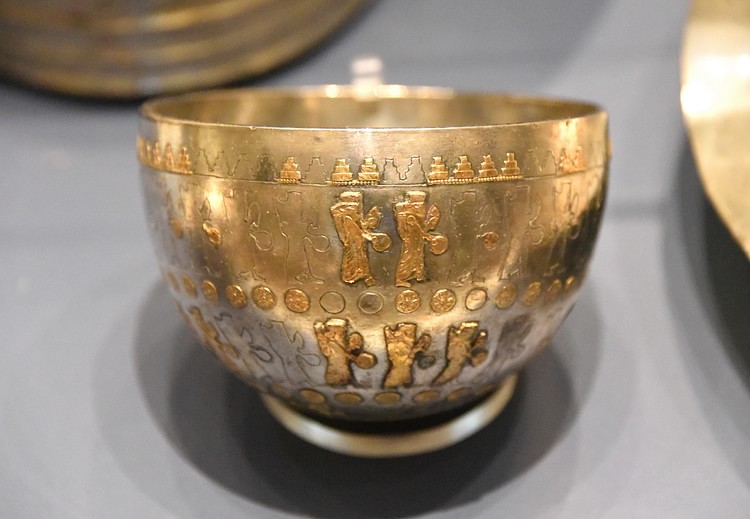 阿契美尼德银制酒碗 Osama Shukir Muhammed Amin (Copyright) ](https://www.worldhistory.org/image/4826/achaemenid-silver-drinking-bowl/ "Achaemenid Silver Drinking Bowl")这个居鲁士和大流士打造的帝国有足够资本承受着延续200年的逐渐衰落,但是更多的矛盾也渐渐显露。省督们划分出自己权力的堡垒,通货膨胀也随着赋税的加重愈加严重。甚至是帝国引以为豪的力量,多元文化,也显现出它的缺陷。帝国庞大的军队就是一群混乱的杂牌军,依照各自的传统有着不同的训练方式和武器装备,讲着不同的语言。
公元前401年,吕底亚、弗里吉亚(Phrygia)和卡帕多奇亚(Cappadocia)的省督小居鲁士(Cyrus the Younger)借助一万希腊雇佣兵反叛他的哥哥阿尔塔薛西斯二世(Artaxerxes II,公元前404-358年)。政变失败后,这一万希腊雇佣兵回到了家乡,而他们带回的信息为公元前334年亚历山大大帝的胜利铺平了道路
波斯帝国是第一个真正的帝国,它统治多元族群的现实理念成就了严谨的制度结构。它定义了帝王的意义,为后世从罗马人到英国人的帝国作出了表率。当亚历山大驾临,以他的愿景取代了垂死的波斯帝国时,他将居鲁士的表率铭记于心。
#### Editorial Review
This human-authored definition has been reviewed by our editorial team before publication to ensure accuracy, reliability and adherence to academic standards in accordance with our [editorial policy](https://www.worldhistory.org/static/editorial-policy/).
## 参考文献
- [Davidson, Peter. *Atlas of Empires.* CompanionHouse Books, 2018.](https://www.worldhistory.org/books/162008287X/)
## 关于作者
Jan是世界历史百科全书(本网站)的创始人和CEO,带领着这个非盈利公司去实现自己的激发人们对文化传统的兴趣和提升世界历史教育的使命。Jan拥有英国国王学院的战争研究的硕士学位。
- [Linkedin Profile](https://www.linkedin.com/in/janvdc)
## 时间轴
- **c. 7200 BCE**: [Elamite](https://www.worldhistory.org/elam/) community of Chogha Bonut established.
- **4395 BCE**: [City](https://www.worldhistory.org/city/) of [Susa](https://www.worldhistory.org/susa/) founded in region of ancient [Persia](https://www.worldhistory.org/Persia/).
- **c. 3000 BCE**: [Aryan](https://www.worldhistory.org/Aryan/) tribes of Indo-Iranians migrate to the region, among them are Persians.
- **c. 1500 BCE - c. 1000 BCE**: Development of the [religion](https://www.worldhistory.org/religion/) of [Zoroastrianism](https://www.worldhistory.org/zoroastrianism/) in region of ancient [Persia](https://www.worldhistory.org/Persia/).
- **c. 1000 BCE**: [Scythians](https://www.worldhistory.org/Scythians/) migrate from [Persia](https://www.worldhistory.org/Persia/) into the Asian steppes.
- **850 BCE**: [Medes](https://www.worldhistory.org/Medes/) migrate into Iran from Asia.
- **750 BCE**: Persians migrate into Iran from Asia.
- **727 BCE - 675 BCE**: [Medes](https://www.worldhistory.org/Medes/) unite during the reign of their king Dayukku (aka Deioces).
- **675 BCE - 640 BCE**: Persians settle in [Persis](https://www.worldhistory.org/Persis/) during the reign of their king Teispes.
- **628 BCE - 551 BCE**: Life of [Zoroaster](https://www.worldhistory.org/zoroaster/), according to Pahlavi sources.
- **553 BCE**: [Cyrus the Great](https://www.worldhistory.org/Cyrus_the_Great/) successfully rebels against the [Medes](https://www.worldhistory.org/Medes/) and establishes the [Achaemenid Empire](https://www.worldhistory.org/Achaemenid_Empire/) of [Persia](https://www.worldhistory.org/Persia/).
- **c. 550 BCE**: [Cyrus the Great](https://www.worldhistory.org/Cyrus_the_Great/) of [Persia](https://www.worldhistory.org/Persia/) founds the [Achaemenid Empire](https://www.worldhistory.org/Achaemenid_Empire/).
- **c. 550 BCE - 330 BCE**: The Persian [Achaemenid Empire](https://www.worldhistory.org/Achaemenid_Empire/) reigns over Central Asia, [Mesopotamia](https://www.worldhistory.org/Mesopotamia/), [Anatolia](https://www.worldhistory.org/Asia_Minor/), and [Egypt](https://www.worldhistory.org/egypt/).
- **547 BCE**: [Anatolia](https://www.worldhistory.org/Asia_Minor/) conquered by the Persians. [Ephesos](https://www.worldhistory.org/ephesos/) remains neutral.
- **547 BCE**: [Phrygia](https://www.worldhistory.org/phrygia/) becomes a Satrapy of the [Persian empire](https://www.worldhistory.org/disambiguation/Persian_Empire/).
- **546 BCE**: The Persians occupy [Cyprus](https://www.worldhistory.org/cyprus/), being invited by Cypriot leaders.
- **539 BCE**: Fall of [Babylon](https://www.worldhistory.org/babylon/), conquered by [Cyrus](https://www.worldhistory.org/disambiguation/Cyrus/) of [Persia](https://www.worldhistory.org/Persia/). Return of the Jews.
- **c. 539 BCE**: [Cyrus the Great](https://www.worldhistory.org/Cyrus_the_Great/) conquers [Babylon](https://www.worldhistory.org/babylon/); the [Fertile Crescent](https://www.worldhistory.org/Fertile_Crescent/) is controlled by the [Achaemenid Empire](https://www.worldhistory.org/Achaemenid_Empire/) (The First [Persian Empire](https://www.worldhistory.org/disambiguation/Persian_Empire/)).
- **530 BCE**: [Persia](https://www.worldhistory.org/Persia/) conquers the [Indus Valley](https://www.worldhistory.org/Indus_Valley_Civilization/).
- **530 BCE - 522 BCE**: Reign of [Cambyses II](https://www.worldhistory.org/Cambyses_II/) of [Persia](https://www.worldhistory.org/Persia/).
- **525 BCE - 404 BCE**: [Persia](https://www.worldhistory.org/Persia/) conquers [Egypt](https://www.worldhistory.org/egypt/).
- **522 BCE**: [Darius I](https://www.worldhistory.org/Darius_I/) ([Darius the Great](https://www.worldhistory.org/Darius_I/)) succeeds to the throne of [Persia](https://www.worldhistory.org/Persia/) after the [death](https://www.worldhistory.org/disambiguation/Death/) of [Cambyses II](https://www.worldhistory.org/Cambyses_II/).
- **522 BCE**: The Persian satrapy of [Armenia](https://www.worldhistory.org/armenia/) briefly cedes from the [Achaemenid Empire](https://www.worldhistory.org/Achaemenid_Empire/) but is brought under control by [Darius I](https://www.worldhistory.org/Darius_I/).
- **520 BCE**: [Darius I](https://www.worldhistory.org/Darius_I/) of [Persia](https://www.worldhistory.org/Persia/) fights the [Scythians](https://www.worldhistory.org/Scythians/) (not very successfully).
- **c. 520 BCE - c. 325 CE**: [Achaemenid](https://www.worldhistory.org/disambiguation/Achaemenid/) rule in the [Gandhara](https://www.worldhistory.org/Gandhara_Civilization/) region.
- **c. 515 BCE**: [Darius I](https://www.worldhistory.org/Darius_I/) moves the capital of [Persia](https://www.worldhistory.org/Persia/) from [Pasargadae](https://www.worldhistory.org/Pasargadae/) to [Persepolis](https://www.worldhistory.org/persepolis/).
- **c. 513 BCE - c. 512 BCE**: [Darius I](https://www.worldhistory.org/Darius_I/) of [Persia](https://www.worldhistory.org/Persia/) campaigns against [Scythians](https://www.worldhistory.org/Scythians/) into European [Scythia](https://www.worldhistory.org/Scythians/), past the Danube River, Scythians refuse to fight and [Darius](https://www.worldhistory.org/disambiguation/darius/) is forced to abandon the campaign due to lack of provisions.
- **c. 499 BCE**: [Naxos](https://www.worldhistory.org/Naxos/) is attacked by [Darius](https://www.worldhistory.org/disambiguation/darius/)' Persian forces.
- **499 BCE - 493 BCE**: Ionian [cities](https://www.worldhistory.org/city/) rebel against Persian rule.
- **c. 498 BCE**: Ionians and [Greek](https://www.worldhistory.org/disambiguation/greek/) allies invade and burn [Sardis](https://www.worldhistory.org/sardis/) (capital of [Lydia](https://www.worldhistory.org/lydia/)).
- **492 BCE**: [Darius I](https://www.worldhistory.org/Darius_I/) of [Persia](https://www.worldhistory.org/Persia/) invades [Greece](https://www.worldhistory.org/greece/).
- **490 BCE**: [Rhodes](https://www.worldhistory.org/Rhodes/) comes under Persian rule.
- **490 BCE**: [Naxos](https://www.worldhistory.org/Naxos/) is attacked for a second time by Persian forces.
- **11 Sep 490 BCE**: A combined force of [Greek](https://www.worldhistory.org/disambiguation/greek/) hoplites defeat the Persians at [Marathon](https://www.worldhistory.org/marathon/).
- **486 BCE**: [Xerxes](https://www.worldhistory.org/Xerxes_I/) succeeds to the throne of [Persia](https://www.worldhistory.org/Persia/) after the [death](https://www.worldhistory.org/disambiguation/Death/) of [Darius I](https://www.worldhistory.org/Darius_I/).
- **485 BCE**: [Babylon](https://www.worldhistory.org/babylon/) is destroyed by [Xerxes](https://www.worldhistory.org/Xerxes_I/), King of [Persia](https://www.worldhistory.org/Persia/).
- **485 BCE - 465 BCE**: Reign of [Xerxes I](https://www.worldhistory.org/Xerxes_I/) (the Great) of [Persia](https://www.worldhistory.org/Persia/).
- **480 BCE**: Persians destroy the sanctuary at [Sounion](https://www.worldhistory.org/sounion/).
- **480 BCE**: Sack of [Athens](https://www.worldhistory.org/Athens/) by the Persians under [Xerxes](https://www.worldhistory.org/Xerxes_I/). The [Agora](https://www.worldhistory.org/agora/) is destroyed.
- **480 BCE**: Persian forces attack the sanctuary of [Delphi](https://www.worldhistory.org/delphi/).
- **Jul 480 BCE**: [Xerxes I](https://www.worldhistory.org/Xerxes_I/) makes extensive preparations to invade mainland [Greece](https://www.worldhistory.org/greece/) by building depots, canals and a boat bridge across the Hellespont.
- **Aug 480 BCE**: The indecisive [battle](https://www.worldhistory.org/disambiguation/battle/) of Artemision between the [Greek](https://www.worldhistory.org/disambiguation/greek/) and Persian fleets of [Xerxes I](https://www.worldhistory.org/Xerxes_I/). The Greeks withdraw to [Salamis](https://www.worldhistory.org/disambiguation/Salamis/).
- **Aug 480 BCE**: [Battle of Thermopylae](https://www.worldhistory.org/thermopylae/). 300 Spartans under King [Leonidas](https://www.worldhistory.org/disambiguation/Leonidas/) and other [Greek](https://www.worldhistory.org/disambiguation/greek/) allies hold back the Persians led by [Xerxes I](https://www.worldhistory.org/Xerxes_I/) for three days but are defeated.
- **Sep 480 BCE**: [Battle of Salamis](https://www.worldhistory.org/Battle_of_Salamis/) where the [Greek](https://www.worldhistory.org/disambiguation/greek/) naval fleet led by [Themistocles](https://www.worldhistory.org/Themistocles/) defeats the invading armada of [Xerxes I](https://www.worldhistory.org/Xerxes_I/) of [Persia](https://www.worldhistory.org/Persia/).
- **479 BCE**: [Xerxes](https://www.worldhistory.org/Xerxes_I/)' Persian forces are defeated by [Greek](https://www.worldhistory.org/disambiguation/greek/) forces at [Plataea](https://www.worldhistory.org/Plataea/) effectively ending [Persia](https://www.worldhistory.org/Persia/)'s imperial ambitions in [Greece](https://www.worldhistory.org/greece/).
- **478 BCE**: [Sparta](https://www.worldhistory.org/sparta/) withdraws from alliance against [Persia](https://www.worldhistory.org/Persia/).
- **c. 478 BCE**: [Xerxes I](https://www.worldhistory.org/Xerxes_I/) builds the Gate of All Nations, the Hall of 100 Columns and the grand [Palace](https://www.worldhistory.org/disambiguation/palace/) of [Xerxes](https://www.worldhistory.org/Xerxes_I/).
- **c. 449 BCE**: Peace is agreed on by [Athens](https://www.worldhistory.org/Athens/) and [Persia](https://www.worldhistory.org/Persia/), sometimes referred to as the [Peace of Callias](https://www.worldhistory.org/Peace_of_Callias/).
- **c. 449 BCE**: Ionian [cities](https://www.worldhistory.org/city/) become independent from [Persia](https://www.worldhistory.org/Persia/) under the [Peace of Callias](https://www.worldhistory.org/Peace_of_Callias/).
- **412 BCE**: [Sparta](https://www.worldhistory.org/sparta/) allies with [Persia](https://www.worldhistory.org/Persia/).
- **401 BCE**: Retreat from [Persia](https://www.worldhistory.org/Persia/) of [Xenophon](https://www.worldhistory.org/xenophon/) and the ten thousand mercenaries.
- **c. 380 BCE - 330 BCE**: Life of [Darius](https://www.worldhistory.org/disambiguation/darius/) III of [Persia](https://www.worldhistory.org/Persia/).
- **341 BCE**: The Persians complete [conquest](https://www.worldhistory.org/warfare/) of [Egypt](https://www.worldhistory.org/egypt/).
- **c. 336 BCE**: Artaxerxes III builds the Hall of 32 Columns, the [Palace](https://www.worldhistory.org/disambiguation/palace/) of Artaxerxes and the Unfinished Gate.
- **May 334 BCE**: [Alexander the Great](https://www.worldhistory.org/Alexander_the_Great/) invades the Persian [Achaemenid Empire](https://www.worldhistory.org/Achaemenid_Empire/).
- **5 Nov 333 BCE**: [Battle of Issus](https://www.worldhistory.org/Battle_of_Issus/). [Alexander the Great](https://www.worldhistory.org/Alexander_the_Great/) is victorious against [Darius](https://www.worldhistory.org/disambiguation/darius/) III of [Persia](https://www.worldhistory.org/Persia/).
- **331 BCE**: [Egypt](https://www.worldhistory.org/egypt/) is conquered by [Alexander the Great](https://www.worldhistory.org/Alexander_the_Great/) without resistance.
- **1 Oct 331 BCE**: [Battle of Gaugamela](https://www.worldhistory.org/Battle_of_Gaugamela/). [Alexander the Great](https://www.worldhistory.org/Alexander_the_Great/) calls himself "King of Asia."
- **330 BCE**: Persian [Achaemenid Empire](https://www.worldhistory.org/Achaemenid_Empire/) falls to [Alexander the Great](https://www.worldhistory.org/Alexander_the_Great/).
- **330 BCE**: [Death](https://www.worldhistory.org/disambiguation/Death/) of [Darius](https://www.worldhistory.org/disambiguation/darius/) III and end of the [Achaemenid Empire](https://www.worldhistory.org/Achaemenid_Empire/) of [Persia](https://www.worldhistory.org/Persia/).
- **May 330 BCE**: [Persepolis](https://www.worldhistory.org/persepolis/) is burned and looted by [Alexander the Great](https://www.worldhistory.org/Alexander_the_Great/).
- **Jan 329 BCE - May 327 BCE**: [Alexander](https://www.worldhistory.org/disambiguation/Alexander/) conquers [Bactria](https://www.worldhistory.org/Bactria/) and [Sogdiana](https://www.worldhistory.org/sogdiana/).
- **312 BCE - 63 BCE**: The [Seleucid Empire](https://www.worldhistory.org/Seleucid_Empire/) replaces the [Achaemenid Empire](https://www.worldhistory.org/Achaemenid_Empire/).
- **247 BCE - 224 BCE**: [Parthia](https://www.worldhistory.org/disambiguation/Parthia/) replaces the [Seleucid Empire](https://www.worldhistory.org/Seleucid_Empire/).
- **247 BCE - 224 CE**: [Empire](https://www.worldhistory.org/empire/) of the Parthians.
- **63 BCE**: The [Roman](https://www.worldhistory.org/disambiguation/Roman/) general [Pompey](https://www.worldhistory.org/pompey/) defeats the [Seleucid](https://www.worldhistory.org/Seleucid_Empire/) Antiochus XIII and incorporates [Syria](https://www.worldhistory.org/syria/) as a province of the [Roman empire](https://www.worldhistory.org/Roman_Empire/).
- **224 CE**: [Zoroastrianism](https://www.worldhistory.org/zoroastrianism/) becomes Persian state [religion](https://www.worldhistory.org/religion/) under the [Sassanian Empire](https://www.worldhistory.org/Sasanian_Empire/).
- **224 CE**: Sasanians overthrow the Parthians.
- **224 CE - 651 CE**: The [Sassanian Empire](https://www.worldhistory.org/Sasanian_Empire/) replaces the [Parthian Empire](https://www.worldhistory.org/Parthia_(Empire)/).
- **240 CE - 270 CE**: Reign of [Shapur I](https://www.worldhistory.org/Shapur_I/), who first brought the [Sassanian empire](https://www.worldhistory.org/Sasanian_Empire/) to its peak.
- **260 CE**: [Shapur I](https://www.worldhistory.org/Shapur_I/) captures the [Roman emperor](https://www.worldhistory.org/Roman_Emperor/) [Valerian](https://www.worldhistory.org/valerian/) at [Edessa](https://www.worldhistory.org/edessa/).
- **607 CE - 627 CE**: East [Rome](https://www.worldhistory.org/Rome/) defeats [Sasanian](https://www.worldhistory.org/Sasanian_Empire/) [Persia](https://www.worldhistory.org/Persia/).
- **651 CE**: [Sassanian Empire](https://www.worldhistory.org/Sasanian_Empire/) conquered during the Muslim Arab invasion of the 7th century CE.
## 问答
### 阿契美尼德以什么而闻名?
阿契美尼德波斯帝国包容万象,以半自治行省(Satrapies)的形式给予了每个臣服的文化与民族一定的自由与自治权,以此而闻名。阿契美尼德帝国也以在希腊波斯战争中与希腊城邦交战,最终被亚历山大大帝征服而为人所知。
### 谁击败了阿契美尼德帝国?
在伊苏斯之战(公元前333年)和高加米拉之战(公元前331年)以及一系列马其顿人的胜利后,亚历山大大帝在公元前330年击败了阿契美尼德帝国。亚历山大曾短暂成为万王之王,直至公元前323年驾崩。然后塞琉古一世(胜利者)继任,并创建了塞琉古波斯帝国。
## 外部链接
- [The Achaemenid Persian Empire (550–330 B.C.) | Essay | The Metropolitan Museum of Art | Heilbrunn Timeline of Art History](https://www.metmuseum.org/toah/hd/acha/hd_acha.htm)
- [Long live the King… of Kings! Accession ritual in ancient Persia | British Museum](https://www.britishmuseum.org/blog/long-live-king-kings-accession-ritual-ancient-persia)
## 引用本文
### APA
Davidson, P. (2025, August 12). 阿契美尼德帝国. (S. Wang, 翻译). *World History Encyclopedia*.
### Chicago
Davidson, Peter. "阿契美尼德帝国." 翻译: Shanxu Wang. *World History Encyclopedia*, August 12, 2025. .
### MLA
Davidson, Peter. "阿契美尼德帝国." 翻译: Shanxu Wang. *World History Encyclopedia*, 12 Aug 2025, .
## 许可与版权
提交人: [Shanxu Wang](https://www.worldhistory.org/user/shanxuwang/ "User Page: Shanxu Wang"), 发表于 12 August 2025. 请查阅原始来源以获取版权信息。 请注意,从本页面链接的内容可能具有不同的许可条款。