---
title: 法老
author: Joshua J. Mark
translator: Yangwei Li
source: https://www.worldhistory.org/trans/zh/1-288/
format: machine-readable-alternate
license: Creative Commons Attribution-NonCommercial-ShareAlike (https://creativecommons.org/licenses/by-nc-sa/4.0/)
updated: 2025-05-21
---
# 法老
_作者: [Joshua J. Mark](https://www.worldhistory.org/user/JPryst/)_
_译者: [Yangwei Li](https://www.worldhistory.org/user/yangweili)_
[](https://www.worldhistory.org/trans/zh/1-22386/)[](https://www.worldhistory.org/trans/zh/2-2409/)在古埃及,法老是民众的政治和宗教领袖,拥有“两域之主”和“所有神庙的高级祭司”这样的称号。而“法老”这个词则是源自埃及语的“pero”或“per-a-a”,这个词原本指的是王宫的名称,意思是“大房子”。
这座宫殿的名称与统治者紧密相连,随着时间的推移,该名称仅用于指代人民的领袖。埃及早期的君主并不被称为“法老”,而是被称为“国王”。直到新王国时期(约公元前1570年至公元前1069年),统治者才有了“法老”这一尊称。在新王国时期之前的各个王朝,外国的高级官员和宫廷成员会称呼他们为“陛下”,而外国的统治者则会称他们为“兄弟”。这些称呼方式在埃及国王被称为“法老”之后仍在继续使用。
### 王权的确立
公元前 3150 年,埃及迎来了第一王朝,国王门尼斯(Menes ,约公元前 3150 年,现认为是纳默尔, Narmer)统一了上埃及和下埃及。纳默尔在铭文中身着埃及的双冠标志,象征着统一,而且人们认为他的统治符合神的旨意;但国王的职位本身直到后来才与神权联系在一起。
在埃及第二王朝时期(公元前 2890 年至公元前 2670 年),国王拉内布(也被称为内贝拉, Nebra)将自己的名字与神灵联系在一起,将自己的统治与神灵的旨意联系在一起。继拉内布之后,后来各王朝的统治者都被视为神灵,并与对这些神灵应尽的职责和义务相等同。其中最为重要的是维持“玛阿特”(ma'at)——和谐与平衡——这是神灵所规定的,人们需要遵守这一原则以过上最美好的生活。
奥西里斯(Osiris)被视为埃及的首位“国王”,因此世俗的统治者们会向他致敬,而奥西里斯(Osiris)是通过手持权杖和连枷的方式来确立自己的权威。权杖象征着王权(对民众的引导),而连枷则与土地的肥力(小麦的脱粒)相关联。权杖和连枷与一位早期强大的神祇安杰蒂(Andjety)有关联,而安杰蒂后来被奥西里斯所吸收。一旦奥西里斯在传统中被确立为首位国王,他的儿子荷鲁斯( Horus )也与法老的统治联系在了一起。
在埃及国王雕像的手上所见到的那些圆柱形物体,被称为“法老圆柱”和“荷鲁斯权杖”,人们认为它们曾被用于集中人的精神和智力能量——这与如今人们使用念珠或“忧思珠”(一种用于缓解忧虑的计数工具)的方式颇为相似。
作为人民的最高统治者,法老被视为人间的神明,是神灵与民众之间的桥梁。当法老登上王位时,他立刻就被与荷鲁斯(Horus)联系在一起——这位战胜了混沌力量并恢复秩序的神明;而当他去世后,他又与奥西里斯(Osiris)联系在一起——这位掌管冥界的神明。
因此,在“每个神庙的首席祭司”这一角色中,法老的职责就是建造宏伟的神庙和纪念碑,以彰显自己的功绩,并向这片土地上的诸神致敬。这些神明赋予了法老今生的统治权,并将在来世指引他前行。
此外,法老还会主持宗教仪式,选定神庙的地点,并下令开展各项工程(尽管他无法挑选祭司,而且也很少参与神庙的设计工作)。作为“两片土地的主宰”,法老制定法律,拥有埃及所有的土地,征收赋税,并发动战争或保护国家免受侵略。
[ 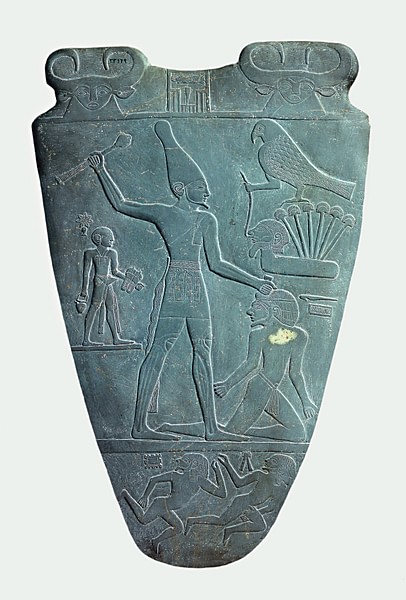 纳尔默征服敌军 Unknown (Public Domain) ](https://www.worldhistory.org/image/4526/narmer-conquering-his-enemies/ "Narmer Conquering His Enemies")埃及的统治者通常是前任法老的子女或正式继承人,他们或是出身于“王后”(即法老的正室),有时则是法老所宠爱的较低等级的妃子所生。早期,这些统治者会与贵族女性联姻,旨在通过将王朝与孟菲斯(当时埃及的首都)的上层阶级相联系,来确立其王朝的合法性。
这种做法可能始于纳默尔(Narmer)。他将孟菲斯(Memphis )定为自己的首都,并迎娶了来自更古老城市纳卡达( Naqada)的公主尼索特佩(Neithhotep),以巩固自己的统治,并将他的新城市与纳卡达( Naqada)以及他的家乡蒂尼斯(Thinis)连接起来。为了保持血统的纯正,许多法老会与自己的姐妹或同父异母的姐妹结婚,而法老阿肯那顿(Akhenaten)则与自己的女儿们结婚。
### 法老与玛特
法老的主要职责是确保整个国家都遵循“玛特”(ma'at)原则。女神“玛特”(发音为“梅-埃特”或“米-赫特”)被认为能通过法老来实现和谐,但具体的解释和执行则由每位统治者负责。
因此,战争是法老统治的重要组成部分,尤其是在人们认为战争对于恢复土地的平衡与社会的和谐是必要的时候。这种战争观念在《彭塔尔之歌》中有所体现,该诗由拉美西斯二世(公元前1279 - 公元前1213 年在位)的臣子所作,讲述了他在公元前1274 年的卡迭什(Kadesh )战役中战胜赫梯人(Hittites)的事迹。
据拉美西斯二世所述,赫梯人破坏了埃及的平衡,因此必须予以严厉处置。这位法老肩负着捍卫国家边境的神圣职责,但若认为此举符合和谐大局,则也有权对邻国进行攻击,以获取自然资源。
### 法老与金字塔
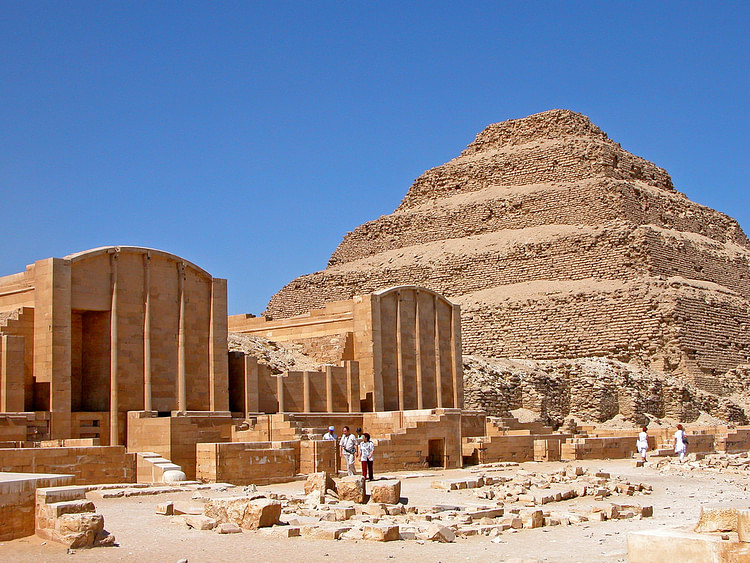
在第三王朝时期,国王乔塞尔(Djoser,约生活在公元前 2670 年)积累了足够的财富、声望和资源,从而能够建造阶梯金字塔(Step Pyramid )作为他的永恒居所。这座金字塔由大臣伊莫特普设计(Imhotep,约生活在公元前 2667 - 2600 年),它是当时最高的建筑,当时也是非常受欢迎的旅游景点,如今依然如此。这座金字塔主要是作为乔塞尔(Djoser)的最终安息之所而设计的,但其周围的建筑群的宏伟气势以及金字塔的高度,旨在不仅向乔塞尔致敬,也向整个埃及、以及他在统治期间这片土地的繁荣表示敬意。
其他第三王朝的国王,如塞克赫赫特(Sekhemkhet )和哈巴(Khaba),依照伊莫赫普的设计(埋葬式金字塔和层状金字塔)建造了金字塔,并创造了一种后来成为埃及标志性建筑的纪念碑形式,尽管这种金字塔结构被许多其他文化所采用(尤其是玛雅人,他们与古埃及毫无联系),但这种形式在埃及却独树一帜。古王国时期的君主(约公元前2613年至公元前2181年)随后也效仿这一做法,最终在吉萨建造了大金字塔,使胡夫(Khufu,公元前2589年至公元前2566年在位)永载史册,并彰显了埃及法老的权力和神权统治。
[  萨卡拉阶梯金字塔群 Dennis Jarvis (CC BY-SA) ](https://www.worldhistory.org/image/4548/step-pyramid-complex-at-saqqara/ "Step Pyramid Complex at Saqqara")### 第十八王朝与埃及帝国
公元前 1782 年,中王国覆灭,埃及被神秘的闪米特人( Semitic )——赫克索斯人(Hyksos)所统治。然而,赫克索斯人却模仿了埃及法老的一切仪态,并将这些习俗延续了下来,直到他们的王国被埃及第十八王朝的王室所推翻,随后便诞生了一些最为著名的法老,如拉美西斯大帝和阿蒙霍特普三世(公元前 1386 年至 1353 年在位)。
这是埃及帝国的鼎盛时期,法老的威望达到了前所未有的高度。埃及掌控着从美索不达米亚一直到黎凡特、跨越利比亚,直至更南端的库什努比亚王国的各个地区的资源。阿赫摩斯一世(约公元前1570年至公元前1544年在位)将赫克索斯人赶出埃及后,在边境周围建立了缓冲区,以防止其他入侵势力在埃及境内立足。这些区域最终得到了加固,并由埃及的行政人员管理,他们要向法老汇报工作。
这些法老大多为男性,但第十八王朝的哈特谢普苏特(Hatshepsut)女王在位时期为公元前1479年至公元前1458年)作为女性君主成功执政了超过二十年,并且在她的统治期间,埃及繁荣昌盛。她重新建立了与蓬特(Punt)之地的贸易往来,并鼓励前往其他地方的贸易探险活动,这使得国家经济蓬勃发展。哈特谢普苏特负责的公共工程项目比除拉美西斯二世之外的任何法老都要多,她的统治时期整个国家都处于和平与富裕的状态。
在图特摩斯三世(Tuthmose III ,公元前1458年至1425年在位)继位后,他将她所有神庙和纪念碑上的画像都移除掉了,此举被认为是为了恢复国家的秩序。据传统说法,女性绝不能拥有法老的称号——这一荣誉专属于男性,符合奥西里斯(Osiris)作为埃及首位国王以及他的姐妹伊西斯( Isis)作为其配偶而非执政君主的地位。因此,人们认为图特摩斯三世担心哈特谢普苏特( Hatshepsut)的榜样可能会激励其他女性“忘却自己的位置”,违背神圣秩序中神赋予男性的权力归属。
### 法老的衰落
新王国时期是埃及在多个方面取得最大成就的时期,但这一时期无法持续下去。在拉美西斯三世(公元前 1186 - 公元前 1155 年在位)统治期间(当时海上民族入侵),法老的权力开始衰落。埃及战胜海上民族的代价,包括财政方面的损失和人员伤亡,是相当巨大的,埃及的经济也开始衰退。
历史上首次工人罢工也发生在拉美西斯三世(Ramesses III)统治时期,这一事件引发了人们对这位法老维护“玛阿特”秩序能力的质疑,同时也让人思考当时上层阶级对民众的真正关怀程度。此外,还有其他一些因素促成了新王国的终结,从而开启了第三中间时期(约公元前1069年至公元前525年),该时期以波斯人(Persian)的入侵而告终。
公元前 525 年,在埃及人于佩鲁西乌姆(Pelusium)战役中被波斯人击败之后,法老的威望大幅下降。此后,随着亚历山大大帝(lexander the Great)的征服行动,法老的威望进一步降低。到了最后一个法老时期,即托勒密(Ptolemaic)王朝著名的克利奥帕特拉七世(Cleopatra VII ,约生于公元前 69 年,卒于公元 30 年)统治时期,这个称号已不再拥有昔日的影响力,所建造的纪念碑也减少了,而且在她于公元前 30 年去世后,埃及成为了罗马的一个行省,昔日法老们的荣耀和权势也逐渐被遗忘。
#### Editorial Review
This human-authored definition has been reviewed by our editorial team before publication to ensure accuracy, reliability and adherence to academic standards in accordance with our [editorial policy](https://www.worldhistory.org/static/editorial-policy/).
## 参考文献
- [Ashton, S. *The Last Queens of Egypt.* Longman, 2003.](https://www.worldhistory.org/books/0582772109/)
- [Bunson, M. *Encyclopedia of Ancient Egypt.* Gramercy, 1999.](https://www.worldhistory.org/books/0517203804/)
- [David, R. *Handbook to Life in Ancient Egypt Revised.* Oxford University Press, 2007.](https://www.worldhistory.org/books/0195366719/)
- [Durant,W. *Our Oriental Heritage.* Simon & Schuster, 1954.](https://www.worldhistory.org/books/B00005WJGO/)
- [Shaw, I. *The Oxford History of Ancient Egypt.* Oxford University Press, 2004.](https://www.worldhistory.org/books/0192804588/)
- [Silverman, D. P. *Ancient Egypt.* Oxford University Press, 1997.](https://www.worldhistory.org/books/B01NGZXOC2/)
- [Van De Mieroop, M. *A History of Ancient Egypt.* Wiley-Blackwell, 2010.](https://www.worldhistory.org/books/1405160713/)
- [Wilkinson,R. H. *Symbol & Magic in Egyptian Art.* Thames & Hudson, 1999.](https://www.worldhistory.org/books/0500280703/)
## 关于作者
约书亚·J·马克(Joshua J. Mark)是世界历史百科全书的联合创始人兼内容总监。他曾在纽约马里斯特学院(Marist College)担任教授,教授历史、哲学、文学和写作课程。他游历广泛,曾在希腊和德国生活。
- [Linkedin Profile](https://www.linkedin.com/pub/joshua-j-mark/38/614/339)
## 时间轴
- **c. 3150 BCE**: King [Menes](https://www.worldhistory.org/Menes/) unifies [Egypt](https://www.worldhistory.org/egypt/) through [conquest](https://www.worldhistory.org/warfare/).
- **c. 3150 BCE - c. 3100 BCE**: Reign of [Menes](https://www.worldhistory.org/Menes/), a.k.a. [Narmer](https://www.worldhistory.org/Narmer/), first king who is thought to have unified Upper and Lower [Egypt](https://www.worldhistory.org/egypt/).
- **3150 BCE - 2613 BCE**: [Early Dynastic Period in Egypt](https://www.worldhistory.org/Early_Dynastic_Period_In_Egypt/). First Kings.
- **2613 BCE - 2589 BCE**: Reign of Sneferu, first king of 4th Dynasty of [Egypt](https://www.worldhistory.org/egypt/).
- **c. 2613 BCE - c. 2181 BCE**: The Period of the [Old Kingdom of Egypt](https://www.worldhistory.org/Old_Kingdom_of_Egypt/).
- **2589 BCE - 2566 BCE**: Reign of King Khufu (Cheops), builder of the [Great Pyramid of Giza](https://www.worldhistory.org/Great_Pyramid_of_Giza/), in [Egypt](https://www.worldhistory.org/egypt/).
- **2566 BCE - 2558 BCE**: Reign of King Djedefre in [Egypt](https://www.worldhistory.org/egypt/).
- **2558 BCE - 2532 BCE**: Reign of King Khafre, builder of the second [pyramid](https://www.worldhistory.org/pyramid/) at [Giza](https://www.worldhistory.org/giza/), in [Egypt](https://www.worldhistory.org/egypt/).
- **2532 BCE - 2503 BCE**: Reign of King Menkaure, builder of the third [pyramid](https://www.worldhistory.org/pyramid/) at [Giza](https://www.worldhistory.org/giza/), in [Egypt](https://www.worldhistory.org/egypt/).
- **2503 BCE - 2498 BCE**: Reign of the King Shepsekaf in [Egypt](https://www.worldhistory.org/egypt/).
- **2498 BCE - 2491 BCE**: Reign of the King Userkaf in [Egypt](https://www.worldhistory.org/egypt/).
- **2490 BCE - 2477 BCE**: Reign of King Sahure in [Egypt](https://www.worldhistory.org/egypt/).
- **2477 BCE - 2467 BCE**: Reign of the King Neferiskare Kakai in [Egypt](https://www.worldhistory.org/egypt/).
- **2460 BCE - 2458 BCE**: Reign of the King Neferefre in [Egypt](https://www.worldhistory.org/egypt/).
- **c. 2458 BCE - c. 2457 BCE**: Reign of King Shepseskare in [Egypt](https://www.worldhistory.org/egypt/).
- **c. 2445 BCE - 2422 BCE**: Reign of the King Nyussere Ini of [Egypt](https://www.worldhistory.org/egypt/).
- **2422 BCE - 2414 BCE**: Reign of King Menkauhor in [Egypt](https://www.worldhistory.org/egypt/).
- **2414 BCE - 2375 BCE**: Reign of King Djedkare Isesi in [Egypt](https://www.worldhistory.org/egypt/).
- **2375 BCE - 2345 BCE**: Reign of King Unas in [Egypt](https://www.worldhistory.org/egypt/).
- **2345 BCE - 2333 BCE**: Reign of King Teti in [Egypt](https://www.worldhistory.org/egypt/).
- **2333 BCE - 2332 BCE**: Reign of King Userkare in [Egypt](https://www.worldhistory.org/egypt/).
- **2332 BCE - 2283 BCE**: Reign of King Pepi I in [Egypt](https://www.worldhistory.org/egypt/).
- **2283 BCE - 2278 BCE**: Reign of King Merenre Nemtyensaf I in [Egypt](https://www.worldhistory.org/egypt/).
- **2278 BCE - 2184 BCE**: Reign of King Pepi II in [Egypt](https://www.worldhistory.org/egypt/).
- **c. 2184 BCE**: Reign of King Merenre Nemtyemsaf II in [Egypt](https://www.worldhistory.org/egypt/).
- **2184 BCE - 2181 BCE**: Reign of King Netjerkare, last ruler of the [Old Kingdom of Egypt](https://www.worldhistory.org/Old_Kingdom_of_Egypt/).
- **2040 BCE - 1782 BCE**: The [Middle Kingdom of Egypt](https://www.worldhistory.org/Middle_Kingdom_of_Egypt/).
- **c. 1550 BCE - 1525 BCE**: Reign of Ahmose I, [Pharaoh of Egypt](https://www.worldhistory.org/collection/25/pharaoh-of-egypt/).
- **1525 BCE - 1504 BCE**: Reign of Amenhotep I, [pharaoh of Egypt](https://www.worldhistory.org/collection/25/pharaoh-of-egypt/).
- **1504 BCE - 1492 BCE**: Reign of Thutmose I, [Pharaoh of Egypt](https://www.worldhistory.org/collection/25/pharaoh-of-egypt/).
- **1492 BCE - 1479 BCE**: Reign of Thutmose II, [pharaoh of Egypt](https://www.worldhistory.org/collection/25/pharaoh-of-egypt/).
- **1479 BCE - 1458 BCE**: Queen [Hatshepsut](https://www.worldhistory.org/hatshepsut/) rules [Egypt](https://www.worldhistory.org/egypt/).
- **1473 BCE**: [Hatshepsut](https://www.worldhistory.org/hatshepsut/) has herself crowned [pharaoh of Egypt](https://www.worldhistory.org/collection/25/pharaoh-of-egypt/) and begins to be depicted as a male [pharaoh](https://www.worldhistory.org/pharaoh/).
- **1458 BCE - 1425 BCE**: Reign of [Thutmose III](https://www.worldhistory.org/Thutmose_III/) in [Egypt](https://www.worldhistory.org/egypt/).
- **1427 BCE - 1400 BCE**: Reign of Amenhotep II, [pharaoh of Egypt](https://www.worldhistory.org/collection/25/pharaoh-of-egypt/).
- **1400 BCE - 1390 BCE**: Reign of Thutmose IV, [pharaoh of Egypt](https://www.worldhistory.org/collection/25/pharaoh-of-egypt/).
- **1353 BCE - c. 1336 BCE**: Reign of [Akhenaten](https://www.worldhistory.org/Akhenaten/), [Tutankhamun](https://www.worldhistory.org/Tutankhamun/)'s father, 'Heretic King' of [Egypt](https://www.worldhistory.org/egypt/).
- **1327 BCE - 1323 BCE**: Reign of Ay, [pharaoh of Egypt](https://www.worldhistory.org/collection/25/pharaoh-of-egypt/).
- **c. 1303 BCE**: Birth of [Ramesses II](https://www.worldhistory.org/Ramesses_II/) of [Egypt](https://www.worldhistory.org/egypt/).
- **1295 BCE - 1294 BCE**: The reign of [Ramesses](https://www.worldhistory.org/disambiguation/ramesses/) I in [Egypt](https://www.worldhistory.org/egypt/).
- **1294 BCE - 1279 BCE**: The reign of Seti I in [Egypt](https://www.worldhistory.org/egypt/).
- **1279 BCE - 1212 BCE**: Reign of [Ramesses II](https://www.worldhistory.org/Ramesses_II/) (The Great) in [Egypt](https://www.worldhistory.org/egypt/).
- **1212 BCE - 1202 BCE**: Reign of Merneptah in [Egypt](https://www.worldhistory.org/egypt/).
- **1202 BCE - c. 1200 BCE**: Reign of Amenmesse in [Egypt](https://www.worldhistory.org/egypt/).
- **1200 BCE - 1194 BCE**: Reign of Seti II.
- **1194 BCE - 1188 BCE**: Reign of Siptah in [Egypt](https://www.worldhistory.org/egypt/).
- **1188 BCE - 1186 BCE**: Reign of Queen Twosret in [Egypt](https://www.worldhistory.org/egypt/).
- **1186 BCE - 1184 BCE**: Reign of Sethnakht, [pharaoh of Egypt](https://www.worldhistory.org/collection/25/pharaoh-of-egypt/).
- **1184 BCE - 1153 BCE**: Reign of [Ramesses](https://www.worldhistory.org/disambiguation/ramesses/) III, [Pharaoh of Egypt](https://www.worldhistory.org/collection/25/pharaoh-of-egypt/).
- **1153 BCE - 1147 BCE**: Reign of [Ramesses](https://www.worldhistory.org/disambiguation/ramesses/) IV, [pharaoh of Egypt](https://www.worldhistory.org/collection/25/pharaoh-of-egypt/).
- **1147 BCE - 1143 BCE**: Reign of [Ramesses](https://www.worldhistory.org/disambiguation/ramesses/) V, [pharaoh of Egypt](https://www.worldhistory.org/collection/25/pharaoh-of-egypt/).
- **1143 BCE - 1136 BCE**: Reign of [Ramesses](https://www.worldhistory.org/disambiguation/ramesses/) VI, [pharaoh of Egypt](https://www.worldhistory.org/collection/25/pharaoh-of-egypt/).
- **1136 BCE - 1129 BCE**: Reign of [Ramesses](https://www.worldhistory.org/disambiguation/ramesses/) VII, [pharaoh of Egypt](https://www.worldhistory.org/collection/25/pharaoh-of-egypt/).
- **1129 BCE - 1126 BCE**: Reign of [Ramesses](https://www.worldhistory.org/disambiguation/ramesses/) VIII, [pharaoh of Egypt](https://www.worldhistory.org/collection/25/pharaoh-of-egypt/).
- **1126 BCE - 1108 BCE**: Reign of [Ramesses](https://www.worldhistory.org/disambiguation/ramesses/) IX, [pharaoh of Egypt](https://www.worldhistory.org/collection/25/pharaoh-of-egypt/).
- **1108 BCE - 1099 BCE**: Reign of [Ramesses](https://www.worldhistory.org/disambiguation/ramesses/) X, [pharaoh of Egypt](https://www.worldhistory.org/collection/25/pharaoh-of-egypt/).
- **1099 BCE - 1069 BCE**: Reign of [Ramesses](https://www.worldhistory.org/disambiguation/ramesses/) XI, [pharaoh of Egypt](https://www.worldhistory.org/collection/25/pharaoh-of-egypt/).
- **664 BCE**: Psamtik I becomes Pharoah in [Egypt](https://www.worldhistory.org/egypt/).
- **664 BCE - 610 BCE**: Reign of Psamtik I, [pharaoh of Egypt](https://www.worldhistory.org/collection/25/pharaoh-of-egypt/).
- **610 BCE - 595 BCE**: Reign of Necho II, [pharaoh of Egypt](https://www.worldhistory.org/collection/25/pharaoh-of-egypt/).
- **595 BCE - 589 BCE**: Reign of Psamtik II, [pharaoh of Egypt](https://www.worldhistory.org/collection/25/pharaoh-of-egypt/).
- **589 BCE - 570 BCE**: Reign of Apries, [pharaoh of Egypt](https://www.worldhistory.org/collection/25/pharaoh-of-egypt/).
- **570 BCE - 526 BCE**: Rule of [Pharaoh](https://www.worldhistory.org/pharaoh/) Amasis of [Egypt](https://www.worldhistory.org/egypt/), who built a shrine to [Ammon](https://www.worldhistory.org/disambiguation/Ammon/) at Siwa.
- **526 BCE - 525 BCE**: Reign of Psamtik III, [pharaoh of Egypt](https://www.worldhistory.org/collection/25/pharaoh-of-egypt/).
## 外部链接
- [Who was King Tut... really?](https://www.missedinhistory.com/podcasts/who-was-king-tut-really.htm)
## 引用本文
### APA
Mark, J. J. (2025, May 21). 法老. (Y. Li, 翻译). *World History Encyclopedia*.
### Chicago
Mark, Joshua J.. "法老." 翻译: Yangwei Li. *World History Encyclopedia*, May 21, 2025. .
### MLA
Mark, Joshua J.. "法老." 翻译: Yangwei Li. *World History Encyclopedia*, 21 May 2025, .
## 许可与版权
提交人: [Yangwei Li](https://www.worldhistory.org/user/yangweili/ "User Page: Yangwei Li"), 发表于 21 May 2025. 请查阅原始来源以获取版权信息。 请注意,从本页面链接的内容可能具有不同的许可条款。