---
title: 美国革命
author: Harrison W. Mark
translator: Jinfeng Zhang
source: https://www.worldhistory.org/trans/zh/1-19591/
format: machine-readable-alternate
license: Creative Commons Attribution-NonCommercial-ShareAlike (https://creativecommons.org/licenses/by-nc-sa/4.0/)
updated: 2024-11-26
---
# 美国革命
_作者: [Harrison W. Mark](https://www.worldhistory.org/user/harrisonwmark/)_
_译者: [Jinfeng Zhang](https://www.worldhistory.org/user/jinfengzhang)_
[](https://www.worldhistory.org/trans/zh/1-22386/)[](https://www.worldhistory.org/trans/zh/2-2409/)美国革命(1765-1789 年)是英属北美十三殖民地的一段政治动荡时期。它最初是对议会税收的抗议,后来演变成一场革命,并最终导致了美国的诞生。美国革命植根于启蒙思想,在现代西方民主国家的兴起过程中发挥了重要作用。
### 起源: 议会与美国身份认同
1763 年 2 月,七年战争北美战场上的英法战争结束。作为和平协议的一部分,战败的法兰西王国将其殖民地新法兰西(加拿大)以及密西西比河以东的所有殖民地领土割让给了战胜国英国。虽然英国因此成为北美殖民地的霸主,但这一新得到的霸主地位是有代价的,那就是巨额战争债务。为了抵消债务,英国议会决定向北美东部沿海的十三个殖民地征收新税。毕竟,战争主要是为了保卫这些殖民地,议会因此决定殖民者应该帮助承担大英帝国的财政负担。
在做出这一决定之前,议会在处理美洲殖民地事务时一直奉行非官方的 “有益的忽视 ”政策。这意味着,尽管有皇家总督,殖民地在很大程度上还是由殖民地立法机构来管理自己的事务,监督治理和税收。这些立法机构的影响力往往等同于甚至超过殖民地皇家任命的总督的权力。由于基础和发展环境的不同,每个殖民地都保持着自己的特点。例如,新英格兰的清教徒社会、纽约的荷兰血统以及弗吉尼亚的烟草经济,都对殖民地身份认同的形成产生了影响。尽管各殖民地视自己为彼此独立的个体,但它们因与英国的共同纽带而松散地联系在一起,并在上个世纪的殖民战争中多次联合起来共同防御。
与此同时,美国殖民者认为自己是英国人,并引以为豪。1689 年光荣革命以及随之而来的宪法改革之后,英国人被视为世界上最自由的民族。他们被保证拥有代议制政府(议会)以及自我征税的权利。殖民者认为,这些 “英国人的权利 ”也适用于他们,因为他们拥有英国血统,并效忠英国国王。事实上,这些权利中有许多在殖民地自己的宪章都有体现。因此,议会可以直接向殖民地征税的观点与这一理念背道而驰。由于美国人在议会中没有代表,议会没有向他们征税的宪法权力(即无代表,不纳税)。议会当然不同意,认为美国人实际上是有代表的,就像成千上万没有财产、不能投票的英国人一样。正是这种对美国人权利和自由的根本分歧,成为美国革命和美国诞生的核心,并以税收的形式表现出来。
### 风雨欲来:1763-1770 年
1763 年 10 月,英国国王乔治三世(1760-1820 年在位)颁布了 1763 年皇家公告,这是有益忽视政策可能要结束的第一个迹象。公告禁止殖民者在阿巴拉契亚山脉以西新获得的土地上定居,以限制殖民者与北美原住民之间不必要的冲突(此外,英国政府担心向西扩张会给殖民地带来更多经济独立的机会,从而破坏商业体系)。这激怒了许多殖民者,尤其是法国和印第安人战争的老兵,他们曾被许诺在俄亥俄地区获得土地,还有希望扩张到该地区的富有的弗吉尼亚土地投机者。皇家公告引起了一些抱怨,而第二年议会通过《糖蜜法案》(Sugar Act)后,这些抱怨更加严重。该法案强制执行对糖蜜贸易征收的现行税款,殖民地商人经常通过走私来规避税收。由于糖蜜对新英格兰殖民地的经济非常重要,美国人认为糖蜜走私是一种无被害人的犯罪,因此对议会的干预感到不满。
虽然皇家公告和《糖蜜法案》都宣告了对殖民地的忽视即将结束,但真正压垮殖民地的却是 1765 年 3 月议会通过的《印花税法案》(Stamp Act)。这是旨在帮助偿还战争债务的第一项直接税,以印花税的形式征收,所有纸质物品上都贴有印花税,如法律文件、报纸、日历和扑克牌。尽管《印花税法案》要到 11 月才生效,但仅仅是该法案实施的消息就引起了整个殖民地的愤怒。在马萨诸塞州,塞缪尔·亚当斯和詹姆斯·奥蒂斯(James Otis, Jr.)率先抵制该税,他们认为《印花税法案》侵犯了殖民者的“作为英国人的权利”,缴纳该税就等同于纳贡奴役。在弗吉尼亚州,帕特里克·亨利率先在众议院通过了《弗吉尼亚决议》,该决议实际上宣布除了弗吉尼亚人之外,任何人都无权向弗吉尼亚征税。 8 月 14 日,波士顿爆发骚乱,由一群自称自由之子的政治煽动者领导,抗议者焚烧肖像并冲进殖民地邮票经销商和副总督的家。罗德岛州纽波特也爆发了类似的骚乱。
[  帕特里克·亨利在弗吉尼亚州众议院 Peter F. Rothermel (Public Domain) ](https://www.worldhistory.org/image/13480/patrick-henry-before-the-virginia-house-of-burgess/ "Patrick Henry Before the Virginia House of Burgesses")最重要的成果之一是《印花税法案》大会,13 个殖民地中有 9 个派代表前往纽约市协调应对措施,这是第一次统一的殖民地反抗英国。议会没有预料到会有如此强烈的反对,于是在 1766 年 1 月废除了《印花税法案》。然而,为了不让美国人觉得议会在让步,议会还通过了《宣示法案》(Declaratory Act),该法案规定议会有权代表所有英国殖民地“在任何情况下”立法(Middlekauff,118)。以《宣示法案》为依据,议会在 1767-68 年的《汤森法案》中通过了另一系列直接税——这次是对玻璃、铅、油漆、纸张和茶叶征税。殖民者再次反抗。殖民地立法机构谴责这些税收违宪,而美国商人则签订了抵制英国进口的非消费协议。自由之子继续用涂焦油和粘羽毛等手段恐吓税务员和托利党人(那些忠于议会的人)。
1768 年 5 月 9 日,波士顿著名商人约翰. 汉考克(John Hancock)的一艘单桅帆船 “自由号 ”被英国海关官员扣押,借口是船上载有走私货物。当英国水手赶到现场扣押这艘单桅帆船时,波士顿港的码头上爆发了骚乱。事情变得如此激烈,以至于五名英国海关官员被迫在港内的威廉城堡寻求庇护。暴乱的消息传到伦敦后,议会决定派遣士兵前往波士顿恢复秩序。1768 年 10 月 1 日,士兵们抵达波士顿,在波士顿公园安营扎寨。在接下来的一年里,士兵和殖民者之间的紧张关系不断升级,直到 1770 年 3 月 5 日,九名英国士兵向一群愤怒的殖民者开枪。五名殖民者在这场被称为 “波士顿大屠杀 ”的事件中丧生。虽然在约翰. 亚当斯(John Adams)的法律辩护下,大部分士兵最终被无罪释放,但这一事件却成为辉格党或爱国者的绝佳宣传素材,他们借此将英国士兵描述为野蛮人。
### 升级: 1770-1775
波士顿大屠杀后不久,殖民地传来消息,除了单一的茶叶税外,所有的《汤森法案》都被废除了。除了一些零星的暴力事件,如 1772 年的加斯皮事件(Gaspee Affair),当时罗德岛人放火焚烧了一艘皇家海军单桅帆船,整体紧张局势明显缓和,似乎一切都可以恢复正常。然后,1773 年 5 月,议会通过了《茶叶法案》。该法案看似无关紧要,但却让英国东印度公司垄断了殖民地的茶叶贸易,东印度公司的所有茶叶仍需缴纳茶叶税。正因为如此,爱国者认为《茶叶法案》是让他们缴纳茶叶税,从而承认议会至高无上地位的一种不正当手段,这最终导致了波士顿倾茶事件。1773 年 12 月 16 日,一群自由之子伪装成莫霍克人(Mohawks),将 342 箱东印度公司的茶叶倾倒进波士顿港。
[  波士顿倾茶事件 W. D. Cooper (Public Domain) ](https://www.worldhistory.org/image/18142/the-boston-tea-party/ "The Boston Tea Party")对议会来说,这是最后一根稻草。1774 年初,议会通过了《强制法案》(Coercive Acts,殖民地称为《不可容忍法案》),旨在惩罚马萨诸塞州的傲慢无礼。这些法案包括关闭波士顿港,禁止通商,直到东印度公司得到货物损失赔偿为止,以及暂停马萨诸塞州的代议制政府,并允许英国士兵在无人居住的美国建筑物中驻扎。1774 年 9 月,除佐治亚州以外的所有殖民地都派代表参加了在宾夕法尼亚州费城召开的第一届大陆会议。国会希望他们的抗议只是与议会有关,因此起草了一份 “向国王请愿书”,其中列出了他们的不满,并请求乔治三世给予帮助。国会还同意了另一项不进口英国商品的协议,并允许新英格兰民兵开始准备与英国士兵的潜在冲突。国会于 10 月 26 日解散,但有一项谅解备忘录,即如果到第二年春天局势仍未改善,国会将再次召开会议。
与此同时,新英格兰殖民地成了一个火药桶,当地民兵开始进行战争训练并囤积弹药。马萨诸塞州军事总督托马斯. 盖奇(Thomas Gage)将军知道他没有足够的士兵镇压公开的叛乱,于是他通过定期从爱国者手中夺取武器储备来尽可能地推迟战争。1775 年 4 月 19 日清晨,一支英军士兵分队在马萨诸塞州康科德夺取武器库的途中,在莱克星顿绿地上遭遇 77 名爱国者民兵。一声枪响造成八名民兵死亡,没有人知道是谁开的枪,十名民兵受伤,然后英军继续前进。在康科德,他们又遇到了数百名民兵。在找不到任何武器后,英军分队撤退到波士顿,一路上都受到爱国者的骚扰。当他们到达波士顿时,近15000名新英格兰民兵已经聚集在城外,准备围攻波士顿。美国革命战争开始了。
### 为独立而战: 1775-1783
列克星敦战役和康科德战役后不久,第二届大陆会议在费城召开,商讨如何指挥反抗。会议通过了大陆军,任命乔治.华盛顿为总司令,同时试图缓和与英国的紧张关系。1775 年 7 月 5 日,它发出了《橄榄枝请愿书》(Olive Branch Petition),为和平做出最后的努力。请愿书表达了对国王乔治三世的忠诚,同时将战争完全归咎于议会的暴政。然而,国王甚至没有阅读这份请愿书。相反,他于 1775 年 10 月发布公告,宣布殖民地公开叛乱。国王并不同情他们的困境,这让许多美国人感到震惊,他们不知道下一步该怎么做,答案来自托马斯·潘恩(Thomas Paine)对未来产生重大影响的小册子《常识》,他在书中敦促殖民地宣布独立。仅在一年前还难以想象的这一想法很快在整个殖民地获得了支持。在国会,约翰.亚当斯和理查德.亨利. 李(Richard Henry Lee)带头推动脱离英国。最终,1776 年 7 月 2 日,国会投票赞成独立,并在两天后通过了《独立宣言》。
与此同时,战争仍在继续。起初,大陆军在邦克山战役(1775 年 6 月 17 日)和攻占提康德罗加堡(1775 年 5 月 10 日)中表现出色,并赢得了波士顿围城战(1775 年 4 月至 1776 年 3 月)。但是,1775 年 12 月大陆军进攻魁北克失败,1776 年 8 月 27 日华盛顿在长岛战役中战败,最终英军占领了纽约市,这些失败都抵消了华盛顿胜利的喜悦。在秋季余下的时间里,华盛顿被追赶着穿过纽约下城和新泽西州,他的军队减员至勉强3000人。就在大陆军似乎濒临失败之时,华盛顿渡过特拉华河,在特伦顿战役(1776 年 12 月 26 日)和普林斯顿战役(1777 年 1 月 3 日)中迅速取得了一系列胜利。这些行动避免了失败,并重新激发了对革命的支持。
第二年,英军在布兰迪温战役(1777 年 9 月 11 日)和日耳曼敦战役(10 月 4 日)中两次大败华盛顿,随后占领了美国首都费城,迫使国会到附近的约克镇避难。英国人很快意识到,他们对费城的占领对爱国者士气的影响微乎其微,他们无法守住这座城市,于1778年6月放弃了费城。与此同时,爱国者在萨拉托加战役(1777 年 9 月 19 日和 10 月 7 日)中取得了惊人的胜利,迫使从加拿大南下的英军全线投降。萨拉托加战役最终说服法国作为美国盟友参战。法国急于为其在七年战争中的损失复仇,向爱国者提供了资金、武器、军队和船只。法国以及后来的西班牙和荷兰共和国的加入,将叛乱转变成了一场全球范围内的冲突。英国被迫分散其军事资源,以保卫其在西印度群岛更有价值的殖民地,这给了爱国者们急需的喘息空间。
1778 年,大陆军从福治山谷的冬季驻扎地脱胎换骨,成为一支纪律更加严明、战斗力更强的部队。英军被迫放弃费城后不久,大陆军就在蒙茅斯战役(1778 年 6 月 28 日)中与英军打得难解难分。战争的焦点随后转移到美国南部,英军在查尔斯顿围城战(1780 年 3 月 29 日至 5 月 12 日)和卡姆登战役(1780 年 8 月 16 日)中取得了一些重要胜利。然而,由于爱国者民兵部队的顽强抵抗和纳塔奈尔. 格林(Nathanael Greene)将军的领导,爱国者逐渐将南方从英国的控制下夺回。最后,1781 年 10 月 19 日,英国将军查尔斯.康沃利斯(Charles Cornwallis)勋爵在约克镇围城战中被美法联军围困,随后向华盛顿投降。1783年9月,美国和英国的外交官签署了《1783年巴黎条约》,承认美国独立。
[  1783 年《巴黎条约》之后的美国扩张 Simeon Netchev (CC BY-NC-ND) ](https://www.worldhistory.org/image/16880/map-of-the-usa-expansion-after-the-treaty-of-paris/ "Map of the USA Expansion after the Treaty of Paris in 1783")### 创建共和国 1783-1789
战争可能已经结束,但新生的共和国仍处于水深火热之中。《邦联条例》是自1781年起生效的政府框架,它有意让中央政府处于弱势,以确保各州的主权。然而,这让中央政府无法提高自己的税收以偿还债务。此外,新的大陆货币实际上已变得一文不值,这导致了进一步的动荡。战争接近尾声时,大陆军士兵因得不到承诺的军饷而哗变,而重税导致马萨诸塞州西部的农民发动了谢司起义(1786-1787 年)。更糟的是,英国察觉到美国的虚弱,从而违反《巴黎条约》,拒绝从西部边境的六个要塞撤军。
对许多美国人来说,如果希望国家生存下去,显然需要一个更强大的中央政府。1787年5月,制宪会议在费城召开。最初只是为了修订《邦联条例》,但会议最终起草了一个全新的政府框架,即《美国宪法》。建立起了一个更强大的联邦政府,分为行政、立法和司法三个部门且相互制衡。9月大会解散后,宪法被送交各州批准,这引发了支持批准宪法的联邦党人和反联邦党人之间的激烈争论,反联邦党人认为拟议中的国家政府过于强大,可能会威胁到美国人的自由。亚历山大.汉密尔顿(Alexander Hamilton)、詹姆斯.麦迪逊(James Madison)和约翰.杰伊(John Jay)撰写了一系列文章支持批准《宪法》,这些文章被统称为《联邦党人文集》。
[ 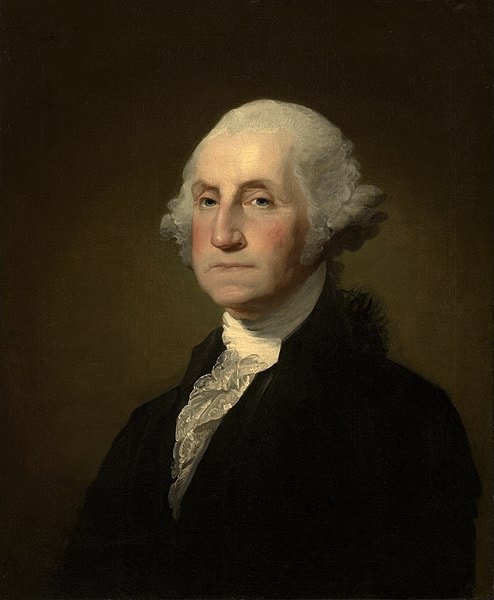 乔治·华盛顿 Gilbert Stuart (Public Domain) ](https://www.worldhistory.org/image/19336/george-washington/ "George Washington")到 1788 年 6 月 21 日,《宪法》获得了所需的九个州的批准(尽管在许多情况下,仅以微弱优势获得批准)。在 1789 年的美国总统选举中,乔治. 华盛顿全票当选为美国首任总统,约翰.亚当斯当选为副总统。第一届国会于 1789 年 4 月初达到法定人数,华盛顿于 4 月 30 日在纽约联邦大厅就职。随着华盛顿的就职,从1765年反对议会暴政的第一次骚乱到1789年美国宪法的实施,美国革命的漫长过程终于结束。这场革命孕育了最早的现代西方民主国家之一,至今仍是美国和世界历史上的重要篇章。
#### Editorial Review
This human-authored definition has been reviewed by our editorial team before publication to ensure accuracy, reliability and adherence to academic standards in accordance with our [editorial policy](https://www.worldhistory.org/static/editorial-policy/).
## 参考文献
- [Anderson, Fred. *Crucible of War.* Vintage, 2001.](https://www.worldhistory.org/books/0375706364/)
- [Bailyn, Bernard. *The Ideological Origins of the American Revolution.* Belknap Press: An Imprint of Harvard University Press, 2017.](https://www.worldhistory.org/books/0674975650/)
- [Boatner, Mark M. *Cassell's Biographical Dictionary of the American War of Independence.* London: Cassell, 1973., 1973.](https://www.worldhistory.org/books/0304292966/)
- [Chernow, Ron. *Alexander Hamilton.* Penguin Books, 2005.](https://www.worldhistory.org/books/0143034758/)
- [Daughan, George C. *Revolution on the Hudson.* W. W. Norton & Company, 2016.](https://www.worldhistory.org/books/0393245721/)
- [Feldman, Noah. *The Three Lives of James Madison.* Picador, 2020.](https://www.worldhistory.org/books/1250267005/)
- [Fleming, Thomas. *The Strategy of Victory.* Da Capo Press, 2017.](https://www.worldhistory.org/books/0306824965/)
- [Freeman, Douglas Southall. *Washington.* Simon & Schuster, 1995.](https://www.worldhistory.org/books/0684826372/)
- [McCullough, David. *1776.* Simon & Schuster, 2006.](https://www.worldhistory.org/books/0743226720/)
- [Middlekauff, Robert. *The Glorious Cause: The American Revolution, 1763-1789.* Oxford University Press, 2007.](https://www.worldhistory.org/books/019531588X/)
- [Philbrick, Nathaniel. *Bunker Hill: A City, A Siege, A Revolution.* Penguin Books, 2014.](https://www.worldhistory.org/books/014312532X/)
- [Schiff, Stacy. *The Revolutionary: Samuel Adams.* Back Bay Books, 2023.](https://www.worldhistory.org/books/0316441090/)
- [Wood, Gordon S. *The Radicalism of the American Revolution.* Vintage, 1993.](https://www.worldhistory.org/books/0679736883/)
- [Zabin, Serena. *The Boston Massacre: A Family History.* Mariner Books, 2023.](https://www.worldhistory.org/books/0063275899/)
## 关于作者
哈里森·马克(Harrison Mark)毕业于纽约州立大学奥斯威戈分校,主修历史和政治学。
- [Facebook Profile](https://www.facebook.com/harrison.mark.5/)
- [Linkedin Profile](https://www.linkedin.com/in/harrison-mark-b56213197/)
## 时间轴
- **7 Oct 1763 CE**: The Royal Proclamation of 1763 restricts the westward expansion of American colonists beyond the Appalachian Mountains.
- **1 Dec 1763 CE**: [Patrick Henry](https://www.worldhistory.org/Patrick_Henry/) argues the [Parson's Cause](https://www.worldhistory.org/Parson's_Cause/) in the Hanover County Courthouse, arguing that the king has no authority to interfere with Virginia's taxation laws.
- **22 Mar 1765 CE**: The [Stamp Act](https://www.worldhistory.org/Stamp_Act/) of 1765 is approved by Parliament and King George III, sparking protest in the American colonies.
- **31 May 1765 CE**: The Virginia [House of Burgesses](https://www.worldhistory.org/House_of_Burgesses/) passes the Virginia Resolves, asserting the colonists' rights as Englishmen and denying Parliament's authority to tax them.
- **14 Aug 1765 CE**: In Boston, Massachusetts, a mob attacks the home of stamp distributor Andrew Oliver in protest of the [Stamp Act](https://www.worldhistory.org/Stamp_Act/); this marks the birth of the Sons of Liberty.
- **7 Oct 1765 CE - 25 Oct 1765 CE**: The [Stamp Act](https://www.worldhistory.org/Stamp_Act/) Congress meets in New York [City](https://www.worldhistory.org/city/) to protest the Stamp Act; a Declaration of Rights and Grievances is issued.
- **18 Mar 1766 CE**: The unpopular [Stamp Act](https://www.worldhistory.org/Stamp_Act/) is repealed by an act of Parliament .
- **Jun 1767 CE - Mar 1768 CE**: The Parliament of Great [Britain](https://www.worldhistory.org/disambiguation/Britain/) passes the [Townshend Acts](https://www.worldhistory.org/Townshend_Acts/) to tax and regulate the thirteen American colonies.
- **10 Jun 1768 CE**: The Liberty, a sloop owned by Boston merchant [John Hancock](https://www.worldhistory.org/John_Hancock/), is seized by British officials leading to widespread riots in Boston.
- **1 Oct 1768 CE**: British soldiers arrive in Boston in the wake of several riots.
- **5 Mar 1770 CE**: The [Boston Massacre](https://www.worldhistory.org/Boston_Massacre/) occurs; nine British soldiers fire into a crowd of American colonists, killing five and wounding six others.
- **Apr 1770 CE**: The [Townshend Acts](https://www.worldhistory.org/Townshend_Acts/) are repealed except for a tax on tea.
- **16 Dec 1773 CE**: A party of colonial Bostonians, some dressed as Mohawks, dump 342 crates of tea into Boston Harbor, in the [Boston Tea Party](https://www.worldhistory.org/Boston_Tea_Party/).
- **Mar 1774 CE - Jun 1774 CE**: British Parliament passes the [Intolerable Acts](https://www.worldhistory.org/Intolerable_Acts/) to punish the [Thirteen Colonies](https://www.worldhistory.org/Thirteen_Colonies/) for the [Boston Tea Party](https://www.worldhistory.org/Boston_Tea_Party/).
- **5 Sep 1774 CE - 26 Oct 1774 CE**: The [First Continental Congress](https://www.worldhistory.org/First_Continental_Congress/) meets in Philadelphia, Pennsylvania, to coordinate a response to the [Intolerable Acts](https://www.worldhistory.org/Intolerable_Acts/).
- **19 Apr 1775 CE**: The [Battles of Lexington and Concord](https://www.worldhistory.org/article/2341/battles-of-lexington-and-concord/) kick off the American [War](https://www.worldhistory.org/disambiguation/War/) of Independence.
- **10 May 1775 CE**: The [Second Continental Congress](https://www.worldhistory.org/Second_Continental_Congress/) convenes in Philadelphia, Pennsylvania.
- **5 Jun 1775 CE**: The [Second Continental Congress](https://www.worldhistory.org/Second_Continental_Congress/) adopts the [Olive Branch Petition](https://www.worldhistory.org/article/2351/olive-branch-petition/) in a final attempt at reconciliation with Great [Britain](https://www.worldhistory.org/disambiguation/Britain/).
- **15 Jun 1775 CE**: The [Second Continental Congress](https://www.worldhistory.org/Second_Continental_Congress/) adopts the Continental Army, names [George Washington](https://www.worldhistory.org/George_Washington/) as commander-in-chief.
- **22 Jun 1775 CE**: The Continental Congress issues $2 million in a new paper currency, called 'Continentals', to fund the Revolution.
- **13 Oct 1775 CE**: The [Second Continental Congress](https://www.worldhistory.org/Second_Continental_Congress/) votes to establish the Continental Navy.
- **1776 CE**: [Thomas Paine](https://www.worldhistory.org/Thomas_Paine/) publishes his revolutionary pamphlet Common Sense.
- **2 Jul 1776 CE**: The Continental Congress votes for independence; the United States is born.
- **4 Jul 1776 CE**: The [Second Continental Congress](https://www.worldhistory.org/Second_Continental_Congress/) adopts the [Declaration of Independence](https://www.worldhistory.org/article/2411/declaration-of-independence/); the United States of America is established.
- **9 Jul 1776 CE**: Gen. [George Washington](https://www.worldhistory.org/George_Washington/) reads the [Declaration of Independence](https://www.worldhistory.org/article/2411/declaration-of-independence/) aloud to his troops in NYC; a statue of King George III on Bowling Green is torn down and melted into bullets.
- **27 Aug 1776 CE**: [Battle of Long Island](https://www.worldhistory.org/article/2359/battle-of-long-island/); the Continental Army is defeated by British troops and German auxiliaries.
- **Dec 1776 CE**: The [Second Continental Congress](https://www.worldhistory.org/Second_Continental_Congress/) is forced to evacuate Philadelphia at the approach of the British army; Washington is granted near dictatorial powers.
- **26 Dec 1776 CE**: After recrossing the Delaware River, Gen. [George Washington](https://www.worldhistory.org/George_Washington/) surprises and defeats a Hessian garrison at the [Battle of Trenton](https://www.worldhistory.org/article/2365/battle-of-trenton/).
- **26 Sep 1777 CE**: Philadelphia is captured by a British army; Congress flees to York, Pennsylvania.
- **Nov 1777 CE - Apr 1778 CE**: The [Conway Cabal](https://www.worldhistory.org/Conway_Cabal/) threatens to remove [George Washington](https://www.worldhistory.org/George_Washington/) from his role as commander-in-chief of the Continental Army but is ultimately thwarted.
- **15 Nov 1777 CE**: The [Second Continental Congress](https://www.worldhistory.org/Second_Continental_Congress/) adopts the [Articles of Confederation](https://www.worldhistory.org/Articles_of_Confederation/), which are sent to the states for ratification.
- **19 Dec 1777 CE - 18 Jun 1778 CE**: The Continental Army spends a grueling winter at [Valley Forge](https://www.worldhistory.org/Valley_Forge/). The supply department is reformed and the soldiers are trained, creating a more effective fighting force.
- **1778 CE**: France enters into a military alliance with the [thirteen colonies](https://www.worldhistory.org/Thirteen_Colonies/), declares [war](https://www.worldhistory.org/disambiguation/War/) on [Britain](https://www.worldhistory.org/disambiguation/Britain/).
- **23 Mar 1779 CE**: [Benjamin Franklin](https://www.worldhistory.org/Benjamin_Franklin/) is named ambassador to France.
- **24 Jun 1779 CE - 7 Feb 1783 CE**: The Great Siege of Gibraltar is fought. A combined Franco-Spanish army fails to seize the fortress from Great [Britain](https://www.worldhistory.org/disambiguation/Britain/).
- **1780 CE**: [Catherine the Great](https://www.worldhistory.org/Catherine_the_Great/) establishes the League of Armed Neutrality seeking to protect shipments during the [American Revolution](https://www.worldhistory.org/American_Revolution/).
- **23 Sep 1780 CE**: British Major [John André](https://www.worldhistory.org/John_Andre/) is captured, exposing the treason of [Benedict Arnold](https://www.worldhistory.org/Benedict_Arnold/).
- **1781 CE**: [Jacques Necker](https://www.worldhistory.org/Jacques_Necker/), French Director of Finance, publishes the Compte rendu au roi, the first record of royal finances ever made public.
- **1 Mar 1781 CE**: The [Articles of Confederation](https://www.worldhistory.org/Articles_of_Confederation/) take effect.
- **19 Oct 1781 CE**: Gen. [George Washington](https://www.worldhistory.org/George_Washington/) accepts the surrender of Lord Cornwallis following the [Siege of Yorktown](https://www.worldhistory.org/article/2532/siege-of-yorktown/).
- **30 Nov 1782 CE**: The first draft of the [Treaty of Paris](https://www.worldhistory.org/Treaty_of_Paris_of_1783/) is finished.
- **3 Sep 1783 CE**: The [Treaty of Paris](https://www.worldhistory.org/Treaty_of_Paris_of_1783/) ends the [American Revolutionary War](https://www.worldhistory.org/American_Revolutionary_War/). The treaty acknowledges the United States as a sovereign and independent nation.
- **29 Aug 1786 CE - 27 Feb 1787 CE**: [Shays' Rebellion](https://www.worldhistory.org/Shays'_Rebellion/) threatens to topple the state government of Massachusetts, leading American political figures to rethink central government under the [Articles of Confederation](https://www.worldhistory.org/Articles_of_Confederation/).
- **4 Feb 1789 CE**: In the first US presidential election, [George Washington](https://www.worldhistory.org/George_Washington/) wins all 69 electoral votes; [John Adams](https://www.worldhistory.org/John_Adams/) is elected vice president.
- **30 Apr 1789 CE**: [George Washington](https://www.worldhistory.org/George_Washington/) is inaugurated as president of the United States at Federal Hall in New York [City](https://www.worldhistory.org/city/).
## 问答
### 美国革命的原因是什么?
美国革命主要是由于英国议会实施了几项政策(主要与税收有关)而引起的,美国殖民者认为这些政策侵犯了他们的自然权利和宪法权利。
### 美国革命有哪些领导人?
美国革命的一些重要领导人包括领导大陆军的乔治·华盛顿、撰写《独立宣言》的托马斯·杰斐逊、帮助获得法国和其他国家支持的本杰明·富兰克林和约翰·亚当斯、大陆会议第一任主席约翰·汉考克等等。
### 美国革命发生在什么时候?
一般来说,美国革命是从1765年8月抵抗印花税法开始,到1789年3月美国宪法实施结束。然而,有些定义只涵盖独立战争时期(1775-1783年),而另一些定义则使用不同的起点和终点。
## 引用本文
### APA
Mark, H. W. (2024, November 26). 美国革命. (J. Zhang, 翻译). *World History Encyclopedia*.
### Chicago
Mark, Harrison W.. "美国革命." 翻译: Jinfeng Zhang. *World History Encyclopedia*, November 26, 2024. .
### MLA
Mark, Harrison W.. "美国革命." 翻译: Jinfeng Zhang. *World History Encyclopedia*, 26 Nov 2024, .
## 许可与版权
提交人: [Jinfeng Zhang](https://www.worldhistory.org/user/jinfengzhang/ "User Page: Jinfeng Zhang"), 发表于 26 November 2024. 请查阅原始来源以获取版权信息。 请注意,从本页面链接的内容可能具有不同的许可条款。