---
title: 维京人
author: Joshua J. Mark
translator: Jinfeng Zhang
source: https://www.worldhistory.org/trans/zh/1-16741/
format: machine-readable-alternate
license: Creative Commons Attribution-NonCommercial-ShareAlike (https://creativecommons.org/licenses/by-nc-sa/4.0/)
updated: 2024-03-08
---
# 维京人
_作者: [Joshua J. Mark](https://www.worldhistory.org/user/JPryst/)_
_译者: [Jinfeng Zhang](https://www.worldhistory.org/user/jinfengzhang)_
[](https://www.worldhistory.org/trans/zh/1-22386/)[](https://www.worldhistory.org/trans/zh/2-2409/)维京人最初是来自挪威、瑞典和丹麦的斯堪的纳维亚航海家(虽然后来也有其他国籍的航海家参与其中),他们的袭击和随后的定居对欧洲文化产生了重大影响,其影响远及地中海地区(约公元 790 年至约 1100 年)。维京人都是斯堪的纳维亚人,但并非所有斯堪的纳维亚人都是维京人。
“维京人”一词只适用于那些为了获取财富而出海到其他国家掠夺的人,该词主要由英国作家使用,并不包括其他文化。大多数斯堪的纳维亚人都不是维京人,那些与其他文化进行贸易的斯堪的纳维亚人被称为北方人、诺斯人或其他表示其来源地的名字。
从公元 793 年开始,维京人在接下来的 300 年里袭击了欧洲沿海和内陆地区,贸易范围远至东方的拜占庭帝国,甚至在拜占庭皇帝的精锐部队瓦格良卫队中服役。几乎在生活的各个方面,他们都对与之交往的文化产生了重大影响,其中最显著的是在苏格兰、英国、法国和爱尔兰地区。他们建立了都柏林,在法国的诺曼底(诺曼人的土地)建立了殖民地,在英国建立了丹麦区,并在苏格兰的许多地方定居。
维京人在冰岛和格陵兰岛建立的定居点将斯堪的纳维亚文化进一步传播到北大西洋,使他们在进一步探索和殖民的时候处于理想位置。维京人是第一批到访北美并建立据点的欧洲人。纽芬兰的兰塞奥兹牧草地(L'Anse Aux Meadows) 遗址已被确认为早期维京人定居点,但仍在继续争论得是从缅因州到罗德岛,甚至更南的其他遗址,作为早期维京人居住或至少到访北美的证据。
虽然人们普遍认为勇士头戴角盔,但这是不准确的。角盔在战斗中并不实用,很可能只在仪式上佩戴。此外,虽然维京人是伟大的战士,他们的名字在今天几乎成了战争、杀戮和毁灭的代名词,流行媒体的描述助长了这种联想。斯堪的纳维亚文化实际上是高度发达的,维京人对其他国家的袭击只是该文明的一个方面。
### 名字由来
关于 "维京 "一词的起源,学者们仍有争议。Kenneth W. Harl 教授代表的传统观点认为,维京 "源于北欧语 vik,意为海湾或小峡湾,是海盗潜伏和捕猎商船的地方"(3)。语言学家亨利. 斯威特(Henry Sweet)称该词源于古挪威语中的 "海盗 "一词(Whitelock, 222)。彼得. 索耶(Peter Sawyer)教授认为,该词一定来自奥斯陆峡湾两侧的维肯(Viken)地区,他写到:
> 维肯地区具有重要价值,因为丹麦人可以在那里获得挪威生产的铁。如果 "维京人 "一词最初指的是维肯地区的居民,那么这就可以解释为什么英国人(也只有英国人)称斯堪的纳维亚海盗为 "维京人"。对于选择逃亡和掠夺者的维肯人来说,英国自然成为他们的目的地。(8)
索耶指出,其他文化都用不同的名称来称呼这些人,但没有一种文化称他们为维京人。爱尔兰人称他们为异教徒或外国人,法国人称他们为北方人,斯拉夫人称他们为罗斯人(俄罗斯由此得名),德国人称他们为白蜡人,因为他们用白蜡木做船。
[ 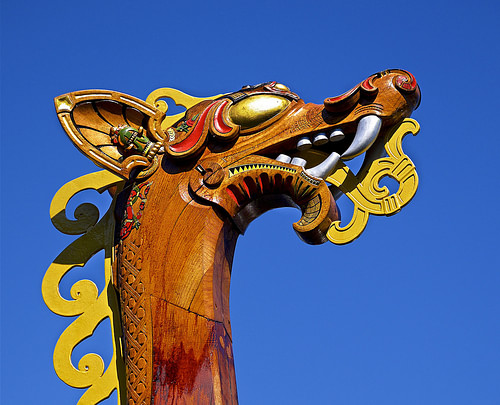 维京战船的头部 Jamie McCaffrey (CC BY-NC-SA) ](https://www.worldhistory.org/image/6557/viking-boat-figurehead/ "Viking Boat Figurehead")维京人自己也用这个词来指以掠夺为目的武装袭击他国的活动。古挪威语中的 "出征维京"(fara i viking)与为合法贸易而进行的海上航行有着明显不同的含义。当一个人决定 "出征维京 "时,就意味着他打算加入对其他国家有利可图的目标发动袭击。
### 文化
维京文化是斯堪的纳维亚文化,社会分为三个阶层:Jarls(贵族)、Karls(下层阶级)和 Thralls(奴隶)。Karls 可以向上流动,但 Thralls 则不行。奴隶制在整个斯堪的纳维亚广泛存在,被认为是维京人袭击其他国家的主要力量之一。
在斯堪的纳维亚或维京文化中,妇女比其他许多文化中的妇女享有更大的自由。她们可以继承财产,选择未婚的生活地点和方式,在法律案件中代表自己,拥有自己的企业(如酿酒厂、酒馆、商店和农场)。女性是女神弗雷亚或男神奥丁的信息传达者,为人们传达和解释神的旨意。
婚姻由部族中的男性安排,女性不能选择自己的配偶,男性也不能。女性的服饰和首饰与同社会阶层的男性相似,男女都不戴耳环,因为耳环被认为是低等种族的装饰品。女性负责抚养孩子和料理家务,但男女都要为家人准备饭菜。
大多数斯堪的纳维亚人是农民,但也有铁匠、盔甲匠、酿酒师、商人、纺织工、制琴匠(制作弦乐器的人)、制鼓匠、诗人、音乐家、工匠、木匠、珠宝商和许多其他职业。琥珀是松树的树脂化石,他们拥有丰富的琥珀资源,琥珀贸易是一项重要的收入来源。琥珀经常被冲到斯堪的纳维亚半岛附近的海岸上,被加工成珠宝或以半成品的形式出售,尤其是卖给罗马帝国和拜占庭帝国。
斯堪的纳维亚人与其他文化一样享受闲暇时光,他们进行体育运动、棋类游戏,并组织节日活动。体育运动包括模拟格斗、摔跤、登山、游泳、投掷标枪、狩猎、不慎了解的马术竞赛,以及类似曲棍球的野战游戏 Knattleik。他们的棋盘游戏包括掷骰子、类似国际象棋的战略游戏和国际象棋。
[ 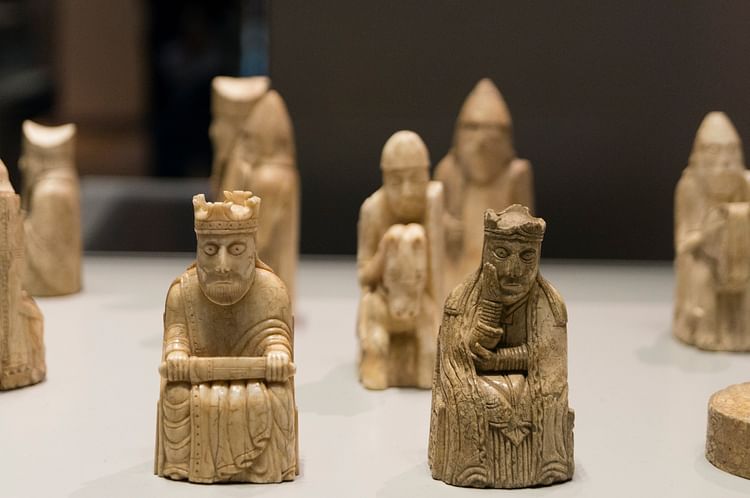 刘易斯棋子 Jagoba Barron (CC BY-SA) ](https://www.worldhistory.org/image/8029/lewis-chessmen/ "Lewis Chessmen")与维京人肮脏野蛮的普遍形象相反,他们实际上相当高雅,非常注重卫生和外表。一旦与东方建立了贸易往来,维京贵族通常会佩戴丝绸和昂贵的珠宝。他们编织发辫,梳理整齐,穿着精美的披风,佩戴项链、臂环和腕环等工艺复杂的首饰。
干净整洁不仅是财富和地位的象征,还具有宗教意义。维京人总是把手指和脚趾甲剪短,因为诸神的黄昏和世界末日,届时,"纳吉尔法 (Naglfar)"号船将漂浮在大蛇约尔蒙甘德(Jormungand)释放的水面上。Naglfar 是用死者的指甲建造的,因此任何未经修整的死者指甲都成为造船材料,这加速了无法避免的末日。
### 北欧宗教
世界末日是注定的,但人们仍可与之抗争。北欧诸神为人们提供了生命的气息,然后就看每个人能否证明自己配得上这份礼物了。北欧诸神随着日耳曼人的迁徙来到斯堪的纳维亚半岛,时间大约在青铜时代初期(约公元前 2300 年至约公元前 1200 年)。他们是凶猛的神灵,深知自己的时间有限,因此充分享受生活,并鼓励他们的追随者也这样做。
北欧宗教信仰的主要来源是《诗体埃达》(Poetic Edda)和《散文埃达》(Prose Edda,约1220 年),前者可追溯到公元 9 世纪和 10 世纪的口头传说,后者则是根据更古老的故事改编的故事集。在北欧的创世故事中,世界诞生之前只有冰和一个名叫尤弥尔(Ymir)的巨人,他依靠吸食奶牛欧德姆布拉(Audhumla)的乳水为生。欧德姆布拉拉用它的四个乳房源源不断地给尤弥尔喂奶,与此同时,尤弥尔还舔食冰雪以维持自己的生命。她的舔食释放了被困的布利(Buri),布利随后生下了儿子包尔(Borr)。
[  《诗体埃达》诗集 Unknown (Public Domain) ](https://www.worldhistory.org/image/6411/codex-regius-of-the-poetic-edda/ "Codex Regius of the Poetic Edda")包尔娶了冰霜巨人博尔索恩的女儿贝斯特拉,她生下了奥丁(Odin)、威利(Vili)和菲(Vé)。这些神联合起来,杀死了尤弥尔,并用他的身体创造了世界。第一批人类是阿斯克(Ask)和恩布拉(Embla),他们没有精神和形体,直到奥丁为他们注入了生命,而其他诸神则赋予了他们理性和激情。
众神创造的世界被理解为一棵巨大的树,被称为尤克特拉希尔(Yggdrasil),包括九个世界。其中最有名的是米德加尔特(中庭,人类的家园)、阿斯加德(众神的家园)和亚尔夫海姆(精灵的家园),以及位于中庭地下的另一个世界——海姆冥界(Niflheim),这里是亡灵的家园。英勇的女性,尤其是难产而死的女性,会被送往阿斯加德的弗丽嘉大厅,在那里她们将与奥丁的妻子永远相伴;而在战场上英勇牺牲的男性则会被送往奥丁的瓦尔哈拉(英灵殿)大厅。
奥丁和其他诸神打败霜巨人后,根据秩序原则建立了整个宇宙。霜巨人生活在自己的王国约顿海姆(Jotunheim),但对阿斯加德和中庭都是一个持续的威胁。在未来的某一天,毁灭的大日子将会来临,混乱将被释放。这一天被称为 "拉格纳罗克"(Ragnarök),即诸神的黄昏。
[  瓦尔哈拉(英灵殿) Emil Doepler (Public Domain) ](https://www.worldhistory.org/image/7527/valhalla/ "Valhalla")当 "诸神的黄昏 "降临时,太阳将巨狼 Skoll 吞噬,月亮将被其兄弟 Hati 吞噬,世界将陷入黑暗,与此同时,巨狼芬里尔(Fenrir)将肆虐 Yggdrasil 的所有星球。海姆达尔(Heimdall)会吹响他的号角,召唤众神参战,奥丁(Odin)会从瓦尔哈拉(Valhalla)的殿堂中召唤出所有英雄,与众神一起保卫众神创造的世界。众神英勇作战,但最终还是战败了,整个宇宙被火焰吞噬,沉入了原始之水。虽然这是世界的终结,但并不是存在的结束。一旦现世毁灭,新的世界又会诞生,并从水中升起,整个轮回周而复始。
北欧诸神是通过人们的信奉得到尊崇的。在基督教传入之前,斯堪的纳维亚没有发现宗教等级制度的证据。被神触摸过的女性被称为沃尔瓦(Volva),她们可以听到神的话语,并为其他凡人解释这些话语。虽然有一些为神灵建造的神庙,但大多数崇拜似乎都发生在与某个神灵有某种联系的自然环境中。关于诸神、创世和诸神的黄昏的故事都是口口相传的,后来才由历史学家、诗人斯诺里.斯图卢松(Snorri Sturluson,公元 1179-1241 年)在冰岛写成文字。
### 造船与维京人的袭击
北欧神话影响了维京人的文化,并鼓励他们发动袭击,因为维京人的生活效仿了众神的生活。勇敢的战士们远赴海外,与他们认为混乱而危险的势力作战。地中海和欧洲的宗教信仰中,只有一个需要祭司、教堂、修女、书籍和规则来供奉神和他的救世主儿子,这在维京人看来是荒谬和具有威胁性的。基督教的教义与北欧人的意识形态没有任何共鸣。一旦斯堪的纳维亚人完全掌握了造船技术并开始 "走向维京",他们对所遇到的基督教毫不留情,但早期的斯堪的纳维亚移民在异国他乡经常接受基督教信仰。
斯堪的纳维亚半岛在公元前 4000-2300 年的雕刻显示,当时的人们已经知道如何造船。这些小船靠划桨前进,没有龙骨,长途旅行非常危险。但仍有大量证据表明人们曾进行过这样的冒险。大约在公元前 300-200 年间,造船业才从小型渡船发展起来,直到公元前 200-400 年间,罗马商人与凯尔特和日耳曼商人利用罗马技术进行交流后,造船业才有了进一步的发展。第一艘能够在海上轻松航行的船只是丹麦的 "Nydam "号,建于约公元350-400 年,尽管这艘船没有风帆。
[  尼达姆船 Erik Christensen (CC BY-SA) ](https://www.worldhistory.org/image/8030/nydam-ship/ "Nydam Ship")然而,早在龙骨或风帆发明之前,一些斯堪的纳维亚商人就在欧洲建立了永久性据点,并被基督教文化同化,忘记了北欧诸神的故事和他们古老的宗教习俗。哈尔教授指出,到公元 625 年,
> 斯堪的纳维亚人的西日耳曼分支皈依了基督教,并开始忘记自己的故事。公元 650 至 700 年间,英格兰、法兰克世界和弗里斯兰(Frisia)出现了新的基督教文化,导致斯堪的纳维亚中心地带与属于前罗马帝国的新国家分道扬镳。(25)
这种 "分道扬镳 "在很大程度上是由于宗教理解和行为上的差异。基督教的神被认为是无所不能、无所不知、无所不在的,这与北欧诸神大相径庭,因为北欧诸神与其他异教一样,各自有自己的特殊领域、自己的生活和关注的问题,诸神的行为可以解释可观察到的世界,而基督教的神却无法解释这些问题。对维京人来说,宇宙中充满了神灵和超自然的能量,为他们带来了一个充满挑战的冒险世界,而对基督徒来说,宇宙由一个神灵统治,他掌管着一个充满罪恶的堕落世界;这种世界观上的差异影响了维京人如何对待他们在袭击中遇到的基督徒。
[  林迪斯法恩圣岛 Damian Entwistle (CC BY-NC-SA) ](https://www.worldhistory.org/image/6547/lindisfarne/ "Lindisfarne")北欧战士杀死手无寸铁的平民并抢走他们的财物被认为是不光彩的行为,但这正是维京人在约公元 793-1100 年间的所作所为。他们之所以能这样做,是因为被掠夺者不是北欧人,所以不受同样信仰的约束,维持维京社会的规则也不适用于他们。
当维京人第一次来到不列颠,并于公元 793 年洗劫林迪斯芳(Lindisfarne)修道院时,他们杀害了所有的僧侣,并带走了所有值钱的东西。如果被杀的是北欧人,这将被视为严重的罪行,但事实上僧侣们只是成为他们获取财富的障碍。而且很明显的事实是,如果上帝的子民可以在自己礼拜场所的围墙内被轻易杀害,基督教之神显然没有能力保护他的子民。
### 扩张与遗产
维京人对基督教地区的袭击,就像几个世纪前匈人对罗马帝国的袭击一样,被欧洲基督徒解释为上帝对其子民所犯罪行的诅咒。在英国,阿尔弗雷德大帝(Alfred the Great,公元 871-899 年)在教育人们的行为和安抚上帝方面实施了改革。他还将洗礼加入基督教信仰,作为与维京人签订条约的一项规定。公元 878 年,阿尔弗雷德在埃丁顿战役(Battle of Eddington)中击败了古特鲁姆(Guthrum)率领的维京军队,古特鲁姆和他的 30 名酋长不得不接受洗礼并皈依基督教。
法国的查理曼大帝( 800-814 年)采取了更为积极的行动,试图通过军事行动强行使斯堪的纳维亚人皈依基督教。这些军事行动摧毁了北欧人的圣地,这使得基督教成为斯堪的纳维亚人眼中的敌对民族的敌对信仰。许多历史学家认为,查理曼的努力是维京人野蛮袭击的主要动机,但这种说法并没有考虑到 793-800 年间他们对不列颠和爱尔兰的袭击。毫无疑问,查理曼的福音圣战并没有鼓励斯堪的纳维亚人接受基督教,反而导致了敌意和更大的分裂。
在欧洲维京时代的早期,这些海上掠夺者最初不过是海盗,但他们最终会在拥有魅力和技艺的军事领袖的带领下组成大军,征服大片领土,建立族群,并最终与当地居民融合。
维京时代以传奇的北欧领袖而闻名,如哈夫丹.拉格纳尔逊(Halfdan Ragnarsson,又称哈夫丹,865-877年)、他的兄弟无骨伊瓦尔(Ivar the Boneless,约870年)、古特鲁姆(Guthrum,约890年)、哈罗德.蓝牙(Harold Bluetooth,985年)、他的儿子斯文. 福克比德(Sven Forkbeard,986-1014年)、克努特大帝(Cnut the Great,1016-1035年)和哈拉尔. 哈德拉达(Harald Hardrada,1046-1066年)。当时其他著名的北欧探险家还有红人埃里克(Eric the Red,卒于1003 年)和雷夫. 埃里克森(Leif Erikson,卒于 1020 年),他们曾在格陵兰岛和北美洲探险并定居。大多数学者一致认为维京时代结束的日期是公元 1066 年,当时哈拉尔德. 哈德拉达在斯坦福桥战役(Battle of Stamford Bridge)中被杀,但此后维京人的袭击仍在继续。导致维京时代结束的因素有很多,但整个公元 10 世纪和 11 世纪斯堪的纳维亚半岛的基督教化无疑是最重要的因素之一。北欧宗教是最后一个倒向基督教的伟大异教信仰体系,而一旦倒向基督教,新信仰中就不再有 "走向维京 "的灵感了。
从建筑到语言,从基础设施到诗歌和地名,从军事改革到衣食住行,当然也包括战争和造船领域,维京人以各种可能的方式影响着他们接触过的每一个国家的文化。中世纪的作家经常将维京人描绘成掠夺成性的一群凶残异教徒,到了公元 20 世纪初,他们又被重新塑造成高贵的野蛮人,而在今天,人们也经常这样描绘他们。然而,维京人实际上并非如此。他们是一个有文化的、成熟的武士阶层,基于他们的宗教信仰,他们明白,为了个人利益而掠夺其他国家的土地,他们可以赢得一切,而不会失去任何东西。
#### Editorial Review
This human-authored definition has been reviewed by our editorial team before publication to ensure accuracy, reliability and adherence to academic standards in accordance with our [editorial policy](https://www.worldhistory.org/static/editorial-policy/).
## 参考文献
- [Arman, J. *The Warrior Queen: The Life and Legend of Aethelflaed, Daughter of Alfred the Great.* Amberley Publishing, 2017.](https://www.worldhistory.org/books/1445662043/)
- [Carlson, R. *Norse Mythology.* CreateSpace Independent Publishing Platform, 2016.](https://www.worldhistory.org/books/B01MQH12IR/)
- [Dersin, D. *Vikings: Raiders from the North.* Time Life Education, 1993.](https://www.worldhistory.org/books/0809498952/)
- [Ferguson, R. *The Vikings: A History.* Penguin Books, 2010.](https://www.worldhistory.org/books/0143118013/)
- [Harl, K. W. *The Great Courses: The Vikings.* The Great Courses, 2016.](https://www.worldhistory.org/books/B01K3HOJFG/)
- [Hollander, L. M. *The Poetic Edda.* Oxford University Press, 2014.](https://www.worldhistory.org/books/0199675341/)
- [Keynes, S. & Lapidge, M. *Alfred the Great & Other Contemporary Sources.* Penguin Classics, 1984.](https://www.worldhistory.org/books/0140444092/)
- [Lindow, J. *Norse Mythology: A Guide to Gods, Heroes, Rituals, and Beliefs.* Oxford University Press, 2002.](https://www.worldhistory.org/books/0195153820/)
- [Oliver, N. *The Vikings: A New History.* Pegasus Books, 2014.](https://www.worldhistory.org/books/1605986399/)
- [Sawyer, P. *The Oxford Illustrated History of the Vikings.* Oxford University Press, 2001.](https://www.worldhistory.org/books/0192854348/)
- [Snorri Sturluson. *The Prose Edda.* University of California Press, 2012.](https://www.worldhistory.org/books/0520273052/)
- [Somerville, A. A. & McDonald, R. A. *The Viking Age: A Reader.* University of Toronto Press, Higher Education Division, 2014.](https://www.worldhistory.org/books/1442608676/)
## 关于作者
约书亚·J·马克(Joshua J. Mark)是世界历史百科全书的联合创始人兼内容总监。他曾在纽约马里斯特学院(Marist College)担任教授,教授历史、哲学、文学和写作课程。他游历广泛,曾在希腊和德国生活。
- [Linkedin Profile](https://www.linkedin.com/pub/joshua-j-mark/38/614/339)
## 时间轴
- **c. 4000 BCE - c. 2300 BCE**: Depictions of ships in stone (in [burial](https://www.worldhistory.org/burial/) settings) and [metal](https://www.worldhistory.org/disambiguation/metal/) found in Scandinavia.
- **c. 350 BCE**: Hjortspring boat - the earliest known plank-built Scandinavian vessel.
- **c. 200 CE - c. 400 CE**: [Roman](https://www.worldhistory.org/disambiguation/Roman/) technology used by [Vikings](https://www.worldhistory.org/Vikings/) in shipbuilding.
- **c. 350 CE - c. 400 CE**: The Nydam Ship built, first able to easily travel long distance overseas.
- **c. 750 CE - c. 800 CE**: The presumed founding of the important [Viking](https://www.worldhistory.org/Vikings/) trading center of [Birka](https://www.worldhistory.org/Birka/) in Sweden.
- **780 CE - 950 CE**: The commercial [Viking](https://www.worldhistory.org/Vikings/) centre at [Kaupang](https://www.worldhistory.org/Kaupang/) thrives.
- **c. 790 CE - c. 880 CE**: Style E (also 'Oseberg' or 'Broa' style) of the Scandinavian animal ornamentation styles flourished between the late 8th- and late 9th century CE.
- **c. 790 CE - c. 1100 CE**: The [Viking Age](https://www.worldhistory.org/collection/29/the-viking-age/).
- **793 CE**: First [Viking](https://www.worldhistory.org/Vikings/) raid in [Britain](https://www.worldhistory.org/disambiguation/Britain/) at Lindisfarne Abbey.
- **c. 800 CE - c. 1050 CE**: Approximate timespan of the [Viking Age](https://www.worldhistory.org/collection/29/the-viking-age/).
- **c. 829 CE - c. 831 CE**: The Frankish missionary St. Ansgar (801-865 CE) first introduces the Swedes to [Christianity](https://www.worldhistory.org/christianity/) in the [Viking](https://www.worldhistory.org/Vikings/) trading town of [Birka](https://www.worldhistory.org/Birka/).
- **845 CE**: [Viking](https://www.worldhistory.org/Vikings/) chief [Ragnar Lothbrok](https://www.worldhistory.org/Ragnar_Lothbrok/) raids [Paris](https://www.worldhistory.org/disambiguation/paris/).
- **c. 850 CE - c. 990 CE**: The Borre Style of the [Viking Age](https://www.worldhistory.org/collection/29/the-viking-age/) animal ornamentation styles flourished between c. 850 and the late 10th century CE.
- **854 CE - 858 CE**: [Viking](https://www.worldhistory.org/Vikings/) raids on West Francia allegedly led by [Bjorn Ironside](https://www.worldhistory.org/Bjorn_Ironside/) and Hastein (although this attribution is more likely legendary rather than historical).
- **876 CE**: [Viking](https://www.worldhistory.org/Vikings/) raids involving Rollo.
- **885 CE - 886 CE**: [Viking](https://www.worldhistory.org/Vikings/) siege of [Paris](https://www.worldhistory.org/disambiguation/paris/). [Odo of West Francia](https://www.worldhistory.org/Odo_of_West_Francia/) successfully defends the [city](https://www.worldhistory.org/city/).
- **c. 890 CE - c. 990 CE**: The Jelling Style, a [Viking Age](https://www.worldhistory.org/collection/29/the-viking-age/) animal ornamentation style, cropped up just before 900 CE and was in vogue until the end of the 10th century CE.
- **c. 900 CE**: [Viking](https://www.worldhistory.org/Vikings/) [Hedeby](https://www.worldhistory.org/Hedeby/) is at its height. It encompasses an area of around 24 hectares and has a population of approximately 1,500 people.
- **c. 950 CE**: The [Viking](https://www.worldhistory.org/Vikings/) trading center of [Birka](https://www.worldhistory.org/Birka/) in present-day Sweden goes into abrupt decline around the mid-10th century CE.
- **c. 950 CE - c. 1000 CE**: The Mammen Style, a Scandinavian animal ornamentation style, flourished in this period.
- **c. 990 CE - c. 1050 CE**: The Ringerike Style, a Scandinavian animal ornamentation style, flourished in this period.
- **c. 1000 CE**: [Vikings](https://www.worldhistory.org/Vikings/) first land in North America, in Newfoundland and other parts of eastern Canada.
- **c. 1040 CE - c. 1100 CE**: The Urnes style, the last of the [Viking Age](https://www.worldhistory.org/collection/29/the-viking-age/) animal ornamentation styles, flourished in this period and even extended into the 12th century CE in certain locations.
- **1066 CE**: [Viking](https://www.worldhistory.org/Vikings/) [Hedeby](https://www.worldhistory.org/Hedeby/) is sacked by Polabian [Slavs](https://www.worldhistory.org/Slavs/), after already having been sacked by Harald Hardrada of Norway a few years before. Residents relocate to Schleswig, and Hedeby's role as mercantile center ceases.
- **c. 1066 CE**: Harald Hardrada of the [Vikings](https://www.worldhistory.org/Vikings/) killed at the [Battle of Stamford Bridge](https://www.worldhistory.org/article/1306/battle-of-stamford-bridge/); accepted date of the end of the [Viking Age](https://www.worldhistory.org/collection/29/the-viking-age/).
- **25 Sep 1066 CE**: [Battle of Stamford Bridge](https://www.worldhistory.org/article/1306/battle-of-stamford-bridge/) in which [Harold Godwinson](https://www.worldhistory.org/Harold_Godwinson/) (Harold II) defeats an invading army led by Harald Hardrada, king of Norway.
- **21 Sep 1069 CE**: A [Viking](https://www.worldhistory.org/Vikings/) force led by King Sweyn II of Denmark's brother Asbjorn sacks York.
- **May 1070 CE**: King Sweyn II of Denmark joins forces with Anglo-[Saxon](https://www.worldhistory.org/Saxons/) rebels led by Hereward the Wake to threaten East Anglia in [England](https://www.worldhistory.org/disambiguation/england/).
- **c. 1220 CE**: The Prose [Edda](https://www.worldhistory.org/Edda/) by Snorri Sturluson is written.
- **c. 1270 CE**: The Poetic [Edda](https://www.worldhistory.org/Edda/) is written. It contains poetry that dates further back, though.
- **2018 CE**: The [Viking](https://www.worldhistory.org/Vikings/) trading center of [Hedeby](https://www.worldhistory.org/Hedeby/) is made a UNESCO World Heritage Site in 2018: the "Archaeological Border complex of Hedeby and the Danevirke".
## 外部链接
- [Vikings - KS2 History - BBC Bitesize](https://www.bbc.com/bitesize/topics/ztyr9j6)
- [32 Viking Facts That Uncover One Of History's Most Misunderstood Civilizations](https://allthatsinteresting.com/viking-facts-history-information)
- [The History of Vikings Podcast by Noah Tetzner](http://thehistoryofvikings.com/)
- [Norse World](https://www.uu.se/en/research/infrastructure/norseworld/)
- [Cross-curricular science ideas web: the Vikings- Learn Chemistry](http://www.rsc.org/learn-chemistry/resource/res00002195/science-ideas-web-the-vikings)
- [Experiment with the Vikings- Learn Chemistry](http://www.rsc.org/learn-chemistry/resource/res00001940/experiment-with-the-vikings?cmpid=CMP00006331)
- [The History of Vikings Podcast](https://thehistoryofvikings.com/)
- [What was so special about Viking ships? - Jan Bill](https://ed.ted.com/lessons/what-was-so-special-about-viking-ships-jan-bill)
- [The Viking Blót Sacrifices](https://en.natmus.dk/historical-knowledge/denmark/prehistoric-period-until-1050-ad/the-viking-age/religion-magic-death-and-rituals/the-viking-blot-sacrifices/)
- [The Vikings (780–1100) | Essay | The Metropolitan Museum of Art | Heilbrunn Timeline of Art History](https://www.metmuseum.org/toah/hd/vikg/hd_vikg.htm)
## 引用本文
### APA
Mark, J. J. (2024, March 08). 维京人. (J. Zhang, 翻译). *World History Encyclopedia*.
### Chicago
Mark, Joshua J.. "维京人." 翻译: Jinfeng Zhang. *World History Encyclopedia*, March 08, 2024. .
### MLA
Mark, Joshua J.. "维京人." 翻译: Jinfeng Zhang. *World History Encyclopedia*, 08 Mar 2024, .
## 许可与版权
提交人: [Jinfeng Zhang](https://www.worldhistory.org/user/jinfengzhang/ "User Page: Jinfeng Zhang"), 发表于 08 March 2024. 请查阅原始来源以获取版权信息。 请注意,从本页面链接的内容可能具有不同的许可条款。