---
title: 宋朝
author: Mark Cartwright
translator: 晚生姓高
source: https://www.worldhistory.org/trans/zh/1-16215/
format: machine-readable-alternate
license: Creative Commons Attribution-NonCommercial-ShareAlike (https://creativecommons.org/licenses/by-nc-sa/4.0/)
updated: 2023-03-13
---
# 宋朝
_作者: [Mark Cartwright](https://www.worldhistory.org/user/markzcartwright/)_
_译者: [晚生姓高](https://www.worldhistory.org/user/ezswvyqf)_
[](https://www.worldhistory.org/trans/zh/1-22386/)[](https://www.worldhistory.org/trans/zh/2-2409/)宋朝統治中國的時間,為公元 960 年至 1279 年,統治分為兩個時期:北宋(公元 960-1125 年)和南宋(公元 1125-1279 年)。 北宋從首都開封統治基本統一的中國,但在公元 12 世紀的前 25 年北方被金國入侵時,宋朝將首都南遷至杭州。 儘管中國在這時期實現相對現代化,並擁有巨大的經濟財富,但宋廷深受政治派系和保守主義的困擾,以至於國家無法承受蒙古入侵的挑戰,並於公元 1279 年崩潰,取而代之的是元朝。
### 基礎
唐朝(公元 618-907 年)的崩潰造成的混亂和政治真空,導致中國分裂為五代十國,但正如前常發生,一個諸侯會挺身而出迎接挑戰 並至少將各個州重新收集起來,統一中國。 因此,宋朝由後周將軍趙匡胤(公元 927-976 年)建立,他於公元 960 年被軍隊擁立為皇帝。 他的年號是太祖。 為確保競爭將軍不會變得太強大,並獲得必要的支持,來繼承他的王位,皇帝引入了軍隊領導人輪換制度,並掃清了所有反對意見。 此外,他通過監督機構確保公務員,享有比軍隊更高的地位。
[宋太祖](https://www.worldhistory.org/trans/zh/1-16336/)由他的弟弟太宗繼位,統治時間為公元 976 年至 997 年。 兩位皇帝長期統治帶來的穩定(至少與前幾個世紀的混亂相比)為宋朝提供了成為中國歷史上最成功之開端。
### 整合與政府
太祖已經征服大部分地區,但他和他的繼任者都無法,征服北方的契丹遼王朝,後者仍控制著長城的重要防禦區域。 事實上,契丹騎兵的實力如此強大,以至於可以隨意入侵,而宋帝被迫每年以銀和絲綢,向鄰國進貢。 他們還承認契丹統治者是皇帝。 西北部的西夏也出現類似的情況。 公元1044年戰敗後,也向他們進貢,使宋帝能維持邊疆安寧,集中精力鞏固中原統治,管理億萬臣民。 貢金數額巨大,但低於戰爭,或在該地駐軍事成本。 此外,隨著這些國家之間貿易繁榮,貢品的大部分價值無論如何都返回中國,作為中國出口的付款。
[  北宋地圖 Yu Ninjie (CC BY-SA) ](https://www.worldhistory.org/image/7327/northern-song-dynasty-map/ "Northern Song Dynasty Map")儘管經過一段分裂時期後,宋朝能夠統治統一的中國,但他們的統治受到了新的政治和知識的困擾,質疑皇權,並試圖解釋唐朝最後幾年哪裡出問題。 這種新思想是儒家理想的複興,後來被稱為新儒家,它強調在更理性的形而上學框架內,改善自我。 這種儒家思想的新方法,加上其形而上學的附加物,現在可以扭轉唐朝對佛教的重視,許多知識分子將其視為非中國宗教。
宮廷政治和宗教理想的衝突,常導致破壞性派系和流亡,但真問題當然從未真正得到解決。 這就是困擾幾個世紀的巨大財富不平等。 嘗試改革是宰相王安石(公元 1021-1086 年)的新政策,他希望減輕社會貧困人口的負擔。 他提出了用破壞性勞務代替實物稅、提供低息貸款和進行新的土地調查等改革,以尋求更公平地分配稅收。 然而,改革幾乎遭到,地方行政人員的全面反對,他們對現狀以及朋友和回扣網絡關係感興趣。 實際情況是,雖然有比以往任何時候,有機會加入管理國家的士大夫階層,即使下層貴族顯著擴大了其基礎,但在 宋朝一如既往地,對農民加重負擔。
### 經濟
如果說宋政對皇帝來說有些麻煩,至少經濟是繁榮。 開封在先朝代已經是首都,是宋代世界大都市之一。 人口約 100 萬,受益於工業化,附近的煤礦和鐵礦供應充足。 開封是主要的貿易中心,以印刷、造紙、紡織和瓷器工業而聞名。 這些商品與茶葉、絲綢、大米和銅,沿著絲綢之路出口到印度洋。 進口包括馬匹、駱駝、綿羊、棉布、象牙、寶石和香料。
[ 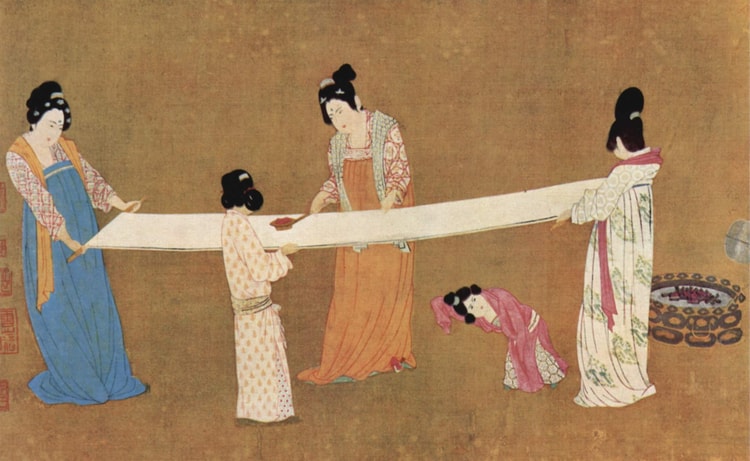 宋代檢查絲綢的婦女。 Unknown Artist (Public Domain) ](https://www.worldhistory.org/image/6920/women-checking-silk-song-china/ "Women Checking Silk, Song China.")總的來說,農業變得更有效率,農民的目標是生產超過自身需求。 城市人口變得更加密集,市場蓬勃發展,農村農民開始種植價格高的作物,例如糖、橙子、棉花、絲綢和茶葉。 為了通過運河和海運,將貨物運送到需要的地方,建造數千艘船,因此另一個行業成功。 公司變得更大複雜,具有不同級別的管理和所有權。 行會、批發商、合夥企業和股份公司都是隨著經濟開始慢慢呈現,出更類似於今天工業模式,發展起來。
### 藝術與科學
得益於機械、農業和製造工藝的創新,宋朝發展更加現代化和工業化。 重大發明或對現有思想的改進包括明輪船、火藥、紙幣、羅盤、尾柱舵、運河閘門和活字印刷。 鐵盔甲大量生產,劍由優質鋼材製成,水力波紋管創造過熱熔爐。
宋代文學繁榮。 李誡所著之《營造法式》是宋朝建築學的重要文獻(公元 1103 年)和百科全書均已成書。 著名的歷史著作如司馬光的《資治通鑑》(公元 1084 年出版)涵蓋了從公元前 403 年到公元 959 年的中國歷史。 這一時期出現了大量的詩歌作品。 最著名的詩人之一是蘇東坡(公元 1037-1101 年),他和許多同時代的詩人一樣,寫下了愛情、孤獨和悲傷。 宋代女性的境遇很可能不如她們前輩,尤其是纏足之類的習俗變得更加普遍,但著名的女詩人李清照曾描述了她的家人在公元 1127 年的流亡和她的著名故事 為丈夫的早逝而悲痛。
[  范寬《谿山行旅圖》 Fan Kuan (Public Domain) ](https://www.worldhistory.org/image/7331/travelling-among-streams--mountains-by-fan-kuan/ "Travelling among Streams & Mountains by Fan Kuan")在不斷增長的富裕中產階級,不斷增長需求的推動下,視覺藝術總體上蓬勃發展。 精美的瓷器和戲劇都受到新精英的歡迎。 山水畫旨在表現出更大的寫實主義,最著名的作品之一是范寬(約公元 990-1030 年)懸掛的 2x1 米絲綢《谿山行旅圖》。 花卉和野生動物繪畫,尤其是鳥類,也很受宋代藝術家的歡迎。 由於藝術鑑賞力的發展,許多最著名的藝術家的作品都被巧妙地複制,而這些贗品,有時還帶有著名藝術家的浮雕印章,至今仍繼續愚弄古董商。
### 領土威脅
到公元 12 世紀初,作為東亞霸主的地位,再次受到遼夏,對北方進攻的威脅。 更危險的是東北部的女真部落。 滿洲人的祖先,他們講通古斯語,並於公元 1115 年宣佈建立自己的金國。 宋國利用領土野心,兩國聯手打敗遼國。 不幸的是,儘管實現他們的目標,但宋卻暴露自己的軍事弱點。 因此,在公元 1125 年,晉國進攻了北方的部分地區,即使是大將軍童貫(公元 1054-1126 年)也無法阻止。 徽宗皇帝(公元 1100-1126 年在位)與其他數千人一起被俘,除了失去大片領土外,宋還被迫向女真人支付巨額贖金,以避免更多的生命損失。
戰敗迫使宋遷往長江流域,最終於公元 1138 年在浙江省杭州(又名臨安)建立了新首都。 這南宋的開端。 宋國領土的縮小,並沒有抑制蓬勃發展的經濟,幸運的是,泉州和福州的重要貿易港口都在南方,並作為跨國城市,繼續繁榮發展,大量穆斯林和印度教移民湧入 永久居留權。 南方也更加肥沃,並且每次收成都繼續盈餘。
[  南宋和金國地圖 Yu Ninjie (CC BY-SA) ](https://www.worldhistory.org/image/7326/map-of-southern-song--jin-states/ "Map of Southern Song & Jin States")公元 1127 年,宋軍擁立徽宗倖存的兒子之一為皇帝,後稱高宗(公元 1127-1162 年在位)。 經過半心半意的嘗試,從晉國收回失地的計劃,都正式放棄,並於公元 1141 年簽署了和平條約。 幸運的是,對於宋皇帝來說,他仍然控制著他前朝最富有的地區和大約 60% 的人口。 杭州繁榮。 它以風景秀麗的運河和花園而聞名,是一個繁榮的商業中心,生產絲綢和船隻,擁有超過一百萬的人口。 軍事上的失敗也讓宋朝統治者和知識分子重新思考他們的戰略,更好地幫助社會各階層。 例如,在首都,窮人得到免費福利和醫療援助。
### 蒙古入侵
就在宋人適應了女真的巨大動盪後,更大的威脅又出現,而且還是來自北方。 游牧的蒙古部落聚集,在成吉思汗(公元1206-1227年在位)的領導下,在公元13世紀的前三十年多次進攻和掠奪夏金國。 宋認為他們是下一個,因此準備軍隊,主要是沒收土地貴族的財富來資助——這一政策對內部統一毫無幫助。 不過,有一個緩刑,因為蒙古人正忙於將帝國擴張到西亞。
直到公元 1268 年,蒙古領袖忽必烈(公元 1260-1294 年在位)才將目光投向長江以南的土地。 首先,具有戰略意義的重要城市襄陽被圍困,由於蒙古人的堅持和優越的投石車,它於公元 1273 年陷落。 公元 1275 年,侵略者渡過長江,勢不可擋。 隨著眾多宋將叛逃投降,朝廷被小皇帝的謀士內訌所困擾,以及對整個常州城的殘酷屠殺,宋朝的末日已近在咫尺。 皇太后和她年幼的兒子恭宗皇帝(公元 1274-5 年在位)投降並被俘虜到北方城市北京。 一些忠誠者又戰鬥了三年,在此過程中又任命了兩個年輕的皇帝(端宗和帝昺),但蒙古人橫掃一切,在中國建立了元朝(公元 1271-1368 年),然後繼續前進 到越南。 宋國足夠富有,但由於缺乏政治統一、軍事投資和武器創新,付出了高昂的代價,成為覆蓋全球五分之一的,龐大蒙古帝國的一部分。
#### Editorial Review
This human-authored definition has been reviewed by our editorial team before publication to ensure accuracy, reliability and adherence to academic standards in accordance with our [editorial policy](https://www.worldhistory.org/static/editorial-policy/).
## 参考文献
- [Dawson, R. *The Chinese Experience.* Phoenix Press - Orion, 2017.](https://www.worldhistory.org/books/1898800499/)
- [Dillon, M. *China.* Routledge, 1998.](https://www.worldhistory.org/books/0700704396/)
- [Ebrey, P.B. *East Asia.* Wadsworth Publishing, 2013.](https://www.worldhistory.org/books/1133606474/)
- [Morris Rossabi. *A History of China.* Wiley-Blackwell, 2017.](https://www.worldhistory.org/books/B01JXT1KVQ/)
## 关于作者
马克是一位全职作家、研究人员、历史学家与编辑,他对艺术、建筑,以及研究所有文明共有的思想尤为感兴趣。马克拥有政治哲学硕士学位,目前担任WHE出版总监一职。
## 时间轴
- **960 CE - 976 CE**: Reign of Emperor Taizu, founder of the [Song dynasty](https://www.worldhistory.org/Song_Dynasty/) in [China](https://www.worldhistory.org/china/).
- **960 CE - 1125 CE**: The Northern [Song Dynasty](https://www.worldhistory.org/Song_Dynasty/) in [China](https://www.worldhistory.org/china/).
- **960 CE - 1279 CE**: [Song Dynasty](https://www.worldhistory.org/Song_Dynasty/) in [China](https://www.worldhistory.org/china/).
- **962 CE**: [Emperor Taizu of Song](https://www.worldhistory.org/Emperor_Taizu_of_Song/) introduces a new and harsh [law](https://www.worldhistory.org/disambiguation/law/) code in [China](https://www.worldhistory.org/china/).
- **976 CE - 997 CE**: Reign of Emperor [Taizong](https://www.worldhistory.org/disambiguation/Taizong/) of the [Song dynasty](https://www.worldhistory.org/Song_Dynasty/) in [China](https://www.worldhistory.org/china/).
- **c. 990 CE - 1030 CE**: Life of Chinese painter Fan Kuan.
- **997 CE - 1022 CE**: Reign of Emperor Zhenzong of the [Song dynasty](https://www.worldhistory.org/Song_Dynasty/) in [China](https://www.worldhistory.org/china/).
- **1004 CE**: Treaty of Shanyuan which brings peace between the [Liao dynasty](https://www.worldhistory.org/Khitan/) and [Song dynasty](https://www.worldhistory.org/Song_Dynasty/) of [China](https://www.worldhistory.org/china/) with the latter compelled to pay annual tribute.
- **1021 CE - 1086 CE**: Life of Wang Anshi, influential chancellor during the [Song dynasty](https://www.worldhistory.org/Song_Dynasty/).
- **1022 CE - 1063 CE**: Reign of Emperor Renzong of the [Song dynasty](https://www.worldhistory.org/Song_Dynasty/) in [China](https://www.worldhistory.org/china/).
- **1037 CE - 1101 CE**: Life of [Song dynasty](https://www.worldhistory.org/Song_Dynasty/) poet Su Dongpo.
- **1044 CE**: Defeat to the Xia state results in [China](https://www.worldhistory.org/china/)'s [Song dynasty](https://www.worldhistory.org/Song_Dynasty/) paying tribute.
- **1054 CE - 1126 CE**: Life of [Song dynasty](https://www.worldhistory.org/Song_Dynasty/) general Tong Guan.
- **1063 CE - 1067 CE**: Reign of Emperor Yingzong of the [Song dynasty](https://www.worldhistory.org/Song_Dynasty/) in [China](https://www.worldhistory.org/china/).
- **1067 CE - 1085 CE**: Reign of Emperor Shenzong of the [Song dynasty](https://www.worldhistory.org/Song_Dynasty/) in [China](https://www.worldhistory.org/china/).
- **1084 CE**: Sima Guang writes his 'Zizhi tongjian' (Comprehensive Mirror for Aid to Government), a history of [China](https://www.worldhistory.org/china/).
- **1085 CE - 1100 CE**: Reign of Emperor Zhizong of the [Song dynasty](https://www.worldhistory.org/Song_Dynasty/) in [China](https://www.worldhistory.org/china/).
- **1100 CE - 1126 CE**: Reign of Emperor Huizong of the [Song dynasty](https://www.worldhistory.org/Song_Dynasty/) in [China](https://www.worldhistory.org/china/).
- **1103 CE**: Lie Jie in [China](https://www.worldhistory.org/china/) writes his 'Yingzao fashi', a treatise on [architecture](https://www.worldhistory.org/disambiguation/architecture/).
- **1125 CE**: The Jin state attacks Song [China](https://www.worldhistory.org/china/).
- **1125 CE**: The [Jurchen Jin state](https://www.worldhistory.org/Jurchen_Jin_Dynasty/) invades Song [China](https://www.worldhistory.org/china/) necessitating the latter to move south and form the Southern [Song dynasty](https://www.worldhistory.org/Song_Dynasty/).
- **1125 CE - 1279 CE**: The Southern [Song Dynasty](https://www.worldhistory.org/Song_Dynasty/) in [China](https://www.worldhistory.org/china/).
- **1127 CE - 1162 CE**: Reign of Emperor Gaozong of the [Song dynasty](https://www.worldhistory.org/Song_Dynasty/) in [China](https://www.worldhistory.org/china/).
- **1138 CE**: Hangzhou (aka Linan) is made the capital of the [Song Dynasty](https://www.worldhistory.org/Song_Dynasty/), now known as the Southern Song.
- **1141 CE**: A peace treaty is signed betwwen the (southern) [Song Dynasty](https://www.worldhistory.org/Song_Dynasty/) and Jin state.
- **1142 CE**: The [Jurchen Jin dynasty](https://www.worldhistory.org/Jurchen_Jin_Dynasty/) and Southern [Song dynasty](https://www.worldhistory.org/Song_Dynasty/) sign a formal peace treaty.
- **1162 CE - 1189 CE**: Reign of Emperor Xiaozong of the [Song dynasty](https://www.worldhistory.org/Song_Dynasty/) in [China](https://www.worldhistory.org/china/).
- **1189 CE - 1194 CE**: Reign of Emperor Guangzong of the [Song dynasty](https://www.worldhistory.org/Song_Dynasty/) in [China](https://www.worldhistory.org/china/).
- **1194 CE - 1224 CE**: Reign of Emperor Ningzong of the [Song dynasty](https://www.worldhistory.org/Song_Dynasty/) in [China](https://www.worldhistory.org/china/).
- **1212 CE - 1215 CE**: The [Mongols](https://www.worldhistory.org/Mongol_Empire/) attack Song [China](https://www.worldhistory.org/china/), sacking over 90 [cities](https://www.worldhistory.org/city/).
- **1215 CE**: The [Mongols](https://www.worldhistory.org/Mongol_Empire/) sack Beijing.
- **1224 CE - 1264 CE**: Reign of Emperor Lizong of the [Song dynasty](https://www.worldhistory.org/Song_Dynasty/) in [China](https://www.worldhistory.org/china/).
- **1264 CE - 1274 CE**: Reign of Emperor Duzong of the [Song dynasty](https://www.worldhistory.org/Song_Dynasty/) in [China](https://www.worldhistory.org/china/).
- **1268 CE**: [Kublai Khan](https://www.worldhistory.org/Kublai_Khan/) resumes the [Mongol](https://www.worldhistory.org/Mongol_Empire/) attacks on [Song Dynasty](https://www.worldhistory.org/Song_Dynasty/) [China](https://www.worldhistory.org/china/).
- **1273 CE**: Xiangyang falls into [Mongol](https://www.worldhistory.org/Mongol_Empire/) hands.
- **1274 CE - 1275 CE**: Reign of Emperor Gongzong of the [Song dynasty](https://www.worldhistory.org/Song_Dynasty/) in southern [China](https://www.worldhistory.org/china/).
- **1275 CE - 1277 CE**: Reign of Emperor Duanzong of the [Song dynasty](https://www.worldhistory.org/Song_Dynasty/) in southern [China](https://www.worldhistory.org/china/).
- **1275 CE - 1279 CE**: The [Mongols](https://www.worldhistory.org/Mongol_Empire/) led by [Kublai Khan](https://www.worldhistory.org/Kublai_Khan/) attack and [conquer](https://www.worldhistory.org/warfare/) the last remnants of Song [China](https://www.worldhistory.org/china/).
- **28 Mar 1276 CE**: Lin'an, the capital of the [Song Dynasty](https://www.worldhistory.org/Song_Dynasty/), is captured by a [Mongol](https://www.worldhistory.org/Mongol_Empire/) army.
- **1278 CE - 1279 CE**: Reign of Emperor Dibing of the [Song dynasty](https://www.worldhistory.org/Song_Dynasty/) in southern [China](https://www.worldhistory.org/china/).
- **19 Mar 1279 CE**: The [Mongols](https://www.worldhistory.org/Mongol_Empire/) complete their [conquest](https://www.worldhistory.org/warfare/) of [Song Dynasty](https://www.worldhistory.org/Song_Dynasty/) [China](https://www.worldhistory.org/china/) with victory at the naval [battle](https://www.worldhistory.org/disambiguation/battle/) at Yaishan.
## 外部链接
- [Northern Song Dynasty (960–1127) | Essay | The Metropolitan Museum of Art | Heilbrunn Timeline of Art History](https://www.metmuseum.org/toah/hd/nsong/hd_nsong.htm)
- [Southern Song Dynasty (1127–1279) | Essay | The Metropolitan Museum of Art | Heilbrunn Timeline of Art History](https://www.metmuseum.org/toah/hd/ssong/hd_ssong.htm)
## 引用本文
### APA
Cartwright, M. (2023, March 13). 宋朝. (. 晚生姓高, 翻译). *World History Encyclopedia*.
### Chicago
Cartwright, Mark. "宋朝." 翻译: 晚生姓高. *World History Encyclopedia*, March 13, 2023. .
### MLA
Cartwright, Mark. "宋朝." 翻译: 晚生姓高. *World History Encyclopedia*, 13 Mar 2023, .
## 许可与版权
提交人: [晚生姓高](https://www.worldhistory.org/user/ezswvyqf/ "User Page: 晚生姓高"), 发表于 13 March 2023. 请查阅原始来源以获取版权信息。 请注意,从本页面链接的内容可能具有不同的许可条款。