---
title: Antik Roma
author: Joshua J. Mark
translator: Doğa Çelik
source: https://www.worldhistory.org/trans/tr/1-68/antik-roma/
format: machine-readable-alternate
license: Creative Commons Attribution-NonCommercial-ShareAlike (https://creativecommons.org/licenses/by-nc-sa/4.0/)
updated: 2021-08-07
---
# Antik Roma
_Yazan: [Joshua J. Mark](https://www.worldhistory.org/user/JPryst/)_
_Çeviren [Doğa Çelik](https://www.worldhistory.org/user/doaelik)_
Efsaneye göre, Antik Roma iki yarı-[tanrı](https://www.worldhistory.org/trans/tr/1-10299/tanri/) kardeş olan [Romulus ve Remus](https://www.worldhistory.org/trans/tr/1-12205/romulus-ve-remus/) tarafından, M.Ö. 753 yılının 21 Nisan'ında kurulmuştur. Efsaneye göre, şehrin kimin yöneteceğine dair çıkacağı tartışma (başka kaynaklarda nereye inşa edileceğine dairdir) Romulus'un Remus'u öldürmesi ve şehre kendi ismini vermesiyle son bulmuştur. Bu hikaye, bilinen en yaygın olanıdır, fakat tek mit bu değildir.
Başka efsanelerde şehrin isminin kökeni, Aeneas ve [Truva](https://www.worldhistory.org/trans/tr/1-372/truva/)'nın çöküşünün ardından kaçan diğerleriyle beraber seyahat eden Roma isimli bir kadına aittir. Tiber Nehri'nin sınırına geldiklerinde, Roma ve diğer kadınlar erkeklere karşı gelerek yolculuğa devam etmek istememişlerdir. Roma, yanına diğer kadınları da alarak Truvalı gemileri yakmış ve sonucunda bu nehrin dibinde mahsur kalarak zamanla Roma'yı kurmuşlardır. Truvalı Aeneas da bu efsaneye dahildir ve aynı zamanda Virgil'in eseri Aeneid'de Romulus ve Remus'un atası olduğundan, Roma'yı kurduğundan söz edilir. Böylece Roma, aynı zamanda Truva'yla da bağlantılı görülebilmektedir.
Başka teorilere göre bu ünlü şehrin ismi "Rumon"dan gelmektedir. Rumon, Tiber Nehri'nin antik ismidir ve nehrin kıyısındaki küçük bir takas merkezinin Etrüsk kökenli bir ismi olabileceği rivayet edilmektedir.
### Erken dönemde Roma
En başta Tiber'in kıyısında bulunan küçük bir kasabayken, ticaret sayesinde Roma ciddi anlamda büyümeye başlamıştır. Şehrin bulunduğu konum, tacirlerin sattıkları ürünleri su yoluyla rahatlıkla taşıyabilmelerini sağlamıştır. Bu ilk büyüme döneminde Romulus'tan Tarquin'e kadar yedi kral başta bulunmuştur. Romalıların kendi kültürlerini oluşturmasının büyük etkenlerinden biri de Yunan kültür ve medeniyetinin güneydeki Yunan kolonileriyle etkileşimler aracılığıyla Roma'ya taşınması olmuştur. Yunanlardan aynı zamanda okuryazarlık, din ve mimarinin temelleri alınmıştır.
Kuzeydeki Etrüskler de ticari bir model ve şehir hayatının örneği olmuştur. Etruria da Roma gibi ticaret için ideal bir konumdaydı, ve erken Romalılar ya Etrüsklerden örnek olarak ticareti ilerlettiler ya da Etrüsklerin MÖ 650 ve 600 (etkileri daha önce hissedilse de) zamanında çevredeki işgalleri de bir etkileşim yolu olmuş olabilir. Etrüsklerin Roma kültürü ve toplumundaki etkileri tartışmaya açık olsa da, erken dönemdeki katkıları reddedilemez.
Baştan beri, Romalılar başka kültürlerden yetenek ve konsept alma konusunda başarılı olmuşlardır. Roma Krallığı, küçük bir takas merkezinden zengin bir şehre dönüşmüştür, bu süreç MÖ 8. ve 6. yüzyıl aralığında hız kazanmıştır. Roma'nın yedi kralından sonuncusu, Gururlu Tarquin MÖ 509'da tahttan indirilince rakibi Lucius Junius Brutus devlet sistemini reforme etmiş ve [Roma Cumhuriyeti](https://www.worldhistory.org/trans/tr/1-560/roma-cumhuriyeti/)'ni kurmuştur.
### Savaş dönemi & genişleme
İlk yıllarda Roma'ya güç ve zenginlik getiren olgu ticaret olduysa da, Roma'yı antik dünyanın asıl gücü haline getiren savaşlar oldu. Kuzey Afrika'daki [Kartaca](https://www.worldhistory.org/trans/tr/1-205/kartaca/)'ya karşı gerçekleştirilen savaşlar (Punik Savaşları olarak da bilinir, MÖ 246-146) Roma'nın gücünü arttırdı ve zenginlik ve prestij getirdi. Batı Akdeniz'de hem Roma hem de Kartaca ticari rakiplerdi, ve Kartaca düştüğünde, Roma bölgede neredeyse mutlak bir güce kavuştu; ancak denizin tamamen Roma kontrolü altına girmesi, mevcut korsanlar tarafından engelleniyordu.
Roma Cumhuriyeti güç ve prestijini arttırırken, Roma şehri zamanla yolsuzluktan, kibirden ve yabancı kölelere fazla güvenilmesinden dolayı sıkıntılar yaşamaya başladı. İşsiz kalan Romalılardan bazıları, ki bu insanlar gelen kölelerden ötürü işsiz kalmışlardı, bir eşkiya grubu oluşturarak kim para verirse onun hizmetine girmeye başladılar. "Patrician" grubu, şehrin zenginleri, çalışan grup, "pebeian" grubunun sırtından daha da zenginleşmeye başladı.
[  2. Yüzyıl Roma Yayılmasını Gösteren Harita US Military Academy (Public Domain) ](https://www.worldhistory.org/image/131/map-of-2nd-century-roman-expansion/ "Map of 2nd Century Roman Expansion")MÖ 2.yüzyılda, Gracchi kardeşler Tiberius ve Gaius, iki Roma tribünü genel anlamda hem toprak hem de politika reformu getirdiler. Bunu yapmaya çalışırken ikisi de öldürülse de, çabaları kanun reformlarının oluşturulmasını sağladı, aynı zamanda Roma Senatosu'nun içindeki yolsuzluklar kısmen ortaya çıktı (ya da senatörler bu işi daha gizli yapmaya başladılar). İlk Triumvirlik zamanına gelindiğinde, hem Roma şehri hem de Roma Cumhuriyeti ciddi bir refah içindeydi.
### Cumhuriyet
Buna rağmen, Roma'da sınıf ayrımı söz konusuydu. Yöneten sınıf kendilerini *optimates* (en iyi adamlar) olarak tanımlıyordu, daha alt sınıflar veya bu sınıfa sempati duyanlar ise *populares* (genel olarak insanlar) olarak geçiyordu. Bu isimler belli bir ideolojiye inanan kişiler için basit birer etiket olarak kullanılıyordu, herhangi politik bir parti oluşumu değillerdi, üst sınıftakilerin hepsi *optimates* olmadığı gibi alt sınıftakilerin hepsi de *populares* değildi.
Genel olarak, *optimates* Roma Senatosu'na değer veriyor, geleneksel politik ve sosyal anlayışları destekliyor ve yönetici sınıfın prestijine ve üstünlüğüne inanıyordu. *Populares* ise genel anlamda Roma Cumhuriyeti'nin demokratikleştirilmesine ve reforma yönelik inançlara sahipti. Bu iki karşılıklı bakış açısı, Roma Cumhuriyeti'nin sonunu getirecek üç adamın çatışmasında özellikle ortaya çıkacaktı.
Marcus Licinius Crassus ve politik açıdan rakibi, Gnaeus Pompeius Magnus (Büyük Pompey) daha genç bir politikacı olan Gaius Julius Caesar ile birleşti ve modern tarihçiler tarafından kullanılan, geçmişte bu üç adamın kendilerini bu şekilde adlandırmadıkları "Birinci Triumvirlik" (üçlü yönetim) oluşturuldu. Crassus ve Pompey optimate bakış açısına sahipken, Caesar populare bakış açısına yakındı.
Üç adam da birbirleriyle eşit hırslara sahipti, ve Roma yükselmeye devam ederken birbirlerinin güçlerini kontrol ediyorlardı. Crassus, Roma'daki en zengin adamdı ve diğer üst sınıf zenginlerin kendisine "güvenlik" parası ödemelerini sağlıyordu. Eğer kişi ödeme yaparsa, Crassus o kişinin evini yakmıyordu, ama eğer para ödenmezse Crassus bir yangın çıkarıyor, ardından da yangını söndürme karşılığında para talep ediyordu. Bu yangın ticaretinin motivasyonu asil olmamakla beraber, Crassus bir açıdan şehre büyük katkı sağlayan itfaiyeciliği aktifleştirmiş oldu.
Hem Pompey hem de Caesar işgalleriyle Roma'ya katkı sağlayan büyük generallerdi. Crassus Roma'nın en zengin adamı (belki de tüm Roma tarihinin) olmasına rağmen, Pompey ve Caesar'ın sahip olduğu askeri başarılar ve takibinde gelen saygıya sahip değildi. Bu yüzden Crassus, MÖ 53'te Parthia'ya bir kuvvetle gitti, ancak günümüz Türkiye'sinde bulunan Carrhae'de savaşı kaybetti ve öldürüldü.
[ 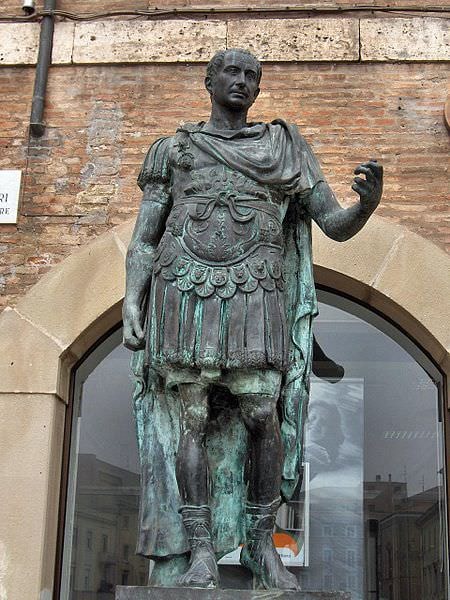 Jül Sezar Georges Jansoone (CC BY-NC-SA) ](https://www.worldhistory.org/image/2737/julius-caesar/ "Julius Caesar")Crassus'un vefatının ardından, Birinci Triumvirlik dağıldı ve Pompey ve Caesar birbirlerines savaş ilan ettiler. Pompey rakibini yasal yollarda yok etmeye çalıştı ve Senato'nun onu yargılamasını ayarladı. Fakat Caesar dönüp mahkemeye karşısına çıkmak yerine ordusuyla beraber Rubicon Nehri'ni MÖ 49'da geçti ve Roma'ya ordusunun başında girdi.
Kendisine yapılan ithamlara cevap vermeyi reddetti ve Pompey'i rakip olarak ortadan kaldırmaya odaklandı. MÖ 48'de, Yunanistan'ın Pharsalus bölgesinde gerçekleştiren savaşta karşı karşıya geldiler. Bu mücadelede Caesar'ın kuvvetleri Pompey'inkilere kıyasla oldukça azdı. Pompey, Mısır'a kaçtı ve orada yardım bulmayı umdu, ancak orada suikaste kurban gitti. Caesar'ın kendisinden kat ve kat güçlü bir kuvvete karşı olan zaferi duyuldu, ve Pompey'in eski dostları ve destekçileri Caesar'ın tarafına geçtiler, onun tanrılar tarafından seçildiğine inanıyorlardı.
### İmparatorluğa doğru
Julius Caesar, bu olayların ardından Roma'nın en güçlü kişisi olmuştu. Kendisini "diktatör" ilan ederek Cumhuriyet dönemini tamamen bitirmiş oldu. İnsanlar tarafından oldukça seviliyordu ve güçlü ve stabil bir merkezi hükümet yaratma çabası Roma'nın refahını daha da arttırdı. Muhtemelen tam da bu başarılarından ötürü MÖ 44'te birkaç Romalı senatör tarafından öldürüldü.
Bu senatörlerden Brutus ve Cassius, Caesar'ın daha da güçlenmesinden ve Senato'yu dağıtmasından korkuyorlardı. Ölümünün ardından, kuzeni ve baştan beri destekçisi Marcus Antonius (Mark Antony) Caesar'ın yeğeni ve varisi, Gaius Octavius Thurinus (Octavian) ve Caesar'ın arkadaşı, Marcus Aemilius Lepidus ile birleşerek Brutus ve Cassius'u MÖ 42'de gerçekleşen Phillippi savaşında yendi.
[  İkinci Triumvirlik'in Ayrımı ColdEl (CC BY-SA) ](https://www.worldhistory.org/image/4951/division-of-the-second-triumvirate/ "Division of the Second Triumvirate")Octavian, Antony ve Lepidus İkinci Triumvirlik'i oluşturmuş oldular ancak ilkindeki gibi hepsi oldukça hırslıydı. Lepidus'un aradan çekilmesini Antony ve Octavian ona Hispania ve Afrika'yı vererek sağladılar, böylece Lepidus Roma'ya herhangi bir müdahelede bulunamayacaktı. Diğer antlaşmaya göreyse Octavian batı Roma topraklarını, Antony ise doğu Roma topraklarını yönetecekti.
Ancak Antony'nin Mısır'ın kraliçesi VII. Cleopatra ile bir ilişkiye başlaması, Octavian'ın hayal ettiği dengeyi bozdu ve ikisi savaşa girdi. Antony ve Cleopatra'nın birleştirilmiş kuvvetleri MÖ 31'de gerçekleşen Actium Savaşı'nda yenildiler ve ikisi de intahar etti. Octavian, Roma'daki tek güç olarak ortaya çıktı. MÖ 27'de Senato tarafından olağanüstü güç aldı ve ismini [Augustus](https://www.worldhistory.org/trans/tr/1-412/augustus/) olarak değiştirerek Roma'nın ilk imparatoru oldu. Bazı tarihçilere göre, Roma tarihinin bitişi ve [Roma İmparatorluğu](https://www.worldhistory.org/trans/tr/1-100/roma-imparatorlugu/)'nun başlangıcı tam da bu döneme denk gelmektedir.
#### Editorial Review
This human-authored definition has been reviewed by our editorial team before publication to ensure accuracy, reliability and adherence to academic standards in accordance with our [editorial policy](https://www.worldhistory.org/static/editorial-policy/).
## Yazar Hakkında
Joshua J. Mark, Dünya Tarihi Ansiklopedisi'nin kurucu ortağı ve içerik direktörüdür. Daha önce New York'taki Marist College’de tarih, felsefe, edebiyat ve yazı dersleri vermiştir. Ayrıca pek çok yere seyahat etmiş, Yunanistan ve Almanya’da yaşamıştır.
- [Linkedin Profile](https://www.linkedin.com/pub/joshua-j-mark/38/614/339)
## Zaman çizelgesi
- **753 BCE**: The legendary founding date of [Rome](https://www.worldhistory.org/Rome/).
- **753 BCE - 510 BCE**: Regal Period of ancient [Rome](https://www.worldhistory.org/Rome/) from Founding to Birth of the Republic.
- **750 BCE - 510 BCE**: The (semi-mythological) seven kings of [Rome](https://www.worldhistory.org/Rome/): [Romulus](https://www.worldhistory.org/Romulus_and_Remus/), Numa Pompilius, Tulus Hostilius, Ancus Marcius, Lucius Tarquinius Priscus, Servius Tullius, [Lucius Tarquinius Superbus](https://www.worldhistory.org/Lucius_Tarquinius_Superbus/).
- **c. 620 BCE**: Posible founding date for [Ostia](https://www.worldhistory.org/Ostia/), the port of [Rome](https://www.worldhistory.org/Rome/).
- **599 BCE - 500 BCE**: The traditional date when the [Circus Maximus](https://www.worldhistory.org/Circus_Maximus/) of [Rome](https://www.worldhistory.org/Rome/) is first laid out.
- **534 BCE - 510 BCE**: Reign of [Lucius Tarquinius Superbus](https://www.worldhistory.org/Lucius_Tarquinius_Superbus/), last king of [Rome](https://www.worldhistory.org/Rome/).
- **510 BCE - 509 BCE**: First treaty between [Rome](https://www.worldhistory.org/Rome/) and [Carthage](https://www.worldhistory.org/carthage/).
- **509 BCE**: Foundation of the [Roman Republic](https://www.worldhistory.org/Roman_Republic/).
- **c. 508 BCE**: [Lars Porsenna](https://www.worldhistory.org/Lars_Porsenna/), [Etruscan](https://www.worldhistory.org/Etruscan_Civilization/) king of [Chiusi](https://www.worldhistory.org/Chiusi/), lays siege to [Rome](https://www.worldhistory.org/Rome/).
- **504 BCE**: Migration of Claudii from Sabine lands to [Rome](https://www.worldhistory.org/Rome/).
- **c. 499 BCE**: [Battle](https://www.worldhistory.org/disambiguation/battle/) of Lake Regillus between [Rome](https://www.worldhistory.org/Rome/) and the Latin League.
- **c. 497 BCE**: The first [temple](https://www.worldhistory.org/temple/) dedicated to [Saturn](https://www.worldhistory.org/Saturn/) is constructed in the [Forum Romanum](https://www.worldhistory.org/Roman_Forum/) of [Rome](https://www.worldhistory.org/Rome/).
- **495 BCE**: [Lucius Tarquinius Superbus](https://www.worldhistory.org/Lucius_Tarquinius_Superbus/), last king of [Rome](https://www.worldhistory.org/Rome/), dies in exile at Cumae.
- **495 BCE**: A [temple](https://www.worldhistory.org/temple/) is built in honour of Mercury near [Rome](https://www.worldhistory.org/Rome/)'s [Circus Maximus](https://www.worldhistory.org/Circus_Maximus/).
- **494 BCE**: Traditional date the office of the tribuni plebis is created in [Rome](https://www.worldhistory.org/Rome/).
- **493 BCE**: Foedus Cassianus - treaty by Spurius Cassius Vecellinus with the Latin League after the [Battle](https://www.worldhistory.org/disambiguation/battle/) of Lake Regillus.
- **484 BCE**: The first [temple](https://www.worldhistory.org/temple/) of the [Dioscuri](https://www.worldhistory.org/Castor_and_Pollux/) (Castor & Pollux) is dedicated in [Rome](https://www.worldhistory.org/Rome/)'s [Forum Romanum](https://www.worldhistory.org/Roman_Forum/) by Aulus Postumius following his victory over the Latins at the [Battle](https://www.worldhistory.org/disambiguation/battle/) of Lake Regillus.
- **451 BCE - 450 BCE**: Decemvirate and Publication of [Twelve Tables](https://www.worldhistory.org/Twelve_Tables/) of [Roman Law](https://www.worldhistory.org/Roman_Law/).
- **c. 400 BCE**: [Roman](https://www.worldhistory.org/disambiguation/Roman/) tale of mythical twins [Romulus and Remus](https://www.worldhistory.org/Romulus_and_Remus/) first recorded.
- **394 BCE**: [Etruscan](https://www.worldhistory.org/Etruscan_Civilization/) [Volsinii](https://www.worldhistory.org/volsinii/) and their ally Sappinum unsuccessfully attacks [Rome](https://www.worldhistory.org/Rome/).
- **390 BCE**: Gauls sack [Rome](https://www.worldhistory.org/Rome/).
- **c. 390 BCE**: "Gallic Catastrophe:" [Brennus](https://www.worldhistory.org/brennus/) of the Senones defeats the Romans at Allia, and subsequently sacks [Rome](https://www.worldhistory.org/Rome/).
- **380 BCE**: Rebuilding of [Rome](https://www.worldhistory.org/Rome/). Strong walls around the seven hills.
- **343 BCE - 341 BCE**: First Samnite [War](https://www.worldhistory.org/disambiguation/War/) ([Rome](https://www.worldhistory.org/Rome/) vs. Samnites).
- **340 BCE - 338 BCE**: Latin [War](https://www.worldhistory.org/disambiguation/War/), victory for [Rome](https://www.worldhistory.org/Rome/).
- **326 BCE - 304 BCE**: Second Samnite [War](https://www.worldhistory.org/disambiguation/War/).
- **321 BCE**: The Via Appia, a famous [Roman](https://www.worldhistory.org/disambiguation/Roman/) road, is constructed.
- **298 BCE - 290 BCE**: Third Samnite [War](https://www.worldhistory.org/disambiguation/War/) between [Rome](https://www.worldhistory.org/Rome/) and the Samnite people.
- **295 BCE**: [Roman](https://www.worldhistory.org/disambiguation/Roman/) victory over Samnites, Gauls and Umbrians at Sentinum.
- **292 BCE**: The Romans adopt the [Greek](https://www.worldhistory.org/disambiguation/greek/) [god](https://www.worldhistory.org/God/) of [medicine](https://www.worldhistory.org/disambiguation/medicine/) [Asclepius](https://www.worldhistory.org/Asclepius/) by stealing his sacred snake from [Epidaurus](https://www.worldhistory.org/epidaurus/) and setting up a [temple](https://www.worldhistory.org/temple/) on the Tiber Island.
- **Mar 218 BCE**: [Rome](https://www.worldhistory.org/Rome/) declares [war](https://www.worldhistory.org/disambiguation/War/) on [Carthage](https://www.worldhistory.org/carthage/) after [Hannibal](https://www.worldhistory.org/hannibal/) sacks [Saguntum](https://www.worldhistory.org/Saguntum/) in Spain. The [Second Punic War](https://www.worldhistory.org/Second_Punic_War/) begins.
- **213 BCE - 212 BCE**: [Roman](https://www.worldhistory.org/disambiguation/Roman/) commander [Marcus Claudius Marcellus](https://www.worldhistory.org/Marcus_Claudius_Marcellus/) lays seige to and ultimately sacks [Syracuse](https://www.worldhistory.org/syracuse/).
- **196 BCE**: The earliest known Triumphal Arches are built in [Rome](https://www.worldhistory.org/Rome/) by L.Sertinius.
- **184 BCE**: The first basilica is added to [Rome](https://www.worldhistory.org/Rome/)'s [Forum Romanum](https://www.worldhistory.org/Roman_Forum/).
- **168 BCE**: [Rome](https://www.worldhistory.org/Rome/) defeats [Macedon](https://www.worldhistory.org/macedon/) at [Battle of Pydna](https://www.worldhistory.org/Battle_of_Pydna/).
- **166 BCE**: [Rome](https://www.worldhistory.org/Rome/) puts [Delos](https://www.worldhistory.org/delos/) under the jurisdiction of [Athens](https://www.worldhistory.org/Athens/) and makes the island a free port.
- **146 BCE**: First [Roman](https://www.worldhistory.org/disambiguation/Roman/) all-marble building is constructed, the [temple](https://www.worldhistory.org/temple/) of [Jupiter](https://www.worldhistory.org/jupiter/) Stater in [Rome](https://www.worldhistory.org/Rome/).
- **121 BCE**: [Gallia](https://www.worldhistory.org/gaul/) Narbonensis becomes a [Roman](https://www.worldhistory.org/disambiguation/Roman/) province.
- **107 BCE - 100 BCE**: [Gaius Marius](https://www.worldhistory.org/Gaius_Marius/) reforms the [Roman army](https://www.worldhistory.org/Roman_Army/).
- **12 Jul 100 BCE - 15 Mar 44 BCE**: Life of Gaius [Julius Caesar](https://www.worldhistory.org/Julius_Caesar/), founder of the [Roman Empire](https://www.worldhistory.org/Roman_Empire/).
- **89 BCE**: All [poleis](https://www.worldhistory.org/Polis/) or [city](https://www.worldhistory.org/city/)-states in [Magna Graecia](https://www.worldhistory.org/Magna_Graecia/) come under [Roman](https://www.worldhistory.org/disambiguation/Roman/) control.
- **80 BCE**: [Sulla](https://www.worldhistory.org/sulla/) moves the [Olympic Games](https://www.worldhistory.org/Olympic_Games/) to [Rome](https://www.worldhistory.org/Rome/) for a single Olympiad.
- **70 BCE**: [Pompey](https://www.worldhistory.org/pompey/) and [Crassus](https://www.worldhistory.org/Marcus_Licinius_Crassus/) are made consuls.
- **59 BCE - 17 CE**: Life of [Livy](https://www.worldhistory.org/livy/).
- **58 BCE - 51 BCE**: [Julius Caesar](https://www.worldhistory.org/Julius_Caesar/)'s [conquest](https://www.worldhistory.org/warfare/) of [Gaul](https://www.worldhistory.org/gaul/).
- **55 BCE**: [Pompey the Great](https://www.worldhistory.org/pompey/) builds the first permanent stone [theatre](https://www.worldhistory.org/disambiguation/theatre/) in [Rome](https://www.worldhistory.org/Rome/).
- **55 BCE - 54 BCE**: [Julius Caesar](https://www.worldhistory.org/Julius_Caesar/)'s expeditions in [Britain](https://www.worldhistory.org/disambiguation/Britain/).
- **54 BCE - 29 BCE**: Forum of [Caesar](https://www.worldhistory.org/disambiguation/caesar/) constructed in [Rome](https://www.worldhistory.org/Rome/) by [Julius Caesar](https://www.worldhistory.org/Julius_Caesar/) as another area to conduct judicial business. It is the best surviving of his monuments.
- **15 Mar 44 BCE**: [Julius Caesar](https://www.worldhistory.org/Julius_Caesar/) is murdered.
- **43 BCE - 36 BCE**: [Second Triumvirate](https://www.worldhistory.org/Second_Triumvirate/): [Antony](https://www.worldhistory.org/Mark_Antony/), [Octavian](https://www.worldhistory.org/augustus/), and Lepidus (official approval by the [Roman Senate](https://www.worldhistory.org/Roman_Senate/)). Mass proscriptions including [Cicero](https://www.worldhistory.org/Cicero/).
- **43 BCE - 17 CE**: Life of the [Roman](https://www.worldhistory.org/disambiguation/Roman/) writer [Ovid](https://www.worldhistory.org/ovid/), author of Metamorphoses.
- **36 BCE**: [Agrippa](https://www.worldhistory.org/Marcus_Agrippa/) defeats the naval fleet of Sextus [Pompey](https://www.worldhistory.org/pompey/) in the [battle](https://www.worldhistory.org/disambiguation/battle/) of Naulochos.
- **31 BCE**: [Greece](https://www.worldhistory.org/greece/) absorbed into [Roman Empire](https://www.worldhistory.org/Roman_Empire/).
- **29 BCE**: [Augustus](https://www.worldhistory.org/augustus/) builds the [temple](https://www.worldhistory.org/temple/) of Divius Iulius on the spot of [Julius Caesar](https://www.worldhistory.org/Julius_Caesar/)'s funeral pyre in [Rome](https://www.worldhistory.org/Rome/)'s [Forum Romanum](https://www.worldhistory.org/Roman_Forum/).
- **c. 27 BCE**: The first [Pantheon](https://www.worldhistory.org/Pantheon/) is built in [Rome](https://www.worldhistory.org/Rome/) and dedicated by [Marcus Agrippa](https://www.worldhistory.org/Marcus_Agrippa/).
- **c. 20 BCE**: Military engineer and architect [Vitruvius](https://www.worldhistory.org/Vitruvius/) publishes his "De Architectura".
- **c. 20 BCE**: The Campus Martius baths in [Rome](https://www.worldhistory.org/Rome/) are constructed and donated to the people by [Agrippa](https://www.worldhistory.org/Marcus_Agrippa/).
- **19 BCE**: Arch of [Augustus](https://www.worldhistory.org/augustus/) built in [Rome](https://www.worldhistory.org/Rome/) to commemorate victory over the Parthians.
- **c. 13 BCE**: Official inauguration of the [Theatre of Marcellus](https://www.worldhistory.org/article/614/theatre-of-marcellus/) in [Rome](https://www.worldhistory.org/Rome/).
- **c. 10 BCE**: [Augustus](https://www.worldhistory.org/augustus/) rebuilds the [Temple of Castor and Pollux](https://www.worldhistory.org/article/632/temple-of-castor--pollux/) in [Rome](https://www.worldhistory.org/Rome/)'s [Forum Romanum](https://www.worldhistory.org/Roman_Forum/).
- **1 CE - 100 CE**: [Mithraism](https://www.worldhistory.org/Mithraic_Mysteries/) spreads in the [Roman empire](https://www.worldhistory.org/Roman_Empire/).
- **c. 13 CE**: [Augustus](https://www.worldhistory.org/augustus/) creates the [cohortes urbanae](https://www.worldhistory.org/Cohortes_Urbanae/) in [Rome](https://www.worldhistory.org/Rome/) to help maintain public order.
- **c. 23 CE**: The castra praetoria, permanent camp of the [Praetorian Guard](https://www.worldhistory.org/Praetorian_Guard/), is built in [Rome](https://www.worldhistory.org/Rome/) by [Sejanus](https://www.worldhistory.org/sejanus/).
- **42 CE - 62 CE**: [Paul the Apostle](https://www.worldhistory.org/Paul_the_Apostle/) goes on missionary journeys across [Asia Minor](https://www.worldhistory.org/Asia_Minor/), [Greece](https://www.worldhistory.org/greece/), and [Rome](https://www.worldhistory.org/Rome/).
- **c. 50 CE - c. 60 CE**: Establishment of various Christian communities in the Eastern [Mediterranean](https://www.worldhistory.org/disambiguation/mediterranean/), [Greece](https://www.worldhistory.org/greece/), [Egypt](https://www.worldhistory.org/egypt/), and at least the [city](https://www.worldhistory.org/city/) of [Rome](https://www.worldhistory.org/Rome/).
- **60 CE - 61 CE**: [Boudicca](https://www.worldhistory.org/Boudicca/)'s Revolt in [Britain](https://www.worldhistory.org/disambiguation/Britain/).
- **64 CE**: Fire destroys the [Circus Maximus](https://www.worldhistory.org/Circus_Maximus/) in [Rome](https://www.worldhistory.org/Rome/).
- **64 CE**: Unofficial persecution of Christians in [Rome](https://www.worldhistory.org/Rome/).
- **64 CE**: The great fire in [Rome](https://www.worldhistory.org/Rome/).
- **c. 64 CE**: The [Roman](https://www.worldhistory.org/disambiguation/Roman/) port of [Ostia](https://www.worldhistory.org/Ostia/) reaches its maximum size becoming a major urban centre.
- **c. 65 CE**: The [Circus Maximus](https://www.worldhistory.org/Circus_Maximus/) in [Rome](https://www.worldhistory.org/Rome/) is rebuilt and its capacity increased to 250,000.
- **c. 65 CE**: The Baths of [Nero](https://www.worldhistory.org/Nero/) are built in [Rome](https://www.worldhistory.org/Rome/).
- **66 CE - 73 CE**: The Jewish Revolt against [Rome](https://www.worldhistory.org/Rome/).
- **68 CE - 69 CE**: [Year of the Four Emperors](https://www.worldhistory.org/Year_of_the_Four_Emperors/): Civil [war](https://www.worldhistory.org/disambiguation/War/) in [Rome](https://www.worldhistory.org/Rome/).
- **70 CE**: The [city](https://www.worldhistory.org/city/) of [Jerusalem](https://www.worldhistory.org/jerusalem/) is besieged and captured by [Rome](https://www.worldhistory.org/Rome/); the Second [Temple](https://www.worldhistory.org/temple/) destroyed.
- **Jun 71 CE**: [Titus](https://www.worldhistory.org/disambiguation/Titus/) returns to [Rome](https://www.worldhistory.org/Rome/) from Jewish [War](https://www.worldhistory.org/disambiguation/War/).
- **72 CE**: [Vespasian](https://www.worldhistory.org/Vespasian/) begins construction of the [Colosseum](https://www.worldhistory.org/Colosseum/) in [Rome](https://www.worldhistory.org/Rome/).
- **Aug 79 CE - Oct 79 CE**: Eruption of Mt. Vesuvius in southern [Italy](https://www.worldhistory.org/italy/) burying the towns of [Pompeii](https://www.worldhistory.org/pompeii/) and [Herculaneum](https://www.worldhistory.org/Herculaneum/) in volcanic ash.
- **80 CE**: The [Colosseum](https://www.worldhistory.org/Colosseum/) in [Rome](https://www.worldhistory.org/Rome/) is officially opened by [Titus](https://www.worldhistory.org/disambiguation/Titus/) with a 100 day [gladiator](https://www.worldhistory.org/gladiator/) spectacular.
- **80 CE**: The first [Pantheon](https://www.worldhistory.org/Pantheon/) in [Rome](https://www.worldhistory.org/Rome/) is destroyed by fire.
- **81 CE - 96 CE**: Construction is finally completed on the [Colosseum](https://www.worldhistory.org/Colosseum/) of [Rome](https://www.worldhistory.org/Rome/) in the reign of [Domitian](https://www.worldhistory.org/domitian/).
- **83 CE**: [Battle](https://www.worldhistory.org/disambiguation/battle/) of Mons Graupius in [Scotland](https://www.worldhistory.org/disambiguation/Scotland/).
- **18 Sep 96 CE**: [Death](https://www.worldhistory.org/disambiguation/Death/) of [Roman Emperor](https://www.worldhistory.org/Roman_Emperor/) [Domitian](https://www.worldhistory.org/domitian/).
- **c. 110 CE**: First documented martydom in the [Colosseum](https://www.worldhistory.org/Colosseum/) of [Rome](https://www.worldhistory.org/Rome/), that of St. Ignatius of [Antioch](https://www.worldhistory.org/Antiochia/).
- **110 CE**: The second [Pantheon](https://www.worldhistory.org/Pantheon/) building in [Rome](https://www.worldhistory.org/Rome/) is hit by lightning and destroyed by fire.
- **113 CE**: [Trajan's column](https://www.worldhistory.org/Trajans_Column/) is constructed in [Rome](https://www.worldhistory.org/Rome/) which commemorates the emperor's campaigns in [Dacia](https://www.worldhistory.org/dacia/).
- **c. 125 CE**: The [Pantheon](https://www.worldhistory.org/Pantheon/) is completed in [Rome](https://www.worldhistory.org/Rome/).
- **10 Jul 138 CE - 9 Mar 161 CE**: Reign of [Roman Emperor](https://www.worldhistory.org/Roman_Emperor/) [Antoninus Pius](https://www.worldhistory.org/Antoninus_Pius/).
- **c. 180 CE**: The [Column of Marcus Aurelius](https://www.worldhistory.org/article/647/the-column-of-marcus-aurelius/) and Faustina is erected in [Rome](https://www.worldhistory.org/Rome/). It depicts in relief [sculpture](https://www.worldhistory.org/disambiguation/Sculpture/) the emperors' campaigns across the Danube.
- **192 CE**: Emperor [Commodus](https://www.worldhistory.org/commodus/) is murdered, civil [war](https://www.worldhistory.org/disambiguation/War/) ensues (until 197 CE).
- **202 CE**: The [Pantheon](https://www.worldhistory.org/Pantheon/) in [Rome](https://www.worldhistory.org/Rome/) is repaired by [Septimius Severus](https://www.worldhistory.org/Septimius_Severus/) and [Caracalla](https://www.worldhistory.org/Caracalla/).
- **227 CE**: The Baths of [Nero](https://www.worldhistory.org/Nero/) in [Rome](https://www.worldhistory.org/Rome/) are extensively renovated and expanded by [Alexander Severus](https://www.worldhistory.org/Alexander_Severus/) and renamed Thermae Alexandrinae.
- **c. 235 CE**: The Baths of [Caracalla](https://www.worldhistory.org/Caracalla/) in [Rome](https://www.worldhistory.org/Rome/) are completed.
- **238 CE**: Year of the Six Emperors in the [Roman Empire](https://www.worldhistory.org/Roman_Empire/).
- **272 CE**: Possible year of Emperor [Constantine](https://www.worldhistory.org/disambiguation/Constantine/)'s birth.
- **283 CE**: A fire devastates [Rome](https://www.worldhistory.org/Rome/)'s [Forum Romanum](https://www.worldhistory.org/Roman_Forum/), necessitating an extensive rebuilding programme.
- **286 CE**: Naval commander Carausius ([Marcus Aurelius](https://www.worldhistory.org/Marcus_Aurelius/) Mausaeus Valerius Carausius) declares himself emperor in [Britain](https://www.worldhistory.org/disambiguation/Britain/) and Northern [Gaul](https://www.worldhistory.org/gaul/).
- **293 CE**: Emperor Carausius assassinated by Allectus.
- **308 CE**: [Constantine I](https://www.worldhistory.org/Constantine_I/) named "[caesar](https://www.worldhistory.org/disambiguation/caesar/)" of the west.
- **312 CE**: [Constantine](https://www.worldhistory.org/disambiguation/Constantine/) defeats Maxentius at Milvian Bridge.
- **312 CE**: [Constantine I](https://www.worldhistory.org/Constantine_I/) reduces the [cohortes urbanae](https://www.worldhistory.org/Cohortes_Urbanae/) of [Rome](https://www.worldhistory.org/Rome/).
- **337 CE**: [Death](https://www.worldhistory.org/disambiguation/Death/) of Emperor [Constantine I](https://www.worldhistory.org/Constantine_I/).
- **c. 360 CE - c. 380 CE**: The [Temple](https://www.worldhistory.org/temple/) of [Saturn](https://www.worldhistory.org/Saturn/) is rebuilt in the [Forum Romanum](https://www.worldhistory.org/Roman_Forum/) of [Rome](https://www.worldhistory.org/Rome/).
- **402 CE**: Ravenna becomes the capital of the [Western Roman Empire](https://www.worldhistory.org/Western_Roman_Empire/).
- **408 CE**: [Alaric](https://www.worldhistory.org/Alaric/) I the [Visigoth](https://www.worldhistory.org/visigoth/) besieges [Rome](https://www.worldhistory.org/Rome/). As ransom, Rome pays 5,000 pounds of [gold](https://www.worldhistory.org/gold/), 30,000 pounds of [silver](https://www.worldhistory.org/Silver/), 4,000 silken tunics, 3,000 hides dyed scarlet, and 3,000 pounds of [pepper](https://www.worldhistory.org/Pepper/).
- **410 CE**: [Alaric](https://www.worldhistory.org/Alaric/) of the [Visigoths](https://www.worldhistory.org/visigoth/) sacks [Rome](https://www.worldhistory.org/Rome/).
- **24 Aug 410 CE**: [Alaric](https://www.worldhistory.org/Alaric/) sacks [Rome](https://www.worldhistory.org/Rome/).
- **422 CE**: The [Colosseum](https://www.worldhistory.org/Colosseum/) of [Rome](https://www.worldhistory.org/Rome/) is damaged by [earthquake](https://www.worldhistory.org/disambiguation/earthquake/).
- **455 CE**: [Vandals](https://www.worldhistory.org/Vandals/) sack [Rome](https://www.worldhistory.org/Rome/).
- **536 CE**: [Rome](https://www.worldhistory.org/Rome/) falls to [Belisarius](https://www.worldhistory.org/Belisarius/).
- **549 CE**: The last official [chariot](https://www.worldhistory.org/chariot/) race is held in [Rome](https://www.worldhistory.org/Rome/)'s [Circus Maximus](https://www.worldhistory.org/Circus_Maximus/).
- **608 CE**: The [Pantheon](https://www.worldhistory.org/Pantheon/) in [Rome](https://www.worldhistory.org/Rome/) is converted into a Christian church.
- **c. 730 CE**: First reference to the Flavian [Amphitheatre](https://www.worldhistory.org/amphitheatre/) as the [Colosseum](https://www.worldhistory.org/Colosseum/) by the Venerable [Bede](https://www.worldhistory.org/Bede/).
## Dış Bağlantılar
- [Ancient Rome Live](http://www.ancientromelive.org/)
- [Rome Reborn](http://romereborn.frischerconsulting.com/)
- [Four sisters in Ancient Rome - Ray Laurence](http://ed.ted.com/lessons/four-sisters-in-ancient-rome-ray-laurence)
- [A glimpse of teenage life in ancient Rome - Ray Laurence](http://ed.ted.com/lessons/a-glimpse-of-teenage-life-in-ancient-rome-ray-laurence)
- [Roman Lives](https://history-podcasts.com/roman-lives)
- [S.P.Q.R.: A History of Ancient Rome - Episode - Free Library](https://libwww.freelibrary.org/podcast/?podcastID=1419)
- [33 Ancient Rome Facts That Will Change The Way You See History](https://allthatsinteresting.com/ancient-rome-facts)
- [Roman Emperors](http://www.roman-emperors.org/auggie.htm)
- [The History of Rome](https://thehistoryofrome.typepad.com/)
- [The Meaning of Myths, Folklore, Legends, and Fairy Tales](https://www.thoughtco.com/defining-terms-myth-folklore-legend-735039)
- [Julius Caesar](http://www.bbc.co.uk/history/historic_figures/caesar_julius.shtml)
- [Discover Ancient Rome in Google Earth](http://www.youtube.com/watch?v=MqMXIRwQniA)
- [Historical city travel guide: Rome, 1st century AD | British Museum](https://www.britishmuseum.org/blog/historical-city-travel-guide-rome-1st-century-ad)
## Bu Çalışmayı Alıntıla
### APA
Mark, J. J. (2021, August 07). Antik Roma. (D. Çelik, Çevirmen). *World History Encyclopedia*.
### Chicago
Mark, Joshua J.. "Antik Roma." tarafından çevrildi Doğa Çelik. *World History Encyclopedia*, August 07, 2021. .
### MLA
Mark, Joshua J.. "Antik Roma." tarafından çevrildi Doğa Çelik. *World History Encyclopedia*, 07 Aug 2021, .
## Lisans & Telif Hakkı
Gönderen [Doğa Çelik](https://www.worldhistory.org/user/doaelik/ "User Page: Doğa Çelik"), tarihinde yayınlandı 07 August 2021. Telif hakkı bilgileri için lütfen orijinal kaynakları kontrol edin. Lütfen bu sayfadan gidebileceğiniz içeriklerin daha farklı lisans koşullarına sahip olabileceğini unutmayın.