---
title: Olympia
author: Mark Cartwright
translator: Ahmet Barış Günevi
source: https://www.worldhistory.org/trans/tr/1-436/olympia/
format: machine-readable-alternate
license: Creative Commons Attribution-NonCommercial-ShareAlike (https://creativecommons.org/licenses/by-nc-sa/4.0/)
updated: 2022-12-05
---
# Olympia
_Yazan: [Mark Cartwright](https://www.worldhistory.org/user/markzcartwright/)_
_Çeviren [Ahmet Barış Günevi](https://www.worldhistory.org/user/bargnevi)_
Antik Olympia, batı Peloponnese'de bulunan Zeus'a tapınmaya adanmış eski bir Yunan mabet alanıydı. [Pan](https://www.worldhistory.org/trans/tr/1-11290/pan/)-Hellenic Olimpiyat Oyunları, MÖ 776'dan MÖ 393'e kadar her dört yılda bir Zeus onuruna düzenlendi. Olympia, UNESCO tarafından Dünya Mirası listesine alınmıştır.
### Erken tarih
İlk olarak MÖ ikinci binyılda yaşayan konutların ilk arkeolojik kaydı MÖ 1900 ila 1600 yılları arasında yaşamaktadır. Sitedeki Kronion tepesi belki de [Kronos](https://www.worldhistory.org/trans/tr/1-21126/kronos/)'a adanmış ilk ibadet yeriydi. Bununla birlikte, yabani zeytin ağaçlarının kutsal korusundaki tepenin eteğindeki diğer kutsal binalar veya Altis, [Gaia](https://www.worldhistory.org/trans/tr/1-13600/gaia/), [Themis](https://www.worldhistory.org/trans/tr/1-15629/themis/), [Afrodit](https://www.worldhistory.org/trans/tr/1-494/afrodit/) ve Pelops gibi diğer tanrılara tapıldığını göstermektedir. Batı Yunan kabilelerinin Peloponnese'ye inmesiyle, Olympia'da baskın kült figürü olacak olan Olimpiya tanrılarının babası Zeus'tu.
### Zeus tapinaği
Ünlü antik [tapınak](https://www.worldhistory.org/trans/tr/1-196/tapinak/) alanında ilk büyük bina, MÖ 650-600 civarında inşa edilen [Hera](https://www.worldhistory.org/trans/tr/1-10295/hera/)'ya adanmış bir tapınak olan Heraion'du. MÖ 5. yüzyılda tapınak refahın zirvesine ulaştı ve Devasa 6 x 13 sütunlu Zeus Tapınağı, Olimpiyat tanrılarının liderinin büyük bir fildişi ve altın heykelini barındırmak için MÖ 457'de tamamlandı. Elisli Libon tarafından tasarlanan Doric tapınağı, o dönemde Yunanistan'ın en büyüğüydü ve 10,53 m yüksekliğinde sütunlarla 64,12 m x 27,68 m ölçülerindeydi. Zeus Tapınağı'nın pedimentleri muhteşem heykeller sergiledi: doğu tarafında Pelops ve Oinomaos arasındaki efsanevi [savaş arabası](https://www.worldhistory.org/trans/tr/1-106/savas-arabasi/) yarışı ve batı pedimentinde Apollo'nun görkemli merkezi figürü ile bir Centauromachy. Tapınaktan gelen metopes, Herkül'ün emeklerini temsil etti. Tapınağın içindeki Zeus heykeli Phidias ([Parthenon](https://www.worldhistory.org/trans/tr/1-343/parthenon/) ve [Athena](https://www.worldhistory.org/trans/tr/1-488/athena/) heykeli üzerinde çalışmış) tarafından yapılmış ve bir taht üzerine oturmuş ve Antik Dünyanın Yedi Harikası'ndan biri olarak kabul edilen 12 m yüksekliğinde altın ve fildişi zeus heykeliydi.
Yüzyıllar boyunca diğer önemli bina projeleri arasında hamamlar ve bir yüzme havuzu (MÖ 5.yüzyıl), seyirciler için setleri olan yeni [stadyum](https://www.worldhistory.org/trans/tr/1-10298/stadyum/) (MÖ 4. yüzyıl ortası), bir palaistra (MÖ 3. yüzyıl) yer aldı. ), bir spor salonu (MÖ 2), hipodrom (780 m uzunluğunda), büyük Leonidaion veya konuk evleri (MÖ 330) ve Theikoloi (papazın ikametgahı).
### Olimpiyat oyunlari
Spor etkinlikleri başlangıçta cenaze ritüelleriyle, örneğin [Homeros](https://www.worldhistory.org/trans/tr/1-225/homeros/)'un [İlyada](https://www.worldhistory.org/trans/tr/1-226/ilyada/)'sında Patroklos onuruna Aşil tarafından başlatılan cenaze oyunlarıyla ilişkilendirildi. Bazı mitolojik hesaplar, Zeus'un Kronos'a karşı zaferini kutlamak için Oyunlara başladığını söyler; Diğer hesaplara göre Pelops onları Oinomaos'un onuruna başlattı. Her halükarda, spor, sağlıklı bir beden ve rekabetçi ruh, Yunan eğitiminin büyük bir parçasıydı ve bu nedenle organize atletik yarışmaların bir noktada yaratılması şaşırtıcı değildir.
İlk ve tek etkinlik olan stadion ayak yarışının galibi stadyum pistinin bir uzunluğu, 600 feet veya 192 m, Elis'li Koroibos'tu ve o zamandan beri her kazanan kaydedildi ve her Olimpiyata onların adı verildi, böylece bize Yunan dünyasının ilk doğru kronolojisini verdi. Üç aylık Pan-Helenik ateşkes sırasında, sporcular ve 40.000 kadar seyirci, Oyunlara katılmak için Akdeniz'in dört bir yanındaki Yunan şehirlerinden geldi.) Bireyler ve şehir devletleri Zeus'a para, heykeller (Paionios'un muhteşem [Nike](https://www.worldhistory.org/trans/tr/1-10301/nike/)'ı, MÖ 424 civarı ve Praxiteles'in [Hermes](https://www.worldhistory.org/trans/tr/1-11103/hermes/)'i de dahil olmak üzere, MÖ 4. yüzyılın sonlarında), bronz tripodlar, kalkanlar, kasklar ve silahlar içeren teklifler getirdi ve Olympia'nın Yunan sanatı ve kültürünün yaşayan bir müzesi haline gelmesiyle sonuçlandı. Birçok şehir ayrıca hazineler inşa etti - tekliflerini barındırmak ve şehirlerinin prestijini artırmak için küçük ama etkileyici binalar.).
Zamanla Oyunlara daha uzun ayak yarışları, güreş, boks, araba yarışı, discus, cirit, atlama ve pentatlon gibi başka etkinlikler de eklendi. Zirvedeyken, beş güne yayılmış 18 olay vardı. Ancak, her zaman en önemli olay olarak kalan orijinal stadyumdu. Galipler zeytin yaprakları taçları ve kutsal korudan kesilmiş bir zeytin dalı kazandılar, ama çok daha önemlisi şan, şöhret ve gerçek anlamda tarihsel ölümsüzlük kazandılar.
[ 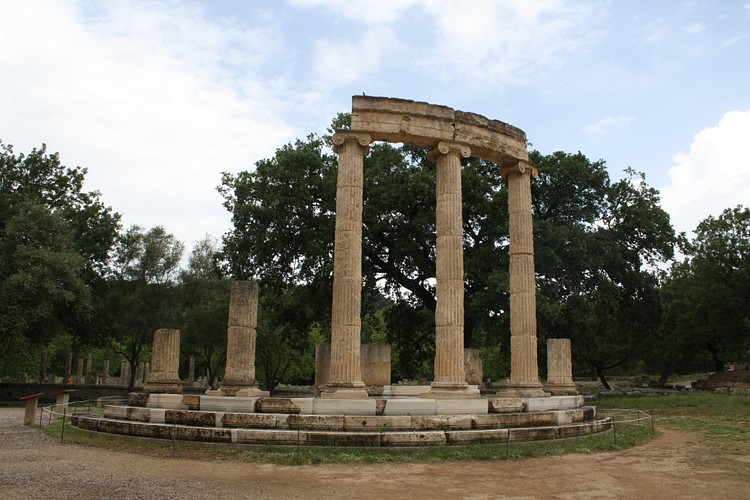 The Philippeion of Olympia Mark Cartwright (CC BY-NC-SA) ](https://www.worldhistory.org/image/441/the-philippeion-of-olympia/ "The Philippeion of Olympia")Olympia'da düzenlenen ikinci önemli etkinlik, tanrıça Hera'nın onuruna her dört yılda bir düzenlenen kadınlar için Heraia Oyunları'ydı. Çocuklar, ergenler ve genç kadınlar, stadyum pistinin 500 metresinden (160 m) uzakta ayrı ayak yarışlarında koştular. Kazananlar için ödüller arasında zeytin kronları ve sitede kendilerinin bir portresini kurma hakkı vardı. Her iki Oyunların organizasyonu ve kullanılmadığında sitenin bakımı sorumluluğu Eleans'a aittir.
Oyunlar, [Makedonya](https://www.worldhistory.org/trans/tr/1-386/makedonya/) II. Filip tarafından inşa edilen ve kraliyet ailesinin altın heykellerini içeren dairesel sütunlu bir bina olan Philippeion'un dikkate değer mimari ilavesiyle Helenistik dönem boyunca devam etti (MÖ 338 civarı). Romalılar, Oyunların dini önemine çok az önem verirken, onları yüksek saygı göstermeye devam ettiler ve Sulla'nın MÖ 80'de Oyunları kalıcı olarak Roma'ya taşıma girişimine rağmen, Olympia'yı yeni binalar, ısıtmalı hamamlar, çeşmeler (özellikle Herodes Atticus'un Nymphaion'u, MS 150) ve heykellerle süslemeye devam ettiler.) En ünlüsü, imparator Nero, MS 67'de Olimpiyat zaferinin ihtişamını kazanmaya çalıştı, girdiği her etkinlikte yarıştı ve şaşırtıcı olmayan bir şekilde kazandı.
### Çöküş
İmparator Theodosios'un tüm kült uygulamalarını ve pagan festivallerini yasaklayan kararnamesiyle, Oyunlar bin yıldan fazla bir süredir 293 Olimpiyat'ın ardından MS 393'te sona erdi. Ünlü kutsal alan yavaş yavaş düşüşe geçti, MS 426'da imparator II. Theodosios'un kararnamesiyle kısmen tahrip edildi ve erken Bizans döneminde bölgeye bir bazilika inşa eden bir Hıristiyan topluluğu tarafından devralındı. MS 522 ve 551'deki depremler kalan kalıntıların çoğunu tahrip etti ve yakındaki Alpheios ve Kladeos nehirlerinden gelen siltler, 1829'da Fransız [Arkeoloji](https://www.worldhistory.org/trans/tr/1-421/arkeoloji/) Misyonu tarafından yeniden keşfedilene ve 1875'ten itibaren Alman Arkeoloji Enstitüsü tarafından sistematik kazı yapılana kadar bölgeyi kapladı.Bir zamanlar güzel olan tapınakların çoğu şimdi sadece harabelerdir, ancak ziyaretçi en azından bugün ilk Olimpiyat stadyumunun pisti boyunca koşabilir.
#### Editorial Review
This human-authored definition has been reviewed by our editorial team before publication to ensure accuracy, reliability and adherence to academic standards in accordance with our [editorial policy](https://www.worldhistory.org/static/editorial-policy/).
## Bibliografya
- Andronicos, M. *Olympia.* Ekdotike Athenon, Athens, 2002
- Kaltsas, N. *Olympia.* MOCARF, Athens, 2009
- Koursi, M (ed.). *The Olympic Games in Ancient Greece.* Ekdotike Athenon, Athens, 2003
## Yazar Hakkında
Mark, WHE'nin Yayın Direktörü olup Siyaset Felsefesi alanında yüksek lisans derecesine sahiptir (York Üniversitesi). Tam zamanlı bir araştırmacı, yazar, tarihçi ve editördür. Özel ilgi alanları arasında sanat, mimari ve tüm medeniyetlerin paylaştığı fikirleri keşfetmek yer almaktadır.
## Zaman çizelgesi
- **c. 1900 BCE**: First evidence of settlement at [Olympia](https://www.worldhistory.org/Olympia/).
- **776 BCE**: First athletic games in honour of [Zeus](https://www.worldhistory.org/zeus/) are held at [Olympia](https://www.worldhistory.org/Olympia/) with one event, the *stadion* foot race.
- **724 BCE**: The *diaulos* foot-race (two lengths of the [stadium](https://www.worldhistory.org/Stadium/)) is added to the schedule of the [Olympic Games](https://www.worldhistory.org/Olympic_Games/).
- **720 BCE**: The *dolichos* foot-race is added to the schedule of the [Olympic Games](https://www.worldhistory.org/Olympic_Games/) and is won by Akanthos of [Sparta](https://www.worldhistory.org/sparta/).
- **720 BCE**: Orsippos is the first athlete to discard his loincloth at the [Olympic Games](https://www.worldhistory.org/Olympic_Games/), establishing the convention for athletes to compete naked.
- **708 BCE**: Wrestling and the pentathlon are added to the schedule of the [Olympic Games](https://www.worldhistory.org/Olympic_Games/).
- **688 BCE**: Boxing is added to the schedule of the [Olympic Games](https://www.worldhistory.org/Olympic_Games/).
- **680 BCE**: [Chariot](https://www.worldhistory.org/chariot/) races are added to the schedule of the [Olympic Games](https://www.worldhistory.org/Olympic_Games/) which are extended to two days for the first time.
- **680 BCE**: The *tethrippon* (four-horse [chariot](https://www.worldhistory.org/chariot/) race) is added to the schedule of the [Olympic Games](https://www.worldhistory.org/Olympic_Games/).
- **650 BCE - 600 BCE**: Heraion, [temple](https://www.worldhistory.org/temple/) dedicated to [Hera](https://www.worldhistory.org/Hera/) built at [Olympia](https://www.worldhistory.org/Olympia/).
- **648 BCE**: The *[Pankration](https://www.worldhistory.org/pankration/)* (a mix of wrestling and boxing) is added to the schedule of the [Olympic Games](https://www.worldhistory.org/Olympic_Games/).
- **632 BCE**: Events for boys are added to the schedule of the [Olympic Games](https://www.worldhistory.org/Olympic_Games/) which are extended to three days for the first time.
- **532 BCE**: Milon of Kroton wins the first of five consecutive wrestling competitions at the [Olympic Games](https://www.worldhistory.org/Olympic_Games/).
- **521 BCE**: Phanas of Pellene wins the *stadion*, *diaulos* and race in armour in the same [Olympic Games](https://www.worldhistory.org/Olympic_Games/).
- **520 BCE**: The *hoplitodromos* (a foot-race in [hoplite](https://www.worldhistory.org/hoplite/) armour is added to the schedule of the [Olympic Games](https://www.worldhistory.org/Olympic_Games/).
- **488 BCE**: Runner Astylos of Kroton wins the first of his six victories over three [Olympic Games](https://www.worldhistory.org/Olympic_Games/).
- **488 BCE**: Kroton of [Magna Graecia](https://www.worldhistory.org/Magna_Graecia/) wins the first of three consecutive *stadion* races in the [Olympic Games](https://www.worldhistory.org/Olympic_Games/).
- **c. 460 BCE**: The west pediment of the [Temple](https://www.worldhistory.org/temple/) of [Zeus](https://www.worldhistory.org/zeus/) at [Olympia](https://www.worldhistory.org/Olympia/) is decorated with a Centauromachy of centaurs fighting Lapiths at the wedding of Peirithoos.
- **c. 460 BCE - 457 BCE**: [Temple](https://www.worldhistory.org/temple/) of [Zeus](https://www.worldhistory.org/zeus/) is built at [Olympia](https://www.worldhistory.org/Olympia/) with a statue of [Apollo](https://www.worldhistory.org/apollo/) dominating the west pediment and containing the cult statue of Zeus by [Phidias](https://www.worldhistory.org/Phidias/).
- **c. 457 BCE**: Metopes on the [Temple](https://www.worldhistory.org/temple/) of [Zeus](https://www.worldhistory.org/zeus/) at [Olympia](https://www.worldhistory.org/Olympia/) depict the twelve labours of [Hercules](https://www.worldhistory.org/hercules/).
- **c. 430 BCE**: The cult statue of [Zeus](https://www.worldhistory.org/zeus/) by [Phidias](https://www.worldhistory.org/Phidias/) is dedicated in the [Temple](https://www.worldhistory.org/temple/) of Zeus, [Olympia](https://www.worldhistory.org/Olympia/). It is one of [the Seven Wonders](https://www.worldhistory.org/The_Seven_Wonders/) of the Ancient World.
- **424 BCE - 420 BCE**: The [Nike](https://www.worldhistory.org/nike/) of Paionios is erected at [Olympia](https://www.worldhistory.org/Olympia/) to commemorate the Messenian and Naupaktian victory over [Sparta](https://www.worldhistory.org/sparta/) at the [battle](https://www.worldhistory.org/disambiguation/battle/) of Sphakteria.
- **420 BCE**: [Sparta](https://www.worldhistory.org/sparta/) is excluded from the [Olympic Games](https://www.worldhistory.org/Olympic_Games/) for breaking the *ekecheiria* or sacred truce.
- **416 BCE**: [Alcibiades](https://www.worldhistory.org/Alcibiades/) wins three [chariot](https://www.worldhistory.org/chariot/) races at the [Olympic Games](https://www.worldhistory.org/Olympic_Games/).
- **408 BCE**: The *synoris* (two-horse [chariot](https://www.worldhistory.org/chariot/) race) was added to the schedule of the [Olympic Games](https://www.worldhistory.org/Olympic_Games/).
- **396 BCE**: Competitions for heralds and trumpeters were added to the schedule of the [Olympic Games](https://www.worldhistory.org/Olympic_Games/).
- **392 BCE**: The horse owner Kyniska becomes the first woman to win a victor's crown at the [Olympic Games](https://www.worldhistory.org/Olympic_Games/).
- **356 BCE**: [Philip II of Macedon](https://www.worldhistory.org/Philip_II_of_Macedon/) wins the horse race at the [Olympic Games](https://www.worldhistory.org/Olympic_Games/).
- **352 BCE**: [Philip II of Macedon](https://www.worldhistory.org/Philip_II_of_Macedon/) wins the [chariot](https://www.worldhistory.org/chariot/) race at the [Olympic Games](https://www.worldhistory.org/Olympic_Games/) and retains the crown in 348 BCE.
- **c. 338 BCE**: Philippeion built at [Olympia](https://www.worldhistory.org/Olympia/) by [Philip II](https://www.worldhistory.org/disambiguation/Philip_II/) of Macedonia.
- **328 BCE**: Herodoros of [Megara](https://www.worldhistory.org/disambiguation/Megara/) wins the first of ten consecutive trumpet competitions at the [Olympic Games](https://www.worldhistory.org/Olympic_Games/).
- **164 BCE**: [Leonidas](https://www.worldhistory.org/disambiguation/Leonidas/) of [Rhodes](https://www.worldhistory.org/Rhodes/) wins the first of his 12 Olympic crowns in runnning events in four successive Olymic Games.
- **72 BCE**: Gaius becomes the first [Roman](https://www.worldhistory.org/disambiguation/Roman/) victor at the [Olympic Games](https://www.worldhistory.org/Olympic_Games/).
- **17 CE**: [Roman emperor](https://www.worldhistory.org/Roman_Emperor/) [Tiberius](https://www.worldhistory.org/Tiberius/) is victorious at the [Olympic Games](https://www.worldhistory.org/Olympic_Games/).
- **c. 67 CE**: Emperor [Nero](https://www.worldhistory.org/Nero/) competes at the panhellenic Games of [Olympia](https://www.worldhistory.org/Olympia/) and [Delphi](https://www.worldhistory.org/delphi/).
- **81 CE**: Hermogenes of Xanthos wins the first of his 8 Olympic running crowns over three consecutive [Olympic Games](https://www.worldhistory.org/Olympic_Games/).
- **150 CE**: Nymphaion fountain of Herodes Atticus built at [Olympia](https://www.worldhistory.org/Olympia/).
- **261 CE**: The list of victors running back to 776 BCE ends for the [Olympic Games](https://www.worldhistory.org/Olympic_Games/).
- **393 CE**: [Roman Emperor](https://www.worldhistory.org/Roman_Emperor/) Theodosius definitively ends all pagan Games in [Greece](https://www.worldhistory.org/greece/).
- **426 CE**: Emperor Theodosios II orders the destruction of [Olympia](https://www.worldhistory.org/Olympia/).
- **522 CE - 551 CE**: Earthquakes destroy many of the buildings at [Olympia](https://www.worldhistory.org/Olympia/).
## Dış Bağlantılar
- [The ancient origins of the Olympics - Armand D'Angour](http://ed.ted.com/lessons/the-ancient-origins-of-the-olympics-armand-d-angour)
## Bu Çalışmayı Alıntıla
### APA
Cartwright, M. (2022, June 15). Olympia. (A. B. Günevi, Çevirmen). *World History Encyclopedia*.
### Chicago
Cartwright, Mark. "Olympia." tarafından çevrildi Ahmet Barış Günevi. *World History Encyclopedia*, June 15, 2022. .
### MLA
Cartwright, Mark. "Olympia." tarafından çevrildi Ahmet Barış Günevi. *World History Encyclopedia*, 15 Jun 2022, .
## Lisans & Telif Hakkı
Gönderen [Ahmet Barış Günevi](https://www.worldhistory.org/user/bargnevi/ "User Page: Ahmet Barış Günevi"), tarihinde yayınlandı 15 June 2022. Telif hakkı bilgileri için lütfen orijinal kaynakları kontrol edin. Lütfen bu sayfadan gidebileceğiniz içeriklerin daha farklı lisans koşullarına sahip olabileceğini unutmayın.