---
title: Starożytny Rzym
author: Joshua J. Mark
translator: Agnieszka Różycka
source: https://www.worldhistory.org/trans/pl/1-68/starozytny-rzym/
format: machine-readable-alternate
license: Creative Commons Attribution-NonCommercial-ShareAlike (https://creativecommons.org/licenses/by-nc-sa/4.0/)
updated: 2024-10-14
---
# Starożytny Rzym
_Autor: [Joshua J. Mark](https://www.worldhistory.org/user/JPryst/)_
_Tłumaczenie: [Agnieszka Różycka](https://www.worldhistory.org/user/agnesrose)_
Według legendy starożytny Rzym został założony przez dwóch braci i półbogów, Romulusa i Remusa, 21 kwietnia 753 roku p.n.e.. Legenda głosi, że w kłótni o to, kto będzie rządził miastem (lub, w innej wersji, gdzie miasto będzie zlokalizowane) Romulus zabił Remusa i nazwał miasto swoim imieniem. Ta historia założenia Rzymu jest najbardziej znana, ale nie jedyna.
Inne legendy mówią, że miasto zostało nazwane na cześć kobiety, Romy, która podróżowała z Eneaszem i innymi ocalałymi z Troi po upadku tego miasta. Po wylądowaniu na brzegu Tybru Roma i inne kobiety sprzeciwiły się, gdy mężczyźni chcieli iść dalej. Poprowadziła kobiety do spalenia trojańskich statków i w ten sposób skutecznie zatrzymała ocalałych Trojan w miejscu, które ostatecznie stało się Rzymem. Eneasz z Troi pojawia się nie tylko w tej legendzie, ale także w słynnej Eneidzie Wergiliusza, jako założyciel Rzymu i przodek Romulusa i Remusa, łącząc w ten sposób Rzym ze wspaniałością i potęgą, jaką niegdyś była Troja.
Jeszcze inne teorie dotyczące nazwy słynnego miasta sugerują, że pochodzi ona od Rumon, starożytnej nazwy rzeki Tyber, i była po prostu nazwą miejsca nadaną małemu centrum handlowemu założonemu na jej brzegach lub że nazwa pochodzi od etruskiego słowa, które mogło oznaczać jedną z ich osad.
### Wczesny Rzym
Rzym, pierwotnie małe miasto położone nad brzegiem Tybru, rozrósł się i urósł w siłę dzięki handlowi. Lokalizacja miasta zapewniała kupcom łatwy do żeglugi szlak wodny, na którym mogli przewozić swoje towary. Miasto było rządzone przez siedmiu królów, od Romulusa do Tarkwiniusza, w miarę jak rosło w siłę. Kultura i cywilizacja grecka, która dotarła do Rzymu za pośrednictwem greckich kolonii na południu, zapewniła wczesnym Rzymianom model, na którym mogli budować własną kulturę. Od Greków zapożyczyli umiejętność czytania i pisania, religię, a także podstawy architektury.
Etruskowie, na północy, zapewnili model handlu i miejskiego luksusu. Etruria była również dobrze usytuowana dla handlu, a pierwsi Rzymianie albo nauczyli się umiejętności handlowych na przykładzie Etrusków, albo byli bezpośrednio nauczani przez Etrusków, którzy dokonali inwazji na obszar wokół Rzymu między 650 a 600 rokiem p.n.e. (chociaż ich wpływ był odczuwalny znacznie wcześniej). Zakres roli, jaką cywilizacja etruska odegrała w rozwoju rzymskiej kultury i społeczeństwa, jest przedmiotem dyskusji, ale wydaje się, że nie ma wątpliwości, iż miała ona znaczący wpływ na wczesnym etapie.
Od samego początku Rzymianie wykazywali talent do zapożyczania i ulepszania umiejętności i koncepcji innych kultur. Między VIII a VI wiekiem p.n.e. Królestwo Rzymu szybko rozrosło się z miasta handlowego do dobrze prosperującego miasta. Kiedy ostatni z siedmiu królów Rzymu, Tarkwiniusz Dumny, został obalony w 509 roku p.n.e., jego rywal o władzę, Lucjusz Juniusz Brutus, zreformował system rządów i ustanowił Republikę Rzymską.
### Wojna i ekspansja
Chociaż we wczesnych latach miasto zawdzięczało swój dobrobyt handlowi, to rzymskie działania wojenne uczyniły z niego potężną siłę w starożytnym świecie. Wojny z północnoafrykańskim miastem Kartagina (znane jako wojny punickie, 264-146 p.n.e.) umocniły władzę Rzymu i pomogły miastu zyskać bogactwo i prestiż. Rzym i Kartagina były rywalami w handlu w zachodniej części Morza Śródziemnego, a po pokonaniu Kartaginy Rzym miał niemal absolutną dominację nad regionem; choć wciąż zdarzały się napady piratów, które uniemożliwiały Rzymowi pełną kontrolę nad morzem.
W miarę jak Republika Rzymska rosła w siłę i prestiż, miasto Rzym zaczęło cierpieć z powodu korupcji, chciwości i nadmiernego polegania na zagranicznej niewolniczej sile roboczej. Gangi bezrobotnych Rzymian, pozbawionych pracy przez napływ niewolników przywiezionych w wyniku podbojów terytorialnych, wynajmowały się jako bandyci do wykonywania poleceń każdego bogatego senatora, który chciał im zapłacić. Bogata elita miasta, patrycjusze, stawała się coraz bogatsza kosztem pracującej klasy niższej, plebsu.
[  Mapa ekspansji rzymskiej w II wieku US Military Academy (Public Domain) ](https://www.worldhistory.org/image/131/map-of-2nd-century-roman-expansion/ "Map of 2nd Century Roman Expansion")W II wieku p.n.e. bracia Grakchi, Tyberiusz i Gajusz, dwaj rzymscy trybuni, przewodzili ruchowi na rzecz reformy rolnej i reform politycznych w ogóle. Choć bracia zostali zabici w wyniku tych działań, ich wysiłki pobudziły reformy legislacyjne, a szerząca się korupcja w rzymskim Senacie została ograniczona (a przynajmniej senatorowie stali się bardziej dyskretni w swoich korupcyjnych działaniach). W czasach Pierwszego Triumwiratu zarówno miasto, jak i Republika Rzymska były w pełnym rozkwicie.
### Republika
Mimo to Rzym był podzielony na klasy. Klasa rządząca nazywała siebie *optymatami* (najlepszymi ludźmi), podczas gdy niższe klasy lub ci, którzy z nimi sympatyzowali, byli znani jako *populares* (lud). Nazwy te były stosowane po prostu do tych, którzy wyznawali określoną ideologię polityczną; nie były to ścisłe partie polityczne, ani też wszyscy z klasy rządzącej nie byli optymatami, ani wszyscy z klas niższych nie byli *populares*.
Ogólnie rzecz biorąc, *optymaci* wyznawali tradycyjne wartości polityczne i społeczne, które faworyzowały władzę Senatu Rzymu oraz prestiż i wyższość klasy rządzącej. *Populares*, ogólnie rzecz biorąc, opowiadali się za reformami i demokratyzacją Republiki Rzymskiej. Te przeciwstawne ideologie zderzyły się ze sobą w postaci trzech mężczyzn, którzy nieświadomie doprowadzili do końca Republiki Rzymskiej.
Marek Licyniusz Krassus i jego polityczny rywal, Gnejusz Pompejusz Magnus (Pompejusz Wielki) dołączyli do innego, młodszego polityka, Gajusza Juliusza Cezara, tworząc coś, co współcześni historycy nazywają Pierwszym Triumwiratem Rzymu (choć Rzymianie nigdy nie używali tego terminu, podobnie jak trzej mężczyźni, którzy go tworzyli). Krassus i Pompejusz utrzymywali *optymalną* linię polityczną, podczas gdy Cezar był *popularem*.
Trzej mężczyźni byli równie ambitni i rywalizując o władzę, byli w stanie trzymać się nawzajem w ryzach, jednocześnie pomagając Rzymowi prosperować. Krassus był najbogatszym człowiekiem w Rzymie i był skorumpowany do tego stopnia, że zmuszał bogatych obywateli do płacenia mu „bezpiecznych” pieniędzy. Jeśli obywatel zapłacił, Krassus nie spalił domu tej osoby, ale jeśli pieniądze nie nadeszły, ogień został wzniecony, a Krassus pobierał opłatę za wysłanie ludzi do ugaszenia pożaru. Chociaż motyw stojący za powstaniem tych straży pożarnych był daleki od szlachetnego, Krassus skutecznie stworzył pierwszą straż pożarną, która później okazała się bardzo cenna dla miasta.
Zarówno Pompejusz, jak i Cezar byli wielkimi generałami, którzy dzięki swoim podbojom wzbogacili Rzym. Chociaż Krassus był najbogatszym człowiekiem w Rzymie (i, jak się twierdzi, najbogatszym w całej historii Rzymu), pragnął takiego samego szacunku, jakim ludzie darzyli Pompejusza i Cezara za ich sukcesy militarne. W 53 roku p.n.e. poprowadził znaczne siły przeciwko Partii i został pokonany w bitwie pod Carrhae, w dzisiejszej Turcji, gdzie został zabity, gdy negocjacje rozejmowe załamały się.
[ 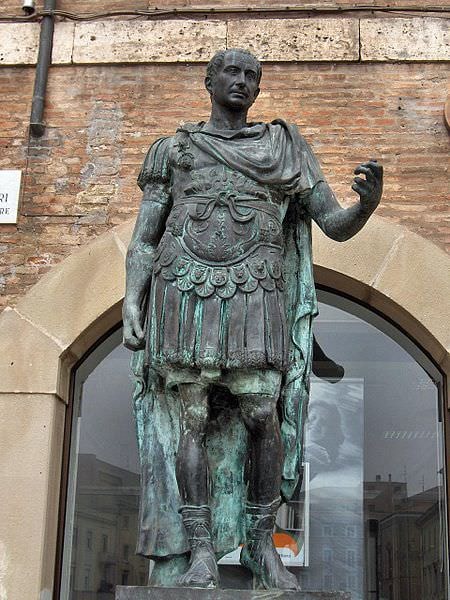 Juliusz Cezar Georges Jansoone (CC BY-NC-SA) ](https://www.worldhistory.org/image/2737/julius-caesar/ "Julius Caesar")Po odejściu Krassusa Pierwszy Triumwirat rozpadł się, a Pompejusz i Cezar wypowiedzieli sobie wojnę. Pompejusz próbował wyeliminować swojego rywala za pomocą środków prawnych i nakazał Senatowi, aby Cezar udał się do Rzymu i stanął przed sądem pod różnymi zarzutami. Zamiast jednak powrócić do miasta w pokorze, aby stawić czoła tym zarzutom, Cezar przekroczył rzekę Rubikon ze swoją armią w 49 roku p.n.e. i wkroczył do Rzymu na jej czele.
Odmówił odpowiedzi na zarzuty i skupił się na wyeliminowaniu Pompejusza jako rywala. Pompejusz i Cezar spotkali się w bitwie pod Farsalus w Grecji w 48 roku p.n.e., gdzie liczebnie słabsze siły Cezara pokonały większe siły Pompejusza. Sam Pompejusz uciekł do Egiptu, spodziewając się znaleźć tam schronienie, ale po przybyciu został zamordowany. Wieści o wielkim zwycięstwie Cezara nad przeważającymi siłami pod Farsalus szybko się rozeszły i wielu byłych przyjaciół i sojuszników Pompejusza szybko stanęło po stronie Cezara, wierząc, że jest on faworyzowany przez bogów.
### W stronę Imperium
Juliusz Cezar był teraz najpotężniejszym człowiekiem w Rzymie. Skutecznie zakończył okres republiki, ogłaszając się przez Senat *dyktatorem*. Jego popularność wśród ludu była ogromna, a jego wysiłki na rzecz stworzenia silnego i stabilnego rządu centralnego oznaczały wzrost dobrobytu dla Rzymu. Został jednak zamordowany przez grupę rzymskich senatorów w 44 roku p.n.e. właśnie z powodu tych osiągnięć.
Spiskowcy, w tym Brutus i Kasjusz, obawiali się, że Cezar staje się zbyt potężny i może ostatecznie znieść Senat. Po jego śmierci, jego prawa ręka i kuzyn, Marcus Antonius (Marek Antoniusz) połączył siły z bratankiem i spadkobiercą Cezara, Gajuszem Oktawiuszem Thurinusem (Oktawianem) i przyjacielem Cezara, Marcusem Aemiliusem Lepidusem, by pokonać siły Brutusa i Kasjusza w bitwie pod Filippi w 42 roku p.n.e..
[  Podział Drugiego Triumwiratu ColdEl (CC BY-SA) ](https://www.worldhistory.org/image/4951/division-of-the-second-triumvirate/ "Division of the Second Triumvirate")Oktawian, Antoniusz i Lepidus utworzyli Drugi Triumwirat Rzymu, ale podobnie jak w przypadku pierwszego, mężczyźni ci byli równie ambitni. Lepidus został skutecznie zneutralizowany, gdy Antoniusz i Oktawian zgodzili się, że powinien on rządzić Hispanią i Afryką, aby tym samym trzymać go z dala od jakiejkolwiek gry o władzę w Rzymie. Uzgodniono, że Oktawian będzie rządził ziemiami rzymskimi na zachodzie, a Antoniusz na wschodzie.
Zaangażowanie Antoniusza w związek z egipską królową Kleopatrą VII zakłóciło jednak równowagę, którą Oktawian miał nadzieję utrzymać, i obaj poszli na wojnę. Połączone siły Antoniusza i Kleopatry zostały pokonane w bitwie pod Akcjum w 31 roku p.n.e., a później oboje odebrali sobie życie. Oktawian stał się jedyną władzą w Rzymie. W 27 roku p.n.e. Senat przyznał mu nadzwyczajne uprawnienia i nadał mu tytuł Augusta, pierwszego cesarza Rzymu. Historycy są zgodni, że jest to moment, w którym kończy się historia Rzymu, a zaczyna historia Imperium Rzymskiego.
#### Editorial Review
This human-authored definition has been reviewed by our editorial team before publication to ensure accuracy, reliability and adherence to academic standards in accordance with our [editorial policy](https://www.worldhistory.org/static/editorial-policy/).
## O autorze
Niezależny pisarz i były profesor filozofii w Marist College w Nowym Jorku. Joshua J. Mark mieszkał w Grecji i w Niemczech oraz podróżował po Egipcie. Wykładał historię, pisanie, literaturę i filozofię na poziomie uniwersyteckim.
- [Linkedin Profile](https://www.linkedin.com/pub/joshua-j-mark/38/614/339)
## Oś czasu
- **753 BCE**: The legendary founding date of [Rome](https://www.worldhistory.org/Rome/).
- **753 BCE - 510 BCE**: Regal Period of ancient [Rome](https://www.worldhistory.org/Rome/) from Founding to Birth of the Republic.
- **750 BCE - 510 BCE**: The (semi-mythological) seven kings of [Rome](https://www.worldhistory.org/Rome/): [Romulus](https://www.worldhistory.org/Romulus_and_Remus/), Numa Pompilius, Tulus Hostilius, Ancus Marcius, Lucius Tarquinius Priscus, Servius Tullius, [Lucius Tarquinius Superbus](https://www.worldhistory.org/Lucius_Tarquinius_Superbus/).
- **c. 620 BCE**: Posible founding date for [Ostia](https://www.worldhistory.org/Ostia/), the port of [Rome](https://www.worldhistory.org/Rome/).
- **599 BCE - 500 BCE**: The traditional date when the [Circus Maximus](https://www.worldhistory.org/Circus_Maximus/) of [Rome](https://www.worldhistory.org/Rome/) is first laid out.
- **534 BCE - 510 BCE**: Reign of [Lucius Tarquinius Superbus](https://www.worldhistory.org/Lucius_Tarquinius_Superbus/), last king of [Rome](https://www.worldhistory.org/Rome/).
- **510 BCE - 509 BCE**: First treaty between [Rome](https://www.worldhistory.org/Rome/) and [Carthage](https://www.worldhistory.org/carthage/).
- **509 BCE**: Foundation of the [Roman Republic](https://www.worldhistory.org/Roman_Republic/).
- **c. 508 BCE**: [Lars Porsenna](https://www.worldhistory.org/Lars_Porsenna/), [Etruscan](https://www.worldhistory.org/Etruscan_Civilization/) king of [Chiusi](https://www.worldhistory.org/Chiusi/), lays siege to [Rome](https://www.worldhistory.org/Rome/).
- **504 BCE**: Migration of Claudii from Sabine lands to [Rome](https://www.worldhistory.org/Rome/).
- **c. 499 BCE**: [Battle](https://www.worldhistory.org/disambiguation/battle/) of Lake Regillus between [Rome](https://www.worldhistory.org/Rome/) and the Latin League.
- **c. 497 BCE**: The first [temple](https://www.worldhistory.org/temple/) dedicated to [Saturn](https://www.worldhistory.org/Saturn/) is constructed in the [Forum Romanum](https://www.worldhistory.org/Roman_Forum/) of [Rome](https://www.worldhistory.org/Rome/).
- **495 BCE**: [Lucius Tarquinius Superbus](https://www.worldhistory.org/Lucius_Tarquinius_Superbus/), last king of [Rome](https://www.worldhistory.org/Rome/), dies in exile at Cumae.
- **495 BCE**: A [temple](https://www.worldhistory.org/temple/) is built in honour of Mercury near [Rome](https://www.worldhistory.org/Rome/)'s [Circus Maximus](https://www.worldhistory.org/Circus_Maximus/).
- **494 BCE**: Traditional date the office of the tribuni plebis is created in [Rome](https://www.worldhistory.org/Rome/).
- **493 BCE**: Foedus Cassianus - treaty by Spurius Cassius Vecellinus with the Latin League after the [Battle](https://www.worldhistory.org/disambiguation/battle/) of Lake Regillus.
- **484 BCE**: The first [temple](https://www.worldhistory.org/temple/) of the [Dioscuri](https://www.worldhistory.org/Castor_and_Pollux/) (Castor & Pollux) is dedicated in [Rome](https://www.worldhistory.org/Rome/)'s [Forum Romanum](https://www.worldhistory.org/Roman_Forum/) by Aulus Postumius following his victory over the Latins at the [Battle](https://www.worldhistory.org/disambiguation/battle/) of Lake Regillus.
- **451 BCE - 450 BCE**: Decemvirate and Publication of [Twelve Tables](https://www.worldhistory.org/Twelve_Tables/) of [Roman Law](https://www.worldhistory.org/Roman_Law/).
- **c. 400 BCE**: [Roman](https://www.worldhistory.org/disambiguation/Roman/) tale of mythical twins [Romulus and Remus](https://www.worldhistory.org/Romulus_and_Remus/) first recorded.
- **394 BCE**: [Etruscan](https://www.worldhistory.org/Etruscan_Civilization/) [Volsinii](https://www.worldhistory.org/volsinii/) and their ally Sappinum unsuccessfully attacks [Rome](https://www.worldhistory.org/Rome/).
- **390 BCE**: Gauls sack [Rome](https://www.worldhistory.org/Rome/).
- **c. 390 BCE**: "Gallic Catastrophe:" [Brennus](https://www.worldhistory.org/brennus/) of the Senones defeats the Romans at Allia, and subsequently sacks [Rome](https://www.worldhistory.org/Rome/).
- **380 BCE**: Rebuilding of [Rome](https://www.worldhistory.org/Rome/). Strong walls around the seven hills.
- **343 BCE - 341 BCE**: First Samnite [War](https://www.worldhistory.org/disambiguation/War/) ([Rome](https://www.worldhistory.org/Rome/) vs. Samnites).
- **340 BCE - 338 BCE**: Latin [War](https://www.worldhistory.org/disambiguation/War/), victory for [Rome](https://www.worldhistory.org/Rome/).
- **326 BCE - 304 BCE**: Second Samnite [War](https://www.worldhistory.org/disambiguation/War/).
- **321 BCE**: The Via Appia, a famous [Roman](https://www.worldhistory.org/disambiguation/Roman/) road, is constructed.
- **298 BCE - 290 BCE**: Third Samnite [War](https://www.worldhistory.org/disambiguation/War/) between [Rome](https://www.worldhistory.org/Rome/) and the Samnite people.
- **295 BCE**: [Roman](https://www.worldhistory.org/disambiguation/Roman/) victory over Samnites, Gauls and Umbrians at Sentinum.
- **292 BCE**: The Romans adopt the [Greek](https://www.worldhistory.org/disambiguation/greek/) [god](https://www.worldhistory.org/God/) of [medicine](https://www.worldhistory.org/disambiguation/medicine/) [Asclepius](https://www.worldhistory.org/Asclepius/) by stealing his sacred snake from [Epidaurus](https://www.worldhistory.org/epidaurus/) and setting up a [temple](https://www.worldhistory.org/temple/) on the Tiber Island.
- **Mar 218 BCE**: [Rome](https://www.worldhistory.org/Rome/) declares [war](https://www.worldhistory.org/disambiguation/War/) on [Carthage](https://www.worldhistory.org/carthage/) after [Hannibal](https://www.worldhistory.org/hannibal/) sacks [Saguntum](https://www.worldhistory.org/Saguntum/) in Spain. The [Second Punic War](https://www.worldhistory.org/Second_Punic_War/) begins.
- **213 BCE - 212 BCE**: [Roman](https://www.worldhistory.org/disambiguation/Roman/) commander [Marcus Claudius Marcellus](https://www.worldhistory.org/Marcus_Claudius_Marcellus/) lays seige to and ultimately sacks [Syracuse](https://www.worldhistory.org/syracuse/).
- **196 BCE**: The earliest known Triumphal Arches are built in [Rome](https://www.worldhistory.org/Rome/) by L.Sertinius.
- **184 BCE**: The first basilica is added to [Rome](https://www.worldhistory.org/Rome/)'s [Forum Romanum](https://www.worldhistory.org/Roman_Forum/).
- **168 BCE**: [Rome](https://www.worldhistory.org/Rome/) defeats [Macedon](https://www.worldhistory.org/macedon/) at [Battle of Pydna](https://www.worldhistory.org/Battle_of_Pydna/).
- **166 BCE**: [Rome](https://www.worldhistory.org/Rome/) puts [Delos](https://www.worldhistory.org/delos/) under the jurisdiction of [Athens](https://www.worldhistory.org/Athens/) and makes the island a free port.
- **146 BCE**: First [Roman](https://www.worldhistory.org/disambiguation/Roman/) all-marble building is constructed, the [temple](https://www.worldhistory.org/temple/) of [Jupiter](https://www.worldhistory.org/jupiter/) Stater in [Rome](https://www.worldhistory.org/Rome/).
- **121 BCE**: [Gallia](https://www.worldhistory.org/gaul/) Narbonensis becomes a [Roman](https://www.worldhistory.org/disambiguation/Roman/) province.
- **107 BCE - 100 BCE**: [Gaius Marius](https://www.worldhistory.org/Gaius_Marius/) reforms the [Roman army](https://www.worldhistory.org/Roman_Army/).
- **12 Jul 100 BCE - 15 Mar 44 BCE**: Life of Gaius [Julius Caesar](https://www.worldhistory.org/Julius_Caesar/), founder of the [Roman Empire](https://www.worldhistory.org/Roman_Empire/).
- **89 BCE**: All [poleis](https://www.worldhistory.org/Polis/) or [city](https://www.worldhistory.org/city/)-states in [Magna Graecia](https://www.worldhistory.org/Magna_Graecia/) come under [Roman](https://www.worldhistory.org/disambiguation/Roman/) control.
- **80 BCE**: [Sulla](https://www.worldhistory.org/sulla/) moves the [Olympic Games](https://www.worldhistory.org/Olympic_Games/) to [Rome](https://www.worldhistory.org/Rome/) for a single Olympiad.
- **70 BCE**: [Pompey](https://www.worldhistory.org/pompey/) and [Crassus](https://www.worldhistory.org/Marcus_Licinius_Crassus/) are made consuls.
- **59 BCE - 17 CE**: Life of [Livy](https://www.worldhistory.org/livy/).
- **58 BCE - 51 BCE**: [Julius Caesar](https://www.worldhistory.org/Julius_Caesar/)'s [conquest](https://www.worldhistory.org/warfare/) of [Gaul](https://www.worldhistory.org/gaul/).
- **55 BCE**: [Pompey the Great](https://www.worldhistory.org/pompey/) builds the first permanent stone [theatre](https://www.worldhistory.org/disambiguation/theatre/) in [Rome](https://www.worldhistory.org/Rome/).
- **55 BCE - 54 BCE**: [Julius Caesar](https://www.worldhistory.org/Julius_Caesar/)'s expeditions in [Britain](https://www.worldhistory.org/disambiguation/Britain/).
- **54 BCE - 29 BCE**: Forum of [Caesar](https://www.worldhistory.org/disambiguation/caesar/) constructed in [Rome](https://www.worldhistory.org/Rome/) by [Julius Caesar](https://www.worldhistory.org/Julius_Caesar/) as another area to conduct judicial business. It is the best surviving of his monuments.
- **15 Mar 44 BCE**: [Julius Caesar](https://www.worldhistory.org/Julius_Caesar/) is murdered.
- **43 BCE - 36 BCE**: [Second Triumvirate](https://www.worldhistory.org/Second_Triumvirate/): [Antony](https://www.worldhistory.org/Mark_Antony/), [Octavian](https://www.worldhistory.org/augustus/), and Lepidus (official approval by the [Roman Senate](https://www.worldhistory.org/Roman_Senate/)). Mass proscriptions including [Cicero](https://www.worldhistory.org/Cicero/).
- **43 BCE - 17 CE**: Life of the [Roman](https://www.worldhistory.org/disambiguation/Roman/) writer [Ovid](https://www.worldhistory.org/ovid/), author of Metamorphoses.
- **36 BCE**: [Agrippa](https://www.worldhistory.org/Marcus_Agrippa/) defeats the naval fleet of Sextus [Pompey](https://www.worldhistory.org/pompey/) in the [battle](https://www.worldhistory.org/disambiguation/battle/) of Naulochos.
- **31 BCE**: [Greece](https://www.worldhistory.org/greece/) absorbed into [Roman Empire](https://www.worldhistory.org/Roman_Empire/).
- **29 BCE**: [Augustus](https://www.worldhistory.org/augustus/) builds the [temple](https://www.worldhistory.org/temple/) of Divius Iulius on the spot of [Julius Caesar](https://www.worldhistory.org/Julius_Caesar/)'s funeral pyre in [Rome](https://www.worldhistory.org/Rome/)'s [Forum Romanum](https://www.worldhistory.org/Roman_Forum/).
- **c. 27 BCE**: The first [Pantheon](https://www.worldhistory.org/Pantheon/) is built in [Rome](https://www.worldhistory.org/Rome/) and dedicated by [Marcus Agrippa](https://www.worldhistory.org/Marcus_Agrippa/).
- **c. 20 BCE**: Military engineer and architect [Vitruvius](https://www.worldhistory.org/Vitruvius/) publishes his "De Architectura".
- **c. 20 BCE**: The Campus Martius baths in [Rome](https://www.worldhistory.org/Rome/) are constructed and donated to the people by [Agrippa](https://www.worldhistory.org/Marcus_Agrippa/).
- **19 BCE**: Arch of [Augustus](https://www.worldhistory.org/augustus/) built in [Rome](https://www.worldhistory.org/Rome/) to commemorate victory over the Parthians.
- **c. 13 BCE**: Official inauguration of the [Theatre of Marcellus](https://www.worldhistory.org/article/614/theatre-of-marcellus/) in [Rome](https://www.worldhistory.org/Rome/).
- **c. 10 BCE**: [Augustus](https://www.worldhistory.org/augustus/) rebuilds the [Temple of Castor and Pollux](https://www.worldhistory.org/article/632/temple-of-castor--pollux/) in [Rome](https://www.worldhistory.org/Rome/)'s [Forum Romanum](https://www.worldhistory.org/Roman_Forum/).
- **1 CE - 100 CE**: [Mithraism](https://www.worldhistory.org/Mithraic_Mysteries/) spreads in the [Roman empire](https://www.worldhistory.org/Roman_Empire/).
- **c. 13 CE**: [Augustus](https://www.worldhistory.org/augustus/) creates the [cohortes urbanae](https://www.worldhistory.org/Cohortes_Urbanae/) in [Rome](https://www.worldhistory.org/Rome/) to help maintain public order.
- **c. 23 CE**: The castra praetoria, permanent camp of the [Praetorian Guard](https://www.worldhistory.org/Praetorian_Guard/), is built in [Rome](https://www.worldhistory.org/Rome/) by [Sejanus](https://www.worldhistory.org/sejanus/).
- **42 CE - 62 CE**: [Paul the Apostle](https://www.worldhistory.org/Paul_the_Apostle/) goes on missionary journeys across [Asia Minor](https://www.worldhistory.org/Asia_Minor/), [Greece](https://www.worldhistory.org/greece/), and [Rome](https://www.worldhistory.org/Rome/).
- **c. 50 CE - c. 60 CE**: Establishment of various Christian communities in the Eastern [Mediterranean](https://www.worldhistory.org/disambiguation/mediterranean/), [Greece](https://www.worldhistory.org/greece/), [Egypt](https://www.worldhistory.org/egypt/), and at least the [city](https://www.worldhistory.org/city/) of [Rome](https://www.worldhistory.org/Rome/).
- **60 CE - 61 CE**: [Boudicca](https://www.worldhistory.org/Boudicca/)'s Revolt in [Britain](https://www.worldhistory.org/disambiguation/Britain/).
- **64 CE**: Fire destroys the [Circus Maximus](https://www.worldhistory.org/Circus_Maximus/) in [Rome](https://www.worldhistory.org/Rome/).
- **64 CE**: Unofficial persecution of Christians in [Rome](https://www.worldhistory.org/Rome/).
- **64 CE**: The great fire in [Rome](https://www.worldhistory.org/Rome/).
- **c. 64 CE**: The [Roman](https://www.worldhistory.org/disambiguation/Roman/) port of [Ostia](https://www.worldhistory.org/Ostia/) reaches its maximum size becoming a major urban centre.
- **c. 65 CE**: The [Circus Maximus](https://www.worldhistory.org/Circus_Maximus/) in [Rome](https://www.worldhistory.org/Rome/) is rebuilt and its capacity increased to 250,000.
- **c. 65 CE**: The Baths of [Nero](https://www.worldhistory.org/Nero/) are built in [Rome](https://www.worldhistory.org/Rome/).
- **66 CE - 73 CE**: The Jewish Revolt against [Rome](https://www.worldhistory.org/Rome/).
- **68 CE - 69 CE**: [Year of the Four Emperors](https://www.worldhistory.org/Year_of_the_Four_Emperors/): Civil [war](https://www.worldhistory.org/disambiguation/War/) in [Rome](https://www.worldhistory.org/Rome/).
- **70 CE**: The [city](https://www.worldhistory.org/city/) of [Jerusalem](https://www.worldhistory.org/jerusalem/) is besieged and captured by [Rome](https://www.worldhistory.org/Rome/); the Second [Temple](https://www.worldhistory.org/temple/) destroyed.
- **Jun 71 CE**: [Titus](https://www.worldhistory.org/disambiguation/Titus/) returns to [Rome](https://www.worldhistory.org/Rome/) from Jewish [War](https://www.worldhistory.org/disambiguation/War/).
- **72 CE**: [Vespasian](https://www.worldhistory.org/Vespasian/) begins construction of the [Colosseum](https://www.worldhistory.org/Colosseum/) in [Rome](https://www.worldhistory.org/Rome/).
- **Aug 79 CE - Oct 79 CE**: Eruption of Mt. Vesuvius in southern [Italy](https://www.worldhistory.org/italy/) burying the towns of [Pompeii](https://www.worldhistory.org/pompeii/) and [Herculaneum](https://www.worldhistory.org/Herculaneum/) in volcanic ash.
- **80 CE**: The [Colosseum](https://www.worldhistory.org/Colosseum/) in [Rome](https://www.worldhistory.org/Rome/) is officially opened by [Titus](https://www.worldhistory.org/disambiguation/Titus/) with a 100 day [gladiator](https://www.worldhistory.org/gladiator/) spectacular.
- **80 CE**: The first [Pantheon](https://www.worldhistory.org/Pantheon/) in [Rome](https://www.worldhistory.org/Rome/) is destroyed by fire.
- **81 CE - 96 CE**: Construction is finally completed on the [Colosseum](https://www.worldhistory.org/Colosseum/) of [Rome](https://www.worldhistory.org/Rome/) in the reign of [Domitian](https://www.worldhistory.org/domitian/).
- **83 CE**: [Battle](https://www.worldhistory.org/disambiguation/battle/) of Mons Graupius in [Scotland](https://www.worldhistory.org/disambiguation/Scotland/).
- **18 Sep 96 CE**: [Death](https://www.worldhistory.org/disambiguation/Death/) of [Roman Emperor](https://www.worldhistory.org/Roman_Emperor/) [Domitian](https://www.worldhistory.org/domitian/).
- **c. 110 CE**: First documented martydom in the [Colosseum](https://www.worldhistory.org/Colosseum/) of [Rome](https://www.worldhistory.org/Rome/), that of St. Ignatius of [Antioch](https://www.worldhistory.org/Antiochia/).
- **110 CE**: The second [Pantheon](https://www.worldhistory.org/Pantheon/) building in [Rome](https://www.worldhistory.org/Rome/) is hit by lightning and destroyed by fire.
- **113 CE**: [Trajan's column](https://www.worldhistory.org/Trajans_Column/) is constructed in [Rome](https://www.worldhistory.org/Rome/) which commemorates the emperor's campaigns in [Dacia](https://www.worldhistory.org/dacia/).
- **c. 125 CE**: The [Pantheon](https://www.worldhistory.org/Pantheon/) is completed in [Rome](https://www.worldhistory.org/Rome/).
- **10 Jul 138 CE - 9 Mar 161 CE**: Reign of [Roman Emperor](https://www.worldhistory.org/Roman_Emperor/) [Antoninus Pius](https://www.worldhistory.org/Antoninus_Pius/).
- **c. 180 CE**: The [Column of Marcus Aurelius](https://www.worldhistory.org/article/647/the-column-of-marcus-aurelius/) and Faustina is erected in [Rome](https://www.worldhistory.org/Rome/). It depicts in relief [sculpture](https://www.worldhistory.org/disambiguation/Sculpture/) the emperors' campaigns across the Danube.
- **192 CE**: Emperor [Commodus](https://www.worldhistory.org/commodus/) is murdered, civil [war](https://www.worldhistory.org/disambiguation/War/) ensues (until 197 CE).
- **202 CE**: The [Pantheon](https://www.worldhistory.org/Pantheon/) in [Rome](https://www.worldhistory.org/Rome/) is repaired by [Septimius Severus](https://www.worldhistory.org/Septimius_Severus/) and [Caracalla](https://www.worldhistory.org/Caracalla/).
- **227 CE**: The Baths of [Nero](https://www.worldhistory.org/Nero/) in [Rome](https://www.worldhistory.org/Rome/) are extensively renovated and expanded by [Alexander Severus](https://www.worldhistory.org/Alexander_Severus/) and renamed Thermae Alexandrinae.
- **c. 235 CE**: The Baths of [Caracalla](https://www.worldhistory.org/Caracalla/) in [Rome](https://www.worldhistory.org/Rome/) are completed.
- **238 CE**: Year of the Six Emperors in the [Roman Empire](https://www.worldhistory.org/Roman_Empire/).
- **272 CE**: Possible year of Emperor [Constantine](https://www.worldhistory.org/disambiguation/Constantine/)'s birth.
- **283 CE**: A fire devastates [Rome](https://www.worldhistory.org/Rome/)'s [Forum Romanum](https://www.worldhistory.org/Roman_Forum/), necessitating an extensive rebuilding programme.
- **286 CE**: Naval commander Carausius ([Marcus Aurelius](https://www.worldhistory.org/Marcus_Aurelius/) Mausaeus Valerius Carausius) declares himself emperor in [Britain](https://www.worldhistory.org/disambiguation/Britain/) and Northern [Gaul](https://www.worldhistory.org/gaul/).
- **293 CE**: Emperor Carausius assassinated by Allectus.
- **308 CE**: [Constantine I](https://www.worldhistory.org/Constantine_I/) named "[caesar](https://www.worldhistory.org/disambiguation/caesar/)" of the west.
- **312 CE**: [Constantine](https://www.worldhistory.org/disambiguation/Constantine/) defeats Maxentius at Milvian Bridge.
- **312 CE**: [Constantine I](https://www.worldhistory.org/Constantine_I/) reduces the [cohortes urbanae](https://www.worldhistory.org/Cohortes_Urbanae/) of [Rome](https://www.worldhistory.org/Rome/).
- **337 CE**: [Death](https://www.worldhistory.org/disambiguation/Death/) of Emperor [Constantine I](https://www.worldhistory.org/Constantine_I/).
- **c. 360 CE - c. 380 CE**: The [Temple](https://www.worldhistory.org/temple/) of [Saturn](https://www.worldhistory.org/Saturn/) is rebuilt in the [Forum Romanum](https://www.worldhistory.org/Roman_Forum/) of [Rome](https://www.worldhistory.org/Rome/).
- **402 CE**: Ravenna becomes the capital of the [Western Roman Empire](https://www.worldhistory.org/Western_Roman_Empire/).
- **408 CE**: [Alaric](https://www.worldhistory.org/Alaric/) I the [Visigoth](https://www.worldhistory.org/visigoth/) besieges [Rome](https://www.worldhistory.org/Rome/). As ransom, Rome pays 5,000 pounds of [gold](https://www.worldhistory.org/gold/), 30,000 pounds of [silver](https://www.worldhistory.org/Silver/), 4,000 silken tunics, 3,000 hides dyed scarlet, and 3,000 pounds of [pepper](https://www.worldhistory.org/Pepper/).
- **410 CE**: [Alaric](https://www.worldhistory.org/Alaric/) of the [Visigoths](https://www.worldhistory.org/visigoth/) sacks [Rome](https://www.worldhistory.org/Rome/).
- **24 Aug 410 CE**: [Alaric](https://www.worldhistory.org/Alaric/) sacks [Rome](https://www.worldhistory.org/Rome/).
- **422 CE**: The [Colosseum](https://www.worldhistory.org/Colosseum/) of [Rome](https://www.worldhistory.org/Rome/) is damaged by [earthquake](https://www.worldhistory.org/disambiguation/earthquake/).
- **455 CE**: [Vandals](https://www.worldhistory.org/Vandals/) sack [Rome](https://www.worldhistory.org/Rome/).
- **536 CE**: [Rome](https://www.worldhistory.org/Rome/) falls to [Belisarius](https://www.worldhistory.org/Belisarius/).
- **549 CE**: The last official [chariot](https://www.worldhistory.org/chariot/) race is held in [Rome](https://www.worldhistory.org/Rome/)'s [Circus Maximus](https://www.worldhistory.org/Circus_Maximus/).
- **608 CE**: The [Pantheon](https://www.worldhistory.org/Pantheon/) in [Rome](https://www.worldhistory.org/Rome/) is converted into a Christian church.
- **c. 730 CE**: First reference to the Flavian [Amphitheatre](https://www.worldhistory.org/amphitheatre/) as the [Colosseum](https://www.worldhistory.org/Colosseum/) by the Venerable [Bede](https://www.worldhistory.org/Bede/).
## Linki zewnętrzne
- [Ancient Rome Live](http://www.ancientromelive.org/)
- [Rome Reborn](http://romereborn.frischerconsulting.com/)
- [Four sisters in Ancient Rome - Ray Laurence](http://ed.ted.com/lessons/four-sisters-in-ancient-rome-ray-laurence)
- [A glimpse of teenage life in ancient Rome - Ray Laurence](http://ed.ted.com/lessons/a-glimpse-of-teenage-life-in-ancient-rome-ray-laurence)
- [Roman Lives](https://history-podcasts.com/roman-lives)
- [S.P.Q.R.: A History of Ancient Rome - Episode - Free Library](https://libwww.freelibrary.org/podcast/?podcastID=1419)
- [33 Ancient Rome Facts That Will Change The Way You See History](https://allthatsinteresting.com/ancient-rome-facts)
- [Roman Emperors](http://www.roman-emperors.org/auggie.htm)
- [The History of Rome](https://thehistoryofrome.typepad.com/)
- [The Meaning of Myths, Folklore, Legends, and Fairy Tales](https://www.thoughtco.com/defining-terms-myth-folklore-legend-735039)
- [Julius Caesar](http://www.bbc.co.uk/history/historic_figures/caesar_julius.shtml)
- [Discover Ancient Rome in Google Earth](http://www.youtube.com/watch?v=MqMXIRwQniA)
- [Historical city travel guide: Rome, 1st century AD | British Museum](https://www.britishmuseum.org/blog/historical-city-travel-guide-rome-1st-century-ad)
## Cytuj tę pracę
### APA
Mark, J. J. (2024, October 14). Starożytny Rzym. (A. Różycka, Tłumacz). *World History Encyclopedia*.
### Chicago
Mark, Joshua J.. "Starożytny Rzym." Przetłumaczone przez Agnieszka Różycka. *World History Encyclopedia*, October 14, 2024. .
### MLA
Mark, Joshua J.. "Starożytny Rzym." Przetłumaczone przez Agnieszka Różycka. *World History Encyclopedia*, 14 Oct 2024, .
## Licencja i prawa autorskie
Wysłane przez [Agnieszka Różycka](https://www.worldhistory.org/user/agnesrose/ "User Page: Agnieszka Różycka"), opublikowano w 14 October 2024. Informacje dotyczące praw autorskich można znaleźć w oryginalnych źródłach. Należy pamiętać, że treści, do których linki znajdują się na tej stronie, mogą podlegać innym warunkom licencyjnym.