---
title: 古代ローマ
author: Joshua J. Mark
translator: Tetsuya Torii
source: https://www.worldhistory.org/trans/ja/1-68/
format: machine-readable-alternate
license: Creative Commons Attribution-NonCommercial-ShareAlike (https://creativecommons.org/licenses/by-nc-sa/4.0/)
updated: 2026-06-01
---
# 古代ローマ
_執筆: [Joshua J. Mark](https://www.worldhistory.org/user/JPryst/)_
_翻訳: [Tetsuya Torii](https://www.worldhistory.org/user/tetsuyatorii)_
伝説によると、紀元前753年4月21日、古代ローマは半神半人の兄弟ロムルスとレムスによって建国された。そして街の統治者をめぐる口論の最中に(もしくは別の伝説によると、街の場所をめぐる口論の中で)ロムルスがレムスを殺害し、その後自身の名にちなんで「ローマ」と名付けたことになっている。ローマの建国記といえばこのストーリーが最もよく知られているが、一方で、これが唯一の物語というわけでもない。
ローマ(Rome)の名前の起源を「ローマ(Roma)」という女性に求める伝説もある。トロイア陥落後、その女性はアエネイスや他の生存者とともに旅をしていた。ティベル川のほとりにたどり着いた時、男たちはさらなる前進を望んだが、ローマと女たちはこれに反対した。ローマは女たちを率いて船を焼き払い、その結果トロイアの生存者は、のちに都市国家ローマとなるこの地に留まらざるを得なくなった。トロイアのアエネイスはこの伝説に登場するほか、有名なウェルギリウスの『アエネイス』の中でもローマの建国者およびロムルス、レムスの祖先として重要な役割を果たし、この英雄の存在が、ローマをトロイアの失われた栄華と強大さに結びつけている。
ローマの名前に関する学説は他にもある。一つは「ルモン(Rumon)」、すなわちティベル川の古名に由来し、川岸の小さな交易拠点に単にその地名を与えたとする説だ。あるいはエトルリア人の集落の名前に由来するという見方もある。
### 初期のローマ
ローマはもともとティベル川沿いの小さな街に過ぎず、その初期段階においては、交易を通じて徐々に拡大し、勢力を強めていった。ローマには交通に便利な水路があり、商人たちはこの水路を使って商品を運搬した。建国以来、ロムルスからタルクィニウスに至る7人の王が統治し、その間に領土を広げ、力をつけていった。ローマの南方にはギリシア人植民市があり、初期のローマ人が自分たちの文化を築く時は、そこから伝わるギリシアの文化と文明をモデルにした。ギリシア人からは文字の読み書き、宗教、さらに建築の基礎を取り入れている。
北方のエトルリア人は、ローマに交易と都市の贅沢な暮らしをもたらした。エトルリアも交易に適した位置にあり、初期のローマ人はエトルリアに倣って交易の技術を学んだか、もしくは紀元前650〜600年にローマ近郊に侵入したエトルリア人から、直接それを教わった(ただし、エトルリアの影響自体はずっと以前から及んでいた)。エトルリア人の文明がローマの文化・社会の発展に果たした役割の範囲について、今も議論は続いているが、成長の初期段階において重大な影響を及ぼしたことはほぼ間違いないだろう。
このようにローマ人は当初から、異文化の技術や概念を取り入れ、それらを改良する才能を見せていた。王政ローマは紀元前8世紀から6世紀にかけて急速に成長し、交易の拠点から繁栄した都市に変貌を遂げた。紀元前509年に最後の王である傲慢王タルクィニウスが追放されると、王政の打倒を誓ったルキウス・ユニウス・ブルートゥスは統治システムを刷新し、共和政ローマを築いた。
### 戦争と拡大
ローマの初期の繁栄は交易によるものだが、ローマを古代世界の強国に押し上げた要因は「戦争」だ。北アフリカのカルタゴに勝利したことで(ポエニ戦争の名で知られる - 紀元前264〜146年)、ローマの影響力は揺るぎないものとなり、富と名声はますます増大した。ローマとカルタゴは西地中海の交易をめぐるライバルだったが、カルタゴが敗れた今、ローマはこの地のほぼ絶対的な実権を獲得したことになる。ただし海賊たちの襲撃が、依然としてローマによる地中海の完全な支配を妨げていた。
共和政ローマの力と名声が高まる一方で、その首都であるローマは、腐敗、欲望、そして外国人奴隷への過度な依存による影響を受け始めていた。征服地から大量の奴隷が流入すれば、ローマ人は仕事を奪われる。仕事を失ったローマ人の集団は暴漢に成り下がり、裕福な貴族が金を払えば、それが誰であれ、彼らの言いなりになった。都市の裕福なエリート層であるパトリキは、懸命に働く下層階級のプレブスを踏み台にして、ますます富を増やしていった。
[  紀元前2世紀のローマの版図 US Military Academy (Public Domain) ](https://www.worldhistory.org/image/131/map-of-2nd-century-roman-expansion/ "Map of 2nd Century Roman Expansion")紀元前2世紀になると、護民官のグラックス兄弟(ティベリウスとガイウス)が土地改革とその他の全面的な政治改革を主導した。これを理由に二人は殺害されたものの、彼らの努力は法改正を促し、蔓延していた元老院の腐敗も減少した(あるいは、少なくとも、元老院はより慎重に汚職をするようになった)。第一回三頭政治が行われる頃には、首都ローマ、共和政ローマはともに全盛期を迎えていた。
### 共和政
繁栄の一方で、ローマは階級によって分断されていた。支配階級は閥族派(the best men)を名乗り、一方で下層階級や彼らに同調する人々は平民派(the people)と呼ばれた。ただし閥族派・平民派という名称は、単にそれぞれの思想を持つ個人を示す言葉に過ぎず、同名の政党が存在したわけではない。またすべての支配者層が閥族派ではなく、すべての下層民が平民派というわけでもなかった。
一般的にいうと、閥族派は元老院の権威や支配階級の名声、優位性を支持する伝統的な政治・社会的価値観を持っていた。一方で平民派は、これもまた一般論だが、共和政ローマの改革と民主化を支持していた。二つの対立するイデオロギーが、やがて「三頭政治」の形で衝突することはよく知られているが、まさにこの三人の男たちが、結果的に共和政ローマの終焉を招くことになる。
マルクス・リキニウス・クラッススと彼の政治的ライバルであるグナエウス・ポンペイウス・マグヌス(Pompey the Great)は、もう一人の若い政治家ガイウス・ユリウス・カエサルと手を組み、現代の歴史家が呼ぶところの「第一回三頭政治」を結成した(ただし当時のローマ人も、三頭政治を構成する当の本人たちも、その言葉を使ったことはない)。クラッススとポンペイウスは閥族派の立場を取り、一方でカエサルは平民派だった。
三人は同じように野心家であったが、三人がともに権力を求めた結果、彼らの行動は互いの抑止力になると同時に、それがローマの繁栄にもつながった。クラッススはローマ最大の富豪であり、裕福な市民に「安全保障金」を強要するほど腐敗し切っていた。市民がそれを支払えば、クラッススは何もせず、支払いが見込めない場合は、彼らの家に火をつけ、消火活動の費用を請求した。消火隊が作られた動機はまるで高貴なものではなかったが、クラッススは事実上、ローマで最初の消防局を創設したことになり、これはのちのローマにとって重要な価値を持つようになる。
ポンペイウスとカエサルはいずれも偉大な将軍であり、それぞれの征服活動を通じてローマに富をもたらした。クラッススはローマ最大の富豪であったが(ローマの歴史上でも一番の富豪といわれれている)、ポンペイウスやカエサルと同じように、軍事的な成功によって市民から尊敬されることを強く望んでいた。紀元前53年、クラッススは大規模な軍隊を率いてパルティアに向かったものの、カルラエの戦い(現代のトルコ)で敗れ、休戦交渉が決裂したのちに殺害された。
[ 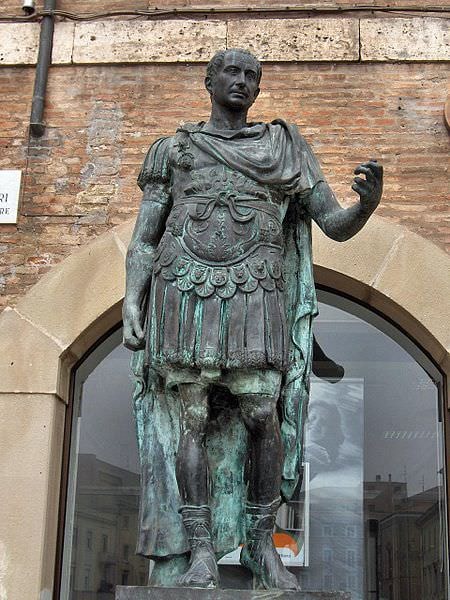 ユリウス・カエサル Georges Jansoone (CC BY-NC-SA) ](https://www.worldhistory.org/image/2737/julius-caesar/ "Julius Caesar")クラッススがいなくなると、第一回三頭政治は瓦解し、ポンペイウスとカエサルは互いに宣戦を布告した。ポンペイウスは法的手段によるカエサルの排除を試みた。かき集めた罪状で裁判を起こすと、元老院に働きかけ、裁判を理由にカエサルのローマ帰国を命じさせた。このような告発に対し、従順にローマへ戻るようなことはせず、紀元前49年、カエサルは軍隊を率いてルビコン川を渡り、その先頭に立ってローマに侵入した。
カエサルは出廷を拒否し、ライバルであるポンペイウスの排除に力を集結した。ポンペイウスとカエサルは紀元前48年、ギリシアのファルサロスで激突し、数で劣るカエサルの軍勢がポンペイウスを打ち破った。ポンペイウスは保護を求めてエジプトに逃亡したが、到着直後に暗殺された。ファルサロスで圧倒的多数を誇るポンペイウス軍を撃破し、偉大な勝利を収めたカエサルのニュースは、瞬く間に広がった。ポンペイウスの友人や同盟者は、カエサルこそ神に愛された男と信じ、速やかに寝返った。
### そして帝政へ
ユリウス・カエサルは、今やローマ最大の権力者となった。元老院に独裁者への就任を命じさせることで、事実上、共和制の時代を終わらせた。市民からは絶大な人気を誇り、カエサルが強力で安定した中央政府の樹立を目指した結果、首都ローマはさらなる繁栄を享受することになった。ところが紀元前44年、カエサルは元老院グループに暗殺された。カエサルの偉大な功績こそが、まさに暗殺の動機だった。
ブルートゥス、カッシウスを含む実行犯たちは、カエサルが権力を持ち過ぎた結果、元老院を廃止するかもしれないと恐れたようだ。カエサルの死を受け、彼の右腕であり従兄弟のマルクス・アントニウス(Mark Antony)は、カエサルの甥で後継者のガイウス・オクタウィウス・トゥリヌス(Octavian)、そしてカエサルの友人であるマルクス・アエミリウス・レピドゥスと結託し、紀元前42年、フィリッピの戦いでブルートゥス、カッシウスの軍勢を撃退した。
[  第二回三頭政治の勢力図 ColdEl (CC BY-SA) ](https://www.worldhistory.org/image/4951/division-of-the-second-triumvirate/ "Division of the Second Triumvirate")オクタウィアヌス、アントニウス、レピドゥスは第二回三頭政治を結成したが、第一回と同様に、彼らもまた等しく野心家だった。アントニウスとオクタウィアヌスは、レピドゥスによるヒスパニアとアフリカの統治を認めたが、これによってレピドゥスは首都ローマにおける権力争いから遠ざけられ、事実上無力化された。そしてオクタウィアヌスはローマ領の西方を、アントニウスは東方を治めることになった。
しかしアントニウスとエジプトの女王クレオパトラが結びついたことで、オクタウィアヌスの維持しようとしたバランスが崩れ、両者は戦争状態に突入した。紀元前31年、アントニウス・クレオパトラ連合軍はアクティウムの海戦で敗北し、のちに二人は自ら命を絶った。これによって、オクタウィアヌスはローマの唯一の権力者となった。紀元前27年、元老院から前例のない強大な権限を与えられると、オクタウィアヌスは「アウグストゥス」の名を自らに冠したが、これがすなわち、ローマ帝国初代皇帝の名前となった。歴史家の間では、この瞬間をもって共和政ローマの時代が終わり、ローマ帝国の歴史が始まるという見解で一致している。
#### Editorial Review
This human-authored definition has been reviewed by our editorial team before publication to ensure accuracy, reliability and adherence to academic standards in accordance with our [editorial policy](https://www.worldhistory.org/static/editorial-policy/).
## 著者の紹介
ジョシュア・マークはフリーランスの作家で、以前はニューヨークのマリスト大学で哲学の非常勤の教授職についていた。これまでギリシャとドイツに滞在歴があり、エジプトにも旅行している。彼は大学レベルの歴史学、文筆、文学、そして哲学を教えている。
- [Linkedin Profile](https://www.linkedin.com/pub/joshua-j-mark/38/614/339)
## 年表
- **753 BCE**: The legendary founding date of [Rome](https://www.worldhistory.org/Rome/).
- **753 BCE - 510 BCE**: Regal Period of ancient [Rome](https://www.worldhistory.org/Rome/) from Founding to Birth of the Republic.
- **750 BCE - 510 BCE**: The (semi-mythological) seven kings of [Rome](https://www.worldhistory.org/Rome/): [Romulus](https://www.worldhistory.org/Romulus_and_Remus/), Numa Pompilius, Tulus Hostilius, Ancus Marcius, Lucius Tarquinius Priscus, Servius Tullius, [Lucius Tarquinius Superbus](https://www.worldhistory.org/Lucius_Tarquinius_Superbus/).
- **c. 620 BCE**: Posible founding date for [Ostia](https://www.worldhistory.org/Ostia/), the port of [Rome](https://www.worldhistory.org/Rome/).
- **599 BCE - 500 BCE**: The traditional date when the [Circus Maximus](https://www.worldhistory.org/Circus_Maximus/) of [Rome](https://www.worldhistory.org/Rome/) is first laid out.
- **534 BCE - 510 BCE**: Reign of [Lucius Tarquinius Superbus](https://www.worldhistory.org/Lucius_Tarquinius_Superbus/), last king of [Rome](https://www.worldhistory.org/Rome/).
- **510 BCE - 509 BCE**: First treaty between [Rome](https://www.worldhistory.org/Rome/) and [Carthage](https://www.worldhistory.org/carthage/).
- **509 BCE**: Foundation of the [Roman Republic](https://www.worldhistory.org/Roman_Republic/).
- **c. 508 BCE**: [Lars Porsenna](https://www.worldhistory.org/Lars_Porsenna/), [Etruscan](https://www.worldhistory.org/Etruscan_Civilization/) king of [Chiusi](https://www.worldhistory.org/Chiusi/), lays siege to [Rome](https://www.worldhistory.org/Rome/).
- **504 BCE**: Migration of Claudii from Sabine lands to [Rome](https://www.worldhistory.org/Rome/).
- **c. 499 BCE**: [Battle](https://www.worldhistory.org/disambiguation/battle/) of Lake Regillus between [Rome](https://www.worldhistory.org/Rome/) and the Latin League.
- **c. 497 BCE**: The first [temple](https://www.worldhistory.org/temple/) dedicated to [Saturn](https://www.worldhistory.org/Saturn/) is constructed in the [Forum Romanum](https://www.worldhistory.org/Roman_Forum/) of [Rome](https://www.worldhistory.org/Rome/).
- **495 BCE**: [Lucius Tarquinius Superbus](https://www.worldhistory.org/Lucius_Tarquinius_Superbus/), last king of [Rome](https://www.worldhistory.org/Rome/), dies in exile at Cumae.
- **495 BCE**: A [temple](https://www.worldhistory.org/temple/) is built in honour of Mercury near [Rome](https://www.worldhistory.org/Rome/)'s [Circus Maximus](https://www.worldhistory.org/Circus_Maximus/).
- **494 BCE**: Traditional date the office of the tribuni plebis is created in [Rome](https://www.worldhistory.org/Rome/).
- **493 BCE**: Foedus Cassianus - treaty by Spurius Cassius Vecellinus with the Latin League after the [Battle](https://www.worldhistory.org/disambiguation/battle/) of Lake Regillus.
- **484 BCE**: The first [temple](https://www.worldhistory.org/temple/) of the [Dioscuri](https://www.worldhistory.org/Castor_and_Pollux/) (Castor & Pollux) is dedicated in [Rome](https://www.worldhistory.org/Rome/)'s [Forum Romanum](https://www.worldhistory.org/Roman_Forum/) by Aulus Postumius following his victory over the Latins at the [Battle](https://www.worldhistory.org/disambiguation/battle/) of Lake Regillus.
- **451 BCE - 450 BCE**: Decemvirate and Publication of [Twelve Tables](https://www.worldhistory.org/Twelve_Tables/) of [Roman Law](https://www.worldhistory.org/Roman_Law/).
- **c. 400 BCE**: [Roman](https://www.worldhistory.org/disambiguation/Roman/) tale of mythical twins [Romulus and Remus](https://www.worldhistory.org/Romulus_and_Remus/) first recorded.
- **394 BCE**: [Etruscan](https://www.worldhistory.org/Etruscan_Civilization/) [Volsinii](https://www.worldhistory.org/volsinii/) and their ally Sappinum unsuccessfully attacks [Rome](https://www.worldhistory.org/Rome/).
- **390 BCE**: Gauls sack [Rome](https://www.worldhistory.org/Rome/).
- **c. 390 BCE**: "Gallic Catastrophe:" [Brennus](https://www.worldhistory.org/brennus/) of the Senones defeats the Romans at Allia, and subsequently sacks [Rome](https://www.worldhistory.org/Rome/).
- **380 BCE**: Rebuilding of [Rome](https://www.worldhistory.org/Rome/). Strong walls around the seven hills.
- **343 BCE - 341 BCE**: First Samnite [War](https://www.worldhistory.org/disambiguation/War/) ([Rome](https://www.worldhistory.org/Rome/) vs. Samnites).
- **340 BCE - 338 BCE**: Latin [War](https://www.worldhistory.org/disambiguation/War/), victory for [Rome](https://www.worldhistory.org/Rome/).
- **326 BCE - 304 BCE**: Second Samnite [War](https://www.worldhistory.org/disambiguation/War/).
- **321 BCE**: The Via Appia, a famous [Roman](https://www.worldhistory.org/disambiguation/Roman/) road, is constructed.
- **298 BCE - 290 BCE**: Third Samnite [War](https://www.worldhistory.org/disambiguation/War/) between [Rome](https://www.worldhistory.org/Rome/) and the Samnite people.
- **295 BCE**: [Roman](https://www.worldhistory.org/disambiguation/Roman/) victory over Samnites, Gauls and Umbrians at Sentinum.
- **292 BCE**: The Romans adopt the [Greek](https://www.worldhistory.org/disambiguation/greek/) [god](https://www.worldhistory.org/God/) of [medicine](https://www.worldhistory.org/disambiguation/medicine/) [Asclepius](https://www.worldhistory.org/Asclepius/) by stealing his sacred snake from [Epidaurus](https://www.worldhistory.org/epidaurus/) and setting up a [temple](https://www.worldhistory.org/temple/) on the Tiber Island.
- **Mar 218 BCE**: [Rome](https://www.worldhistory.org/Rome/) declares [war](https://www.worldhistory.org/disambiguation/War/) on [Carthage](https://www.worldhistory.org/carthage/) after [Hannibal](https://www.worldhistory.org/hannibal/) sacks [Saguntum](https://www.worldhistory.org/Saguntum/) in Spain. The [Second Punic War](https://www.worldhistory.org/Second_Punic_War/) begins.
- **213 BCE - 212 BCE**: [Roman](https://www.worldhistory.org/disambiguation/Roman/) commander [Marcus Claudius Marcellus](https://www.worldhistory.org/Marcus_Claudius_Marcellus/) lays seige to and ultimately sacks [Syracuse](https://www.worldhistory.org/syracuse/).
- **196 BCE**: The earliest known Triumphal Arches are built in [Rome](https://www.worldhistory.org/Rome/) by L.Sertinius.
- **184 BCE**: The first basilica is added to [Rome](https://www.worldhistory.org/Rome/)'s [Forum Romanum](https://www.worldhistory.org/Roman_Forum/).
- **168 BCE**: [Rome](https://www.worldhistory.org/Rome/) defeats [Macedon](https://www.worldhistory.org/macedon/) at [Battle of Pydna](https://www.worldhistory.org/Battle_of_Pydna/).
- **166 BCE**: [Rome](https://www.worldhistory.org/Rome/) puts [Delos](https://www.worldhistory.org/delos/) under the jurisdiction of [Athens](https://www.worldhistory.org/Athens/) and makes the island a free port.
- **146 BCE**: First [Roman](https://www.worldhistory.org/disambiguation/Roman/) all-marble building is constructed, the [temple](https://www.worldhistory.org/temple/) of [Jupiter](https://www.worldhistory.org/jupiter/) Stater in [Rome](https://www.worldhistory.org/Rome/).
- **121 BCE**: [Gallia](https://www.worldhistory.org/gaul/) Narbonensis becomes a [Roman](https://www.worldhistory.org/disambiguation/Roman/) province.
- **107 BCE - 100 BCE**: [Gaius Marius](https://www.worldhistory.org/Gaius_Marius/) reforms the [Roman army](https://www.worldhistory.org/Roman_Army/).
- **12 Jul 100 BCE - 15 Mar 44 BCE**: Life of Gaius [Julius Caesar](https://www.worldhistory.org/Julius_Caesar/), founder of the [Roman Empire](https://www.worldhistory.org/Roman_Empire/).
- **89 BCE**: All [poleis](https://www.worldhistory.org/Polis/) or [city](https://www.worldhistory.org/city/)-states in [Magna Graecia](https://www.worldhistory.org/Magna_Graecia/) come under [Roman](https://www.worldhistory.org/disambiguation/Roman/) control.
- **80 BCE**: [Sulla](https://www.worldhistory.org/sulla/) moves the [Olympic Games](https://www.worldhistory.org/Olympic_Games/) to [Rome](https://www.worldhistory.org/Rome/) for a single Olympiad.
- **70 BCE**: [Pompey](https://www.worldhistory.org/pompey/) and [Crassus](https://www.worldhistory.org/Marcus_Licinius_Crassus/) are made consuls.
- **59 BCE - 17 CE**: Life of [Livy](https://www.worldhistory.org/livy/).
- **58 BCE - 51 BCE**: [Julius Caesar](https://www.worldhistory.org/Julius_Caesar/)'s [conquest](https://www.worldhistory.org/warfare/) of [Gaul](https://www.worldhistory.org/gaul/).
- **55 BCE**: [Pompey the Great](https://www.worldhistory.org/pompey/) builds the first permanent stone [theatre](https://www.worldhistory.org/disambiguation/theatre/) in [Rome](https://www.worldhistory.org/Rome/).
- **55 BCE - 54 BCE**: [Julius Caesar](https://www.worldhistory.org/Julius_Caesar/)'s expeditions in [Britain](https://www.worldhistory.org/disambiguation/Britain/).
- **54 BCE - 29 BCE**: Forum of [Caesar](https://www.worldhistory.org/disambiguation/caesar/) constructed in [Rome](https://www.worldhistory.org/Rome/) by [Julius Caesar](https://www.worldhistory.org/Julius_Caesar/) as another area to conduct judicial business. It is the best surviving of his monuments.
- **15 Mar 44 BCE**: [Julius Caesar](https://www.worldhistory.org/Julius_Caesar/) is murdered.
- **43 BCE - 36 BCE**: [Second Triumvirate](https://www.worldhistory.org/Second_Triumvirate/): [Antony](https://www.worldhistory.org/Mark_Antony/), [Octavian](https://www.worldhistory.org/augustus/), and Lepidus (official approval by the [Roman Senate](https://www.worldhistory.org/Roman_Senate/)). Mass proscriptions including [Cicero](https://www.worldhistory.org/Cicero/).
- **43 BCE - 17 CE**: Life of the [Roman](https://www.worldhistory.org/disambiguation/Roman/) writer [Ovid](https://www.worldhistory.org/ovid/), author of Metamorphoses.
- **36 BCE**: [Agrippa](https://www.worldhistory.org/Marcus_Agrippa/) defeats the naval fleet of Sextus [Pompey](https://www.worldhistory.org/pompey/) in the [battle](https://www.worldhistory.org/disambiguation/battle/) of Naulochos.
- **31 BCE**: [Greece](https://www.worldhistory.org/greece/) absorbed into [Roman Empire](https://www.worldhistory.org/Roman_Empire/).
- **29 BCE**: [Augustus](https://www.worldhistory.org/augustus/) builds the [temple](https://www.worldhistory.org/temple/) of Divius Iulius on the spot of [Julius Caesar](https://www.worldhistory.org/Julius_Caesar/)'s funeral pyre in [Rome](https://www.worldhistory.org/Rome/)'s [Forum Romanum](https://www.worldhistory.org/Roman_Forum/).
- **c. 27 BCE**: The first [Pantheon](https://www.worldhistory.org/Pantheon/) is built in [Rome](https://www.worldhistory.org/Rome/) and dedicated by [Marcus Agrippa](https://www.worldhistory.org/Marcus_Agrippa/).
- **c. 20 BCE**: Military engineer and architect [Vitruvius](https://www.worldhistory.org/Vitruvius/) publishes his "De Architectura".
- **c. 20 BCE**: The Campus Martius baths in [Rome](https://www.worldhistory.org/Rome/) are constructed and donated to the people by [Agrippa](https://www.worldhistory.org/Marcus_Agrippa/).
- **19 BCE**: Arch of [Augustus](https://www.worldhistory.org/augustus/) built in [Rome](https://www.worldhistory.org/Rome/) to commemorate victory over the Parthians.
- **c. 13 BCE**: Official inauguration of the [Theatre of Marcellus](https://www.worldhistory.org/article/614/theatre-of-marcellus/) in [Rome](https://www.worldhistory.org/Rome/).
- **c. 10 BCE**: [Augustus](https://www.worldhistory.org/augustus/) rebuilds the [Temple of Castor and Pollux](https://www.worldhistory.org/article/632/temple-of-castor--pollux/) in [Rome](https://www.worldhistory.org/Rome/)'s [Forum Romanum](https://www.worldhistory.org/Roman_Forum/).
- **1 CE - 100 CE**: [Mithraism](https://www.worldhistory.org/Mithraic_Mysteries/) spreads in the [Roman empire](https://www.worldhistory.org/Roman_Empire/).
- **c. 13 CE**: [Augustus](https://www.worldhistory.org/augustus/) creates the [cohortes urbanae](https://www.worldhistory.org/Cohortes_Urbanae/) in [Rome](https://www.worldhistory.org/Rome/) to help maintain public order.
- **c. 23 CE**: The castra praetoria, permanent camp of the [Praetorian Guard](https://www.worldhistory.org/Praetorian_Guard/), is built in [Rome](https://www.worldhistory.org/Rome/) by [Sejanus](https://www.worldhistory.org/sejanus/).
- **42 CE - 62 CE**: [Paul the Apostle](https://www.worldhistory.org/Paul_the_Apostle/) goes on missionary journeys across [Asia Minor](https://www.worldhistory.org/Asia_Minor/), [Greece](https://www.worldhistory.org/greece/), and [Rome](https://www.worldhistory.org/Rome/).
- **c. 50 CE - c. 60 CE**: Establishment of various Christian communities in the Eastern [Mediterranean](https://www.worldhistory.org/disambiguation/mediterranean/), [Greece](https://www.worldhistory.org/greece/), [Egypt](https://www.worldhistory.org/egypt/), and at least the [city](https://www.worldhistory.org/city/) of [Rome](https://www.worldhistory.org/Rome/).
- **60 CE - 61 CE**: [Boudicca](https://www.worldhistory.org/Boudicca/)'s Revolt in [Britain](https://www.worldhistory.org/disambiguation/Britain/).
- **64 CE**: Fire destroys the [Circus Maximus](https://www.worldhistory.org/Circus_Maximus/) in [Rome](https://www.worldhistory.org/Rome/).
- **64 CE**: Unofficial persecution of Christians in [Rome](https://www.worldhistory.org/Rome/).
- **64 CE**: The great fire in [Rome](https://www.worldhistory.org/Rome/).
- **c. 64 CE**: The [Roman](https://www.worldhistory.org/disambiguation/Roman/) port of [Ostia](https://www.worldhistory.org/Ostia/) reaches its maximum size becoming a major urban centre.
- **c. 65 CE**: The [Circus Maximus](https://www.worldhistory.org/Circus_Maximus/) in [Rome](https://www.worldhistory.org/Rome/) is rebuilt and its capacity increased to 250,000.
- **c. 65 CE**: The Baths of [Nero](https://www.worldhistory.org/Nero/) are built in [Rome](https://www.worldhistory.org/Rome/).
- **66 CE - 73 CE**: The Jewish Revolt against [Rome](https://www.worldhistory.org/Rome/).
- **68 CE - 69 CE**: [Year of the Four Emperors](https://www.worldhistory.org/Year_of_the_Four_Emperors/): Civil [war](https://www.worldhistory.org/disambiguation/War/) in [Rome](https://www.worldhistory.org/Rome/).
- **70 CE**: The [city](https://www.worldhistory.org/city/) of [Jerusalem](https://www.worldhistory.org/jerusalem/) is besieged and captured by [Rome](https://www.worldhistory.org/Rome/); the Second [Temple](https://www.worldhistory.org/temple/) destroyed.
- **Jun 71 CE**: [Titus](https://www.worldhistory.org/disambiguation/Titus/) returns to [Rome](https://www.worldhistory.org/Rome/) from Jewish [War](https://www.worldhistory.org/disambiguation/War/).
- **72 CE**: [Vespasian](https://www.worldhistory.org/Vespasian/) begins construction of the [Colosseum](https://www.worldhistory.org/Colosseum/) in [Rome](https://www.worldhistory.org/Rome/).
- **Aug 79 CE - Oct 79 CE**: Eruption of Mt. Vesuvius in southern [Italy](https://www.worldhistory.org/italy/) burying the towns of [Pompeii](https://www.worldhistory.org/pompeii/) and [Herculaneum](https://www.worldhistory.org/Herculaneum/) in volcanic ash.
- **80 CE**: The [Colosseum](https://www.worldhistory.org/Colosseum/) in [Rome](https://www.worldhistory.org/Rome/) is officially opened by [Titus](https://www.worldhistory.org/disambiguation/Titus/) with a 100 day [gladiator](https://www.worldhistory.org/gladiator/) spectacular.
- **80 CE**: The first [Pantheon](https://www.worldhistory.org/Pantheon/) in [Rome](https://www.worldhistory.org/Rome/) is destroyed by fire.
- **81 CE - 96 CE**: Construction is finally completed on the [Colosseum](https://www.worldhistory.org/Colosseum/) of [Rome](https://www.worldhistory.org/Rome/) in the reign of [Domitian](https://www.worldhistory.org/domitian/).
- **83 CE**: [Battle](https://www.worldhistory.org/disambiguation/battle/) of Mons Graupius in [Scotland](https://www.worldhistory.org/disambiguation/Scotland/).
- **18 Sep 96 CE**: [Death](https://www.worldhistory.org/disambiguation/Death/) of [Roman Emperor](https://www.worldhistory.org/Roman_Emperor/) [Domitian](https://www.worldhistory.org/domitian/).
- **c. 110 CE**: First documented martydom in the [Colosseum](https://www.worldhistory.org/Colosseum/) of [Rome](https://www.worldhistory.org/Rome/), that of St. Ignatius of [Antioch](https://www.worldhistory.org/Antiochia/).
- **110 CE**: The second [Pantheon](https://www.worldhistory.org/Pantheon/) building in [Rome](https://www.worldhistory.org/Rome/) is hit by lightning and destroyed by fire.
- **113 CE**: [Trajan's column](https://www.worldhistory.org/Trajans_Column/) is constructed in [Rome](https://www.worldhistory.org/Rome/) which commemorates the emperor's campaigns in [Dacia](https://www.worldhistory.org/dacia/).
- **c. 125 CE**: The [Pantheon](https://www.worldhistory.org/Pantheon/) is completed in [Rome](https://www.worldhistory.org/Rome/).
- **10 Jul 138 CE - 9 Mar 161 CE**: Reign of [Roman Emperor](https://www.worldhistory.org/Roman_Emperor/) [Antoninus Pius](https://www.worldhistory.org/Antoninus_Pius/).
- **c. 180 CE**: The [Column of Marcus Aurelius](https://www.worldhistory.org/article/647/the-column-of-marcus-aurelius/) and Faustina is erected in [Rome](https://www.worldhistory.org/Rome/). It depicts in relief [sculpture](https://www.worldhistory.org/disambiguation/Sculpture/) the emperors' campaigns across the Danube.
- **192 CE**: Emperor [Commodus](https://www.worldhistory.org/commodus/) is murdered, civil [war](https://www.worldhistory.org/disambiguation/War/) ensues (until 197 CE).
- **202 CE**: The [Pantheon](https://www.worldhistory.org/Pantheon/) in [Rome](https://www.worldhistory.org/Rome/) is repaired by [Septimius Severus](https://www.worldhistory.org/Septimius_Severus/) and [Caracalla](https://www.worldhistory.org/Caracalla/).
- **227 CE**: The Baths of [Nero](https://www.worldhistory.org/Nero/) in [Rome](https://www.worldhistory.org/Rome/) are extensively renovated and expanded by [Alexander Severus](https://www.worldhistory.org/Alexander_Severus/) and renamed Thermae Alexandrinae.
- **c. 235 CE**: The Baths of [Caracalla](https://www.worldhistory.org/Caracalla/) in [Rome](https://www.worldhistory.org/Rome/) are completed.
- **238 CE**: Year of the Six Emperors in the [Roman Empire](https://www.worldhistory.org/Roman_Empire/).
- **272 CE**: Possible year of Emperor [Constantine](https://www.worldhistory.org/disambiguation/Constantine/)'s birth.
- **283 CE**: A fire devastates [Rome](https://www.worldhistory.org/Rome/)'s [Forum Romanum](https://www.worldhistory.org/Roman_Forum/), necessitating an extensive rebuilding programme.
- **286 CE**: Naval commander Carausius ([Marcus Aurelius](https://www.worldhistory.org/Marcus_Aurelius/) Mausaeus Valerius Carausius) declares himself emperor in [Britain](https://www.worldhistory.org/disambiguation/Britain/) and Northern [Gaul](https://www.worldhistory.org/gaul/).
- **293 CE**: Emperor Carausius assassinated by Allectus.
- **308 CE**: [Constantine I](https://www.worldhistory.org/Constantine_I/) named "[caesar](https://www.worldhistory.org/disambiguation/caesar/)" of the west.
- **312 CE**: [Constantine](https://www.worldhistory.org/disambiguation/Constantine/) defeats Maxentius at Milvian Bridge.
- **312 CE**: [Constantine I](https://www.worldhistory.org/Constantine_I/) reduces the [cohortes urbanae](https://www.worldhistory.org/Cohortes_Urbanae/) of [Rome](https://www.worldhistory.org/Rome/).
- **337 CE**: [Death](https://www.worldhistory.org/disambiguation/Death/) of Emperor [Constantine I](https://www.worldhistory.org/Constantine_I/).
- **c. 360 CE - c. 380 CE**: The [Temple](https://www.worldhistory.org/temple/) of [Saturn](https://www.worldhistory.org/Saturn/) is rebuilt in the [Forum Romanum](https://www.worldhistory.org/Roman_Forum/) of [Rome](https://www.worldhistory.org/Rome/).
- **402 CE**: Ravenna becomes the capital of the [Western Roman Empire](https://www.worldhistory.org/Western_Roman_Empire/).
- **408 CE**: [Alaric](https://www.worldhistory.org/Alaric/) I the [Visigoth](https://www.worldhistory.org/visigoth/) besieges [Rome](https://www.worldhistory.org/Rome/). As ransom, Rome pays 5,000 pounds of [gold](https://www.worldhistory.org/gold/), 30,000 pounds of [silver](https://www.worldhistory.org/Silver/), 4,000 silken tunics, 3,000 hides dyed scarlet, and 3,000 pounds of [pepper](https://www.worldhistory.org/Pepper/).
- **410 CE**: [Alaric](https://www.worldhistory.org/Alaric/) of the [Visigoths](https://www.worldhistory.org/visigoth/) sacks [Rome](https://www.worldhistory.org/Rome/).
- **24 Aug 410 CE**: [Alaric](https://www.worldhistory.org/Alaric/) sacks [Rome](https://www.worldhistory.org/Rome/).
- **422 CE**: The [Colosseum](https://www.worldhistory.org/Colosseum/) of [Rome](https://www.worldhistory.org/Rome/) is damaged by [earthquake](https://www.worldhistory.org/disambiguation/earthquake/).
- **455 CE**: [Vandals](https://www.worldhistory.org/Vandals/) sack [Rome](https://www.worldhistory.org/Rome/).
- **536 CE**: [Rome](https://www.worldhistory.org/Rome/) falls to [Belisarius](https://www.worldhistory.org/Belisarius/).
- **549 CE**: The last official [chariot](https://www.worldhistory.org/chariot/) race is held in [Rome](https://www.worldhistory.org/Rome/)'s [Circus Maximus](https://www.worldhistory.org/Circus_Maximus/).
- **608 CE**: The [Pantheon](https://www.worldhistory.org/Pantheon/) in [Rome](https://www.worldhistory.org/Rome/) is converted into a Christian church.
- **c. 730 CE**: First reference to the Flavian [Amphitheatre](https://www.worldhistory.org/amphitheatre/) as the [Colosseum](https://www.worldhistory.org/Colosseum/) by the Venerable [Bede](https://www.worldhistory.org/Bede/).
## 外部リンク
- [Ancient Rome Live](http://www.ancientromelive.org/)
- [Rome Reborn](http://romereborn.frischerconsulting.com/)
- [Four sisters in Ancient Rome - Ray Laurence](http://ed.ted.com/lessons/four-sisters-in-ancient-rome-ray-laurence)
- [A glimpse of teenage life in ancient Rome - Ray Laurence](http://ed.ted.com/lessons/a-glimpse-of-teenage-life-in-ancient-rome-ray-laurence)
- [Roman Lives](https://history-podcasts.com/roman-lives)
- [S.P.Q.R.: A History of Ancient Rome - Episode - Free Library](https://libwww.freelibrary.org/podcast/?podcastID=1419)
- [33 Ancient Rome Facts That Will Change The Way You See History](https://allthatsinteresting.com/ancient-rome-facts)
- [Roman Emperors](http://www.roman-emperors.org/auggie.htm)
- [The History of Rome](https://thehistoryofrome.typepad.com/)
- [The Meaning of Myths, Folklore, Legends, and Fairy Tales](https://www.thoughtco.com/defining-terms-myth-folklore-legend-735039)
- [Julius Caesar](http://www.bbc.co.uk/history/historic_figures/caesar_julius.shtml)
- [Discover Ancient Rome in Google Earth](http://www.youtube.com/watch?v=MqMXIRwQniA)
- [Historical city travel guide: Rome, 1st century AD | British Museum](https://www.britishmuseum.org/blog/historical-city-travel-guide-rome-1st-century-ad)
## 記事の引用
### APA
Mark, J. J. (2026, June 01). 古代ローマ. (T. Torii, 翻訳者). *World History Encyclopedia*.
### Chicago
Mark, Joshua J.. "古代ローマ." 翻訳者: Tetsuya Torii. *World History Encyclopedia*, June 01, 2026. .
### MLA
Mark, Joshua J.. "古代ローマ." 翻訳者: Tetsuya Torii. *World History Encyclopedia*, 01 Jun 2026, .
## ライセンスと著作権
投稿者: [Tetsuya Torii](https://www.worldhistory.org/user/tetsuyatorii/ "User Page: Tetsuya Torii"), 公開日 01 June 2026. 著作権情報については、元の情報源をご確認ください。 このページからリンクされているコンテンツは、異なるライセンス条件が適用される場合がありますのでご注意ください。