---
title: Antica Roma
author: Joshua J. Mark
translator: Aldo Copetti
source: https://www.worldhistory.org/trans/it/1-68/antica-roma/
format: machine-readable-alternate
license: Creative Commons Attribution-NonCommercial-ShareAlike (https://creativecommons.org/licenses/by-nc-sa/4.0/)
updated: 2024-03-25
---
# Antica Roma
_A cura di [Joshua J. Mark](https://www.worldhistory.org/user/JPryst/)_
_Tradotto da [Aldo Copetti](https://www.worldhistory.org/user/aldocopetti)_
Secondo la leggenda, l'Antica Roma fu fondata dai due fratelli - e semidei - [Romolo e Remo](https://www.worldhistory.org/trans/it/1-12205/romolo-e-remo/), il 21 aprile 753 a.C. Secondo la leggenda, durante un litigio su chi dei due avrebbe dovuto governare la città (o, in una seconda versione, su dove avrebbe dovuto essere fondata) Romolo uccise Remo e diede il proprio nome alla città. Questa storia sulla fondazione di Roma è la più nota, ma non l'unica.
Altre leggende affermano che la città sia stata chiamata così in onore di una donna, Roma, che viaggiò assieme ad [Enea](https://www.worldhistory.org/trans/it/1-782/enea/) e gli altri superstiti di [Troia](https://www.worldhistory.org/trans/it/1-372/troia/) dopo la caduta della città. Approdando sulle rive del fiume Tevere, Roma e le altre donne si opposero agli uomini che avrebbero voluto continuare il viaggio. Ella guidò le donne nell'incendio delle navi troiane bloccando - di fatto - i superstiti troiani nel luogo che sarebbe diventato Roma. Enea di Troia compare in questa leggenda ed anche, notoriamente, nell'*Eneide* di Virgilio, come fondatore di Roma e degli antenati di Romolo e Remo, legando così Roma alla grandiosità ed alla ricchezza che un tempo fu Troia.
Ancora, altre teorie sul nome della famosa città suggeriscono che derivi da *Rumon*, l'antico nome del fiume Tevere, nient'altro che il nome dato al piccolo polo commerciale sorto sulle sue rive o che derivasse da una parola etrusca che poteva designare uno dei loro insediamenti.
### Roma antica
Originariamente una piccola città sulle rive del Tevere, Roma crebbe in dimensioni e forza, all'inizio, attraverso i commerci. La posizione della città fornì ai mercanti una via fluviale facilmente navigabile attraverso cui commerciare i loro beni. La città fu governata da sette re, da Romolo a Tarquinio, mentre cresceva in dimensioni e potenza. La cultura e la civiltà greche, che giunsero a Roma attraverso le colonie greche a sud, diedero ai romani un modello su cui costruire la loro cultura. Dai greci presero in prestito la letteratura e la religione, così come i fondamenti dell'architettura.
Gli etruschi, a nord, furono da modello per i commerci e per il lusso urbano. Anche l'Etruria [era](https://www.worldhistory.org/trans/it/1-10295/era/) in una buona posizione per i commerci ed i romani appresero le abilità commerciali dall'esempio etrusco o furono istruiti direttamente da loro, che fecero incursioni nell'area intorno Roma tra il 650 ed il 600 a.C. (nonostante la loro influenza fosse giunta ben prima). La portata del ruolo che ebbe [la civiltà etrusca](https://www.worldhistory.org/trans/it/1-206/la-civilta-etrusca/) nello sviluppo della cultura e della società romane è oggetto di discussione ma ci sono pochi dubbi sul fatto che abbiano avuto un impatto significativo nelle fasi iniziali.
Fin dall'inizio, i Romani mostrarono un talento nel prendere in prestito e migliorare le abilità ed i concetti di altre culture. Il Regno di Roma crebbe rapidamente da una cittadina commerciale ad una prospera città tra l'VIII ed il VI secolo a.C. Quando l'ultimo dei sette re di Roma, Tarquinio il Superbo, fu deposto nel 509 a.C., il suo rivale, Lucio Giunio Bruto, riformò il sistema di governo ed istituì la Repubblica Romana.
### Guerra ed Espansione
Nonostante la città abbia ottenuto la sua prosperità attraverso il commercio durante i primi anni, fu la politica militare romana a renderla una potente forza nel mondo antico. Le guerre con la città nordafricana di [Cartagine](https://www.worldhistory.org/trans/it/1-205/cartagine/) (note come [Guerre Puniche](https://www.worldhistory.org/trans/it/1-736/guerre-puniche/), 264-146 a.C.) consolidarono il potere di Roma ed aiutarono la città a crescere in ricchezza e prestigio. Roma e Cartagine furono rivali nei commerci nel Mediterraneo occidentale e, con la sconfitta di Cartagine, Roma ottenne un quasi assoluto dominio della regione; nonostante ci fossero ancora delle incursioni di pirati che impedivano il completo controllo romano del mare.
Mentre la Repubblica di Roma cresceva in potere e prestigio, la città di Roma iniziò a soffrire gli effetti della corruzione, dell'avidità e l'eccessiva dipendenza dalla manodopera di schiavi stranieri. Bande di romani disoccupati, tagliati fuori dal lavoro dall'afflusso di schiavi portati dalle conquiste territoriali, si offrirono come delinquenti al servizio di qualsiasi ricco senatore li pagasse. La ricca elite della città, i patrizi, divenne ancora più ricca alle spese della classe lavoratrice inferiore, i plebei.
[  Mappa dell'Espansione romana del II Secolo US Military Academy (Public Domain) ](https://www.worldhistory.org/image/131/map-of-2nd-century-roman-expansion/ "Map of 2nd Century Roman Expansion")Nel II secolo a.C., i fratelli Gracchi - Tiberio e Gaio - due tribuni romani, guidarono un movimento per la riforma agraria e politica in generale. Nonostante i fratelli siano stati uccisi per la loro causa, i loro sforzi portarono a delle riforme legislative e la corruzione del Senato Romano fu ridimensionata (o, per lo meno, i senatori divennero più discreti nelle loro attività di corruzione). Ai tempi del Primo Triumvirato, sia la città che la Repubblica di Roma prosperavano.
### La Repubblica
Ciononostante, Roma si trovò divisa in classi. La classe dirigente si definiva degli *optimates* (gli uomini migliori) mentre le classi più basse, o i loro simpatizzanti, erano noti come *populares* (il popolo). Questi nomi erano applicati solo a coloro che sostenevano una certa ideologia politica; non vi erano partiti politici rigidi, né tutta la classe dirigente era costituita da *optimates* e tutti gli appartenenti alle classi inferiori erano *populares*.
In generale, gli *optimates* si attenevano a valori della tradizione politica e sociale in favore del potere del Senato di Roma e del prestigio e della superiorità della classe dirigente. I *populares*, sempre in termini generici, erano favorevoli ad una riforma ed una democratizzazione della Repubblica Romana. Queste ideologie opposte si scontrarono sotto forma di tre uomini che, inconsapevolmente, portarono alla fine della Repubblica Romana.
[Marco Licinio Crasso](https://www.worldhistory.org/trans/it/1-11534/marco-licinio-crasso/) ed il suo rivale politico, Gneo Pompeo Magno (Pompeo il Grande) assieme ad un terzo - più giovane - politico, Gaio [Giulio Cesare](https://www.worldhistory.org/trans/it/1-95/giulio-cesare/), formarono quello che gli storici moderni chiamano il Primo Triumvirato di Roma (nonostante né i romani di quei tempi né i tre uomini che componevano il triumvirato abbiano mai usato tale termine). Crasso e Pompeo si attenevano alla linea politica degli *optimates* mentre Cesare era un *populare*.
I tre uomini erano ugualmente ambiziosi e, gareggiando per il potere, furono in grado di tenersi a vicenda sotto controllo, contribuendo al contempo a far prosperare Roma. Crasso era l'uomo più ricco di Roma, corrotto al punto da costringere i cittadini più ricchi a pagargli un tributo 'di sicurezza'. Se il cittadino pagava, Crasso non avrebbe bruciato la sua casa ma, in mancanza di denaro, essa sarebbe stata data alle fiamme e Crasso si sarebbe fatto pagare per mandare degli uomini a spegnere l'incendio. Sebbene il motivo alla base dell'origine di questi vigili del fuoco fosse tutt'altro che nobile, Crasso diede effettivamente vita al primo dipartimento di vigili del fuoco che, in seguito, si sarebbe dimostrato di grande valore per la città.
Sia Pompeo che Cesare erano grandi generali che, attraverso le rispettive conquiste, arricchirono Roma. Pur essendo l'uomo più ricco di Roma (e, si dice, il più ricco di tutta la storia romana), Crasso desiderava ricevere lo stesso rispetto che le persone portavano verso Pompeo e Cesare per i loro successi militari. Nel 53 a.C. guidò una considerevole forza contro i parti e fu sconfitto nella Battaglia di Carre, nella moderna Turchia, dove fu ucciso quando i negoziati per la tregua fallirono.
[ 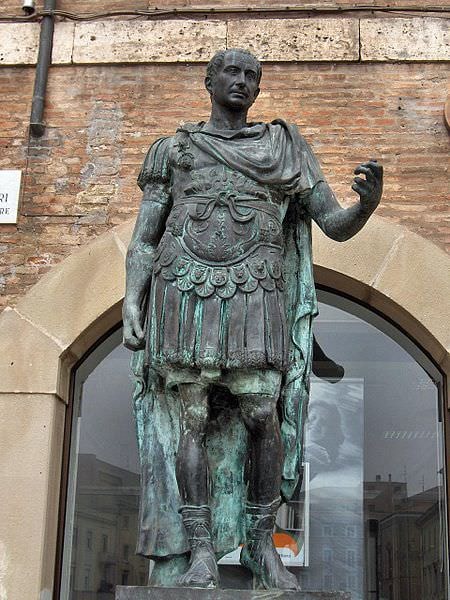 Giulio Cesare Georges Jansoone (CC BY-NC-SA) ](https://www.worldhistory.org/image/2737/julius-caesar/ "Julius Caesar")Con la scomparsa di Crasso, il Primo Triumvirato si disintegrò e Pompeo e Cesare si dichiararono guerra a vicenda. Pompeo provò ad eliminare il suo rivale con mezzi legali e fece in modo che il Senato ordinasse a Cesare di recarsi a Roma per essere processato con accuse di vario genere. Invece di tornare in città con umiltà per affrontare le accuse, Cesare attraversò il fiume Rubicone con i suoi eserciti nel 49 a.C. ed entrò a Roma.
Rifiutò di rispondere alle accuse e si concentrò sull'eliminazione di Pompeo come rivale. Pompeo e Cesare si scontrarono in battaglia a Farsalo in Grecia nel 48 a.C. dove le forze numericamente inferiori di Cesare sconfissero le più grandi di Pompeo. Pompeo stesso fuggì in Egitto, pensando di trovarvi rifugio, ma fu assassinato al suo arrivo. La notizia della grande vittoria di Cesare a Farsalo si diffuse rapidamente e molti ex-amici ed alleati di Pompeo si schierarono subito con Cesare, ritenendolo favorito dagli dei.
### Verso l'[Impero](https://www.worldhistory.org/trans/it/1-99/impero/)
Giulio Cesare divenne così l'uomo più potente di Roma. Portò a tutti gli effetti alla fine del periodo della Repubblica con la sua proclamazione da parte del Senato a *dictator*. La sua popolarità tra il popolo era enorme ed i suoi sforzi nel creare un governo centrale forte e stabile portarono ad un aumento di prosperità per la città di Roma. Fu, tuttavia, assassinato da un gruppo di senatori romani nel 44 a.C., proprio per via di questi successi.
I cospiratori, tra cui Bruto e Cassio, sembravano temere che Cesare stesse diventando troppo potente e che avrebbe infine abolito il Senato. A seguito della sua morte, il suo braccio destro - nonché cugino - Marco Antonio si unì al nipote ed erede di Cesare, Gaio Ottavio Turino (Ottaviano) ed all'amico di Cesare, Marco Emilio Lepido, per sconfiggere le forze di Bruto e Cassio nella Battaglia di Filippi nel 42 a.C.
[  Divisione del Secondo Triumvirato ColdEl (CC BY-SA) ](https://www.worldhistory.org/image/4951/division-of-the-second-triumvirate/ "Division of the Second Triumvirate")Ottaviano, Antonio e Lepido formarono il Secondo Triumvirato di Roma ma, così come nel primo, questi tre uomini erano ugualmente ambiziosi. Lepido fu definitivamente neutralizzato quando Antonio ed Ottaviano si accordarono nell'affidargli il controllo dell'Hispania e dell'Africa, tenendolo lontano da ogni potere a Roma. Fu stabilito che Ottaviano avrebbe governato le terre romane ad occidente ed Antonio quelle ad oriente.
Il coinvolgimento di Antonio con la regina egizia [Cleopatra](https://www.worldhistory.org/trans/it/1-866/cleopatra/) VII, tuttavia, turbò l'equilibrio che Ottaviano aveva sperato di mantenere ed i due si fecero guerra. Le forze combinate di Antonio e Cleopatra furono sconfitte nella Battaglia di Azio nel 31 a.C. ed entrambi giunsero a togliersi la vita. Ottaviano emerse come sola potenza a Roma. Nel 27 a.C. gli furono garantiti poteri eccezionali dal Senato e prese il nome di [Augusto](https://www.worldhistory.org/trans/it/1-412/augusto/), il primo Imperatore di Roma. Gli storici sono concordi nell'affermare che questo sia il punto in cui la storia di Roma giunge alla fine ed inizia la storia dell'[Impero Romano](https://www.worldhistory.org/trans/it/1-100/impero-romano/).
#### Editorial Review
This human-authored definition has been reviewed by our editorial team before publication to ensure accuracy, reliability and adherence to academic standards in accordance with our [editorial policy](https://www.worldhistory.org/static/editorial-policy/).
## Info autore
Joshua J. Mark è cofondatore e direttore dei contenuti della World History Encyclopedia. In precedenza è stato professore al Marist College (New York), dove ha insegnato storia, filosofia, letteratura e scrittura. Ha viaggiato molto, e ha soggiornato in Grecia e Germania.
- [Linkedin Profile](https://www.linkedin.com/pub/joshua-j-mark/38/614/339)
## Cronologia
- **753 BCE**: The legendary founding date of [Rome](https://www.worldhistory.org/Rome/).
- **753 BCE - 510 BCE**: Regal Period of ancient [Rome](https://www.worldhistory.org/Rome/) from Founding to Birth of the Republic.
- **750 BCE - 510 BCE**: The (semi-mythological) seven kings of [Rome](https://www.worldhistory.org/Rome/): [Romulus](https://www.worldhistory.org/Romulus_and_Remus/), Numa Pompilius, Tulus Hostilius, Ancus Marcius, Lucius Tarquinius Priscus, Servius Tullius, [Lucius Tarquinius Superbus](https://www.worldhistory.org/Lucius_Tarquinius_Superbus/).
- **c. 620 BCE**: Posible founding date for [Ostia](https://www.worldhistory.org/Ostia/), the port of [Rome](https://www.worldhistory.org/Rome/).
- **599 BCE - 500 BCE**: The traditional date when the [Circus Maximus](https://www.worldhistory.org/Circus_Maximus/) of [Rome](https://www.worldhistory.org/Rome/) is first laid out.
- **534 BCE - 510 BCE**: Reign of [Lucius Tarquinius Superbus](https://www.worldhistory.org/Lucius_Tarquinius_Superbus/), last king of [Rome](https://www.worldhistory.org/Rome/).
- **510 BCE - 509 BCE**: First treaty between [Rome](https://www.worldhistory.org/Rome/) and [Carthage](https://www.worldhistory.org/carthage/).
- **509 BCE**: Foundation of the [Roman Republic](https://www.worldhistory.org/Roman_Republic/).
- **c. 508 BCE**: [Lars Porsenna](https://www.worldhistory.org/Lars_Porsenna/), [Etruscan](https://www.worldhistory.org/Etruscan_Civilization/) king of [Chiusi](https://www.worldhistory.org/Chiusi/), lays siege to [Rome](https://www.worldhistory.org/Rome/).
- **504 BCE**: Migration of Claudii from Sabine lands to [Rome](https://www.worldhistory.org/Rome/).
- **c. 499 BCE**: [Battle](https://www.worldhistory.org/disambiguation/battle/) of Lake Regillus between [Rome](https://www.worldhistory.org/Rome/) and the Latin League.
- **c. 497 BCE**: The first [temple](https://www.worldhistory.org/temple/) dedicated to [Saturn](https://www.worldhistory.org/Saturn/) is constructed in the [Forum Romanum](https://www.worldhistory.org/Roman_Forum/) of [Rome](https://www.worldhistory.org/Rome/).
- **495 BCE**: [Lucius Tarquinius Superbus](https://www.worldhistory.org/Lucius_Tarquinius_Superbus/), last king of [Rome](https://www.worldhistory.org/Rome/), dies in exile at Cumae.
- **495 BCE**: A [temple](https://www.worldhistory.org/temple/) is built in honour of Mercury near [Rome](https://www.worldhistory.org/Rome/)'s [Circus Maximus](https://www.worldhistory.org/Circus_Maximus/).
- **494 BCE**: Traditional date the office of the tribuni plebis is created in [Rome](https://www.worldhistory.org/Rome/).
- **493 BCE**: Foedus Cassianus - treaty by Spurius Cassius Vecellinus with the Latin League after the [Battle](https://www.worldhistory.org/disambiguation/battle/) of Lake Regillus.
- **484 BCE**: The first [temple](https://www.worldhistory.org/temple/) of the [Dioscuri](https://www.worldhistory.org/Castor_and_Pollux/) (Castor & Pollux) is dedicated in [Rome](https://www.worldhistory.org/Rome/)'s [Forum Romanum](https://www.worldhistory.org/Roman_Forum/) by Aulus Postumius following his victory over the Latins at the [Battle](https://www.worldhistory.org/disambiguation/battle/) of Lake Regillus.
- **451 BCE - 450 BCE**: Decemvirate and Publication of [Twelve Tables](https://www.worldhistory.org/Twelve_Tables/) of [Roman Law](https://www.worldhistory.org/Roman_Law/).
- **c. 400 BCE**: [Roman](https://www.worldhistory.org/disambiguation/Roman/) tale of mythical twins [Romulus and Remus](https://www.worldhistory.org/Romulus_and_Remus/) first recorded.
- **394 BCE**: [Etruscan](https://www.worldhistory.org/Etruscan_Civilization/) [Volsinii](https://www.worldhistory.org/volsinii/) and their ally Sappinum unsuccessfully attacks [Rome](https://www.worldhistory.org/Rome/).
- **390 BCE**: Gauls sack [Rome](https://www.worldhistory.org/Rome/).
- **c. 390 BCE**: "Gallic Catastrophe:" [Brennus](https://www.worldhistory.org/brennus/) of the Senones defeats the Romans at Allia, and subsequently sacks [Rome](https://www.worldhistory.org/Rome/).
- **380 BCE**: Rebuilding of [Rome](https://www.worldhistory.org/Rome/). Strong walls around the seven hills.
- **343 BCE - 341 BCE**: First Samnite [War](https://www.worldhistory.org/disambiguation/War/) ([Rome](https://www.worldhistory.org/Rome/) vs. Samnites).
- **340 BCE - 338 BCE**: Latin [War](https://www.worldhistory.org/disambiguation/War/), victory for [Rome](https://www.worldhistory.org/Rome/).
- **326 BCE - 304 BCE**: Second Samnite [War](https://www.worldhistory.org/disambiguation/War/).
- **321 BCE**: The Via Appia, a famous [Roman](https://www.worldhistory.org/disambiguation/Roman/) road, is constructed.
- **298 BCE - 290 BCE**: Third Samnite [War](https://www.worldhistory.org/disambiguation/War/) between [Rome](https://www.worldhistory.org/Rome/) and the Samnite people.
- **295 BCE**: [Roman](https://www.worldhistory.org/disambiguation/Roman/) victory over Samnites, Gauls and Umbrians at Sentinum.
- **292 BCE**: The Romans adopt the [Greek](https://www.worldhistory.org/disambiguation/greek/) [god](https://www.worldhistory.org/God/) of [medicine](https://www.worldhistory.org/disambiguation/medicine/) [Asclepius](https://www.worldhistory.org/Asclepius/) by stealing his sacred snake from [Epidaurus](https://www.worldhistory.org/epidaurus/) and setting up a [temple](https://www.worldhistory.org/temple/) on the Tiber Island.
- **Mar 218 BCE**: [Rome](https://www.worldhistory.org/Rome/) declares [war](https://www.worldhistory.org/disambiguation/War/) on [Carthage](https://www.worldhistory.org/carthage/) after [Hannibal](https://www.worldhistory.org/hannibal/) sacks [Saguntum](https://www.worldhistory.org/Saguntum/) in Spain. The [Second Punic War](https://www.worldhistory.org/Second_Punic_War/) begins.
- **213 BCE - 212 BCE**: [Roman](https://www.worldhistory.org/disambiguation/Roman/) commander [Marcus Claudius Marcellus](https://www.worldhistory.org/Marcus_Claudius_Marcellus/) lays seige to and ultimately sacks [Syracuse](https://www.worldhistory.org/syracuse/).
- **196 BCE**: The earliest known Triumphal Arches are built in [Rome](https://www.worldhistory.org/Rome/) by L.Sertinius.
- **184 BCE**: The first basilica is added to [Rome](https://www.worldhistory.org/Rome/)'s [Forum Romanum](https://www.worldhistory.org/Roman_Forum/).
- **168 BCE**: [Rome](https://www.worldhistory.org/Rome/) defeats [Macedon](https://www.worldhistory.org/macedon/) at [Battle of Pydna](https://www.worldhistory.org/Battle_of_Pydna/).
- **166 BCE**: [Rome](https://www.worldhistory.org/Rome/) puts [Delos](https://www.worldhistory.org/delos/) under the jurisdiction of [Athens](https://www.worldhistory.org/Athens/) and makes the island a free port.
- **146 BCE**: First [Roman](https://www.worldhistory.org/disambiguation/Roman/) all-marble building is constructed, the [temple](https://www.worldhistory.org/temple/) of [Jupiter](https://www.worldhistory.org/jupiter/) Stater in [Rome](https://www.worldhistory.org/Rome/).
- **121 BCE**: [Gallia](https://www.worldhistory.org/gaul/) Narbonensis becomes a [Roman](https://www.worldhistory.org/disambiguation/Roman/) province.
- **107 BCE - 100 BCE**: [Gaius Marius](https://www.worldhistory.org/Gaius_Marius/) reforms the [Roman army](https://www.worldhistory.org/Roman_Army/).
- **12 Jul 100 BCE - 15 Mar 44 BCE**: Life of Gaius [Julius Caesar](https://www.worldhistory.org/Julius_Caesar/), founder of the [Roman Empire](https://www.worldhistory.org/Roman_Empire/).
- **89 BCE**: All [poleis](https://www.worldhistory.org/Polis/) or [city](https://www.worldhistory.org/city/)-states in [Magna Graecia](https://www.worldhistory.org/Magna_Graecia/) come under [Roman](https://www.worldhistory.org/disambiguation/Roman/) control.
- **80 BCE**: [Sulla](https://www.worldhistory.org/sulla/) moves the [Olympic Games](https://www.worldhistory.org/Olympic_Games/) to [Rome](https://www.worldhistory.org/Rome/) for a single Olympiad.
- **70 BCE**: [Pompey](https://www.worldhistory.org/pompey/) and [Crassus](https://www.worldhistory.org/Marcus_Licinius_Crassus/) are made consuls.
- **59 BCE - 17 CE**: Life of [Livy](https://www.worldhistory.org/livy/).
- **58 BCE - 51 BCE**: [Julius Caesar](https://www.worldhistory.org/Julius_Caesar/)'s [conquest](https://www.worldhistory.org/warfare/) of [Gaul](https://www.worldhistory.org/gaul/).
- **55 BCE**: [Pompey the Great](https://www.worldhistory.org/pompey/) builds the first permanent stone [theatre](https://www.worldhistory.org/disambiguation/theatre/) in [Rome](https://www.worldhistory.org/Rome/).
- **55 BCE - 54 BCE**: [Julius Caesar](https://www.worldhistory.org/Julius_Caesar/)'s expeditions in [Britain](https://www.worldhistory.org/disambiguation/Britain/).
- **54 BCE - 29 BCE**: Forum of [Caesar](https://www.worldhistory.org/disambiguation/caesar/) constructed in [Rome](https://www.worldhistory.org/Rome/) by [Julius Caesar](https://www.worldhistory.org/Julius_Caesar/) as another area to conduct judicial business. It is the best surviving of his monuments.
- **15 Mar 44 BCE**: [Julius Caesar](https://www.worldhistory.org/Julius_Caesar/) is murdered.
- **43 BCE - 36 BCE**: [Second Triumvirate](https://www.worldhistory.org/Second_Triumvirate/): [Antony](https://www.worldhistory.org/Mark_Antony/), [Octavian](https://www.worldhistory.org/augustus/), and Lepidus (official approval by the [Roman Senate](https://www.worldhistory.org/Roman_Senate/)). Mass proscriptions including [Cicero](https://www.worldhistory.org/Cicero/).
- **43 BCE - 17 CE**: Life of the [Roman](https://www.worldhistory.org/disambiguation/Roman/) writer [Ovid](https://www.worldhistory.org/ovid/), author of Metamorphoses.
- **36 BCE**: [Agrippa](https://www.worldhistory.org/Marcus_Agrippa/) defeats the naval fleet of Sextus [Pompey](https://www.worldhistory.org/pompey/) in the [battle](https://www.worldhistory.org/disambiguation/battle/) of Naulochos.
- **31 BCE**: [Greece](https://www.worldhistory.org/greece/) absorbed into [Roman Empire](https://www.worldhistory.org/Roman_Empire/).
- **29 BCE**: [Augustus](https://www.worldhistory.org/augustus/) builds the [temple](https://www.worldhistory.org/temple/) of Divius Iulius on the spot of [Julius Caesar](https://www.worldhistory.org/Julius_Caesar/)'s funeral pyre in [Rome](https://www.worldhistory.org/Rome/)'s [Forum Romanum](https://www.worldhistory.org/Roman_Forum/).
- **c. 27 BCE**: The first [Pantheon](https://www.worldhistory.org/Pantheon/) is built in [Rome](https://www.worldhistory.org/Rome/) and dedicated by [Marcus Agrippa](https://www.worldhistory.org/Marcus_Agrippa/).
- **c. 20 BCE**: Military engineer and architect [Vitruvius](https://www.worldhistory.org/Vitruvius/) publishes his "De Architectura".
- **c. 20 BCE**: The Campus Martius baths in [Rome](https://www.worldhistory.org/Rome/) are constructed and donated to the people by [Agrippa](https://www.worldhistory.org/Marcus_Agrippa/).
- **19 BCE**: Arch of [Augustus](https://www.worldhistory.org/augustus/) built in [Rome](https://www.worldhistory.org/Rome/) to commemorate victory over the Parthians.
- **c. 13 BCE**: Official inauguration of the [Theatre of Marcellus](https://www.worldhistory.org/article/614/theatre-of-marcellus/) in [Rome](https://www.worldhistory.org/Rome/).
- **c. 10 BCE**: [Augustus](https://www.worldhistory.org/augustus/) rebuilds the [Temple of Castor and Pollux](https://www.worldhistory.org/article/632/temple-of-castor--pollux/) in [Rome](https://www.worldhistory.org/Rome/)'s [Forum Romanum](https://www.worldhistory.org/Roman_Forum/).
- **1 CE - 100 CE**: [Mithraism](https://www.worldhistory.org/Mithraic_Mysteries/) spreads in the [Roman empire](https://www.worldhistory.org/Roman_Empire/).
- **c. 13 CE**: [Augustus](https://www.worldhistory.org/augustus/) creates the [cohortes urbanae](https://www.worldhistory.org/Cohortes_Urbanae/) in [Rome](https://www.worldhistory.org/Rome/) to help maintain public order.
- **c. 23 CE**: The castra praetoria, permanent camp of the [Praetorian Guard](https://www.worldhistory.org/Praetorian_Guard/), is built in [Rome](https://www.worldhistory.org/Rome/) by [Sejanus](https://www.worldhistory.org/sejanus/).
- **42 CE - 62 CE**: [Paul the Apostle](https://www.worldhistory.org/Paul_the_Apostle/) goes on missionary journeys across [Asia Minor](https://www.worldhistory.org/Asia_Minor/), [Greece](https://www.worldhistory.org/greece/), and [Rome](https://www.worldhistory.org/Rome/).
- **c. 50 CE - c. 60 CE**: Establishment of various Christian communities in the Eastern [Mediterranean](https://www.worldhistory.org/disambiguation/mediterranean/), [Greece](https://www.worldhistory.org/greece/), [Egypt](https://www.worldhistory.org/egypt/), and at least the [city](https://www.worldhistory.org/city/) of [Rome](https://www.worldhistory.org/Rome/).
- **60 CE - 61 CE**: [Boudicca](https://www.worldhistory.org/Boudicca/)'s Revolt in [Britain](https://www.worldhistory.org/disambiguation/Britain/).
- **64 CE**: Fire destroys the [Circus Maximus](https://www.worldhistory.org/Circus_Maximus/) in [Rome](https://www.worldhistory.org/Rome/).
- **64 CE**: Unofficial persecution of Christians in [Rome](https://www.worldhistory.org/Rome/).
- **64 CE**: The great fire in [Rome](https://www.worldhistory.org/Rome/).
- **c. 64 CE**: The [Roman](https://www.worldhistory.org/disambiguation/Roman/) port of [Ostia](https://www.worldhistory.org/Ostia/) reaches its maximum size becoming a major urban centre.
- **c. 65 CE**: The [Circus Maximus](https://www.worldhistory.org/Circus_Maximus/) in [Rome](https://www.worldhistory.org/Rome/) is rebuilt and its capacity increased to 250,000.
- **c. 65 CE**: The Baths of [Nero](https://www.worldhistory.org/Nero/) are built in [Rome](https://www.worldhistory.org/Rome/).
- **66 CE - 73 CE**: The Jewish Revolt against [Rome](https://www.worldhistory.org/Rome/).
- **68 CE - 69 CE**: [Year of the Four Emperors](https://www.worldhistory.org/Year_of_the_Four_Emperors/): Civil [war](https://www.worldhistory.org/disambiguation/War/) in [Rome](https://www.worldhistory.org/Rome/).
- **70 CE**: The [city](https://www.worldhistory.org/city/) of [Jerusalem](https://www.worldhistory.org/jerusalem/) is besieged and captured by [Rome](https://www.worldhistory.org/Rome/); the Second [Temple](https://www.worldhistory.org/temple/) destroyed.
- **Jun 71 CE**: [Titus](https://www.worldhistory.org/disambiguation/Titus/) returns to [Rome](https://www.worldhistory.org/Rome/) from Jewish [War](https://www.worldhistory.org/disambiguation/War/).
- **72 CE**: [Vespasian](https://www.worldhistory.org/Vespasian/) begins construction of the [Colosseum](https://www.worldhistory.org/Colosseum/) in [Rome](https://www.worldhistory.org/Rome/).
- **Aug 79 CE - Oct 79 CE**: Eruption of Mt. Vesuvius in southern [Italy](https://www.worldhistory.org/italy/) burying the towns of [Pompeii](https://www.worldhistory.org/pompeii/) and [Herculaneum](https://www.worldhistory.org/Herculaneum/) in volcanic ash.
- **80 CE**: The [Colosseum](https://www.worldhistory.org/Colosseum/) in [Rome](https://www.worldhistory.org/Rome/) is officially opened by [Titus](https://www.worldhistory.org/disambiguation/Titus/) with a 100 day [gladiator](https://www.worldhistory.org/gladiator/) spectacular.
- **80 CE**: The first [Pantheon](https://www.worldhistory.org/Pantheon/) in [Rome](https://www.worldhistory.org/Rome/) is destroyed by fire.
- **81 CE - 96 CE**: Construction is finally completed on the [Colosseum](https://www.worldhistory.org/Colosseum/) of [Rome](https://www.worldhistory.org/Rome/) in the reign of [Domitian](https://www.worldhistory.org/domitian/).
- **83 CE**: [Battle](https://www.worldhistory.org/disambiguation/battle/) of Mons Graupius in [Scotland](https://www.worldhistory.org/disambiguation/Scotland/).
- **18 Sep 96 CE**: [Death](https://www.worldhistory.org/disambiguation/Death/) of [Roman Emperor](https://www.worldhistory.org/Roman_Emperor/) [Domitian](https://www.worldhistory.org/domitian/).
- **c. 110 CE**: First documented martydom in the [Colosseum](https://www.worldhistory.org/Colosseum/) of [Rome](https://www.worldhistory.org/Rome/), that of St. Ignatius of [Antioch](https://www.worldhistory.org/Antiochia/).
- **110 CE**: The second [Pantheon](https://www.worldhistory.org/Pantheon/) building in [Rome](https://www.worldhistory.org/Rome/) is hit by lightning and destroyed by fire.
- **113 CE**: [Trajan's column](https://www.worldhistory.org/Trajans_Column/) is constructed in [Rome](https://www.worldhistory.org/Rome/) which commemorates the emperor's campaigns in [Dacia](https://www.worldhistory.org/dacia/).
- **c. 125 CE**: The [Pantheon](https://www.worldhistory.org/Pantheon/) is completed in [Rome](https://www.worldhistory.org/Rome/).
- **10 Jul 138 CE - 9 Mar 161 CE**: Reign of [Roman Emperor](https://www.worldhistory.org/Roman_Emperor/) [Antoninus Pius](https://www.worldhistory.org/Antoninus_Pius/).
- **c. 180 CE**: The [Column of Marcus Aurelius](https://www.worldhistory.org/article/647/the-column-of-marcus-aurelius/) and Faustina is erected in [Rome](https://www.worldhistory.org/Rome/). It depicts in relief [sculpture](https://www.worldhistory.org/disambiguation/Sculpture/) the emperors' campaigns across the Danube.
- **192 CE**: Emperor [Commodus](https://www.worldhistory.org/commodus/) is murdered, civil [war](https://www.worldhistory.org/disambiguation/War/) ensues (until 197 CE).
- **202 CE**: The [Pantheon](https://www.worldhistory.org/Pantheon/) in [Rome](https://www.worldhistory.org/Rome/) is repaired by [Septimius Severus](https://www.worldhistory.org/Septimius_Severus/) and [Caracalla](https://www.worldhistory.org/Caracalla/).
- **227 CE**: The Baths of [Nero](https://www.worldhistory.org/Nero/) in [Rome](https://www.worldhistory.org/Rome/) are extensively renovated and expanded by [Alexander Severus](https://www.worldhistory.org/Alexander_Severus/) and renamed Thermae Alexandrinae.
- **c. 235 CE**: The Baths of [Caracalla](https://www.worldhistory.org/Caracalla/) in [Rome](https://www.worldhistory.org/Rome/) are completed.
- **238 CE**: Year of the Six Emperors in the [Roman Empire](https://www.worldhistory.org/Roman_Empire/).
- **272 CE**: Possible year of Emperor [Constantine](https://www.worldhistory.org/disambiguation/Constantine/)'s birth.
- **283 CE**: A fire devastates [Rome](https://www.worldhistory.org/Rome/)'s [Forum Romanum](https://www.worldhistory.org/Roman_Forum/), necessitating an extensive rebuilding programme.
- **286 CE**: Naval commander Carausius ([Marcus Aurelius](https://www.worldhistory.org/Marcus_Aurelius/) Mausaeus Valerius Carausius) declares himself emperor in [Britain](https://www.worldhistory.org/disambiguation/Britain/) and Northern [Gaul](https://www.worldhistory.org/gaul/).
- **293 CE**: Emperor Carausius assassinated by Allectus.
- **308 CE**: [Constantine I](https://www.worldhistory.org/Constantine_I/) named "[caesar](https://www.worldhistory.org/disambiguation/caesar/)" of the west.
- **312 CE**: [Constantine](https://www.worldhistory.org/disambiguation/Constantine/) defeats Maxentius at Milvian Bridge.
- **312 CE**: [Constantine I](https://www.worldhistory.org/Constantine_I/) reduces the [cohortes urbanae](https://www.worldhistory.org/Cohortes_Urbanae/) of [Rome](https://www.worldhistory.org/Rome/).
- **337 CE**: [Death](https://www.worldhistory.org/disambiguation/Death/) of Emperor [Constantine I](https://www.worldhistory.org/Constantine_I/).
- **c. 360 CE - c. 380 CE**: The [Temple](https://www.worldhistory.org/temple/) of [Saturn](https://www.worldhistory.org/Saturn/) is rebuilt in the [Forum Romanum](https://www.worldhistory.org/Roman_Forum/) of [Rome](https://www.worldhistory.org/Rome/).
- **402 CE**: Ravenna becomes the capital of the [Western Roman Empire](https://www.worldhistory.org/Western_Roman_Empire/).
- **408 CE**: [Alaric](https://www.worldhistory.org/Alaric/) I the [Visigoth](https://www.worldhistory.org/visigoth/) besieges [Rome](https://www.worldhistory.org/Rome/). As ransom, Rome pays 5,000 pounds of [gold](https://www.worldhistory.org/gold/), 30,000 pounds of [silver](https://www.worldhistory.org/Silver/), 4,000 silken tunics, 3,000 hides dyed scarlet, and 3,000 pounds of [pepper](https://www.worldhistory.org/Pepper/).
- **410 CE**: [Alaric](https://www.worldhistory.org/Alaric/) of the [Visigoths](https://www.worldhistory.org/visigoth/) sacks [Rome](https://www.worldhistory.org/Rome/).
- **24 Aug 410 CE**: [Alaric](https://www.worldhistory.org/Alaric/) sacks [Rome](https://www.worldhistory.org/Rome/).
- **422 CE**: The [Colosseum](https://www.worldhistory.org/Colosseum/) of [Rome](https://www.worldhistory.org/Rome/) is damaged by [earthquake](https://www.worldhistory.org/disambiguation/earthquake/).
- **455 CE**: [Vandals](https://www.worldhistory.org/Vandals/) sack [Rome](https://www.worldhistory.org/Rome/).
- **536 CE**: [Rome](https://www.worldhistory.org/Rome/) falls to [Belisarius](https://www.worldhistory.org/Belisarius/).
- **549 CE**: The last official [chariot](https://www.worldhistory.org/chariot/) race is held in [Rome](https://www.worldhistory.org/Rome/)'s [Circus Maximus](https://www.worldhistory.org/Circus_Maximus/).
- **608 CE**: The [Pantheon](https://www.worldhistory.org/Pantheon/) in [Rome](https://www.worldhistory.org/Rome/) is converted into a Christian church.
- **c. 730 CE**: First reference to the Flavian [Amphitheatre](https://www.worldhistory.org/amphitheatre/) as the [Colosseum](https://www.worldhistory.org/Colosseum/) by the Venerable [Bede](https://www.worldhistory.org/Bede/).
## Link esterni
- [Ancient Rome Live](http://www.ancientromelive.org/)
- [Rome Reborn](http://romereborn.frischerconsulting.com/)
- [Four sisters in Ancient Rome - Ray Laurence](http://ed.ted.com/lessons/four-sisters-in-ancient-rome-ray-laurence)
- [A glimpse of teenage life in ancient Rome - Ray Laurence](http://ed.ted.com/lessons/a-glimpse-of-teenage-life-in-ancient-rome-ray-laurence)
- [Roman Lives](https://history-podcasts.com/roman-lives)
- [S.P.Q.R.: A History of Ancient Rome - Episode - Free Library](https://libwww.freelibrary.org/podcast/?podcastID=1419)
- [33 Ancient Rome Facts That Will Change The Way You See History](https://allthatsinteresting.com/ancient-rome-facts)
- [Roman Emperors](http://www.roman-emperors.org/auggie.htm)
- [The History of Rome](https://thehistoryofrome.typepad.com/)
- [The Meaning of Myths, Folklore, Legends, and Fairy Tales](https://www.thoughtco.com/defining-terms-myth-folklore-legend-735039)
- [Julius Caesar](http://www.bbc.co.uk/history/historic_figures/caesar_julius.shtml)
- [Discover Ancient Rome in Google Earth](http://www.youtube.com/watch?v=MqMXIRwQniA)
- [Historical city travel guide: Rome, 1st century AD | British Museum](https://www.britishmuseum.org/blog/historical-city-travel-guide-rome-1st-century-ad)
## Cita questo lavoro
### APA
Mark, J. J. (2024, March 25). Antica Roma. (A. Copetti, Traduttore). *World History Encyclopedia*.
### Chicago
Mark, Joshua J.. "Antica Roma." Tradotto da Aldo Copetti. *World History Encyclopedia*, March 25, 2024. .
### MLA
Mark, Joshua J.. "Antica Roma." Tradotto da Aldo Copetti. *World History Encyclopedia*, 25 Mar 2024, .
## Licenza e copyright
Inviato da [Aldo Copetti](https://www.worldhistory.org/user/aldocopetti/ "User Page: Aldo Copetti"), Pubblicato il 25 March 2024. Si prega di consultare le fonti originali per le informazioni sul copyright. Si prega di notare che i contenuti collegati possono avere diversi termini di licenza.