---
title: ओलम्पिया
author: Mark Cartwright
translator: Ruby Anand
source: https://www.worldhistory.org/trans/hi/1-436/
format: machine-readable-alternate
license: Creative Commons Attribution-NonCommercial-ShareAlike (https://creativecommons.org/licenses/by-nc-sa/4.0/)
updated: 2024-07-22
---
# ओलम्पिया
द्वारा रचित [Mark Cartwright](https://www.worldhistory.org/user/markzcartwright/)_
द्वारा अनुवादित [Ruby Anand](https://www.worldhistory.org/user/ruby)_
प्राचीन ओलंपिया पश्चिमी पेलोपोनीज़ में स्थित ज़ीउस की पूजा के लिए समर्पित एक प्राचीन यूनानी अभयारण्य स्थल था। 776 ईसा पूर्व से 393 ईसवी तक इस स्थल पर हर चार साल में ज़ीउस के सम्मान में पैन-हेलेनिक ओलंपिक खेल आयोजित किए गए थे। ओलंपिया को यूनेस्को द्वारा विश्व धरोहर स्थल के रूप में सूचीबद्ध किया गया है।
### प्रारंभिक इतिहास
यह स्थल पहली बार दूसरी सहस्राब्दी ईसा पूर्व में बसा और यहाँ के आवासों का पहला पुरातात्विक रिकॉर्ड 1900 से 1600 ईसा पूर्व का है। यहाँ स्थित क्रोनियन पहाड़ी शायद क्रोनोस को समर्पित पहली पूजा स्थल थी। हालाँकि, पहाड़ी के तल पर जंगली जैतून के पेड़ों या अल्टिस के पवित्र उपवनों में पाई गई अन्य पवित्र इमारतें इस बात का संकेत देती हैं कि यहाँ गैया, थेमिस, एफ़्रोडाइट और पेलोप्स जैसे अन्य देवताओं की भी पूजा की जाती थी। पेलोपोन्नी में पश्चिमी ग्रीक जनजातियों के आने से, ओलंपियन देवताओं के पिता ज़ीउस,ओलंपिया में प्रमुख पंथ व्यक्ति बन गए।
### ज़ीउस का मंदिर
इस प्रसिद्ध प्राचीन अभयारण्य स्थल पर पहली बड़ी इमारत हेरायन थी, जो 650-600 ईसा पूर्व के आसपास निर्मित ,हेरा को समर्पित एक मंदिर था। 5वीं शताब्दी ईसा पूर्व में यह अभयारण्य अपनी समृद्धि के चरम पर पहुंच गया। ओलंपियन देवताओं के नेता की एक विशाल हाथीदांत और सोने की मूर्ति को रखने के लिए ज़ीउस का विशाल 6 x 13 स्तंभ वाला मंदिर 457 ईसा पूर्व में पूरा हुआ।एलिस के लिबोन द्वारा डिज़ाइन किया गया, डोरिक मंदिर उस समय ग्रीस में सबसे बड़ा था। यह माप में 64.12 मीटर x 27.68 मीटर था और इसके स्तंभ 10.53 मीटर ऊंचे थे। ज़ीउस के मंदिर की चौकीयों में शानदार मूर्तिकला प्रदर्शित की गई थी ; पूर्व में पेलोप्स और ओइनोमाओस के बीच पौराणिक रथ दौड़, और पश्चिमी चौकी पर अपोलो की राजसी केंद्रीय आकृति के साथ एक सेंटोरोमाची ( लड़ाई )। मंदिर के मेटोप्स पर हरक्यूलिस के महान करतबों के दृश्य थे। मंदिर के भीतर ज़ीउस की मूर्ति फिदियास द्वारा बनाई गई थी (जिन्होंने पार्थेनन और एथेना की मूर्ति पर भी काम किया था)।सिंहासन पर बैठे ज़ीउस की सोने और हाथीदांत से बनी यह 12 मीटर ऊंची मूर्ति को प्राचीन विश्व के सात आश्चर्यों में से एक माना जाता था।
सदियों से चली आ रही अन्य महत्वपूर्ण निर्माण परियोजनाओं में स्नानघर और स्विमिंग पूल (5वीं शताब्दी ईसा पूर्व), दर्शकों के लिए तटबंधों वाला नया स्टेडियम (मध्य-4वीं शताब्दी ईसा पूर्व), एक पलाइस्ट्रा (3री शताब्दी ईसा पूर्व), एक व्यायामशाला (2वीं शताब्दी ईसा पूर्व), हिप्पोड्रोम (780 मीटर लंबा), बड़े लियोनिडियन या गेस्ट हाउस (330 ईसा पूर्व), और थेइकोलोई (पुजारी का निवास) शामिल थे।
### ओलंपिक खेल
यह खेल आयोजन मूल रूप में अंतिम संस्कार की रस्मों से जुड़े हुए थे। उदाहरण के लिए, होमर के इलियड में , पैट्रोकलोस के सम्मान में अकिलीज़ द्वारा शुरू किए गए अंतिम संस्कार खेल, का ज़िकर है।कुछ पौराणिक कथाओं में ज़ीउस को इन खेलों की शुरुआत करने का श्रेय दिया जाता है जो उसने क्रोनोस पर अपनी जीत का जश्न मनाने के लिए किया।कुछ अन्य कहानियों में कहा गया है कि पेलोप्स ने ओइनोमाओस के सम्मान में उन्हें शुरू किया था। जो भी हो खेल, स्वस्थ शरीर और प्रतिस्पर्धी भावना, सभी ग्रीक शिक्षा का एक बहुत बड़ा हिस्सा थे और इसलिए यह कोई आश्चर्य की बात नहीं कि किसी समय पर संगठित एथलेटिक प्रतियोगितायों को स्थापित किया गया हो।
पहला ओलंपिक खेल ग्रीष्म संक्रांति के बाद पहली पूर्णिमा पर 776 ईसा पूर्व में आयोजित किया गया था। इस पहले और एकमात्र आयोजन, स्टेडियन फ़ुट-रेस (स्टेडियम ट्रैक की एक लंबाई, 600 फ़ीट या 192 मीटर) का विजेता एलिस का कोरोइबोस था। तब से हर विजेता को रिकॉर्ड किया गया और प्रत्येक ओलंपियाड का नाम उनके नाम पर रखा गया, इस प्रकार हमें ग्रीक दुनिया का पहला सटीक कालक्रम मिला। तीन महीने के पैन-हेलेनिक युद्धविराम के दौरान एथलीट और 40,000 से अधिक दर्शक भूमध्य सागर के पार ग्रीक शहरों से खेलों में भाग लेने के लिए आए थे। व्यक्तियों और शहर-राज्यों ने ज़ीउस को भेंटें चढ़ाई जिसमें पैसे, मूर्तियाँ (पैयोनियोस की शानदार नाइके- लगभग 424 ईसा पूर्व, और प्रैक्सिटेल्स के हर्मीस- 4 वीं शताब्दी ईसा पूर्व के अंत में), कांस्य तिपाई, ढाल, हेलमेट और हथियार शामिल थे। इसके परिणामस्वरूप ओलंपिया ग्रीक कला और संस्कृति का एक जीवंत संग्रहालय बन गया। कई शहरों में कोषागार भी बनवाए गए जो कि छोटे लेकिन प्रभावशाली भवन थे जिनमें चढ़ावा रखा जाता था और जो शहर की प्रतिष्ठा बढ़ाते थे।
समय के साथ साथ खेलों में अन्य स्पर्धाएँ भी जोड़ी दी गईं जैसे -लंबी पैदल दौड़, कुश्ती, मुक्केबाजी, रथ दौड़, डिस्कस, भाला फेंक, कूद और पेंटाथलॉन। अपने चरम पर 18 स्पर्धाएँ थीं जो पाँच दिनों में फैली होती थीं, हालाँकि मूल स्टेडियम ही हमेशा सबसे महत्वपूर्ण आयोजन रहता ।विजेताओं को जैतून के पत्तों के मुकुट और पवित्र उपवन से काटी गई जैतून की शाखा से पुरस्कारित किया जाता , लेकिन इससे अधिक महत्वपूर्ण था उनका महिमा, प्रसिद्धि और वास्तव में ऐतिहासिक अमरता को जीतना।
[ 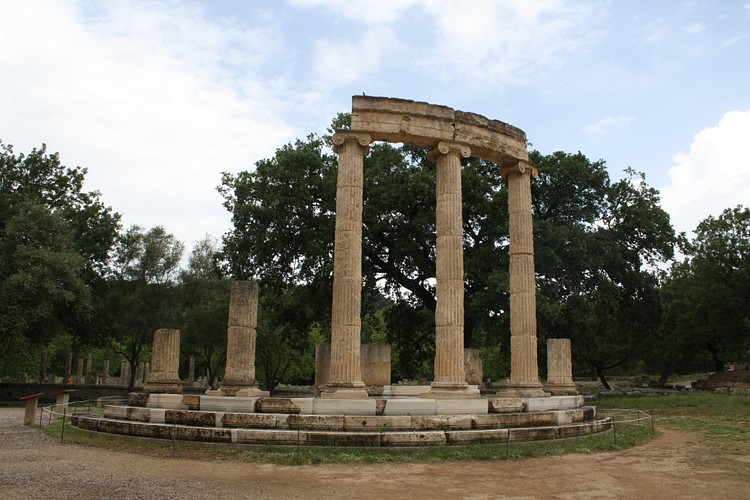 ओलंपिया का फिलिपियन Mark Cartwright (CC BY-NC-SA) ](https://www.worldhistory.org/image/441/the-philippeion-of-olympia/ "The Philippeion of Olympia")ओलंपिया में आयोजित दूसरा महत्वपूर्ण आयोजन महिलाओं के लिए हेरिया खेल था, जो हर चार साल में देवी हेरा के सम्मान में आयोजित किया जाता था। बच्चे, किशोर और युवतियाँ स्टेडियम ट्रैक (160 मीटर) के 500 फीट से अधिक की अलग-अलग पैदल दौड़ में भाग लेते थे। विजेताओं के लिए पुरस्कारों में जैतून के मुकुट और साइट पर अपना चित्र स्थापित करने का अधिकार शामिल था। दोनों खेलों के आयोजन और उपयोग में न होने पर साइट के रखरखाव की जिम्मेदारी एलियंस के पास थी।
यह खेल हेलेनिस्टिक काल के दौरान भी जारी रहे, जिसमें फिलिपियन नामक एक गोलाकार स्तंभयुक्त इमारत शामिल की गई जो एक उल्लेखनीय वास्तुशिल्पी का नमूना थी। इसे मैसेडोनिया के फिलिप द्वितीय ने बनवाया था और इसमें शाही परिवार की सोने की मूर्तियाँ थीं (लगभग 338 ई.पू.)। रोमनों ने खेलों के धार्मिक महत्ता को कम महत्व देते हुए भी उन्हें उच्च सम्मान देना जारी रखा और 80 ई.पू. में सुल्ला द्वारा खेलों को स्थायी रूप से रोम में स्थानांतरित करने के प्रयास के बावजूद, ओलंपिया को नई इमारतों, गर्म स्नानघरों, फव्वारों (विशेष रूप से हेरोड्स एटिकस का निम्फियन, 150 ई.पू.) और मूर्तियों से अलंकृत करना जारी रखा। इनमें सबसे प्रसिद्ध है - सम्राट नीरो का 67 ई.पू. में ओलंपिक जीत का गौरव हासिल करने का प्रयास ! नीरो ने न केवल इन खेलों में भाग ही लिया बल्कि आश्चर्यजनक रूप से हर प्रतियोगिता, जिसमें उन्होंने हिस्सा लिया, उसमें जीत भी हासिल की।
### पतन
सम्राट थियोडोसियस द्वारा सभी पंथ प्रथाओं और बुतपरस्त त्योहारों पर प्रतिबंध लगाने के आदेश पर, एक सहस्राब्दी से अधिक समय और 293 ओलंपिक खेलों के बाद , 393 ई. में इन खेलों का समापन हुआ। प्रसिद्ध अभयारण्य स्थल धीरे-धीरे पतन की ओर चला गया और 426 ई. में सम्राट थियोडोसियस द्वितीय के आदेश के तहत, यह आंशिक रूप से नष्ट हो गया।आगे चलकर एक ईसाई समुदाय द्वारा इसका कब्जा कर लिया गया, जिसने शुरुआती बीजान्टिन काल में इस स्थल पर एक बेसिलिका का निर्माण किया। 522 और 551 ई. में आए भूकंपों ने शेष बचे अधिकांश खंडहरों को नष्ट कर दिया, और निकटवर्ती नदियों अल्फियोस और क्लेडियोस की गाद से अंततः यह स्थल ढक रहे जब तक कि 1829 में फ्रांसीसी पुरातत्व मिशन द्वारा इसकी पुनः खोज नहीं की गई और 1875 से जर्मन पुरातत्व संस्थान द्वारा व्यवस्थित खुदाई नहीं की गई। एक समय के बेहतरीन मंदिरों में से अधिकांश अब केवल खंडहर हैं, लेकिन आगंतुक कम से कम सबसे पहले ओलंपिक स्टेडियम के ट्रैक पर आज भी दौड़ सकते हैं।
#### Editorial Review
This human-authored definition has been reviewed by our editorial team before publication to ensure accuracy, reliability and adherence to academic standards in accordance with our [editorial policy](https://www.worldhistory.org/static/editorial-policy/).
## ग्रंथसूची
- Andronicos, M. *Olympia.* Ekdotike Athenon, Athens, 2002
- Kaltsas, N. *Olympia.* MOCARF, Athens, 2009
- Koursi, M (ed.). *The Olympic Games in Ancient Greece.* Ekdotike Athenon, Athens, 2003
## लेखक के बारे में
मार्क एक पूर्णकालिक लेखक, शोधकर्ता, इतिहासकार और संपादक हैं। उनकी विशेष रुचि कला, वास्तुकला और सभी सभ्यताओं के साझा विचारों की खोज में है। उन्होंने राजनीति दर्शन में स्नातकोत्तर की उपाधि प्राप्त की है और WHE प्रकाशन निदेशक हैं।
## समयरेखा
- **c. 1900 BCE**: First evidence of settlement at [Olympia](https://www.worldhistory.org/Olympia/).
- **776 BCE**: First athletic games in honour of [Zeus](https://www.worldhistory.org/zeus/) are held at [Olympia](https://www.worldhistory.org/Olympia/) with one event, the *stadion* foot race.
- **724 BCE**: The *diaulos* foot-race (two lengths of the [stadium](https://www.worldhistory.org/Stadium/)) is added to the schedule of the [Olympic Games](https://www.worldhistory.org/Olympic_Games/).
- **720 BCE**: The *dolichos* foot-race is added to the schedule of the [Olympic Games](https://www.worldhistory.org/Olympic_Games/) and is won by Akanthos of [Sparta](https://www.worldhistory.org/sparta/).
- **720 BCE**: Orsippos is the first athlete to discard his loincloth at the [Olympic Games](https://www.worldhistory.org/Olympic_Games/), establishing the convention for athletes to compete naked.
- **708 BCE**: Wrestling and the pentathlon are added to the schedule of the [Olympic Games](https://www.worldhistory.org/Olympic_Games/).
- **688 BCE**: Boxing is added to the schedule of the [Olympic Games](https://www.worldhistory.org/Olympic_Games/).
- **680 BCE**: [Chariot](https://www.worldhistory.org/chariot/) races are added to the schedule of the [Olympic Games](https://www.worldhistory.org/Olympic_Games/) which are extended to two days for the first time.
- **680 BCE**: The *tethrippon* (four-horse [chariot](https://www.worldhistory.org/chariot/) race) is added to the schedule of the [Olympic Games](https://www.worldhistory.org/Olympic_Games/).
- **650 BCE - 600 BCE**: Heraion, [temple](https://www.worldhistory.org/temple/) dedicated to [Hera](https://www.worldhistory.org/Hera/) built at [Olympia](https://www.worldhistory.org/Olympia/).
- **648 BCE**: The *[Pankration](https://www.worldhistory.org/pankration/)* (a mix of wrestling and boxing) is added to the schedule of the [Olympic Games](https://www.worldhistory.org/Olympic_Games/).
- **632 BCE**: Events for boys are added to the schedule of the [Olympic Games](https://www.worldhistory.org/Olympic_Games/) which are extended to three days for the first time.
- **532 BCE**: Milon of Kroton wins the first of five consecutive wrestling competitions at the [Olympic Games](https://www.worldhistory.org/Olympic_Games/).
- **521 BCE**: Phanas of Pellene wins the *stadion*, *diaulos* and race in armour in the same [Olympic Games](https://www.worldhistory.org/Olympic_Games/).
- **520 BCE**: The *hoplitodromos* (a foot-race in [hoplite](https://www.worldhistory.org/hoplite/) armour is added to the schedule of the [Olympic Games](https://www.worldhistory.org/Olympic_Games/).
- **488 BCE**: Runner Astylos of Kroton wins the first of his six victories over three [Olympic Games](https://www.worldhistory.org/Olympic_Games/).
- **488 BCE**: Kroton of [Magna Graecia](https://www.worldhistory.org/Magna_Graecia/) wins the first of three consecutive *stadion* races in the [Olympic Games](https://www.worldhistory.org/Olympic_Games/).
- **c. 460 BCE**: The west pediment of the [Temple](https://www.worldhistory.org/temple/) of [Zeus](https://www.worldhistory.org/zeus/) at [Olympia](https://www.worldhistory.org/Olympia/) is decorated with a Centauromachy of centaurs fighting Lapiths at the wedding of Peirithoos.
- **c. 460 BCE - 457 BCE**: [Temple](https://www.worldhistory.org/temple/) of [Zeus](https://www.worldhistory.org/zeus/) is built at [Olympia](https://www.worldhistory.org/Olympia/) with a statue of [Apollo](https://www.worldhistory.org/apollo/) dominating the west pediment and containing the cult statue of Zeus by [Phidias](https://www.worldhistory.org/Phidias/).
- **c. 457 BCE**: Metopes on the [Temple](https://www.worldhistory.org/temple/) of [Zeus](https://www.worldhistory.org/zeus/) at [Olympia](https://www.worldhistory.org/Olympia/) depict the twelve labours of [Hercules](https://www.worldhistory.org/hercules/).
- **c. 430 BCE**: The cult statue of [Zeus](https://www.worldhistory.org/zeus/) by [Phidias](https://www.worldhistory.org/Phidias/) is dedicated in the [Temple](https://www.worldhistory.org/temple/) of Zeus, [Olympia](https://www.worldhistory.org/Olympia/). It is one of [the Seven Wonders](https://www.worldhistory.org/The_Seven_Wonders/) of the Ancient World.
- **424 BCE - 420 BCE**: The [Nike](https://www.worldhistory.org/nike/) of Paionios is erected at [Olympia](https://www.worldhistory.org/Olympia/) to commemorate the Messenian and Naupaktian victory over [Sparta](https://www.worldhistory.org/sparta/) at the [battle](https://www.worldhistory.org/disambiguation/battle/) of Sphakteria.
- **420 BCE**: [Sparta](https://www.worldhistory.org/sparta/) is excluded from the [Olympic Games](https://www.worldhistory.org/Olympic_Games/) for breaking the *ekecheiria* or sacred truce.
- **416 BCE**: [Alcibiades](https://www.worldhistory.org/Alcibiades/) wins three [chariot](https://www.worldhistory.org/chariot/) races at the [Olympic Games](https://www.worldhistory.org/Olympic_Games/).
- **408 BCE**: The *synoris* (two-horse [chariot](https://www.worldhistory.org/chariot/) race) was added to the schedule of the [Olympic Games](https://www.worldhistory.org/Olympic_Games/).
- **396 BCE**: Competitions for heralds and trumpeters were added to the schedule of the [Olympic Games](https://www.worldhistory.org/Olympic_Games/).
- **392 BCE**: The horse owner Kyniska becomes the first woman to win a victor's crown at the [Olympic Games](https://www.worldhistory.org/Olympic_Games/).
- **356 BCE**: [Philip II of Macedon](https://www.worldhistory.org/Philip_II_of_Macedon/) wins the horse race at the [Olympic Games](https://www.worldhistory.org/Olympic_Games/).
- **352 BCE**: [Philip II of Macedon](https://www.worldhistory.org/Philip_II_of_Macedon/) wins the [chariot](https://www.worldhistory.org/chariot/) race at the [Olympic Games](https://www.worldhistory.org/Olympic_Games/) and retains the crown in 348 BCE.
- **c. 338 BCE**: Philippeion built at [Olympia](https://www.worldhistory.org/Olympia/) by [Philip II](https://www.worldhistory.org/disambiguation/Philip_II/) of Macedonia.
- **328 BCE**: Herodoros of [Megara](https://www.worldhistory.org/disambiguation/Megara/) wins the first of ten consecutive trumpet competitions at the [Olympic Games](https://www.worldhistory.org/Olympic_Games/).
- **164 BCE**: [Leonidas](https://www.worldhistory.org/disambiguation/Leonidas/) of [Rhodes](https://www.worldhistory.org/Rhodes/) wins the first of his 12 Olympic crowns in runnning events in four successive Olymic Games.
- **72 BCE**: Gaius becomes the first [Roman](https://www.worldhistory.org/disambiguation/Roman/) victor at the [Olympic Games](https://www.worldhistory.org/Olympic_Games/).
- **17 CE**: [Roman emperor](https://www.worldhistory.org/Roman_Emperor/) [Tiberius](https://www.worldhistory.org/Tiberius/) is victorious at the [Olympic Games](https://www.worldhistory.org/Olympic_Games/).
- **c. 67 CE**: Emperor [Nero](https://www.worldhistory.org/Nero/) competes at the panhellenic Games of [Olympia](https://www.worldhistory.org/Olympia/) and [Delphi](https://www.worldhistory.org/delphi/).
- **81 CE**: Hermogenes of Xanthos wins the first of his 8 Olympic running crowns over three consecutive [Olympic Games](https://www.worldhistory.org/Olympic_Games/).
- **150 CE**: Nymphaion fountain of Herodes Atticus built at [Olympia](https://www.worldhistory.org/Olympia/).
- **261 CE**: The list of victors running back to 776 BCE ends for the [Olympic Games](https://www.worldhistory.org/Olympic_Games/).
- **393 CE**: [Roman Emperor](https://www.worldhistory.org/Roman_Emperor/) Theodosius definitively ends all pagan Games in [Greece](https://www.worldhistory.org/greece/).
- **426 CE**: Emperor Theodosios II orders the destruction of [Olympia](https://www.worldhistory.org/Olympia/).
- **522 CE - 551 CE**: Earthquakes destroy many of the buildings at [Olympia](https://www.worldhistory.org/Olympia/).
## बाहरी लिंक
- [The ancient origins of the Olympics - Armand D'Angour](http://ed.ted.com/lessons/the-ancient-origins-of-the-olympics-armand-d-angour)
## इस कृति का हवाला दें
### APA
Cartwright, M. (2024, July 22). ओलम्पिया. (R. Anand, अनुवादक). *World History Encyclopedia*.
### Chicago
Cartwright, Mark. "ओलम्पिया." द्वारा अनुवादित Ruby Anand. *World History Encyclopedia*, July 22, 2024. .
### MLA
Cartwright, Mark. "ओलम्पिया." द्वारा अनुवादित Ruby Anand. *World History Encyclopedia*, 22 Jul 2024, .
## लाइसेंस और कॉपीराइट
द्वारा प्रस्तुत [Ruby Anand](https://www.worldhistory.org/user/ruby/ "User Page: Ruby Anand"), पर प्रकाशित 22 July 2024. कृपया कॉपीराइट जानकारी के लिए मूल स्रोत(ओं) की जाँच करें। कृपया ध्यान दें कि इस पृष्ठ से लिंक की गई सामग्री के लाइसेंसिंग नियम भिन्न हो सकते हैं।