---
title: רומא העתיקה
author: Joshua J. Mark
translator: Max Fradkin
source: https://www.worldhistory.org/trans/he/1-68/
format: machine-readable-alternate
license: Creative Commons Attribution-NonCommercial-ShareAlike (https://creativecommons.org/licenses/by-nc-sa/4.0/)
updated: 2025-08-11
---
# רומא העתיקה
_נכתב על ידי [Joshua J. Mark](https://www.worldhistory.org/user/JPryst/)_
_תרגום: [Max Fradkin](https://www.worldhistory.org/user/maxfradkin)_
על פי האגדה, רומא העתיקה נוסדה על ידי שני האחים והאלים למחצה, רומולוס ורמוס, ב-21 באפריל 753 לפני הספירה. האגדה טוענת שבוויכוח על מי ישלוט בעיר (או, בגרסה אחרת, היכן תמוקם העיר), רומולוס הרג את רמוס וקרא לעיר על שמו. סיפור זה על ייסוד רומא הוא הידוע ביותר, אך אינו היחיד.
אגדות אחרות טוענות שהעיר נקראה על שם אישה, רומא, שנסעה עם איניאס וניצולים אחרים מטרויה לאחר נפילת העיר. עם הנחיתה על גדות נהר הטיבר, רומא והנשים האחרות התנגדו כאשר הגברים רצו להמשיך הלאה. היא הובילה את הנשים בשריפת ספינות הטרויאנים וכך למעשה תקעה את הניצולים הטרויאנים באתר שבסופו של דבר יהפוך לרומא. איניאס מטרויה מופיע באגדה זו וגם, באופן מפורסם, באיניאס של וירגיליוס, כמייסד רומא ואבי קדמון של רומולוס ורמוס, ובכך מקשר את רומא לגדולה ולעוצמה שהיו פעם טרויה.
תיאוריות אחרות בנוגע לשם העיר המפורסמת מציעות שמקורו ברומון, השם העתיק של נהר הטיבר, והיה פשוט שם מקום שניתן למרכז מסחר קטן שהוקם על גדותיו, או שהשם נגזר ממילה אטרוסקית שיכלה לציין אחת מיישוביהם.
### רומא הקדומה
במקור, רומא הייתה עיירה קטנה על גדות הטיבר, אך גדלה בגודלה ובכוחה, בשלב מוקדם, באמצעות סחר. מיקומה של העיר סיפק לסוחרים נתיב מים קל לשיט בו יכלו לסחור את סחורותיהם. העיר נשלטה על ידי שבעה מלכים, מרומולוס ועד טרקין, ככל שגדלה בגודלה ובכוחה. התרבות והציוויליזציה היוונית, שהגיעו לרומא דרך מושבות יווניות בדרום, סיפקו לרומאים המוקדמים מודל שעליו יכלו לבנות את תרבותם. מהיוונים הם שאלו אוריינות ודת כמו גם את יסודות האדריכלות.
האטרוסקים, בצפון, סיפקו מודל לסחר וליוקרה עירונית. אטרוריה הייתה גם ממוקמת היטב למסחר והרומאים המוקדמים למדו את כישורי המסחר מהדוגמה האטרוסקית או שלימדו אותם ישירות מהאטרוסקים שפלשו לאזור סביב רומא מתישהו בין 650 ל-600 לפני הספירה (אם כי השפעתם הורגשה הרבה קודם לכן). היקף התפקיד שמילאה הציוויליזציה האטרוסקית בהתפתחות התרבות והחברה הרומית נתון במחלוקת, אך נראה שאין ספק שהייתה להם השפעה משמעותית בשלב מוקדם.
מההתחלה, הרומאים גילו כישרון לשאלה ולשיפור מיומנויות ותפיסות של תרבויות אחרות. ממלכת רומא צמחה במהירות מעיר מסחר לעיר משגשגת בין המאות ה-8 וה-6 לפנה"ס. כאשר האחרון מבין שבעת מלכי רומא, טרקינוס הגאה, הודח בשנת 509 לפנה"ס, יריבו לשלטון, לוקיוס יוניוס ברוטוס, ביצע רפורמה במערכת הממשל והקים את הרפובליקה הרומית.
### מלחמה והתרחבות
אף על פי שהעיר חבה את שגשוגה לסחר בשנים הראשונות, היו אלה המלחמות הרומיות שהפכו אותה לכוח רב עוצמה בעולם העתיק. המלחמות עם העיר קרתגו הצפון אפריקאית (הידועה בשם המלחמות הפוניות, 264-146 לפנה"ס) ביססו את כוחה של רומא וסייעו לעיר לצמוח בעושרה וביוקרה. רומא וקרתגו היו יריבות בסחר בים התיכון המערבי, ועם תבוסת קרתגו, רומא החזיקה בשליטה כמעט מוחלטת באזור; אם כי עדיין היו פלישות של פיראטים שמנעו שליטה מוחלטת של הרומאים בים.
ככל שרפובליקת רומא צמחה בכוחה וביוקרה, העיר רומא החלה לסבול מהשפעות השחיתות, החמדנות וההסתמכות יתר על עבודת כפייה זרה. כנופיות של רומאים מובטלים, שהובטלו עקב זרם העבדים שהובאו באמצעות כיבושים טריטוריאליים, שכרו את עצמם כבריונים כדי לבצע את פקודותיו של כל סכום שהסנאטור העשיר היה מוכן לשלם להם. האליטה העשירה של העיר, האצילים, התעשרה עוד יותר על חשבון המעמד הנמוך העובד, הפלבאים.
[  מפת ההתרחבות הרומאית במאה השנייה US Military Academy (Public Domain) ](https://www.worldhistory.org/image/131/map-of-2nd-century-roman-expansion/ "Map of 2nd Century Roman Expansion")במאה השנייה לפני הספירה, האחים גראקי, טיבריוס וגאיוס, שני טריבונים רומאים, הובילו תנועה לרפורמה בקרקעות ורפורמה פוליטית באופן כללי. למרות ששניהם נהרגו במטרה זו, מאמציהם עודדו רפורמות חקיקה והשחיתות המשתוללת בסנאט הרומי צומצמה (או, לפחות, הסנאטורים הפכו דיסקרטיים יותר בפעילותם המושחתת). עד לתקופת הטריומווירט הראשון, גם העיר וגם הרפובליקה של רומא היו בשגשוג מלא.
### הרפובליקה
למרות זאת, רומא מצאה את עצמה מפולגת בין קווי מעמדות. המעמד השליט כינה את עצמו אופטימטים (האנשים הטובים ביותר) בעוד שהמעמדות הנמוכים, או אלו שזכו בהם, נודעו כפופולרים (העם). שמות אלה יושמו בפשטות לאלו שהחזיקו באידיאולוגיה פוליטית מסוימת; הם לא היו מפלגות פוליטיות קפדניות, וגם לא כל המעמד השליט היו אופטימטים וגם לא כל המעמדות הנמוכים היו פופולריים.
באופן כללי, האופטימאטים דבקו בערכים פוליטיים וחברתיים מסורתיים שתמכו בכוחו של הסנאט של רומא וביוקרה ובעליונותו של המעמד השליט. הפופולרים, שוב באופן כללי, תמכו ברפורמה ובדמוקרטיזציה של הרפובליקה הרומית. אידיאולוגיות מנוגדות אלו התנגשו זו בזו בדמותם של שלושה אנשים אשר, מבלי משים, הביאו לסוף הרפובליקה הרומית.
מרקוס ליקיניאוס קראסוס ויריבו הפוליטי, גנאיוס פומפאיוס מגנוס (פומפיי הגדול), הצטרפו למדינאי נוסף, צעיר יותר, גאיוס יוליוס קיסר, כדי להקים את מה שההיסטוריונים המודרניים מכנים “הטריומווירט הראשון של רומא” (למרות שרומאים באותה תקופה מעולם לא השתמשו במונח הזה וגם שלושת הגברים שמהווים את הטריומווירט לא כינו זאת כך). קראסוס ופומפיי החזיקו בקו המדיני של האופטימאטים, בעוד שקיסר היה מדינאי מהזרם הפופולארי.
שלושת הגברים היו שאפתניים באותה מידה, ובמהלך המאבקים על השלטון, הצליחו לרסן זה את זה תוך כדי סיוע לשגשוגה של רומא. קראסוס היה האיש העשיר ביותר ברומא והיה מושחת עד כדי כך שאילץ אזרחים עשירים לשלם לו דמי "ביטחון". אם האזרח שילם, קראסוס לא היה שורף את ביתו של אותו אדם, אך אם לא היה מגיע כסף, האש הייתה מוצתת וקראסוס היה גובה תשלום עבור שליחת אנשים לכבות את האש. למרות שהמניע מאחורי הקמתן של יחידות כיבוי אש אלה היה רחוק מלהיות אצילי, קראסוס אכן יצר למעשה את מחלקת הכיבוי הראשונה, שמאוחר יותר הוכיחה את ערכה הרב לעיר.
גם פומפיוס וגם קיסר היו גנרלים גדולים אשר, באמצעות כיבושיהם, הפכו את רומא לעשירה. למרות שהיו האיש העשיר ביותר ברומא (ו, כך נטען, העשיר ביותר בכל ההיסטוריה הרומית), קראסוס ייחל לאותו כבוד שאנשים העניקו לפומפיוס ולקיסר על הצלחותיהם הצבאיות. בשנת 53 לפנה"ס הוא הוביל כוח גדול נגד פרתיה והובס בקרב קארה ב, בטורקיה של ימינו, שם נהרג כאשר משא ומתן על הפסקת האש נכשל.
[ 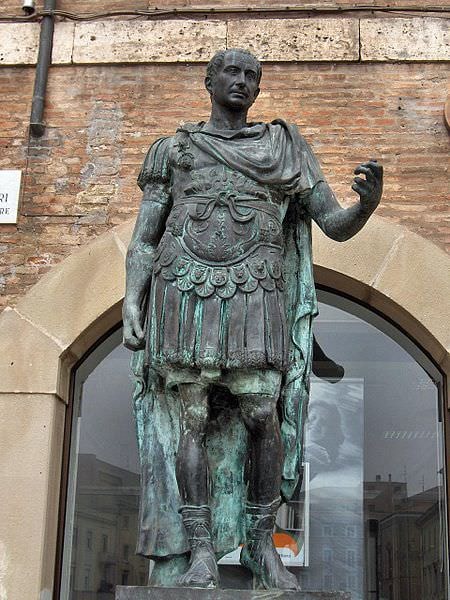 יוליוס קיסר Georges Jansoone (CC BY-NC-SA) ](https://www.worldhistory.org/image/2737/julius-caesar/ "Julius Caesar")עם היעלמותו של קראסוס, התפרק הטריומווירט הראשון ופומפיוס וקיסר הכריזו מלחמה זה על זה. פומפיוס ניסה לחסל את יריבו באמצעים משפטיים והורה לסנאט לשלוח את קיסר לרומא כדי לעמוד לדין בגין מגוון אישומים. במקום לחזור לעיר בענווה כדי להתמודד עם אישומים אלה, קיסר חצה את נהר הרוביקון עם צבאו בשנת 49 לפני הספירה ונכנס לרומא בראשו.
הוא סירב להגיב להאשמות והתמקד בחיסול פומפיוס כיריב. פומפיוס וקיסר נפגשו בקרב בפרסלוס ביוון בשנת 48 לפנה"ס, שם כוחו הנמוך מבחינה מספרית של קיסר ניצח את כוחו הגדול יותר של פומפיוס. פומפיוס עצמו נמלט למצרים, בציפייה למצוא שם מקלט, אך נרצח עם הגעתו. הידיעה על ניצחונו הגדול של קיסר על פני מספרים מוחצים בפרסלוס התפשטה במהירות, וחברים ובעלי ברית רבים של פומפיוס צידדו במהירות בקיסר, מתוך אמונה שהוא מועדף על ידי האלים.
### לקראת האימפריה
יוליוס קיסר היה כעת האיש החזק ביותר ברומא. הוא סיים למעשה את תקופת הרפובליקה בכך שהסנאט הכריז עליו כדיקטטור. הפופולריות שלו בקרב העם הייתה עצומה ומאמציו ליצור ממשל מרכזי חזק ויציב הביאו לשגשוג מוגבר של העיר רומא. הוא נרצח על ידי קבוצת סנאטורים רומאים בשנת 44 לפנה"ס, דווקא בשל הישגים אלה.
הקושרים, ברוטוס וקסיוס ביניהם, חששו ככל הנראה שקיסר הופך לחזק מדי ושהוא עלול בסופו של דבר לבטל את הסנאט. לאחר מותו, יד ימינו ובן דודו, מרקוס אנטוניוס, חברו לאחיינו ויורשו של קיסר, גאיוס אוקטביוס ת'ורינוס (אוקטביאנוס) ולחברו של קיסר, מרקוס אמיליוס לפידוס, כדי להביס את כוחותיהם של ברוטוס וקסיוס בקרב פיליפי בשנת 42 לפנה"ס.
[  חלוקת הטריומווירט השני ColdEl (CC BY-SA) ](https://www.worldhistory.org/image/4951/division-of-the-second-triumvirate/ "Division of the Second Triumvirate")אוקטביאנוס, אנטוניוס ולפידוס הקימו את הטריומווירט השני של רומא, אך כמו הראשון, גם אנשים אלה היו שאפתניים באותה מידה. לפידוס נוטרל למעשה כאשר אנטוניוס ואוקטביאנוס הסכים שהוא יקבל את היספניה ואפריקה לשלוט עליהן, ובכך מנע ממנו מהלכי כוח ברומא. הוסכם שאוקטביאנוס ישלוט באדמות הרומיות במערב ואנטוניוס במזרח.
מעורבותו של אנטוניוס עם המלכה המצרית קלאופטרה השביעית, לעומת זאת, הפרה את האיזון שקיווה אוקטביאנוס לשמור עליו, והשניים יצאו למלחמה. כוחותיהם המשולבים של אנטוניוס וקלאופטרה הובסו בקרב אקטיום בשנת 31 לפנה"ס ושניהם התאבדו מאוחר יותר. אוקטביאנוס התגלה ככוח היחיד ברומא. בשנת 27 לפנה"ס הוא קיבל סמכויות יוצאות דופן מהסנאט ואימץ את שמו אוגוסטוס, הקיסר הראשון של רומא. היסטוריונים מסכימים שזו הנקודה שבה מסתיימת ההיסטוריה של רומא ומתחילה ההיסטוריה של האימפריה הרומית.
#### Editorial Review
This human-authored definition has been reviewed by our editorial team before publication to ensure accuracy, reliability and adherence to academic standards in accordance with our [editorial policy](https://www.worldhistory.org/static/editorial-policy/).
## אודות המחבר
ג'ושוע ג'יי מארק הוא מייסד שותף ומנהל תוכן של אנציקלופדיית ההיסטוריה העולמית. בעבר היה פרופסור במריסט קולג' (ניו יורק), שם לימד היסטוריה, פילוסופיה, ספרות וכתיבה. הוא טייל רבות וחי ביוון ובגרמניה.
- [Linkedin Profile](https://www.linkedin.com/pub/joshua-j-mark/38/614/339)
## ציר זמן
- **753 BCE**: The legendary founding date of [Rome](https://www.worldhistory.org/Rome/).
- **753 BCE - 510 BCE**: Regal Period of ancient [Rome](https://www.worldhistory.org/Rome/) from Founding to Birth of the Republic.
- **750 BCE - 510 BCE**: The (semi-mythological) seven kings of [Rome](https://www.worldhistory.org/Rome/): [Romulus](https://www.worldhistory.org/Romulus_and_Remus/), Numa Pompilius, Tulus Hostilius, Ancus Marcius, Lucius Tarquinius Priscus, Servius Tullius, [Lucius Tarquinius Superbus](https://www.worldhistory.org/Lucius_Tarquinius_Superbus/).
- **c. 620 BCE**: Posible founding date for [Ostia](https://www.worldhistory.org/Ostia/), the port of [Rome](https://www.worldhistory.org/Rome/).
- **599 BCE - 500 BCE**: The traditional date when the [Circus Maximus](https://www.worldhistory.org/Circus_Maximus/) of [Rome](https://www.worldhistory.org/Rome/) is first laid out.
- **534 BCE - 510 BCE**: Reign of [Lucius Tarquinius Superbus](https://www.worldhistory.org/Lucius_Tarquinius_Superbus/), last king of [Rome](https://www.worldhistory.org/Rome/).
- **510 BCE - 509 BCE**: First treaty between [Rome](https://www.worldhistory.org/Rome/) and [Carthage](https://www.worldhistory.org/carthage/).
- **509 BCE**: Foundation of the [Roman Republic](https://www.worldhistory.org/Roman_Republic/).
- **c. 508 BCE**: [Lars Porsenna](https://www.worldhistory.org/Lars_Porsenna/), [Etruscan](https://www.worldhistory.org/Etruscan_Civilization/) king of [Chiusi](https://www.worldhistory.org/Chiusi/), lays siege to [Rome](https://www.worldhistory.org/Rome/).
- **504 BCE**: Migration of Claudii from Sabine lands to [Rome](https://www.worldhistory.org/Rome/).
- **c. 499 BCE**: [Battle](https://www.worldhistory.org/disambiguation/battle/) of Lake Regillus between [Rome](https://www.worldhistory.org/Rome/) and the Latin League.
- **c. 497 BCE**: The first [temple](https://www.worldhistory.org/temple/) dedicated to [Saturn](https://www.worldhistory.org/Saturn/) is constructed in the [Forum Romanum](https://www.worldhistory.org/Roman_Forum/) of [Rome](https://www.worldhistory.org/Rome/).
- **495 BCE**: [Lucius Tarquinius Superbus](https://www.worldhistory.org/Lucius_Tarquinius_Superbus/), last king of [Rome](https://www.worldhistory.org/Rome/), dies in exile at Cumae.
- **495 BCE**: A [temple](https://www.worldhistory.org/temple/) is built in honour of Mercury near [Rome](https://www.worldhistory.org/Rome/)'s [Circus Maximus](https://www.worldhistory.org/Circus_Maximus/).
- **494 BCE**: Traditional date the office of the tribuni plebis is created in [Rome](https://www.worldhistory.org/Rome/).
- **493 BCE**: Foedus Cassianus - treaty by Spurius Cassius Vecellinus with the Latin League after the [Battle](https://www.worldhistory.org/disambiguation/battle/) of Lake Regillus.
- **484 BCE**: The first [temple](https://www.worldhistory.org/temple/) of the [Dioscuri](https://www.worldhistory.org/Castor_and_Pollux/) (Castor & Pollux) is dedicated in [Rome](https://www.worldhistory.org/Rome/)'s [Forum Romanum](https://www.worldhistory.org/Roman_Forum/) by Aulus Postumius following his victory over the Latins at the [Battle](https://www.worldhistory.org/disambiguation/battle/) of Lake Regillus.
- **451 BCE - 450 BCE**: Decemvirate and Publication of [Twelve Tables](https://www.worldhistory.org/Twelve_Tables/) of [Roman Law](https://www.worldhistory.org/Roman_Law/).
- **c. 400 BCE**: [Roman](https://www.worldhistory.org/disambiguation/Roman/) tale of mythical twins [Romulus and Remus](https://www.worldhistory.org/Romulus_and_Remus/) first recorded.
- **394 BCE**: [Etruscan](https://www.worldhistory.org/Etruscan_Civilization/) [Volsinii](https://www.worldhistory.org/volsinii/) and their ally Sappinum unsuccessfully attacks [Rome](https://www.worldhistory.org/Rome/).
- **390 BCE**: Gauls sack [Rome](https://www.worldhistory.org/Rome/).
- **c. 390 BCE**: "Gallic Catastrophe:" [Brennus](https://www.worldhistory.org/brennus/) of the Senones defeats the Romans at Allia, and subsequently sacks [Rome](https://www.worldhistory.org/Rome/).
- **380 BCE**: Rebuilding of [Rome](https://www.worldhistory.org/Rome/). Strong walls around the seven hills.
- **343 BCE - 341 BCE**: First Samnite [War](https://www.worldhistory.org/disambiguation/War/) ([Rome](https://www.worldhistory.org/Rome/) vs. Samnites).
- **340 BCE - 338 BCE**: Latin [War](https://www.worldhistory.org/disambiguation/War/), victory for [Rome](https://www.worldhistory.org/Rome/).
- **326 BCE - 304 BCE**: Second Samnite [War](https://www.worldhistory.org/disambiguation/War/).
- **321 BCE**: The Via Appia, a famous [Roman](https://www.worldhistory.org/disambiguation/Roman/) road, is constructed.
- **298 BCE - 290 BCE**: Third Samnite [War](https://www.worldhistory.org/disambiguation/War/) between [Rome](https://www.worldhistory.org/Rome/) and the Samnite people.
- **295 BCE**: [Roman](https://www.worldhistory.org/disambiguation/Roman/) victory over Samnites, Gauls and Umbrians at Sentinum.
- **292 BCE**: The Romans adopt the [Greek](https://www.worldhistory.org/disambiguation/greek/) [god](https://www.worldhistory.org/God/) of [medicine](https://www.worldhistory.org/disambiguation/medicine/) [Asclepius](https://www.worldhistory.org/Asclepius/) by stealing his sacred snake from [Epidaurus](https://www.worldhistory.org/epidaurus/) and setting up a [temple](https://www.worldhistory.org/temple/) on the Tiber Island.
- **Mar 218 BCE**: [Rome](https://www.worldhistory.org/Rome/) declares [war](https://www.worldhistory.org/disambiguation/War/) on [Carthage](https://www.worldhistory.org/carthage/) after [Hannibal](https://www.worldhistory.org/hannibal/) sacks [Saguntum](https://www.worldhistory.org/Saguntum/) in Spain. The [Second Punic War](https://www.worldhistory.org/Second_Punic_War/) begins.
- **213 BCE - 212 BCE**: [Roman](https://www.worldhistory.org/disambiguation/Roman/) commander [Marcus Claudius Marcellus](https://www.worldhistory.org/Marcus_Claudius_Marcellus/) lays seige to and ultimately sacks [Syracuse](https://www.worldhistory.org/syracuse/).
- **196 BCE**: The earliest known Triumphal Arches are built in [Rome](https://www.worldhistory.org/Rome/) by L.Sertinius.
- **184 BCE**: The first basilica is added to [Rome](https://www.worldhistory.org/Rome/)'s [Forum Romanum](https://www.worldhistory.org/Roman_Forum/).
- **168 BCE**: [Rome](https://www.worldhistory.org/Rome/) defeats [Macedon](https://www.worldhistory.org/macedon/) at [Battle of Pydna](https://www.worldhistory.org/Battle_of_Pydna/).
- **166 BCE**: [Rome](https://www.worldhistory.org/Rome/) puts [Delos](https://www.worldhistory.org/delos/) under the jurisdiction of [Athens](https://www.worldhistory.org/Athens/) and makes the island a free port.
- **146 BCE**: First [Roman](https://www.worldhistory.org/disambiguation/Roman/) all-marble building is constructed, the [temple](https://www.worldhistory.org/temple/) of [Jupiter](https://www.worldhistory.org/jupiter/) Stater in [Rome](https://www.worldhistory.org/Rome/).
- **121 BCE**: [Gallia](https://www.worldhistory.org/gaul/) Narbonensis becomes a [Roman](https://www.worldhistory.org/disambiguation/Roman/) province.
- **107 BCE - 100 BCE**: [Gaius Marius](https://www.worldhistory.org/Gaius_Marius/) reforms the [Roman army](https://www.worldhistory.org/Roman_Army/).
- **12 Jul 100 BCE - 15 Mar 44 BCE**: Life of Gaius [Julius Caesar](https://www.worldhistory.org/Julius_Caesar/), founder of the [Roman Empire](https://www.worldhistory.org/Roman_Empire/).
- **89 BCE**: All [poleis](https://www.worldhistory.org/Polis/) or [city](https://www.worldhistory.org/city/)-states in [Magna Graecia](https://www.worldhistory.org/Magna_Graecia/) come under [Roman](https://www.worldhistory.org/disambiguation/Roman/) control.
- **80 BCE**: [Sulla](https://www.worldhistory.org/sulla/) moves the [Olympic Games](https://www.worldhistory.org/Olympic_Games/) to [Rome](https://www.worldhistory.org/Rome/) for a single Olympiad.
- **70 BCE**: [Pompey](https://www.worldhistory.org/pompey/) and [Crassus](https://www.worldhistory.org/Marcus_Licinius_Crassus/) are made consuls.
- **59 BCE - 17 CE**: Life of [Livy](https://www.worldhistory.org/livy/).
- **58 BCE - 51 BCE**: [Julius Caesar](https://www.worldhistory.org/Julius_Caesar/)'s [conquest](https://www.worldhistory.org/warfare/) of [Gaul](https://www.worldhistory.org/gaul/).
- **55 BCE**: [Pompey the Great](https://www.worldhistory.org/pompey/) builds the first permanent stone [theatre](https://www.worldhistory.org/disambiguation/theatre/) in [Rome](https://www.worldhistory.org/Rome/).
- **55 BCE - 54 BCE**: [Julius Caesar](https://www.worldhistory.org/Julius_Caesar/)'s expeditions in [Britain](https://www.worldhistory.org/disambiguation/Britain/).
- **54 BCE - 29 BCE**: Forum of [Caesar](https://www.worldhistory.org/disambiguation/caesar/) constructed in [Rome](https://www.worldhistory.org/Rome/) by [Julius Caesar](https://www.worldhistory.org/Julius_Caesar/) as another area to conduct judicial business. It is the best surviving of his monuments.
- **15 Mar 44 BCE**: [Julius Caesar](https://www.worldhistory.org/Julius_Caesar/) is murdered.
- **43 BCE - 36 BCE**: [Second Triumvirate](https://www.worldhistory.org/Second_Triumvirate/): [Antony](https://www.worldhistory.org/Mark_Antony/), [Octavian](https://www.worldhistory.org/augustus/), and Lepidus (official approval by the [Roman Senate](https://www.worldhistory.org/Roman_Senate/)). Mass proscriptions including [Cicero](https://www.worldhistory.org/Cicero/).
- **43 BCE - 17 CE**: Life of the [Roman](https://www.worldhistory.org/disambiguation/Roman/) writer [Ovid](https://www.worldhistory.org/ovid/), author of Metamorphoses.
- **36 BCE**: [Agrippa](https://www.worldhistory.org/Marcus_Agrippa/) defeats the naval fleet of Sextus [Pompey](https://www.worldhistory.org/pompey/) in the [battle](https://www.worldhistory.org/disambiguation/battle/) of Naulochos.
- **31 BCE**: [Greece](https://www.worldhistory.org/greece/) absorbed into [Roman Empire](https://www.worldhistory.org/Roman_Empire/).
- **29 BCE**: [Augustus](https://www.worldhistory.org/augustus/) builds the [temple](https://www.worldhistory.org/temple/) of Divius Iulius on the spot of [Julius Caesar](https://www.worldhistory.org/Julius_Caesar/)'s funeral pyre in [Rome](https://www.worldhistory.org/Rome/)'s [Forum Romanum](https://www.worldhistory.org/Roman_Forum/).
- **c. 27 BCE**: The first [Pantheon](https://www.worldhistory.org/Pantheon/) is built in [Rome](https://www.worldhistory.org/Rome/) and dedicated by [Marcus Agrippa](https://www.worldhistory.org/Marcus_Agrippa/).
- **c. 20 BCE**: Military engineer and architect [Vitruvius](https://www.worldhistory.org/Vitruvius/) publishes his "De Architectura".
- **c. 20 BCE**: The Campus Martius baths in [Rome](https://www.worldhistory.org/Rome/) are constructed and donated to the people by [Agrippa](https://www.worldhistory.org/Marcus_Agrippa/).
- **19 BCE**: Arch of [Augustus](https://www.worldhistory.org/augustus/) built in [Rome](https://www.worldhistory.org/Rome/) to commemorate victory over the Parthians.
- **c. 13 BCE**: Official inauguration of the [Theatre of Marcellus](https://www.worldhistory.org/article/614/theatre-of-marcellus/) in [Rome](https://www.worldhistory.org/Rome/).
- **c. 10 BCE**: [Augustus](https://www.worldhistory.org/augustus/) rebuilds the [Temple of Castor and Pollux](https://www.worldhistory.org/article/632/temple-of-castor--pollux/) in [Rome](https://www.worldhistory.org/Rome/)'s [Forum Romanum](https://www.worldhistory.org/Roman_Forum/).
- **1 CE - 100 CE**: [Mithraism](https://www.worldhistory.org/Mithraic_Mysteries/) spreads in the [Roman empire](https://www.worldhistory.org/Roman_Empire/).
- **c. 13 CE**: [Augustus](https://www.worldhistory.org/augustus/) creates the [cohortes urbanae](https://www.worldhistory.org/Cohortes_Urbanae/) in [Rome](https://www.worldhistory.org/Rome/) to help maintain public order.
- **c. 23 CE**: The castra praetoria, permanent camp of the [Praetorian Guard](https://www.worldhistory.org/Praetorian_Guard/), is built in [Rome](https://www.worldhistory.org/Rome/) by [Sejanus](https://www.worldhistory.org/sejanus/).
- **42 CE - 62 CE**: [Paul the Apostle](https://www.worldhistory.org/Paul_the_Apostle/) goes on missionary journeys across [Asia Minor](https://www.worldhistory.org/Asia_Minor/), [Greece](https://www.worldhistory.org/greece/), and [Rome](https://www.worldhistory.org/Rome/).
- **c. 50 CE - c. 60 CE**: Establishment of various Christian communities in the Eastern [Mediterranean](https://www.worldhistory.org/disambiguation/mediterranean/), [Greece](https://www.worldhistory.org/greece/), [Egypt](https://www.worldhistory.org/egypt/), and at least the [city](https://www.worldhistory.org/city/) of [Rome](https://www.worldhistory.org/Rome/).
- **60 CE - 61 CE**: [Boudicca](https://www.worldhistory.org/Boudicca/)'s Revolt in [Britain](https://www.worldhistory.org/disambiguation/Britain/).
- **64 CE**: Fire destroys the [Circus Maximus](https://www.worldhistory.org/Circus_Maximus/) in [Rome](https://www.worldhistory.org/Rome/).
- **64 CE**: Unofficial persecution of Christians in [Rome](https://www.worldhistory.org/Rome/).
- **64 CE**: The great fire in [Rome](https://www.worldhistory.org/Rome/).
- **c. 64 CE**: The [Roman](https://www.worldhistory.org/disambiguation/Roman/) port of [Ostia](https://www.worldhistory.org/Ostia/) reaches its maximum size becoming a major urban centre.
- **c. 65 CE**: The [Circus Maximus](https://www.worldhistory.org/Circus_Maximus/) in [Rome](https://www.worldhistory.org/Rome/) is rebuilt and its capacity increased to 250,000.
- **c. 65 CE**: The Baths of [Nero](https://www.worldhistory.org/Nero/) are built in [Rome](https://www.worldhistory.org/Rome/).
- **66 CE - 73 CE**: The Jewish Revolt against [Rome](https://www.worldhistory.org/Rome/).
- **68 CE - 69 CE**: [Year of the Four Emperors](https://www.worldhistory.org/Year_of_the_Four_Emperors/): Civil [war](https://www.worldhistory.org/disambiguation/War/) in [Rome](https://www.worldhistory.org/Rome/).
- **70 CE**: The [city](https://www.worldhistory.org/city/) of [Jerusalem](https://www.worldhistory.org/jerusalem/) is besieged and captured by [Rome](https://www.worldhistory.org/Rome/); the Second [Temple](https://www.worldhistory.org/temple/) destroyed.
- **Jun 71 CE**: [Titus](https://www.worldhistory.org/disambiguation/Titus/) returns to [Rome](https://www.worldhistory.org/Rome/) from Jewish [War](https://www.worldhistory.org/disambiguation/War/).
- **72 CE**: [Vespasian](https://www.worldhistory.org/Vespasian/) begins construction of the [Colosseum](https://www.worldhistory.org/Colosseum/) in [Rome](https://www.worldhistory.org/Rome/).
- **Aug 79 CE - Oct 79 CE**: Eruption of Mt. Vesuvius in southern [Italy](https://www.worldhistory.org/italy/) burying the towns of [Pompeii](https://www.worldhistory.org/pompeii/) and [Herculaneum](https://www.worldhistory.org/Herculaneum/) in volcanic ash.
- **80 CE**: The [Colosseum](https://www.worldhistory.org/Colosseum/) in [Rome](https://www.worldhistory.org/Rome/) is officially opened by [Titus](https://www.worldhistory.org/disambiguation/Titus/) with a 100 day [gladiator](https://www.worldhistory.org/gladiator/) spectacular.
- **80 CE**: The first [Pantheon](https://www.worldhistory.org/Pantheon/) in [Rome](https://www.worldhistory.org/Rome/) is destroyed by fire.
- **81 CE - 96 CE**: Construction is finally completed on the [Colosseum](https://www.worldhistory.org/Colosseum/) of [Rome](https://www.worldhistory.org/Rome/) in the reign of [Domitian](https://www.worldhistory.org/domitian/).
- **83 CE**: [Battle](https://www.worldhistory.org/disambiguation/battle/) of Mons Graupius in [Scotland](https://www.worldhistory.org/disambiguation/Scotland/).
- **18 Sep 96 CE**: [Death](https://www.worldhistory.org/disambiguation/Death/) of [Roman Emperor](https://www.worldhistory.org/Roman_Emperor/) [Domitian](https://www.worldhistory.org/domitian/).
- **c. 110 CE**: First documented martydom in the [Colosseum](https://www.worldhistory.org/Colosseum/) of [Rome](https://www.worldhistory.org/Rome/), that of St. Ignatius of [Antioch](https://www.worldhistory.org/Antiochia/).
- **110 CE**: The second [Pantheon](https://www.worldhistory.org/Pantheon/) building in [Rome](https://www.worldhistory.org/Rome/) is hit by lightning and destroyed by fire.
- **113 CE**: [Trajan's column](https://www.worldhistory.org/Trajans_Column/) is constructed in [Rome](https://www.worldhistory.org/Rome/) which commemorates the emperor's campaigns in [Dacia](https://www.worldhistory.org/dacia/).
- **c. 125 CE**: The [Pantheon](https://www.worldhistory.org/Pantheon/) is completed in [Rome](https://www.worldhistory.org/Rome/).
- **10 Jul 138 CE - 9 Mar 161 CE**: Reign of [Roman Emperor](https://www.worldhistory.org/Roman_Emperor/) [Antoninus Pius](https://www.worldhistory.org/Antoninus_Pius/).
- **c. 180 CE**: The [Column of Marcus Aurelius](https://www.worldhistory.org/article/647/the-column-of-marcus-aurelius/) and Faustina is erected in [Rome](https://www.worldhistory.org/Rome/). It depicts in relief [sculpture](https://www.worldhistory.org/disambiguation/Sculpture/) the emperors' campaigns across the Danube.
- **192 CE**: Emperor [Commodus](https://www.worldhistory.org/commodus/) is murdered, civil [war](https://www.worldhistory.org/disambiguation/War/) ensues (until 197 CE).
- **202 CE**: The [Pantheon](https://www.worldhistory.org/Pantheon/) in [Rome](https://www.worldhistory.org/Rome/) is repaired by [Septimius Severus](https://www.worldhistory.org/Septimius_Severus/) and [Caracalla](https://www.worldhistory.org/Caracalla/).
- **227 CE**: The Baths of [Nero](https://www.worldhistory.org/Nero/) in [Rome](https://www.worldhistory.org/Rome/) are extensively renovated and expanded by [Alexander Severus](https://www.worldhistory.org/Alexander_Severus/) and renamed Thermae Alexandrinae.
- **c. 235 CE**: The Baths of [Caracalla](https://www.worldhistory.org/Caracalla/) in [Rome](https://www.worldhistory.org/Rome/) are completed.
- **238 CE**: Year of the Six Emperors in the [Roman Empire](https://www.worldhistory.org/Roman_Empire/).
- **272 CE**: Possible year of Emperor [Constantine](https://www.worldhistory.org/disambiguation/Constantine/)'s birth.
- **283 CE**: A fire devastates [Rome](https://www.worldhistory.org/Rome/)'s [Forum Romanum](https://www.worldhistory.org/Roman_Forum/), necessitating an extensive rebuilding programme.
- **286 CE**: Naval commander Carausius ([Marcus Aurelius](https://www.worldhistory.org/Marcus_Aurelius/) Mausaeus Valerius Carausius) declares himself emperor in [Britain](https://www.worldhistory.org/disambiguation/Britain/) and Northern [Gaul](https://www.worldhistory.org/gaul/).
- **293 CE**: Emperor Carausius assassinated by Allectus.
- **308 CE**: [Constantine I](https://www.worldhistory.org/Constantine_I/) named "[caesar](https://www.worldhistory.org/disambiguation/caesar/)" of the west.
- **312 CE**: [Constantine](https://www.worldhistory.org/disambiguation/Constantine/) defeats Maxentius at Milvian Bridge.
- **312 CE**: [Constantine I](https://www.worldhistory.org/Constantine_I/) reduces the [cohortes urbanae](https://www.worldhistory.org/Cohortes_Urbanae/) of [Rome](https://www.worldhistory.org/Rome/).
- **337 CE**: [Death](https://www.worldhistory.org/disambiguation/Death/) of Emperor [Constantine I](https://www.worldhistory.org/Constantine_I/).
- **c. 360 CE - c. 380 CE**: The [Temple](https://www.worldhistory.org/temple/) of [Saturn](https://www.worldhistory.org/Saturn/) is rebuilt in the [Forum Romanum](https://www.worldhistory.org/Roman_Forum/) of [Rome](https://www.worldhistory.org/Rome/).
- **402 CE**: Ravenna becomes the capital of the [Western Roman Empire](https://www.worldhistory.org/Western_Roman_Empire/).
- **408 CE**: [Alaric](https://www.worldhistory.org/Alaric/) I the [Visigoth](https://www.worldhistory.org/visigoth/) besieges [Rome](https://www.worldhistory.org/Rome/). As ransom, Rome pays 5,000 pounds of [gold](https://www.worldhistory.org/gold/), 30,000 pounds of [silver](https://www.worldhistory.org/Silver/), 4,000 silken tunics, 3,000 hides dyed scarlet, and 3,000 pounds of [pepper](https://www.worldhistory.org/Pepper/).
- **410 CE**: [Alaric](https://www.worldhistory.org/Alaric/) of the [Visigoths](https://www.worldhistory.org/visigoth/) sacks [Rome](https://www.worldhistory.org/Rome/).
- **24 Aug 410 CE**: [Alaric](https://www.worldhistory.org/Alaric/) sacks [Rome](https://www.worldhistory.org/Rome/).
- **422 CE**: The [Colosseum](https://www.worldhistory.org/Colosseum/) of [Rome](https://www.worldhistory.org/Rome/) is damaged by [earthquake](https://www.worldhistory.org/disambiguation/earthquake/).
- **455 CE**: [Vandals](https://www.worldhistory.org/Vandals/) sack [Rome](https://www.worldhistory.org/Rome/).
- **536 CE**: [Rome](https://www.worldhistory.org/Rome/) falls to [Belisarius](https://www.worldhistory.org/Belisarius/).
- **549 CE**: The last official [chariot](https://www.worldhistory.org/chariot/) race is held in [Rome](https://www.worldhistory.org/Rome/)'s [Circus Maximus](https://www.worldhistory.org/Circus_Maximus/).
- **608 CE**: The [Pantheon](https://www.worldhistory.org/Pantheon/) in [Rome](https://www.worldhistory.org/Rome/) is converted into a Christian church.
- **c. 730 CE**: First reference to the Flavian [Amphitheatre](https://www.worldhistory.org/amphitheatre/) as the [Colosseum](https://www.worldhistory.org/Colosseum/) by the Venerable [Bede](https://www.worldhistory.org/Bede/).
## קישורים חיצוניים
- [Ancient Rome Live](http://www.ancientromelive.org/)
- [Rome Reborn](http://romereborn.frischerconsulting.com/)
- [Four sisters in Ancient Rome - Ray Laurence](http://ed.ted.com/lessons/four-sisters-in-ancient-rome-ray-laurence)
- [A glimpse of teenage life in ancient Rome - Ray Laurence](http://ed.ted.com/lessons/a-glimpse-of-teenage-life-in-ancient-rome-ray-laurence)
- [Roman Lives](https://history-podcasts.com/roman-lives)
- [S.P.Q.R.: A History of Ancient Rome - Episode - Free Library](https://libwww.freelibrary.org/podcast/?podcastID=1419)
- [33 Ancient Rome Facts That Will Change The Way You See History](https://allthatsinteresting.com/ancient-rome-facts)
- [Roman Emperors](http://www.roman-emperors.org/auggie.htm)
- [The History of Rome](https://thehistoryofrome.typepad.com/)
- [The Meaning of Myths, Folklore, Legends, and Fairy Tales](https://www.thoughtco.com/defining-terms-myth-folklore-legend-735039)
- [Julius Caesar](http://www.bbc.co.uk/history/historic_figures/caesar_julius.shtml)
- [Discover Ancient Rome in Google Earth](http://www.youtube.com/watch?v=MqMXIRwQniA)
- [Historical city travel guide: Rome, 1st century AD | British Museum](https://www.britishmuseum.org/blog/historical-city-travel-guide-rome-1st-century-ad)
## ציטוט עבודה זו
### APA
Mark, J. J. (2025, August 11). רומא העתיקה. (M. Fradkin, מתרגם). *World History Encyclopedia*.
### Chicago
Mark, Joshua J.. "רומא העתיקה." תורגם על ידי Max Fradkin. *World History Encyclopedia*, August 11, 2025. .
### MLA
Mark, Joshua J.. "רומא העתיקה." תורגם על ידי Max Fradkin. *World History Encyclopedia*, 11 Aug 2025, .
## רישיון וזכויות יוצרים
הוגש על ידי [Max Fradkin](https://www.worldhistory.org/user/maxfradkin/ "User Page: Max Fradkin"), פורסם ב 11 August 2025. אנא בדקו את המקור או המקורות המקוריים לקבלת מידע בנושא זכויות יוצרים. יש לשים לב כי לתכנים המקושרים מדף זה עשויים להיות תנאי רישיון שונים.