---
title: Antigua Roma
author: Joshua J. Mark
translator: Daniel Alzate Agudelo
source: https://www.worldhistory.org/trans/es/1-68/antigua-roma/
format: machine-readable-alternate
license: Creative Commons Attribution-NonCommercial-ShareAlike (https://creativecommons.org/licenses/by-nc-sa/4.0/)
updated: 2021-04-30
---
# Antigua Roma
_Escrito por [Joshua J. Mark](https://www.worldhistory.org/user/JPryst/)_
_Traducido por [Daniel Alzate Agudelo](https://www.worldhistory.org/user/daniel.alzate2015)_
Según la leyenda,[](https://www.worldhistory.org/trans/es/2-1491/era-cleopatra-bonita/)[](https://www.worldhistory.org/trans/es/2-2578/como-llego-hitler-al-poder/)[](https://www.worldhistory.org/trans/es/2-2674/por-que-ataco-hitler-la-urss/)[](https://www.worldhistory.org/trans/es/2-2646/por-que-hitler-odiaba-a-los-judios/)[](https://www.worldhistory.org/trans/es/2-2350/dadme-la-libertad-o-dadme-la-muerte/)[](https://www.worldhistory.org/trans/es/2-207/que-le-paso-a-la-gran-biblioteca-de-alejandria/)[](https://www.worldhistory.org/trans/es/2-2574/por-que-gran-bretana-y-francia-apaciguaron-a-hitle/)[](https://www.worldhistory.org/trans/es/2-2754/por-que-desaparecio-la-mancomunidad-de-polonia-lit/)[](https://www.worldhistory.org/trans/es/2-2660/cuales-fueron-las-consecuencias-de-la-segunda-guer/) la Antigua Roma fue fundada por dos hermanos y semidioses, [Rómulo y Remo](https://www.worldhistory.org/trans/es/1-12205/romulo-y-remo/), el 21 de abril del 753 a.C. La leyenda afirma que durante una discusión sobre quién gobernaría la ciudad (o, en otra versión, dónde estaría situada), Rómulo asesinó a Remo y nombró la ciudad tras sí mismo. Esta historia de la Fundación de Roma es la más conocida, pero no la única.
Otras leyendas afirman que la ciudad fue nombrada en honor a una mujer, Roma, quien viajó con [Eneas](https://www.worldhistory.org/trans/es/1-782/eneas/) y otros sobrevivientes de [Troya](https://www.worldhistory.org/trans/es/1-372/troya/), después de la caída de la ciudad. Al desembarcar en las orillas del río Tíber, Roma y las otras mujeres se opusieron al deseo de los hombres de seguir avanzando. Ella lideró a las mujeres en la quema de los navíos troyanos y, de manera efectiva, dejó varados a los sobrevivientes troyanos en el lugar que eventualmente se convertiría en Roma. Eneas de Troya aparece en esta leyenda y también, notoriamente, en la *Eneida* de [Virgilio](https://www.worldhistory.org/trans/es/1-784/virgilio/), como el fundador de Roma y ancestro de Rómulo y Remo, uniendo así a Roma con la grandeza y el poder que tuvo alguna vez Troya.
Otras teorías sobre el nombre de la famosa ciudad sugieren que viene de *Rumon*, el antiguo nombre del río Tíber, y fue simplemente un nombre dado al pequeño centro comercial establecido en sus orillas, o que el nombre derivó de una palabra Etrusca que pudo haber designado uno de sus asentamientos.
### Roma temprana
Originalmente un pueblo pequeño en las orillas del río Tíber, Roma creció en tamaño y fuerza desde temprano a través del comercio. La ubicación de la ciudad proporcionó a los comerciantes una vía fluvial por la que mover sus bienes. La ciudad fue gobernada por siete reyes, desde Rómulo hasta Tarquinio, a medida que crecía en tamaño y poder. La cultura y [civilización](https://www.worldhistory.org/trans/es/1-10175/civilizacion/) griega, la cual llegó a Roma desde las colonias griegas en el sur, proporcionó a los primeros romanos un modelo a seguir para construir su propia cultura. De los griegos tomaron prestados la educación y la religión, así como los fundamentos de la arquitectura.
Los Etruscos, al norte, dieron un modelo de comercio y lujo urbano. Etruria estaba igual de bien ubicada para el comercio y los primeros romanos o aprendieron las habilidades comerciales de los etruscos o estas fueron enseñadas directamente por estos, quienes incursionaron en el área alrededor de Roma en algún momento entre el 650 y el 600 a.C. (aunque su influencia se sintió desde mucho antes). El alcance del papel que jugó la [civilización etrusca](https://www.worldhistory.org/trans/es/1-206/civilizacion-etrusca/) en el desarrollo de la cultura y sociedad romana es debatido, pero parece no haber duda de que tuvo un impacto significativo en una etapa temprana.
Desde el inicio, los Romanos demostraron talento para tomar prestadas y mejorar las habilidades y los conceptos de otras culturas. El Reino de Roma creció rápidamente de un pueblo comerciante a una ciudad próspera entre los siglos VIII y VI a.C. Cuando el último de los siete reyes de Roma, Tarquinio el Soberbio, fue depuesto en el 509 a.C., su rival por el poder, Lucio Junio Bruto, reformó el sistema de gobierno y estableció [la República Romana](https://www.worldhistory.org/trans/es/1-560/la-republica-romana/).
### [Guerra](https://www.worldhistory.org/trans/es/1-154/guerra/) y expansión
Aunque la ciudad debía su prosperidad al comercio en sus primeros años, sería la guerra la que haría a Roma una poderosa fuerza en el mundo antiguo. Las guerras con la ciudad norteafricana de [Cartago](https://www.worldhistory.org/trans/es/1-205/cartago/) (conocidas como las [Guerras púnicas](https://www.worldhistory.org/trans/es/1-736/guerras-punicas/), 264-146 a.C.) consolidaron el poder de Roma y ayudaron a la ciudad a crecer en riqueza y prestigio. Roma y Cartago eran rivales por el comercio del Mediterráneo occidental y, con Cartago derrotada, Roma sostuvo una dominancia casi absoluta de la región; aunque aún habían incursiones de piratas, que impidieron el completo control romano del mar.
Mientras la República Romana crecía en poder y prestigio, la ciudad de Roma empezó a sufrir los efectos de la corrupción, codicia y la dependencia en mano de obra esclava. Bandas de romanos desempleados, sin trabajo por la afluencia de esclavos traídos gracias a las conquistas territoriales, se ofrecieron como matones para cualquier rico senador que les pagara. La élite adinerada de la ciudad, los [patricios](https://www.worldhistory.org/trans/es/1-374/patricios/), se volvió más adinerada que nunca a expensas de la clase trabajadora, los [plebeyos](https://www.worldhistory.org/trans/es/1-20632/plebeyos/).
[  Mapa de la expansión romana del siglo II US Military Academy (Public Domain) ](https://www.worldhistory.org/image/131/map-of-2nd-century-roman-expansion/ "Map of 2nd Century Roman Expansion")En el siglo II a.C., los [hermanos Graco](https://www.worldhistory.org/trans/es/1-22136/hermanos-graco/), [Tiberio](https://www.worldhistory.org/trans/es/1-10428/tiberio/) y Gayo, dos tribunos romanos, lideraron un movimiento en pro de una reforma agraria y política en general. Aunque ambos fueron asesinados por esto, sus esfuerzos estimularon reformas legislativas y se redujo la corrupción desenfrenada del [Senado romano](https://www.worldhistory.org/trans/es/1-15522/senado-romano/) (o al menos los senadores se volvieron más discretos con sus actividades corruptas). Para el momento del [Primer Triunvirato](https://www.worldhistory.org/trans/es/1-14533/primer-triunvirato/), tanto la ciudad como la República de Roma estaban en pleno florecimiento.
### La República
Aún así, Roma se encontró dividida entre clases. La clase dominante se llamaba así misma *optimates* (los hombres excelentes), mientras que las clases bajas, o quienes simpatizaban con estas, eran conocidas como los *populares* (el pueblo). Estos nombres se aplicaron simplemente a aquellos que tenían cierta ideología política; no eran partidos políticos, tampoco eran todos los gobernantes *optimates* ni las clases bajas *populares*.
En general, los *optimates* se sostuvieron con valores, políticos y sociales, tradicionales que favorecían el poder del Senado romano, y el prestigio y superioridad de la clase gobernante. Los *populares* favorecieron la reforma y democratización de la República romana. Estas ideologías opuestas chocarían notoriamente en la forma de tres hombres que, sin saberlo, provocarían el fin de la República.
[Marco Licinio Craso](https://www.worldhistory.org/trans/es/1-11534/marco-licinio-craso/) y su rival político, Cneo [Pompeyo](https://www.worldhistory.org/trans/es/1-550/pompeyo/) Magno (Pompeyo el Grande) se unieron con otro joven político, Cayo [Julio César](https://www.worldhistory.org/trans/es/1-95/julio-cesar/), para formar lo que los historiadores modernos llaman el Primer Triunvirato de Roma (aunque los romanos de la época nunca usaron el término, ni siquiera los tres hombres que lo componían). Craso y Pompeyo mantenían una línea política *optimate*, mientras que César era un *populare*.
Los tres hombres eran ambiciosos por igual y, compitiendo por el poder, pudieron vigilarse mutuamente mientras ayudaban a hacer a Roma próspera. Craso era el hombre más rico de Roma, tan corrupto al punto de forzar a ciudadanos adinerados a pagarle dinero de "seguridad". Si el ciudadano pagaba, Craso no quemaría su casa, pero si el dinero no llegaba, el incendio empezaría y Craso cobraría una tarifa para enviar hombres a apagarlo. Aunque el motivo detrás de estas brigadas de bomberos estaba lejos de ser noble, Craso creó efectivamente el departamento de bomberos que eventualmente se probaría valioso para la ciudad.
Tanto Pompeyo como César eran grandes generales quienes, a través de sus respectivas conquistas, habían hecho rica a Roma. Aunque fuese el hombre más rico de Roma (e incluso se ha argumentando que de la historia romana), Craso anhelaba el mismo respeto que la gente le concedía a Pompeyo y César por sus éxitos militares. En el 53 a.C., Craso lideró una fuerza considerable contra [Partia](https://www.worldhistory.org/trans/es/1-18370/partia/) y fue derrotado en la Batalla de Carras, en la Turquía moderna, donde fue asesinado cuando las negociaciones de tregua se rompieron.
[ 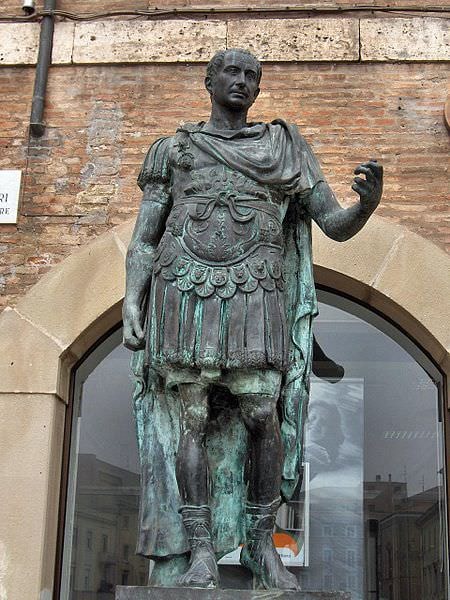 Escultura de Julio César Georges Jansoone (CC BY-NC-SA) ](https://www.worldhistory.org/image/2737/julius-caesar/ "Julius Caesar")Con Craso muerto, el Primer Triunvirato se desintegró y Pompeyo y César se declararon la guerra el uno al otro. Pompeyo trató de eliminar a su rival a través de medios legales y logró que el Senado ordenara que César fuese a Roma para ser juzgado por diversos cargos. En vez de volver a la ciudad con humildad para enfrentar estos cargos, César cruzó el río Rubicón con su ejército en el 49 a.C., entrando en Roma a la cabeza de este.
Se negó a responder por los cargos y se concentró en eliminar a Pompeyo como rival. Pompeyo y César se encontraron en la Batalla de Farsalia en Grecia, en el 48 a.C., donde el ejército numéricamente inferior de César venció a Pompeyo. El mismo Pompeyo huyó a Egipto, esperando encontrar refugio, pero fue asesinado a su llegada. Las noticias de la gran victoria de César contra números abrumadores en Farsalia se extendieron rápidamente y muchos antiguos amigos y aliados de Pompeyo prontamente se pusieron del lado de César, creyendo que estaba favorecido por los dioses.
### Hacia el [Imperio](https://www.worldhistory.org/trans/es/1-99/imperio/)
Ahora, Julio César era el hombre más poderoso de Roma. Terminó efectivamente el período de la República al hacerse proclamar *dictator* por el Senado. Su popularidad entre la gente era enorme y sus esfuerzos para crear un gobierno estable y central significaron una inmensa prosperidad para la ciudad de Roma. Fue asesinado por un grupo de Senadores en el 44 a.C., precisamente, por estos logros.
Los conspiradores, Bruto y Casio entre ellos, temían que César se volviese muy poderoso y eventualmente aboliera el Senado. Después de su muerte, su mano derecha y primo, [Marco Antonio](https://www.worldhistory.org/trans/es/1-10057/marco-antonio/), se unió en armas con el sobrino y heredero de César, Cayo Octavio Turino (Octaviano) y el mejor amigo de César, Marco Emilio Lépido, derrotando las fuerzas de Bruto y Casio en la Batalla de Filipos en el 42 a.C.
[  División del Segundo Triunvirato ColdEl (CC BY-SA) ](https://www.worldhistory.org/image/4951/division-of-the-second-triumvirate/ "Division of the Second Triumvirate")Octaviano, Antonio y Lépido formaron el [Segundo Triunvirato](https://www.worldhistory.org/trans/es/1-14692/segundo-triunvirato/), pero como en el primero, estos tres hombres eran igual de ambiciosos. Lépido fue neutralizado cuando Antonio y Octaviano decidieron que debería gobernar Hispania y África, manteniéndolo así fuera del juego de poder de Roma. Se decidió también que Octaviano gobernaría las tierras romanas en el Occidente y Antonio en el Oriente.
Sin embargo, la relación de Antonio con la reina egipcia [Cleopatra VII](https://www.worldhistory.org/trans/es/1-866/cleopatra-vii/), trastornó el equilibrio que Octaviano había esperado mantener y los dos fueron a la guerra. Las fuerzas combinadas de Antonio y Cleopatra fueron derrotadas en la Batalla de Actium, en el 31 a.C. Los dos se suicidaron después. Octaviano emergió como el único poder en Roma. En el 27 a.C. le fueron otorgados poderes extraordinarios por el Senado y tomó el nombre de [Augusto](https://www.worldhistory.org/trans/es/1-412/augusto/), el primer Emperador de Roma. Los historiadores coinciden con que este es el punto en el que la historia de Roma termina y la del Imperio Romano comienza.
#### Editorial Review
This human-authored definition has been reviewed by our editorial team before publication to ensure accuracy, reliability and adherence to academic standards in accordance with our [editorial policy](https://www.worldhistory.org/static/editorial-policy/).
## Sobre el autor
Joshua J. Mark no solo es cofundador de World History Encyclopedia, sino también es el director de Contenidos. Anteriormente fue profesor en el Colegio Marista de Nueva York, donde enseñó historia, filosofía, literatura y escritura. Ha viajado extensamente y vivió en Grecia y en Alemania.
- [Linkedin Profile](https://www.linkedin.com/pub/joshua-j-mark/38/614/339)
## Cronología
- **753 BCE**: The legendary founding date of [Rome](https://www.worldhistory.org/Rome/).
- **753 BCE - 510 BCE**: Regal Period of ancient [Rome](https://www.worldhistory.org/Rome/) from Founding to Birth of the Republic.
- **750 BCE - 510 BCE**: The (semi-mythological) seven kings of [Rome](https://www.worldhistory.org/Rome/): [Romulus](https://www.worldhistory.org/Romulus_and_Remus/), Numa Pompilius, Tulus Hostilius, Ancus Marcius, Lucius Tarquinius Priscus, Servius Tullius, [Lucius Tarquinius Superbus](https://www.worldhistory.org/Lucius_Tarquinius_Superbus/).
- **c. 620 BCE**: Posible founding date for [Ostia](https://www.worldhistory.org/Ostia/), the port of [Rome](https://www.worldhistory.org/Rome/).
- **599 BCE - 500 BCE**: The traditional date when the [Circus Maximus](https://www.worldhistory.org/Circus_Maximus/) of [Rome](https://www.worldhistory.org/Rome/) is first laid out.
- **534 BCE - 510 BCE**: Reign of [Lucius Tarquinius Superbus](https://www.worldhistory.org/Lucius_Tarquinius_Superbus/), last king of [Rome](https://www.worldhistory.org/Rome/).
- **510 BCE - 509 BCE**: First treaty between [Rome](https://www.worldhistory.org/Rome/) and [Carthage](https://www.worldhistory.org/carthage/).
- **509 BCE**: Foundation of the [Roman Republic](https://www.worldhistory.org/Roman_Republic/).
- **c. 508 BCE**: [Lars Porsenna](https://www.worldhistory.org/Lars_Porsenna/), [Etruscan](https://www.worldhistory.org/Etruscan_Civilization/) king of [Chiusi](https://www.worldhistory.org/Chiusi/), lays siege to [Rome](https://www.worldhistory.org/Rome/).
- **504 BCE**: Migration of Claudii from Sabine lands to [Rome](https://www.worldhistory.org/Rome/).
- **c. 499 BCE**: [Battle](https://www.worldhistory.org/disambiguation/battle/) of Lake Regillus between [Rome](https://www.worldhistory.org/Rome/) and the Latin League.
- **c. 497 BCE**: The first [temple](https://www.worldhistory.org/temple/) dedicated to [Saturn](https://www.worldhistory.org/Saturn/) is constructed in the [Forum Romanum](https://www.worldhistory.org/Roman_Forum/) of [Rome](https://www.worldhistory.org/Rome/).
- **495 BCE**: [Lucius Tarquinius Superbus](https://www.worldhistory.org/Lucius_Tarquinius_Superbus/), last king of [Rome](https://www.worldhistory.org/Rome/), dies in exile at Cumae.
- **495 BCE**: A [temple](https://www.worldhistory.org/temple/) is built in honour of Mercury near [Rome](https://www.worldhistory.org/Rome/)'s [Circus Maximus](https://www.worldhistory.org/Circus_Maximus/).
- **494 BCE**: Traditional date the office of the tribuni plebis is created in [Rome](https://www.worldhistory.org/Rome/).
- **493 BCE**: Foedus Cassianus - treaty by Spurius Cassius Vecellinus with the Latin League after the [Battle](https://www.worldhistory.org/disambiguation/battle/) of Lake Regillus.
- **484 BCE**: The first [temple](https://www.worldhistory.org/temple/) of the [Dioscuri](https://www.worldhistory.org/Castor_and_Pollux/) (Castor & Pollux) is dedicated in [Rome](https://www.worldhistory.org/Rome/)'s [Forum Romanum](https://www.worldhistory.org/Roman_Forum/) by Aulus Postumius following his victory over the Latins at the [Battle](https://www.worldhistory.org/disambiguation/battle/) of Lake Regillus.
- **451 BCE - 450 BCE**: Decemvirate and Publication of [Twelve Tables](https://www.worldhistory.org/Twelve_Tables/) of [Roman Law](https://www.worldhistory.org/Roman_Law/).
- **c. 400 BCE**: [Roman](https://www.worldhistory.org/disambiguation/Roman/) tale of mythical twins [Romulus and Remus](https://www.worldhistory.org/Romulus_and_Remus/) first recorded.
- **394 BCE**: [Etruscan](https://www.worldhistory.org/Etruscan_Civilization/) [Volsinii](https://www.worldhistory.org/volsinii/) and their ally Sappinum unsuccessfully attacks [Rome](https://www.worldhistory.org/Rome/).
- **390 BCE**: Gauls sack [Rome](https://www.worldhistory.org/Rome/).
- **c. 390 BCE**: "Gallic Catastrophe:" [Brennus](https://www.worldhistory.org/brennus/) of the Senones defeats the Romans at Allia, and subsequently sacks [Rome](https://www.worldhistory.org/Rome/).
- **380 BCE**: Rebuilding of [Rome](https://www.worldhistory.org/Rome/). Strong walls around the seven hills.
- **343 BCE - 341 BCE**: First Samnite [War](https://www.worldhistory.org/disambiguation/War/) ([Rome](https://www.worldhistory.org/Rome/) vs. Samnites).
- **340 BCE - 338 BCE**: Latin [War](https://www.worldhistory.org/disambiguation/War/), victory for [Rome](https://www.worldhistory.org/Rome/).
- **326 BCE - 304 BCE**: Second Samnite [War](https://www.worldhistory.org/disambiguation/War/).
- **321 BCE**: The Via Appia, a famous [Roman](https://www.worldhistory.org/disambiguation/Roman/) road, is constructed.
- **298 BCE - 290 BCE**: Third Samnite [War](https://www.worldhistory.org/disambiguation/War/) between [Rome](https://www.worldhistory.org/Rome/) and the Samnite people.
- **295 BCE**: [Roman](https://www.worldhistory.org/disambiguation/Roman/) victory over Samnites, Gauls and Umbrians at Sentinum.
- **292 BCE**: The Romans adopt the [Greek](https://www.worldhistory.org/disambiguation/greek/) [god](https://www.worldhistory.org/God/) of [medicine](https://www.worldhistory.org/disambiguation/medicine/) [Asclepius](https://www.worldhistory.org/Asclepius/) by stealing his sacred snake from [Epidaurus](https://www.worldhistory.org/epidaurus/) and setting up a [temple](https://www.worldhistory.org/temple/) on the Tiber Island.
- **Mar 218 BCE**: [Rome](https://www.worldhistory.org/Rome/) declares [war](https://www.worldhistory.org/disambiguation/War/) on [Carthage](https://www.worldhistory.org/carthage/) after [Hannibal](https://www.worldhistory.org/hannibal/) sacks [Saguntum](https://www.worldhistory.org/Saguntum/) in Spain. The [Second Punic War](https://www.worldhistory.org/Second_Punic_War/) begins.
- **213 BCE - 212 BCE**: [Roman](https://www.worldhistory.org/disambiguation/Roman/) commander [Marcus Claudius Marcellus](https://www.worldhistory.org/Marcus_Claudius_Marcellus/) lays seige to and ultimately sacks [Syracuse](https://www.worldhistory.org/syracuse/).
- **196 BCE**: The earliest known Triumphal Arches are built in [Rome](https://www.worldhistory.org/Rome/) by L.Sertinius.
- **184 BCE**: The first basilica is added to [Rome](https://www.worldhistory.org/Rome/)'s [Forum Romanum](https://www.worldhistory.org/Roman_Forum/).
- **168 BCE**: [Rome](https://www.worldhistory.org/Rome/) defeats [Macedon](https://www.worldhistory.org/macedon/) at [Battle of Pydna](https://www.worldhistory.org/Battle_of_Pydna/).
- **166 BCE**: [Rome](https://www.worldhistory.org/Rome/) puts [Delos](https://www.worldhistory.org/delos/) under the jurisdiction of [Athens](https://www.worldhistory.org/Athens/) and makes the island a free port.
- **146 BCE**: First [Roman](https://www.worldhistory.org/disambiguation/Roman/) all-marble building is constructed, the [temple](https://www.worldhistory.org/temple/) of [Jupiter](https://www.worldhistory.org/jupiter/) Stater in [Rome](https://www.worldhistory.org/Rome/).
- **121 BCE**: [Gallia](https://www.worldhistory.org/gaul/) Narbonensis becomes a [Roman](https://www.worldhistory.org/disambiguation/Roman/) province.
- **107 BCE - 100 BCE**: [Gaius Marius](https://www.worldhistory.org/Gaius_Marius/) reforms the [Roman army](https://www.worldhistory.org/Roman_Army/).
- **12 Jul 100 BCE - 15 Mar 44 BCE**: Life of Gaius [Julius Caesar](https://www.worldhistory.org/Julius_Caesar/), founder of the [Roman Empire](https://www.worldhistory.org/Roman_Empire/).
- **89 BCE**: All [poleis](https://www.worldhistory.org/Polis/) or [city](https://www.worldhistory.org/city/)-states in [Magna Graecia](https://www.worldhistory.org/Magna_Graecia/) come under [Roman](https://www.worldhistory.org/disambiguation/Roman/) control.
- **80 BCE**: [Sulla](https://www.worldhistory.org/sulla/) moves the [Olympic Games](https://www.worldhistory.org/Olympic_Games/) to [Rome](https://www.worldhistory.org/Rome/) for a single Olympiad.
- **70 BCE**: [Pompey](https://www.worldhistory.org/pompey/) and [Crassus](https://www.worldhistory.org/Marcus_Licinius_Crassus/) are made consuls.
- **59 BCE - 17 CE**: Life of [Livy](https://www.worldhistory.org/livy/).
- **58 BCE - 51 BCE**: [Julius Caesar](https://www.worldhistory.org/Julius_Caesar/)'s [conquest](https://www.worldhistory.org/warfare/) of [Gaul](https://www.worldhistory.org/gaul/).
- **55 BCE**: [Pompey the Great](https://www.worldhistory.org/pompey/) builds the first permanent stone [theatre](https://www.worldhistory.org/disambiguation/theatre/) in [Rome](https://www.worldhistory.org/Rome/).
- **55 BCE - 54 BCE**: [Julius Caesar](https://www.worldhistory.org/Julius_Caesar/)'s expeditions in [Britain](https://www.worldhistory.org/disambiguation/Britain/).
- **54 BCE - 29 BCE**: Forum of [Caesar](https://www.worldhistory.org/disambiguation/caesar/) constructed in [Rome](https://www.worldhistory.org/Rome/) by [Julius Caesar](https://www.worldhistory.org/Julius_Caesar/) as another area to conduct judicial business. It is the best surviving of his monuments.
- **15 Mar 44 BCE**: [Julius Caesar](https://www.worldhistory.org/Julius_Caesar/) is murdered.
- **43 BCE - 36 BCE**: [Second Triumvirate](https://www.worldhistory.org/Second_Triumvirate/): [Antony](https://www.worldhistory.org/Mark_Antony/), [Octavian](https://www.worldhistory.org/augustus/), and Lepidus (official approval by the [Roman Senate](https://www.worldhistory.org/Roman_Senate/)). Mass proscriptions including [Cicero](https://www.worldhistory.org/Cicero/).
- **43 BCE - 17 CE**: Life of the [Roman](https://www.worldhistory.org/disambiguation/Roman/) writer [Ovid](https://www.worldhistory.org/ovid/), author of Metamorphoses.
- **36 BCE**: [Agrippa](https://www.worldhistory.org/Marcus_Agrippa/) defeats the naval fleet of Sextus [Pompey](https://www.worldhistory.org/pompey/) in the [battle](https://www.worldhistory.org/disambiguation/battle/) of Naulochos.
- **31 BCE**: [Greece](https://www.worldhistory.org/greece/) absorbed into [Roman Empire](https://www.worldhistory.org/Roman_Empire/).
- **29 BCE**: [Augustus](https://www.worldhistory.org/augustus/) builds the [temple](https://www.worldhistory.org/temple/) of Divius Iulius on the spot of [Julius Caesar](https://www.worldhistory.org/Julius_Caesar/)'s funeral pyre in [Rome](https://www.worldhistory.org/Rome/)'s [Forum Romanum](https://www.worldhistory.org/Roman_Forum/).
- **c. 27 BCE**: The first [Pantheon](https://www.worldhistory.org/Pantheon/) is built in [Rome](https://www.worldhistory.org/Rome/) and dedicated by [Marcus Agrippa](https://www.worldhistory.org/Marcus_Agrippa/).
- **c. 20 BCE**: Military engineer and architect [Vitruvius](https://www.worldhistory.org/Vitruvius/) publishes his "De Architectura".
- **c. 20 BCE**: The Campus Martius baths in [Rome](https://www.worldhistory.org/Rome/) are constructed and donated to the people by [Agrippa](https://www.worldhistory.org/Marcus_Agrippa/).
- **19 BCE**: Arch of [Augustus](https://www.worldhistory.org/augustus/) built in [Rome](https://www.worldhistory.org/Rome/) to commemorate victory over the Parthians.
- **c. 13 BCE**: Official inauguration of the [Theatre of Marcellus](https://www.worldhistory.org/article/614/theatre-of-marcellus/) in [Rome](https://www.worldhistory.org/Rome/).
- **c. 10 BCE**: [Augustus](https://www.worldhistory.org/augustus/) rebuilds the [Temple of Castor and Pollux](https://www.worldhistory.org/article/632/temple-of-castor--pollux/) in [Rome](https://www.worldhistory.org/Rome/)'s [Forum Romanum](https://www.worldhistory.org/Roman_Forum/).
- **1 CE - 100 CE**: [Mithraism](https://www.worldhistory.org/Mithraic_Mysteries/) spreads in the [Roman empire](https://www.worldhistory.org/Roman_Empire/).
- **c. 13 CE**: [Augustus](https://www.worldhistory.org/augustus/) creates the [cohortes urbanae](https://www.worldhistory.org/Cohortes_Urbanae/) in [Rome](https://www.worldhistory.org/Rome/) to help maintain public order.
- **c. 23 CE**: The castra praetoria, permanent camp of the [Praetorian Guard](https://www.worldhistory.org/Praetorian_Guard/), is built in [Rome](https://www.worldhistory.org/Rome/) by [Sejanus](https://www.worldhistory.org/sejanus/).
- **42 CE - 62 CE**: [Paul the Apostle](https://www.worldhistory.org/Paul_the_Apostle/) goes on missionary journeys across [Asia Minor](https://www.worldhistory.org/Asia_Minor/), [Greece](https://www.worldhistory.org/greece/), and [Rome](https://www.worldhistory.org/Rome/).
- **c. 50 CE - c. 60 CE**: Establishment of various Christian communities in the Eastern [Mediterranean](https://www.worldhistory.org/disambiguation/mediterranean/), [Greece](https://www.worldhistory.org/greece/), [Egypt](https://www.worldhistory.org/egypt/), and at least the [city](https://www.worldhistory.org/city/) of [Rome](https://www.worldhistory.org/Rome/).
- **60 CE - 61 CE**: [Boudicca](https://www.worldhistory.org/Boudicca/)'s Revolt in [Britain](https://www.worldhistory.org/disambiguation/Britain/).
- **64 CE**: Fire destroys the [Circus Maximus](https://www.worldhistory.org/Circus_Maximus/) in [Rome](https://www.worldhistory.org/Rome/).
- **64 CE**: Unofficial persecution of Christians in [Rome](https://www.worldhistory.org/Rome/).
- **64 CE**: The great fire in [Rome](https://www.worldhistory.org/Rome/).
- **c. 64 CE**: The [Roman](https://www.worldhistory.org/disambiguation/Roman/) port of [Ostia](https://www.worldhistory.org/Ostia/) reaches its maximum size becoming a major urban centre.
- **c. 65 CE**: The [Circus Maximus](https://www.worldhistory.org/Circus_Maximus/) in [Rome](https://www.worldhistory.org/Rome/) is rebuilt and its capacity increased to 250,000.
- **c. 65 CE**: The Baths of [Nero](https://www.worldhistory.org/Nero/) are built in [Rome](https://www.worldhistory.org/Rome/).
- **66 CE - 73 CE**: The Jewish Revolt against [Rome](https://www.worldhistory.org/Rome/).
- **68 CE - 69 CE**: [Year of the Four Emperors](https://www.worldhistory.org/Year_of_the_Four_Emperors/): Civil [war](https://www.worldhistory.org/disambiguation/War/) in [Rome](https://www.worldhistory.org/Rome/).
- **70 CE**: The [city](https://www.worldhistory.org/city/) of [Jerusalem](https://www.worldhistory.org/jerusalem/) is besieged and captured by [Rome](https://www.worldhistory.org/Rome/); the Second [Temple](https://www.worldhistory.org/temple/) destroyed.
- **Jun 71 CE**: [Titus](https://www.worldhistory.org/disambiguation/Titus/) returns to [Rome](https://www.worldhistory.org/Rome/) from Jewish [War](https://www.worldhistory.org/disambiguation/War/).
- **72 CE**: [Vespasian](https://www.worldhistory.org/Vespasian/) begins construction of the [Colosseum](https://www.worldhistory.org/Colosseum/) in [Rome](https://www.worldhistory.org/Rome/).
- **Aug 79 CE - Oct 79 CE**: Eruption of Mt. Vesuvius in southern [Italy](https://www.worldhistory.org/italy/) burying the towns of [Pompeii](https://www.worldhistory.org/pompeii/) and [Herculaneum](https://www.worldhistory.org/Herculaneum/) in volcanic ash.
- **80 CE**: The [Colosseum](https://www.worldhistory.org/Colosseum/) in [Rome](https://www.worldhistory.org/Rome/) is officially opened by [Titus](https://www.worldhistory.org/disambiguation/Titus/) with a 100 day [gladiator](https://www.worldhistory.org/gladiator/) spectacular.
- **80 CE**: The first [Pantheon](https://www.worldhistory.org/Pantheon/) in [Rome](https://www.worldhistory.org/Rome/) is destroyed by fire.
- **81 CE - 96 CE**: Construction is finally completed on the [Colosseum](https://www.worldhistory.org/Colosseum/) of [Rome](https://www.worldhistory.org/Rome/) in the reign of [Domitian](https://www.worldhistory.org/domitian/).
- **83 CE**: [Battle](https://www.worldhistory.org/disambiguation/battle/) of Mons Graupius in [Scotland](https://www.worldhistory.org/disambiguation/Scotland/).
- **18 Sep 96 CE**: [Death](https://www.worldhistory.org/disambiguation/Death/) of [Roman Emperor](https://www.worldhistory.org/Roman_Emperor/) [Domitian](https://www.worldhistory.org/domitian/).
- **c. 110 CE**: First documented martydom in the [Colosseum](https://www.worldhistory.org/Colosseum/) of [Rome](https://www.worldhistory.org/Rome/), that of St. Ignatius of [Antioch](https://www.worldhistory.org/Antiochia/).
- **110 CE**: The second [Pantheon](https://www.worldhistory.org/Pantheon/) building in [Rome](https://www.worldhistory.org/Rome/) is hit by lightning and destroyed by fire.
- **113 CE**: [Trajan's column](https://www.worldhistory.org/Trajans_Column/) is constructed in [Rome](https://www.worldhistory.org/Rome/) which commemorates the emperor's campaigns in [Dacia](https://www.worldhistory.org/dacia/).
- **c. 125 CE**: The [Pantheon](https://www.worldhistory.org/Pantheon/) is completed in [Rome](https://www.worldhistory.org/Rome/).
- **10 Jul 138 CE - 9 Mar 161 CE**: Reign of [Roman Emperor](https://www.worldhistory.org/Roman_Emperor/) [Antoninus Pius](https://www.worldhistory.org/Antoninus_Pius/).
- **c. 180 CE**: The [Column of Marcus Aurelius](https://www.worldhistory.org/article/647/the-column-of-marcus-aurelius/) and Faustina is erected in [Rome](https://www.worldhistory.org/Rome/). It depicts in relief [sculpture](https://www.worldhistory.org/disambiguation/Sculpture/) the emperors' campaigns across the Danube.
- **192 CE**: Emperor [Commodus](https://www.worldhistory.org/commodus/) is murdered, civil [war](https://www.worldhistory.org/disambiguation/War/) ensues (until 197 CE).
- **202 CE**: The [Pantheon](https://www.worldhistory.org/Pantheon/) in [Rome](https://www.worldhistory.org/Rome/) is repaired by [Septimius Severus](https://www.worldhistory.org/Septimius_Severus/) and [Caracalla](https://www.worldhistory.org/Caracalla/).
- **227 CE**: The Baths of [Nero](https://www.worldhistory.org/Nero/) in [Rome](https://www.worldhistory.org/Rome/) are extensively renovated and expanded by [Alexander Severus](https://www.worldhistory.org/Alexander_Severus/) and renamed Thermae Alexandrinae.
- **c. 235 CE**: The Baths of [Caracalla](https://www.worldhistory.org/Caracalla/) in [Rome](https://www.worldhistory.org/Rome/) are completed.
- **238 CE**: Year of the Six Emperors in the [Roman Empire](https://www.worldhistory.org/Roman_Empire/).
- **272 CE**: Possible year of Emperor [Constantine](https://www.worldhistory.org/disambiguation/Constantine/)'s birth.
- **283 CE**: A fire devastates [Rome](https://www.worldhistory.org/Rome/)'s [Forum Romanum](https://www.worldhistory.org/Roman_Forum/), necessitating an extensive rebuilding programme.
- **286 CE**: Naval commander Carausius ([Marcus Aurelius](https://www.worldhistory.org/Marcus_Aurelius/) Mausaeus Valerius Carausius) declares himself emperor in [Britain](https://www.worldhistory.org/disambiguation/Britain/) and Northern [Gaul](https://www.worldhistory.org/gaul/).
- **293 CE**: Emperor Carausius assassinated by Allectus.
- **308 CE**: [Constantine I](https://www.worldhistory.org/Constantine_I/) named "[caesar](https://www.worldhistory.org/disambiguation/caesar/)" of the west.
- **312 CE**: [Constantine](https://www.worldhistory.org/disambiguation/Constantine/) defeats Maxentius at Milvian Bridge.
- **312 CE**: [Constantine I](https://www.worldhistory.org/Constantine_I/) reduces the [cohortes urbanae](https://www.worldhistory.org/Cohortes_Urbanae/) of [Rome](https://www.worldhistory.org/Rome/).
- **337 CE**: [Death](https://www.worldhistory.org/disambiguation/Death/) of Emperor [Constantine I](https://www.worldhistory.org/Constantine_I/).
- **c. 360 CE - c. 380 CE**: The [Temple](https://www.worldhistory.org/temple/) of [Saturn](https://www.worldhistory.org/Saturn/) is rebuilt in the [Forum Romanum](https://www.worldhistory.org/Roman_Forum/) of [Rome](https://www.worldhistory.org/Rome/).
- **402 CE**: Ravenna becomes the capital of the [Western Roman Empire](https://www.worldhistory.org/Western_Roman_Empire/).
- **408 CE**: [Alaric](https://www.worldhistory.org/Alaric/) I the [Visigoth](https://www.worldhistory.org/visigoth/) besieges [Rome](https://www.worldhistory.org/Rome/). As ransom, Rome pays 5,000 pounds of [gold](https://www.worldhistory.org/gold/), 30,000 pounds of [silver](https://www.worldhistory.org/Silver/), 4,000 silken tunics, 3,000 hides dyed scarlet, and 3,000 pounds of [pepper](https://www.worldhistory.org/Pepper/).
- **410 CE**: [Alaric](https://www.worldhistory.org/Alaric/) of the [Visigoths](https://www.worldhistory.org/visigoth/) sacks [Rome](https://www.worldhistory.org/Rome/).
- **24 Aug 410 CE**: [Alaric](https://www.worldhistory.org/Alaric/) sacks [Rome](https://www.worldhistory.org/Rome/).
- **422 CE**: The [Colosseum](https://www.worldhistory.org/Colosseum/) of [Rome](https://www.worldhistory.org/Rome/) is damaged by [earthquake](https://www.worldhistory.org/disambiguation/earthquake/).
- **455 CE**: [Vandals](https://www.worldhistory.org/Vandals/) sack [Rome](https://www.worldhistory.org/Rome/).
- **536 CE**: [Rome](https://www.worldhistory.org/Rome/) falls to [Belisarius](https://www.worldhistory.org/Belisarius/).
- **549 CE**: The last official [chariot](https://www.worldhistory.org/chariot/) race is held in [Rome](https://www.worldhistory.org/Rome/)'s [Circus Maximus](https://www.worldhistory.org/Circus_Maximus/).
- **608 CE**: The [Pantheon](https://www.worldhistory.org/Pantheon/) in [Rome](https://www.worldhistory.org/Rome/) is converted into a Christian church.
- **c. 730 CE**: First reference to the Flavian [Amphitheatre](https://www.worldhistory.org/amphitheatre/) as the [Colosseum](https://www.worldhistory.org/Colosseum/) by the Venerable [Bede](https://www.worldhistory.org/Bede/).
## Enlaces externos
- [Ancient Rome Live](http://www.ancientromelive.org/)
- [Rome Reborn](http://romereborn.frischerconsulting.com/)
- [Four sisters in Ancient Rome - Ray Laurence](http://ed.ted.com/lessons/four-sisters-in-ancient-rome-ray-laurence)
- [A glimpse of teenage life in ancient Rome - Ray Laurence](http://ed.ted.com/lessons/a-glimpse-of-teenage-life-in-ancient-rome-ray-laurence)
- [Roman Lives](https://history-podcasts.com/roman-lives)
- [S.P.Q.R.: A History of Ancient Rome - Episode - Free Library](https://libwww.freelibrary.org/podcast/?podcastID=1419)
- [33 Ancient Rome Facts That Will Change The Way You See History](https://allthatsinteresting.com/ancient-rome-facts)
- [Roman Emperors](http://www.roman-emperors.org/auggie.htm)
- [The History of Rome](https://thehistoryofrome.typepad.com/)
- [The Meaning of Myths, Folklore, Legends, and Fairy Tales](https://www.thoughtco.com/defining-terms-myth-folklore-legend-735039)
- [Julius Caesar](http://www.bbc.co.uk/history/historic_figures/caesar_julius.shtml)
- [Discover Ancient Rome in Google Earth](http://www.youtube.com/watch?v=MqMXIRwQniA)
- [Historical city travel guide: Rome, 1st century AD | British Museum](https://www.britishmuseum.org/blog/historical-city-travel-guide-rome-1st-century-ad)
## Cita este trabajo
### APA
Mark, J. J. (2021, April 30). Antigua Roma. (D. A. Agudelo, Traductor). *World History Encyclopedia*.
### Chicago
Mark, Joshua J.. "Antigua Roma." Traducido por Daniel Alzate Agudelo. *World History Encyclopedia*, April 30, 2021. .
### MLA
Mark, Joshua J.. "Antigua Roma." Traducido por Daniel Alzate Agudelo. *World History Encyclopedia*, 30 Apr 2021, .
## Licencia y derechos de autor
Enviado por [Daniel Alzate Agudelo](https://www.worldhistory.org/user/daniel.alzate2015/ "User Page: Daniel Alzate Agudelo"), publicado el 30 April 2021. Consulta la fuente original para obtener información sobre derechos de autor. Por favor, ten en cuenta que el contenido vinculado con esta página puede tener términos de licencia diferentes.