---
title: Antiga Roma
author: Joshua J. Mark
translator: Eudald Martínez Gavagnin
source: https://www.worldhistory.org/trans/ca/1-68/antiga-roma/
format: machine-readable-alternate
license: Creative Commons Attribution-NonCommercial-ShareAlike (https://creativecommons.org/licenses/by-nc-sa/4.0/)
updated: 2021-11-29
---
# Antiga Roma
Autor: [Joshua J. Mark](https://www.worldhistory.org/user/JPryst/)_
_Traducció de [Eudald Martínez Gavagnin](https://www.worldhistory.org/user/eudaldmg)_
Segons la llegenda,[](https://www.worldhistory.org/trans/ca/2-119/els-ushebtis-la-ma-dobra-del-mes-enlla/) l’antiga Roma va ser fundada per dos germans semideus, Ròmul i Rem, el 21 d’abril del 735 aC. La llegenda afirma que mentre discutien per decidir qui governaria la ciutat (o, segons altres versions, on la fundarien), Ròmul va matar Rem i va anomenar la ciutat amb el seu nom. Aquesta història de la fundació de Roma és la més coneguda, però no és l’única que hi ha.
Altres llegendes asseguren que la ciutat va prendre el nom d’una dona, Roma, que va viatjar amb Enees i altres supervivents de Troia després que la ciutat caigués. Quan van atracar a la riba del riu Tíber, els homes van voler continuar el viatge, però Roma i les altres dones s’hi van negar. Roma va instigar les dones per cremar les naus troianes, cosa que va obligar els supervivents troians a romandre al lloc que eventualment esdevindria Roma. A banda d’aparèixer en aquesta llegenda, Enees de Troia també fa acte de presència a l’Eneida de Virgili com a fundador de Roma i ancestre de Ròmul i Rem, fet que relacionava Roma amb l’esplendor i el poder de l'antiga Troia.
Altres teories sobre el nom de la famosa ciutat suggereixen que o bé provenia de *Rumon*, l’antic nom del riu Tíber, i que era merament un topònim que designava la petita base comercial establerta a la seva riba, o bé que derivava d’una paraula etrusca.
### Roma més antiga
Originalment un petit llogaret a la riba del Tíber, ben aviat Roma es va engrandir i enfortir amb el comerç. La ubicació de la ciutat oferia als mercaders una ruta marítima fàcilment navegable on podien intercanviar els béns. A mesura que es va anar fent més gran, la ciutat va ser governada per set reis, des de Ròmul fins a Tarquini. La cultura i la civilització grega, que van arribar a Roma a través de les colònies gregues del sud de la península, van proporcionar a Roma un model amb el qual construirien la seva pròpia cultura. Dels grecs en van agafar la literatura i la religió, així com els fonaments d’arquitectura.
Els etruscs, emplaçats al nord, els van proporcionar un model per al comerç i l’urbanisme luxuriós. Etrúria[ ](https://www.worldhistory.org/trans/ca/1-206/civilitzacio-etrusca/)també era molt ben situada per comerciar i els primers romans en devien aprendre les tècniques mercantils, sia imitant-ne l’exemple sia seguint el mestratge dels etruscs que van fer incursions a la zona del voltant de Roma entre el 650 i el 600 aC (malgrat que la seva influència ja s’havia notat força abans). L’abast del rol que va tenir la [civilització etrusca](https://www.worldhistory.org/trans/ca/1-206/civilitzacio-etrusca/) en el desenvolupament de la cultura i la societat romana encara es debat, però hi ha força consens en l’impacte significant que va tenir en aquestes etapes primerenques.
Des del principi, els romans van exhibir un talent per agafar i millorar les tècniques i els conceptes de les altres cultures. El regne de Roma va passar ràpidament de ser un poblet mercant a una ciutat pròspera entre els segles VIII i VI aC. Quan el 509 aC van deposar l’últim dels set reis de Roma, Tarquini el Superb, el seu rival al poder, Luci Juni Brut, va reformar el sistema de govern i va establir la República romana.
### Guerra i expansionisme
Malgrat que els primers anys la prosperitat de la ciutat es va deure principalment al comerç, va ser la guerra allò que va convertir Roma en una de les potències del món antic. Les guerres contra la ciutat nord-africana de Cartago (conegudes com a guerres púniques, 264-146 aC) van consolidar el poder de Roma i en van augmentar la riquesa i el prestigi. Roma i Cartago eren rivals en el comerç del mediterrani occidental i, després de derrotar la ciutat nord-africana, Roma va exercir el control gairebé absolut de la zona, malgrat que encara hi havia incursions de pirates que li impedien controlar els mars.
A mesura que la República de Roma guanyava poder i prestigi, la ciutat de Roma va començar a patir les conseqüències de la corrupció, l’ambició i l’excessiva dependència del treball esclau estranger. Bandes de romans desocupats que perdien la feina a causa dels esclaus duts dels territoris conquerits oferien els seus serveis com a pinxos a les ordres del senador opulent que els volgués contractar. L’elit adinerada de la ciutat, els patricis, van esdevenir cada cop més rics a costa de la classe baixa treballadora, la plebs.
[  Mapa de l'expansió romana al segle II US Military Academy (Public Domain) ](https://www.worldhistory.org/image/131/map-of-2nd-century-roman-expansion/ "Map of 2nd Century Roman Expansion")Al segle II aC els germans Grac, Tiberi i Gai, dos tribuns romans, van impulsar tant reformes agràries com polítiques. Malgrat que tots dos van ser morts en el procés, els seus esforços van atiar reformes legislatives i la corrupció desenfrenada del senat romà es va limitar una mica (o, com a mínim, els senadors van començar a ser més discrets en els seus comportaments corruptes). En temps del primer triumvirat, tant la ciutat com la República romana eren en ple apogeu.
### La República
Malgrat tot, Roma era dividida per les classes socials. La classe governant s’anomenava a si mateix *optimates* (els millors), mentre que les classes baixes, o qui hi simpatitzava, eren coneguts com els *populares* (el poble). Aquests epítets només es feien servir amb qui defensava una determinada ideologia política, no designaven estrictament partits polítics i ni tota la classe governant eren *optimates*, ni totes les classes populars, *populares*.
En general, els *optimates* defensaven uns valors polítics i socials tradicionals que afavorien el poder del senat de Roma i el prestigi i la superioritat de la classe governant. Els *populares*, també en general, defensaven les reformes i la democratització de la República romana. Aquestes ideologies oposades acabarien xocant en forma de tres homes que, a contracor, van dur la República romana a la seva fi.
Marc Licini Cras i el seu rival polític, Gneu Pompeu Magne (Pompeu), juntament amb un altre polític jove, Gai Juli Cèsar, van formar el que els historiadors moderns anomenen el primer triumvirat de Roma (ni els romans de l’època ni els tres homes que el conformaven no van fer servir mai el terme). Cras i Pompeu defensaven una visió política d’*optimate* mentre que Cèsar era *populare*.
Tots tres homes eren igual d’ambiciosos i gràcies a l’anhel de poder tots tres es mantenien a ratlla l’un a l’altre i van fer que Roma prosperés. Cras va ser l’home més ric de Roma i era tan corrupte que obligava els ciutadans benestants a pagar una “taxa de seguretat”. Si el ciutadà la pagava, Cras no li cremava la casa, però si els diners no arribaven, el foc prenia i Cras cobrava una taxa per enviar-hi homes que l’apaguessin. Malgrat que la motivació era de tot menys noble, Cras va crear de facto els primers bombers, els quals més tard serien de gran utilitat per a la ciutat.
Tant Pompeu com Cèsar eren grans generals que mitjançant llurs conquestes van enriquir Roma. Malgrat ser l’home més ric de Roma (i s’ha especulat que el més ric de tota la història de Roma), Cras anhelava rebre el mateix respecte que Pompeu i Cèsar aconseguien amb els èxits militars. El 53 aC va organitzar una expedició contra Pàrtia i va ser derrotat a la batalla de Carres, a l’actual Turquia, on va ser mort quan les negociacions per a la treva van fracassar.
[ 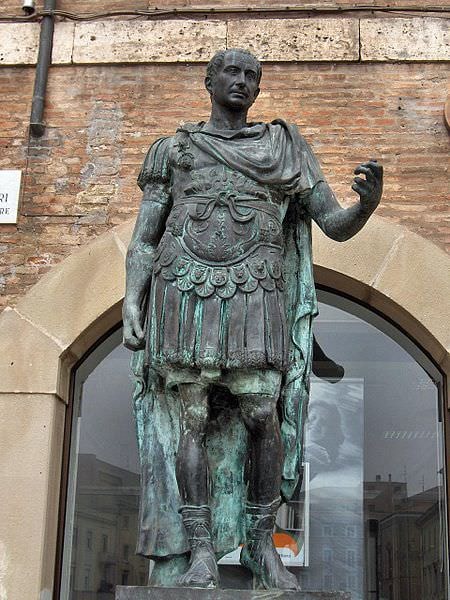 Juli Cèsar Georges Jansoone (CC BY-NC-SA) ](https://www.worldhistory.org/image/2737/julius-caesar/ "Julius Caesar")Amb Cras fora del mapa, el primer triumvirat es va desintegrar i Pompeu i Cèsar es van declarar la guerra. Pompeu va intentar eliminar el rival per la via legal i va fer que el senat ordenés a Cèsar que es presentés a Roma per tal de ser jutjat. En comptes de retornar amb humilitat per defensar-se’n, Cèsar va travessar el riu Rubicó amb la seva armada el 49 aC i va entrar a Roma estant-hi al capdavant.
Es va negar a respondre als càrrecs i es va dedicar a mirar d’eliminar el seu rival Pompeu. Pompeu i Cèsar es van trobar en combat el 48 aC a Farsàlia, Grècia, on les forces numèricament inferiors de Cèsar van derrotar l’armada més nombrosa de Pompeu. Pompeu va fugir a Egipte tot esperant de trobar-hi asil, però va ser assassinat tan bon punt hi va arribar. La notícia de la victòria de Cèsar contra l’aclaparadora armada de Pompeu s’havia escampat ràpidament i molts antics amics i aliats de Pompeu van canviar ràpidament de bàndol, creient que Cèsar era el favorit dels déus.
### Vers l’imperi
Ara Juli Cèsar era l’home més poderós de Roma. Quan el senat el va proclamar com a *dictador* el període de la República va arribar definitivament a la fi. La seva popularitat era immensa i els esforços per crear un govern central fort i estable van fer prosperar la ciutat de Roma encara més. Malgrat tot, precisament a causa d’aquestes mesures pròsperes va ser assassinat per un grup de senadors romans l’any 44 aC.
Els conspiradors, entre els quals hi havia Brut i Cassi, temien que si Cèsar continuava obtenint poder tard o d’hora aboliria el senat. Després de la seva mort la seva mà dreta i cosí, Marc Antoni, es va aliar amb el nebot i hereu de Cèsar, Gai Octavi (Octavià), i l’amic de Cèsar, Marc Emili Lèpid, per derrotar les forces de Bru i Cassi a la batalla de Filipos el 42 aC.
[  Divisió del segon triumvirat ColdEl (CC BY-SA) ](https://www.worldhistory.org/image/4951/division-of-the-second-triumvirate/ "Division of the Second Triumvirate")Octavi , Marc Antoni i Lèpid van formar el segon triumvirat de Roma, però, com al primer, els tres homes eren igual d’ambiciosos. Lèpid va ser neutralitzat eficaçment quan Marc Antoni i Octavi van acordar que hauria de governar Hispània i l’Àfrica, cosa que li impedia de jugar cap paper en la política romana. Es va acordar que Octavi governés les terres occidentals i Marc Antoni, les orientals.
La relació de Marc Antoni amb la reina d’Egipte Cleòpatra VII, però, va fer trontollar l’equilibri que Octavi havia volgut mantenir i Marc Antoni i Octavi es van declarar la guerra. Les forces combinades de Marc Antoni i Cleòpatra van ser derrotades a la batalla d’Àccium el 31 aC i un any més tard tots dos es van suïcidar. El 27 aC el senat va concedir a Octavi poders extraordinaris, i va prendre el nom d’August, el primer emperador de Roma. Hi ha força consens a establir aquest punt com el final de la història de Roma i el principi de la història de l’imperi Romà.
#### Editorial Review
This human-authored definition has been reviewed by our editorial team before publication to ensure accuracy, reliability and adherence to academic standards in accordance with our [editorial policy](https://www.worldhistory.org/static/editorial-policy/).
## Sobre l'autor/a
Un escriptor independent i antic professor associat de filosofia al Marist College, Nova York, Joshua J. En Mark ha viscut a Grècia i Alemanya i ha viatjat per Egipte. Ha ensenyat història, literatura i filosofia a la universitat.
- [Linkedin Profile](https://www.linkedin.com/pub/joshua-j-mark/38/614/339)
## Línia de temps
- **753 BCE**: The legendary founding date of [Rome](https://www.worldhistory.org/Rome/).
- **753 BCE - 510 BCE**: Regal Period of ancient [Rome](https://www.worldhistory.org/Rome/) from Founding to Birth of the Republic.
- **750 BCE - 510 BCE**: The (semi-mythological) seven kings of [Rome](https://www.worldhistory.org/Rome/): [Romulus](https://www.worldhistory.org/Romulus_and_Remus/), Numa Pompilius, Tulus Hostilius, Ancus Marcius, Lucius Tarquinius Priscus, Servius Tullius, [Lucius Tarquinius Superbus](https://www.worldhistory.org/Lucius_Tarquinius_Superbus/).
- **c. 620 BCE**: Posible founding date for [Ostia](https://www.worldhistory.org/Ostia/), the port of [Rome](https://www.worldhistory.org/Rome/).
- **599 BCE - 500 BCE**: The traditional date when the [Circus Maximus](https://www.worldhistory.org/Circus_Maximus/) of [Rome](https://www.worldhistory.org/Rome/) is first laid out.
- **534 BCE - 510 BCE**: Reign of [Lucius Tarquinius Superbus](https://www.worldhistory.org/Lucius_Tarquinius_Superbus/), last king of [Rome](https://www.worldhistory.org/Rome/).
- **510 BCE - 509 BCE**: First treaty between [Rome](https://www.worldhistory.org/Rome/) and [Carthage](https://www.worldhistory.org/carthage/).
- **509 BCE**: Foundation of the [Roman Republic](https://www.worldhistory.org/Roman_Republic/).
- **c. 508 BCE**: [Lars Porsenna](https://www.worldhistory.org/Lars_Porsenna/), [Etruscan](https://www.worldhistory.org/Etruscan_Civilization/) king of [Chiusi](https://www.worldhistory.org/Chiusi/), lays siege to [Rome](https://www.worldhistory.org/Rome/).
- **504 BCE**: Migration of Claudii from Sabine lands to [Rome](https://www.worldhistory.org/Rome/).
- **c. 499 BCE**: [Battle](https://www.worldhistory.org/disambiguation/battle/) of Lake Regillus between [Rome](https://www.worldhistory.org/Rome/) and the Latin League.
- **c. 497 BCE**: The first [temple](https://www.worldhistory.org/temple/) dedicated to [Saturn](https://www.worldhistory.org/Saturn/) is constructed in the [Forum Romanum](https://www.worldhistory.org/Roman_Forum/) of [Rome](https://www.worldhistory.org/Rome/).
- **495 BCE**: [Lucius Tarquinius Superbus](https://www.worldhistory.org/Lucius_Tarquinius_Superbus/), last king of [Rome](https://www.worldhistory.org/Rome/), dies in exile at Cumae.
- **495 BCE**: A [temple](https://www.worldhistory.org/temple/) is built in honour of Mercury near [Rome](https://www.worldhistory.org/Rome/)'s [Circus Maximus](https://www.worldhistory.org/Circus_Maximus/).
- **494 BCE**: Traditional date the office of the tribuni plebis is created in [Rome](https://www.worldhistory.org/Rome/).
- **493 BCE**: Foedus Cassianus - treaty by Spurius Cassius Vecellinus with the Latin League after the [Battle](https://www.worldhistory.org/disambiguation/battle/) of Lake Regillus.
- **484 BCE**: The first [temple](https://www.worldhistory.org/temple/) of the [Dioscuri](https://www.worldhistory.org/Castor_and_Pollux/) (Castor & Pollux) is dedicated in [Rome](https://www.worldhistory.org/Rome/)'s [Forum Romanum](https://www.worldhistory.org/Roman_Forum/) by Aulus Postumius following his victory over the Latins at the [Battle](https://www.worldhistory.org/disambiguation/battle/) of Lake Regillus.
- **451 BCE - 450 BCE**: Decemvirate and Publication of [Twelve Tables](https://www.worldhistory.org/Twelve_Tables/) of [Roman Law](https://www.worldhistory.org/Roman_Law/).
- **c. 400 BCE**: [Roman](https://www.worldhistory.org/disambiguation/Roman/) tale of mythical twins [Romulus and Remus](https://www.worldhistory.org/Romulus_and_Remus/) first recorded.
- **394 BCE**: [Etruscan](https://www.worldhistory.org/Etruscan_Civilization/) [Volsinii](https://www.worldhistory.org/volsinii/) and their ally Sappinum unsuccessfully attacks [Rome](https://www.worldhistory.org/Rome/).
- **390 BCE**: Gauls sack [Rome](https://www.worldhistory.org/Rome/).
- **c. 390 BCE**: "Gallic Catastrophe:" [Brennus](https://www.worldhistory.org/brennus/) of the Senones defeats the Romans at Allia, and subsequently sacks [Rome](https://www.worldhistory.org/Rome/).
- **380 BCE**: Rebuilding of [Rome](https://www.worldhistory.org/Rome/). Strong walls around the seven hills.
- **343 BCE - 341 BCE**: First Samnite [War](https://www.worldhistory.org/disambiguation/War/) ([Rome](https://www.worldhistory.org/Rome/) vs. Samnites).
- **340 BCE - 338 BCE**: Latin [War](https://www.worldhistory.org/disambiguation/War/), victory for [Rome](https://www.worldhistory.org/Rome/).
- **326 BCE - 304 BCE**: Second Samnite [War](https://www.worldhistory.org/disambiguation/War/).
- **321 BCE**: The Via Appia, a famous [Roman](https://www.worldhistory.org/disambiguation/Roman/) road, is constructed.
- **298 BCE - 290 BCE**: Third Samnite [War](https://www.worldhistory.org/disambiguation/War/) between [Rome](https://www.worldhistory.org/Rome/) and the Samnite people.
- **295 BCE**: [Roman](https://www.worldhistory.org/disambiguation/Roman/) victory over Samnites, Gauls and Umbrians at Sentinum.
- **292 BCE**: The Romans adopt the [Greek](https://www.worldhistory.org/disambiguation/greek/) [god](https://www.worldhistory.org/God/) of [medicine](https://www.worldhistory.org/disambiguation/medicine/) [Asclepius](https://www.worldhistory.org/Asclepius/) by stealing his sacred snake from [Epidaurus](https://www.worldhistory.org/epidaurus/) and setting up a [temple](https://www.worldhistory.org/temple/) on the Tiber Island.
- **Mar 218 BCE**: [Rome](https://www.worldhistory.org/Rome/) declares [war](https://www.worldhistory.org/disambiguation/War/) on [Carthage](https://www.worldhistory.org/carthage/) after [Hannibal](https://www.worldhistory.org/hannibal/) sacks [Saguntum](https://www.worldhistory.org/Saguntum/) in Spain. The [Second Punic War](https://www.worldhistory.org/Second_Punic_War/) begins.
- **213 BCE - 212 BCE**: [Roman](https://www.worldhistory.org/disambiguation/Roman/) commander [Marcus Claudius Marcellus](https://www.worldhistory.org/Marcus_Claudius_Marcellus/) lays seige to and ultimately sacks [Syracuse](https://www.worldhistory.org/syracuse/).
- **196 BCE**: The earliest known Triumphal Arches are built in [Rome](https://www.worldhistory.org/Rome/) by L.Sertinius.
- **184 BCE**: The first basilica is added to [Rome](https://www.worldhistory.org/Rome/)'s [Forum Romanum](https://www.worldhistory.org/Roman_Forum/).
- **168 BCE**: [Rome](https://www.worldhistory.org/Rome/) defeats [Macedon](https://www.worldhistory.org/macedon/) at [Battle of Pydna](https://www.worldhistory.org/Battle_of_Pydna/).
- **166 BCE**: [Rome](https://www.worldhistory.org/Rome/) puts [Delos](https://www.worldhistory.org/delos/) under the jurisdiction of [Athens](https://www.worldhistory.org/Athens/) and makes the island a free port.
- **146 BCE**: First [Roman](https://www.worldhistory.org/disambiguation/Roman/) all-marble building is constructed, the [temple](https://www.worldhistory.org/temple/) of [Jupiter](https://www.worldhistory.org/jupiter/) Stater in [Rome](https://www.worldhistory.org/Rome/).
- **121 BCE**: [Gallia](https://www.worldhistory.org/gaul/) Narbonensis becomes a [Roman](https://www.worldhistory.org/disambiguation/Roman/) province.
- **107 BCE - 100 BCE**: [Gaius Marius](https://www.worldhistory.org/Gaius_Marius/) reforms the [Roman army](https://www.worldhistory.org/Roman_Army/).
- **12 Jul 100 BCE - 15 Mar 44 BCE**: Life of Gaius [Julius Caesar](https://www.worldhistory.org/Julius_Caesar/), founder of the [Roman Empire](https://www.worldhistory.org/Roman_Empire/).
- **89 BCE**: All [poleis](https://www.worldhistory.org/Polis/) or [city](https://www.worldhistory.org/city/)-states in [Magna Graecia](https://www.worldhistory.org/Magna_Graecia/) come under [Roman](https://www.worldhistory.org/disambiguation/Roman/) control.
- **80 BCE**: [Sulla](https://www.worldhistory.org/sulla/) moves the [Olympic Games](https://www.worldhistory.org/Olympic_Games/) to [Rome](https://www.worldhistory.org/Rome/) for a single Olympiad.
- **70 BCE**: [Pompey](https://www.worldhistory.org/pompey/) and [Crassus](https://www.worldhistory.org/Marcus_Licinius_Crassus/) are made consuls.
- **59 BCE - 17 CE**: Life of [Livy](https://www.worldhistory.org/livy/).
- **58 BCE - 51 BCE**: [Julius Caesar](https://www.worldhistory.org/Julius_Caesar/)'s [conquest](https://www.worldhistory.org/warfare/) of [Gaul](https://www.worldhistory.org/gaul/).
- **55 BCE**: [Pompey the Great](https://www.worldhistory.org/pompey/) builds the first permanent stone [theatre](https://www.worldhistory.org/disambiguation/theatre/) in [Rome](https://www.worldhistory.org/Rome/).
- **55 BCE - 54 BCE**: [Julius Caesar](https://www.worldhistory.org/Julius_Caesar/)'s expeditions in [Britain](https://www.worldhistory.org/disambiguation/Britain/).
- **54 BCE - 29 BCE**: Forum of [Caesar](https://www.worldhistory.org/disambiguation/caesar/) constructed in [Rome](https://www.worldhistory.org/Rome/) by [Julius Caesar](https://www.worldhistory.org/Julius_Caesar/) as another area to conduct judicial business. It is the best surviving of his monuments.
- **15 Mar 44 BCE**: [Julius Caesar](https://www.worldhistory.org/Julius_Caesar/) is murdered.
- **43 BCE - 36 BCE**: [Second Triumvirate](https://www.worldhistory.org/Second_Triumvirate/): [Antony](https://www.worldhistory.org/Mark_Antony/), [Octavian](https://www.worldhistory.org/augustus/), and Lepidus (official approval by the [Roman Senate](https://www.worldhistory.org/Roman_Senate/)). Mass proscriptions including [Cicero](https://www.worldhistory.org/Cicero/).
- **43 BCE - 17 CE**: Life of the [Roman](https://www.worldhistory.org/disambiguation/Roman/) writer [Ovid](https://www.worldhistory.org/ovid/), author of Metamorphoses.
- **36 BCE**: [Agrippa](https://www.worldhistory.org/Marcus_Agrippa/) defeats the naval fleet of Sextus [Pompey](https://www.worldhistory.org/pompey/) in the [battle](https://www.worldhistory.org/disambiguation/battle/) of Naulochos.
- **31 BCE**: [Greece](https://www.worldhistory.org/greece/) absorbed into [Roman Empire](https://www.worldhistory.org/Roman_Empire/).
- **29 BCE**: [Augustus](https://www.worldhistory.org/augustus/) builds the [temple](https://www.worldhistory.org/temple/) of Divius Iulius on the spot of [Julius Caesar](https://www.worldhistory.org/Julius_Caesar/)'s funeral pyre in [Rome](https://www.worldhistory.org/Rome/)'s [Forum Romanum](https://www.worldhistory.org/Roman_Forum/).
- **c. 27 BCE**: The first [Pantheon](https://www.worldhistory.org/Pantheon/) is built in [Rome](https://www.worldhistory.org/Rome/) and dedicated by [Marcus Agrippa](https://www.worldhistory.org/Marcus_Agrippa/).
- **c. 20 BCE**: Military engineer and architect [Vitruvius](https://www.worldhistory.org/Vitruvius/) publishes his "De Architectura".
- **c. 20 BCE**: The Campus Martius baths in [Rome](https://www.worldhistory.org/Rome/) are constructed and donated to the people by [Agrippa](https://www.worldhistory.org/Marcus_Agrippa/).
- **19 BCE**: Arch of [Augustus](https://www.worldhistory.org/augustus/) built in [Rome](https://www.worldhistory.org/Rome/) to commemorate victory over the Parthians.
- **c. 13 BCE**: Official inauguration of the [Theatre of Marcellus](https://www.worldhistory.org/article/614/theatre-of-marcellus/) in [Rome](https://www.worldhistory.org/Rome/).
- **c. 10 BCE**: [Augustus](https://www.worldhistory.org/augustus/) rebuilds the [Temple of Castor and Pollux](https://www.worldhistory.org/article/632/temple-of-castor--pollux/) in [Rome](https://www.worldhistory.org/Rome/)'s [Forum Romanum](https://www.worldhistory.org/Roman_Forum/).
- **1 CE - 100 CE**: [Mithraism](https://www.worldhistory.org/Mithraic_Mysteries/) spreads in the [Roman empire](https://www.worldhistory.org/Roman_Empire/).
- **c. 13 CE**: [Augustus](https://www.worldhistory.org/augustus/) creates the [cohortes urbanae](https://www.worldhistory.org/Cohortes_Urbanae/) in [Rome](https://www.worldhistory.org/Rome/) to help maintain public order.
- **c. 23 CE**: The castra praetoria, permanent camp of the [Praetorian Guard](https://www.worldhistory.org/Praetorian_Guard/), is built in [Rome](https://www.worldhistory.org/Rome/) by [Sejanus](https://www.worldhistory.org/sejanus/).
- **42 CE - 62 CE**: [Paul the Apostle](https://www.worldhistory.org/Paul_the_Apostle/) goes on missionary journeys across [Asia Minor](https://www.worldhistory.org/Asia_Minor/), [Greece](https://www.worldhistory.org/greece/), and [Rome](https://www.worldhistory.org/Rome/).
- **c. 50 CE - c. 60 CE**: Establishment of various Christian communities in the Eastern [Mediterranean](https://www.worldhistory.org/disambiguation/mediterranean/), [Greece](https://www.worldhistory.org/greece/), [Egypt](https://www.worldhistory.org/egypt/), and at least the [city](https://www.worldhistory.org/city/) of [Rome](https://www.worldhistory.org/Rome/).
- **60 CE - 61 CE**: [Boudicca](https://www.worldhistory.org/Boudicca/)'s Revolt in [Britain](https://www.worldhistory.org/disambiguation/Britain/).
- **64 CE**: Fire destroys the [Circus Maximus](https://www.worldhistory.org/Circus_Maximus/) in [Rome](https://www.worldhistory.org/Rome/).
- **64 CE**: Unofficial persecution of Christians in [Rome](https://www.worldhistory.org/Rome/).
- **64 CE**: The great fire in [Rome](https://www.worldhistory.org/Rome/).
- **c. 64 CE**: The [Roman](https://www.worldhistory.org/disambiguation/Roman/) port of [Ostia](https://www.worldhistory.org/Ostia/) reaches its maximum size becoming a major urban centre.
- **c. 65 CE**: The [Circus Maximus](https://www.worldhistory.org/Circus_Maximus/) in [Rome](https://www.worldhistory.org/Rome/) is rebuilt and its capacity increased to 250,000.
- **c. 65 CE**: The Baths of [Nero](https://www.worldhistory.org/Nero/) are built in [Rome](https://www.worldhistory.org/Rome/).
- **66 CE - 73 CE**: The Jewish Revolt against [Rome](https://www.worldhistory.org/Rome/).
- **68 CE - 69 CE**: [Year of the Four Emperors](https://www.worldhistory.org/Year_of_the_Four_Emperors/): Civil [war](https://www.worldhistory.org/disambiguation/War/) in [Rome](https://www.worldhistory.org/Rome/).
- **70 CE**: The [city](https://www.worldhistory.org/city/) of [Jerusalem](https://www.worldhistory.org/jerusalem/) is besieged and captured by [Rome](https://www.worldhistory.org/Rome/); the Second [Temple](https://www.worldhistory.org/temple/) destroyed.
- **Jun 71 CE**: [Titus](https://www.worldhistory.org/disambiguation/Titus/) returns to [Rome](https://www.worldhistory.org/Rome/) from Jewish [War](https://www.worldhistory.org/disambiguation/War/).
- **72 CE**: [Vespasian](https://www.worldhistory.org/Vespasian/) begins construction of the [Colosseum](https://www.worldhistory.org/Colosseum/) in [Rome](https://www.worldhistory.org/Rome/).
- **Aug 79 CE - Oct 79 CE**: Eruption of Mt. Vesuvius in southern [Italy](https://www.worldhistory.org/italy/) burying the towns of [Pompeii](https://www.worldhistory.org/pompeii/) and [Herculaneum](https://www.worldhistory.org/Herculaneum/) in volcanic ash.
- **80 CE**: The [Colosseum](https://www.worldhistory.org/Colosseum/) in [Rome](https://www.worldhistory.org/Rome/) is officially opened by [Titus](https://www.worldhistory.org/disambiguation/Titus/) with a 100 day [gladiator](https://www.worldhistory.org/gladiator/) spectacular.
- **80 CE**: The first [Pantheon](https://www.worldhistory.org/Pantheon/) in [Rome](https://www.worldhistory.org/Rome/) is destroyed by fire.
- **81 CE - 96 CE**: Construction is finally completed on the [Colosseum](https://www.worldhistory.org/Colosseum/) of [Rome](https://www.worldhistory.org/Rome/) in the reign of [Domitian](https://www.worldhistory.org/domitian/).
- **83 CE**: [Battle](https://www.worldhistory.org/disambiguation/battle/) of Mons Graupius in [Scotland](https://www.worldhistory.org/disambiguation/Scotland/).
- **18 Sep 96 CE**: [Death](https://www.worldhistory.org/disambiguation/Death/) of [Roman Emperor](https://www.worldhistory.org/Roman_Emperor/) [Domitian](https://www.worldhistory.org/domitian/).
- **c. 110 CE**: First documented martydom in the [Colosseum](https://www.worldhistory.org/Colosseum/) of [Rome](https://www.worldhistory.org/Rome/), that of St. Ignatius of [Antioch](https://www.worldhistory.org/Antiochia/).
- **110 CE**: The second [Pantheon](https://www.worldhistory.org/Pantheon/) building in [Rome](https://www.worldhistory.org/Rome/) is hit by lightning and destroyed by fire.
- **113 CE**: [Trajan's column](https://www.worldhistory.org/Trajans_Column/) is constructed in [Rome](https://www.worldhistory.org/Rome/) which commemorates the emperor's campaigns in [Dacia](https://www.worldhistory.org/dacia/).
- **c. 125 CE**: The [Pantheon](https://www.worldhistory.org/Pantheon/) is completed in [Rome](https://www.worldhistory.org/Rome/).
- **10 Jul 138 CE - 9 Mar 161 CE**: Reign of [Roman Emperor](https://www.worldhistory.org/Roman_Emperor/) [Antoninus Pius](https://www.worldhistory.org/Antoninus_Pius/).
- **c. 180 CE**: The [Column of Marcus Aurelius](https://www.worldhistory.org/article/647/the-column-of-marcus-aurelius/) and Faustina is erected in [Rome](https://www.worldhistory.org/Rome/). It depicts in relief [sculpture](https://www.worldhistory.org/disambiguation/Sculpture/) the emperors' campaigns across the Danube.
- **192 CE**: Emperor [Commodus](https://www.worldhistory.org/commodus/) is murdered, civil [war](https://www.worldhistory.org/disambiguation/War/) ensues (until 197 CE).
- **202 CE**: The [Pantheon](https://www.worldhistory.org/Pantheon/) in [Rome](https://www.worldhistory.org/Rome/) is repaired by [Septimius Severus](https://www.worldhistory.org/Septimius_Severus/) and [Caracalla](https://www.worldhistory.org/Caracalla/).
- **227 CE**: The Baths of [Nero](https://www.worldhistory.org/Nero/) in [Rome](https://www.worldhistory.org/Rome/) are extensively renovated and expanded by [Alexander Severus](https://www.worldhistory.org/Alexander_Severus/) and renamed Thermae Alexandrinae.
- **c. 235 CE**: The Baths of [Caracalla](https://www.worldhistory.org/Caracalla/) in [Rome](https://www.worldhistory.org/Rome/) are completed.
- **238 CE**: Year of the Six Emperors in the [Roman Empire](https://www.worldhistory.org/Roman_Empire/).
- **272 CE**: Possible year of Emperor [Constantine](https://www.worldhistory.org/disambiguation/Constantine/)'s birth.
- **283 CE**: A fire devastates [Rome](https://www.worldhistory.org/Rome/)'s [Forum Romanum](https://www.worldhistory.org/Roman_Forum/), necessitating an extensive rebuilding programme.
- **286 CE**: Naval commander Carausius ([Marcus Aurelius](https://www.worldhistory.org/Marcus_Aurelius/) Mausaeus Valerius Carausius) declares himself emperor in [Britain](https://www.worldhistory.org/disambiguation/Britain/) and Northern [Gaul](https://www.worldhistory.org/gaul/).
- **293 CE**: Emperor Carausius assassinated by Allectus.
- **308 CE**: [Constantine I](https://www.worldhistory.org/Constantine_I/) named "[caesar](https://www.worldhistory.org/disambiguation/caesar/)" of the west.
- **312 CE**: [Constantine](https://www.worldhistory.org/disambiguation/Constantine/) defeats Maxentius at Milvian Bridge.
- **312 CE**: [Constantine I](https://www.worldhistory.org/Constantine_I/) reduces the [cohortes urbanae](https://www.worldhistory.org/Cohortes_Urbanae/) of [Rome](https://www.worldhistory.org/Rome/).
- **337 CE**: [Death](https://www.worldhistory.org/disambiguation/Death/) of Emperor [Constantine I](https://www.worldhistory.org/Constantine_I/).
- **c. 360 CE - c. 380 CE**: The [Temple](https://www.worldhistory.org/temple/) of [Saturn](https://www.worldhistory.org/Saturn/) is rebuilt in the [Forum Romanum](https://www.worldhistory.org/Roman_Forum/) of [Rome](https://www.worldhistory.org/Rome/).
- **402 CE**: Ravenna becomes the capital of the [Western Roman Empire](https://www.worldhistory.org/Western_Roman_Empire/).
- **408 CE**: [Alaric](https://www.worldhistory.org/Alaric/) I the [Visigoth](https://www.worldhistory.org/visigoth/) besieges [Rome](https://www.worldhistory.org/Rome/). As ransom, Rome pays 5,000 pounds of [gold](https://www.worldhistory.org/gold/), 30,000 pounds of [silver](https://www.worldhistory.org/Silver/), 4,000 silken tunics, 3,000 hides dyed scarlet, and 3,000 pounds of [pepper](https://www.worldhistory.org/Pepper/).
- **410 CE**: [Alaric](https://www.worldhistory.org/Alaric/) of the [Visigoths](https://www.worldhistory.org/visigoth/) sacks [Rome](https://www.worldhistory.org/Rome/).
- **24 Aug 410 CE**: [Alaric](https://www.worldhistory.org/Alaric/) sacks [Rome](https://www.worldhistory.org/Rome/).
- **422 CE**: The [Colosseum](https://www.worldhistory.org/Colosseum/) of [Rome](https://www.worldhistory.org/Rome/) is damaged by [earthquake](https://www.worldhistory.org/disambiguation/earthquake/).
- **455 CE**: [Vandals](https://www.worldhistory.org/Vandals/) sack [Rome](https://www.worldhistory.org/Rome/).
- **536 CE**: [Rome](https://www.worldhistory.org/Rome/) falls to [Belisarius](https://www.worldhistory.org/Belisarius/).
- **549 CE**: The last official [chariot](https://www.worldhistory.org/chariot/) race is held in [Rome](https://www.worldhistory.org/Rome/)'s [Circus Maximus](https://www.worldhistory.org/Circus_Maximus/).
- **608 CE**: The [Pantheon](https://www.worldhistory.org/Pantheon/) in [Rome](https://www.worldhistory.org/Rome/) is converted into a Christian church.
- **c. 730 CE**: First reference to the Flavian [Amphitheatre](https://www.worldhistory.org/amphitheatre/) as the [Colosseum](https://www.worldhistory.org/Colosseum/) by the Venerable [Bede](https://www.worldhistory.org/Bede/).
## Enllaços externs
- [Ancient Rome Live](http://www.ancientromelive.org/)
- [Rome Reborn](http://romereborn.frischerconsulting.com/)
- [Four sisters in Ancient Rome - Ray Laurence](http://ed.ted.com/lessons/four-sisters-in-ancient-rome-ray-laurence)
- [A glimpse of teenage life in ancient Rome - Ray Laurence](http://ed.ted.com/lessons/a-glimpse-of-teenage-life-in-ancient-rome-ray-laurence)
- [Roman Lives](https://history-podcasts.com/roman-lives)
- [S.P.Q.R.: A History of Ancient Rome - Episode - Free Library](https://libwww.freelibrary.org/podcast/?podcastID=1419)
- [33 Ancient Rome Facts That Will Change The Way You See History](https://allthatsinteresting.com/ancient-rome-facts)
- [Roman Emperors](http://www.roman-emperors.org/auggie.htm)
- [The History of Rome](https://thehistoryofrome.typepad.com/)
- [The Meaning of Myths, Folklore, Legends, and Fairy Tales](https://www.thoughtco.com/defining-terms-myth-folklore-legend-735039)
- [Julius Caesar](http://www.bbc.co.uk/history/historic_figures/caesar_julius.shtml)
- [Discover Ancient Rome in Google Earth](http://www.youtube.com/watch?v=MqMXIRwQniA)
- [Historical city travel guide: Rome, 1st century AD | British Museum](https://www.britishmuseum.org/blog/historical-city-travel-guide-rome-1st-century-ad)
## Cita aquesta entrada
### APA
Mark, J. J. (2021, November 29). Antiga Roma. (E. M. Gavagnin, Traductor). *World History Encyclopedia*.
### Chicago
Mark, Joshua J.. "Antiga Roma." Traduït per Eudald Martínez Gavagnin. *World History Encyclopedia*, November 29, 2021. .
### MLA
Mark, Joshua J.. "Antiga Roma." Traduït per Eudald Martínez Gavagnin. *World History Encyclopedia*, 29 Nov 2021, .
## Llicència i drets d'autor
Presentat per [Eudald Martínez Gavagnin](https://www.worldhistory.org/user/eudaldmg/ "User Page: Eudald Martínez Gavagnin"), publicat el 29 November 2021. Consulteu la font original per a la informació sobre els drets d'autor. Tingueu en compte que els termes de llicència dels continguts que hi ha enllaçats en aquesta pàgina poden ser diferents.