---
title: প্রাচীন মিশর: ভারসাম্য ও সম্প্রীতির দেবতাদের দেশ
author: Joshua J. Mark
translator: Tuli Banerjee
source: https://www.worldhistory.org/trans/bn/1-74/
format: machine-readable-alternate
license: Creative Commons Attribution-NonCommercial-ShareAlike (https://creativecommons.org/licenses/by-nc-sa/4.0/)
updated: 2026-08-27
---
# প্রাচীন মিশর: ভারসাম্য ও সম্প্রীতির দেবতাদের দেশ
লিখেছেন [Joshua J. Mark](https://www.worldhistory.org/user/JPryst/)_
অনুবাদ করেছেন [Tuli Banerjee](https://www.worldhistory.org/user/tulibanerjee)_
মিশর ভূমধ্যসাগরের তীরে উত্তর আফ্রিকার একটি দেশ এবং পৃথিবীর প্রাচীনতম [সভ্যতা](https://www.worldhistory.org/trans/bn/1-10175/)গুলির মধ্যে একটি। "মিশর" নামটি গ্রীক মিশরীয় থেকে এসেছে, যা প্রাচীন মিশরীয় নাম *Hwt-Ka-Ptah* ("Ptah এর আত্মার প্রাসাদ") এর গ্রীক উচ্চারণ ছিল, মূলত মেমফিস শহরের নাম। মেমফিস ছিল মিশরের প্রথম রাজধানী এবং একটি বিখ্যাত ধর্মীয় ও বাণিজ্য কেন্দ্র; গ্রীকরা এই নামের দ্বারা পুরো দেশকে ইঙ্গিত করে এর উচ্চ মর্যাদা প্রমাণ করে। প্রাচীন মিশরীয়দের কাছে, তাদের দেশটি কেবল কেমেট নামে পরিচিত ছিল, যার অর্থ "ব্ল্যাক ল্যান্ড", নীল নদীর তীরে সমৃদ্ধ, অন্ধকার মাটির জন্য নামকরণ করা হয়েছিল যেখানে প্রথম বসতি শুরু হয়েছিল।
পরবর্তীকালে, দেশটি মিসর নামে পরিচিত ছিল, যার অর্থ "দেশ", এই নামটি আজও মিশরীয়রা তাদের জাতির জন্য ব্যবহার করে। মিশর হাজার হাজার বছর ধরে (প্রায় 6000 খ্রিস্টপূর্বাব্দ থেকে 30 খ্রিস্টপূর্বাব্দ পর্যন্ত) একটি স্বাধীন জাতি হিসাবে সমৃদ্ধ হয়েছিল যার [সংস্কৃত](https://www.worldhistory.org/trans/bn/1-12138/)ি শিল্প থেকে বিজ্ঞান থেকে প্রযুক্তি এবং ধর্ম পর্যন্ত মানব জ্ঞানের প্রতিটি ক্ষেত্রে দুর্দান্ত সাংস্কৃতিক অগ্রগতির জন্য বিখ্যাত ছিল।
আধুনিক যুগের পণ্ডিতরা অধ্যয়নের স্বাচ্ছন্দ্যের জন্য প্রাচীন মিশরীয় সভ্যতার ইতিহাসকে বিভিন্ন যুগে ভাগ করেছেন। এগুলি হল:
- প্রাক-রাজবংশীয় সময়: প্রায় 6000 থেকে প্রায় 3150 খ্রিস্টপূর্বাব্দ
- প্রারম্ভিক রাজবংশীয় সময়: প্রায় 3150 থেকে প্রায় 2613 খ্রিস্টপূর্বাব্দ
- পুরাতন রাজ্য: প্রায় 2613-2181 খ্রিস্টপূর্বাব্দ
- প্রথম মধ্যবর্তী সময়: 2181-2040 খ্রিস্টপূর্বাব্দ
- মধ্য রাজ্য: 2040-1782 খ্রিস্টপূর্বাব্দ
- দ্বিতীয় মধ্যবর্তী সময়: প্রায় 1782 থেকে প্রায় 1570 খ্রিস্টপূর্বাব্দ
- নিউ কিংডম: প্রায় 1570 থেকে প্রায় 1069 খ্রিস্টপূর্বাব্দ
- তৃতীয় মধ্যবর্তী সময়: প্রায় 1069-525 খ্রিস্টপূর্বাব্দ
- প্রাচীন মিশরের শেষ সময়: 525-323 খ্রিস্টপূর্বাব্দ
- টলেমিক মিশর: 323-30 খ্রিস্টপূর্বাব্দ
একটি "রাজ্য" এবং "মধ্যবর্তী" যুগের মধ্যে পার্থক্য হ'ল একটি "রাজ্য" যুগের একটি শক্তিশালী, কেন্দ্রীভূত সরকার ছিল; "মধ্যবর্তী" সময়কাল ছিল না।
প্রাচীন মিশরের মহান স্মৃতিসৌধগুলি মিশরীয় সংস্কৃতির গভীরতা এবং মহিমা প্রতিফলিত করে, যা অনেক প্রাচীন সভ্যতাকে প্রভাবিত করেছিল, যার মধ্যে রয়েছে গ্রীস এবং রোম। মিশরীয় সংস্কৃতির স্থায়ী জনপ্রিয়তার অন্যতম কারণ হ'ল মানব অভিজ্ঞতার মহিমা উপর জোর দেওয়া। তাদের দুর্দান্ত স্মৃতিসৌধ, সমাধি, মন্দির এবং শিল্পকর্ম সবই জীবনকে উদযাপন করে এবং একসময় কী ছিল এবং মানুষ তাদের সর্বোত্তমভাবে কী অর্জন করতে সক্ষম তার স্মরণ করিয়ে দেয়।
যদিও জনপ্রিয় সংস্কৃতিতে প্রাচীন মিশরকে প্রায়শই মৃত্যু এবং মর্গের আচারের সাথে যুক্ত করা হয়, প্রাচীন মিশরীয়রা জীবনকে ভালবাসত এবং প্রদত্ত সময়ে সম্পূর্ণরূপে বেঁচে থাকার উপর উচ্চ মূল্য রেখেছিল। মিশরীয়দের কাছে পৃথিবীতে জীবন ছিল অনন্ত যাত্রার একটি দিক মাত্র। আত্মা অমর ছিল এবং কেবল অল্প সময়ের জন্য এই শারীরিক স্তরে একটি দেহে বসবাস করছিল। মৃত্যুর সময়, কেউ সত্যের হলে বিচারের মুখোমুখি হবে এবং যদি ন্যায়সঙ্গত হয়, তবে ফিল্ড অফ রিডস নামে পরিচিত একটি চিরন্তন স্বর্গে চলে যাবে, যা পৃথিবীতে একজনের জীবনের একটি আয়না চিত্র ছিল। একবার কেউ স্বর্গে পৌঁছানোর পরে, একজন পৃথিবীতে থাকাকালীন নিজের পোষা প্রাণী সহ একই পাড়ায় একই স্রোতের ধারে একই পাড়ায় একই গাছের নীচে মৃত্যুর সময় হারিয়ে গেছে বলে মনে করা হয়েছিল তাদের সান্নিধ্যে শান্তিতে বসবাস করতে পারে। তবে এই অনন্ত জীবন কেবল তাদের জন্য উপলব্ধ ছিল যারা এই লক্ষ্যের জন্য [অনু](https://www.worldhistory.org/trans/bn/1-15601/)কূল সবচেয়ে নিখুঁত স্থানে এবং দেবতাদের ইচ্ছা অনুসারে ভালভাবে বেঁচে ছিল: মিশর ভূমি।
মিশরের একটি দীর্ঘ ইতিহাস রয়েছে যা লিখিত শব্দ, দেবতাদের গল্প বা স্মৃতিসৌধগুলি যা সংস্কৃতিকে বিখ্যাত করে তুলেছে তার বাইরে অনেক পিছনে যায়। বর্তমানে সাহারা মরুভূমিতে গবাদি পশুর অত্যধিক চারণভূমির প্রমাণ প্রায় 8000 খ্রিস্টপূর্বাব্দে রয়েছে। এই প্রমাণ, আবিষ্কৃত নিদর্শনগুলির সাথে, সেই সময়ে এই অঞ্চলে একটি সমৃদ্ধ কৃষি সভ্যতার দিকে ইঙ্গিত করে। যেহেতু জমিটি তখনও বেশিরভাগ শুষ্ক ছিল, শিকারী-সংগ্রাহক যাযাবররা নীল নদী উপত্যকার জলের উত্সকে শীতল করার চেষ্টা করেছিল এবং খ্রিস্টপূর্ব 6000 এর আগে সেখানে বসতি স্থাপন করতে শুরু করেছিল।
[  দ্বিতীয় নাকাদা মৃৎশিল্প Guillaume Blanchard (CC BY-SA) ](https://www.worldhistory.org/image/3985/naqada-ii-pottery/ "Naqada II pottery")খ্রিস্টপূর্ব 6000 সালের দিকে এই অঞ্চলে সংগঠিত কৃষিকাজ শুরু হয়েছিল এবং বাদারিয়ান সংস্কৃতি নামে পরিচিত সম্প্রদায়গুলি নদীর তীরে বিকশিত হতে শুরু করে। প্রায় একই সময়ে শিল্প বিকশিত হয়েছিল, যা প্রায় 5500 খ্রিস্টপূর্বাব্দে অ্যাবিডোসে আবিষ্কৃত ফাইয়েন্স ওয়ার্কশপ দ্বারা প্রমাণিত হয়। বাদারিয়ানদের অনুসরণ করে আম্রাতিয়ান, গেরজিয়ান এবং নাকাদা সংস্কৃতি (নাকাদা প্রথম, নাকাদা দ্বিতীয় এবং তৃতীয় নাকাদা নামেও পরিচিত), এগুলি সবই মিশরীয় সভ্যতায় পরিণত হওয়ার বিকাশে উল্লেখযোগ্য অবদান রেখেছিল।
ভূমির লিখিত ইতিহাস খ্রিস্টপূর্ব 3400 থেকে 3200 এর মধ্যে কোনও এক সময়ে শুরু হয় যখন নাকাদা সংস্কৃতি তৃতীয় দ্বারা হায়ারোগ্লিফিক লিপি তৈরি করা হয়েছিল। খ্রিস্টপূর্ব 3500 সালের মধ্যে, হিয়ারাকনপোলিস শহরে মৃতদের মমিকরণ প্রচলিত ছিল এবং অ্যাবিডোসে বড় পাথরের সমাধি নির্মিত হয়েছিল। বিখ্যাত পালেরমো পাথরে খোদাই করা হিসাবে জোইস শহরটি ইতিমধ্যে 3100-2181 খ্রিস্টপূর্বাব্দের মধ্যে প্রাচীন হিসাবে রেকর্ড করা হয়েছে। বিশ্বব্যাপী অন্যান্য সংস্কৃতির মতো, ছোট কৃষি সম্প্রদায়গুলি কেন্দ্রীভূত হয়ে ওঠে এবং বৃহত্তর নগর কেন্দ্রগুলিতে বৃদ্ধি পায়।
### **মিশরের প্রাথমিক ইতিহাস**
মিশরের প্রারম্ভিক রাজবংশীয় যুগ (প্রায় 3150 থেকে প্রায় 2613 খ্রিস্টপূর্বাব্দ) উচ্চ মিশরের রাজা মেনেসের (মেনি বা মেনেস নামেও পরিচিত) অধীনে উত্তর ও দক্ষিণ রাজ্যগুলির একীকরণ দেখেছিল, যিনি প্রায় 3118 খ্রিস্টপূর্বাব্দ বা প্রায় 3150 খ্রিস্টপূর্বাব্দে নিম্ন মিশর জয় করেছিলেন। প্রারম্ভিক ইতিহাসের এই সংস্করণটি প্রাচীন ইতিহাসবিদ মানেথোর *এজিপ্টিকা ("মিশরের ইতিহাস")* থেকে এসেছে , যিনি খ্রিস্টপূর্ব তৃতীয় শতাব্দীতে টলেমিক রাজবংশের (323-30 খ্রিস্টপূর্বাব্দ) অধীনে বসবাস করেছিলেন।
যদিও তাঁর কালানুক্রম পরবর্তী ঐতিহাসিকদের দ্বারা বিতর্কিত হয়েছে, তবুও এটি রাজবংশীয় উত্তরাধিকার এবং প্রাচীন মিশরের প্রাথমিক ইতিহাস সম্পর্কে নিয়মিতভাবে পরামর্শ করা হয়।
[ 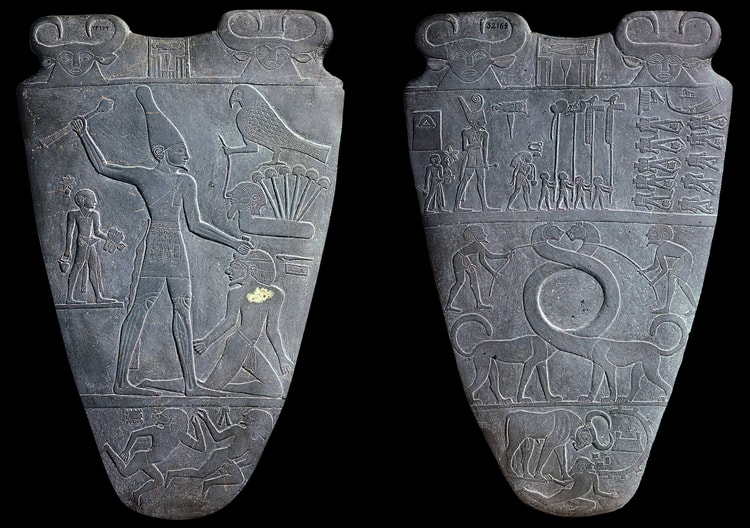 নার্মার প্যালেট \[দুই পক্ষ\] Unknown Artist (Public Domain) ](https://www.worldhistory.org/image/4412/narmer-palette-two-sides/ "Narmer Palette [Two Sides]")মানেথোর কাজটি একমাত্র উত্স যা মেনেস এবং বিজয়ের উদ্ধৃতি দেয় এবং এখন মনে করা হয় যে মানেথো "মেনেস" হিসাবে উল্লেখ করা ব্যক্তি ছিলেন রাজা নার্মার, যিনি উচ্চ এবং নিম্ন মিশরকে একটি শাসনের অধীনে একত্রিত করেছিলেন। নর্মারের সাথে মেনেসের পরিচয় সর্বজনীনভাবে গৃহীত নয়, তবে মেনেসকে বিশ্বাসযোগ্যভাবে রাজা হোর-আহা (প্রায় 3100-3050 খ্রিস্টপূর্বাব্দ) এর সাথে যুক্ত করা হয়েছে, যিনি তাঁর উত্তরসূরি হয়েছিলেন। তার পূর্বসূরি এবং উত্তরসূরির সাথে মেনেসের সম্পর্কের একটি ব্যাখ্যা হ'ল মেনেস একটি সম্মানসূচক উপাধি যার অর্থ "যিনি সহ্য করেন" এবং কোনও ব্যক্তিগত নাম নয়, এবং তাই একাধিক রাজাকে বোঝাতে ব্যবহার করা যেতে পারে।
সামরিক অভিযান দ্বারা ভূমিটি একীভূত হয়েছিল এমন দাবিটিও বিতর্কিত, কারণ বিখ্যাত নার্মার প্যালেট, একটি সামরিক বিজয়কে চিত্রিত করে, কিছু পণ্ডিত রাজকীয় প্রচার হিসাবে বিবেচনা করেন। দেশটি প্রথমে শান্তিপূর্ণভাবে ঐক্যবদ্ধ হতে পারে, তবে এটি অসম্ভব বলে মনে হচ্ছে।
প্রাচীন মিশরের ভৌগোলিক পদবী নীল নদের দিক অনুসরণ করে, এবং তাই উচ্চ মিশর দক্ষিণ অঞ্চল, এবং নিম্ন মিশর ভূমধ্যসাগরের নিকটবর্তী উত্তর অঞ্চল। নার্মার হেইরাকোনোপলিস শহর থেকে এবং তারপরে মেমফিস এবং অ্যাবিডোস থেকে শাসন করেছিলেন।
মিশরের প্রারম্ভিক রাজবংশীয় যুগের শাসকদের অধীনে বাণিজ্য উল্লেখযোগ্যভাবে বৃদ্ধি পেয়েছিল এবং বিস্তৃত মাস্তাবা সমাধিগুলি, পরবর্তী পিরামিডগুলির পূর্বসূরী, মিশরীয় সমাধি অনুশীলনে বিকশিত হয়েছিল, যার মধ্যে ক্রমবর্ধমান বিস্তৃত মমিকরণ কৌশল অন্তর্ভুক্ত ছিল।
### **দেবতা**
প্রাচীন মিশরীয়দের কাছে, তাদের দেশ ছিল দেবতাদের দেশ, পৃথিবীর সবচেয়ে নিখুঁত জায়গা। মিশরের প্রাক-রাজবংশীয় যুগ থেকে (প্রায় 6000 খ্রিস্টপূর্বাব্দ থেকে প্রায় 3150 খ্রিস্টপূর্বাব্দ), দেবতাদের প্রতি বিশ্বাস মিশরীয় সংস্কৃতিকে সংজ্ঞায়িত করে। প্রারম্ভিক মিশরীয় সৃষ্টির একটি পৌরাণিক কাহিনী দেবতা আতুমের কথা বলে, যিনি সময়ের শুরুর আগে ঘূর্ণায়মান বিশৃঙ্খলার মধ্যে দাঁড়িয়ে ছিলেন এবং সৃষ্টির অস্তিত্বের কথা বলেছিলেন। আতুমের সাথে *হেকা* (যাদু) এর চিরন্তন শক্তি ছিল , যা দেবতা হেকা এবং অন্যান্য আধ্যাত্মিক শক্তি দ্বারা মূর্ত হয়েছিল যা বিশ্বকে প্রাণবন্ত করবে। *হেকা* ছিল সেই প্রাথমিক শক্তি যা মহাবিশ্বকে প্রভাবিত করেছিল এবং সমস্ত জিনিসকে তাদের মতো করে কাজ করেছিল; এটি মিশরীয় সংস্কৃতির কেন্দ্রীয় মূল্যের জন্যও অনুমতি দিয়েছিল: মা'আত, ভারসাম্য এবং সম্প্রীতি।
সমস্ত দেবতা এবং তাদের সমস্ত দায়িত্ব *মা'আত এবং হেকার* কাছে ফিরে গেল । সূর্য যেমন উদয় হয়েছিল এবং অস্ত গিয়েছিল, চাঁদ আকাশ জুড়ে তার গতিপথ ভ্রমণ করেছিল এবং ঋতুগুলি ভারসাম্য এবং শৃঙ্খলা অনুসারে এসেছিল এবং যায়, যা এই দুটি সংস্থার কারণে সম্ভব হয়েছিল। মা'আতকে একজন দেবতা হিসাবেও মূর্ত করা হয়েছিল, উটপাখির পালকের দেবী, যাকে প্রতিটি রাজা তার সম্পূর্ণ ক্ষমতা এবং ভক্তির প্রতিশ্রুতি দিয়েছিলেন। রাজা জীবনে দেবতা [হোরাস](https://www.worldhistory.org/trans/bn/1-11203/) এবং মৃত্যুতে ওসাইরিসের সাথে যুক্ত ছিলেন একটি পৌরাণিক কাহিনীর উপর ভিত্তি করে যা মিশরীয় ইতিহাসে সর্বাধিক জনপ্রিয় হয়ে ওঠে।
[  ইজিপ্টের দেবতা ওসাইরিস A.K. (Copyright) ](https://www.worldhistory.org/image/775/egyptian-god-osiris/ "Egyptian God Osiris")ওসাইরিস এবং তার বোন-স্ত্রী আইসিস ছিলেন মূল রাজা যারা বিশ্বকে শাসন করেছিলেন এবং জনগণকে সভ্যতার উপহার দিয়েছিলেন। ওসাইরিসের ভাই সেট তার প্রতি ঈর্ষান্বিত হয়েছিল এবং তাকে হত্যা করেছিল, তবে আইসিস তাকে জীবিত করেছিল, যিনি তার পুত্র [হোরা](https://www.worldhistory.org/trans/bn/1-21729/)সকে জন্ম দিয়েছিলেন। ওসাইরিস অবশ্য অসম্পূর্ণ ছিল এবং তাই পাতাল জগতে শাসন করতে নেমে এসেছিল যখন হোরাস একবার পরিপক্ক হয়ে গেলে তার বাবার প্রতিশোধ নিয়েছিল এবং সেটকে পরাজিত করেছিল।
এই পৌরাণিক কাহিনীটি চিত্রিত করেছিল যে কীভাবে শৃঙ্খলা বিশৃঙ্খলার উপর বিজয়ী হয়েছিল এবং মিশরীয় ধর্ম, মর্গের আচার, ধর্মীয় গ্রন্থ এবং শিল্পে একটি অবিরাম মোটিফে পরিণত হয়েছিল। এমন কোনও সময় ছিল না যেখানে দেবতারা মিশরীয়দের দৈনন্দিন জীবনে অবিচ্ছেদ্য ভূমিকা পালন করেনি এবং এটি দেশের ইতিহাসের প্রথম দিকের সময় থেকে স্পষ্টভাবে দেখা যায়।
### **পুরাতন রাজ্য**
মিশরের পুরাতন কিংডম (প্রায় 2613-2181 খ্রিস্টপূর্বাব্দ) নামে পরিচিত সময়কালে, দেবতাদের সম্মান জানাতে স্থাপত্য বর্ধিত হারে বিকশিত হয়েছিল এবং মিশরের কয়েকটি বিখ্যাত স্মৃতিসৌধ যেমন পিরামিড এবং গিজার গ্রেট স্ফিংক্স নির্মিত হয়েছিল।
রাজা জোসার, যিনি প্রায় 2670 খ্রিস্টপূর্বাব্দে রাজত্ব করেছিলেন, প্রায় 2670 সালে সাক্কারায় প্রথম স্টেপ পিরামিড তৈরি করেছিলেন, যা তার প্রধান স্থপতি এবং চিকিত্সক ইমহোটেপ (প্রায় 2667-2600 খ্রিস্টপূর্বাব্দ) দ্বারা ডিজাইন করা হয়েছিল, যিনি 200 টিরও বেশি বিভিন্ন রোগের চিকিত্সার বর্ণনা দিয়ে প্রথম চিকিত্সা গ্রন্থগুলির মধ্যে একটি লিখেছিলেন এবং যুক্তি দিয়েছিলেন যে রোগের কারণটি প্রাকৃতিক হতে পারে, দেবতাদের ইচ্ছা নয়।
খুফুর গ্রেট পিরামিড (প্রাচীন বিশ্বের সাতটি আশ্চর্যের মধ্যে শেষ) তার রাজত্বকালে (2589-2566 খ্রিস্টপূর্বাব্দ) নির্মিত হয়েছিল, খাফ্রে (2558-2532 খ্রিস্টপূর্বাব্দ) এবং মেনকাউরে (2532-2503 খ্রিস্টপূর্বাব্দ) এর পিরামিডগুলি অনুসরণ করা হয়েছিল।
[  পিরামিড, গিজা, মিশর Shellapic76 (CC BY) ](https://www.worldhistory.org/image/5687/the-pyramids-giza-egypt/ "The Pyramids, Giza, Egypt")গিজা মালভূমিতে পিরামিডগুলির জাঁকজমকপূর্ণ, যেমনটি [তারা](https://www.worldhistory.org/trans/bn/1-19947/) প্রথমে আবির্ভূত হত, চকচকে সাদা চুনাপাথরে আবৃত, এই সময়ের শাসকদের শক্তি এবং সম্পদের প্রমাণ। এই স্মৃতিসৌধ এবং সমাধিগুলি কীভাবে নির্মিত হয়েছিল সে সম্পর্কে অনেক তত্ত্ব রয়েছে, তবে আধুনিক স্থপতি এবং পণ্ডিতরা কোনও একটির সাথে একমত নন। তখনকার প্রযুক্তি বিবেচনা করে, কেউ কেউ যুক্তি দেখিয়েছেন, গিজার গ্রেট পিরামিডের মতো একটি স্মৃতিসৌধের অস্তিত্ব থাকা উচিত নয়। কিন্তু, অন্যরা দাবি করে যে, এই ধরনের দালান ও সমাধিগুলোর অস্তিত্ব সময়ের সঙ্গে হারিয়ে যাওয়া উচ্চতর প্রযুক্তির ইঙ্গিত দেয়।
গিজা মালভূমির স্মৃতিসৌধগুলি বা মিশরের অন্য কোনও স্মৃতিসৌধ দাস শ্রম দ্বারা নির্মিত হয়েছিল এমন কোনও প্রমাণ নেই, বা [বাইবেল](https://www.worldhistory.org/trans/bn/1-191/)ের যাত্রাপুস্তকের বইয়ের ঐতিহাসিক পাঠকে সমর্থন করার জন্য কোনও প্রমাণ নেই। বেশিরভাগ নামী পণ্ডিতরা আজ এই দাবিটি প্রত্যাখ্যান করেন যে পিরামিড এবং অন্যান্য স্মৃতিসৌধগুলি দাস শ্রম দ্বারা নির্মিত হয়েছিল, যদিও বিভিন্ন জাতীয়তার দাসরা অবশ্যই মিশরে বিদ্যমান ছিল এবং খনিতে নিয়মিত নিযুক্ত ছিল।
মিশরীয় স্মৃতিসৌধগুলি রাষ্ট্রের জন্য তৈরি গণপূর্ত হিসাবে বিবেচিত হত এবং নির্মাণে দক্ষ এবং অদক্ষ উভয় মিশরীয় শ্রমিককে ব্যবহার করেছিল, যাদের সকলকেই তাদের শ্রমের জন্য অর্থ প্রদান করা হত। গিজা সাইটের শ্রমিকরা, যা অনেকের মধ্যে একজন, দিনে তিনবার [বিয়ার](https://www.worldhistory.org/trans/bn/1-10181/)ের রেশন দেওয়া হয়েছিল এবং তাদের আবাসন, সরঞ্জাম এবং এমনকি তাদের স্বাস্থ্যসেবার স্তরের জন্য বরাদ্দ করা তহবিল সবই স্পষ্টভাবে প্রতিষ্ঠিত হয়েছে।
### **প্রথম মধ্যবর্তী থেকে দ্বিতীয় মধ্যবর্তী সময়কাল**
[মিশরের প্রথম মধ্যবর্তী যুগ](https://www.worldhistory.org/trans/bn/1-15056/) (2181-2040 খ্রিস্টপূর্বাব্দ) হিসাবে পরিচিত যুগটি তার পতনের পরে কেন্দ্রীয় সরকারের ক্ষমতা হ্রাস পেয়েছিল। দুটি দুর্দান্ত কেন্দ্র আবির্ভূত না হওয়া পর্যন্ত তাদের নিজস্ব গভর্নরদের সাথে বেশিরভাগ স্বাধীন জেলা মিশর জুড়ে বিকশিত হয়েছিল: নিম্ন মিশরের হিয়েরাকনপোলিস এবং উচ্চ মিশরের থিবস।
এই কেন্দ্রগুলি তাদের নিজস্ব রাজবংশ প্রতিষ্ঠা করেছিল, যা তাদের অঞ্চলগুলি স্বাধীনভাবে শাসন করেছিল এবং প্রায় 2040 খ্রিস্টপূর্বাব্দ অবধি সর্বোচ্চ নিয়ন্ত্রণের জন্য একে অপরের সাথে লড়াই করেছিল, যখন থিবান রাজা দ্বিতীয় মেন্টুহোটেপ (প্রায় 2061-2010 খ্রিস্টপূর্বাব্দ) হিয়েরাকনপোলিসের বাহিনীকে পরাজিত করেছিলেন এবং থিবসের শাসনের অধীনে মিশরকে একত্রিত করেছিলেন।
থিবান শাসন দ্বারা প্রদত্ত স্থিতিশীলতা [মিশরের মধ্য রাজ্য](https://www.worldhistory.org/trans/bn/1-15057/) (2040-1782 খ্রিস্টপূর্বাব্দ) হিসাবে পরিচিত বিকাশের অনুমতি দেয়। মধ্য রাজ্যকে মিশরের "ধ্রুপদী যুগ" হিসাবে বিবেচনা করা হয় যখন শিল্প ও সংস্কৃতি চরম উচ্চতায় পৌঁছেছিল এবং থিবস দেশের সবচেয়ে গুরুত্বপূর্ণ এবং ধনী শহরে পরিণত হয়েছিল। পণ্ডিত ওকস এবং গাহলিনের মতে:
> দ্বাদশ রাজবংশের রাজারা শক্তিশালী শাসক ছিলেন যারা কেবল পুরো মিশরের উপরই নয়, দক্ষিণে নুবিয়ার উপরও নিয়ন্ত্রণ প্রতিষ্ঠা করেছিলেন, যেখানে মিশরীয় বাণিজ্যিক স্বার্থ রক্ষার জন্য বেশ কয়েকটি দুর্গ নির্মিত হয়েছিল।
> (11)
মধ্য রাজ্যের সময় রাজা প্রথম আমেনেমহাট (প্রায় 1991-1962 খ্রিস্টপূর্বাব্দ) দ্বারা প্রথম স্থায়ী সেনাবাহিনী তৈরি করা হয়েছিল, কর্নাকের মন্দিরটি প্রথম সেনরুসেটের অধীনে শুরু হয়েছিল (প্রায় 1971-1926 খ্রিস্টপূর্বাব্দ), এবং কিছু সেরা মিশরীয় [সাহিত্য](https://www.worldhistory.org/trans/bn/1-562/) ও শিল্প তৈরি হয়েছিল। 13 তম রাজবংশ অবশ্য 12 তম রাজবংশের চেয়ে দুর্বল ছিল এবং অভ্যন্তরীণ সমস্যার দ্বারা বিভ্রান্ত হয়েছিল, যা [হাইকসোস](https://www.worldhistory.org/trans/bn/1-15689/) নামে পরিচিত একটি বিদেশী লোককে নীল বদ্বীপের আশেপাশে নিম্ন মিশরে ক্ষমতা অর্জনের অনুমতি দেয়।
হাইকসোস একটি রহস্যময় জাতি যারা 1800 সালের দিকে মিশরে প্রথম আবির্ভূত হয়েছিল এবং আভারিস শহরে বসতি স্থাপন করেছিল। যদিও হাইকসোস রাজাদের নামগুলি মূলত সেমিটিক, তবে তাদের জন্য কোনও নির্দিষ্ট জাতিসত্তা প্রতিষ্ঠিত হয়নি। প্রায় 1720 খ্রিস্টপূর্বাব্দের মধ্যে নিম্ন মিশরের একটি উল্লেখযোগ্য অংশ নিয়ন্ত্রণ করতে সক্ষম না হওয়া পর্যন্ত হাইকসোস ক্ষমতায় বৃদ্ধি পেয়েছিল, যা উচ্চ মিশরের থিবান রাজবংশকে প্রায় একটি সামন্ত রাষ্ট্রে পরিণত করেছিল।
[ 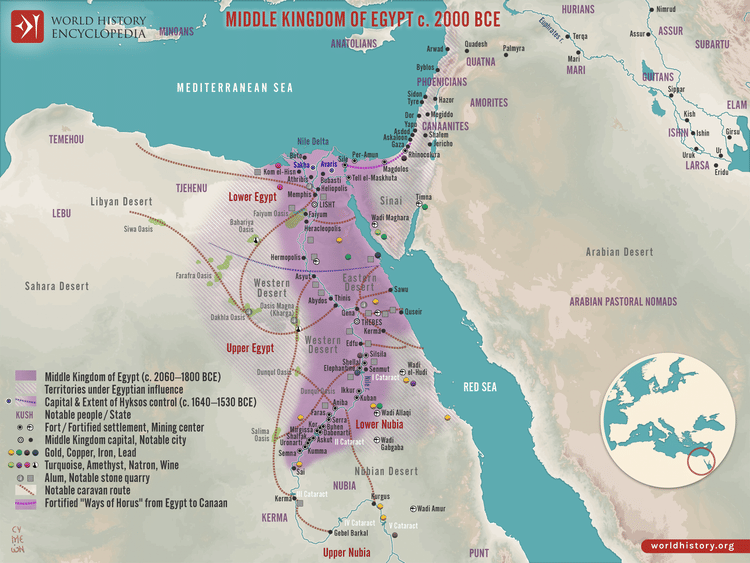 মিশরের মধ্য রাজ্যের মানচিত্র, আনুমানিক 2000 খ্রিস্টপূর্বাব্দ Simeon Netchev (CC BY-NC-ND) ](https://www.worldhistory.org/image/19956/map-of-the-middle-kingdom-of-egypt-c-2000-bce/ "Map of the Middle Kingdom of Egypt, c. 2000 BCE")এই যুগটি [মিশরের দ্বিতীয় মধ্যবর্তী যুগ](https://www.worldhistory.org/trans/bn/1-15058/) (প্রায় 1782 থেকে প্রায় 1570 খ্রিস্টপূর্বাব্দ) নামে পরিচিত। যদিও হাইকসোস (যার নামের অর্থ কেবল "বিদেশী শাসক") মিশরীয়দের দ্বারা ঘৃণা করা হয়েছিল, তারা সংস্কৃতিতে প্রচুর উন্নতি প্রবর্তন করেছিল, যেমন যৌগিক ধনুক, ঘোড়া এবং রথ, ফসলের ঘূর্ণন এবং ব্রোঞ্জ এবং সিরামিক কাজের বিকাশ।
একই সময়ে হাইকসোস নিম্ন মিশরের বন্দরগুলি নিয়ন্ত্রণ করেছিল, 1700 খ্রিস্টপূর্বাব্দের মধ্যে, কুশ রাজ্য নুবিয়ার থিবসের দক্ষিণে উত্থিত হয়েছিল এবং এখন সেই সীমানা দখল করেছিল। মিশরীয়রা হাইকসোসকে তাড়ানোর জন্য এবং নুবিয়ানদের বশীভূত করার জন্য বেশ কয়েকটি অভিযান চালিয়েছিল, তবে থিবসের প্রিন্স প্রথম আহমোস (প্রায় 1570-1544 খ্রিস্টপূর্বাব্দ) সফল না হওয়া পর্যন্ত এবং থিবান শাসনের অধীনে দেশকে একীভূত না করা পর্যন্ত সবই ব্যর্থ হয়েছিল।
### **দ্য নিউ কিংডম অ্যান্ড দ্য অমরনা পিরিয়ড**
আহমোস প্রথম মিশরের নতুন কিংডমের সময়কাল (প্রায় 1570 থেকে প্রায় 1069 খ্রিস্টপূর্বাব্দ) হিসাবে পরিচিত শুরু করেছিলেন, যা আবার একটি শক্তিশালী কেন্দ্রীয় সরকারের অধীনে দেশে প্রচুর সমৃদ্ধি দেখেছিল। মিশরের শাসকের জন্য ফেরাউন উপাধিটি নতুন রাজ্যের সময় থেকে এসেছে; পূর্ববর্তী রাজারা কেবল রাজা হিসাবে পরিচিত ছিল। মিশরীয় সার্বভৌমদের অনেকে আজ সর্বাধিক পরিচিত এই সময়কালে শাসন করেছিলেন এবং মিশরীয় স্থাপত্যের বেশিরভাগ দুর্দান্ত কাঠামো যেমন [রাম](https://www.worldhistory.org/trans/bn/1-14021/)েসিয়াম, আবু সিম্বেল, [কার্নাক](https://www.worldhistory.org/trans/bn/1-13167/) এবং লুক্সরের মন্দির এবং রাজাদের উপত্যকা এবং রানীদের উপত্যকার সমাধিগুলি এই সময়ে তৈরি করা হয়েছিল বা ব্যাপকভাবে উন্নত হয়েছিল।
1504 এবং 1492 খ্রিস্টপূর্বাব্দের মধ্যে, ফেরাও থুটমোস প্রথম (তুথমোসিস প্রথম) তার ক্ষমতা সুসংহত করেছিলেন এবং মিশরের সীমানা উত্তরে ইউফ্রেটিস নদী, উত্তর-পূর্বে কানান এবং দক্ষিণে নুবিয়া পর্যন্ত প্রসারিত করেছিলেন। তাঁর রাজত্বকালের পরে রানী হাটশেপসুট (1479-1458 খ্রিস্টপূর্বাব্দ), যিনি অন্যান্য জাতির সাথে বাণিজ্য ব্যাপকভাবে প্রসারিত করেছিলেন, বিশেষত পুন্টের ভূমি। তার 22 বছরের রাজত্ব ছিল মিশরের জন্য শান্তি এবং সমৃদ্ধির।
[  রানী হাটশেপসুটের প্রতিকৃতি Rob Koopman (CC BY-SA) ](https://www.worldhistory.org/image/572/portrait-of-queen-hatshepsut/ "Portrait of Queen Hatshepsut")তার উত্তরসূরি, তৃতীয় থুটমোস (তুথমোসিস তৃতীয়), তার নীতিগুলি চালিয়ে যান (যদিও তিনি তার সমস্ত স্মৃতি মুছে ফেলার চেষ্টা করেছিলেন, কারণ এটি মনে করা হয়, তিনি চাননি যে তিনি অন্য মহিলাদের জন্য রোল মডেল হিসাবে কাজ করুন কারণ কেবল পুরুষরাই শাসনের যোগ্য বলে বিবেচিত হত), এবং 1425 খ্রিস্টপূর্বাব্দে তাঁর মৃত্যুর সময়, মিশর একটি মহান এবং শক্তিশালী জাতি ছিল। সমৃদ্ধির ফলে অন্যান্য বিষয়ের মধ্যে, বিভিন্ন ধরণের বিয়ার তৈরি করা বৃদ্ধি পায় এবং খেলাধুলার জন্য আরও অবসর সময় পাওয়া যায়। ঔষধের অগ্রগতির ফলে স্বাস্থ্যের উন্নতি ঘটে।
প্রাচীন মিশরে স্নান দীর্ঘকাল ধরে দৈনন্দিন জীবনের একটি গুরুত্বপূর্ণ অংশ ছিল, কারণ এটি মিশরীয় ধর্ম দ্বারা উত্সাহিত হয়েছিল এবং তাদের যাজকদের দ্বারা মডেল করা হয়েছিল। এই সময়ে, তবে, আরও বিস্তৃত স্নান তৈরি করা হয়েছিল, সম্ভবত কেবল স্বাস্থ্যবিধির চেয়ে অবসরের জন্য আরও বেশি। মহিলাদের স্বাস্থ্য এবং গর্ভনিরোধক সম্পর্কিত কাহুন গাইনোকোলজিকাল প্যাপিরাস প্রায় 1800 খ্রিস্টপূর্বাব্দে [লেখা](https://www.worldhistory.org/trans/bn/1-72/) হয়েছিল এবং এই সময়কালে, এটি ডাক্তারদের দ্বারা ব্যাপকভাবে ব্যবহার করা হয়েছিল বলে মনে হয়। অস্ত্রোপচার এবং দন্তচিকিত্সা উভয়ই ব্যাপকভাবে এবং দুর্দান্ত দক্ষতার সাথে অনুশীলন করা হয়েছিল এবং 200 টিরও বেশি বিভিন্ন রোগের লক্ষণগুলি সহজ করার জন্য চিকিত্সকদের দ্বারা বিয়ার নির্ধারিত হয়েছিল।
[ 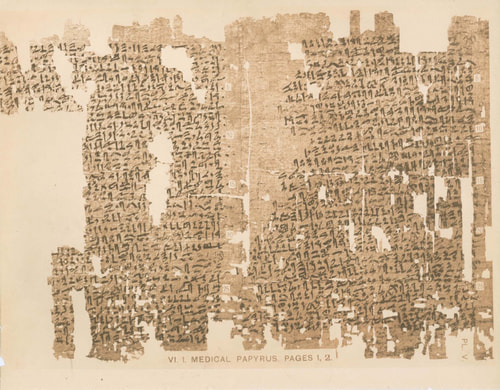 কাহুন গাইনোকোলজিকাল প্যাপিরাস Francis Llewellyn Griffith (Public Domain) ](https://www.worldhistory.org/image/6367/kahun-gynaecological-papyrus/ "Kahun Gynaecological Papyrus")1353 খ্রিস্টপূর্বাব্দে, ফেরাও চতুর্থ আমেনহোটেপ সিংহাসনে সফল হন এবং এর কিছুদিন পরে, একক দেবতা আতেনের প্রতি তার বিশ্বাসকে প্রতিফলিত করার জন্য তার নাম পরিবর্তন করে আখেনাটেন ("আতেনের জীবন্ত আত্মা")। উপরে উল্লিখিত হিসাবে, মিশরীয়রা ঐতিহ্যগতভাবে অনেক দেবতায় বিশ্বাস করত যাদের গুরুত্ব তাদের দৈনন্দিন জীবনের প্রতিটি দিককে প্রভাবিত করেছিল। এই দেবতাদের মধ্যে সবচেয়ে জনপ্রিয় ছিল আমুন, ওসাইরিস, আইসিস এবং হাথোর। এই সময়ে আমুনের ধর্ম এতটাই ধনী হয়ে উঠেছিল যে পুরোহিতরা প্রায় ফেরাউনের মতোই শক্তিশালী ছিল। আখেনাতেন এবং তার রানী নেফারতিতি মিশরের ঐতিহ্যবাহী ধর্মীয় বিশ্বাস এবং রীতিনীতি ত্যাগ করেছিলেন এবং আতেনকে একক, সত্য দেবতা হিসাবে স্বীকৃতির উপর ভিত্তি করে একটি নতুন একেশ্বরবাদী বিশ্বাস ব্যবস্থা প্রতিষ্ঠা করেছিলেন।
তাঁর ধর্মীয় সংস্কারগুলি কার্যকরভাবে আমুনের পুরোহিতদের ক্ষমতা কেটে দেয় এবং এটি তার হাতে তুলে দেয়। তিনি তার পূর্বসূরিদের থেকে তার শাসনকে আরও দূরে সরিয়ে রাখার জন্য রাজধানী থিবস থেকে অমরনায় স্থানান্তরিত করেছিলেন। এটি অমরনা পিরিয়ড (1353-1336 খ্রিস্টপূর্বাব্দ) নামে পরিচিত, যার সময় অমরনা দেশের রাজধানী হিসাবে বৃদ্ধি পেয়েছিল এবং বহুঈশ্বরবাদী ধর্মীয় রীতিনীতি নিষিদ্ধ করা হয়েছিল।
তাঁর অনেক কৃতিত্বের মধ্যে, আখেনাটেন ছিলেন প্রথম শাসক যিনি কেবল নিজের বা দেবতাদের জন্য নয়, তাঁর রানীর সম্মানে মূর্তি এবং একটি মন্দির প্রণয়নের আদেশ দিয়েছিলেন এবং তিনি একসময় মন্দিরে যাওয়া অর্থ গণপূর্তি এবং উদ্যানের জন্য ব্যবহার করেছিলেন।
কেন্দ্রীয় সরকারের ক্ষমতা বাড়ার সাথে সাথে যাজকদের ক্ষমতা তীব্রভাবে হ্রাস পেয়েছিল, যা আখেনাটেনের লক্ষ্য বলে মনে হয়েছিল, তবে তিনি তার জনগণের সর্বোত্তম স্বার্থের জন্য তার ক্ষমতা ব্যবহার করতে ব্যর্থ হন। *অমরনা* *চিঠিগুলি* স্পষ্ট করে দেয় যে তিনি বৈদেশিক নীতি বা মিশরের জনগণের প্রয়োজনের চেয়ে তার ধর্মীয় সংস্কার নিয়ে বেশি উদ্বিগ্ন ছিলেন।
তাঁর রাজত্বের পরে তাঁর পুত্র, আধুনিক দিনের সবচেয়ে স্বীকৃত মিশরীয় শাসক তুতানখামুন, যিনি প্রায় 1336 থেকে প্রায় 1327 খ্রিস্টপূর্বাব্দ পর্যন্ত রাজত্ব করেছিলেন। তার পিতার ধর্মীয় বিশ্বাসকে প্রতিফলিত করার জন্য তার নামকরণ করা হয়েছিল তুতানখাতেন, তবে সিংহাসনে আরোহণের পরে, তিনি প্রাচীন দেবতা আমুনের সম্মানে তার নাম পরিবর্তন করে তুতানখামুন রেখেছিলেন। তিনি প্রাচীন মন্দিরগুলি পুনরুদ্ধার করেছিলেন, তার পিতার একক দেবতার সমস্ত উল্লেখ মুছে ফেলেছিলেন এবং রাজধানীটি থিবসের কাছে ফিরিয়ে দিয়েছিলেন। তাঁর মৃত্যুর ফলে তাঁর রাজত্ব সংক্ষিপ্ত হয়ে গিয়েছিল এবং আজ, তিনি 1922 সালে আবিষ্কৃত তাঁর সমাধির অক্ষত জাঁকজমকের জন্য সর্বাধিক বিখ্যাত, যা সেই সময়ে একটি আন্তর্জাতিক সংবেদন হয়ে ওঠে।
[  তুতানখামুনের মৃত্যুর মুখোশ Richard IJzermans (CC BY-NC-SA) ](https://www.worldhistory.org/image/1048/death-mask-of-tutankhamun/ "Death Mask of Tutankhamun")তবে নতুন রাজ্যের সর্বশ্রেষ্ঠ শাসক ছিলেন দ্বিতীয় রামেসিস (রামেসেস দ্য গ্রেট নামেও পরিচিত, 1279-1213 খ্রিস্টপূর্বাব্দ), যিনি যে কোনও মিশরীয় শাসকের সবচেয়ে বিস্তৃত বিল্ডিং প্রকল্প শুরু করেছিলেন এবং যিনি এত দক্ষতার সাথে শাসন করেছিলেন যে তার এটি করার উপায় ছিল। যদিও 1274 খ্রিস্টপূর্বাব্দের বিখ্যাত কাদেশের যুদ্ধ (মিশরের দ্বিতীয় রামেসিস এবং হিত্তীয়দের দ্বিতীয় মুওয়াতাল্লির মধ্যে) আজ একটি ড্র হিসাবে বিবেচিত হয়, রামেসিস এটিকে একটি মহান মিশরীয় বিজয় হিসাবে বিবেচনা করেছিলেন এবং নিজেকে জনগণের চ্যাম্পিয়ন হিসাবে এবং অবশেষে দেবতা হিসাবে উদযাপন করেছিলেন।
তার আবু সিম্বেল মন্দির (তার রানী নেফারতারির জন্য নির্মিত) কাদেহের যুদ্ধকে চিত্রিত করে এবং আখেনাটেনের উদাহরণ অনুসরণ করে সাইটের ছোট মন্দিরটি তাকে উত্সর্গ করা হয়েছে। দ্বিতীয় রামেসিসের রাজত্বকালে বিশ্বের প্রথম শান্তি চুক্তি (কাদেশ চুক্তি) 1258 খ্রিস্টপূর্বাব্দে স্বাক্ষরিত হয়েছিল এবং মিশর প্রায় অভূতপূর্ব সমৃদ্ধি উপভোগ করেছিল যা তার শাসনামলে নির্মিত বা পুনরুদ্ধার করা স্মৃতিসৌধের সংখ্যা দ্বারা প্রমাণিত হয়।
দ্বিতীয় রামসেসের চতুর্থ পুত্র, খায়েমওয়েসেট (প্রায় 1281 থেকে প্রায় 1225 খ্রিস্টপূর্বাব্দ), পুরানো স্মৃতিসৌধ, মন্দির এবং তাদের মূল মালিকদের নাম সংরক্ষণ এবং রেকর্ড করার প্রচেষ্টার জন্য "প্রথম মিশরবিদ" হিসাবে পরিচিত। মূলত খায়েমওয়েসেটের উদ্যোগের কারণেই মিশরের অনেক প্রাচীন স্থানে দ্বিতীয় রামেসেসের নাম এত বিশিষ্ট রয়েছে। খায়েমওয়েসেট তার নিজের প্রচেষ্টার একটি রেকর্ড রেখে গেছেন, স্মৃতিসৌধ বা মন্দিরের মূল নির্মাতা / মালিক এবং তার বাবার নামও।
[ 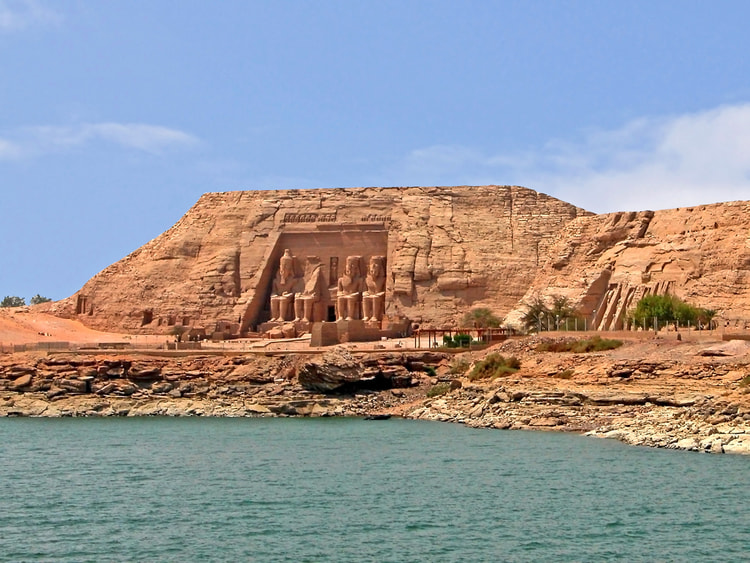 আবু সিম্বেল প্যানোরামা Dennis Jarvis (CC BY-SA) ](https://www.worldhistory.org/image/1008/abu-simbel-panorama/ "Abu Simbel Panorama")দ্বিতীয় রামেসিস পরবর্তী প্রজন্মের কাছে "মহান পূর্বপুরুষ" হিসাবে পরিচিত হয়েছিলেন এবং এত দীর্ঘ সময় ধরে রাজত্ব করেছিলেন যে তিনি তার বেশিরভাগ সন্তান এবং স্ত্রীদের ছাড়িয়ে গিয়েছিলেন। সময়ের সাথে সাথে, তার সমস্ত প্রজা কেবল দ্বিতীয় রামেসিসকে তাদের শাসক হিসাবে জানতে পেরেছিল এবং অন্যের কোনও স্মৃতি ছিল না। তিনি 96 বছরের ব্যতিক্রমী দীর্ঘ জীবন উপভোগ করেছিলেন, যা প্রাচীন মিশরীয়দের গড় জীবনকালের দ্বিগুণেরও বেশি। তাঁর মৃত্যুর পর অনেকে ভয় পেয়েছিল যে, জগতের শেষ আসবে বলে অনেকে ভয় পেয়েছিল, কারণ তারা অন্য কোন ফরৌনকে চিনত না।
### **রামেসিড পিরিয়ড এবং সি পিপলস**
তার উত্তরসূরিদের মধ্যে একজন, তৃতীয় রামেসিস (1186-1155 খ্রিস্টপূর্বাব্দ), তার নীতিগুলি অনুসরণ করেছিলেন, তবে, এই সময়ের মধ্যে, মিশরের বিশাল সম্পদ সমুদ্রের জনগণের দৃষ্টি আকর্ষণ করেছিল, যারা উপকূল বরাবর নিয়মিত আক্রমণ শুরু করেছিল। হাইকসোসের মতো সমুদ্রের জনগোষ্ঠী অজানা উত্স তবে দক্ষিণ এজিয়ান অঞ্চল থেকে এসেছিল বলে মনে করা হয়।
1276 এবং 1178 খ্রিস্টপূর্বাব্দের মধ্যে, সী পিপলস মিশরীয় নিরাপত্তার জন্য হুমকি ছিল। দ্বিতীয় রামেসিস তার রাজত্বের গোড়ার দিকে একটি নৌ যুদ্ধে তাদের পরাজিত করেছিলেন, যেমন তার উত্তরসূরি মেরেনপ্টাহ (1213-1203 খ্রিস্টপূর্বাব্দ)। তবে মেরেনপ্তাহের মৃত্যুর পরে, তারা তাদের প্রচেষ্টা বাড়িয়ে তোলে, কাদেশকে বরখাস্ত করে, যা তখন মিশরীয় নিয়ন্ত্রণে ছিল এবং উপকূলকে ধ্বংস করে। 1180 এবং 1178 খ্রিস্টপূর্বাব্দের মধ্যে, তৃতীয় রামেসিস তাদের সাথে লড়াই করেছিলেন, 1178 খ্রিস্টপূর্বাব্দে জাহির যুদ্ধে এবং 1175 খ্রিস্টপূর্বাব্দে বদ্বীপের যুদ্ধে তাদের পরাজিত করেছিলেন।
[  ব্রোঞ্জ যুগের শেষের ধসের মানচিত্র Simeon Netchev (CC BY-NC-ND) ](https://www.worldhistory.org/image/15310/map-of-the-late-bronze-age-collapse-and-transfroma/ "Map of the Late Bronze Age Collapse and Transfromation")তৃতীয় রামেসিসের রাজত্বের পরে, তার উত্তরসূরিরা তার নীতিগুলি বজায় রাখার চেষ্টা করেছিলেন তবে ক্রমবর্ধমানভাবে মিশরের জনগণ, বিজিত অঞ্চলগুলির এবং বিশেষত পুরোহিত শ্রেণির প্রতিরোধের মুখোমুখি হয়েছিল। তুতানখামুন আমুনের পুরানো ধর্ম পুনরুদ্ধার করার পরের বছরগুলিতে, এবং বিশেষত দ্বিতীয় রামেসিসের অধীনে সমৃদ্ধির মহান সময়ে, আমুনের পুরোহিতরা প্রচুর জমি অর্জন করেছিলেন এবং প্রচুর সম্পদ সংগ্রহ করেছিলেন, যা এখন কেন্দ্রীয় সরকারকে হুমকির মুখে ফেলেছে এবং মিশরের ঐক্যকে বিঘ্নিত করেছে। রামেসিস একাদশের (1107-1077 খ্রিস্টপূর্বাব্দ) সময়ে, 20 তম রাজবংশের শেষের দিকে, মিশরীয় সরকার যাজকদের ক্ষমতা এবং দুর্নীতির দ্বারা এতটাই দুর্বল হয়ে পড়েছিল যে দেশটি আবার ভেঙে পড়ে এবং কেন্দ্রীয় প্রশাসন ভেঙে পড়ে, প্রায় 1069-525 খ্রিস্টপূর্বাব্দে মিশরের তথাকথিত তৃতীয় মধ্যবর্তী যুগ শুরু করে।
### **মিশরের অবনতি ও আক্রমণ**
কুশাইট রাজা পাইয়ের অধীনে (752-722 খ্রিস্টপূর্বাব্দ), মিশর আবার একীভূত হয়েছিল এবং সংস্কৃতি বিকশিত হয়েছিল, তবে খ্রিস্টপূর্ব 671 এর শুরুতে, এসারহাদোনের অধীনে আসিরীয়রা মিশরে আক্রমণ শুরু করেছিল, খ্রিস্টপূর্ব 666 সালে এটি তার উত্তরসূরি [আশুর](https://www.worldhistory.org/trans/bn/1-148/)বানিপালের অধীনে জয় করেছিল। দেশের নিয়ন্ত্রণের জন্য কোনও দীর্ঘমেয়াদী পরিকল্পনা না করায় [আসিরিয়া](https://www.worldhistory.org/trans/bn/1-149/)নরা এটিকে স্থানীয় শাসকদের হাতে ধ্বংসের মধ্যে রেখে দেয় এবং মিশরকে তার ভাগ্যের উপর ছেড়ে দেয়।
মিশর পুনর্নির্মাণ এবং পুনর্নির্মাণ করেছিল এবং খ্রিস্টপূর্বাব্দ 525 সালে পেলুসিয়ামের যুদ্ধে পারস্যের দ্বিতীয় ক্যাম্বিসেস যখন আঘাত করেছিলেন তখন দেশটি এই অবস্থায় ছিল। মিশরীয়রা বিড়ালদের প্রতি শ্রদ্ধা রেখেছিল (যাদেরকে জনপ্রিয় দেবী বাস্টেটের জীবন্ত প্রতিনিধিত্ব বলে মনে করা হত), দ্বিতীয় ক্যাম্বিসেস তার লোকদের তাদের ঢালগুলিতে বিড়াল আঁকতে এবং সেনাবাহিনীর সামনে মিশরীয়দের জন্য পবিত্র বিড়াল এবং অন্যান্য প্রাণীদের পেলুসিয়ামের দিকে তাড়ানোর আদেশ দিয়েছিলেন। মিশরীয় বাহিনী আত্মসমর্পণ করে এবং দেশটি পারস্যদের হাতে পড়ে। খ্রিস্টপূর্ব 332 সালে [আলেকজান্ডার দ্য গ্রেট](https://www.worldhistory.org/trans/bn/1-265/)ের আগমন পর্যন্ত এটি পারস্যের দখলে ছিল।
আলেকজান্ডারকে মুক্তিদাতা হিসাবে স্বাগত জানানো হয়েছিল এবং কোনও লড়াই ছাড়াই মিশর জয় করেছিলেন। তিনি আলেকজান্দ্রিয়া শহর প্রতিষ্ঠা করেন এবং ফিনিশিয়া এবং পারস্য [সাম্রাজ্য](https://www.worldhistory.org/trans/bn/1-99/)ের বাকি অংশ জয় করার জন্য এগিয়ে যান। খ্রিস্টপূর্ব 323 সালে আলেকজান্ডার দ্য গ্রেটের মৃত্যুর পরে, তার সেনাপতি প্রথম টলেমি সোটার তার দেহ আলেকজান্দ্রিয়ায় ফিরিয়ে আনেন এবং টলেমিক রাজবংশ (323-30 খ্রিস্টপূর্বাব্দ) প্রতিষ্ঠা করেন।
টলেমিদের মধ্যে শেষ ছিলেন [ক্লিওপেট্রা সপ্তম](https://www.worldhistory.org/trans/bn/1-866/), যিনি [অ্যাক্টিয়ামের যুদ্ধ](https://www.worldhistory.org/trans/bn/1-10408/)ে (31 খ্রিস্টপূর্বাব্দে) অক্টাভিয়ানের অধীনে রোমানদের দ্বারা তার বাহিনী (এবং তার স্ত্রী মার্ক অ্যান্টনির) পরাজিত হওয়ার পরে 30 খ্রিস্টপূর্বাব্দে আত্মহত্যা করেছিলেন। মিশর তখন [রোমান সাম্রাজ্য](https://www.worldhistory.org/trans/bn/1-100/)ের একটি প্রদেশ (30 খ্রিস্টপূর্বাব্দ থেকে 476 খ্রিস্টাব্দ), তারপরে বাইজেন্টাইন সাম্রাজ্যের (প্রায় 527-646 খ্রিস্টাব্দ), যতক্ষণ না এটি 646 খ্রিস্টাব্দে খলিফা উমরের অধীনে আরব মুসলমানদের দ্বারা জয় করা হয় এবং ইসলামী শাসনের অধীনে পড়ে।
### **উপসংহার**
মিশরের অতীতের গৌরব অবশ্য 18 তম এবং 19 শতকে পুনরায় আবিষ্কৃত হয়েছিল এবং প্রাচীন ইতিহাস এবং বিশ্বের বর্তমান সময়ের বোঝার উপর গভীর প্রভাব ফেলেছে। ইতিহাসবিদ উইল ডুরান্ট একটি সাধারণ অনুভূতি প্রকাশ করেছেন:
> ইতিহাসের একেবারে প্রারম্ভে মিশর যা অর্জন করেছিল তার প্রভাব বা স্মরণ প্রতিটি জাতি এবং প্রতিটি যুগে প্রভাব ফেলেছিল। 'এটাও সম্ভব', যেমন ফৌর বলেছেন, 'মিশর, সংহতি, ঐক্য এবং তার শৈল্পিক পণ্যগুলির শৃঙ্খলাবদ্ধ বৈচিত্র্যের মাধ্যমে, তার প্রচেষ্টার বিশাল সময়কাল এবং টেকসই শক্তির মাধ্যমে, পৃথিবীতে এখনও আবির্ভূত সর্বশ্রেষ্ঠ সভ্যতার [দর্শন](https://www.worldhistory.org/trans/bn/1-340/) সরবরাহ করে। আমরা এর সমান করা ভাল।
> (217)
মিশরীয় সংস্কৃতি এবং ইতিহাস দীর্ঘকাল ধরে মানুষের জন্য একটি সর্বজনীন আকর্ষণ ধরে রেখেছে, 19 শতকের প্রাথমিক প্রত্নতাত্ত্বিক এবং পণ্ডিতদের কাজের মাধ্যমে (যেমন চ্যাম্পোলিয়ন, যিনি 1822 সালে রোজেটা স্টোন পাঠোদ্ধার করেছিলেন) বা 1922 সালে হাওয়ার্ড কার্টার দ্বারা তুতানখামুনের সমাধির বিখ্যাত আবিষ্কার। ঐশ্বরিক যাদু দ্বারা তৈরি এবং রক্ষণাবেক্ষণ করা একটি চিরন্তন যাত্রা হিসাবে প্রাচীন মিশরীয় বিশ্বাস পরবর্তী সংস্কৃতি এবং পরবর্তী ধর্মীয় বিশ্বাসকে অনুপ্রাণিত করেছিল।
[  হাওয়ার্ড কার্টার ও তুতানখামুন New York Times (Public Domain) ](https://www.worldhistory.org/image/6598/howard-carter--tutankhamun/ "Howard Carter & Tutankhamun")মিশরীয় ধর্মের বেশিরভাগ আইকনোগ্রাফি এবং বিশ্বাসগুলি খ্রিস্টান ধর্মের নতুন ধর্মে প্রবেশ করেছিল এবং তাদের অনেকগুলি প্রতীক আজ প্রায় একই অর্থের সাথে স্বীকৃত। এটি মিশরীয় সভ্যতার শক্তির একটি গুরুত্বপূর্ণ প্রমাণ যে চলচ্চিত্র থেকে শুরু করে বই থেকে চিত্রকলা, এমনকি ধর্মীয় বিশ্বাস পর্যন্ত কল্পনার অনেক কাজ মহাবিশ্ব এবং এতে মানবতার অবস্থান সম্পর্কে তার উচ্চতর এবং গভীর দৃষ্টিভঙ্গি দ্বারা অনুপ্রাণিত হয়েছে এবং অব্যাহত রয়েছে।
#### Editorial Review
This human-authored definition has been reviewed by our editorial team before publication to ensure accuracy, reliability and adherence to academic standards in accordance with our [editorial policy](https://www.worldhistory.org/static/editorial-policy/).
## গ্রন্থপঞ্জী
- [Bunson, M. *The Encyclopedia of Ancient Egypt.* Gramercy Books, 2000.](https://www.worldhistory.org/books/B01NH04966/)
- [David, R. *Handbook to Life in Ancient Egypt.* Oxford University Press, 2003.](https://www.worldhistory.org/books/0816050341/)
- [Durant, W. *Our Oriental Heritage.* Simon & Schuster, 2000.](https://www.worldhistory.org/books/1567310125/)
- [Flinders, Sir W. M. (William Matthew Flinders) Petrie. *The Religion of Ancient Egypt.* Public Domain Books, 2009.](https://www.worldhistory.org/books/B002RKTANY/)
- [Nardo, D. *Living in Ancient Egypt.* Thompson/Gale, 2004.](https://www.worldhistory.org/books/1601526385/)
- [Oakes, L. and Gahlin, L. *Ancient Egypt.* Hermes House, London, 2008.](https://www.worldhistory.org/books/1591431093/)
- [Shaw, I. *The Oxford History of Ancient Egypt.* Oxford University Press, 2006.](https://www.worldhistory.org/books/B000OKSGJ8/)
- [Silverman, D.P. *Ancient Egypt.* Oxford University Press, 2000.](https://www.worldhistory.org/books/B01K3MRL10/)
- [Strudwick, H. *The Encyclopedia of Ancient Egypt.* Metro Books, 2006.](https://www.worldhistory.org/books/B01MS1KVAK/)
- [Wilkinson, R. H. *The Complete Gods and Goddesses of Ancient Egypt.* Thames & Hudson, 2003.](https://www.worldhistory.org/books/0500051208/)
## লেখকের সম্পর্কে
জোসুয়া যে মার্ক একজন 'ফ্রিল্যান্স' লেখক এবং নিউ ইয়র্ক, মারিস্ট কলেজের প্রাক্তণ পার্ট-টাইম প্রফেসর অফ ফিলজফি। নিবাস গ্রীস এবং জার্মানি। ইজিপ্ট ভ্রমণ করেছেন একাধিকবার। কলেজে উনি ইতিহাস, লেখালিখি, সাহিত্য এবং দর্শন বিষয়ে শিক্ষাদান করেছেন।
- [Linkedin Profile](https://www.linkedin.com/pub/joshua-j-mark/38/614/339)
## সময়রেখা
- **c. 6000 BCE**: [Nile](https://www.worldhistory.org/nile/) River Valley first inhabited.
- **c. 6000 BCE**: [Burial](https://www.worldhistory.org/burial/) of the dead in [Egypt](https://www.worldhistory.org/egypt/).
- **c. 6000 BCE**: Earliest [Egyptian](https://www.worldhistory.org/disambiguation/Egyptian/) mastabas dug at Saqqara.
- **5500 BCE**: Oldest [faience](https://www.worldhistory.org/disambiguation/Faience/) workshop in [Egypt](https://www.worldhistory.org/egypt/) founded at Abydos.
- **5000 BCE**: Organised farming begins in [Egypt](https://www.worldhistory.org/egypt/).
- **c. 4000 BCE**: Depictions of gods and afterlife on walls of [Egyptian](https://www.worldhistory.org/disambiguation/Egyptian/) tombs.
- **c. 3414 BCE - c. 3100 BCE**: [Xois](https://www.worldhistory.org/Xois/) founded as a [city](https://www.worldhistory.org/city/) during the 1st Dynasty.
- **c. 3200 BCE**: Hieroglyphic [script](https://www.worldhistory.org/script/) developed in [Egypt](https://www.worldhistory.org/egypt/).
- **c. 3200 BCE - c. 3000 BCE**: Probable dates for creation of [Narmer Palette](https://www.worldhistory.org/Narmer_Palette/).
- **c. 3150 BCE**: King [Menes](https://www.worldhistory.org/Menes/) unifies [Egypt](https://www.worldhistory.org/egypt/) through [conquest](https://www.worldhistory.org/warfare/).
- **c. 3150 BCE - c. 3100 BCE**: Reign of [Menes](https://www.worldhistory.org/Menes/), aka [Narmer](https://www.worldhistory.org/Narmer/), the first king who is thought to have unified Upper and Lower [Egypt](https://www.worldhistory.org/egypt/).
- **3150 BCE - 2613 BCE**: [Early Dynastic Period in Egypt](https://www.worldhistory.org/Early_Dynastic_Period_In_Egypt/). First Kings.
- **3100 BCE - 2181 BCE**: [Xois](https://www.worldhistory.org/Xois/) inscribed on Palermo Stone as an ancient [city](https://www.worldhistory.org/city/) during the 5th Dynasty.
- **c. 3000 BCE**: [Trade](https://www.worldhistory.org/disambiguation/trade/) already established between [Syria](https://www.worldhistory.org/syria/) and [Egypt](https://www.worldhistory.org/egypt/).
- **c. 2670 BCE**: Reign of King [Djoser](https://www.worldhistory.org/Djoser/) in [Egypt](https://www.worldhistory.org/egypt/), builder of the first [pyramid](https://www.worldhistory.org/pyramid/).
- **c. 2670 BCE - c. 2650 BCE**: The Step [Pyramid](https://www.worldhistory.org/pyramid/) is built by [Imhotep](https://www.worldhistory.org/imhotep/) under reign of King [Djoser](https://www.worldhistory.org/Djoser/).
- **2667 BCE - 2648 BCE**: [Imhotep](https://www.worldhistory.org/imhotep/) in [Egypt](https://www.worldhistory.org/egypt/) writes medical texts describing diagnosis and treatment of 100 diseases and 48 injuries.
- **c. 2667 BCE - c. 2600 BCE**: Attributed dates of [Imhotep](https://www.worldhistory.org/imhotep/)'s medical and architectural achievements.
- **c. 2613 BCE - c. 2181 BCE**: The Period of the [Old Kingdom of Egypt](https://www.worldhistory.org/Old_Kingdom_of_Egypt/).
- **c. 2560 BCE**: The [Great Pyramid of Giza](https://www.worldhistory.org/Great_Pyramid_of_Giza/) is constructed by [Pharaoh](https://www.worldhistory.org/pharaoh/) Khufu (Cheops).
- **c. 2500 BCE**: The [Great Sphinx of Giza](https://www.worldhistory.org/Great_Sphinx_of_Giza/) is built.
- **c. 2181 BCE - c. 2040 BCE**: [First Intermediate Period](https://www.worldhistory.org/disambiguation/First_Intermediate_Period/) in [Egypt](https://www.worldhistory.org/egypt/).
- **2064 BCE - 1986 BCE**: Twin Dynasty Wars in [Egypt](https://www.worldhistory.org/egypt/).
- **1800 BCE**: [Bronze](https://www.worldhistory.org/disambiguation/bronze/) working introduced to [Egypt](https://www.worldhistory.org/egypt/).
- **c. 1800 BCE**: The Kahun Gynecological Papyrus deals with [women](https://www.worldhistory.org/disambiguation/women/)'s health and contraception.
- **1783 BCE**: Avaris is built and set as capital of [Hyksos](https://www.worldhistory.org/Hyksos/).
- **c. 1782 BCE - c. 1570 BCE**: [Second Intermediate Period](https://www.worldhistory.org/disambiguation/Second_Intermediate_Period/) in [Egypt](https://www.worldhistory.org/egypt/).
- **1700 BCE**: The Kingdom of [Kush](https://www.worldhistory.org/Kush/) is formed to the south of [Egypt](https://www.worldhistory.org/egypt/).
- **1650 BCE - 1550 BCE**: [Xois](https://www.worldhistory.org/Xois/) serves as capital of the 14th Dynasty.
- **c. 1600 BCE**: The Edwin Smith Papyrus, an [Egyptian](https://www.worldhistory.org/disambiguation/Egyptian/) medical text, is written, supposedly as a copy of [Imhotep](https://www.worldhistory.org/imhotep/)'s earlier work.
- **c. 1570 BCE**: Ahmose I defeats and expels the [Hyksos](https://www.worldhistory.org/Hyksos/) from [Egypt](https://www.worldhistory.org/egypt/) and destroy their capital Avaris.
- **c. 1570 BCE - c. 1069 BCE**: The [New Kingdom of Egypt](https://www.worldhistory.org/New_Kingdom_of_Egypt/).
- **c. 1550 BCE - 1070 BCE**: Composition of the [Egyptian Book of the Dead](https://www.worldhistory.org/Egyptian_Book_of_the_Dead/).
- **1504 BCE - 1492 BCE**: The [Egyptian Empire](https://www.worldhistory.org/Egyptian_Empire/) reaches greatest extent under Thutmose I.
- **1500 BCE**: The [Egyptian Empire](https://www.worldhistory.org/Egyptian_Empire/) extends to the Euphrates.
- **1479 BCE - 1458 BCE**: Queen [Hatshepsut](https://www.worldhistory.org/hatshepsut/) rules [Egypt](https://www.worldhistory.org/egypt/).
- **c. 1458 BCE**: [Kadesh](https://www.worldhistory.org/Kadesh/) and Megiddo lead a Canaanite alliance against the [Egyptian](https://www.worldhistory.org/disambiguation/Egyptian/) invasion by [Thutmose III](https://www.worldhistory.org/Thutmose_III/).
- **1458 BCE - 1425 BCE**: Reign of [Thutmose III](https://www.worldhistory.org/Thutmose_III/) in [Egypt](https://www.worldhistory.org/egypt/).
- **c. 1457 BCE**: [Battle](https://www.worldhistory.org/disambiguation/battle/) of Megiddo: [Thutmose III](https://www.worldhistory.org/Thutmose_III/) of [Egypt](https://www.worldhistory.org/egypt/) defeats a coalition of [Canaan](https://www.worldhistory.org/canaan/), [Kadesh](https://www.worldhistory.org/Kadesh/), [Mitanni](https://www.worldhistory.org/Mitanni/), and Megiddo led by Durusha, king of Kadesh.
- **16 Apr 1457 BCE**: The [Battle](https://www.worldhistory.org/disambiguation/battle/) of Megiddo is fought between the [Egyptian Empire](https://www.worldhistory.org/Egyptian_Empire/) under [Pharaoh](https://www.worldhistory.org/pharaoh/) [Thutmose III](https://www.worldhistory.org/Thutmose_III/) and a Canaanite coalition over territorial expansion by the Egyptians, resulting in a decisive victory for Thutmose III. It is considered the first battle in history recorded in detail.
- **c. 1386 BCE - c. 1353 BCE**: Reign of [Amenhotep III](https://www.worldhistory.org/Amenhotep_III/) of [Egypt](https://www.worldhistory.org/egypt/).
- **1353 BCE - c. 1336 BCE**: Reign of [Akhenaten](https://www.worldhistory.org/Akhenaten/), [Tutankhamun](https://www.worldhistory.org/Tutankhamun/)'s father, 'Heretic King' of [Egypt](https://www.worldhistory.org/egypt/).
- **c. 1336 BCE - c. 1327 BCE**: Reign of [Tutankhamun](https://www.worldhistory.org/Tutankhamun/) with [Ankhsenamun](https://www.worldhistory.org/Ankhsenamun/) as queen.
- **c. 1334 BCE**: [Tutankhamun](https://www.worldhistory.org/Tutankhamun/) initiates religious reforms returning [Egypt](https://www.worldhistory.org/egypt/) to traditional belief structure.
- **1327 BCE - 1323 BCE**: Reign of Ay in [Egypt](https://www.worldhistory.org/egypt/).
- **c. 1320 BCE**: Commander-in-Chief of the Army, [Horemheb](https://www.worldhistory.org/Horemheb/), succeeds Ay as ruler of [Egypt](https://www.worldhistory.org/egypt/)
- **c. 1320 BCE - 1292 BCE**: Reign of [Horemheb](https://www.worldhistory.org/Horemheb/) in [Egypt](https://www.worldhistory.org/egypt/), [Tutankhamun](https://www.worldhistory.org/Tutankhamun/)'s name erased from record.
- **c. 1303 BCE**: Birth of [Ramesses II](https://www.worldhistory.org/Ramesses_II/) of [Egypt](https://www.worldhistory.org/egypt/).
- **1295 BCE - 1294 BCE**: The reign of [Ramesses](https://www.worldhistory.org/disambiguation/ramesses/) I in [Egypt](https://www.worldhistory.org/egypt/).
- **1295 BCE - 1188 BCE**: The 19th Dynasty of [Egypt](https://www.worldhistory.org/egypt/).
- **1294 BCE - 1279 BCE**: The reign of Seti I in [Egypt](https://www.worldhistory.org/egypt/).
- **1279 BCE - 1212 BCE**: Reign of [Ramesses II](https://www.worldhistory.org/Ramesses_II/) (The Great) in [Egypt](https://www.worldhistory.org/egypt/).
- **1274 BCE**: [Battle](https://www.worldhistory.org/disambiguation/battle/) of [Kadesh](https://www.worldhistory.org/Kadesh/) between [Pharaoh](https://www.worldhistory.org/pharaoh/) [Ramesses II](https://www.worldhistory.org/Ramesses_II/) of [Egypt](https://www.worldhistory.org/egypt/) and King Muwatalli II of the [Hittites](https://www.worldhistory.org/hittite/).
- **c. 1264 BCE - c. 1244 BCE**: Probable dates for the construction of [Abu Simbel](https://www.worldhistory.org/Abu_Simbel/).
- **1258 BCE**: The Treaty of [Kadesh](https://www.worldhistory.org/Kadesh/) between Egyptians and [Hittites](https://www.worldhistory.org/hittite/). The world's first peace treaty.
- **c. 1244 BCE - c. 1224 BCE**: Other probable dates for the construction of [Abu Simbel](https://www.worldhistory.org/Abu_Simbel/).
- **1184 BCE - 1153 BCE**: Reign of [Ramesses](https://www.worldhistory.org/disambiguation/ramesses/) III, [Pharaoh of Egypt](https://www.worldhistory.org/collection/25/pharaoh-of-egypt/).
- **1180 BCE**: The [Sea Peoples](https://www.worldhistory.org/Sea_Peoples/) begin increased incursions into [Egypt](https://www.worldhistory.org/egypt/).
- **1180 BCE - 1178 BCE**: [Ramesses](https://www.worldhistory.org/disambiguation/ramesses/) III of the 20th Dynasty fortifies [Xois](https://www.worldhistory.org/Xois/) against the threat of the invading [Sea Peoples](https://www.worldhistory.org/Sea_Peoples/).
- **1178 BCE**: [Ramesses](https://www.worldhistory.org/disambiguation/ramesses/) III defends [Egypt](https://www.worldhistory.org/egypt/) from the [Sea Peoples](https://www.worldhistory.org/Sea_Peoples/) on the shores at [Xois](https://www.worldhistory.org/Xois/), defeating them completely.
- **c. 1069 BCE - 525 BCE**: [Third Intermediate Period](https://www.worldhistory.org/Third_Intermediate_Period_of_Egypt/) in [Egypt](https://www.worldhistory.org/egypt/).
- **750 BCE**: Iron working is introduced to [Egypt](https://www.worldhistory.org/egypt/).
- **712 BCE - 671 BCE**: [Egypt](https://www.worldhistory.org/egypt/) is ruled by the Kushite dynasty.
- **671 BCE**: [Egypt](https://www.worldhistory.org/egypt/) is conquered by [Assyria](https://www.worldhistory.org/assyria/).
- **671 BCE**: Second [Egyptian](https://www.worldhistory.org/disambiguation/Egyptian/) Campaign, Assyrian army successfully captures [Memphis](https://www.worldhistory.org/Memphis_(Ancient_Egypt)/) and conquers [Egypt](https://www.worldhistory.org/egypt/).
- **667 BCE - 665 BCE**: [Ashurbanipal](https://www.worldhistory.org/Ashurbanipal/) wages [war](https://www.worldhistory.org/disambiguation/War/) in [Egypt](https://www.worldhistory.org/egypt/) to put down rebellions.
- **664 BCE**: Psamtik I becomes Pharoah in [Egypt](https://www.worldhistory.org/egypt/).
- **653 BCE**: [Egypt](https://www.worldhistory.org/egypt/) expels Assyrians.
- **601 BCE**: [Nebuchadnezzar II](https://www.worldhistory.org/Nebuchadnezzar_II/) of [Babylon](https://www.worldhistory.org/babylon/) unsuccessfully attempts to invade [Egypt](https://www.worldhistory.org/egypt/).
- **525 BCE**: [Cambyses II](https://www.worldhistory.org/Cambyses_II/) of [Persia](https://www.worldhistory.org/Persia/) takes the [city](https://www.worldhistory.org/city/) of Pelusium, conquers [Egypt](https://www.worldhistory.org/egypt/).
- **c. 525 BCE**: [Imhotep](https://www.worldhistory.org/imhotep/) is deified in [Egypt](https://www.worldhistory.org/egypt/).
- **525 BCE - 404 BCE**: [Persia](https://www.worldhistory.org/Persia/) conquers [Egypt](https://www.worldhistory.org/egypt/).
- **520 BCE**: [Darius](https://www.worldhistory.org/disambiguation/darius/) of [Persia](https://www.worldhistory.org/Persia/) links the [Nile](https://www.worldhistory.org/nile/) and the Red Sea by a canal.
- **c. 398 BCE - c. 380 BCE**: [Plato](https://www.worldhistory.org/plato/) travels in [Egypt](https://www.worldhistory.org/egypt/), [Cyrene](https://www.worldhistory.org/cyrene/), [Italy](https://www.worldhistory.org/italy/), [Syracuse](https://www.worldhistory.org/syracuse/) and [Sicily](https://www.worldhistory.org/sicily/).
- **341 BCE**: The Persians complete [conquest](https://www.worldhistory.org/warfare/) of [Egypt](https://www.worldhistory.org/egypt/).
- **332 BCE**: [Alexander the Great](https://www.worldhistory.org/Alexander_the_Great/) conquers [Phoenicia](https://www.worldhistory.org/phoenicia/) and turns toward [Egypt](https://www.worldhistory.org/egypt/).
- **331 BCE**: [Egypt](https://www.worldhistory.org/egypt/) is conquered by [Alexander the Great](https://www.worldhistory.org/Alexander_the_Great/) without resistance.
- **Jan 331 BCE**: [Alexander the Great](https://www.worldhistory.org/Alexander_the_Great/) founds [Alexandria](https://www.worldhistory.org/alexandria/) at the port town of Rhakotis in [Egypt](https://www.worldhistory.org/egypt/).
- **323 BCE**: [Death of Alexander the Great](https://www.worldhistory.org/article/2366/death-of-alexander-the-great/).
- **323 BCE - 282 BCE**: Rule of [Ptolemy I](https://www.worldhistory.org/Ptolemy_I/) Soter.
- **323 BCE - 31 BCE**: The [Hellenistic](https://www.worldhistory.org/Hellenic_World/) Age. [Greek](https://www.worldhistory.org/disambiguation/greek/) thought and [culture](https://www.worldhistory.org/disambiguation/culture/) infuses with indigenous people.
- **305 BCE - 285 BCE**: Reign of [Ptolemy I](https://www.worldhistory.org/Ptolemy_I/) in [Egypt](https://www.worldhistory.org/egypt/), who initiated the Great Library.
- **300 BCE**: [Ptolemy I](https://www.worldhistory.org/Ptolemy_I/) founds the Museum of [Alexandria](https://www.worldhistory.org/alexandria/).
- **282 BCE - 246 BCE**: Reign of [Ptolemy II](https://www.worldhistory.org/Ptolemy_II_Philadelphus/) in [Egypt](https://www.worldhistory.org/egypt/), development of Library at [Alexandria](https://www.worldhistory.org/alexandria/).
- **277 BCE - 276 BCE**: 4,000 [Celts](https://www.worldhistory.org/celt/) are employed in [Egypt](https://www.worldhistory.org/egypt/) under [Ptolemy II](https://www.worldhistory.org/Ptolemy_II_Philadelphus/).
- **259 BCE**: [Celts](https://www.worldhistory.org/celt/) in [Egypt](https://www.worldhistory.org/egypt/) fail to overthrow [Ptolemy II](https://www.worldhistory.org/Ptolemy_II_Philadelphus/) and are starved to [death](https://www.worldhistory.org/disambiguation/Death/) on an island.
- **247 BCE**: The [Lighthouse of Alexandria](https://www.worldhistory.org/Lighthouse_of_Alexandria/) (Pharos) is completed.
- **217 BCE**: 14,000 [Celts](https://www.worldhistory.org/celt/) serve under [Ptolemy](https://www.worldhistory.org/disambiguation/Ptolemy/) IV in his victory at Raphia over the [Seleucid](https://www.worldhistory.org/Seleucid_Empire/) King Antiochus III.
- **c. 69 BCE - 12 Aug 30 BCE**: Life of [Cleopatra VII](https://www.worldhistory.org/Cleopatra_VII/) of [Egypt](https://www.worldhistory.org/egypt/).
- **47 BCE**: [Cleopatra VII](https://www.worldhistory.org/Cleopatra_VII/) is sole ruler of [Egypt](https://www.worldhistory.org/egypt/); she presents herself as the goddess [Isis](https://www.worldhistory.org/isis/).
- **30 BCE**: [Egypt](https://www.worldhistory.org/egypt/) becomes province of the [Roman Empire](https://www.worldhistory.org/Roman_Empire/).
- **30 BCE**: [Death](https://www.worldhistory.org/disambiguation/Death/) of [Cleopatra VII](https://www.worldhistory.org/Cleopatra_VII/), end of the [Ptolemaic Dynasty](https://www.worldhistory.org/Ptolemaic_Dynasty/) in [Egypt](https://www.worldhistory.org/egypt/).
- **30 BCE - 14 CE**: Reign of [Augustus](https://www.worldhistory.org/augustus/) [Caesar](https://www.worldhistory.org/disambiguation/caesar/) in [Rome](https://www.worldhistory.org/Rome/), restoration of [Roman](https://www.worldhistory.org/disambiguation/Roman/) province of [Alexandria](https://www.worldhistory.org/alexandria/).
- **30 BCE - 476 CE**: [Egypt](https://www.worldhistory.org/egypt/) remains a province of the [Roman Empire](https://www.worldhistory.org/Roman_Empire/).
- **c. 1 CE**: First non-stop voyages from [Egypt](https://www.worldhistory.org/egypt/) to [India](https://www.worldhistory.org/india/).
- **c. 50 CE - c. 60 CE**: Establishment of various Christian communities in the Eastern [Mediterranean](https://www.worldhistory.org/disambiguation/mediterranean/), [Greece](https://www.worldhistory.org/greece/), [Egypt](https://www.worldhistory.org/egypt/), and at least the [city](https://www.worldhistory.org/city/) of [Rome](https://www.worldhistory.org/Rome/).
- **232 CE**: Emperor [Maximinus Thrax](https://www.worldhistory.org/Maximinus_Thrax/) commands a legion in [Egypt](https://www.worldhistory.org/egypt/).
- **c. 527 CE - 646 CE**: The [Byzantine Empire](https://www.worldhistory.org/Byzantine_Empire/) controls [Egypt](https://www.worldhistory.org/egypt/).
- **6 Jul 640 CE**: The [Battle](https://www.worldhistory.org/disambiguation/battle/) Heliopolis is fought in the region of modern-day Cairo, [Egypt](https://www.worldhistory.org/egypt/) between the [Rashidun Caliphate](https://www.worldhistory.org/Rashidun_Caliphate/) and the [Byzantine Empire](https://www.worldhistory.org/Byzantine_Empire/) for control of Egypt, ending in a Rashidun victory and opening up Egypt for [conquest](https://www.worldhistory.org/warfare/) by the Muslim Arabs.
- **646 CE**: The Arab Muslims [conquer](https://www.worldhistory.org/warfare/) [Egypt](https://www.worldhistory.org/egypt/) under Caliph [Umar](https://www.worldhistory.org/Umar/).
- **18 Feb 1229 CE**: The Treaty of Jaffa is signed between [Frederick II](https://www.worldhistory.org/Frederick_II/), Holy [Roman Emperor](https://www.worldhistory.org/Roman_Emperor/) and King of [Sicily](https://www.worldhistory.org/sicily/), and al-Kamil, the Ayyubid Sultan of [Egypt](https://www.worldhistory.org/egypt/), ending the [Sixth Crusade](https://www.worldhistory.org/Sixth_Crusade/). Negotiations between Frederick II and al-Kamil were conducted in secrecy to avoid complications from others who might object to the terms. The two leaders turned out to be right as the treaty, once publicized, was received negatively by both Christians and Muslims.
- **15 Jul 1799 CE**: The [Rosetta Stone](https://www.worldhistory.org/Rosetta_Stone/) is found near Rashid (Rosetta) [Egypt](https://www.worldhistory.org/egypt/) by French Lieutenant Pierre-Francois Bouchard, an engineer in the army of [Napoleon Bonaparte](https://www.worldhistory.org/Napoleon_Bonaparte/) during [Napoleon](https://www.worldhistory.org/disambiguation/Napoleon/)'s [Egyptian](https://www.worldhistory.org/disambiguation/Egyptian/) campaign. The stone, inscribed in Hieroglyphic, Demotic, and [Greek](https://www.worldhistory.org/disambiguation/greek/), allowed for the decipherment of Egyptian [hieroglyphics](https://www.worldhistory.org/Egyptian_Hieroglyphs/) and opened up the history of ancient Egypt to the modern age.
- **27 Sep 1822 CE**: Jean-Francois Champollion publishes his work on deciphering ancient [Egyptian](https://www.worldhistory.org/disambiguation/Egyptian/) [hieroglyphics](https://www.worldhistory.org/Egyptian_Hieroglyphs/) in a letter to the Academie des Inscriptions et Belles Lettres, opening up the history of ancient [Egypt](https://www.worldhistory.org/egypt/) to the modern world.
- **25 Apr 1859 CE**: British and French engineers officially break ground for the construction of the Suez Canal at Port Said, [Egypt](https://www.worldhistory.org/egypt/). The canal took a little over ten years to complete, opening on 17 November 1869.
- **17 Nov 1869 CE**: The Suez Canal in [Egypt](https://www.worldhistory.org/egypt/), connecting the [Mediterranean](https://www.worldhistory.org/disambiguation/mediterranean/) Sea with the Red Sea through the Isthmus of Suez, officially opens with a length of 120.1 miles (193.3 km) under the control of France. It was nationalized in 1956 and has since been managed by Egypt's Suez Canal Authority.
- **24 Dec 1871 CE**: The opera \*Aida\* by [Giuseppe Verdi](https://www.worldhistory.org/Giuseppe_Verdi/) premieres at the Khedivial Opera House, Cairo, [Egypt](https://www.worldhistory.org/egypt/), conducted by Giovanni Bottesini. Set in the period of the [Old Kingdom of Egypt](https://www.worldhistory.org/Old_Kingdom_of_Egypt/), the opera was staged with elaborate sets and costumes and was highly acclaimed. It remains one of the most popular and oft-performed operas in the world.
- **22 Feb 1881 CE**: [Cleopatra](https://www.worldhistory.org/disambiguation/cleopatra/)'s Needle is erected in Central Park, New York [City](https://www.worldhistory.org/city/). The obelisk arrived in New York, as a gift from [Egypt](https://www.worldhistory.org/egypt/), in July 1880 but the weight and size of the monument required over five months to move it to the chosen site in Central Park on the Greywacke Knoll near the Metropolitan Museum of Art.
- **6 Dec 1912 CE**: The famous [Nefertiti](https://www.worldhistory.org/Nefertiti/) Bust is discovered at [Amarna](https://www.worldhistory.org/Amarna/), [Egypt](https://www.worldhistory.org/egypt/) by a German team led by archaeologist Ludwig Borchardt in the ruins of the ancient workshop of the sculptor Thutmose. The bust, dated to circa 1345 BCE, depicts Queen Nefertiti, Great Royal Wife of the [Pharaoh](https://www.worldhistory.org/pharaoh/) [Akhenaten](https://www.worldhistory.org/Akhenaten/), and is presently on exhibit at the Museum of Berlin, Germany.
- **4 Nov 1922 CE**: British archaeologist Howard Carter discovers [Pharaoh](https://www.worldhistory.org/pharaoh/) [Tutankhamun](https://www.worldhistory.org/Tutankhamun/)'s [tomb](https://www.worldhistory.org/tomb/) in the Valley of the Kings, [Egypt](https://www.worldhistory.org/egypt/), when the first steps are uncovered. It was the most intact royal tomb ever discovered in Egypt and ignited a world-wide interest in ancient [Egyptian](https://www.worldhistory.org/disambiguation/Egyptian/) [civilization](https://www.worldhistory.org/civilization/).
- **3 Jan 1924 CE**: Archaeologist Howard Carter uncovers the sarcophagus of the [pharaoh](https://www.worldhistory.org/pharaoh/) [Tutankhamun](https://www.worldhistory.org/Tutankhamun/). Although the [tomb](https://www.worldhistory.org/tomb/) was discovered in November 1922, excavation proceeded slowly, and the famous sarcophagus was not found until January 1924.
- **31 Aug 1950 CE**: TWA Flight 903, from [India](https://www.worldhistory.org/india/) to the United States, crashes due to engine failure in [Egypt](https://www.worldhistory.org/egypt/), killing all 55 people on board.
- **9 Jan 1960 CE**: Construction of the Aswan High Dam begins in [Egypt](https://www.worldhistory.org/egypt/), replacing the Aswan Low Dam built between 1898-1902, creating Lake Nasser, among the world's largest reservoirs at almost 2,000 square miles and necessitating the relocation of ancient [Egyptian](https://www.worldhistory.org/disambiguation/Egyptian/) sites such as [Abu Simbel](https://www.worldhistory.org/Abu_Simbel/).
## প্রশ্ন ও উত্তর
### মিশর নামটি কোথা থেকে এলো?
"মিশর" গ্রীক নাম "মিশর" থেকে এসেছে যা মেমফিস শহরের জন্য মিশরীয় নামের উচ্চারণ ছিল।
### মিশরীয় সংস্কৃতির বয়স কত?
মিশরীয় সংস্কৃতি প্রাক-রাজবংশীয় যুগে খ্রিস্টপূর্বাব্দ 6000 সাল থেকে শুরু হয়েছিল তবে জমিটি তার আগে বসতি স্থাপন করা হয়েছিল এবং সভ্যতার কিছু স্তর ইতিমধ্যে প্রতিষ্ঠিত হয়েছিল।
### মিশর কি আফ্রিকার দেশ?
মিশর উত্তর আফ্রিকায় অবস্থিত এবং তাই এটিকে একটি আফ্রিকান দেশ হিসেবে গণ্য করা হয়।
### পিরামিড কে নির্মাণ করেন?
পিরামিডগুলি মিশরীয় দক্ষ এবং অ-দক্ষ কর্মীদের দ্বারা বেতনের জন্য বা রাজার কাছে পাওনা সম্প্রদায় সেবার অংশ হিসাবে নির্মিত হয়েছিল। এগুলো দাসদের দ্বারা নির্মিত হয়নি।
## বহিঃসংযোগসমূহ
- [Stories My Mummy Told Me](http://storiesmymummytoldme.com/)
- [How to make a mummy - Len Bloch](http://ed.ted.com/lessons/how-to-make-a-mummy-len-bloch)
- [episode 6: The Pros and Cons of Wisdom](http://literatureandhistory.com/index.php/episode-006-the-pros-and-cons-of-wisdom)
- [Discovering Ancient Egypt hieroglyphs pharaohs pyramids mummification](https://discoveringegypt.com/)
- [44 Ancient Egypt Facts That Separate Myth From Truth](https://allthatsinteresting.com/interesting-ancient-egypt-facts)
- [Ancient Egypt Military](http://www.ancientmilitary.com/ancient-egypt-military.htm)
- [The Oriental Institute of the University of Chicago](http://oi.uchicago.edu/research/computer-laboratory/archaeological-site-photography-egypt)
- [Egyptian Life](http://www.ancientegypt.co.uk/life/home.html)
- [The Ancient Egypt Site](http://www.ancient-egypt.org/)
- [Ancient History in depth: Ancient Egyptian Magic](http://www.bbc.co.uk/history/ancient/egyptians/magic_01.shtml)
- [History: Egyptians](http://www.bbc.co.uk/history/ancient/egyptians/)
- [List of Rulers of Ancient Egypt and Nubia | Lists of Rulers | Heilbrunn Timeline of Art History | The Metropolitan Museum of Art](https://www.metmuseum.org/toah/hd/phar/hd_phar.htm)
## এই কাজটি উদ্ধৃত করুন
### APA
Mark, J. J. (2026, August 27). প্রাচীন মিশর: ভারসাম্য ও সম্প্রীতির দেবতাদের দেশ. (T. Banerjee, অনুবাদক). *World History Encyclopedia*.
### Chicago
Mark, Joshua J.. "প্রাচীন মিশর: ভারসাম্য ও সম্প্রীতির দেবতাদের দেশ." অনুবাদ করেছেন Tuli Banerjee. *World History Encyclopedia*, August 27, 2026. .
### MLA
Mark, Joshua J.. "প্রাচীন মিশর: ভারসাম্য ও সম্প্রীতির দেবতাদের দেশ." অনুবাদ করেছেন Tuli Banerjee. *World History Encyclopedia*, 27 Aug 2026, .
## লাইসেন্স ও কপিরাইট
দ্বারা জমা দেওয়া [Tuli Banerjee](https://www.worldhistory.org/user/tulibanerjee/ "User Page: Tuli Banerjee"), এতে প্রকাশিত হয়েছে 27 August 2026. কপিরাইট তথ্যের জন্য অনুগ্রহ করে মূল উৎস(গুলি) পরীক্ষা করুন। অনুগ্রহ করে লক্ষ্য করুন যে এই পৃষ্ঠা থেকে লিঙ্ক করা বিষয়বস্তুর লাইসেন্সিং শর্ত ভিন্ন হতে পারে।