---
title: প্রাচীন রোম
author: Joshua J. Mark
translator: Manika Chattopadhyay
source: https://www.worldhistory.org/trans/bn/1-68/
format: machine-readable-alternate
license: Creative Commons Attribution-NonCommercial-ShareAlike (https://creativecommons.org/licenses/by-nc-sa/4.0/)
updated: 2026-02-20
---
# প্রাচীন রোম
লিখেছেন [Joshua J. Mark](https://www.worldhistory.org/user/JPryst/)_
অনুবাদ করেছেন [Manika Chattopadhyay](https://www.worldhistory.org/user/monica.qot)_
কিংবদন্তি অনুসারে, প্রাচীন রোম দুই ভাই এবং দেবতা, রোমুলাস এবং রেমাস দ্বারা প্রতিষ্ঠিত হয়েছিল 21 এপ্রিল 753 খ্রিস্টপূর্বাব্দ। কিংবদন্তি দাবি করে যে কে শহরটি শাসন করবে তা নিয়ে তর্কে (বা, অন্য সংস্করণে, শহরটি কোথায় অবস্থিত) রোমুলাস রেমুসকে হত্যা করেছিলেন এবং নিজের নামে শহরটির নামকরণ করেছিলেন। রোম প্রতিষ্ঠার এই গল্পটি সর্বাধিক পরিচিত তবে এটি একমাত্র নয়।
অন্যান্য কিংবদন্তি দাবি করে যে শহরটির নামকরণ করা হয়েছিল রোমা নামে এক মহিলার নামে, যিনি সেই শহরটির পতনের পরে এনিয়াস এবং ট্রয় থেকে বেঁচে যাওয়া অন্যান্য বেঁচে যাওয়া ব্যক্তিদের সাথে ভ্রমণ করেছিলেন। টাইবার নদীর তীরে অবতরণ করার পরে, পুরুষরা এগিয়ে যেতে চাইলে রোমা এবং অন্যান্য মহিলারা আপত্তি জানায়। তিনি ট্রোজান জাহাজ পোড়াতে মহিলাদের নেতৃত্ব দিয়েছিলেন এবং তাই কার্যকরভাবে ট্রোজান বেঁচে যাওয়া ব্যক্তিদের সাইটে আটকে রেখেছিলেন যা শেষ পর্যন্ত রোমে পরিণত হয়েছিল। ট্রয়ের এনিয়াস এই কিংবদন্তিতে এবং বিখ্যাতভাবে, ভার্জিলের এনিড, রোমের প্রতিষ্ঠাতা এবং রোমুলাস এবং রেমাসের পূর্বপুরুষ হিসাবে, এইভাবে রোমকে মহিমা এবং শক্তির সাথে যুক্ত করেছে যা একসময় ট্রয় ছিল।
বিখ্যাত শহরটির নাম সম্পর্কিত অন্যান্য তত্ত্বগুলি পরামর্শ দেয় যে এটি টাইবার নদীর প্রাচীন নাম রুমন থেকে এসেছে এবং এটি কেবল এর তীরে প্রতিষ্ঠিত ছোট বাণিজ্য কেন্দ্রকে দেওয়া একটি স্থানের নাম ছিল বা নামটি একটি এট্রুস্কান শব্দ থেকে উদ্ভূত হয়েছিল যা তাদের বসতিগুলির মধ্যে একটিকে মনোনীত করতে পারে।
### প্রারম্ভিক রোম
মূলত টাইবার নদীর তীরে একটি ছোট শহর, রোম প্রথম দিকে বাণিজ্যের মাধ্যমে আকার এবং শক্তিতে বৃদ্ধি পেয়েছিল। শহরের অবস্থান বণিকদের একটি সহজেই নাব্য জলপথ সরবরাহ করেছিল যার উপর দিয়ে তাদের পণ্য পরিবহন করা যায়। শহরটি রোমুলাস থেকে তারকুইন পর্যন্ত সাতজন রাজা দ্বারা শাসিত হয়েছিল, কারণ এটি আকার এবং শক্তিতে বৃদ্ধি পেয়েছিল। গ্রীক [সংস্কৃত](https://www.worldhistory.org/trans/bn/1-12138/)ি এবং [সভ্যতা](https://www.worldhistory.org/trans/bn/1-10175/), যা দক্ষিণে গ্রীক উপনিবেশের মাধ্যমে রোমে এসেছিল, প্রাথমিক রোমানদের তাদের নিজস্ব সংস্কৃতি গড়ে তোলার জন্য একটি মডেল সরবরাহ করেছিল। গ্রীকদের কাছ থেকে [তারা](https://www.worldhistory.org/trans/bn/1-19947/) সাক্ষরতা এবং ধর্মের পাশাপাশি স্থাপত্যের মৌলিক বিষয়গুলি ধার করেছিল।
উত্তরে এট্রুস্কানরা বাণিজ্য এবং শহুরে বিলাসিতার জন্য একটি মডেল সরবরাহ করেছিল। এট্রুরিয়া বাণিজ্যের জন্যও ভাল অবস্থানে ছিল এবং প্রাথমিক রোমানরা হয় এট্রুস্কান উদাহরণ থেকে বাণিজ্যের দক্ষতা শিখেছিল বা সরাসরি এট্রুস্কানদের দ্বারা শেখানো হয়েছিল যারা 650 থেকে 600 খ্রিস্টপূর্বাব্দের মধ্যে রোমের আশেপাশের অঞ্চলে আক্রমণ করেছিল (যদিও তাদের প্রভাব অনেক আগে অনুভূত হয়েছিল)। রোমান সংস্কৃতি এবং সমাজের বিকাশে এট্রুস্কান সভ্যতার ভূমিকার পরিমাণ নিয়ে বিতর্ক রয়েছে, তবে প্রাথমিক পর্যায়ে তাদের উল্লেখযোগ্য প্রভাব ছিল তাতে সন্দেহ নেই।
শুরু থেকেই, রোমানরা অন্যান্য সংস্কৃতির দক্ষতা এবং ধারণাগুলি ধার এবং উন্নত করার জন্য একটি প্রতিভা দেখিয়েছিল। রোম কিংডম খ্রিস্টপূর্ব 8 ম এবং 6 ম শতাব্দীর মধ্যে একটি বাণিজ্য শহর থেকে একটি সমৃদ্ধ শহরে দ্রুত বৃদ্ধি পেয়েছিল। যখন রোমের সাত রাজার মধ্যে শেষজন, তারকুইন দ্য প্রাউডকে 509 খ্রিস্টপূর্বাব্দে ক্ষমতাচ্যুত করা হয়েছিল, তখন তার ক্ষমতার প্রতিদ্বন্দ্বী লুসিয়াস জুনিয়াস ব্রুটাস সরকার ব্যবস্থার সংস্কার করেছিলেন এবং রোমান প্রজাতন্ত্র প্রতিষ্ঠা করেছিলেন।
### যুদ্ধ ও সম্প্রসারণ
যদিও শহরটি প্রথম বছরগুলিতে বাণিজ্যের জন্য তার সমৃদ্ধির জন্য ঋণী ছিল, তবে এটি ছিল রোমান যুদ্ধ যা এটিকে প্রাচীন বিশ্বের একটি শক্তিশালী শক্তিতে পরিণত করবে। উত্তর আফ্রিকার শহর [কার্থেজ](https://www.worldhistory.org/trans/bn/1-205/)ের সাথে যুদ্ধগুলি (পিউনিক যুদ্ধ নামে পরিচিত, 264-146 খ্রিস্টপূর্বাব্দ) রোমের শক্তিকে সুসংহত করেছিল এবং শহরটিকে সম্পদ এবং প্রতিপত্তি বৃদ্ধিতে সহায়তা করেছিল। রোম এবং কার্থেজ পশ্চিম ভূমধ্যসাগরে বাণিজ্যে প্রতিদ্বন্দ্বী ছিল এবং কার্থেজ পরাজিত হওয়ার সাথে সাথে রোম এই অঞ্চলের উপর প্রায় নিরঙ্কুশ আধিপত্য বজায় রেখেছিল; যদিও এখনও জলদস্যুদের আক্রমণ ছিল যা সমুদ্রের সম্পূর্ণ রোমান নিয়ন্ত্রণকে বাধা দেয়।
রোম প্রজাতন্ত্রের ক্ষমতা ও প্রতিপত্তি বাড়ার সাথে সাথে রোম শহরটি দুর্নীতি, লোভ এবং বিদেশী দাস শ্রমের উপর অত্যধিক নির্ভরতার প্রভাবের শিকার হতে শুরু করে। বেকার রোমানদের দলগুলি, আঞ্চলিক বিজয়ের মাধ্যমে আনা ক্রীতদাসদের আগমনের কারণে কাজ থেকে বঞ্চিত হয়েছিল, ধনী সিনেটর তাদের যে অর্থ প্রদান করবে তার বিডিং করার জন্য নিজেদেরকে গুন্ডা হিসাবে ভাড়া করেছিল। শহরের ধনী অভিজাত, প্যাট্রিশিয়ানরা শ্রমজীবী নিম্নবিত্ত, প্লেবিয়ানদের ব্যয়ে আরও ধনী হয়ে ওঠে।
[  2 য় শতাব্দীর রোমান সম্প্রসারণের মানচিত্র US Military Academy (Public Domain) ](https://www.worldhistory.org/image/131/map-of-2nd-century-roman-expansion/ "Map of 2nd Century Roman Expansion")খ্রিস্টপূর্ব 2 য় শতাব্দীতে, গ্রাচি ভাই, [টাইবেরিয়াস](https://www.worldhistory.org/trans/bn/1-10428/) এবং গাইয়াস, দুই রোমান ট্রিবিউন, সাধারণভাবে ভূমি সংস্কার এবং রাজনৈতিক সংস্কারের জন্য একটি আন্দোলনের নেতৃত্ব দিয়েছিলেন। যদিও ভাইয়েরা উভয়ই এই কারণে নিহত হয়েছিল, তাদের প্রচেষ্টা আইনী সংস্কারকে উত্সাহিত করেছিল এবং রোমান সিনেটের ব্যাপক দুর্নীতি হ্রাস পেয়েছিল (বা, অন্তত, সিনেটররা তাদের দুর্নীতিগ্রস্ত ক্রিয়াকলাপে আরও বিচক্ষণ হয়ে ওঠে)। প্রথম ত্রয়ীর সময়ে, শহর এবং রোম প্রজাতন্ত্র উভয়ই পুরোপুরি সমৃদ্ধ হয়েছিল।
### প্রজাতন্ত্র
তবুও, রোম নিজেকে শ্রেণী রেখার মধ্যে বিভক্ত বলে মনে করেছিল। শাসক শ্রেণী নিজেদেরকে সর্বোত্তম (সর্বোত্তম মানুষ) বলে অভিহিত করত এবং নিম্নবিত্ত শ্রেণী বা যারা তাদের প্রতি সহানুভূতিশীল তারা জনপ্রিয় (জনগণ) নামে পরিচিত ছিল। এই নামগুলি কেবল তাদের জন্য প্রয়োগ করা হয়েছিল যারা একটি নির্দিষ্ট রাজনৈতিক মতাদর্শ ধারণ করেছিল; তারা কঠোর রাজনৈতিক দল ছিল না, শাসক শ্রেণীর সবাই সর্বোত্তম ছিল না বা নিম্নবিত্তের সবাই জনপ্রিয় ছিল না।
সাধারণভাবে, ঐতিহ্যগত রাজনৈতিক ও সামাজিক মূল্যবোধের সাথে অপ্টিমেটগুলি অনুষ্ঠিত হয়েছিল যা রোমের সিনেটের ক্ষমতা এবং শাসক শ্রেণির প্রতিপত্তি এবং শ্রেষ্ঠত্বের পক্ষে ছিল। জনপ্রিয়রা, আবার সাধারণভাবে বলতে গেলে, রোমান প্রজাতন্ত্রের সংস্কার এবং গণতন্ত্রীকরণের পক্ষে ছিলেন। এই বিরোধী মতাদর্শগুলি তিনজন ব্যক্তির আকারে বিখ্যাতভাবে সংঘর্ষ করবে যারা অজান্তেই রোমান প্রজাতন্ত্রের সমাপ্তি আনবে।
মার্কাস লিসিনিয়াস ক্রাসাস এবং তার রাজনৈতিক প্রতিদ্বন্দ্বী, গ্নেয়াস পম্পিয়াস ম্যাগনাস (পম্পে দ্য গ্রেট) আরেকজন, তরুণ, রাজনীতিবিদ গাইয়াস জুলিয়াস সিজারের সাথে যোগ দিয়েছিলেন, যাকে আধুনিক ঐতিহাসিকরা রোমের প্রথম ত্রয়ী বলে অভিহিত করেছিলেন (যদিও তৎকালীন রোমানরা কখনও এই শব্দটি ব্যবহার করেননি, বা ত্রয়ীর সমন্বয়ে গঠিত তিনজন ব্যক্তিও ছিলেন)। ক্রাসাস এবং পম্পে উভয়ই *সর্বোত্তম* রাজনৈতিক লাইন ধারণ করেছিলেন যখন সিজার *জনপ্রিয়* ছিলেন।
এই তিনজন সমানভাবে উচ্চাকাঙ্ক্ষী ছিলেন এবং ক্ষমতার জন্য প্রতিদ্বন্দ্বিতা করেছিলেন, রোমকে সমৃদ্ধ করতে সহায়তা করার সময় একে অপরকে নিয়ন্ত্রণে রাখতে সক্ষম হয়েছিলেন। ক্রাসাস ছিলেন রোমের সবচেয়ে ধনী ব্যক্তি এবং তিনি এতটাই দুর্নীতিগ্রস্ত ছিলেন যে ধনী নাগরিকদের তাকে 'সুরক্ষা' অর্থ দিতে বাধ্য করেছিলেন। যদি নাগরিক টাকা দেয় তবে ক্রাসাস সেই ব্যক্তির বাড়ি জ্বালিয়ে দিত না, তবে যদি কোনও অর্থ না আসে তবে আগুন জ্বালানো হবে এবং ক্রাসাস তখন আগুন নেভানোর জন্য লোক পাঠানোর জন্য একটি ফি নেবে। যদিও এই ফায়ার ব্রিগেডগুলির উৎপত্তির পিছনে উদ্দেশ্যটি মহৎ ছিল না, ক্রাসাস কার্যকরভাবে প্রথম দমকল বিভাগ তৈরি করেছিলেন যা পরে শহরের জন্য দুর্দান্ত মূল্যবান প্রমাণিত হবে।
পম্পে এবং সিজার উভয়ই মহান সেনাপতি ছিলেন যারা তাদের নিজ নিজ বিজয়ের মাধ্যমে রোমকে ধনী করে তুলেছিলেন। যদিও রোমের সবচেয়ে ধনী ব্যক্তি (এবং, এটি তর্ক করা হয়, সমস্ত রোমান ইতিহাসের মধ্যে সবচেয়ে ধনী), ক্রাসাস একই সম্মানের জন্য আকাঙ্ক্ষা করেছিলেন যা লোকেরা পম্পে এবং সিজারকে তাদের সামরিক সাফল্যের জন্য দিয়েছিল। খ্রিস্টপূর্ব 53 সালে তিনি পার্থিয়ার বিরুদ্ধে একটি বড় বাহিনীর নেতৃত্ব দিয়েছিলেন এবং আধুনিক তুরস্কের কারহাই যুদ্ধে পরাজিত হন, যেখানে যুদ্ধবিরতি আলোচনা ভেঙে গেলে তিনি নিহত হন।
[ 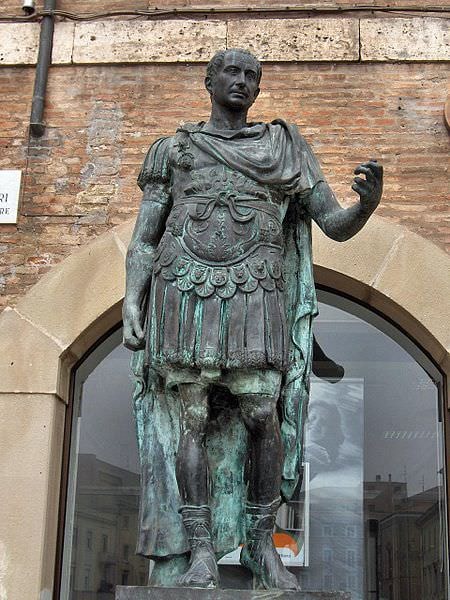 জুলিয়াস সিজার Georges Jansoone (CC BY-NC-SA) ](https://www.worldhistory.org/image/2737/julius-caesar/ "Julius Caesar")ক্রাসাস চলে যাওয়ার সাথে সাথে প্রথম ত্রয়ী ভেঙে যায় এবং পম্পে এবং সিজার একে অপরের বিরুদ্ধে যুদ্ধ ঘোষণা করে। পম্পে আইনি উপায়ে তার প্রতিদ্বন্দ্বীকে নির্মূল করার চেষ্টা করেছিলেন এবং সিনেট সিজারকে রোমে বিভিন্ন অভিযোগে বিচারের মুখোমুখি হওয়ার আদেশ দিয়েছিলেন। এই অভিযোগগুলির মুখোমুখি হওয়ার জন্য নম্রতার সাথে শহরে ফিরে আসার পরিবর্তে, সিজার 49 খ্রিস্টপূর্বাব্দে তার সেনাবাহিনীর সাথে রুবিকন নদী পেরিয়ে রোমে প্রবেশ করেছিলেন।
তিনি অভিযোগের উত্তর দিতে অস্বীকার করেছিলেন এবং প্রতিদ্বন্দ্বী হিসাবে পম্পেকে নির্মূল করার দিকে মনোনিবেশ করেছিলেন। পম্পে এবং সিজার 48 খ্রিস্টপূর্বাব্দে গ্রিসের ফার্সালাসে যুদ্ধে মিলিত হয়েছিলেন যেখানে সিজারের সংখ্যাগতভাবে নিকৃষ্ট বাহিনী পম্পের বৃহত্তর বাহিনীকে পরাজিত করেছিল। পম্পে নিজে মিশরে পালিয়ে গিয়েছিলেন, সেখানে আশ্রয় পাওয়ার প্রত্যাশায়, কিন্তু তিনি পৌঁছানোর পরে তাকে হত্যা করা হয়েছিল। ফার্সালাসে বিপুল সংখ্যার বিরুদ্ধে সিজারের দুর্দান্ত বিজয়ের খবর দ্রুত ছড়িয়ে পড়েছিল এবং পম্পের অনেক প্রাক্তন বন্ধু এবং মিত্ররা দ্রুত সিজারের পক্ষে ছিল, বিশ্বাস করেছিল যে তিনি দেবতাদের দ্বারা অনুগ্রহিত।
### [সাম্রাজ্য](https://www.worldhistory.org/trans/bn/1-99/)ের দিকে
জুলিয়াস সিজার এখন রোমের সবচেয়ে ক্ষমতাধর ব্যক্তি ছিলেন। তিনি কার্যকরভাবে সিনেট তাকে স্বৈরশাসক ঘোষণা করে প্রজাতন্ত্রের সময়কাল শেষ করেছিলেন। জনগণের মধ্যে তার জনপ্রিয়তা ছিল অপরিসীম এবং একটি শক্তিশালী ও স্থিতিশীল কেন্দ্রীয় সরকার গঠনের জন্য তাঁর প্রচেষ্টার অর্থ রোম শহরের সমৃদ্ধি বৃদ্ধি পেয়েছিল। খ্রিস্টপূর্ব 44 সালে একদল রোমান সিনেটর তাকে হত্যা করেছিল, তবে এই কৃতিত্বের কারণে।
ষড়যন্ত্রকারী, ব্রুটাস এবং ক্যাসিয়াস, তাদের মধ্যে ভয় পেয়েছিল যে সিজার খুব শক্তিশালী হয়ে উঠছেন এবং শেষ পর্যন্ত তিনি সিনেট বিলুপ্ত করতে পারেন। তার মৃত্যুর পরে, তার ডান হাত এবং চাচাতো ভাই, মার্কাস অ্যান্টোনিয়াস (মার্ক অ্যান্টনি) সিজারের ভাগ্নে এবং উত্তরাধিকারী, গাইয়াস অক্টাভিয়াস থুরিনাস (অক্টাভিয়ান) এবং সিজারের বন্ধু মার্কাস এমিলিয়াস লেপিডাসের সাথে যোগ দিয়েছিলেন 42 খ্রিস্টপূর্বাব্দে ফিলিপ্পির যুদ্ধে ব্রুটাস এবং ক্যাসিয়াসের বাহিনীকে পরাজিত করতে।
[  দ্বিতীয় ত্রয়ীর বিভাগ ColdEl (CC BY-SA) ](https://www.worldhistory.org/image/4951/division-of-the-second-triumvirate/ "Division of the Second Triumvirate")অক্টাভিয়ান, অ্যান্টনি এবং লেপিডাস রোমের দ্বিতীয় ত্রয়ী গঠন করেছিলেন তবে প্রথমটির মতো, এই ব্যক্তিরাও সমানভাবে উচ্চাকাঙ্ক্ষী ছিলেন। লেপিডাসকে কার্যকরভাবে নিরপেক্ষ করা হয়েছিল যখন অ্যান্টনি এবং অক্টাভিয়ান একমত হয়েছিলেন যে তার হিস্পানিয়া এবং আফ্রিকা শাসন করা উচিত এবং এর ফলে তাকে রোমের কোনও পাওয়ার প্লে থেকে বিরত রাখা হয়েছিল। এটি সম্মত হয়েছিল যে অক্টাভিয়ান পশ্চিমে রোমান ভূমি এবং পূর্বে অ্যান্টনি শাসন করবেন।
মিশরীয় রানী সপ্তম ক্লিওপেট্রার সাথে অ্যান্টনির সম্পৃক্ততা অক্টাভিয়ান যে ভারসাম্য বজায় রাখার আশা করেছিলেন তা বিপর্যস্ত করেছিল এবং দুজনে যুদ্ধে গিয়েছিলেন। অ্যান্টনি এবং ক্লিওপেট্রার সম্মিলিত বাহিনী খ্রিস্টপূর্ব 31 সালে অ্যাক্টিয়ামের যুদ্ধে পরাজিত হয়েছিল এবং পরে উভয়ই তাদের আত্মহত্যা করেছিল। অক্টাভিয়ান রোমের একমাত্র শক্তি হিসাবে আবির্ভূত হয়েছিল। খ্রিস্টপূর্ব 27 সালে তিনি সিনেট দ্বারা অসাধারণ ক্ষমতা প্রদান করেছিলেন এবং রোমের প্রথম সম্রাট [অগাস্টাস](https://www.worldhistory.org/trans/bn/1-412/)ের নাম গ্রহণ করেছিলেন। ঐতিহাসিকরা একমত যে এটি সেই বিন্দু যেখানে রোমের ইতিহাস শেষ হয় এবং [রোমান সাম্রাজ্য](https://www.worldhistory.org/trans/bn/1-100/)ের ইতিহাস শুরু হয়।
#### Editorial Review
This human-authored definition has been reviewed by our editorial team before publication to ensure accuracy, reliability and adherence to academic standards in accordance with our [editorial policy](https://www.worldhistory.org/static/editorial-policy/).
## লেখকের সম্পর্কে
জোসুয়া যে মার্ক একজন 'ফ্রিল্যান্স' লেখক এবং নিউ ইয়র্ক, মারিস্ট কলেজের প্রাক্তণ পার্ট-টাইম প্রফেসর অফ ফিলজফি। নিবাস গ্রীস এবং জার্মানি। ইজিপ্ট ভ্রমণ করেছেন একাধিকবার। কলেজে উনি ইতিহাস, লেখালিখি, সাহিত্য এবং দর্শন বিষয়ে শিক্ষাদান করেছেন।
- [Linkedin Profile](https://www.linkedin.com/pub/joshua-j-mark/38/614/339)
## সময়রেখা
- **753 BCE**: The legendary founding date of [Rome](https://www.worldhistory.org/Rome/).
- **753 BCE - 510 BCE**: Regal Period of ancient [Rome](https://www.worldhistory.org/Rome/) from Founding to Birth of the Republic.
- **750 BCE - 510 BCE**: The (semi-mythological) seven kings of [Rome](https://www.worldhistory.org/Rome/): [Romulus](https://www.worldhistory.org/Romulus_and_Remus/), Numa Pompilius, Tulus Hostilius, Ancus Marcius, Lucius Tarquinius Priscus, Servius Tullius, [Lucius Tarquinius Superbus](https://www.worldhistory.org/Lucius_Tarquinius_Superbus/).
- **c. 620 BCE**: Posible founding date for [Ostia](https://www.worldhistory.org/Ostia/), the port of [Rome](https://www.worldhistory.org/Rome/).
- **599 BCE - 500 BCE**: The traditional date when the [Circus Maximus](https://www.worldhistory.org/Circus_Maximus/) of [Rome](https://www.worldhistory.org/Rome/) is first laid out.
- **534 BCE - 510 BCE**: Reign of [Lucius Tarquinius Superbus](https://www.worldhistory.org/Lucius_Tarquinius_Superbus/), last king of [Rome](https://www.worldhistory.org/Rome/).
- **510 BCE - 509 BCE**: First treaty between [Rome](https://www.worldhistory.org/Rome/) and [Carthage](https://www.worldhistory.org/carthage/).
- **509 BCE**: Foundation of the [Roman Republic](https://www.worldhistory.org/Roman_Republic/).
- **c. 508 BCE**: [Lars Porsenna](https://www.worldhistory.org/Lars_Porsenna/), [Etruscan](https://www.worldhistory.org/Etruscan_Civilization/) king of [Chiusi](https://www.worldhistory.org/Chiusi/), lays siege to [Rome](https://www.worldhistory.org/Rome/).
- **504 BCE**: Migration of Claudii from Sabine lands to [Rome](https://www.worldhistory.org/Rome/).
- **c. 499 BCE**: [Battle](https://www.worldhistory.org/disambiguation/battle/) of Lake Regillus between [Rome](https://www.worldhistory.org/Rome/) and the Latin League.
- **c. 497 BCE**: The first [temple](https://www.worldhistory.org/temple/) dedicated to [Saturn](https://www.worldhistory.org/Saturn/) is constructed in the [Forum Romanum](https://www.worldhistory.org/Roman_Forum/) of [Rome](https://www.worldhistory.org/Rome/).
- **495 BCE**: [Lucius Tarquinius Superbus](https://www.worldhistory.org/Lucius_Tarquinius_Superbus/), last king of [Rome](https://www.worldhistory.org/Rome/), dies in exile at Cumae.
- **495 BCE**: A [temple](https://www.worldhistory.org/temple/) is built in honour of Mercury near [Rome](https://www.worldhistory.org/Rome/)'s [Circus Maximus](https://www.worldhistory.org/Circus_Maximus/).
- **494 BCE**: Traditional date the office of the tribuni plebis is created in [Rome](https://www.worldhistory.org/Rome/).
- **493 BCE**: Foedus Cassianus - treaty by Spurius Cassius Vecellinus with the Latin League after the [Battle](https://www.worldhistory.org/disambiguation/battle/) of Lake Regillus.
- **484 BCE**: The first [temple](https://www.worldhistory.org/temple/) of the [Dioscuri](https://www.worldhistory.org/Castor_and_Pollux/) (Castor & Pollux) is dedicated in [Rome](https://www.worldhistory.org/Rome/)'s [Forum Romanum](https://www.worldhistory.org/Roman_Forum/) by Aulus Postumius following his victory over the Latins at the [Battle](https://www.worldhistory.org/disambiguation/battle/) of Lake Regillus.
- **451 BCE - 450 BCE**: Decemvirate and Publication of [Twelve Tables](https://www.worldhistory.org/Twelve_Tables/) of [Roman Law](https://www.worldhistory.org/Roman_Law/).
- **c. 400 BCE**: [Roman](https://www.worldhistory.org/disambiguation/Roman/) tale of mythical twins [Romulus and Remus](https://www.worldhistory.org/Romulus_and_Remus/) first recorded.
- **394 BCE**: [Etruscan](https://www.worldhistory.org/Etruscan_Civilization/) [Volsinii](https://www.worldhistory.org/volsinii/) and their ally Sappinum unsuccessfully attacks [Rome](https://www.worldhistory.org/Rome/).
- **390 BCE**: Gauls sack [Rome](https://www.worldhistory.org/Rome/).
- **c. 390 BCE**: "Gallic Catastrophe:" [Brennus](https://www.worldhistory.org/brennus/) of the Senones defeats the Romans at Allia, and subsequently sacks [Rome](https://www.worldhistory.org/Rome/).
- **380 BCE**: Rebuilding of [Rome](https://www.worldhistory.org/Rome/). Strong walls around the seven hills.
- **343 BCE - 341 BCE**: First Samnite [War](https://www.worldhistory.org/disambiguation/War/) ([Rome](https://www.worldhistory.org/Rome/) vs. Samnites).
- **340 BCE - 338 BCE**: Latin [War](https://www.worldhistory.org/disambiguation/War/), victory for [Rome](https://www.worldhistory.org/Rome/).
- **326 BCE - 304 BCE**: Second Samnite [War](https://www.worldhistory.org/disambiguation/War/).
- **321 BCE**: The Via Appia, a famous [Roman](https://www.worldhistory.org/disambiguation/Roman/) road, is constructed.
- **298 BCE - 290 BCE**: Third Samnite [War](https://www.worldhistory.org/disambiguation/War/) between [Rome](https://www.worldhistory.org/Rome/) and the Samnite people.
- **295 BCE**: [Roman](https://www.worldhistory.org/disambiguation/Roman/) victory over Samnites, Gauls and Umbrians at Sentinum.
- **292 BCE**: The Romans adopt the [Greek](https://www.worldhistory.org/disambiguation/greek/) [god](https://www.worldhistory.org/God/) of [medicine](https://www.worldhistory.org/disambiguation/medicine/) [Asclepius](https://www.worldhistory.org/Asclepius/) by stealing his sacred snake from [Epidaurus](https://www.worldhistory.org/epidaurus/) and setting up a [temple](https://www.worldhistory.org/temple/) on the Tiber Island.
- **Mar 218 BCE**: [Rome](https://www.worldhistory.org/Rome/) declares [war](https://www.worldhistory.org/disambiguation/War/) on [Carthage](https://www.worldhistory.org/carthage/) after [Hannibal](https://www.worldhistory.org/hannibal/) sacks [Saguntum](https://www.worldhistory.org/Saguntum/) in Spain. The [Second Punic War](https://www.worldhistory.org/Second_Punic_War/) begins.
- **213 BCE - 212 BCE**: [Roman](https://www.worldhistory.org/disambiguation/Roman/) commander [Marcus Claudius Marcellus](https://www.worldhistory.org/Marcus_Claudius_Marcellus/) lays seige to and ultimately sacks [Syracuse](https://www.worldhistory.org/syracuse/).
- **196 BCE**: The earliest known Triumphal Arches are built in [Rome](https://www.worldhistory.org/Rome/) by L.Sertinius.
- **184 BCE**: The first basilica is added to [Rome](https://www.worldhistory.org/Rome/)'s [Forum Romanum](https://www.worldhistory.org/Roman_Forum/).
- **168 BCE**: [Rome](https://www.worldhistory.org/Rome/) defeats [Macedon](https://www.worldhistory.org/macedon/) at [Battle of Pydna](https://www.worldhistory.org/Battle_of_Pydna/).
- **166 BCE**: [Rome](https://www.worldhistory.org/Rome/) puts [Delos](https://www.worldhistory.org/delos/) under the jurisdiction of [Athens](https://www.worldhistory.org/Athens/) and makes the island a free port.
- **146 BCE**: First [Roman](https://www.worldhistory.org/disambiguation/Roman/) all-marble building is constructed, the [temple](https://www.worldhistory.org/temple/) of [Jupiter](https://www.worldhistory.org/jupiter/) Stater in [Rome](https://www.worldhistory.org/Rome/).
- **121 BCE**: [Gallia](https://www.worldhistory.org/gaul/) Narbonensis becomes a [Roman](https://www.worldhistory.org/disambiguation/Roman/) province.
- **107 BCE - 100 BCE**: [Gaius Marius](https://www.worldhistory.org/Gaius_Marius/) reforms the [Roman army](https://www.worldhistory.org/Roman_Army/).
- **12 Jul 100 BCE - 15 Mar 44 BCE**: Life of Gaius [Julius Caesar](https://www.worldhistory.org/Julius_Caesar/), founder of the [Roman Empire](https://www.worldhistory.org/Roman_Empire/).
- **89 BCE**: All [poleis](https://www.worldhistory.org/Polis/) or [city](https://www.worldhistory.org/city/)-states in [Magna Graecia](https://www.worldhistory.org/Magna_Graecia/) come under [Roman](https://www.worldhistory.org/disambiguation/Roman/) control.
- **80 BCE**: [Sulla](https://www.worldhistory.org/sulla/) moves the [Olympic Games](https://www.worldhistory.org/Olympic_Games/) to [Rome](https://www.worldhistory.org/Rome/) for a single Olympiad.
- **70 BCE**: [Pompey](https://www.worldhistory.org/pompey/) and [Crassus](https://www.worldhistory.org/Marcus_Licinius_Crassus/) are made consuls.
- **59 BCE - 17 CE**: Life of [Livy](https://www.worldhistory.org/livy/).
- **58 BCE - 51 BCE**: [Julius Caesar](https://www.worldhistory.org/Julius_Caesar/)'s [conquest](https://www.worldhistory.org/warfare/) of [Gaul](https://www.worldhistory.org/gaul/).
- **55 BCE**: [Pompey the Great](https://www.worldhistory.org/pompey/) builds the first permanent stone [theatre](https://www.worldhistory.org/disambiguation/theatre/) in [Rome](https://www.worldhistory.org/Rome/).
- **55 BCE - 54 BCE**: [Julius Caesar](https://www.worldhistory.org/Julius_Caesar/)'s expeditions in [Britain](https://www.worldhistory.org/disambiguation/Britain/).
- **54 BCE - 29 BCE**: Forum of [Caesar](https://www.worldhistory.org/disambiguation/caesar/) constructed in [Rome](https://www.worldhistory.org/Rome/) by [Julius Caesar](https://www.worldhistory.org/Julius_Caesar/) as another area to conduct judicial business. It is the best surviving of his monuments.
- **15 Mar 44 BCE**: [Julius Caesar](https://www.worldhistory.org/Julius_Caesar/) is murdered.
- **43 BCE - 36 BCE**: [Second Triumvirate](https://www.worldhistory.org/Second_Triumvirate/): [Antony](https://www.worldhistory.org/Mark_Antony/), [Octavian](https://www.worldhistory.org/augustus/), and Lepidus (official approval by the [Roman Senate](https://www.worldhistory.org/Roman_Senate/)). Mass proscriptions including [Cicero](https://www.worldhistory.org/Cicero/).
- **43 BCE - 17 CE**: Life of the [Roman](https://www.worldhistory.org/disambiguation/Roman/) writer [Ovid](https://www.worldhistory.org/ovid/), author of Metamorphoses.
- **36 BCE**: [Agrippa](https://www.worldhistory.org/Marcus_Agrippa/) defeats the naval fleet of Sextus [Pompey](https://www.worldhistory.org/pompey/) in the [battle](https://www.worldhistory.org/disambiguation/battle/) of Naulochos.
- **31 BCE**: [Greece](https://www.worldhistory.org/greece/) absorbed into [Roman Empire](https://www.worldhistory.org/Roman_Empire/).
- **29 BCE**: [Augustus](https://www.worldhistory.org/augustus/) builds the [temple](https://www.worldhistory.org/temple/) of Divius Iulius on the spot of [Julius Caesar](https://www.worldhistory.org/Julius_Caesar/)'s funeral pyre in [Rome](https://www.worldhistory.org/Rome/)'s [Forum Romanum](https://www.worldhistory.org/Roman_Forum/).
- **c. 27 BCE**: The first [Pantheon](https://www.worldhistory.org/Pantheon/) is built in [Rome](https://www.worldhistory.org/Rome/) and dedicated by [Marcus Agrippa](https://www.worldhistory.org/Marcus_Agrippa/).
- **c. 20 BCE**: Military engineer and architect [Vitruvius](https://www.worldhistory.org/Vitruvius/) publishes his "De Architectura".
- **c. 20 BCE**: The Campus Martius baths in [Rome](https://www.worldhistory.org/Rome/) are constructed and donated to the people by [Agrippa](https://www.worldhistory.org/Marcus_Agrippa/).
- **19 BCE**: Arch of [Augustus](https://www.worldhistory.org/augustus/) built in [Rome](https://www.worldhistory.org/Rome/) to commemorate victory over the Parthians.
- **c. 13 BCE**: Official inauguration of the [Theatre of Marcellus](https://www.worldhistory.org/article/614/theatre-of-marcellus/) in [Rome](https://www.worldhistory.org/Rome/).
- **c. 10 BCE**: [Augustus](https://www.worldhistory.org/augustus/) rebuilds the [Temple of Castor and Pollux](https://www.worldhistory.org/article/632/temple-of-castor--pollux/) in [Rome](https://www.worldhistory.org/Rome/)'s [Forum Romanum](https://www.worldhistory.org/Roman_Forum/).
- **1 CE - 100 CE**: [Mithraism](https://www.worldhistory.org/Mithraic_Mysteries/) spreads in the [Roman empire](https://www.worldhistory.org/Roman_Empire/).
- **c. 13 CE**: [Augustus](https://www.worldhistory.org/augustus/) creates the [cohortes urbanae](https://www.worldhistory.org/Cohortes_Urbanae/) in [Rome](https://www.worldhistory.org/Rome/) to help maintain public order.
- **c. 23 CE**: The castra praetoria, permanent camp of the [Praetorian Guard](https://www.worldhistory.org/Praetorian_Guard/), is built in [Rome](https://www.worldhistory.org/Rome/) by [Sejanus](https://www.worldhistory.org/sejanus/).
- **42 CE - 62 CE**: [Paul the Apostle](https://www.worldhistory.org/Paul_the_Apostle/) goes on missionary journeys across [Asia Minor](https://www.worldhistory.org/Asia_Minor/), [Greece](https://www.worldhistory.org/greece/), and [Rome](https://www.worldhistory.org/Rome/).
- **c. 50 CE - c. 60 CE**: Establishment of various Christian communities in the Eastern [Mediterranean](https://www.worldhistory.org/disambiguation/mediterranean/), [Greece](https://www.worldhistory.org/greece/), [Egypt](https://www.worldhistory.org/egypt/), and at least the [city](https://www.worldhistory.org/city/) of [Rome](https://www.worldhistory.org/Rome/).
- **60 CE - 61 CE**: [Boudicca](https://www.worldhistory.org/Boudicca/)'s Revolt in [Britain](https://www.worldhistory.org/disambiguation/Britain/).
- **64 CE**: Fire destroys the [Circus Maximus](https://www.worldhistory.org/Circus_Maximus/) in [Rome](https://www.worldhistory.org/Rome/).
- **64 CE**: Unofficial persecution of Christians in [Rome](https://www.worldhistory.org/Rome/).
- **64 CE**: The great fire in [Rome](https://www.worldhistory.org/Rome/).
- **c. 64 CE**: The [Roman](https://www.worldhistory.org/disambiguation/Roman/) port of [Ostia](https://www.worldhistory.org/Ostia/) reaches its maximum size becoming a major urban centre.
- **c. 65 CE**: The [Circus Maximus](https://www.worldhistory.org/Circus_Maximus/) in [Rome](https://www.worldhistory.org/Rome/) is rebuilt and its capacity increased to 250,000.
- **c. 65 CE**: The Baths of [Nero](https://www.worldhistory.org/Nero/) are built in [Rome](https://www.worldhistory.org/Rome/).
- **66 CE - 73 CE**: The Jewish Revolt against [Rome](https://www.worldhistory.org/Rome/).
- **68 CE - 69 CE**: [Year of the Four Emperors](https://www.worldhistory.org/Year_of_the_Four_Emperors/): Civil [war](https://www.worldhistory.org/disambiguation/War/) in [Rome](https://www.worldhistory.org/Rome/).
- **70 CE**: The [city](https://www.worldhistory.org/city/) of [Jerusalem](https://www.worldhistory.org/jerusalem/) is besieged and captured by [Rome](https://www.worldhistory.org/Rome/); the Second [Temple](https://www.worldhistory.org/temple/) destroyed.
- **Jun 71 CE**: [Titus](https://www.worldhistory.org/disambiguation/Titus/) returns to [Rome](https://www.worldhistory.org/Rome/) from Jewish [War](https://www.worldhistory.org/disambiguation/War/).
- **72 CE**: [Vespasian](https://www.worldhistory.org/Vespasian/) begins construction of the [Colosseum](https://www.worldhistory.org/Colosseum/) in [Rome](https://www.worldhistory.org/Rome/).
- **Aug 79 CE - Oct 79 CE**: Eruption of Mt. Vesuvius in southern [Italy](https://www.worldhistory.org/italy/) burying the towns of [Pompeii](https://www.worldhistory.org/pompeii/) and [Herculaneum](https://www.worldhistory.org/Herculaneum/) in volcanic ash.
- **80 CE**: The [Colosseum](https://www.worldhistory.org/Colosseum/) in [Rome](https://www.worldhistory.org/Rome/) is officially opened by [Titus](https://www.worldhistory.org/disambiguation/Titus/) with a 100 day [gladiator](https://www.worldhistory.org/gladiator/) spectacular.
- **80 CE**: The first [Pantheon](https://www.worldhistory.org/Pantheon/) in [Rome](https://www.worldhistory.org/Rome/) is destroyed by fire.
- **81 CE - 96 CE**: Construction is finally completed on the [Colosseum](https://www.worldhistory.org/Colosseum/) of [Rome](https://www.worldhistory.org/Rome/) in the reign of [Domitian](https://www.worldhistory.org/domitian/).
- **83 CE**: [Battle](https://www.worldhistory.org/disambiguation/battle/) of Mons Graupius in [Scotland](https://www.worldhistory.org/disambiguation/Scotland/).
- **18 Sep 96 CE**: [Death](https://www.worldhistory.org/disambiguation/Death/) of [Roman Emperor](https://www.worldhistory.org/Roman_Emperor/) [Domitian](https://www.worldhistory.org/domitian/).
- **c. 110 CE**: First documented martydom in the [Colosseum](https://www.worldhistory.org/Colosseum/) of [Rome](https://www.worldhistory.org/Rome/), that of St. Ignatius of [Antioch](https://www.worldhistory.org/Antiochia/).
- **110 CE**: The second [Pantheon](https://www.worldhistory.org/Pantheon/) building in [Rome](https://www.worldhistory.org/Rome/) is hit by lightning and destroyed by fire.
- **113 CE**: [Trajan's column](https://www.worldhistory.org/Trajans_Column/) is constructed in [Rome](https://www.worldhistory.org/Rome/) which commemorates the emperor's campaigns in [Dacia](https://www.worldhistory.org/dacia/).
- **c. 125 CE**: The [Pantheon](https://www.worldhistory.org/Pantheon/) is completed in [Rome](https://www.worldhistory.org/Rome/).
- **10 Jul 138 CE - 9 Mar 161 CE**: Reign of [Roman Emperor](https://www.worldhistory.org/Roman_Emperor/) [Antoninus Pius](https://www.worldhistory.org/Antoninus_Pius/).
- **c. 180 CE**: The [Column of Marcus Aurelius](https://www.worldhistory.org/article/647/the-column-of-marcus-aurelius/) and Faustina is erected in [Rome](https://www.worldhistory.org/Rome/). It depicts in relief [sculpture](https://www.worldhistory.org/disambiguation/Sculpture/) the emperors' campaigns across the Danube.
- **192 CE**: Emperor [Commodus](https://www.worldhistory.org/commodus/) is murdered, civil [war](https://www.worldhistory.org/disambiguation/War/) ensues (until 197 CE).
- **202 CE**: The [Pantheon](https://www.worldhistory.org/Pantheon/) in [Rome](https://www.worldhistory.org/Rome/) is repaired by [Septimius Severus](https://www.worldhistory.org/Septimius_Severus/) and [Caracalla](https://www.worldhistory.org/Caracalla/).
- **227 CE**: The Baths of [Nero](https://www.worldhistory.org/Nero/) in [Rome](https://www.worldhistory.org/Rome/) are extensively renovated and expanded by [Alexander Severus](https://www.worldhistory.org/Alexander_Severus/) and renamed Thermae Alexandrinae.
- **c. 235 CE**: The Baths of [Caracalla](https://www.worldhistory.org/Caracalla/) in [Rome](https://www.worldhistory.org/Rome/) are completed.
- **238 CE**: Year of the Six Emperors in the [Roman Empire](https://www.worldhistory.org/Roman_Empire/).
- **272 CE**: Possible year of Emperor [Constantine](https://www.worldhistory.org/disambiguation/Constantine/)'s birth.
- **283 CE**: A fire devastates [Rome](https://www.worldhistory.org/Rome/)'s [Forum Romanum](https://www.worldhistory.org/Roman_Forum/), necessitating an extensive rebuilding programme.
- **286 CE**: Naval commander Carausius ([Marcus Aurelius](https://www.worldhistory.org/Marcus_Aurelius/) Mausaeus Valerius Carausius) declares himself emperor in [Britain](https://www.worldhistory.org/disambiguation/Britain/) and Northern [Gaul](https://www.worldhistory.org/gaul/).
- **293 CE**: Emperor Carausius assassinated by Allectus.
- **308 CE**: [Constantine I](https://www.worldhistory.org/Constantine_I/) named "[caesar](https://www.worldhistory.org/disambiguation/caesar/)" of the west.
- **312 CE**: [Constantine](https://www.worldhistory.org/disambiguation/Constantine/) defeats Maxentius at Milvian Bridge.
- **312 CE**: [Constantine I](https://www.worldhistory.org/Constantine_I/) reduces the [cohortes urbanae](https://www.worldhistory.org/Cohortes_Urbanae/) of [Rome](https://www.worldhistory.org/Rome/).
- **337 CE**: [Death](https://www.worldhistory.org/disambiguation/Death/) of Emperor [Constantine I](https://www.worldhistory.org/Constantine_I/).
- **c. 360 CE - c. 380 CE**: The [Temple](https://www.worldhistory.org/temple/) of [Saturn](https://www.worldhistory.org/Saturn/) is rebuilt in the [Forum Romanum](https://www.worldhistory.org/Roman_Forum/) of [Rome](https://www.worldhistory.org/Rome/).
- **402 CE**: Ravenna becomes the capital of the [Western Roman Empire](https://www.worldhistory.org/Western_Roman_Empire/).
- **408 CE**: [Alaric](https://www.worldhistory.org/Alaric/) I the [Visigoth](https://www.worldhistory.org/visigoth/) besieges [Rome](https://www.worldhistory.org/Rome/). As ransom, Rome pays 5,000 pounds of [gold](https://www.worldhistory.org/gold/), 30,000 pounds of [silver](https://www.worldhistory.org/Silver/), 4,000 silken tunics, 3,000 hides dyed scarlet, and 3,000 pounds of [pepper](https://www.worldhistory.org/Pepper/).
- **410 CE**: [Alaric](https://www.worldhistory.org/Alaric/) of the [Visigoths](https://www.worldhistory.org/visigoth/) sacks [Rome](https://www.worldhistory.org/Rome/).
- **24 Aug 410 CE**: [Alaric](https://www.worldhistory.org/Alaric/) sacks [Rome](https://www.worldhistory.org/Rome/).
- **422 CE**: The [Colosseum](https://www.worldhistory.org/Colosseum/) of [Rome](https://www.worldhistory.org/Rome/) is damaged by [earthquake](https://www.worldhistory.org/disambiguation/earthquake/).
- **455 CE**: [Vandals](https://www.worldhistory.org/Vandals/) sack [Rome](https://www.worldhistory.org/Rome/).
- **536 CE**: [Rome](https://www.worldhistory.org/Rome/) falls to [Belisarius](https://www.worldhistory.org/Belisarius/).
- **549 CE**: The last official [chariot](https://www.worldhistory.org/chariot/) race is held in [Rome](https://www.worldhistory.org/Rome/)'s [Circus Maximus](https://www.worldhistory.org/Circus_Maximus/).
- **608 CE**: The [Pantheon](https://www.worldhistory.org/Pantheon/) in [Rome](https://www.worldhistory.org/Rome/) is converted into a Christian church.
- **c. 730 CE**: First reference to the Flavian [Amphitheatre](https://www.worldhistory.org/amphitheatre/) as the [Colosseum](https://www.worldhistory.org/Colosseum/) by the Venerable [Bede](https://www.worldhistory.org/Bede/).
## বহিঃসংযোগসমূহ
- [Ancient Rome Live](http://www.ancientromelive.org/)
- [Rome Reborn](http://romereborn.frischerconsulting.com/)
- [Four sisters in Ancient Rome - Ray Laurence](http://ed.ted.com/lessons/four-sisters-in-ancient-rome-ray-laurence)
- [A glimpse of teenage life in ancient Rome - Ray Laurence](http://ed.ted.com/lessons/a-glimpse-of-teenage-life-in-ancient-rome-ray-laurence)
- [Roman Lives](https://history-podcasts.com/roman-lives)
- [S.P.Q.R.: A History of Ancient Rome - Episode - Free Library](https://libwww.freelibrary.org/podcast/?podcastID=1419)
- [33 Ancient Rome Facts That Will Change The Way You See History](https://allthatsinteresting.com/ancient-rome-facts)
- [Roman Emperors](http://www.roman-emperors.org/auggie.htm)
- [The History of Rome](https://thehistoryofrome.typepad.com/)
- [The Meaning of Myths, Folklore, Legends, and Fairy Tales](https://www.thoughtco.com/defining-terms-myth-folklore-legend-735039)
- [Julius Caesar](http://www.bbc.co.uk/history/historic_figures/caesar_julius.shtml)
- [Discover Ancient Rome in Google Earth](http://www.youtube.com/watch?v=MqMXIRwQniA)
- [Historical city travel guide: Rome, 1st century AD | British Museum](https://www.britishmuseum.org/blog/historical-city-travel-guide-rome-1st-century-ad)
## এই কাজটি উদ্ধৃত করুন
### APA
Mark, J. J. (2026, February 20). প্রাচীন রোম. (M. Chattopadhyay, অনুবাদক). *World History Encyclopedia*.
### Chicago
Mark, Joshua J.. "প্রাচীন রোম." অনুবাদ করেছেন Manika Chattopadhyay. *World History Encyclopedia*, February 20, 2026. .
### MLA
Mark, Joshua J.. "প্রাচীন রোম." অনুবাদ করেছেন Manika Chattopadhyay. *World History Encyclopedia*, 20 Feb 2026, .
## লাইসেন্স ও কপিরাইট
দ্বারা জমা দেওয়া [Manika Chattopadhyay](https://www.worldhistory.org/user/monica.qot/ "User Page: Manika Chattopadhyay"), এতে প্রকাশিত হয়েছে 20 February 2026. কপিরাইট তথ্যের জন্য অনুগ্রহ করে মূল উৎস(গুলি) পরীক্ষা করুন। অনুগ্রহ করে লক্ষ্য করুন যে এই পৃষ্ঠা থেকে লিঙ্ক করা বিষয়বস্তুর লাইসেন্সিং শর্ত ভিন্ন হতে পারে।