---
title: روما القديمة
author: Joshua J. Mark
translator: Sami M. Al Atrash
source: https://www.worldhistory.org/trans/ar/1-68/
format: machine-readable-alternate
license: Creative Commons Attribution-NonCommercial-ShareAlike (https://creativecommons.org/licenses/by-nc-sa/4.0/)
updated: 2022-08-06
---
# روما القديمة
_بقلم [Joshua J. Mark](https://www.worldhistory.org/user/JPryst/)_
_ترجمة [Sami M. Al Atrash](https://www.worldhistory.org/user/samima)_
وفقاً للأسطورة، تأسست روما القديمة من قبل أخوين، وأنصاف آلهة، رومولوس وريموس، في 21 نيسان\\ أبريل سنة 753 قبل الميلاد. تدّعي [الأسطورة](https://www.worldhistory.org/trans/ar/1-427/) أنّهُ وأثناء جدال حول من سوف يحكم المدينة (أو، في نسخة أخرى، حول أين المدينة ستقع) رومولوس قتل ريموس وسمّى المدينة تيمناً بنفسه. هذه القصة الأكثر انتشاراً حول تأسيس المدينة ولكنها ليست الوحيدة.
وفي أسطورة مختلفة سُميت المدينة تيمناً بإمرأة- روما، التي سافرت مع الآلهة إينياس وناجون آخرون من مدينة طروادة بعد سقوطها. وعند رسوهم على ضفاف نهر التيبر، اعترضت روما والنساء عندما أرادوا الرجال الرحيل. فقد قادت النساء عند احتراق الاسطول الطروادي وتقطعت بهنّ السُبل في المكان الذي سوف تتأسس عليه روما. إينياس الطروادي ظهر في هذه الأسطورة وكذلك وبشكلٍ أشهر، في *ملحمة الإينيادة* لفيرجيل، كموؤسس لروما وسلف لرومولوس وريموس، وبهذا ربط روما بعظمة طروادة التي كانت تتمتع فيها يوماً ما.
مع ذلك نظريات أخرى تتعلق بتسمية المدينة الشهيرة تشير إلى أنها جاءت من رومون، الاسم القديم لنهر التيبر، وكان مجرد اسم يطلق على مركز تجاري صغير تم إنشاؤه على ضفاف النهر، أو أن الاسم مشتق من كلمة إترورية والتي من الممكن أنها كانت تحدد اسم لأحد المستوطنات الإتروسكانية.
### روما القديمة
كانت بالأصل بلدة صغيرة على ضفاف نهر التيبر، ونمت روما من حيث الحجم والقوّة، في البداية، من خلال التجارة. ووفّر موقع المدينة ممراً مائياً سهل الملاحة على التجار في نقلِ بضاعتهم. حكم المدينة سبعة ملوك، من رومولوس إلى تاركوين، كما نمت في الحجم والقوّة. قدمت الثقافة والحضارة الهيلينية، التي دخلت روما من خلال المستوطنات الإغريقية من الجنوب، نموذجاً للرومان الأوائل في بناء ثقافتهم الخاصة. واقترضوا من الإغريق فنون [الكتابة](https://www.worldhistory.org/trans/ar/1-72/) والقراءة والدين، وكذلك أساسيات الهندسة المعمارية.
أما الإتروسكانيين، في الشمال، قدموا نموذجاً للتجارة والرفاه الحضاري. كانت مدينة إيتروريا في موقع جيداً للتجارة أيضاً، والرومان الأوائل إما تعلموا مهارات التجارة من الإتروسكانيين أو لقنوهم مهارات التجارة مباشرةً، والذين قاموا بتوغلات في المنطقة المحيطة بروما في وقتٍ ما بين 650 و600 قبل الميلاد (على الرغم من أن تأثيرهم كان محسوساً قبل ذلك بكثير). حجم تأثير [الحضارة](https://www.worldhistory.org/trans/ar/1-10175/) الإتروسكانية الذي لعبتهُ في تطوير الثقافة والمجتمع الروماني ما زال محضر نقاش، ولكن يبدو هنالك القليل من الشك في أنّهُ كان لها تأثيراً كبيراً في المراحل الأولى.
منذ البداية، أظهروا الرومان موهبة استعارة وتطوير مهارات ومفاهيم الثقافات الأخرى، نمت مملكة روما بسرعة من بلدة تجارية إلى مدينة مزدهرة بين القرنين 8 و6 قبل الميلاد. وعندما تم عزل تاركوين الفخور آخر الملوك السبعة، في 509 قبل الميلاد، منافسه على السلطة، لوكيوس يونيوس بروتوس، أصلح نظام الحكومة وأسس الجمهورية الرومانية.
### الحرب والتوسّع
رغم أن المدينة أدانت لازدهارها في سنواتها الأولى للتجارة، إلّأ أنّ كانت المكنة الحربية الرومانية التي سوف تحولها إلى قوّة جبّارة. الحروب مع مدينة قرطاجة في شمال افريقيا (المعروفة بالحروب البونيقية، 264- 146 قبل الميلاد) عزّزت من قوّة روما وساعدت المدينة على النمو في الثروة والمكانة. كانت روما وقرطاجة تتنفسان على التجارة في غرب البحر الأبيض المتوسط، ومع هزيمة قرطاجة، تمتعت روما بهيمنة شبه مطلقة على المنطقة؛ وقد منعت غارات القراصنة من السيطرة الرومانية الكاملة على البحر.
بينما نمت الجمهورية الرومانية في القوّة والمكانة، بدأت تعاني مدينة روما من تأثير الفساد، والجشع والاعتماد المفرط على عمل الرق. عصابات من الرومان العاطلين عن العمل، توقفوا عن العمل بسبب تدفق العبيد الذين تم جلبهم من خلال الفتوحات الإقليمية. واستأجروا من أنفسهم كبلطجية لصالح أي سيناتور غني يدفع لهم. وأصبحت نخبة المدينة الثرية، الأستُقراطيين أكثر غناءً على حساب الطبقة العاملة السفلى، العوام.
[  خريطة التوسع الروماني في القرن الثاني US Military Academy (Public Domain) ](https://www.worldhistory.org/image/131/map-of-2nd-century-roman-expansion/ "Map of 2nd Century Roman Expansion")في القرن الثاني قبل الميلاد، قاما الأخوين جراتشي، الأطروبنين تيبيريوس وجايوس، بقيادة حركة إصلاح زراعي وسياسي بشكلٍ عام. من الرغم أن الأخوين قد قتلوا في هذه القضية، إلّأ أن جهودهم دفعت إلى إصلاحات تشريعية وتم الحد من الفساد المستشري في مجلس الشيوخ الروماني (أو، على الأقل، أصبحوا أعضاء مجلس الشيوخ أكثر تحفظاً في أنشطتهم الفاسدة). ومع حلول الحكم الثلاثي الأول، كانت كل من المدينة والجمهورية الرومانية في ازدهارٍ كامل.
### الجمهورية
مع ذلك، وجدت روما نفسها منقسمة عبر شرائحها الاجتماعية، الطبقة الحكمة اطلقوا على أنفسهم *الأوبتيماتيس* (أفضل الرجال) بينما الطبقات الأدنى، أو أولئك الذين أبدوا تعاطفاً معهم، كانوا معروفين *بالبوبيلارس* (الشعب). وطُبّقت هذه الأسماء ببساطة على أولئك الذين يحملون عقيدة سياسية مُعينة؛ لم تكن أحزاباً سياسية صارمة وليس كل الطبقة الحاكمة كانت- *أوبتيماتيس* ولا كل الطبقات الدنيا كانت- *بوبيلاريس*.
بشكلٍ عام، *الأوبتيماتيس* أمسكوا بالقيم السياسية والاجتماعية التقليدية التي فضّلت سلطة مجلس الشيوخ الروماني وتفوّق مكانة الطبقة الحاكمة، أما *البوبيلاريس*، مرةً أُخرى بشكلٍ عام اتكلم، فضّلوا الإصلاح وإضفاء الطابع الديمقراطي على الجمهورية الرومانية. ومن المعروف أن هذه الأيدولوجيات المتعارضة سوف تتصادم على شكل ثلاثة رجال من شأنهم، وعن غير قصد، أن يحققوا نهاية الجمهورية الرومانية.
ماركوس ليكينيوس كراسوس ومنافسه السياسي، جنايوس بومبيّوس ماغنوس (بومبي العظيم) انضموا سوياً، مع سياسي يصغرهم سناً، غايوس يوليوس قيصر، لتشكيل ما يسموه المؤرخين الحكم الثلاثي الأول (على الرغم أن الرومان لم يستخدموا هذا المصطلح على الإطلاق، ولا الرجال الثلاثة الذين شكلوا الحكم الثلاثي). كراسوس وبومبي حملا *الأوبتيماتي* كخطٍ سياسي بينما قيصر كان *بوبيلاري*.
كانوا الرجال الثلاثة طموحين بنفس القدر، وتنافسوا على السلطة، واستطاعوا على إبقاءِ بعضهم البعض تحت السيطرة مع المساعدة في جعل روما أكثر ازدهاراً. كراسوس كان أغنى رجل في روما وفاسداً لدرجةٍ أنّهُ كان يجبر الأثرياء إلى دفع آتوات بحجة الحماية. اذا المواطن دفع المال، فلن يحرق كراسوس منزله، ولكن، اذا لم يكن هناك من مالٍ قادم، فسوف يشعل النار ثم سيتقاضى كراسوس رسوماً مالية لإرسال رجالٍ لإخماد الحريق. على الرغم من أن الدافع وراء أصل فرق الإطفاء تلك بعيد كل البعد عن النُبل، إلّا أنَّ كراسوس أنشأ أول إدارة إطفاء والتي ستثبت لاحقاً أنها ذات قيمة كبيرة للمدينة.
كان كل من بومبي وقيصر جنرالات عظماء، من خلال فتوحاتهم، وجعلوا من روما غنية. وعلى الرغم أنّهُ كان أغنى رجل في روما (وقد قيل إنهُ الأغنى في كل التاريخ الروماني) إلّأ أن كراسوس كان يتوق إلى نفس الاحترام الذي منحهُ الناس لبومبي وقيصر لنجاحاتهم العسكرية. في عام 53 قبل الميلاد قاد قوة كبيرة ضد بارثيا وهُزِمَ في معركة حرّان- شمال سوريا في تركيا اليوم، حيثُ قُتِلَ بعد أن انهارت مفاوضات الهدنة.
[ 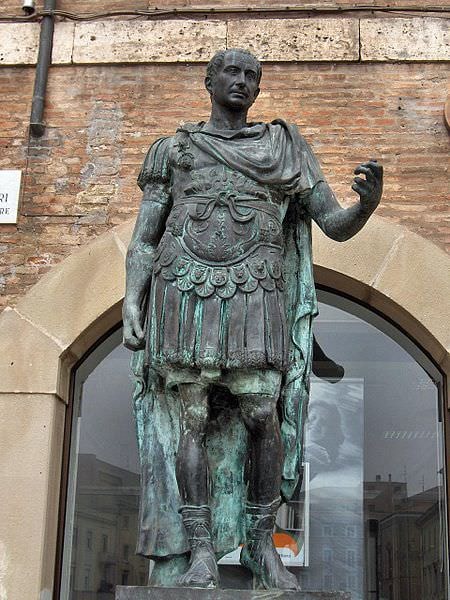 يوليوس قيصر Georges Jansoone (CC BY-NC-SA) ](https://www.worldhistory.org/image/2737/julius-caesar/ "Julius Caesar")مع رحيل كراسوس، انهار الحكم الثلاثي وبومبي وقيصر أعلنا الحرب على بعضهما البعض. حاول بومبي القضاء على منافسه من خلال الوسائل القانونية وأمر مجلس الشيوخ قيصر للمثول أمام المحكمة بتهم متنوعة، بدلاً من العودة إلى روما متواضعاً لمواجهة هذه التُّهم، عبر قيصر نهر الروبيكوني ودخلَ روما وهو على رأسِ جيشهِ في 49 قبل الميلاد.
رفض الانصياع على التهم الموجّه لهُ ووجّه تركيزه نحو إقصاء بومبي كمنافس. بومبي وقيصر اللتقيا في معركة فارسالوس في اليونان في 48 قبل الميلاد حيث هزمت قوات قيصر الأقل عدداً قوات بومبي الأكبر، هرب بومبي إلى مصر، متوقعاً أن يجد ملاذاً هناك، لكنهُ اغتيل عُقب وصولهِ. انتشرت أخبار انتصار قيصر على قواتٍ تكبرهُ حجماً في فارسالوس كالنارِ في الهشيم، والكثير من أصدقاء وحلفاء بومبي وقفوا بجانب قيصر، معتقدين أن الآلهة قد فضّلته.
### نحوَ الإمبراطورية
أضحى يوليوس قيصر الآن أقوى رجل في روما. أنهى فعلياً حقبة الجمهورية من خلال جعل مجلس الشيوخ يعلنه *ديكتاتور*. كانت شعبيته بين الناس هائلة وجهوده لإنشاء حكومة مركزية مستقرة وقوية تعني زيادة الازدهار لمدينة روما. تم اغتياله من قِبل مجموعة من أعضاء مجلس الشيوخ الرومان في 44 قبل الميلاد، وبسبب هذه الانجازات على وجه التحديد.
المتآمرون، ومن بينهم بروتوس وكاسيوس، كانوا على خشية من أن قيصر أصبح قوياً جداً على ما يبدو وأنّهُ قد يُلغي مجلس الشيوخ في نهاية المطاف. بعد وفاته، انضم ساعده الأيمن وابن عمه، ماركوس أنطونيوس (مارك أنتوني) إلى قوات ابن شقيقة قيصر ووريثه، غايوس أوكتافيوس ثورينوس (أوكتافيان) وصديق قيصر، ماركوس آميليوس ليبيدوس، لهزيمة قوات بروتوس وكاسيوس في معركة فيليبي في 42 قبل الميلاد.
[  تقسيم الثلاثية الثانية ColdEl (CC BY-SA) ](https://www.worldhistory.org/image/4951/division-of-the-second-triumvirate/ "Division of the Second Triumvirate")شكّل أوكتافيان، أنطوني، وليبيدوس الحكم الروماني الثلاثي الثاني، ولكن، وكما هو الحال مع الأول، كانوا هؤلاء الرجال طموحين أيضاً بنفس القدر. تم تحييد ليبيدوس بشكلٍ فعال عندما اتّفق أنطوني وأوكتافيان على أن يجب أن يكون لديه هيسبانيا وأفريقيا ليحكمهما وبالتالي أبعدوه عن أي قوة بإمكانه أن يلعبها في روما. وتم الاتفاق على أن يحكم أوكتافيان الأراضي الرومانية في الغرب وأنطوني في الشرق.
ومع ذلك، تورُّط أنطوني مع الملكة المصرية [كليوبترا السابعة](https://www.worldhistory.org/trans/ar/1-866/)، أخلَّ بالتوازن الذي كان يأمل أوكتافيان الحفاظ عليه وذهبا الاثنان إلى الحرب. هُزمت قوات أنطوني وكليوبترا المشتركة في موقعة أكتيوم في سنة 31 قبل الميلاد وانتحر كلاهما في وقتٍ لاحق. برز أوكتافيان كقوة وحيدة في روما. ومنحهُ مجلس الشيوخ سُلطات استثنائية في 27 قبل الميلاد واتخذ اسم أوغوسطوس أول إمبراطور في روما. ويتفقون المؤرخين أن هذه هي النقطة التي ينتهي فيها تاريخ روما ويبدأ تاريخ [الإمبراطورية الرومانية](https://www.worldhistory.org/trans/ar/1-100/).
#### Editorial Review
This human-authored definition has been reviewed by our editorial team before publication to ensure accuracy, reliability and adherence to academic standards in accordance with our [editorial policy](https://www.worldhistory.org/static/editorial-policy/).
## نبذة عن الكاتب
جوشوا مارك: مؤسس ومساهم ومدير محتوى في موسوعة تاريخ العالم. عمل كبروفيسور في كلية ماريست في نيويورك حيث درّس التاريخ، الفلسفة، الأدب والكتابة. سافر كثيراً وعاش في اليونان وألمانيا.
- [Linkedin Profile](https://www.linkedin.com/pub/joshua-j-mark/38/614/339)
## الجدول الزمني
- **753 BCE**: The legendary founding date of [Rome](https://www.worldhistory.org/Rome/).
- **753 BCE - 510 BCE**: Regal Period of ancient [Rome](https://www.worldhistory.org/Rome/) from Founding to Birth of the Republic.
- **750 BCE - 510 BCE**: The (semi-mythological) seven kings of [Rome](https://www.worldhistory.org/Rome/): [Romulus](https://www.worldhistory.org/Romulus_and_Remus/), Numa Pompilius, Tulus Hostilius, Ancus Marcius, Lucius Tarquinius Priscus, Servius Tullius, [Lucius Tarquinius Superbus](https://www.worldhistory.org/Lucius_Tarquinius_Superbus/).
- **c. 620 BCE**: Posible founding date for [Ostia](https://www.worldhistory.org/Ostia/), the port of [Rome](https://www.worldhistory.org/Rome/).
- **599 BCE - 500 BCE**: The traditional date when the [Circus Maximus](https://www.worldhistory.org/Circus_Maximus/) of [Rome](https://www.worldhistory.org/Rome/) is first laid out.
- **534 BCE - 510 BCE**: Reign of [Lucius Tarquinius Superbus](https://www.worldhistory.org/Lucius_Tarquinius_Superbus/), last king of [Rome](https://www.worldhistory.org/Rome/).
- **510 BCE - 509 BCE**: First treaty between [Rome](https://www.worldhistory.org/Rome/) and [Carthage](https://www.worldhistory.org/carthage/).
- **509 BCE**: Foundation of the [Roman Republic](https://www.worldhistory.org/Roman_Republic/).
- **c. 508 BCE**: [Lars Porsenna](https://www.worldhistory.org/Lars_Porsenna/), [Etruscan](https://www.worldhistory.org/Etruscan_Civilization/) king of [Chiusi](https://www.worldhistory.org/Chiusi/), lays siege to [Rome](https://www.worldhistory.org/Rome/).
- **504 BCE**: Migration of Claudii from Sabine lands to [Rome](https://www.worldhistory.org/Rome/).
- **c. 499 BCE**: [Battle](https://www.worldhistory.org/disambiguation/battle/) of Lake Regillus between [Rome](https://www.worldhistory.org/Rome/) and the Latin League.
- **c. 497 BCE**: The first [temple](https://www.worldhistory.org/temple/) dedicated to [Saturn](https://www.worldhistory.org/Saturn/) is constructed in the [Forum Romanum](https://www.worldhistory.org/Roman_Forum/) of [Rome](https://www.worldhistory.org/Rome/).
- **495 BCE**: [Lucius Tarquinius Superbus](https://www.worldhistory.org/Lucius_Tarquinius_Superbus/), last king of [Rome](https://www.worldhistory.org/Rome/), dies in exile at Cumae.
- **495 BCE**: A [temple](https://www.worldhistory.org/temple/) is built in honour of Mercury near [Rome](https://www.worldhistory.org/Rome/)'s [Circus Maximus](https://www.worldhistory.org/Circus_Maximus/).
- **494 BCE**: Traditional date the office of the tribuni plebis is created in [Rome](https://www.worldhistory.org/Rome/).
- **493 BCE**: Foedus Cassianus - treaty by Spurius Cassius Vecellinus with the Latin League after the [Battle](https://www.worldhistory.org/disambiguation/battle/) of Lake Regillus.
- **484 BCE**: The first [temple](https://www.worldhistory.org/temple/) of the [Dioscuri](https://www.worldhistory.org/Castor_and_Pollux/) (Castor & Pollux) is dedicated in [Rome](https://www.worldhistory.org/Rome/)'s [Forum Romanum](https://www.worldhistory.org/Roman_Forum/) by Aulus Postumius following his victory over the Latins at the [Battle](https://www.worldhistory.org/disambiguation/battle/) of Lake Regillus.
- **451 BCE - 450 BCE**: Decemvirate and Publication of [Twelve Tables](https://www.worldhistory.org/Twelve_Tables/) of [Roman Law](https://www.worldhistory.org/Roman_Law/).
- **c. 400 BCE**: [Roman](https://www.worldhistory.org/disambiguation/Roman/) tale of mythical twins [Romulus and Remus](https://www.worldhistory.org/Romulus_and_Remus/) first recorded.
- **394 BCE**: [Etruscan](https://www.worldhistory.org/Etruscan_Civilization/) [Volsinii](https://www.worldhistory.org/volsinii/) and their ally Sappinum unsuccessfully attacks [Rome](https://www.worldhistory.org/Rome/).
- **390 BCE**: Gauls sack [Rome](https://www.worldhistory.org/Rome/).
- **c. 390 BCE**: "Gallic Catastrophe:" [Brennus](https://www.worldhistory.org/brennus/) of the Senones defeats the Romans at Allia, and subsequently sacks [Rome](https://www.worldhistory.org/Rome/).
- **380 BCE**: Rebuilding of [Rome](https://www.worldhistory.org/Rome/). Strong walls around the seven hills.
- **343 BCE - 341 BCE**: First Samnite [War](https://www.worldhistory.org/disambiguation/War/) ([Rome](https://www.worldhistory.org/Rome/) vs. Samnites).
- **340 BCE - 338 BCE**: Latin [War](https://www.worldhistory.org/disambiguation/War/), victory for [Rome](https://www.worldhistory.org/Rome/).
- **326 BCE - 304 BCE**: Second Samnite [War](https://www.worldhistory.org/disambiguation/War/).
- **321 BCE**: The Via Appia, a famous [Roman](https://www.worldhistory.org/disambiguation/Roman/) road, is constructed.
- **298 BCE - 290 BCE**: Third Samnite [War](https://www.worldhistory.org/disambiguation/War/) between [Rome](https://www.worldhistory.org/Rome/) and the Samnite people.
- **295 BCE**: [Roman](https://www.worldhistory.org/disambiguation/Roman/) victory over Samnites, Gauls and Umbrians at Sentinum.
- **292 BCE**: The Romans adopt the [Greek](https://www.worldhistory.org/disambiguation/greek/) [god](https://www.worldhistory.org/God/) of [medicine](https://www.worldhistory.org/disambiguation/medicine/) [Asclepius](https://www.worldhistory.org/Asclepius/) by stealing his sacred snake from [Epidaurus](https://www.worldhistory.org/epidaurus/) and setting up a [temple](https://www.worldhistory.org/temple/) on the Tiber Island.
- **Mar 218 BCE**: [Rome](https://www.worldhistory.org/Rome/) declares [war](https://www.worldhistory.org/disambiguation/War/) on [Carthage](https://www.worldhistory.org/carthage/) after [Hannibal](https://www.worldhistory.org/hannibal/) sacks [Saguntum](https://www.worldhistory.org/Saguntum/) in Spain. The [Second Punic War](https://www.worldhistory.org/Second_Punic_War/) begins.
- **213 BCE - 212 BCE**: [Roman](https://www.worldhistory.org/disambiguation/Roman/) commander [Marcus Claudius Marcellus](https://www.worldhistory.org/Marcus_Claudius_Marcellus/) lays seige to and ultimately sacks [Syracuse](https://www.worldhistory.org/syracuse/).
- **196 BCE**: The earliest known Triumphal Arches are built in [Rome](https://www.worldhistory.org/Rome/) by L.Sertinius.
- **184 BCE**: The first basilica is added to [Rome](https://www.worldhistory.org/Rome/)'s [Forum Romanum](https://www.worldhistory.org/Roman_Forum/).
- **168 BCE**: [Rome](https://www.worldhistory.org/Rome/) defeats [Macedon](https://www.worldhistory.org/macedon/) at [Battle of Pydna](https://www.worldhistory.org/Battle_of_Pydna/).
- **166 BCE**: [Rome](https://www.worldhistory.org/Rome/) puts [Delos](https://www.worldhistory.org/delos/) under the jurisdiction of [Athens](https://www.worldhistory.org/Athens/) and makes the island a free port.
- **146 BCE**: First [Roman](https://www.worldhistory.org/disambiguation/Roman/) all-marble building is constructed, the [temple](https://www.worldhistory.org/temple/) of [Jupiter](https://www.worldhistory.org/jupiter/) Stater in [Rome](https://www.worldhistory.org/Rome/).
- **121 BCE**: [Gallia](https://www.worldhistory.org/gaul/) Narbonensis becomes a [Roman](https://www.worldhistory.org/disambiguation/Roman/) province.
- **107 BCE - 100 BCE**: [Gaius Marius](https://www.worldhistory.org/Gaius_Marius/) reforms the [Roman army](https://www.worldhistory.org/Roman_Army/).
- **12 Jul 100 BCE - 15 Mar 44 BCE**: Life of Gaius [Julius Caesar](https://www.worldhistory.org/Julius_Caesar/), founder of the [Roman Empire](https://www.worldhistory.org/Roman_Empire/).
- **89 BCE**: All [poleis](https://www.worldhistory.org/Polis/) or [city](https://www.worldhistory.org/city/)-states in [Magna Graecia](https://www.worldhistory.org/Magna_Graecia/) come under [Roman](https://www.worldhistory.org/disambiguation/Roman/) control.
- **80 BCE**: [Sulla](https://www.worldhistory.org/sulla/) moves the [Olympic Games](https://www.worldhistory.org/Olympic_Games/) to [Rome](https://www.worldhistory.org/Rome/) for a single Olympiad.
- **70 BCE**: [Pompey](https://www.worldhistory.org/pompey/) and [Crassus](https://www.worldhistory.org/Marcus_Licinius_Crassus/) are made consuls.
- **59 BCE - 17 CE**: Life of [Livy](https://www.worldhistory.org/livy/).
- **58 BCE - 51 BCE**: [Julius Caesar](https://www.worldhistory.org/Julius_Caesar/)'s [conquest](https://www.worldhistory.org/warfare/) of [Gaul](https://www.worldhistory.org/gaul/).
- **55 BCE**: [Pompey the Great](https://www.worldhistory.org/pompey/) builds the first permanent stone [theatre](https://www.worldhistory.org/disambiguation/theatre/) in [Rome](https://www.worldhistory.org/Rome/).
- **55 BCE - 54 BCE**: [Julius Caesar](https://www.worldhistory.org/Julius_Caesar/)'s expeditions in [Britain](https://www.worldhistory.org/disambiguation/Britain/).
- **54 BCE - 29 BCE**: Forum of [Caesar](https://www.worldhistory.org/disambiguation/caesar/) constructed in [Rome](https://www.worldhistory.org/Rome/) by [Julius Caesar](https://www.worldhistory.org/Julius_Caesar/) as another area to conduct judicial business. It is the best surviving of his monuments.
- **15 Mar 44 BCE**: [Julius Caesar](https://www.worldhistory.org/Julius_Caesar/) is murdered.
- **43 BCE - 36 BCE**: [Second Triumvirate](https://www.worldhistory.org/Second_Triumvirate/): [Antony](https://www.worldhistory.org/Mark_Antony/), [Octavian](https://www.worldhistory.org/augustus/), and Lepidus (official approval by the [Roman Senate](https://www.worldhistory.org/Roman_Senate/)). Mass proscriptions including [Cicero](https://www.worldhistory.org/Cicero/).
- **43 BCE - 17 CE**: Life of the [Roman](https://www.worldhistory.org/disambiguation/Roman/) writer [Ovid](https://www.worldhistory.org/ovid/), author of Metamorphoses.
- **36 BCE**: [Agrippa](https://www.worldhistory.org/Marcus_Agrippa/) defeats the naval fleet of Sextus [Pompey](https://www.worldhistory.org/pompey/) in the [battle](https://www.worldhistory.org/disambiguation/battle/) of Naulochos.
- **31 BCE**: [Greece](https://www.worldhistory.org/greece/) absorbed into [Roman Empire](https://www.worldhistory.org/Roman_Empire/).
- **29 BCE**: [Augustus](https://www.worldhistory.org/augustus/) builds the [temple](https://www.worldhistory.org/temple/) of Divius Iulius on the spot of [Julius Caesar](https://www.worldhistory.org/Julius_Caesar/)'s funeral pyre in [Rome](https://www.worldhistory.org/Rome/)'s [Forum Romanum](https://www.worldhistory.org/Roman_Forum/).
- **c. 27 BCE**: The first [Pantheon](https://www.worldhistory.org/Pantheon/) is built in [Rome](https://www.worldhistory.org/Rome/) and dedicated by [Marcus Agrippa](https://www.worldhistory.org/Marcus_Agrippa/).
- **c. 20 BCE**: Military engineer and architect [Vitruvius](https://www.worldhistory.org/Vitruvius/) publishes his "De Architectura".
- **c. 20 BCE**: The Campus Martius baths in [Rome](https://www.worldhistory.org/Rome/) are constructed and donated to the people by [Agrippa](https://www.worldhistory.org/Marcus_Agrippa/).
- **19 BCE**: Arch of [Augustus](https://www.worldhistory.org/augustus/) built in [Rome](https://www.worldhistory.org/Rome/) to commemorate victory over the Parthians.
- **c. 13 BCE**: Official inauguration of the [Theatre of Marcellus](https://www.worldhistory.org/article/614/theatre-of-marcellus/) in [Rome](https://www.worldhistory.org/Rome/).
- **c. 10 BCE**: [Augustus](https://www.worldhistory.org/augustus/) rebuilds the [Temple of Castor and Pollux](https://www.worldhistory.org/article/632/temple-of-castor--pollux/) in [Rome](https://www.worldhistory.org/Rome/)'s [Forum Romanum](https://www.worldhistory.org/Roman_Forum/).
- **1 CE - 100 CE**: [Mithraism](https://www.worldhistory.org/Mithraic_Mysteries/) spreads in the [Roman empire](https://www.worldhistory.org/Roman_Empire/).
- **c. 13 CE**: [Augustus](https://www.worldhistory.org/augustus/) creates the [cohortes urbanae](https://www.worldhistory.org/Cohortes_Urbanae/) in [Rome](https://www.worldhistory.org/Rome/) to help maintain public order.
- **c. 23 CE**: The castra praetoria, permanent camp of the [Praetorian Guard](https://www.worldhistory.org/Praetorian_Guard/), is built in [Rome](https://www.worldhistory.org/Rome/) by [Sejanus](https://www.worldhistory.org/sejanus/).
- **42 CE - 62 CE**: [Paul the Apostle](https://www.worldhistory.org/Paul_the_Apostle/) goes on missionary journeys across [Asia Minor](https://www.worldhistory.org/Asia_Minor/), [Greece](https://www.worldhistory.org/greece/), and [Rome](https://www.worldhistory.org/Rome/).
- **c. 50 CE - c. 60 CE**: Establishment of various Christian communities in the Eastern [Mediterranean](https://www.worldhistory.org/disambiguation/mediterranean/), [Greece](https://www.worldhistory.org/greece/), [Egypt](https://www.worldhistory.org/egypt/), and at least the [city](https://www.worldhistory.org/city/) of [Rome](https://www.worldhistory.org/Rome/).
- **60 CE - 61 CE**: [Boudicca](https://www.worldhistory.org/Boudicca/)'s Revolt in [Britain](https://www.worldhistory.org/disambiguation/Britain/).
- **64 CE**: Fire destroys the [Circus Maximus](https://www.worldhistory.org/Circus_Maximus/) in [Rome](https://www.worldhistory.org/Rome/).
- **64 CE**: Unofficial persecution of Christians in [Rome](https://www.worldhistory.org/Rome/).
- **64 CE**: The great fire in [Rome](https://www.worldhistory.org/Rome/).
- **c. 64 CE**: The [Roman](https://www.worldhistory.org/disambiguation/Roman/) port of [Ostia](https://www.worldhistory.org/Ostia/) reaches its maximum size becoming a major urban centre.
- **c. 65 CE**: The [Circus Maximus](https://www.worldhistory.org/Circus_Maximus/) in [Rome](https://www.worldhistory.org/Rome/) is rebuilt and its capacity increased to 250,000.
- **c. 65 CE**: The Baths of [Nero](https://www.worldhistory.org/Nero/) are built in [Rome](https://www.worldhistory.org/Rome/).
- **66 CE - 73 CE**: The Jewish Revolt against [Rome](https://www.worldhistory.org/Rome/).
- **68 CE - 69 CE**: [Year of the Four Emperors](https://www.worldhistory.org/Year_of_the_Four_Emperors/): Civil [war](https://www.worldhistory.org/disambiguation/War/) in [Rome](https://www.worldhistory.org/Rome/).
- **70 CE**: The [city](https://www.worldhistory.org/city/) of [Jerusalem](https://www.worldhistory.org/jerusalem/) is besieged and captured by [Rome](https://www.worldhistory.org/Rome/); the Second [Temple](https://www.worldhistory.org/temple/) destroyed.
- **Jun 71 CE**: [Titus](https://www.worldhistory.org/disambiguation/Titus/) returns to [Rome](https://www.worldhistory.org/Rome/) from Jewish [War](https://www.worldhistory.org/disambiguation/War/).
- **72 CE**: [Vespasian](https://www.worldhistory.org/Vespasian/) begins construction of the [Colosseum](https://www.worldhistory.org/Colosseum/) in [Rome](https://www.worldhistory.org/Rome/).
- **Aug 79 CE - Oct 79 CE**: Eruption of Mt. Vesuvius in southern [Italy](https://www.worldhistory.org/italy/) burying the towns of [Pompeii](https://www.worldhistory.org/pompeii/) and [Herculaneum](https://www.worldhistory.org/Herculaneum/) in volcanic ash.
- **80 CE**: The [Colosseum](https://www.worldhistory.org/Colosseum/) in [Rome](https://www.worldhistory.org/Rome/) is officially opened by [Titus](https://www.worldhistory.org/disambiguation/Titus/) with a 100 day [gladiator](https://www.worldhistory.org/gladiator/) spectacular.
- **80 CE**: The first [Pantheon](https://www.worldhistory.org/Pantheon/) in [Rome](https://www.worldhistory.org/Rome/) is destroyed by fire.
- **81 CE - 96 CE**: Construction is finally completed on the [Colosseum](https://www.worldhistory.org/Colosseum/) of [Rome](https://www.worldhistory.org/Rome/) in the reign of [Domitian](https://www.worldhistory.org/domitian/).
- **83 CE**: [Battle](https://www.worldhistory.org/disambiguation/battle/) of Mons Graupius in [Scotland](https://www.worldhistory.org/disambiguation/Scotland/).
- **18 Sep 96 CE**: [Death](https://www.worldhistory.org/disambiguation/Death/) of [Roman Emperor](https://www.worldhistory.org/Roman_Emperor/) [Domitian](https://www.worldhistory.org/domitian/).
- **c. 110 CE**: First documented martydom in the [Colosseum](https://www.worldhistory.org/Colosseum/) of [Rome](https://www.worldhistory.org/Rome/), that of St. Ignatius of [Antioch](https://www.worldhistory.org/Antiochia/).
- **110 CE**: The second [Pantheon](https://www.worldhistory.org/Pantheon/) building in [Rome](https://www.worldhistory.org/Rome/) is hit by lightning and destroyed by fire.
- **113 CE**: [Trajan's column](https://www.worldhistory.org/Trajans_Column/) is constructed in [Rome](https://www.worldhistory.org/Rome/) which commemorates the emperor's campaigns in [Dacia](https://www.worldhistory.org/dacia/).
- **c. 125 CE**: The [Pantheon](https://www.worldhistory.org/Pantheon/) is completed in [Rome](https://www.worldhistory.org/Rome/).
- **10 Jul 138 CE - 9 Mar 161 CE**: Reign of [Roman Emperor](https://www.worldhistory.org/Roman_Emperor/) [Antoninus Pius](https://www.worldhistory.org/Antoninus_Pius/).
- **c. 180 CE**: The [Column of Marcus Aurelius](https://www.worldhistory.org/article/647/the-column-of-marcus-aurelius/) and Faustina is erected in [Rome](https://www.worldhistory.org/Rome/). It depicts in relief [sculpture](https://www.worldhistory.org/disambiguation/Sculpture/) the emperors' campaigns across the Danube.
- **192 CE**: Emperor [Commodus](https://www.worldhistory.org/commodus/) is murdered, civil [war](https://www.worldhistory.org/disambiguation/War/) ensues (until 197 CE).
- **202 CE**: The [Pantheon](https://www.worldhistory.org/Pantheon/) in [Rome](https://www.worldhistory.org/Rome/) is repaired by [Septimius Severus](https://www.worldhistory.org/Septimius_Severus/) and [Caracalla](https://www.worldhistory.org/Caracalla/).
- **227 CE**: The Baths of [Nero](https://www.worldhistory.org/Nero/) in [Rome](https://www.worldhistory.org/Rome/) are extensively renovated and expanded by [Alexander Severus](https://www.worldhistory.org/Alexander_Severus/) and renamed Thermae Alexandrinae.
- **c. 235 CE**: The Baths of [Caracalla](https://www.worldhistory.org/Caracalla/) in [Rome](https://www.worldhistory.org/Rome/) are completed.
- **238 CE**: Year of the Six Emperors in the [Roman Empire](https://www.worldhistory.org/Roman_Empire/).
- **272 CE**: Possible year of Emperor [Constantine](https://www.worldhistory.org/disambiguation/Constantine/)'s birth.
- **283 CE**: A fire devastates [Rome](https://www.worldhistory.org/Rome/)'s [Forum Romanum](https://www.worldhistory.org/Roman_Forum/), necessitating an extensive rebuilding programme.
- **286 CE**: Naval commander Carausius ([Marcus Aurelius](https://www.worldhistory.org/Marcus_Aurelius/) Mausaeus Valerius Carausius) declares himself emperor in [Britain](https://www.worldhistory.org/disambiguation/Britain/) and Northern [Gaul](https://www.worldhistory.org/gaul/).
- **293 CE**: Emperor Carausius assassinated by Allectus.
- **308 CE**: [Constantine I](https://www.worldhistory.org/Constantine_I/) named "[caesar](https://www.worldhistory.org/disambiguation/caesar/)" of the west.
- **312 CE**: [Constantine](https://www.worldhistory.org/disambiguation/Constantine/) defeats Maxentius at Milvian Bridge.
- **312 CE**: [Constantine I](https://www.worldhistory.org/Constantine_I/) reduces the [cohortes urbanae](https://www.worldhistory.org/Cohortes_Urbanae/) of [Rome](https://www.worldhistory.org/Rome/).
- **337 CE**: [Death](https://www.worldhistory.org/disambiguation/Death/) of Emperor [Constantine I](https://www.worldhistory.org/Constantine_I/).
- **c. 360 CE - c. 380 CE**: The [Temple](https://www.worldhistory.org/temple/) of [Saturn](https://www.worldhistory.org/Saturn/) is rebuilt in the [Forum Romanum](https://www.worldhistory.org/Roman_Forum/) of [Rome](https://www.worldhistory.org/Rome/).
- **402 CE**: Ravenna becomes the capital of the [Western Roman Empire](https://www.worldhistory.org/Western_Roman_Empire/).
- **408 CE**: [Alaric](https://www.worldhistory.org/Alaric/) I the [Visigoth](https://www.worldhistory.org/visigoth/) besieges [Rome](https://www.worldhistory.org/Rome/). As ransom, Rome pays 5,000 pounds of [gold](https://www.worldhistory.org/gold/), 30,000 pounds of [silver](https://www.worldhistory.org/Silver/), 4,000 silken tunics, 3,000 hides dyed scarlet, and 3,000 pounds of [pepper](https://www.worldhistory.org/Pepper/).
- **410 CE**: [Alaric](https://www.worldhistory.org/Alaric/) of the [Visigoths](https://www.worldhistory.org/visigoth/) sacks [Rome](https://www.worldhistory.org/Rome/).
- **24 Aug 410 CE**: [Alaric](https://www.worldhistory.org/Alaric/) sacks [Rome](https://www.worldhistory.org/Rome/).
- **422 CE**: The [Colosseum](https://www.worldhistory.org/Colosseum/) of [Rome](https://www.worldhistory.org/Rome/) is damaged by [earthquake](https://www.worldhistory.org/disambiguation/earthquake/).
- **455 CE**: [Vandals](https://www.worldhistory.org/Vandals/) sack [Rome](https://www.worldhistory.org/Rome/).
- **536 CE**: [Rome](https://www.worldhistory.org/Rome/) falls to [Belisarius](https://www.worldhistory.org/Belisarius/).
- **549 CE**: The last official [chariot](https://www.worldhistory.org/chariot/) race is held in [Rome](https://www.worldhistory.org/Rome/)'s [Circus Maximus](https://www.worldhistory.org/Circus_Maximus/).
- **608 CE**: The [Pantheon](https://www.worldhistory.org/Pantheon/) in [Rome](https://www.worldhistory.org/Rome/) is converted into a Christian church.
- **c. 730 CE**: First reference to the Flavian [Amphitheatre](https://www.worldhistory.org/amphitheatre/) as the [Colosseum](https://www.worldhistory.org/Colosseum/) by the Venerable [Bede](https://www.worldhistory.org/Bede/).
## روابط خارجية
- [Ancient Rome Live](http://www.ancientromelive.org/)
- [Rome Reborn](http://romereborn.frischerconsulting.com/)
- [Four sisters in Ancient Rome - Ray Laurence](http://ed.ted.com/lessons/four-sisters-in-ancient-rome-ray-laurence)
- [A glimpse of teenage life in ancient Rome - Ray Laurence](http://ed.ted.com/lessons/a-glimpse-of-teenage-life-in-ancient-rome-ray-laurence)
- [Roman Lives](https://history-podcasts.com/roman-lives)
- [S.P.Q.R.: A History of Ancient Rome - Episode - Free Library](https://libwww.freelibrary.org/podcast/?podcastID=1419)
- [33 Ancient Rome Facts That Will Change The Way You See History](https://allthatsinteresting.com/ancient-rome-facts)
- [Roman Emperors](http://www.roman-emperors.org/auggie.htm)
- [The History of Rome](https://thehistoryofrome.typepad.com/)
- [The Meaning of Myths, Folklore, Legends, and Fairy Tales](https://www.thoughtco.com/defining-terms-myth-folklore-legend-735039)
- [Julius Caesar](http://www.bbc.co.uk/history/historic_figures/caesar_julius.shtml)
- [Discover Ancient Rome in Google Earth](http://www.youtube.com/watch?v=MqMXIRwQniA)
- [Historical city travel guide: Rome, 1st century AD | British Museum](https://www.britishmuseum.org/blog/historical-city-travel-guide-rome-1st-century-ad)
## استشهد بهذا العمل
### APA
Mark, J. J. (2022, August 06). روما القديمة. (S. M. A. Atrash, المترجم). *World History Encyclopedia*.
### Chicago
Mark, Joshua J.. "روما القديمة." تمت ترجمته من قبل Sami M. Al Atrash. *World History Encyclopedia*, August 06, 2022. .
### MLA
Mark, Joshua J.. "روما القديمة." تمت ترجمته من قبل Sami M. Al Atrash. *World History Encyclopedia*, 06 Aug 2022, .
## الترخيص وحقوق النشر
مقدم من [Sami M. Al Atrash](https://www.worldhistory.org/user/samima/ "User Page: Sami M. Al Atrash"), نُشِر بتاريخ 06 August 2022. يرجى الرجوع إلى المصدر (المصادر) الأصلي(ة) للاطلاع على معلومات حقوق النشر. يرجى ملاحظة أن المحتوى المرتبط بهذه الصفحة قد يكون له شروط ترخيص مختلفة.