---
title: إمبراطورية المغول
author: Mark Cartwright
translator: Al-Hussain Al-Tahir
source: https://www.worldhistory.org/trans/ar/1-17448/
format: machine-readable-alternate
license: Creative Commons Attribution-NonCommercial-ShareAlike (https://creativecommons.org/licenses/by-nc-sa/4.0/)
updated: 2022-01-02
---
# إمبراطورية المغول
_بقلم [Mark Cartwright](https://www.worldhistory.org/user/markzcartwright/)_
_ترجمة [Al-Hussain Al-Tahir](https://www.worldhistory.org/user/al_hussain1989)_
تأسست الإمبراطورية المغولية (1206-1368 م) على يد جنكيز خان (حكم 1206-1227 م)، وهو أول خان مغولي عظيم أو «حاكم كوني» تسيّد القبائل المغولية، وقد شكّل جنكيز إمبراطوريته بتوحيده قبائل السهب الآسيوي المترحلة وخلقه جيشًا عظيمًا فعّالًا من الفرسان السريعين الخفيفين المنظمين إلى درجة عالية، فامتدت إمبراطوريته -أخيرًا- في ربوع آسيا من البحر الأسود حتى شبه الجزيرة الكورية.
أثبت المغول أنهم -بخيالتهم ورماتهم- قوم لا يُقهرون، سواء كانوا يحاربون في آسيا الوسطى أو خارجها؛ فهزموا الجيوش في إيران وروسيا وأوروبا الشرقية والصين وغيرها كثير، وقد حكم كل من أحفاد جنكيز جزءًا من الإمبراطورية فكونوا الخانيات (الخاقانيات) الأربع التي كانت أقواها سلالة يوان في الصين (1271-1368 م) التي أسسها قوبلاي خان (حكم 1260-1279). في النهاية، صار المغول جزءًا من المجتمعات الحضرية فذابوا في ثقافة رعيتهم بسهولة وتحول كثير منهم عن معتقداتهم الشامانية التقليدية وصاروا بوذيين تبتيين أو مسلمين؛ فكان ذلك إرهاصًا بفقدان المغول -عامةً- قسمًا من هويتهم الثقافية إضافة إلى براعتهم الحربية، وانشغلت الخانيات الأربع جميعها بالصراع الداخلي حول تولي الحكم وضد جيوش منافسيهم. لم يشتهر المغول بإقامة الصروح العمرانية العظيمة أو بأنظمتهم السياسية، لكنهم -مع ذلك- ساهموا كثيرًا في التقدم الثقافي العالمي حين وصلوا الشرق بالغرب بطرق تجارية منتشرة وبسفارات دبلوماسية وبتسهيلهم حركة المبشرين والرحالة من أوراسيا حتى الشرق الأقصى.
### رحّالة السهب
كان المغول بدوًا يرعون الأغنام والماعز والخيول والجمال والثيران في السهب الآسيوي، وكانوا قبائل ترتحل مع دوران الفصول وتعيش في مخيمات مؤقتة دائرية الشكل مكونة من خيم اللباد أو خيم اليورت، وكانت ملابسهم عمليةً متينةً توفر الدفء ليتحملوا مناخ منغوليا القاسي عمومًا، فشاع استعمال اللباد المصنوع من صوف الخراف وفراء الحيوانات في ملابسهم التي كانت بدورها شبه متماثلة بين النساء والرجال؛ فلبسوا الأحذية الخالية من الكعوب والبناطيل الفضفاضة والسترة الطويلة الشبيهة بالجلباب (الديل) التي تحتوي على حزام جلدي والقبعات المخروطية التي تغطي آذانهم، بينما كانت ملابسهم الداخلية مصنوعة من القطن أو الحرير.
[ 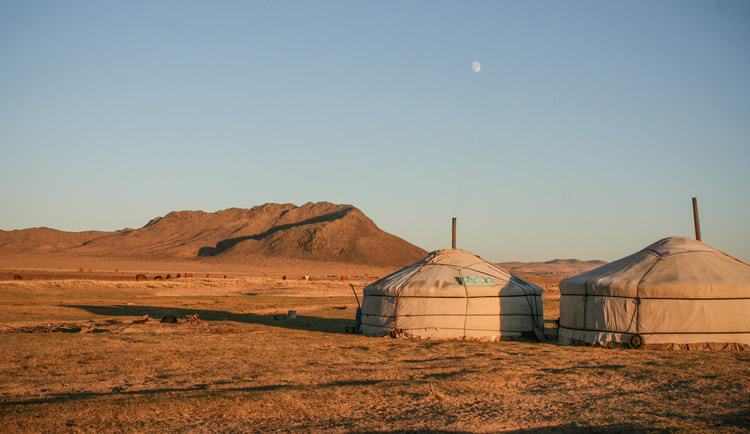 اليورت (الخيمة) التقليدية Michael Chu (CC BY-NC-ND) ](https://www.worldhistory.org/image/11224/traditional-yurts/ "Traditional Yurts")اعتمد غذاء المغول على منتجات الألبان أساسًا كالجبن واللبن والزبدة وخثارة الحليب المجفف (كُرُف)، وصنعوا شرابًا كحوليًا معتدلًا هو الكُمِس من حليب الفرس وشربوه بكثرة، واصطادوا الحيوانات البرية ليأكلوا لحمها متجنبين أكل لحم قطعانهم الثمينة التي تمدهم بالحليب والصوف وحتى الروث الذي استعملوه وقودًا، وقد جمعوا الفواكه والخضروات من البرية، واعتادوا تنظيم حملات الصيد الخاصة لجمع ما يحتاجون من طعام خلال الشتاء ولأجل الأعياد الخاصة كمناسبة تجمع القبائل بين حين وآخر. في مثل هذه المناسبات اتبع المغول استراتيجيةً دعوها «نَرغة» تطوق فيها الخيالة مساحةً شاسعةً من السهوب لتدفع بالطرائد -التي تشمل كل أنواع الحيوانات من الغرير إلى الذئاب- إلى مساحة أصغر ليصطادها رماة السهام على خيولهم بصورة أسهل. وقد استفاد المغول في حروبهم مما تعوده من أساليب النرغة وطرائق تنظيمها والانضباط الذي تتطلبه، وما يزال بدو السهوب في آسيا يحتفظون -حتى اليوم- بكثير من ملامح حياة المغول اليومية في العصور الوسطى.
في الحياة البدوية عمومًا، يهتم الرجال بالصيد بينما تهتم النساء بالطبخ، لكن تقسيم العمل لم يكن واضحًا دومًا وعادةً ما يستطيع الجنسان القيام بمهام أحدهما الآخر مثل ركوب الخيل واستعمال القوس لإطلاق السهام. رعت نساء المغول الماشية ونصبن المخيمات ورفعنها عند الرحيل، وقدن عربات القبيلة ورعين أطفالهن وحضّرن الطعام واستقبلن الضيوف، وكانت لنساء المغول حقوق أكثر من حقوق النساء في الثقافات الآسيوية المعاصرة لهن، وكان لهن أن يحتفظن بالممتلكات وأن يرثنها، حتى أن بعضهن تولين الحكم بصفتهن وصيات على العرش في فترات فاصلة بين عهود الخاقانات الكبار. ولم يقتصر الأمر على ذلك؛ إذ نشطت المغوليات في مجالات أخرى مثل الدين.
### المعتقدات الدينية
لم يكن للدين المغولي كتابٌ مقدس أو طقوس محددة، بل كان خليطًا من الأرواحية (تأليه الحيوانات) وعبادة السلف والشامانية، وجعل المغول أرواحًا لعناصر كالنار والأرض والماء ولمواقع جغرافية مهيبة كالجبال ولظواهر طبيعية كالعواصف، واعتقدوا بقدرة الشامان (رجلًا كان أو امرأة) على التواصل مع هذه الأرواح حين يغشى عليه، وبقدرته -في تلك الحالة- على التنقل في عالمهم يساعد في العثور على الأرواح التائهة والأحداث الإلهية المستقبلية.
واعتنق بعض المغول ديانات أخرى خصوصًا [المسيحية](https://www.worldhistory.org/trans/ar/1-665/) النسطورية، ومنذ القرن 14 للميلاد انتشرت بينهم الديانة البوذية التيبتية (اللامية)، وربما يرجع سبب انتشارها إلى عناصرها الشامانية، أما في الخاقانات الغربية فقد اعتنق معظم المغول الدين الإسلامي. أهم ما في الديانة المغولية هو الاعتقاد بإلهين رئيسيين: الأرض أو الإلهة الأم «إيتوغين» التي مثلت الخصوبة، والسماء الزرقاء (السماء اللامتناهية) أو الإله الأب الحامي «تينغري» (غوك مونغي تينغيري) الذي أعطى لأمة المغول -حسب اعتقاد نخبة قبائلهم- الحق المقدس في حكم العالم بأسره، وهو الحق الذي استغله جنكيز خان وخلفاؤه أبشع استغلال حين فتحوا معظم قارة آسيا صانعين أكبر إمبراطورية شهدها التاريخ حتى وقتهم.
### التأسيس على يد جنكيز خان
كانت القبائل المغولية المتنقلة التي اعتادت على الحياة القاسية حينئذ قادرة على التحرك السريع ومدربة -منذ نعومة أظافر أبنائها- على ركوب الخيل ورمي السهام، وجعلت هذه المزايا المغولَ محاربين أشداء قادرين على القيام بحملات عسكرية طويلة ومعقدة تغطي مساحات واسعة في وقت قصير وبأقل قدر ممكن من الإمدادات، وحتى مهام النساء ودَورهن في نصب المخيمات والنقل ساعدت الجيش المغولي إذ وفرت النساء لأزواجهن المحاربين ما يحتاجون من دعم لوجستي.
ربما كان جنكيز خان أول قائد مغولي يدرك قدرة أمته على حكم العالم إن توحدت عشائرهم وقبائلهم المختلفة. لقد ولِد جنكيز (كان اسمه تيموجين عند الولادة) نحو 1162 م، وتغلب على طفولة قاسية من الهجر والفقر حتى أثبت نفسه قائدًا عسكريًا تابعًا لزعيم قبيلة كيرايت «توغريل». سرد قصةَ جنكيز كتابُ «التاريخ السري للمغول»؛ وهو سجل من القرن 13 للميلاد يُعد أفضل مصادرنا الأساسية عن الإمبراطورية المغولية المبكرة. صار جنكيز -في غضون 10 سنوات، بين 1195 إلى 1205- قائدًا لا يسوده أحد، فوسع من منطقة نفوذه تدريجيًا بمزيجٍ قاسٍ من الدبلوماسية والحرب والإرهاب، وقد وضِع معظمُ المحاربين أمام خيار الانضمام للقائد الشاب أو الإعدام. أجبرت قبائل كالتتار (وهو الاسم الخاطىء الذي استعمله الغربيون في العصور الوسطى للإشارة إلى المغول) والكيريد والنيمان والميركيد على الخضوع، وفي 1206 م ضم اجتماع عظيم (كورولتاي) كل قادة القبائل فاعترفوا رسميًا بجنكيز خان خاقانًا عظيمًا أو «حاكمًا كونيًا» يحكم أمة المغول.
[  خريطة الإمبراطورية المغولية Arienne King (CC BY-NC-SA) ](https://www.worldhistory.org/image/11309/map-of-the-mongol-empire/ "Map of the Mongol Empire")حاول الخان توحيد مملكته أكثر بإصراره على كتابة اللغة المغولية حصرًا بحروف الترك الأويغور، وبإصداره شريعة قانونية أبدية هي الـ «ياسا» (الياسق)، هذا وقد تحسنت الاتصالات كثيرًا بتأسيس الـ «يام»؛ وهي شبكة من محطات متعاقبة يستعملها السعاة للتزود بالمؤونة حين يتنقلون عبر البلاد. وهكذا بدأت الإمبراطورية بحماس وسرعان ما نمت وكبرت وتوسعت.
### التوسع: شمالي الصين وبلاد فارس
وصل قادة القبائل المغول إلى مراكزهم وحافظوا عليها عادةً عن طريق توزيع غنائم الحرب بين أتباعهم المخلصين، ولم يكن جنكيز مختلفًا عنهم في ذلك. تأسس الجيش المغولي حول لب مكون من 10000 مقاتل يشكلون حرس الخان الخاص (الكيسكتين)؛ وحظي أعضاء من هذه النخبة بمراكز إدارية مرموقة عبر الإمبراطورية، أما القوات الإضافية فقد جُنِّدت إلزاميًا من بين أفراد القبائل المغولية وعن طريق تشكيل فرق من مقاتلي الحلفاء والأراضي المفتوحة. كان أهم الأسلحة الهجومية هو سلاح الخيالة الخفيفة براكبي خيولها الخبراء بإطلاق السهام من أقواس المغول المركبة المشهورة بقوتها، وكانت الخيول قيّمة لقوة احتمالها وجلادتها، ولكثرة عددها أيضًا التي وفرت للخيالة حتى 16 حصانًا احتياطيًا، ما أعطى الجيش قدرة هائلة على التنقل عبر المسافات الكبيرة بسرعة عظيمة.
كان أول أهداف جنكيز بعد تنصيبه خانًا أعظم هو دولة شين (1115-1234 م) شمالي الصين، ونجحت سرعة الخيالة المغول ووسائل الإرهاب التي اتبعوها حين استولوا على المدن نجاحًا بالغًا حتى اضطرت سلالة شين الممزقة إلى الانسحاب جنوبًا، وزامن الهجوم على شين استهدافُ دولة التانغوت «شيا الغربية» (1038-1227 م) الواقعة شمالي الصين أيضًا، التي فشلت كذلك في إيقاف تقدم جنكيز العنيد عبر آسيا الشرقية. كان ثالث أهداف المغول في تلك الحقبة هو سلالة سونغ الصينية (960-1279 م)، التي كانت أكثر ثراءً وأعظم قوة من جيرانها، حتى أنها استطاعت الاستمرار رغم احتلال جنكيز لكثير من مدنها، لكن وقت سقوطها كان سيحين فيما بعد. وبحلول سنة 1219 م كان جنكيز قد هاجم حتى كوريا الشمالية في مطاردته قبائل الخيتان المثيرة للمشاكل والتي لجأت إليها.
[  تمثال نصفي لجنكيز خان Jim Garamone (Public Domain) ](https://www.worldhistory.org/image/11220/bust-of-genghis-khan/ "Bust of Genghis Khan")لينال لقب «الحاكم الكوني» بجدارة، حول جنكيز انتباهه الآن نحو غربي آسيا، فبدأ هجومه على الإمبراطورية الخوارزمية سنة 1218 م، حين توجه جيش مغولي مكون من مئة ألف مقاتل نحو المنطقة فمسحها مستوليًا على مدن مهمة كبخارى وسمرقند، وفي 1221 وصل المغول إلى شمالي أفغانستان، وفي السنة التالية هزموا جيشًا روسيًا في كالكا قبل أن يحيطوا ببحر قزوين في طريق عودتهم إلى بلادهم. وقد أطلق مسلمو المنطقة على جنكيز لقب «الملعون»، فقد مسح مدنهم وذبح المدنيين ودمر حتى أنظمة الري. انقلب العالم الآسيوي رأسًا على عقب في أقل من عقدين، ثم مات جنكيز خان بتاريخ 18 آب 1227 م بسبب مرض غير معروف، لكن خلفاءه سيحرصون على استمرار النظام العالمي الجديد بعد وفاة مؤسسه.
### أوقطاي خان يهاجم أوروبا
أصدر جنكيز أمرًا بتقسيم إمبراطوريته بين أولاده الأربعة: جوتشي (جوكال) وجغطاي (جاغطاي) وتولي (تولاي) وأوقطاي، ليحكم كل منهم خانية من الخانيات (خاقانية من الخاقانيات)، لكن جوتشي مات عام 1227 م قبل وفاة والده، وأصبح أوقطاي خانًا عظيمًا (حكم 1229-1241 م) أي حاكمًا للمغول بأسْرِهم، واستمرت الإمبراطورية الموحدة بالوجود حتى 1260 م حين صارت كل خانية من الخانيات الأربع مستقلة بنفسها تمامًا (كما سيرد ذكر ذلك).
عزز أوقطاي من جهاز الدولة المغولية بتعيينه وزراء وأعضاء من الحرس الإمبراطوري حكامًا محليين (داروقاتشي)، وإجرائه إحصاءً سكانيًا، وفرضه ضريبة منظمة مناسبة (بعكس ما ساد قبله من ممارسة مصادرة الممتلكات)، وفي 1235 م اختار عاصمةً له هي كاراكوروم (قراقورم) بمنغوليا، وقد شهد عهده توسع شبكة اليام (البريد) وحُميت الآبار على مر طرق التجارة ومُنح المسافرون من التجار حماية عسكرية.
أما من ناحية الفتوحات فقد أكمل أوقطاي من حيث انتهى سلفه، وبمساعدة القائد العسكري الموهوب سوبوتاي (تسوبودي، 1176-1248 م) الذي عُرف بوصفه أحد كلاب صيد الخان الأربعة، أطلق أوقطاي حملة على شين في 1230\\1231 فسقطت عاصمتها «كايفنغ» سنة 1233، أما حملة سنة 1234 فقد أدت إلى انتحار إمبراطور شين «أيزونغ» (حكم 1224-1234 م) وانهيار دولة شين النهائي، وقد غُزيت كوريا مرارًا وتكرارًا في هذه المرحلة الزمنية أيضًا.
[  إعادة إنشاء شكل محارب مغولي William Cho (CC BY-SA) ](https://www.worldhistory.org/image/11223/mongol-warrior-reconstruction/ "Mongol Warrior Reconstruction")ونظم سوبوتاي -منذ 1235 م- الحملة العسكرية عبر أواسط آسيا فسقطت أمامه مدن مثل تبليسي (تفليس)، وفي الفترة 1236-1242 م زحف جيش تعداده 150 ألف رجل؛ موزعين في خمس فرق، عبر كازاخستان وأوزبكستان ليهاجم أوروبا الشرقية حول نهر الفولغا فانتصر على البلغار والروس والبولنديين والهنغاريين في حملات عديدة، ولأن الناس لم يعرفوا مصدر قدوم خيالة المغول عادةً فقد أطلقوا عليهم لقب خيالة الشيطان، وقد سقطت أمامهم مدن كييف (سنة 1240) وكراكاو (1241) وبودا وبيست (1241) فنهبوها جميعًا. يبدو أن موت أوقطاي، لا غير، سنة 1241 م هو الذي أنقذ أوروبا من توغلات أخرى إذ رغب قادة المغول -عند سماعهم نبأ الوفاة- بالرجوع إلى قراقورم لينتخبوا خانًا جديدًا، وكان الخانان اللاحقان هما جيوك خان (غويوك خان، حكم 1246-1248) ومونكو خان (حكم 1251-1259) توسط حكمَهما حكمُ الأوصياء على العرش، لكن الذي أظهر طموحًا كبيرًا فنقل الفتوحات المغولية إلى مستوى جديد تمامًا هو قوبلاي؛ حفيد جنكيز.
### قوبلاي خان يهاجم الصين واليابان
حكم قوبلاي خان المغول بين 1260 و1294 م، لكنه كان قد أثبت نفسه قبل ذلك حين شارك في حملة مونكو خان ضد دولة سونغ في الصين. اضطر قوبلاي أن يخوض الحرب ضد أخيه الأصغر أريك بوك (1219-1266) لحيازة منصب الخان الأعظم، وانتصر قوبلاي رغم أن الإمبراطورية انقسمت إلى أربعة خانيات فعليًا فاحتفظ بأغناها. كان قوبلاي يطمح إلى لقب أكثر تميزًا هو «إمبراطور الصين» لذلك هاجم دولة سونغ مجددًا ولكنه استعمل -هذه المرة- أسلوب حصار المدن ودكّها بالمنجنيقات المتطورة التي انتقلت معرفتها إلى المغول من مناطق غربي آسيا، فسقطت المدن أمامه تباعًا لأكثر من 11 سنة حتى فتح العاصمة «لِن آن» (هانغتشو الحالية، والخنساء عند الرحالة العرب) في 28 آذار 1276 م، وبفتحها سقطت سلالة سونغ. وفي 19 آذار 1279 انتصر في معركة بحرية عظيمة عند يايشان (يامن) قرب ماكاو حاليًا فضرب مثالًا جديدًا على تكيف الجهاز الحربي المغولي، وبهذا الانتصار قُضي تمامًا على آخر مقاومة أبدتها دولة سونغ. فهزم قوبلاي البلاد التي حلم بهزيمتها جميع بدو السهوب الذين سبقوه: دولة الصين العظيمة الثرية.
أعلن قوبلاي نفسه إمبراطور الصين في 1271 م واستهل حكم سلالة يوان (التي تعني الأصل أو المركز)، وصارت دايدو (بكين الحالية، أو خان بالق عند العرب تاريخيًا) عاصمته الجديدة مع احتفاظه بزانادو (شانغدو) في الشمال الشرقي بصفتها عاصمةً الإمبراطور الصيفية. مثلما كان فاتحًا شديد البأس كان قوبلاي إداريًا قديرًا، نظم دولته الهائلة الحجم في 12 مقاطعة وشجع التجارة بفرضه رسومًا ضريبيةً تحابي التجار وإصداره نقودًا ورقية وتحسينه شبكة الطرق والقنوات لنقل البضائع بسهولة. لكن قوبلاي لم يرضَ بذلك بل شنّ حملتين على اليابان في 1274 و1281 لقيتا الفشل بسبب المقاومة المحلية الصامدة والعواصف الرهيبة التي يطلق عليها اليابانيون اسم كاميكازي (الرياح الإلهية)، ومع ذلك لم يَهَب قوبلاي الفشل بل شن سلسلة هجمات على جنوب شرق آسيا حين غزا فيتنام (1257 و1281 و1286) وبورما (1277 و1287) وجزيرة جاوة (1292)، لم تكن نتائجها إلا خليطًا من الربح والخسارة، وبدا أن إمبراطورية المغول قد وصلت قمتها ولن يشهد القرن 13 للميلاد منذ الآن إلا انحدارها.
[  خانيات الإمبراطورية المغولية الأربع Arienne King (CC BY-NC-SA) ](https://www.worldhistory.org/image/11439/four-khanates-of-the-mongol-empire/ "Four Khanates of the Mongol Empire")### الخانيات والانحدار
بينما انشغل الخانات العظماء بالجزء الشرقي من الإمبراطورية المغولية، سارت الأجزاء الوسطى والغربية في طريقها الخاص. أسس باتو خان (ت 1255 م) حفيد جنكيز خانية القبيلة الذهبية المتمركزة في وسط السهب الأوراسي نحو 1227 م، واستمرت أكثر من باقي الخانيات المغولية حتى قُضي عليها رسميًا سنة 1480، مع أن الروس والليتوانيين استعادوا نشاطهم منذ منتصف القرن الرابع عشر للميلاد، بينما أسس هولاكو (ت 1265 م)، وهو حفيد آخر لجنكيز، خانية الإلخانية المتمركزة في بلاد فارس نحو 1260 م، واستمرت مهددة من قِبل جارتها الجنوب شرقية: سلطنة المماليك (1261-1517 م)، قبل أن تتفكك عام 1335 بسبب النزاع على الحكم. وأخيرًا أسس أبن جنكيز الثاني «جاغطاي» (1183-1242) خانيته الخاصة التي ستبقى أكثر الدول مغولية حيث أثبتت الجذور البدوية صعوبة اقتلاعها، لكنها انهارت كذلك بسبب الصراع على الحكم عام 1363 م.
استمر القتال مستعرًا بين الخانيات الغربية الثلاث في نزاعات حدودية، وسوف تتبنى كل خانية منها الإسلام دينًا لها في النهاية، ما سيضيف سببًا آخر للخلاف بين النُخب. وأخيرًا سيستولي تيمور (تيمورلنك) مؤسس الإمبراطورية التيمورية (1370-1507) على أراضي الخانيتين الإلخانية والجاغطاي. استسلمت حتى يوان الصينية للحروب الأهلية المألوفة التي أشعلتها مجموعات منافسة، وباقتصاد ضعيف تحاصرها المجاعات والثورات المحلية سقطت يوان أمام سلالة مينغ التي حكمت الصين عام 1368 م؛ ففي النهاية صار المغول جزءًا من المجتمعات الحضرية التي كانوا قد فتحوا أراضيها من قبل بسهولة بالغة، ما جعلهم عرضة -كأي دولة أخرى- للسقوط أمام أولئك الذين شاءوا تبني الأفكار والتقنيات الجديدة.
### التراث المغولي
ربما لم يُتعب المغولُ أمناءَ المتاحف المعاصرين بقطعهم الفنية وربما لم يتركوا صروحًا أنيقة بديعة، لكنهم تركوا تراثًا خالدًا بطرق أخرى. وقد يكون أعظم تأثير تركوه على الثقافة العالمية إقامتهم أول خطوط اتصال جدية بين الشرق والغرب؛ فالإمبراطورية المغولية التي كانت أكبر إمبراطورية برية متلاصقة حتى وقتها بامتدادها عبر خُمس أراضي الكوكب وبجنودها الذين كانوا يقاتلون فرسان التيوتون في طرف ويواجهون محاربي الساموراي في الطرف الآخر، ولم يكن أيًا من الساكنين عند الطرفين يعرف بوجود الآخر، هذه الإمبراطورية هي التي وصلت الطرفين ببعضهما. فالصينيون والأوروبيون حينها رأوا في أراضي الآخر مكانًا شبه أسطوري مسكونًا بالوحوش، لكن السفراء والمبشرين والتجار والرحالة -كماركو بولو (1254-1324)- كانوا يُشجَّعون للسفر عبر آسيا بحُريّة، فازداد التواصل وانتشرت الأفكار والأديان، حتى صار البارود والورق والطباعة والبوصلة أمورًا مألوفة في أوروبا. وقد نشر المغول أفكارًا تختص بالمطبخ أيضًا، كطريقة صنع السولين (الشولين)؛ وهو حساء ثريد مغولي ما زال منتشرًا في ربوع آسيا حتى اليوم. لكن كانت هناك -للأسف- عواقب ضارة أيضًا لهذا الاتصال، كالموت الأسود (1347-1352) الذي انتقل أولًا من جيب في الصين البعيدة إلى البحر الأسود ومنه إلى البندقية وباقي أنحاء أوروبا. أما في منغوليا، فما زال الناس يذكرون الإمبراطورية بإعزاز باعتبارها حقبة ذهبية، وما زال مؤسسها جنكيز خان يُكرم في احتفالات منتظمة في عاصمة منغوليا الحديثة «أولان باتور».
#### Editorial Review
This human-authored definition has been reviewed by our editorial team before publication to ensure accuracy, reliability and adherence to academic standards in accordance with our [editorial policy](https://www.worldhistory.org/static/editorial-policy/).
## قائمة المصادر والمراجع
- [Broadbridge, A.F. *Women and the Making of the Mongol Empire.* Cambridge University Press, 2018.](https://www.worldhistory.org/books/1108441009/)
- [Buell, P.D. *Historical Dictionary of the Mongol World Empire.* Rowman & Littlefield Publishers, 2018.](https://www.worldhistory.org/books/1538111365/)
- [Ebrey, P.B. *Pre-Modern East Asia.* Cengage Learning, 2013.](https://www.worldhistory.org/books/1133606512/)
- [Lane, G. *Daily Life in the Mongol Empire.* Hackett Publishing Company, Inc., 2009.](https://www.worldhistory.org/books/0872209687/)
- [May, T. *The Mongol Empire.* Edinburgh University Press, 2018.](https://www.worldhistory.org/books/0748642366/)
- [Morgan, D. *The Mongols by David Morgan.* Wiley-Blackwell, 2019.](https://www.worldhistory.org/books/B01FGL17HW/)
- [Rossabi, M. *A History of China.* Wiley-Blackwell, 2013.](https://www.worldhistory.org/books/1577181131/)
- [Saunders, J.J. *The History of the Mongol Conquests.* University of Pennsylvania Press, 2001.](https://www.worldhistory.org/books/0812217667/)
- [Turnbull, S. *Genghis Khan & the Mongol Conquests 1190-1400.* Osprey Publishing, 2003.](https://www.worldhistory.org/books/1841765236/)
- [Turnbull, S. *Mongol Warrior 1200-1350.* Osprey Publishing, 2003.](https://www.worldhistory.org/books/184176583X/)
- [Turnbull, S. *The Mongols.* Osprey Publishing, 1980.](https://www.worldhistory.org/books/0850453720/)
## نبذة عن الكاتب
مارك كاتب وباحث ومؤرخ ومحرر متفرغ. يهتم بالفنون والعمارة وباكتشاف الأفكار والمفاهيم مشتركة بين الحضارات. حاصل على درجة الماجستير في الفلسفة السياسية ويشغل منصب مدير النشر في موسوعة تاريخ العالم.
## الجدول الزمني
- **c. 1162 CE - 1227 CE**: Life of [Genghis Khan](https://www.worldhistory.org/Genghis_Khan/), founder of the [Mongol Empire](https://www.worldhistory.org/Mongol_Empire/).
- **1205 CE**: The [Mongols](https://www.worldhistory.org/Mongol_Empire/) attack the [Jurchen Jin state](https://www.worldhistory.org/Jurchen_Jin_Dynasty/) in northern [China](https://www.worldhistory.org/china/).
- **1205 CE - 1255 CE**: Life of the [Mongol](https://www.worldhistory.org/Mongol_Empire/) military commander and grandson of [Genghis Khan](https://www.worldhistory.org/Genghis_Khan/), [Batu Khan](https://www.worldhistory.org/Batu_Khan/).
- **1206 CE**: A great [Mongol](https://www.worldhistory.org/Mongol_Empire/) conference of tribal leaders (khuriltai) awards Temujin the title of [Genghis Khan](https://www.worldhistory.org/Genghis_Khan/) ('universal ruler').
- **1206 CE - 1227 CE**: Reign of [Genghis Khan](https://www.worldhistory.org/Genghis_Khan/) as the ruler of the [Mongol Empire](https://www.worldhistory.org/Mongol_Empire/).
- **1206 CE - 1368 CE**: The [Mongol Empire](https://www.worldhistory.org/Mongol_Empire/) rules in Central and East Asia.
- **1209 CE**: The [Mongols](https://www.worldhistory.org/Mongol_Empire/) attack the [Jurchen Jin state](https://www.worldhistory.org/Jurchen_Jin_Dynasty/) in northern [China](https://www.worldhistory.org/china/).
- **1209 CE**: The [Mongols](https://www.worldhistory.org/Mongol_Empire/) attack the Tangut state of Xi Xia.
- **1209 CE**: The [Mongols](https://www.worldhistory.org/Mongol_Empire/) attack the [Jurchen Jin state](https://www.worldhistory.org/Jurchen_Jin_Dynasty/) in northern [China](https://www.worldhistory.org/china/).
- **1211 CE**: The [Mongols](https://www.worldhistory.org/Mongol_Empire/) attack the [Jurchen Jin state](https://www.worldhistory.org/Jurchen_Jin_Dynasty/) in northern [China](https://www.worldhistory.org/china/).
- **1212 CE - 1215 CE**: The [Mongols](https://www.worldhistory.org/Mongol_Empire/) attack Song [China](https://www.worldhistory.org/china/), sacking over 90 [cities](https://www.worldhistory.org/city/).
- **1214 CE**: The [Jurchen Jin state](https://www.worldhistory.org/Jurchen_Jin_Dynasty/) signs a short-lived peace treaty with the [Mongol Empire](https://www.worldhistory.org/Mongol_Empire/) and is obliged to pay tribute.
- **1215 CE**: The [Mongols](https://www.worldhistory.org/Mongol_Empire/) attack the Tangut state of Xi Xia.
- **1215 CE**: The [Mongols](https://www.worldhistory.org/Mongol_Empire/) sack Beijing.
- **1215 CE**: The [Mongols](https://www.worldhistory.org/Mongol_Empire/) attack the [Jurchen Jin state](https://www.worldhistory.org/Jurchen_Jin_Dynasty/) in northern [China](https://www.worldhistory.org/china/).
- **1218 CE - 1220 CE**: The [Mongols](https://www.worldhistory.org/Mongol_Empire/) attack the Khwarazm [Empire](https://www.worldhistory.org/empire/) in Central Asia.
- **1219 CE**: A [Goryeo](https://www.worldhistory.org/Goryeo/) army allies with the [Mongols](https://www.worldhistory.org/Mongol_Empire/) to attack the [Khitan](https://www.worldhistory.org/Khitan/) in northern [Korea](https://www.worldhistory.org/Korea/).
- **1221 CE**: The [Mongols](https://www.worldhistory.org/Mongol_Empire/) attack northern Afghanistan.
- **1223 CE**: The [Mongols](https://www.worldhistory.org/Mongol_Empire/) defeat an army of the [Kievan Rus](https://www.worldhistory.org/Kievan_Rus/) at Kalka.
- **c. 1227 CE - 1242 CE**: Reign of Chagatai Khan, ruler of the [Mongol](https://www.worldhistory.org/Mongol_Empire/) [Chagatai Khanate](https://www.worldhistory.org/Chagatai_Khanate/) named after him.
- **c. 1227 CE - 1363 CE**: The [Mongol](https://www.worldhistory.org/Mongol_Empire/) [Chagatai Khanate](https://www.worldhistory.org/Chagatai_Khanate/) rules in Central Asia.
- **18 Aug 1227 CE**: [Death](https://www.worldhistory.org/disambiguation/Death/) of [Genghis Khan](https://www.worldhistory.org/Genghis_Khan/) from illness.
- **1228 CE - 1240 CE**: Composition of [the Secret History of the Mongols](https://www.worldhistory.org/The_Secret_History_of_the_Mongols/).
- **1229 CE - 1241 CE**: Reign of [Ogedei Khan](https://www.worldhistory.org/Ogedei_Khan/) as the ruler of the [Mongol Empire](https://www.worldhistory.org/Mongol_Empire/).
- **1230 CE - 1231 CE**: The [Mongols](https://www.worldhistory.org/Mongol_Empire/) attack the [Jurchen Jin State](https://www.worldhistory.org/Jurchen_Jin_Dynasty/).
- **1231 CE - 1232 CE**: [Ogedei Khan](https://www.worldhistory.org/Ogedei_Khan/) leads a [Mongol](https://www.worldhistory.org/Mongol_Empire/) invasion into [Korea](https://www.worldhistory.org/Korea/).
- **1233 CE**: Kaifeng, capital of the [Jurchen Jin State](https://www.worldhistory.org/Jurchen_Jin_Dynasty/), falls after a lengthy siege by the [Mongols](https://www.worldhistory.org/Mongol_Empire/).
- **1234 CE - 1236 CE**: [Ogedei Khan](https://www.worldhistory.org/Ogedei_Khan/) orders a census to be conducted for tax purposes across northern [China](https://www.worldhistory.org/china/).
- **Feb 1234 CE**: The [Mongols](https://www.worldhistory.org/Mongol_Empire/) attack and [conquer](https://www.worldhistory.org/warfare/) the [Jurchen Jin State](https://www.worldhistory.org/Jurchen_Jin_Dynasty/) in northern [China](https://www.worldhistory.org/china/).
- **1235 CE**: [Ogedei Khan](https://www.worldhistory.org/Ogedei_Khan/) orders the construction of a new capital of the [Mongol Empire](https://www.worldhistory.org/Mongol_Empire/) at [Karakorum](https://www.worldhistory.org/Karakorum/), Mongolia.
- **1235 CE**: The [Mongols](https://www.worldhistory.org/Mongol_Empire/) invade northern Iraq and western Asia
- **1235 CE - 1263 CE**: [Karakorum](https://www.worldhistory.org/Karakorum/) is capital of the [Mongol Empire](https://www.worldhistory.org/Mongol_Empire/).
- **1236 CE - 1242 CE**: Multiple [Mongol](https://www.worldhistory.org/Mongol_Empire/) armies attack western Asia, Russia, Poland, and Hungary.
- **21 Dec 1237 CE**: The [city](https://www.worldhistory.org/city/) of Ryazan (Riazan) is besieged and captured by the [Mongols](https://www.worldhistory.org/Mongol_Empire/).
- **1238 CE**: The [Mongols](https://www.worldhistory.org/Mongol_Empire/) invade Azerbaijan, Georgia, and [Armenia](https://www.worldhistory.org/armenia/).
- **7 Feb 1238 CE**: The [Mongols](https://www.worldhistory.org/Mongol_Empire/) capture the [city](https://www.worldhistory.org/city/) of Vladimir.
- **23 Mar 1238 CE**: The [Mongols](https://www.worldhistory.org/Mongol_Empire/) capture the [city](https://www.worldhistory.org/city/) of Torshok.
- **1240 CE**: The [Mongols](https://www.worldhistory.org/Mongol_Empire/) sack Halych.
- **6 Dec 1240 CE**: The [Mongols](https://www.worldhistory.org/Mongol_Empire/) capture Kiev.
- **9 Apr 1241 CE**: The [Mongols](https://www.worldhistory.org/Mongol_Empire/) defeat an army led by Henry the Pious, the Duke of Silesia, near Liegnitz (Legnica).
- **10 Apr 1241 CE - 11 Apr 1241 CE**: The [Mongols](https://www.worldhistory.org/Mongol_Empire/) defeat an army led by Bela IV, king of Hungary, at the [Battle](https://www.worldhistory.org/disambiguation/battle/) of Mohi.
- **Dec 1241 CE**: The [Mongols](https://www.worldhistory.org/Mongol_Empire/) capture Buda and Pest.
- **Dec 1241 CE**: The [Mongols](https://www.worldhistory.org/Mongol_Empire/) capture the great [city](https://www.worldhistory.org/city/) of Gran (Esztergom) in Hungary.
- **11 Dec 1241 CE**: [Ogedei Khan](https://www.worldhistory.org/Ogedei_Khan/), ruler of the [Mongol Empire](https://www.worldhistory.org/Mongol_Empire/), dies at the capital [Karakorum](https://www.worldhistory.org/Karakorum/).
- **1242 CE**: [Death](https://www.worldhistory.org/disambiguation/Death/) of Chagatai, ruler of the [Chagatai Khanate](https://www.worldhistory.org/Chagatai_Khanate/).
- **1246 CE - 1248 CE**: Reign of Guyuk Khan as ruler of the [Mongol Empire](https://www.worldhistory.org/Mongol_Empire/).
- **1251 CE**: [Batu Khan](https://www.worldhistory.org/Batu_Khan/) and the Jochid-Toluid kurultai declare Mongke Great Khan of the [Mongols](https://www.worldhistory.org/Mongol_Empire/).
- **1251 CE - 1259 CE**: Reign of [Mongke Khan](https://www.worldhistory.org/Mongke_Khan/), ruler of the [Mongol Empire](https://www.worldhistory.org/Mongol_Empire/).
- **1253 CE - 1255 CE**: The Franciscan missionary and chronicler William of Rubruck visits the [Mongol Empire](https://www.worldhistory.org/Mongol_Empire/), including the capital [Karakorum](https://www.worldhistory.org/Karakorum/).
- **1253 CE - 1260 CE**: A [Mongol](https://www.worldhistory.org/Mongol_Empire/) army led by Hulegu invades [Persia](https://www.worldhistory.org/Persia/) and the Middle East.
- **1256 CE**: The [Mongols](https://www.worldhistory.org/Mongol_Empire/) defeat the Ismailis (aka [the Assassins](https://www.worldhistory.org/The_Assassins/)) in [Persia](https://www.worldhistory.org/Persia/).
- **1257 CE**: The [Mongols](https://www.worldhistory.org/Mongol_Empire/) invade Vietnam.
- **1257 CE**: The [Mongols](https://www.worldhistory.org/Mongol_Empire/) [conquer](https://www.worldhistory.org/warfare/) the Dali kingdom in southern [China](https://www.worldhistory.org/china/).
- **1258 CE**: An uprising restores the monarchy in [Korea](https://www.worldhistory.org/Korea/) and makes peace with the [Mongol Empire](https://www.worldhistory.org/Mongol_Empire/).
- **1258 CE**: The [Mongols](https://www.worldhistory.org/Mongol_Empire/) [conquer](https://www.worldhistory.org/warfare/) the [Abbasid Caliphate](https://www.worldhistory.org/Abbasid_Dynasty/). During this campaign there is the infamous sacking of Baghdad and murder of the caliph.
- **11 Aug 1259 CE**: [Death](https://www.worldhistory.org/disambiguation/Death/) of [Mongke Khan](https://www.worldhistory.org/Mongke_Khan/), ruler of the [Mongol Empire](https://www.worldhistory.org/Mongol_Empire/).
- **Dec 1259 CE**: The [Mongols](https://www.worldhistory.org/Mongol_Empire/) besiege and capture Aleppo in [Syria](https://www.worldhistory.org/syria/).
- **1260 CE - 1264 CE**: [Kublai Khan](https://www.worldhistory.org/Kublai_Khan/) fights a civil [war](https://www.worldhistory.org/disambiguation/War/) with his brother Ariq Boke for control of the [Mongol Empire](https://www.worldhistory.org/Mongol_Empire/).
- **1260 CE - 1265 CE**: Hulegu rules the [Ilkhanate](https://www.worldhistory.org/Ilkhanate/).
- **1260 CE - 1294 CE**: Reign of [Kublai Khan](https://www.worldhistory.org/Kublai_Khan/), ruler of the [Mongol Empire](https://www.worldhistory.org/Mongol_Empire/).
- **1260 CE - 1335 CE**: The [Mongol](https://www.worldhistory.org/Mongol_Empire/) [Ilkhanate](https://www.worldhistory.org/Ilkhanate/) rules in Iran and neighbouring territories.
- **1262 CE**: [Kublai Khan](https://www.worldhistory.org/Kublai_Khan/) captures [Karakorum](https://www.worldhistory.org/Karakorum/) after his rival nAriq Boke (1219-1266 CE) used it as his base.
- **1263 CE - 1273 CE**: [Xanadu](https://www.worldhistory.org/Xanadu/) is the capital of the [Mongol Empire](https://www.worldhistory.org/Mongol_Empire/).
- **1265 CE - 1282 CE**: Abaqa rules the [Ilkhanate](https://www.worldhistory.org/Ilkhanate/).
- **1268 CE**: [Kublai Khan](https://www.worldhistory.org/Kublai_Khan/) resumes the [Mongol](https://www.worldhistory.org/Mongol_Empire/) attacks on [Song Dynasty](https://www.worldhistory.org/Song_Dynasty/) [China](https://www.worldhistory.org/china/).
- **1270 CE**: Abaqa, ruler of the [Ilkhanate](https://www.worldhistory.org/Ilkhanate/), defeats Baraq, ruler of the [Chagatai Khanate](https://www.worldhistory.org/Chagatai_Khanate/), at the [battle](https://www.worldhistory.org/disambiguation/battle/) of Herat.
- **1270 CE**: Part of northern [Korea](https://www.worldhistory.org/Korea/) is conquered by the [Mongol Empire](https://www.worldhistory.org/Mongol_Empire/).
- **1271 CE**: The [Ilkhanate](https://www.worldhistory.org/Ilkhanate/) signs a [trade](https://www.worldhistory.org/disambiguation/trade/) agreement with Venice.
- **1271 CE - 1368 CE**: The [Mongol](https://www.worldhistory.org/Mongol_Empire/) [Yuan Dynasty](https://www.worldhistory.org/Yuan_Dynasty/), founded by [Kublai Khan](https://www.worldhistory.org/Kublai_Khan/), rules [China](https://www.worldhistory.org/china/).
- **1272 CE - 1301 CE**: The [Mongol](https://www.worldhistory.org/Mongol_Empire/) leader Qaidu II dominates Central Asia and nominates khans to rule the [Chagatai Khanate](https://www.worldhistory.org/Chagatai_Khanate/).
- **1273 CE**: Abaqa, ruler of the [Ilkhanate](https://www.worldhistory.org/Ilkhanate/), sacks the [city](https://www.worldhistory.org/city/) of Bukhara in the [Chagatai Khanate](https://www.worldhistory.org/Chagatai_Khanate/).
- **1273 CE**: Xiangyang falls into [Mongol](https://www.worldhistory.org/Mongol_Empire/) hands.
- **1274 CE - 1364 CE**: [Xanadu](https://www.worldhistory.org/Xanadu/) is the summer capital of the [Mongol Empire](https://www.worldhistory.org/Mongol_Empire/).
- **1275 CE - 1279 CE**: The [Mongols](https://www.worldhistory.org/Mongol_Empire/) led by [Kublai Khan](https://www.worldhistory.org/Kublai_Khan/) attack and [conquer](https://www.worldhistory.org/warfare/) the last remnants of Song [China](https://www.worldhistory.org/china/).
- **c. 1275 CE - 1292 CE**: [Marco Polo](https://www.worldhistory.org/Marco_Polo/) serves [Kublai Khan](https://www.worldhistory.org/Kublai_Khan/) in [Mongol](https://www.worldhistory.org/Mongol_Empire/) [Yuan Dynasty](https://www.worldhistory.org/Yuan_Dynasty/) [China](https://www.worldhistory.org/china/).
- **28 Mar 1276 CE**: Lin'an, the capital of the [Song Dynasty](https://www.worldhistory.org/Song_Dynasty/), is captured by a [Mongol](https://www.worldhistory.org/Mongol_Empire/) army.
- **1277 CE**: The [Ilkhanate](https://www.worldhistory.org/Ilkhanate/) defeats a Mamluk army in Lesser [Armenia](https://www.worldhistory.org/armenia/).
- **1277 CE**: The [Mongols](https://www.worldhistory.org/Mongol_Empire/)/[Yuan Dynasty](https://www.worldhistory.org/Yuan_Dynasty/) invade Burma.
- **19 Mar 1279 CE**: The [Mongols](https://www.worldhistory.org/Mongol_Empire/) complete their [conquest](https://www.worldhistory.org/warfare/) of [Song Dynasty](https://www.worldhistory.org/Song_Dynasty/) [China](https://www.worldhistory.org/china/) with victory at the naval [battle](https://www.worldhistory.org/disambiguation/battle/) at Yaishan.
- **1281 CE**: The [Mongols](https://www.worldhistory.org/Mongol_Empire/)/[Yuan Dynasty](https://www.worldhistory.org/Yuan_Dynasty/) [China](https://www.worldhistory.org/china/) invade Vietnam for a second time.
- **1282 CE - 1284 CE**: Ahmad Teguder rules the [Ilkhanate](https://www.worldhistory.org/Ilkhanate/).
- **1284 CE - 1291 CE**: Arghun rules the [Ilkhanate](https://www.worldhistory.org/Ilkhanate/).
- **1286 CE**: The [Mongols](https://www.worldhistory.org/Mongol_Empire/)/[Yuan Dynasty](https://www.worldhistory.org/Yuan_Dynasty/) [China](https://www.worldhistory.org/china/) re-invade Vietnam.
- **1287 CE**: The [Mongols](https://www.worldhistory.org/Mongol_Empire/)/[Yuan Dynasty](https://www.worldhistory.org/Yuan_Dynasty/) [China](https://www.worldhistory.org/china/) re-invade Burma.
- **Dec 1288 CE**: The [Ilkhanate](https://www.worldhistory.org/Ilkhanate/) agrees a [trade](https://www.worldhistory.org/disambiguation/trade/) deal with Genoa.
- **1291 CE - 1295 CE**: Gaikhatu rules the [Ilkhanate](https://www.worldhistory.org/Ilkhanate/).
- **1292 CE**: A [Mongol](https://www.worldhistory.org/Mongol_Empire/)/[Yuan Dynasty](https://www.worldhistory.org/Yuan_Dynasty/) naval force attacks Java.
- **1295 CE**: Baidu rules the [Ilkhanate](https://www.worldhistory.org/Ilkhanate/).
- **1295 CE**: Ghazan, ruler of the [Ilkhanate](https://www.worldhistory.org/Ilkhanate/), converts to [Islam](https://www.worldhistory.org/islam/).
- **1295 CE - 1304 CE**: Ghazan rules the [Ilkhanate](https://www.worldhistory.org/Ilkhanate/).
- **Nov 1299 CE**: The [Ilkhanate](https://www.worldhistory.org/Ilkhanate/) briefly captures Mamluk-controlled Aleppo and Damascus.
- **1303 CE**: The Mamluks defeat an [Ilkhanate](https://www.worldhistory.org/Ilkhanate/) army in [Syria](https://www.worldhistory.org/syria/) at Marj al-Suffar.
- **1304 CE - 1316 CE**: Oljeitu rules the [Ilkhanate](https://www.worldhistory.org/Ilkhanate/).
- **1316 CE - 1335 CE**: [Abu](https://www.worldhistory.org/disambiguation/Abu/) Said rules the [Ilkhanate](https://www.worldhistory.org/Ilkhanate/).
- **1322 CE**: The [Ilkhanate](https://www.worldhistory.org/Ilkhanate/) and Mamluk Sultanate sign a peace treaty.
- **1335 CE**: The [Ilkhanate](https://www.worldhistory.org/Ilkhanate/) disintegrates into smaller states following dynastic disputes.
- **1347 CE - 1363 CE**: Tughlugh [Timur](https://www.worldhistory.org/Timur/) rules as the last Khan of the [Chagatai Khanate](https://www.worldhistory.org/Chagatai_Khanate/). Upon his [death](https://www.worldhistory.org/disambiguation/Death/), the state disintegrates.
- **1370 CE**: The last [Yuan Dynasty](https://www.worldhistory.org/Yuan_Dynasty/) emperor, Toghon Temur (r. 1333-1368 CE), dies at [Karakorum](https://www.worldhistory.org/Karakorum/).
- **1430 CE**: The [city](https://www.worldhistory.org/city/) of [Xanadu](https://www.worldhistory.org/Xanadu/), once the capital of the [Mongol Empire](https://www.worldhistory.org/Mongol_Empire/), is definitively abandoned.
## روابط خارجية
- [The Legacy of Genghis Khan | Essay | The Metropolitan Museum of Art | Heilbrunn Timeline of Art History](https://www.metmuseum.org/toah/hd/khan1/hd_khan1.htm)
- [Genghis Khan and the Mongol Empire (video) | Khan Academy](https://www.khanacademy.org/humanities/world-history/medieval-times/the-mongols/v/genghis-khan-and-the-mongol-empire)
## استشهد بهذا العمل
### APA
Cartwright, M. (2021, January 02). إمبراطورية المغول. (A. Al-Tahir, المترجم). *World History Encyclopedia*.
### Chicago
Cartwright, Mark. "إمبراطورية المغول." تمت ترجمته من قبل Al-Hussain Al-Tahir. *World History Encyclopedia*, January 02, 2021. .
### MLA
Cartwright, Mark. "إمبراطورية المغول." تمت ترجمته من قبل Al-Hussain Al-Tahir. *World History Encyclopedia*, 02 Jan 2021, .
## الترخيص وحقوق النشر
مقدم من [Al-Hussain Al-Tahir](https://www.worldhistory.org/user/al_hussain1989/ "User Page: Al-Hussain Al-Tahir"), نُشِر بتاريخ 02 January 2021. يرجى الرجوع إلى المصدر (المصادر) الأصلي(ة) للاطلاع على معلومات حقوق النشر. يرجى ملاحظة أن المحتوى المرتبط بهذه الصفحة قد يكون له شروط ترخيص مختلفة.