---
title: الإمبراطورية الرومانية
author: Joshua J. Mark
translator: Mahmoud Ismael
source: https://www.worldhistory.org/trans/ar/1-100/
format: machine-readable-alternate
license: Creative Commons Attribution-NonCommercial-ShareAlike (https://creativecommons.org/licenses/by-nc-sa/4.0/)
updated: 2026-05-19
---
# الإمبراطورية الرومانية
_بقلم [Joshua J. Mark](https://www.worldhistory.org/user/JPryst/)_
_ترجمة [Mahmoud Ismael](https://www.worldhistory.org/user/mahmoudhistoria)_
كانت الإمبراطورية الرومانية، في أوج عظمتها (حوالي عام 117م)، أكثر الهياكل السياسية، والاجتماعية اتساعًا في [الحضارة](https://www.worldhistory.org/trans/ar/1-10175/) الغربية، وبناءً على الأساس الذي وضعته الجمهورية الرومانية، أصبحت الإمبراطورية أكبر، وأقوى كيان سياسي، وعسكري في العالم حتى ذلك الوقت، وتوسعت تدريجيًا حتى سقطت في الغرب عام 476م.
أصبحت الإمبراطورية بحلول عام 285م، واسعة جدًا بحيث يستحيل حكمها من الحكومة المركزية في روما، لذلك قام الإمبراطور دقلديانوس (حكم 284-305م) بتقسيمها إلى إمبراطورية غربية، وأخرى شرقية. بدأت الإمبراطورية عندما أصبح أغسطس قيصر (حكم 27 ق.م - 14 م) أول إمبراطور لروما، وانتهت في الغرب عندما خُلِعَ آخر إمبراطور روماني، رومولوس أوغستولوس (حكم 475-476م)، على يد الملك الجرماني أودواكر (حكم 476-493م).
استمرت الإمبراطورية البيزنطية في الشرق، حتى وفاة قسطنطين الحادي عشر (حكم 1449-1453م)، وسقوط القسطنطينية في أيدي الأتراك العثمانيين عام 1453م. كان تأثير الإمبراطورية الرومانية على الحضارة الغربية عميقاً؛ عن طريق إسهاماتها الدائمة في جميع جوانب الثقافة الغربية تقريباً.
### السلالات المبكرة
أصبح غايوس أوكتافيان تورينوس، ابن شقيق يوليوس قيصر ووريثه، أول إمبراطور لروما بعد معركة أكتيوم في عام 31 ق.م، واتخذ اسم أغسطس قيص، وبالرغم من أن يوليوس قيصر غالبًا ما يُعتبر أول إمبراطور لروما، إلا أن هذا غير صحيح؛ إذ إنه لم يحمل لقب "إمبراطور" بل "ديكتاتور"، وهو لقب لم يكن أمام مجلس الشيوخ خِيار سوى منحه له، حيث كان قيصر يمتلك السلطة العسكرية، والسياسية العليا في ذلك الوقت، وعلى النقيض من ذلك، منح مجلس الشيوخ أغسطس لقب الإمبراطور طواعيةً، وأغدق عليه المديح، والسلطة؛ لتدميره أعداء روما، وجلب الاستقرار الذي كانت في أمس الحاجة إليه.
حكم أوغسطس الإمبراطورية من عام 27 ق.م حتى عام 14م، وهو العام الذي توفي فيه، وخلال ذلك العصر، وكما قال بنفسه، "وجد روما مدينة من طين، لكنه تركها مدينة من الرخام". أجرى أوغسطس إصلاحات في قوانين المدينة، وبالتالي في قوانين الإمبراطورية، وأمن حدود روما، وبدأ مشروعات بناء ضخمة (نفذها إلى حد بعيد قائده المخلص أغريبا (63-12 ق.م)، الذي بنى البانثيون الأول)، وأمن للإمبراطورية اسمًا خالدًا باعتبارها واحدة من أعظم القوى السياسية، والثقافية في التاريخ، إن لم تكن أعظمها على الإطلاق. كان "السلام الروماني" (Pax Romana)، المعروف أيضًا باسم "السلام الأوغسطي" (Pax Augusta)، الذي أطلقه، فترة من السلام، والازدهار لم يسبق لها مثيل واستمرت لأكثر من 200 عام.
انتقلت السلطة بعد وفاة أوغسطس، إلى وريثه تيبيريوس (حكم من 14م إلى عام 37م)، الذي واصل العديد من سياسات الإمبراطور، لكنه افتقر إلى قوة الشخصية، والرؤية اللتين ميزتا أوغسطس، واستمر هذا الاتجاه، بشكل أو بآخر، مع الأباطرة الذين تلوه: كاليجولا (حكم من 37م إلى 41م)، وكلوديوس (حكم من 41م إلى 54م)، ونيرون (حكم من 54م إلى 68م). يُشار إلى هؤلاء الحكام الخمسة الأوائل للإمبراطورية باسم السلالة اليوليوكلاودية نسبةً إلى اسمي العائلتين اللتين ينحدران منهما (سواء بالولادة أو بالتبني)، يوليوس وكلوديوس.
على الرغم من أن كاليجولا أصبح سيئ السمعة بسبب فساده وجنونه الظاهر، إلا أن حكمه في بدايته كان جديرًا بالثناء، وكذلك حكم خليفته كلوديوس، الذي وسع نفوذ روما وأراضيها في بريطانيا؛ أما نيرون فلم يكن كذلك. اُغتِيلَ كاليجولا وكلوديوس خلال توليهما الحكم (كاليجولا على يد الحرس البريتوري الخاص به، وكلوديوس، على ما يبدو، على يد زوجته). أنهي انتحار نيرون السلالة اليوليوكلاودية وأدى إلى بَدْء فترة الاضطرابات الاجتماعية المعروفة بعام الأباطرة الأربعة.
كان هؤلاء الحكام الأربعة هم: غَلْبَاسُ، أوثو، وفيتيلوس، وفِسْبَسِيَانُوس، وبعد انتحار نيرون عام 68م، تولى غالبا الحكم (69)، وسرعان ما تبين أنه غير مؤهل لتحمل هذه المسؤولية، فاغتاله الحرس البريتوري، فخلفه أوثو فورًا في نفس يوم وفاته، وتشير السجلات القديمة إلى أنه كان يُتوقع منه أن يكون إمبراطورًا جيدًا، لكن القائد فيتيلوس سعى إلى السلطة لنفسه، فبدأ حربًا أهلية قصيرة انتهت بانتحار أوثو، وصعود فيتيلوس على العرش.
لم يثبت فيتيلوس أنه أكثر كفاءة للحكم مما كان عليه غَلْبَاسُ؛ حيث انغمس فورًا، وتقريبًا في الملاهي، والولائم الفاخرة على حساب واجباته. أعلنت الجيوش تأييدها للقائد فِسْبَسِيَانُوس كإمبراطور، وسارت نحو روما. قُتل فيتيلوس على يد رجال فِسْبَسِيَانُوس، وتولى فِسْبَسِيَانُوس (حكم من 69 إلى 79م) السلطة بعد مرور عام واحد بالضبط من اليوم الذي اعتلى فيه غَلْبَاسُ العرش أول مرة.
أسس فِسْبَسِيَانُوس السلالة الفلافية التي تميزت بمشروعات بناء ضخمة، وازدهار اقتصادي، وتوسع للإمبراطورية. كان عهد فِسْبَسِيَانُوس مزدهرًا كما يتضح من مشروعاته الإنشائية، التي شملت البَدْء في بناء مدرج فلافيان (الكولوسيوم الشهير في روما)، الذي أكمله ابنه تيتوس (حكم من 79 إلى 81م). شهدت بداية عهد تيتوس ثوران بركان فيزوف عام 79م، الذي دفن مدينتي بومبي وهركولانيوم.
[  الإمبراطور الروماني دوميتيان، متحف اللوفر Mary Harrsch (Photographed at the Musée de Louvre) (CC BY-NC-SA) ](https://www.worldhistory.org/image/1154/roman-emperor-domitian-louvre/ "Roman Emperor Domitian, Louvre")تتفق المصادر القديمة في إشادتها بكيفية تعامله مع هذه الكارثة، وكذلك مع حريق روما الكبير الذي اندلع عام 80م. توفي تيتوس متأثرًا بحمى عام 81م، وخلفه شقيقه دوميتيان (حكم من عام 81 إلى عام 96م).
قام دوميتيان بتوسيع حدود روما وتوطيدها، وأصلح الأضرار التي لحقت بالمدينة من جرّاءِ الحريق الكبير، وواصل مشروعات البناء التي بدأها شقيقه، وحسّن اقتصاد الإمبراطورية، ومع ذلك، فإن أساليبه، وسياساته الاستبدادية، جعلته مكروهًا لدى مجلس السناتو، فَاغْتِيلَ عام 96م.
### الأباطرة الخمسة الصالحين
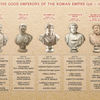
خلف دوميتيان مستشاره نيرفا، الذي أسس السلالة النيرفية الأنطونية، التي حكمت روما في الفترة من 96 إلى 192م. اتسمت هذه الفترة بزيادة الرخاء، بفضل الحكام المعروفين باسم الأباطرة الخمسة الجيدون لروما، بين عامي 96 و180م، حكم خمس رجال استثنائيين على التوالي، وأوصلوا الإمبراطورية الرومانية إلى ذروتها:
- نَارُوَاس (حكم من 96 إلى 98م)
- تراجان (حكم من 98 إلى 117م)
- هادريان (حكم من 117 إلى 138م)
- أنطونيوس بيوس (حكم من 138 إلى 161م)
- ماركوس أوريليوس (حكم من 161 إلى 180م)
ازدادت قوة الإمبراطورية الرومانية واستقرارها، وتوسعت في الحجم والنطاق، تحت قيادة هؤلاء الأباطرة، كان لوسيوس فيروس، وكومودوس آخر أباطرة السلالة النيرفية الأنطونية. كان لوسيوس فيروس شريكًا في الحكم مع ماركوس أوريليوس حتى وفاة الأخير عام 169م، ويبدو أنه كان عديم الفعالية إلى حد بعيد. كان كومودوس (حكم من 180 إلى 192م)، ابن أوريليوس وخليفته، أحد أكثر الأباطرة إثارة للعار في تاريخ روما، ويُصوَّر عمومًا على أنه كان ينغمس في ملذاته ونزواته على حساب الإمبراطورية. خُنِقَ كومودوس على يد شريكه في المصارعة في حوض الاستحمام عام 192م، مما أنهى السلالة النيرفية الأنطونية، وصعود الحاكم برتيناكس (الذي يرجح أنه مدبر حادثة اغتيال كومودوس) إلى السلطة.
[  بومبي وجبل فيزوف mchen007 (Copyright) ](https://www.worldhistory.org/image/301/pompeii-and-mt-vesuvius/ "Pompeii and Mt. Vesuvius")### السلالة السيفيرية
لم يحكم برتيناكس سوى ثلاث أشهر قبل أن يُغتال، وخلفه، في مدة قصيرة، أربعة أباطرة آخرون في الفترة المعروفة باسم "عام الأباطرة الخمسة"، والتي انتهت بوصول سيبتموس سيفيروس إلى السلطة. أسس سيفيروس (حكم من 193 إلى 211م) السلالة السيفيرية، وهزم البارثيين، ووسع الإمبراطورية. كانت حملاته في إفريقيَا، وبريطانيا واسعة النطاق ومكلفة، وساهمت في الصعوبات المالية التي واجهتها روما لاحقًا. خلفه ابناؤه كاراكالا وغيتا، إلى أن أمر كاراكالا بقتل أخيه.
[  هجوم بحري روماني The Creative Assembly (Copyright) ](https://www.worldhistory.org/image/5173/roman-beach-attack/ "Roman Beach Attack")حكم كاراكالا حتى عام 217م، عندما اغتاله أحد حراسه الشخصيين، خلال عهد كاراكالا، وُسِّعَ نطاق الجنسية الرومانية لتشمل جميع الرجال الأحرار داخل الإمبراطورية. يُقال إن هذا القانون سُن كوسيلة لزيادة العوائد الضريبية، وذلك ببساطة لأنه بعد إقراره، أصبح هناك عدد أكبر من الأشخاص الذين يمكن للحكومة المركزية فرض الضرائب عليهم. استمرت السلالة السيفيرية، إلى حد بعيد تحت توجيه وتلاعب يوليا ميزا (المشار إليها بـ "الإمبراطورة")، حتى اغتيال ألكسندر سيفيروس (حكم من 222م إلى 235م) في عام 235م، مما أدى إلى إغراق الإمبراطورية في الفوضى المعروفة باسم أزمة القرن الثالث (التي استمرت من 235 إلى 284م).
### إمبراطوريتان: الشرق والغرب
اتسمت هذه الفترة، المعروفة أيضًا باسم "الأزمة الإمبراطورية"، بحروب أهلية متواصلة، حيث تنافس قادة عسكريون متعددون في السيطرة على الإمبراطورية. أشار المؤرخون أيضًا إلى أن هذه الأزمة ترافقت مع اضطرابات اجتماعية واسعة النطاق، وعدم استقرار اقتصادي (ساهم في تفاقمه، جزئيًا، انخفاض قيمة العملة الرومانية على يد أسرة سيفيروس)، وأخيرًا، تفكك الإمبراطورية التي انقسمت إلى ثلاث مناطق منفصلة. أعاد أوريليان (270-275م) توحيد الإمبراطورية، ثم طور دقلديانوس سياساته وحسّنها، حيث أسس نظام الحكم الرباعي (حكم الأربعة) للحفاظ على النظام في جميع أنحاء الإمبراطورية.
كانت الإمبراطورية، بالرغم من كل هذا لا تزل شاسعة للغاية، لدرجة أن دقلديانوس قسمها إلى نصفين حوالي عام 285م؛ لتسهيل الإدارة بشكل أكثر كفاءة، وذلك بترقية أحد ضباطه، مكسيميانوس (حكم من 286م إلى 305م)، إلى منصب الإمبراطور المشارك. وبذلك، أنشأ الإمبراطورية الرومانية الغربية، والإمبراطورية الرومانية الشرقية (المعروفة أيضًا باسم الإمبراطورية البيزنطية)، ونظرًا لأن أحد الأسباب الرئيسة للأزمة الإمبراطورية كان عدم وضوح الخلافة، أصدر دقلديانوس مرسومًا يقضي بضرورة اختيار الخلفاء، والموافقة عليهم منذ بداية عهد كل فرد. كان القائدان مكسنتيوس، وقسطنطين اثنين من هؤلاء الخلفاء. تنازل دقلديانوس طواعيةً عن الحكم عام 305م، وانحل الحكم الرباعي مع تنافس المناطق المتنافسة في الإمبراطورية فيمَا بينها على السيطرة. ألقى مكسنتيوس، وقسطنطين بالإمبراطورية مرة أخرى في حرب أهلية، بعد وفاة دقلديانوس عام 311م.
### قسطنطين والمسيحية
هزم قسطنطين مكسنتيوس في معركة جسر ميلفيو عام 312، وأصبح الإمبراطور الوحيد لكل من الإمبراطوريتين الغربية والشرقية (حكم في الفترة من 306م إلى 337م، لكنه تولى السلطة المطلقة في الفترة من 324م إلى 307م)، واعتقادًا منه بأن [يسوع المسيح](https://www.worldhistory.org/trans/ar/1-12343/) هو السبب في انتصاره، أصدر قسطنطين سلسلة من القوانين مثل: مرسوم ميلانو (313م)، الذي فرض التسامح الديني في جميع أنحاء الإمبراطورية، وبشكل خاص التسامح مع العقيدة التي أصبحت تُعرف باسم [المسيحية](https://www.worldhistory.org/trans/ar/1-665/).
[  تمثال قسطنطين Dana Murray (CC BY-NC-SA) ](https://www.worldhistory.org/image/3632/the-colossus-of-constantine/ "The Colossus of Constantine")اختار قسطنطين شخصية يسوع المسيح، على غرار ادعاء الأباطرة الرومان السابقون، الذين أدعوا وجود عَلاقة خاصة بينهم وإحدى الآلهة لتعزيز سلطتهم، ومكانتهم (كاراكالا مع سيرابيس، على سبيل المثال، أو دقلديانوس مع جوبيتر). رأس قسطنطين مجمع نيقية الأول (325م)، لتدوين العقيدة، والبت في قضايا مهمة مثل ألوهية يسوع، والمخطوطات التي ستُجمعُ لتشكيل الكتاب المعروف اليوم باسم الكتاب المقدس، وعمل أيضًا على استقرار الإمبراطورية، وإعادة تقييم العملة، وإصلاح الجيش، فضلًا عن تأسيس المدينة التي سماها "روما الجديدة" في موقع مدينة بيزنطة القديمة (إسطنبول الحالية) التي أصبحت تُعرف باسم القسطنطينية.
لُقِبَ قسطنطين باسم "الكبير" بفضل الكتاب المسيحيين اللاحقين الذين عدّوه مدافعًا قويًا عن عقيدتهم، لكن كما أشار العديد من المؤرخين، يمكن أن يُنسب هذا اللقب بسهولة إلى إصلاحاته الدينية، والثقافية، والسياسية، فضلًا عن براعته في القتال، ومشروعاته الإنشائية الضخمة. ورث أبناؤه الإمبراطورية بعد وفاته، وسرعان ما انخرطوا في سلسلة من الصراعات فيمَا بينهم، مما هدد بتدمير كلّما أنجزه قسطنطين.
قسم أبناؤه الثلاثة: قسطنطين الثاني، وقنسطانطيوس الثاني، وقنسطنس، الإمبراطورية الرومانية فيما بينهم، لكنهم سرعان ما انخرطوا في صراع حول من منهم يستحق نصيباً أكبر، في هذه الصراعات، قُتل قسطنطين الثاني، وقنسطنس، وتوفي قنسطانطيوس الثاني لاحقًا، بعد أن عيّن ابن عمه يوليانوس خليفةً ووريثًا له، حكم الإمبراطور يوليانوس مدة عامين فقط (361-363م)، وحاول خلال تلك الفترة إعادة روما إلى مجدها السابق عن طريق سلسلة من الإصلاحات، التي تهدف إلى زيادة كفاءة الحكومة.
رفض يوليانوس بصفته فيلسوفًا نيو-أفلاطونيًا، المسيحية وألقى باللوم على هذا الدين، وعلى دفاع قسطنطين عنه، في تدهور الإمبراطورية، ورغم إعلان يوليانوس رسميًا سياسة التسامح الديني، فقد عمل بشكل منهجي على إقصاء المسيحيين من المناصب الحكومية المؤثرة، وحظر تعليم المسيحية ونشرها، ومنع المسيحيين من الخدمة العسكرية، وقد أنهت وفاته، خلال حملته ضد الفرس، السلالة التي أسسها قسطنطين، كان يوليانوس آخر إمبراطور وثني لروما، وأصبح يُعرف باسم "يوليانوس المرتد" بسبب معارضته للمسيحية.
[  الإمبراطورية البيزنطية حوالي 460 م Tataryn77 (CC BY-SA) ](https://www.worldhistory.org/image/7704/byzantine-empire-c-460-ce/ "Byzantine Empire c. 460 CE")انتقلت مسؤولية الحكم إلى ثيودوسيوس الأول، بعد فترة الحكم القصيرة ليوفيان، الذي أعاد ترسيخ المسيحية باعتبارها الديانة السائدة في الإمبراطورية، وألغى المراسيم المختلفة التي أصدرها يوليانوس. أكمل ثيودوسيوس الأول (حكم من 379م إلى 395م) الإصلاحات الدينية التي بدأها قسطنطين ويوفيان، وحظر العبادة الوثنية في جميع أنحاء الإمبراطورية، وأغلق المدارس والجامعات، وحوّل المعابد الوثنية إلى كنائس مسيحية بعد إعلان المسيحية دينًا رسميًا لروما في عام 380م.
أُغلقت أكاديمية أفلاطون الشهيرة خلال تلك الفترة، بموجب مرسوم صادر عن ثيودوسيوس، ولم تلقَ العديد من إصلاحاته قبولًا لدى كل من الطبقة الأرستقراطية الرومانية، والناس العاديين الذين تمسكوا بالقيم التقليدية للممارسات الوثنية. انقطعت الوحدة بين الواجبات الاجتماعية، والمعتقدات الدينية التي كانت توفرها الوثنية، وذلك بفعل إرساء دين أزال الآلهة من الأرض، والمجتمع البشري، وأعلن إلهًا واحدًا فقط يحكم من السماء.
هذا الإله الجديد، على خلاف آلهة الماضي، لم يكن له اهتمام خاص بروما — فقد كان إله جميع الشعوب — وهذا ما أدى إلى إبعاد دين روما، عن الدولة الرومانية، في السابق، كانت المعتقدات الدينية الرومانية مدعومة من الدولة، وكانت الشعائر، والمهرجانات تهدف إلى تعزيز مكانة الحكومة. كرس ثيودوسيوس الأول جهودًا كبيرة لتعزيز المسيحية، لدرجة أنه يبدو أنه أهمل واجباته الأخرى كإمبراطور، وكان آخر من حكم كل من الإمبراطوريتين الشرقية والغربية.
[  خريطة سقوط الإمبراطورية الرومانية الغربية، حوالي 480 ميلادي Simeon Netchev (CC BY-NC-ND) ](https://www.worldhistory.org/image/17289/map-of-the-fall-of-the-western-roman-empire-c-480/ "Map of the Fall of the Western Roman Empire, c. 480 CE")### سقوط الإمبراطورية الرومانية
خاضت روما منذ عام 376م حتى 382م، سلسلة من المعارك ضد القوط الغزاة، التي تعرف اليوم باسم الحروب القوطية. هُزم الإمبراطور الروماني فالنس (حكم من 364م إلى 378م) في معركة أدرنة، في 9 أغسطس 378م، ويعتبر المؤرخون هذا الحدث نقطة تحول محورية في تراجع الإمبراطورية الرومانية الغربية. اُقتُرِحَت نظريات مختلفة حول سبب سقوط الإمبراطورية، ولكن حتى اليوم، لا يوجد اتفاق عالمي على ما كانت عليه تلك العوامل المحددة. جادل إدوارد جيبون في كتابه الشهير "تاريخ ضعف وسقوط الإمبراطورية الرومانية" بأن المسيحية أدّت دورًا محوريًا، إذ إن الديانة الجديدة قوضت الأعراف الاجتماعية، التي وفرتها الوثنية للإمبراطورية.
نوقشت النظرية التي تقول إن المسيحية كانت سببًا جذريًا في سقوط الإمبراطورية قبل جيبون بفترة طويلة، إذ جادل اللاهوتي أوروسيوس (القرن الخامس الميلادي) ببراءة المسيحية من مسؤولية تراجع روما في وقت مبكر يعود إلى عام 418م. ادعى أوروسيوس أن الوثنية نفسها، وممارساتها كانت السبب الرئيس في سقوط روما، وتشمل العوامل الأخرى التي ساهمت في سقوط روما ما يلي:
- عدم الاستقرار السياسي بسبب حجم الإمبراطورية.
- المصلحة الذاتية لنصفي الإمبراطورية.
- غزو القبائل البربرية.
- فساد الحكومة.
- الجيوش المُرْتَزِقَة.
- الاعتماد المفرط على عمل العبيد.
- البطالة الهائلة والتضخم.
جعل اتساع الإمبراطورية الذي لا يمكن السيطرة عليه، حتى بعد تقسيمها إلى قسمين، إدارتها صعبة. ازدهرت الإمبراطورية الشرقية، في حين عانت الإمبراطورية الغربية، ولم يفكر أي منهما كثيرًا في مساعدة الآخر. رأت روما الشرقية، والغربية بعضهما البعض كمنافسين أكثر من كونهما شركاء، وعمل كل منهما بشكل أساسي لتحقيق مصالحه الخاصة. كان يمكن التعامل مع القوة المتزايدة للقبائل الجرمانية، وغزواتهم المستمرة لروما بشكل أكثر فعالية لولا فساد الحكومة، خاصة بين حكام الأقاليم، ومعاملة الرومان الظالمة للقوط عمومًا.
لم يكن لدي الجيش الروماني، الذي كان يتكون إلى حد بعيد من مُرْتَزِقَة برابرة روابط عرقية مع روما، لم يعد قادرًا على حماية الحدود بكفاءة كما كان في السابق، ولم يعد بإمكان الحكومة جمع الضرائب في المقاطعات بسهولة، علاوة على ذلك، فإن تخفيض قيمة العملة، الذي بدأ في عهد السلالة السيفيرية، شجع التضخم بشكل مستمر، في حين إن انتشار العمل بالسخرة حرم المواطنين من الطبقة الدنيا من الوظائف، وزاد من مستويات البطالة، كما يُشار إلى وصول القوط الغربيين إلى الإمبراطورية في القرن الثالث، هاربين من غزو الهون، وتمرداتهم اللاحقة، كعامل مساهم في الانهيار.
[  غزوات الإمبراطورية الرومانية MapMaster (CC BY-SA) ](https://www.worldhistory.org/image/4131/invasions-of-the-roman-empire/ "Invasions of the Roman Empire")انتهت الإمبراطورية الرومانية الغربية رسميًا في 4 سبتمبر 476م، مع خلع الإمبراطور رومولوس أوغستولوس على يد الملك الجرماني أودواكر (بالرغم من أن بعض المؤرخين يؤرخون النهاية في عام 480م مع وفاة يوليوس نيبوس). استمرت الإمبراطورية الرومانية الشرقية متمثلة في بيزنطة حتى عام 1453م، وبالرغم من أنها عُرفت في البداية باسم "الإمبراطورية الرومانية"، إلا أنها لم تكن تشبه ذلك الكيان كثيرًا. أُعيد اختراع الإمبراطورية الرومانية الغربية لاحقًا كالإمبراطورية الرومانية المقدسة (962-1806م)، لكن ذلك الكيان أيضًا كان بعيدًا عن الإمبراطورية الرومانية القديمة وكان "إمبراطورية" بالاسم فقط.
### إرث الإمبراطورية الرومانية
غيرت الاختراعات، والابتكارات التي أبدعتها الإمبراطورية الرومانية حياة الشعوب القديمة بشكل عميق، ولا تزال تُستخدم في الثقافات حول العالم حتى اليوم. إن التقدم في بناء الطرق والمباني، والسِبَاكَة الداخلية، والقنوات المائية، وحتى الأسمنت سريع الجفاف، إما تم اختراعه، أو تحسينه من قبل الرومان.
إن التقويم المستخدم في الغرب مشتق من التقويم الذي أنشأه يوليوس قيصر، ثم إن أسماء أيام الأسبوع (في اللغات الرومانسية) وأشهر السنة تأتي أيضًا من روما، حتى عادة إرجاع بعض المشتريات التي يكتشف المرء أنه لا يريدها، تعود إلى روما؛ حيث جعلت تشريعاتها من القانوني للمستهلك إعادة بعض البضائع المعيبة، أو غير المرغوب فيها إلى البائع.
المجمعات السكنية (المعروفة باسم إنسيولا)، والمراحيض العامة، والأقفال والمفاتيح، والصحف، حتى الجوارب، جميعها طورها الرومان، بالإضافة إلى الأحذية، ونظام البريد (المستوحى من الفرس)، ومستحضرات التجميل، والعدسة المكبرة، ومفهوم السخرية في الأدب، خلال فترة الإمبراطورية، أُحرِزَ تقدم كبير أيضًا في مجالات الطب، والقانون، والدين، والحكومة، والحروب.
برع الرومان في استعارة، وتحسين الاختراعات، أو المفاهيم التي وجدوها بين السكان الأصليين، في المناطق التي غزوها، لذلك يصعب القول ما هو اختراع "أصلي" للرومان وما هو ابتكار قاموا به على مفهوم، أو تقنية، أو أداة موجودة مسبقًا، ومع ذلك، يمكن القول بأمان إن الإمبراطورية الرومانية تركت إرثًا دائمًا لا يزال يؤثر على طريقة عيش الناس في العصر الحاضر.
[](https://www.worldhistory.org/collection/184/ancient-rome-in-8-infographics/)Image Gallery#### [Ancient Rome in 8 Infographics](https://www.worldhistory.org/collection/184/ancient-rome-in-8-infographics/)
The culture of ancient Rome intricately blended laws, military values, and cultural innovations to lay the groundwork for a civilization that endured...
#### Editorial Review
This human-authored definition has been reviewed by our editorial team before publication to ensure accuracy, reliability and adherence to academic standards in accordance with our [editorial policy](https://www.worldhistory.org/static/editorial-policy/).
## قائمة المصادر والمراجع
- [Adkins, L. & Adkins, R. A. *Handbook to Life in Ancient Rome.* Oxford University Press, 1998.](https://www.worldhistory.org/books/0195123328/)
- [Durant, W. *Caesar and Christ.* Simon & Schuster, 1980.](https://www.worldhistory.org/books/0671115006/)
- [Gibbon, E. *The History of the Decline and Fall of the Roman Empire.* Penguin, 2000.](https://www.worldhistory.org/books/B002XHNO8S/)
- [Grant, M. *Readings in the Classical Historians.* Scribner, 1993.](https://www.worldhistory.org/books/0684192454/)
- [Grant, M. *The Climax of Rome.* Weidenfeld, London, 1993.](https://www.worldhistory.org/books/0297813919/)
- [Harvey, B. K. *Daily Life in Ancient Rome.* Focus, 2016.](https://www.worldhistory.org/books/1585107956/)
- [Herwig, W. *History of the Goths.* University of California Press, 1988.](https://www.worldhistory.org/books/B001JL5UWW/)
- [Kelly, C. *The Roman Empire.* Oxford University Press, 2006.](https://www.worldhistory.org/books/0192803913/)
- [Lewis, J. E. *The Mammoth Book of Eyewitness Ancient Rome.* Running Press, 2003.](https://www.worldhistory.org/books/078671168X/)
- [Mellor, R. *The Historians of Ancient Rome.* Routledge, 2012.](https://www.worldhistory.org/books/0415527163/)
- [Polybius. *The Rise of the Roman Empire.* Penguin Classics, 1980.](https://www.worldhistory.org/books/0140443622/)
- [Tacitus. *Annals of Tacitus.* Cambridge University Press, 2001.](https://www.worldhistory.org/books/0521469961/)
- [The Roman Empire](http://www.roman-empire.net/ "The Roman Empire"), accessed 1 Dec 2016.
- [Titus Livy. *Livy's Histories.* Penguin Classics, 2002.](https://www.worldhistory.org/books/0140448098/)
## نبذة عن الكاتب
جوشوا مارك: مؤسس ومساهم ومدير محتوى في موسوعة تاريخ العالم. عمل كبروفيسور في كلية ماريست في نيويورك حيث درّس التاريخ، الفلسفة، الأدب والكتابة. سافر كثيراً وعاش في اليونان وألمانيا.
- [Linkedin Profile](https://www.linkedin.com/pub/joshua-j-mark/38/614/339)
## الجدول الزمني
- **753 BCE**: The legendary founding date of [Rome](https://www.worldhistory.org/Rome/).
- **212 BCE**: The Romans [conquer](https://www.worldhistory.org/warfare/) [Saguntum](https://www.worldhistory.org/Saguntum/) from the Carthaginians.
- **206 BCE - 205 BCE**: The Romans [conquer](https://www.worldhistory.org/warfare/) [Gades](https://www.worldhistory.org/Gades/). End of the Carthaginian presence on the Iberian Peninsula.
- **191 BCE**: [Delphi](https://www.worldhistory.org/delphi/) comes under [Roman](https://www.worldhistory.org/disambiguation/Roman/) control.
- **c. 191 BCE**: The [Achaean League](https://www.worldhistory.org/Achaean_League/) signs a treaty of alliance with [Rome](https://www.worldhistory.org/Rome/).
- **188 BCE**: [Rome](https://www.worldhistory.org/Rome/) gives [Samos](https://www.worldhistory.org/samos/) its independence.
- **166 BCE**: [Rome](https://www.worldhistory.org/Rome/) gives dominion over the [Cyclades](https://www.worldhistory.org/Cyclades/) to [Athens](https://www.worldhistory.org/Athens/).
- **c. 150 BCE**: Macedonia becomes a [Roman](https://www.worldhistory.org/disambiguation/Roman/) province.
- **150 BCE**: The Lusitani are betrayed and slaughtered by the Romans.
- **148 BCE**: [Corcyra](https://www.worldhistory.org/corcyra/) is made part of the [Roman](https://www.worldhistory.org/disambiguation/Roman/) province of Macedonia.
- **146 BCE**: [Thessalonica](https://www.worldhistory.org/Thessalonica/) is made the captial of the [Roman](https://www.worldhistory.org/disambiguation/Roman/) province of [Macedon](https://www.worldhistory.org/macedon/).
- **146 BCE**: End of the [Third Punic War](https://www.worldhistory.org/Third_Punic_War/). [Carthage](https://www.worldhistory.org/carthage/) is destroyed and its lands become the [Roman](https://www.worldhistory.org/disambiguation/Roman/) province [Africa](https://www.worldhistory.org/disambiguation/africa/).
- **146 BCE**: [Utica](https://www.worldhistory.org/Utica/) is made the capital of the [Roman](https://www.worldhistory.org/disambiguation/Roman/) province of [Africa](https://www.worldhistory.org/disambiguation/africa/).
- **133 BCE**: [Lydia](https://www.worldhistory.org/lydia/) and its captial [Sardis](https://www.worldhistory.org/sardis/) comes under [Roman](https://www.worldhistory.org/disambiguation/Roman/) rule.
- **129 BCE**: [Samos](https://www.worldhistory.org/samos/) becomes part of the [Roman](https://www.worldhistory.org/disambiguation/Roman/) province of Asia.
- **96 BCE**: Cyrenaica becomes a [Roman](https://www.worldhistory.org/disambiguation/Roman/) province.
- **74 BCE**: The [city](https://www.worldhistory.org/city/) of [Cyrene](https://www.worldhistory.org/cyrene/) comes under [Roman](https://www.worldhistory.org/disambiguation/Roman/) control.
- **64 BCE**: [Tyre](https://www.worldhistory.org/Tyre/) becomes a [Roman](https://www.worldhistory.org/disambiguation/Roman/) colony.
- **64 BCE**: [Byblos](https://www.worldhistory.org/Byblos/) conquered by the [Roman](https://www.worldhistory.org/disambiguation/Roman/) general [Pompey the Great](https://www.worldhistory.org/pompey/).
- **63 BCE**: [Jerash](https://www.worldhistory.org/Jerash/) in [Jordan](https://www.worldhistory.org/Jordan/) becomes part of the [Roman](https://www.worldhistory.org/disambiguation/Roman/) province of [Syria](https://www.worldhistory.org/syria/).
- **48 BCE**: [Butrint](https://www.worldhistory.org/Butrint/) formally becomes a [Roman](https://www.worldhistory.org/disambiguation/Roman/) colony.
- **44 BCE**: [Julius Caesar](https://www.worldhistory.org/Julius_Caesar/) founds the [Roman](https://www.worldhistory.org/disambiguation/Roman/) colony of [Corinth](https://www.worldhistory.org/corinth/).
- **41 BCE**: [Rome](https://www.worldhistory.org/Rome/) takes control over [Naxos](https://www.worldhistory.org/Naxos/) in the [Cyclades](https://www.worldhistory.org/Cyclades/).
- **37 BCE - 4 BCE**: Reign of [Herod the Great](https://www.worldhistory.org/Herod_the_Great/) over Judea.
- **31 BCE**: [Octavian](https://www.worldhistory.org/augustus/) uses [Corcyra](https://www.worldhistory.org/corcyra/) as a [Roman](https://www.worldhistory.org/disambiguation/Roman/) naval base.
- **30 BCE**: [Egypt](https://www.worldhistory.org/egypt/) becomes province of the [Roman Empire](https://www.worldhistory.org/Roman_Empire/).
- **30 BCE - 476 CE**: [Egypt](https://www.worldhistory.org/egypt/) remains a province of the [Roman Empire](https://www.worldhistory.org/Roman_Empire/).
- **27 BCE**: [Philippi](https://www.worldhistory.org/Philippi/) gains the honorary title of Colonia Iulia Augusta Philippensis.
- **c. 27 BCE**: [Augustus](https://www.worldhistory.org/augustus/) makes [Gortyn](https://www.worldhistory.org/Gortyn/) the capital of the [Roman](https://www.worldhistory.org/disambiguation/Roman/) province of [Crete](https://www.worldhistory.org/crete/) & [Cyrene](https://www.worldhistory.org/cyrene/).
- **27 BCE - 19 BCE**: Cantabrian Wars: [Roman](https://www.worldhistory.org/disambiguation/Roman/) [conquest](https://www.worldhistory.org/warfare/) of the Iberian Penninsula.
- **25 BCE**: [Galatia](https://www.worldhistory.org/galatia/) is peacefully absorbed into the [Roman Empire](https://www.worldhistory.org/Roman_Empire/).
- **14 BCE - 96 CE**: [Rome](https://www.worldhistory.org/Rome/) launches an extensive cultural patronage and construction programme in [Iberia](https://www.worldhistory.org/disambiguation/iberia/).
- **1 CE - 100 CE**: [Mithraism](https://www.worldhistory.org/Mithraic_Mysteries/) spreads in the [Roman empire](https://www.worldhistory.org/Roman_Empire/).
- **6 CE**: [Publius Quinctilius Varus](https://www.worldhistory.org/Publius_Quinctilius_Varus/) is made governor of Germania.
- **9 CE**: The Rhine River is established as the boundary between the Latin and German speaking worlds, following the defeat of the [Roman army](https://www.worldhistory.org/Roman_Army/), under the command of Varus, at the [Battle](https://www.worldhistory.org/disambiguation/battle/) of the Teutoburg Forest.
- **43 CE**: Romans invade [Britain](https://www.worldhistory.org/disambiguation/Britain/) under Aulus Plautius.
- **43 CE**: [Claudius](https://www.worldhistory.org/claudius/) commences the [Roman](https://www.worldhistory.org/disambiguation/Roman/) [conquest](https://www.worldhistory.org/warfare/) of [Britain](https://www.worldhistory.org/disambiguation/Britain/).
- **43 CE - 47 CE**: Romans [conquer](https://www.worldhistory.org/warfare/) South [Britain](https://www.worldhistory.org/disambiguation/Britain/) and claim the territory as part of [Roman Empire](https://www.worldhistory.org/Roman_Empire/).
- **44 CE**: [Caesarea](https://www.worldhistory.org/disambiguation/Caesarea/) made capital of imperial province.
- **47 CE - 50 CE**: Londinium (London) founded, roads constructed.
- **51 CE**: [Briton](https://www.worldhistory.org/Ancient_Britain/) rebel leader [Caratacus](https://www.worldhistory.org/caratacus/) defeated, rebellion crushed.
- **54 CE - 60 CE**: [Roman](https://www.worldhistory.org/disambiguation/Roman/) general Corbulo successfully campaigns in [Armenia](https://www.worldhistory.org/armenia/).
- **68 CE - 69 CE**: [Year of the Four Emperors](https://www.worldhistory.org/Year_of_the_Four_Emperors/): Civil [war](https://www.worldhistory.org/disambiguation/War/) in [Rome](https://www.worldhistory.org/Rome/).
- **75 CE - 77 CE**: Romans defeat the last of the Northern tribes; [Roman](https://www.worldhistory.org/disambiguation/Roman/) [conquest](https://www.worldhistory.org/warfare/) of [Britain](https://www.worldhistory.org/disambiguation/Britain/) complete.
- **76 CE - 138 CE**: Life of Emperor [Hadrian](https://www.worldhistory.org/hadrian/).
- **85 CE - 86 CE**: Dacians invade Moesia and defeat the Romans.
- **86 CE**: The [Roman](https://www.worldhistory.org/disambiguation/Roman/) general Cornelius Fuscus invades [Dacia](https://www.worldhistory.org/dacia/). He is ambushed and his army is annihilated.
- **88 CE**: Resolved to avenge Fuscus' defeat, [Domitian](https://www.worldhistory.org/domitian/) sends another army to [Dacia](https://www.worldhistory.org/dacia/) under Tettius Iulianus. This general is victorious on the mountainous pass of Tapae, in the south-west of modern Romania.
- **101 CE - 106 CE**: [Trajan](https://www.worldhistory.org/trajan/) conquers [Dacia](https://www.worldhistory.org/dacia/).
- **106 CE**: [Jerash](https://www.worldhistory.org/Jerash/) in [Jordan](https://www.worldhistory.org/Jordan/) becomes part of the [Roman](https://www.worldhistory.org/disambiguation/Roman/) province of [Arabia](https://www.worldhistory.org/Arabia/).
- **115 CE - 117 CE**: [Rome](https://www.worldhistory.org/Rome/) occupies [Mesopotamia](https://www.worldhistory.org/Mesopotamia/).
- **116 CE**: Invasion and annexation of the [Fertile Crescent](https://www.worldhistory.org/Fertile_Crescent/) region by [Rome](https://www.worldhistory.org/Rome/) under [Trajan](https://www.worldhistory.org/trajan/).
- **11 Aug 117 CE - 10 Jul 138 CE**: Reign of [Roman Emperor](https://www.worldhistory.org/Roman_Emperor/) [Hadrian](https://www.worldhistory.org/hadrian/).
- **121 CE - 125 CE**: First trip of [Hadrian](https://www.worldhistory.org/hadrian/) around the [Empire](https://www.worldhistory.org/empire/): [Gaul](https://www.worldhistory.org/gaul/), Germania, Noricum, [Britain](https://www.worldhistory.org/disambiguation/Britain/), Cappadocia, [Galatia](https://www.worldhistory.org/galatia/), Bithynia, Asia, [Greece](https://www.worldhistory.org/greece/), Moesia, [Dacia](https://www.worldhistory.org/dacia/), and Pannonia.
- **26 Apr 121 CE - 17 Mar 180 CE**: Life of [Marcus Aurelius](https://www.worldhistory.org/Marcus_Aurelius/).
- **142 CE**: The [Antonine Wall](https://www.worldhistory.org/Antonine_Wall/) built under [Antoninus Pius](https://www.worldhistory.org/Antoninus_Pius/), north of [Hadrian's Wall](https://www.worldhistory.org/Hadrians_Wall/).
- **165 CE - 167 CE**: [Plague](https://www.worldhistory.org/disambiguation/plague/) epidemic in the [Roman empire](https://www.worldhistory.org/Roman_Empire/).
- **167 CE**: Marcomanni sack [Aquileia](https://www.worldhistory.org/aquileia/).
- **167 CE - 180 CE**: Marcomannic Wars.
- **168 CE**: Germanic tribes cross the Danube into the [Roman Empire](https://www.worldhistory.org/Roman_Empire/).
- **192 CE**: Emperor [Commodus](https://www.worldhistory.org/commodus/) is murdered, civil [war](https://www.worldhistory.org/disambiguation/War/) ensues (until 197 CE).
- **195 CE**: First Parthian [war](https://www.worldhistory.org/disambiguation/War/).
- **197 CE - 198 CE**: Second Parthian [war](https://www.worldhistory.org/disambiguation/War/).
- **198 CE - 209 CE**: Reign of [Caracalla](https://www.worldhistory.org/Caracalla/) with his father [Septimius Severus](https://www.worldhistory.org/Septimius_Severus/).
- **200 CE**: Completion of the [Roman](https://www.worldhistory.org/disambiguation/Roman/) road system.
- **c. 204 CE - 270 CE**: Life of [Plotinus](https://www.worldhistory.org/Plotinus/).
- **209 CE - Dec 211 CE**: Reign of [Caracalla](https://www.worldhistory.org/Caracalla/) with his father [Septimius Severus](https://www.worldhistory.org/Septimius_Severus/) and his brother Geta (Feb - Dec 211 only with Geta).
- **212 CE**: [Caracalla](https://www.worldhistory.org/Caracalla/)'s edict grants [Roman citizenship](https://www.worldhistory.org/article/859/roman-citizenship/) to all free inhabitants of the [Roman Empire](https://www.worldhistory.org/Roman_Empire/).
- **212 CE**: [Rome](https://www.worldhistory.org/Rome/) withdraws from region of [Scotland](https://www.worldhistory.org/disambiguation/Scotland/).
- **212 CE**: [Roman citizenship](https://www.worldhistory.org/article/859/roman-citizenship/) granted to all inhabitants of the [empire](https://www.worldhistory.org/empire/).
- **232 CE**: Emperor [Maximinus Thrax](https://www.worldhistory.org/Maximinus_Thrax/) commands a legion in [Egypt](https://www.worldhistory.org/egypt/).
- **234 CE**: Emperor [Maximinus Thrax](https://www.worldhistory.org/Maximinus_Thrax/) is governor of [Mesopotamia](https://www.worldhistory.org/Mesopotamia/).
- **238 CE**: Year of the Six Emperors in the [Roman Empire](https://www.worldhistory.org/Roman_Empire/).
- **242 CE**: Osroene, with its capital at [Edessa](https://www.worldhistory.org/edessa/), is made into a [Roman](https://www.worldhistory.org/disambiguation/Roman/) province.
- **250 CE**: [Thessalonica](https://www.worldhistory.org/Thessalonica/) is made a [Roman](https://www.worldhistory.org/disambiguation/Roman/) colony.
- **260 CE**: [Shapur I](https://www.worldhistory.org/Shapur_I/) captures the [Roman emperor](https://www.worldhistory.org/Roman_Emperor/) [Valerian](https://www.worldhistory.org/valerian/) at [Edessa](https://www.worldhistory.org/edessa/).
- **261 CE**: [Thugga](https://www.worldhistory.org/Dougga/) is made a [Roman](https://www.worldhistory.org/disambiguation/Roman/) colonia.
- **262 CE - 266 CE**: Odaenathus expels Persian garrisons and restores [Syria](https://www.worldhistory.org/syria/) and [Armenia](https://www.worldhistory.org/armenia/) to the [Roman Empire](https://www.worldhistory.org/Roman_Empire/). Odaenathus invades [Mesopotamia](https://www.worldhistory.org/Mesopotamia/), and inflicts two defeats upon [Shapur I](https://www.worldhistory.org/Shapur_I/), which ends with the sack of [Ctesiphon](https://www.worldhistory.org/ctesiphon/).
- **Sep 270 CE - c. Sep 275 CE**: Reign of [Roman emperor](https://www.worldhistory.org/Roman_Emperor/) [Aurelian](https://www.worldhistory.org/Aurelian/).
- **271 CE**: [Aurelian](https://www.worldhistory.org/Aurelian/) defends the [Roman Empire](https://www.worldhistory.org/Roman_Empire/) against Juthungi, Alamanni, and Marcomanni incursions.
- **272 CE - 273 CE**: [Aurelian](https://www.worldhistory.org/Aurelian/) successfully campaigns against Palmyra.
- **285 CE**: The [Roman empire](https://www.worldhistory.org/Roman_Empire/) is split into the Western and Eastern [Roman](https://www.worldhistory.org/disambiguation/Roman/) empires.
- **312 CE**: [Roman emperor](https://www.worldhistory.org/Roman_Emperor/) [Constantine I](https://www.worldhistory.org/Constantine_I/) tolerates [Christianity](https://www.worldhistory.org/christianity/).
- **337 CE**: Ascension of [Constantius II](https://www.worldhistory.org/Constantius_II/).
- **337 CE**: [Death](https://www.worldhistory.org/disambiguation/Death/) of Emperor [Constantine I](https://www.worldhistory.org/Constantine_I/).
- **361 CE**: [Death](https://www.worldhistory.org/disambiguation/Death/) of [Constantius II](https://www.worldhistory.org/Constantius_II/).
- **367 CE**: [Picts](https://www.worldhistory.org/picts/), Scots, [Saxons](https://www.worldhistory.org/Saxons/), and [Franks](https://www.worldhistory.org/Franks/) attack the [Roman Empire](https://www.worldhistory.org/Roman_Empire/).
- **376 CE**: The [Visigoths](https://www.worldhistory.org/visigoth/) are fleeing the [Huns](https://www.worldhistory.org/Huns/), entering the [Eastern Roman Empire](https://www.worldhistory.org/Byzantine_Empire/).
- **391 CE**: Emperor Theodosius I closes pagan temples.
- **410 CE**: [Rome](https://www.worldhistory.org/Rome/) withdraws forces from [Britain](https://www.worldhistory.org/disambiguation/Britain/).
- **410 CE**: The Romans withdraw from [Britain](https://www.worldhistory.org/disambiguation/Britain/).
- **426 CE**: [Roman Emperor](https://www.worldhistory.org/Roman_Emperor/) Theodosius II orders closure of [Epidaurus](https://www.worldhistory.org/epidaurus/) sanctuary.
- **439 CE**: [Vandals](https://www.worldhistory.org/Vandals/) take [Carthage](https://www.worldhistory.org/carthage/) from the [Western Roman Empire](https://www.worldhistory.org/Western_Roman_Empire/) and make it their new capital.
- **523 CE**: Emperor Justinian seizes [Caesarea](https://www.worldhistory.org/disambiguation/Caesarea/).
- **565 CE**: [Death](https://www.worldhistory.org/disambiguation/Death/) of [Justinian I](https://www.worldhistory.org/Justinian_I/) after 38 years ruling the [Roman Empire](https://www.worldhistory.org/Roman_Empire/).
## أسئلة وأجوبة
### ما تواريخ الإمبراطورية الرومانية؟
بدأت الإمبراطورية الرومانية في عام 27 ق.م وانتهت في الغرب عام 476 م؛ وفي الشرق انتهت عام 1453 م.
### من كان أول إمبراطور لروما؟
كان أغسطس قيصر أول إمبراطور لروما، حكم بين 27 ق.م و14 م.
### من الأباطرة الخمسة الصالحون لروما؟
الأباطرة الخمسة الصالحون لروما هم: نيرفا، تراجان، هادريان، أنطونينوس بيوس، وماركوس أوريليوس الذين حكموا بين عامي 96 و180 م.
### لماذا سقطت الإمبراطورية الرومانية؟
تدهورت وسقطت الإمبراطورية الرومانية في الغرب عام 476 م لأسباب عدّة منها: عدم الاستقرار السياسي، عدم الاستقرار الديني/الثقافي، فساد الحكومة، الاعتماد المفرط على عمالة العبيد، الجيوش المُرْتَزِقَة، البطالة والتضخم، والغزوات من قبل القبائل البربرية. أما في الشرق، فقد سقطت الإمبراطورية أمام الأتراك العثمانيين عام 1453 م.
## روابط خارجية
- [Roman Empire - KS2 History - BBC Bitesize](https://www.bbc.com/bitesize/topics/zwmpfg8)
- [Interactive Map of the Roman Empire and Celtic Lands](http://resourcesforhistory.com/map.htm)
- [40 maps that explain the Roman Empire](http://www.vox.com/2014/8/19/5942585/40-maps-that-explain-the-roman-empire)
- [following hadrian photography](https://followinghadrianphotography.com/)
- [The Fall of Rome Podcast](https://fallofromepodcast.wordpress.com/)
- [ORBIS: The Stanford Geospatial Network Model of the Roman World](http://orbis.stanford.edu/)
- [The History of Rome](https://thehistoryofrome.typepad.com/)
- [Rome Project](http://blogs.dalton.org/rome/)
- [10 Innovations That Built Ancient Rome](https://www.history.com/news/10-innovations-that-built-ancient-rome)
- [mariamilani Ancient Rome](https://mariamilani.com/ancient_rome/ancient_roman_inventions.htm)
- [Smith College Museum of Ancient Inventions: Sarculum](https://www.smith.edu/hsc/museum/ancient_inventions/hoe2.html)
- [Inventions and Discoveries](http://thegreatestempire.weebly.com/inventions-and-discoveries.html)
- [What was it like in Roman Britain?](https://www.bbc.com/bitesize/articles/ztqg4wx)
- [The Roman Army and warfare](https://www.historylearningsite.co.uk/ancient-rome/the-roman-army-and-warfare/)
- [mariamilani Ancient Rome](https://mariamilani.com/ancient_rome/Ancient_Roman_Medicine.htm)
- [Medicine and Health in Ancient Rome](https://www.unrv.com/medicine.php)
- [Account Suspended](http://www.the-romans.co.uk/women.htm)
- [15 Interesting Women of Ancient Rome](http://listverse.com/2011/10/20/15-interesting-women-of-ancient-rome/)
- [What was life like in ancient Rome?](https://www.bbc.com/bitesize/articles/z2sm6sg)
- [7 Major Emperors During the Rise of the Roman Empire](https://online.norwich.edu/academic-programs/resources/7-major-emperors-during-the-rise-of-the-roman-empire )
- [The Roman Empire | The Complete Illustrated History](https://roman-empire.net/)
- [List of Rulers of the Roman Empire | Lists of Rulers | Heilbrunn Timeline of Art History | The Metropolitan Museum of Art](https://www.metmuseum.org/toah/hd/roru/hd_roru.htm)
- [The Roman Empire (27 B.C.–393 A.D.) | Essay | The Metropolitan Museum of Art | Heilbrunn Timeline of Art History](https://www.metmuseum.org/toah/hd/roem/hd_roem.htm)
## استشهد بهذا العمل
### APA
Mark, J. J. (2026, May 19). الإمبراطورية الرومانية. (M. Ismael, المترجم). *World History Encyclopedia*.
### Chicago
Mark, Joshua J.. "الإمبراطورية الرومانية." تمت ترجمته من قبل Mahmoud Ismael. *World History Encyclopedia*, May 19, 2026. .
### MLA
Mark, Joshua J.. "الإمبراطورية الرومانية." تمت ترجمته من قبل Mahmoud Ismael. *World History Encyclopedia*, 19 May 2026, .
## الترخيص وحقوق النشر
مقدم من [Mahmoud Ismael](https://www.worldhistory.org/user/mahmoudhistoria/ "User Page: Mahmoud Ismael"), نُشِر بتاريخ 19 May 2026. يرجى الرجوع إلى المصدر (المصادر) الأصلي(ة) للاطلاع على معلومات حقوق النشر. يرجى ملاحظة أن المحتوى المرتبط بهذه الصفحة قد يكون له شروط ترخيص مختلفة.