---
title: Rome Antique
author: Joshua J. Mark
translator: Babeth Étiève-Cartwright
source: https://www.worldhistory.org/trans/Fr/1-68/rome-antique/
format: machine-readable-alternate
license: Creative Commons Attribution-NonCommercial-ShareAlike (https://creativecommons.org/licenses/by-nc-sa/4.0/)
updated: 2022-08-15
---
# Rome Antique
_Rédigé par [Joshua J. Mark](https://www.worldhistory.org/user/JPryst/)_
_Traduit par [Babeth Étiève-Cartwright](https://www.worldhistory.org/user/bab.cartwright)_
Selon la légende,[](https://www.worldhistory.org/trans/fr/2-1290/fantomes-nordiques-et-au-dela/)[](https://www.worldhistory.org/trans/fr/2-148/textes-des-pyramides-guide-de-lau-dela/)[](https://www.worldhistory.org/trans/fr/2-119/les-chaouabtis-la-main-doeuvre-de-lau-dela/)[](https://www.worldhistory.org/trans/fr/2-1942/communautes-diasporiques-en-mediterranee-et-au-del/) la Rome antique fut fondée par les deux frères, et demi-dieux, [Rémus et Romulus](https://www.worldhistory.org/trans/fr/1-12205/remus-et-romulus/), le 21 avril 753 avant notre ère. La légende affirme qu'au cours d'une dispute pour savoir qui gouvernerait la ville (ou, dans une autre version, où la ville serait située), Romulus aurait tué Rémus et aurait donné son nom à la ville. Cette histoire de la fondation de Rome est la plus connue, mais elle n'est pas la seule.
D'autres légendes affirment que la ville fut nommée d'après une femme, Roma, qui aurait voyagé avec [Énée](https://www.worldhistory.org/trans/fr/1-782/enee/) et les autres survivants de [Troie](https://www.worldhistory.org/trans/fr/1-372/troie/) après la chute de cette dernière. En débarquant sur les rives du Tibre, Roma et les autres femmes s'opposèrent à la volonté des hommes de poursuivre leur route. Elle poussa les femmes à incendier les navires troyens et bloqua ainsi les survivants de Troie sur le site qui deviendrait Rome. Énée de Troie apparaît dans cette légende, et aussi dans l'*[Énéide](https://www.worldhistory.org/trans/fr/1-13207/eneide/)* de [Virgile](https://www.worldhistory.org/trans/fr/1-784/virgile/), comme le fondateur de Rome et l'ancêtre de Rémus et Romulus, reliant ainsi Rome à la grandeur et à la puissance qu'était autrefois Troie.
D'autres théories concernant le nom de la célèbre ville suggèrent qu'il vient de *Rumon*, l'ancien nom du fleuve Tibre, et qu'il s'agissait simplement d'un nom de lieu donné au petit poste de commerce établi sur ses rives, ou bien encore que le nom dérivait d'un mot étrusque qui aurait pu désigner l'un de leurs établissements.
### Les débuts de Rome
Petite ville sur les rives du Tibre à l'origine, Rome se développa en taille et en force, très tôt, grâce au commerce. L'emplacement de la ville offrait aux marchands une voie d'eau facilement navigable pour le trafic de leurs marchandises. La ville fut gouvernée par sept rois, de Romulus à Tarquin, alors qu'elle grandissait en taille et en puissance. La culture et la [civilisation](https://www.worldhistory.org/trans/fr/1-10175/civilisation/) grecques, arrivées à Rome par les colonies grecques du sud, fournirent aux premiers Romains un modèle sur lequel bâtir leur propre culture. Ils empruntèrent aux Grecs l'alphabétisation et la religion, ainsi que les principes fondamentaux de l'architecture.
Les Étrusques, au nord, fournirent un modèle de commerce et de luxe urbain. L'Étrurie était également bien située pour le commerce et les premiers Romains soit apprirent les techniques commerciales à partir de l'exemple étrusque, soit reçurent un enseignement direct des Étrusques qui firent des incursions dans la région de Rome entre 650 et 600 avant J.-C. (bien que leur influence se soit fait sentir bien plus tôt). L'étendue du rôle joué par la civilisation étrusque dans le développement de la culture et de la société romaines est débattue, mais il ne fait guère de doute qu'elle a eu un impact significatif à un [stade](https://www.worldhistory.org/trans/fr/1-10298/stade/) précoce.
Dès le début, les Romains montrèrent un vrai talent en ce qui concerne emprunter et améliorer les compétences et les concepts d'autres cultures. Le royaume de Rome se développa rapidement, passant d'une ville commerciale à une cité prospère entre le 8e et le 6e siècle avant notre ère. Lorsque le dernier des sept rois de Rome, Tarquin le Fier, fut déposé en 509 avant Jésus-Christ, son rival pour le pouvoir, Lucius Junius [Brutus](https://www.worldhistory.org/trans/fr/1-22209/brutus/), réforma le système de gouvernement et établit la [République romaine](https://www.worldhistory.org/trans/fr/1-560/republique-romaine/).
### Guerre et expansion
Bien que la ville ait dû sa prospérité au commerce dans les premières années, c'est la guerre romaine qui allait en faire une force puissante dans le monde antique. Les guerres contre la ville nord-africaine de [Carthage](https://www.worldhistory.org/trans/fr/1-205/carthage/) (connues sous le nom de [guerres puniques](https://www.worldhistory.org/trans/fr/1-736/guerres-puniques/), 264-146 avant notre ère) consolidèrent le pouvoir de Rome et permirent à la ville de gagner en richesse et en prestige. Rome et Carthage étaient rivales dans le commerce en Méditerranée occidentale et, après la défaite de Carthage, Rome exerça une domination presque absolue sur la région, bien que des incursions de pirates aient empêché les Romains de contrôler complètement la mer.
Alors que la République de Rome gagnait en puissance et en prestige, la ville de Rome commença à souffrir des effets de la corruption, de la cupidité et de la dépendance excessive à l'égard de la main-d'œuvre étrangère esclave. Des bandes de Romains sans emploi, mis au chômage par l'afflux d'esclaves apportés par les conquêtes territoriales, s'engagèrent comme voyous pour obéir aux ordres de n'importe quel riche sénateur qui voulait bien les payer. L'élite de la ville, les patriciens, s'enrichit au détriment de la classe inférieure, les [plébéiens](https://www.worldhistory.org/trans/fr/1-20632/plebeiens/).
[  Carte de l'expansion romaine au IIe siècle US Military Academy (Public Domain) ](https://www.worldhistory.org/image/131/map-of-2nd-century-roman-expansion/ "Map of 2nd Century Roman Expansion")Au IIe siècle avant Jésus-Christ, les frères Gracchi, [Tibère](https://www.worldhistory.org/trans/fr/1-10428/tibere/) et Gaius, deux tribuns romains, prirent la tête d'un mouvement de réforme agraire et de réforme politique en général. Bien que les deux frères aient été tués pour cette cause, leurs efforts donnèrent lieu à des réformes législatives et la corruption rampante du [Sénat romain](https://www.worldhistory.org/trans/fr/1-15522/senat-romain/) fut réduite (ou, du moins, les sénateurs devinrent plus discrets dans leurs activités corrompues). À l'époque du [Premier Triumvirat](https://www.worldhistory.org/trans/fr/1-14533/premier-triumvirat/), la ville et la République de Rome étaient en plein essor.
### La République
Malgré cela, Rome était divisée entre les classes sociales. La classe dirigeante s'appelait les *optimates* (les meilleurs hommes) tandis que les classes inférieures, ou ceux qui leurs étaient associés, étaient connus sous le nom de *populares* (le peuple). Ces noms s'appliquaient simplement à ceux qui défendaient une certaine idéologie politique ; il ne s'agissait pas de partis politiques à proprement parler, toute la classe dirigeante n'était pas *optimates,* tous les membres des classes inférieures n'étaient pas non plus tous des *populares*.
En général, les *optimates* étaient attachés aux valeurs politiques et sociales traditionnelles qui favorisaient le pouvoir du Sénat de Rome ainsi que le prestige et la supériorité de la classe dirigeante. Les *populares*, encore une fois de manière générale, étaient favorables à la réforme et à la démocratisation de la République romaine. Ces idéologies opposées s'affronteront de façon célèbre sous la forme de trois hommes qui, sans le vouloir, provoqueront la fin de la République romaine.
[Marcus Licinius Crassus](https://www.worldhistory.org/trans/fr/1-11534/marcus-licinius-crassus/) et son rival politique, Gnaeus Pompeius Magnus ([Pompée](https://www.worldhistory.org/trans/fr/1-550/pompee/) le Grand) s'associèrent à un autre homme politique plus jeune, Gaius [Jules César](https://www.worldhistory.org/trans/fr/1-95/jules-cesar/), pour former ce que les historiens modernes appellent le Premier Triumvirat de Rome (bien que les Romains de l'époque n'aient jamais utilisé ce terme, pas plus que les trois hommes qui composaient le triumvirat). Crassus et Pompée se situaient tous deux dans la ligne politique *optimate*, tandis que César était un *populare.*
Les trois hommes étaient aussi ambitieux l'un que l'autre et, se disputant le pouvoir, ils parvenaient à se contenir mutuellement tout en contribuant à la prospérité de Rome. Crassus était l'homme le plus riche de Rome et était corrompu au point d'obliger les riches citoyens à lui verser de l'argent pour la "sécurité". Si le citoyen payait, Crassus ne brûlait pas la maison de cette personne, mais si l'argent n'arrivait pas, le feu était allumé et Crassus demandait alors un droit pour envoyer des hommes éteindre le feu. Bien que le motif derrière l'origine de ces brigades de pompiers ait été loin d'être noble, Crassus créa tout de même le premier service d'incendie qui, plus tard, se révélerait d'une grande valeur pour la ville.
Pompée et César étaient tous deux de grands généraux qui, grâce à leurs conquêtes respectives, enrichirent Rome. Bien qu'étant l'homme le plus riche de Rome (et, selon certains, le plus riche de toute l'histoire romaine), Crassus aspirait au même respect que celui accordé à Pompée et César pour leurs succès militaires. En 53 avant J.-C., il dirigea une force importante contre la Parthie et fut vaincu à la [bataille de Carrhes](https://www.worldhistory.org/trans/fr/2-1406/bataille-de-carrhes/), dans l'actuelle Turquie, où il fut tué après l'échec des négociations de trêve.
[ 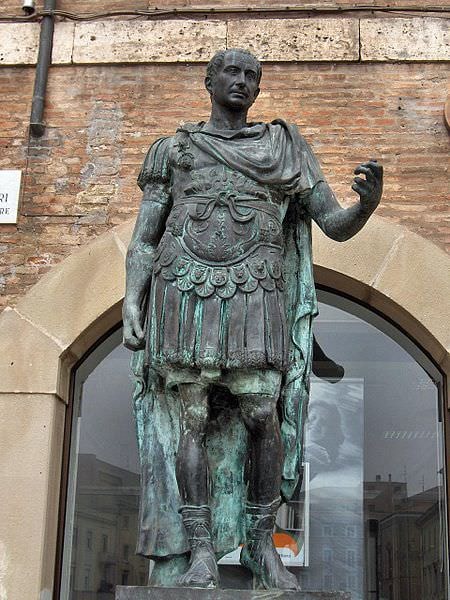 Jules César Georges Jansoone (CC BY-NC-SA) ](https://www.worldhistory.org/image/2737/julius-caesar/ "Julius Caesar")Crassus parti, le Premier Triumvirat se désintégra et Pompée et César se déclarèrent la guerre. Pompée tenta d'éliminer son rival par des moyens légaux et fit en sorte que le Sénat ordonne à César de se rendre à Rome pour y être jugé sur la base d'accusations diverses. Au lieu de rentrer dans la ville en toute humilité pour faire face à ces accusations, César traversa le Rubicon avec son armée en 49 avant J.-C. et entra dans Rome à la tête de celle-ci.
Il refusa de répondre aux accusations et se concentra sur l'élimination de Pompée en tant que rival. Pompée et César se rencontrèrent lors d'une bataille à Pharsale, en Grèce, en 48 avant Jésus-Christ, où la force de César, inférieure en nombre, battit celle de Pompée, supérieure. Pompée lui-même s'enfuit en Égypte, espérant y trouver refuge, mais il fut assassiné à son arrivée. La nouvelle de la grande victoire de César contre des forces écrasantes à Pharsale se répandit rapidement et de nombreux anciens amis et alliés de Pompée se rangèrent rapidement du côté de César, croyant qu'il était favorisé par les dieux.
### Vers l'[empire](https://www.worldhistory.org/trans/fr/1-99/empire/)
Jules César était désormais l'homme le plus puissant de Rome. Il mit effectivement fin à la période de la République en se faisant proclamer *dictateur* par le Sénat. Sa popularité auprès du peuple était immense et ses efforts pour créer un gouvernement central fort et stable se traduisirent par une prospérité accrue pour la ville de Rome. Cependant, c'est précisément en raison de ces réalisations qu'il fut assassiné par un groupe de sénateurs romains en 44 avant Jésus-Christ.
Les conspirateurs, dont Brutus et Cassius faisaient partie, semblaient craindre que César ne devienne trop puissant et qu'il ne finisse par abolir le Sénat. Après sa mort, son bras droit et cousin, Marcus Antonius (Marc-Antoine), s'associa au neveu et héritier de César, Gaius Octavius Thurinus (Octave), et à l'ami de César, Marcus Aemilius Lepidus (Lépide), pour vaincre les forces de Brutus et Cassius lors de la bataille de Phillippes en 42 avant Jésus-Christ.
[  Répartition territoriale du second triumvirat ColdEl (CC BY-SA) ](https://www.worldhistory.org/image/4951/division-of-the-second-triumvirate/ "Division of the Second Triumvirate")Octave, Antoine et Lépide formèrent [le second triumvirat](https://www.worldhistory.org/trans/fr/1-14692/le-second-triumvirat/) de Rome mais, comme pour le premier, ces hommes étaient également ambitieux. Lépide fut efficacement neutralisé lorsqu'Antoine et Octave se mirent d'accord pour qu'il puisse régner sur l'Hispanie et l'Afrique, l'écartant ainsi de tout jeu de pouvoir à Rome. Il fut convenu qu'Octave gouvernerait les terres romaines à l'ouest et Antoine à l'est.
Cependant, l'engagement d'Antoine avec la reine égyptienne [Cléopâtre](https://www.worldhistory.org/trans/fr/1-866/cleopatre/) VII bouleversa l'équilibre qu'Octave avait espéré maintenir et les deux hommes entrèrent en guerre. Les forces combinées d'Antoine et de Cléopâtre furent vaincues à la [bataille d'Actium](https://www.worldhistory.org/trans/fr/1-10408/bataille-dactium/) en 31 avant J.-C. et tous deux se donnèrent ensuite la mort. Octave s'imposa comme le seul pouvoir à Rome. En 27 avant J.-C., il se vit accorder des pouvoirs extraordinaires par le Sénat et pritle nom d'[Auguste](https://www.worldhistory.org/trans/fr/1-412/auguste/), le premier empereur de Rome. Les historiens s'accordent à dire que c'est à ce moment-là que se termine l'histoire de Rome et que commence celle de l'[Empire romain](https://www.worldhistory.org/trans/fr/1-100/empire-romain/).
#### Editorial Review
This human-authored definition has been reviewed by our editorial team before publication to ensure accuracy, reliability and adherence to academic standards in accordance with our [editorial policy](https://www.worldhistory.org/static/editorial-policy/).
## Auteur
Joshua J. Mark est cofondateur et Directeur de Contenu de la World History Encyclopedia. Il était auparavant professeur au Marist College (NY) où il a enseigné l’histoire, la philosophie, la littérature et l’écriture. Il a beaucoup voyagé et a vécu en Grèce et en Allemagne.
- [Linkedin Profile](https://www.linkedin.com/pub/joshua-j-mark/38/614/339)
## Chronologie
- **753 BCE**: The legendary founding date of [Rome](https://www.worldhistory.org/Rome/).
- **753 BCE - 510 BCE**: Regal Period of ancient [Rome](https://www.worldhistory.org/Rome/) from Founding to Birth of the Republic.
- **750 BCE - 510 BCE**: The (semi-mythological) seven kings of [Rome](https://www.worldhistory.org/Rome/): [Romulus](https://www.worldhistory.org/Romulus_and_Remus/), Numa Pompilius, Tulus Hostilius, Ancus Marcius, Lucius Tarquinius Priscus, Servius Tullius, [Lucius Tarquinius Superbus](https://www.worldhistory.org/Lucius_Tarquinius_Superbus/).
- **c. 620 BCE**: Posible founding date for [Ostia](https://www.worldhistory.org/Ostia/), the port of [Rome](https://www.worldhistory.org/Rome/).
- **599 BCE - 500 BCE**: The traditional date when the [Circus Maximus](https://www.worldhistory.org/Circus_Maximus/) of [Rome](https://www.worldhistory.org/Rome/) is first laid out.
- **534 BCE - 510 BCE**: Reign of [Lucius Tarquinius Superbus](https://www.worldhistory.org/Lucius_Tarquinius_Superbus/), last king of [Rome](https://www.worldhistory.org/Rome/).
- **510 BCE - 509 BCE**: First treaty between [Rome](https://www.worldhistory.org/Rome/) and [Carthage](https://www.worldhistory.org/carthage/).
- **509 BCE**: Foundation of the [Roman Republic](https://www.worldhistory.org/Roman_Republic/).
- **c. 508 BCE**: [Lars Porsenna](https://www.worldhistory.org/Lars_Porsenna/), [Etruscan](https://www.worldhistory.org/Etruscan_Civilization/) king of [Chiusi](https://www.worldhistory.org/Chiusi/), lays siege to [Rome](https://www.worldhistory.org/Rome/).
- **504 BCE**: Migration of Claudii from Sabine lands to [Rome](https://www.worldhistory.org/Rome/).
- **c. 499 BCE**: [Battle](https://www.worldhistory.org/disambiguation/battle/) of Lake Regillus between [Rome](https://www.worldhistory.org/Rome/) and the Latin League.
- **c. 497 BCE**: The first [temple](https://www.worldhistory.org/temple/) dedicated to [Saturn](https://www.worldhistory.org/Saturn/) is constructed in the [Forum Romanum](https://www.worldhistory.org/Roman_Forum/) of [Rome](https://www.worldhistory.org/Rome/).
- **495 BCE**: [Lucius Tarquinius Superbus](https://www.worldhistory.org/Lucius_Tarquinius_Superbus/), last king of [Rome](https://www.worldhistory.org/Rome/), dies in exile at Cumae.
- **495 BCE**: A [temple](https://www.worldhistory.org/temple/) is built in honour of Mercury near [Rome](https://www.worldhistory.org/Rome/)'s [Circus Maximus](https://www.worldhistory.org/Circus_Maximus/).
- **494 BCE**: Traditional date the office of the tribuni plebis is created in [Rome](https://www.worldhistory.org/Rome/).
- **493 BCE**: Foedus Cassianus - treaty by Spurius Cassius Vecellinus with the Latin League after the [Battle](https://www.worldhistory.org/disambiguation/battle/) of Lake Regillus.
- **484 BCE**: The first [temple](https://www.worldhistory.org/temple/) of the [Dioscuri](https://www.worldhistory.org/Castor_and_Pollux/) (Castor & Pollux) is dedicated in [Rome](https://www.worldhistory.org/Rome/)'s [Forum Romanum](https://www.worldhistory.org/Roman_Forum/) by Aulus Postumius following his victory over the Latins at the [Battle](https://www.worldhistory.org/disambiguation/battle/) of Lake Regillus.
- **451 BCE - 450 BCE**: Decemvirate and Publication of [Twelve Tables](https://www.worldhistory.org/Twelve_Tables/) of [Roman Law](https://www.worldhistory.org/Roman_Law/).
- **c. 400 BCE**: [Roman](https://www.worldhistory.org/disambiguation/Roman/) tale of mythical twins [Romulus and Remus](https://www.worldhistory.org/Romulus_and_Remus/) first recorded.
- **394 BCE**: [Etruscan](https://www.worldhistory.org/Etruscan_Civilization/) [Volsinii](https://www.worldhistory.org/volsinii/) and their ally Sappinum unsuccessfully attacks [Rome](https://www.worldhistory.org/Rome/).
- **390 BCE**: Gauls sack [Rome](https://www.worldhistory.org/Rome/).
- **c. 390 BCE**: "Gallic Catastrophe:" [Brennus](https://www.worldhistory.org/brennus/) of the Senones defeats the Romans at Allia, and subsequently sacks [Rome](https://www.worldhistory.org/Rome/).
- **380 BCE**: Rebuilding of [Rome](https://www.worldhistory.org/Rome/). Strong walls around the seven hills.
- **343 BCE - 341 BCE**: First Samnite [War](https://www.worldhistory.org/disambiguation/War/) ([Rome](https://www.worldhistory.org/Rome/) vs. Samnites).
- **340 BCE - 338 BCE**: Latin [War](https://www.worldhistory.org/disambiguation/War/), victory for [Rome](https://www.worldhistory.org/Rome/).
- **326 BCE - 304 BCE**: Second Samnite [War](https://www.worldhistory.org/disambiguation/War/).
- **321 BCE**: The Via Appia, a famous [Roman](https://www.worldhistory.org/disambiguation/Roman/) road, is constructed.
- **298 BCE - 290 BCE**: Third Samnite [War](https://www.worldhistory.org/disambiguation/War/) between [Rome](https://www.worldhistory.org/Rome/) and the Samnite people.
- **295 BCE**: [Roman](https://www.worldhistory.org/disambiguation/Roman/) victory over Samnites, Gauls and Umbrians at Sentinum.
- **292 BCE**: The Romans adopt the [Greek](https://www.worldhistory.org/disambiguation/greek/) [god](https://www.worldhistory.org/God/) of [medicine](https://www.worldhistory.org/disambiguation/medicine/) [Asclepius](https://www.worldhistory.org/Asclepius/) by stealing his sacred snake from [Epidaurus](https://www.worldhistory.org/epidaurus/) and setting up a [temple](https://www.worldhistory.org/temple/) on the Tiber Island.
- **Mar 218 BCE**: [Rome](https://www.worldhistory.org/Rome/) declares [war](https://www.worldhistory.org/disambiguation/War/) on [Carthage](https://www.worldhistory.org/carthage/) after [Hannibal](https://www.worldhistory.org/hannibal/) sacks [Saguntum](https://www.worldhistory.org/Saguntum/) in Spain. The [Second Punic War](https://www.worldhistory.org/Second_Punic_War/) begins.
- **213 BCE - 212 BCE**: [Roman](https://www.worldhistory.org/disambiguation/Roman/) commander [Marcus Claudius Marcellus](https://www.worldhistory.org/Marcus_Claudius_Marcellus/) lays seige to and ultimately sacks [Syracuse](https://www.worldhistory.org/syracuse/).
- **196 BCE**: The earliest known Triumphal Arches are built in [Rome](https://www.worldhistory.org/Rome/) by L.Sertinius.
- **184 BCE**: The first basilica is added to [Rome](https://www.worldhistory.org/Rome/)'s [Forum Romanum](https://www.worldhistory.org/Roman_Forum/).
- **168 BCE**: [Rome](https://www.worldhistory.org/Rome/) defeats [Macedon](https://www.worldhistory.org/macedon/) at [Battle of Pydna](https://www.worldhistory.org/Battle_of_Pydna/).
- **166 BCE**: [Rome](https://www.worldhistory.org/Rome/) puts [Delos](https://www.worldhistory.org/delos/) under the jurisdiction of [Athens](https://www.worldhistory.org/Athens/) and makes the island a free port.
- **146 BCE**: First [Roman](https://www.worldhistory.org/disambiguation/Roman/) all-marble building is constructed, the [temple](https://www.worldhistory.org/temple/) of [Jupiter](https://www.worldhistory.org/jupiter/) Stater in [Rome](https://www.worldhistory.org/Rome/).
- **121 BCE**: [Gallia](https://www.worldhistory.org/gaul/) Narbonensis becomes a [Roman](https://www.worldhistory.org/disambiguation/Roman/) province.
- **107 BCE - 100 BCE**: [Gaius Marius](https://www.worldhistory.org/Gaius_Marius/) reforms the [Roman army](https://www.worldhistory.org/Roman_Army/).
- **12 Jul 100 BCE - 15 Mar 44 BCE**: Life of Gaius [Julius Caesar](https://www.worldhistory.org/Julius_Caesar/), founder of the [Roman Empire](https://www.worldhistory.org/Roman_Empire/).
- **89 BCE**: All [poleis](https://www.worldhistory.org/Polis/) or [city](https://www.worldhistory.org/city/)-states in [Magna Graecia](https://www.worldhistory.org/Magna_Graecia/) come under [Roman](https://www.worldhistory.org/disambiguation/Roman/) control.
- **80 BCE**: [Sulla](https://www.worldhistory.org/sulla/) moves the [Olympic Games](https://www.worldhistory.org/Olympic_Games/) to [Rome](https://www.worldhistory.org/Rome/) for a single Olympiad.
- **70 BCE**: [Pompey](https://www.worldhistory.org/pompey/) and [Crassus](https://www.worldhistory.org/Marcus_Licinius_Crassus/) are made consuls.
- **59 BCE - 17 CE**: Life of [Livy](https://www.worldhistory.org/livy/).
- **58 BCE - 51 BCE**: [Julius Caesar](https://www.worldhistory.org/Julius_Caesar/)'s [conquest](https://www.worldhistory.org/warfare/) of [Gaul](https://www.worldhistory.org/gaul/).
- **55 BCE**: [Pompey the Great](https://www.worldhistory.org/pompey/) builds the first permanent stone [theatre](https://www.worldhistory.org/disambiguation/theatre/) in [Rome](https://www.worldhistory.org/Rome/).
- **55 BCE - 54 BCE**: [Julius Caesar](https://www.worldhistory.org/Julius_Caesar/)'s expeditions in [Britain](https://www.worldhistory.org/disambiguation/Britain/).
- **54 BCE - 29 BCE**: Forum of [Caesar](https://www.worldhistory.org/disambiguation/caesar/) constructed in [Rome](https://www.worldhistory.org/Rome/) by [Julius Caesar](https://www.worldhistory.org/Julius_Caesar/) as another area to conduct judicial business. It is the best surviving of his monuments.
- **15 Mar 44 BCE**: [Julius Caesar](https://www.worldhistory.org/Julius_Caesar/) is murdered.
- **43 BCE - 36 BCE**: [Second Triumvirate](https://www.worldhistory.org/Second_Triumvirate/): [Antony](https://www.worldhistory.org/Mark_Antony/), [Octavian](https://www.worldhistory.org/augustus/), and Lepidus (official approval by the [Roman Senate](https://www.worldhistory.org/Roman_Senate/)). Mass proscriptions including [Cicero](https://www.worldhistory.org/Cicero/).
- **43 BCE - 17 CE**: Life of the [Roman](https://www.worldhistory.org/disambiguation/Roman/) writer [Ovid](https://www.worldhistory.org/ovid/), author of Metamorphoses.
- **36 BCE**: [Agrippa](https://www.worldhistory.org/Marcus_Agrippa/) defeats the naval fleet of Sextus [Pompey](https://www.worldhistory.org/pompey/) in the [battle](https://www.worldhistory.org/disambiguation/battle/) of Naulochos.
- **31 BCE**: [Greece](https://www.worldhistory.org/greece/) absorbed into [Roman Empire](https://www.worldhistory.org/Roman_Empire/).
- **29 BCE**: [Augustus](https://www.worldhistory.org/augustus/) builds the [temple](https://www.worldhistory.org/temple/) of Divius Iulius on the spot of [Julius Caesar](https://www.worldhistory.org/Julius_Caesar/)'s funeral pyre in [Rome](https://www.worldhistory.org/Rome/)'s [Forum Romanum](https://www.worldhistory.org/Roman_Forum/).
- **c. 27 BCE**: The first [Pantheon](https://www.worldhistory.org/Pantheon/) is built in [Rome](https://www.worldhistory.org/Rome/) and dedicated by [Marcus Agrippa](https://www.worldhistory.org/Marcus_Agrippa/).
- **c. 20 BCE**: Military engineer and architect [Vitruvius](https://www.worldhistory.org/Vitruvius/) publishes his "De Architectura".
- **c. 20 BCE**: The Campus Martius baths in [Rome](https://www.worldhistory.org/Rome/) are constructed and donated to the people by [Agrippa](https://www.worldhistory.org/Marcus_Agrippa/).
- **19 BCE**: Arch of [Augustus](https://www.worldhistory.org/augustus/) built in [Rome](https://www.worldhistory.org/Rome/) to commemorate victory over the Parthians.
- **c. 13 BCE**: Official inauguration of the [Theatre of Marcellus](https://www.worldhistory.org/article/614/theatre-of-marcellus/) in [Rome](https://www.worldhistory.org/Rome/).
- **c. 10 BCE**: [Augustus](https://www.worldhistory.org/augustus/) rebuilds the [Temple of Castor and Pollux](https://www.worldhistory.org/article/632/temple-of-castor--pollux/) in [Rome](https://www.worldhistory.org/Rome/)'s [Forum Romanum](https://www.worldhistory.org/Roman_Forum/).
- **1 CE - 100 CE**: [Mithraism](https://www.worldhistory.org/Mithraic_Mysteries/) spreads in the [Roman empire](https://www.worldhistory.org/Roman_Empire/).
- **c. 13 CE**: [Augustus](https://www.worldhistory.org/augustus/) creates the [cohortes urbanae](https://www.worldhistory.org/Cohortes_Urbanae/) in [Rome](https://www.worldhistory.org/Rome/) to help maintain public order.
- **c. 23 CE**: The castra praetoria, permanent camp of the [Praetorian Guard](https://www.worldhistory.org/Praetorian_Guard/), is built in [Rome](https://www.worldhistory.org/Rome/) by [Sejanus](https://www.worldhistory.org/sejanus/).
- **42 CE - 62 CE**: [Paul the Apostle](https://www.worldhistory.org/Paul_the_Apostle/) goes on missionary journeys across [Asia Minor](https://www.worldhistory.org/Asia_Minor/), [Greece](https://www.worldhistory.org/greece/), and [Rome](https://www.worldhistory.org/Rome/).
- **c. 50 CE - c. 60 CE**: Establishment of various Christian communities in the Eastern [Mediterranean](https://www.worldhistory.org/disambiguation/mediterranean/), [Greece](https://www.worldhistory.org/greece/), [Egypt](https://www.worldhistory.org/egypt/), and at least the [city](https://www.worldhistory.org/city/) of [Rome](https://www.worldhistory.org/Rome/).
- **60 CE - 61 CE**: [Boudicca](https://www.worldhistory.org/Boudicca/)'s Revolt in [Britain](https://www.worldhistory.org/disambiguation/Britain/).
- **64 CE**: Fire destroys the [Circus Maximus](https://www.worldhistory.org/Circus_Maximus/) in [Rome](https://www.worldhistory.org/Rome/).
- **64 CE**: Unofficial persecution of Christians in [Rome](https://www.worldhistory.org/Rome/).
- **64 CE**: The great fire in [Rome](https://www.worldhistory.org/Rome/).
- **c. 64 CE**: The [Roman](https://www.worldhistory.org/disambiguation/Roman/) port of [Ostia](https://www.worldhistory.org/Ostia/) reaches its maximum size becoming a major urban centre.
- **c. 65 CE**: The [Circus Maximus](https://www.worldhistory.org/Circus_Maximus/) in [Rome](https://www.worldhistory.org/Rome/) is rebuilt and its capacity increased to 250,000.
- **c. 65 CE**: The Baths of [Nero](https://www.worldhistory.org/Nero/) are built in [Rome](https://www.worldhistory.org/Rome/).
- **66 CE - 73 CE**: The Jewish Revolt against [Rome](https://www.worldhistory.org/Rome/).
- **68 CE - 69 CE**: [Year of the Four Emperors](https://www.worldhistory.org/Year_of_the_Four_Emperors/): Civil [war](https://www.worldhistory.org/disambiguation/War/) in [Rome](https://www.worldhistory.org/Rome/).
- **70 CE**: The [city](https://www.worldhistory.org/city/) of [Jerusalem](https://www.worldhistory.org/jerusalem/) is besieged and captured by [Rome](https://www.worldhistory.org/Rome/); the Second [Temple](https://www.worldhistory.org/temple/) destroyed.
- **Jun 71 CE**: [Titus](https://www.worldhistory.org/disambiguation/Titus/) returns to [Rome](https://www.worldhistory.org/Rome/) from Jewish [War](https://www.worldhistory.org/disambiguation/War/).
- **72 CE**: [Vespasian](https://www.worldhistory.org/Vespasian/) begins construction of the [Colosseum](https://www.worldhistory.org/Colosseum/) in [Rome](https://www.worldhistory.org/Rome/).
- **Aug 79 CE - Oct 79 CE**: Eruption of Mt. Vesuvius in southern [Italy](https://www.worldhistory.org/italy/) burying the towns of [Pompeii](https://www.worldhistory.org/pompeii/) and [Herculaneum](https://www.worldhistory.org/Herculaneum/) in volcanic ash.
- **80 CE**: The [Colosseum](https://www.worldhistory.org/Colosseum/) in [Rome](https://www.worldhistory.org/Rome/) is officially opened by [Titus](https://www.worldhistory.org/disambiguation/Titus/) with a 100 day [gladiator](https://www.worldhistory.org/gladiator/) spectacular.
- **80 CE**: The first [Pantheon](https://www.worldhistory.org/Pantheon/) in [Rome](https://www.worldhistory.org/Rome/) is destroyed by fire.
- **81 CE - 96 CE**: Construction is finally completed on the [Colosseum](https://www.worldhistory.org/Colosseum/) of [Rome](https://www.worldhistory.org/Rome/) in the reign of [Domitian](https://www.worldhistory.org/domitian/).
- **83 CE**: [Battle](https://www.worldhistory.org/disambiguation/battle/) of Mons Graupius in [Scotland](https://www.worldhistory.org/disambiguation/Scotland/).
- **18 Sep 96 CE**: [Death](https://www.worldhistory.org/disambiguation/Death/) of [Roman Emperor](https://www.worldhistory.org/Roman_Emperor/) [Domitian](https://www.worldhistory.org/domitian/).
- **c. 110 CE**: First documented martydom in the [Colosseum](https://www.worldhistory.org/Colosseum/) of [Rome](https://www.worldhistory.org/Rome/), that of St. Ignatius of [Antioch](https://www.worldhistory.org/Antiochia/).
- **110 CE**: The second [Pantheon](https://www.worldhistory.org/Pantheon/) building in [Rome](https://www.worldhistory.org/Rome/) is hit by lightning and destroyed by fire.
- **113 CE**: [Trajan's column](https://www.worldhistory.org/Trajans_Column/) is constructed in [Rome](https://www.worldhistory.org/Rome/) which commemorates the emperor's campaigns in [Dacia](https://www.worldhistory.org/dacia/).
- **c. 125 CE**: The [Pantheon](https://www.worldhistory.org/Pantheon/) is completed in [Rome](https://www.worldhistory.org/Rome/).
- **10 Jul 138 CE - 9 Mar 161 CE**: Reign of [Roman Emperor](https://www.worldhistory.org/Roman_Emperor/) [Antoninus Pius](https://www.worldhistory.org/Antoninus_Pius/).
- **c. 180 CE**: The [Column of Marcus Aurelius](https://www.worldhistory.org/article/647/the-column-of-marcus-aurelius/) and Faustina is erected in [Rome](https://www.worldhistory.org/Rome/). It depicts in relief [sculpture](https://www.worldhistory.org/disambiguation/Sculpture/) the emperors' campaigns across the Danube.
- **192 CE**: Emperor [Commodus](https://www.worldhistory.org/commodus/) is murdered, civil [war](https://www.worldhistory.org/disambiguation/War/) ensues (until 197 CE).
- **202 CE**: The [Pantheon](https://www.worldhistory.org/Pantheon/) in [Rome](https://www.worldhistory.org/Rome/) is repaired by [Septimius Severus](https://www.worldhistory.org/Septimius_Severus/) and [Caracalla](https://www.worldhistory.org/Caracalla/).
- **227 CE**: The Baths of [Nero](https://www.worldhistory.org/Nero/) in [Rome](https://www.worldhistory.org/Rome/) are extensively renovated and expanded by [Alexander Severus](https://www.worldhistory.org/Alexander_Severus/) and renamed Thermae Alexandrinae.
- **c. 235 CE**: The Baths of [Caracalla](https://www.worldhistory.org/Caracalla/) in [Rome](https://www.worldhistory.org/Rome/) are completed.
- **238 CE**: Year of the Six Emperors in the [Roman Empire](https://www.worldhistory.org/Roman_Empire/).
- **272 CE**: Possible year of Emperor [Constantine](https://www.worldhistory.org/disambiguation/Constantine/)'s birth.
- **283 CE**: A fire devastates [Rome](https://www.worldhistory.org/Rome/)'s [Forum Romanum](https://www.worldhistory.org/Roman_Forum/), necessitating an extensive rebuilding programme.
- **286 CE**: Naval commander Carausius ([Marcus Aurelius](https://www.worldhistory.org/Marcus_Aurelius/) Mausaeus Valerius Carausius) declares himself emperor in [Britain](https://www.worldhistory.org/disambiguation/Britain/) and Northern [Gaul](https://www.worldhistory.org/gaul/).
- **293 CE**: Emperor Carausius assassinated by Allectus.
- **308 CE**: [Constantine I](https://www.worldhistory.org/Constantine_I/) named "[caesar](https://www.worldhistory.org/disambiguation/caesar/)" of the west.
- **312 CE**: [Constantine](https://www.worldhistory.org/disambiguation/Constantine/) defeats Maxentius at Milvian Bridge.
- **312 CE**: [Constantine I](https://www.worldhistory.org/Constantine_I/) reduces the [cohortes urbanae](https://www.worldhistory.org/Cohortes_Urbanae/) of [Rome](https://www.worldhistory.org/Rome/).
- **337 CE**: [Death](https://www.worldhistory.org/disambiguation/Death/) of Emperor [Constantine I](https://www.worldhistory.org/Constantine_I/).
- **c. 360 CE - c. 380 CE**: The [Temple](https://www.worldhistory.org/temple/) of [Saturn](https://www.worldhistory.org/Saturn/) is rebuilt in the [Forum Romanum](https://www.worldhistory.org/Roman_Forum/) of [Rome](https://www.worldhistory.org/Rome/).
- **402 CE**: Ravenna becomes the capital of the [Western Roman Empire](https://www.worldhistory.org/Western_Roman_Empire/).
- **408 CE**: [Alaric](https://www.worldhistory.org/Alaric/) I the [Visigoth](https://www.worldhistory.org/visigoth/) besieges [Rome](https://www.worldhistory.org/Rome/). As ransom, Rome pays 5,000 pounds of [gold](https://www.worldhistory.org/gold/), 30,000 pounds of [silver](https://www.worldhistory.org/Silver/), 4,000 silken tunics, 3,000 hides dyed scarlet, and 3,000 pounds of [pepper](https://www.worldhistory.org/Pepper/).
- **410 CE**: [Alaric](https://www.worldhistory.org/Alaric/) of the [Visigoths](https://www.worldhistory.org/visigoth/) sacks [Rome](https://www.worldhistory.org/Rome/).
- **24 Aug 410 CE**: [Alaric](https://www.worldhistory.org/Alaric/) sacks [Rome](https://www.worldhistory.org/Rome/).
- **422 CE**: The [Colosseum](https://www.worldhistory.org/Colosseum/) of [Rome](https://www.worldhistory.org/Rome/) is damaged by [earthquake](https://www.worldhistory.org/disambiguation/earthquake/).
- **455 CE**: [Vandals](https://www.worldhistory.org/Vandals/) sack [Rome](https://www.worldhistory.org/Rome/).
- **536 CE**: [Rome](https://www.worldhistory.org/Rome/) falls to [Belisarius](https://www.worldhistory.org/Belisarius/).
- **549 CE**: The last official [chariot](https://www.worldhistory.org/chariot/) race is held in [Rome](https://www.worldhistory.org/Rome/)'s [Circus Maximus](https://www.worldhistory.org/Circus_Maximus/).
- **608 CE**: The [Pantheon](https://www.worldhistory.org/Pantheon/) in [Rome](https://www.worldhistory.org/Rome/) is converted into a Christian church.
- **c. 730 CE**: First reference to the Flavian [Amphitheatre](https://www.worldhistory.org/amphitheatre/) as the [Colosseum](https://www.worldhistory.org/Colosseum/) by the Venerable [Bede](https://www.worldhistory.org/Bede/).
## Liens externes
- [Ancient Rome Live](http://www.ancientromelive.org/)
- [Rome Reborn](http://romereborn.frischerconsulting.com/)
- [Four sisters in Ancient Rome - Ray Laurence](http://ed.ted.com/lessons/four-sisters-in-ancient-rome-ray-laurence)
- [A glimpse of teenage life in ancient Rome - Ray Laurence](http://ed.ted.com/lessons/a-glimpse-of-teenage-life-in-ancient-rome-ray-laurence)
- [Roman Lives](https://history-podcasts.com/roman-lives)
- [S.P.Q.R.: A History of Ancient Rome - Episode - Free Library](https://libwww.freelibrary.org/podcast/?podcastID=1419)
- [33 Ancient Rome Facts That Will Change The Way You See History](https://allthatsinteresting.com/ancient-rome-facts)
- [Roman Emperors](http://www.roman-emperors.org/auggie.htm)
- [The History of Rome](https://thehistoryofrome.typepad.com/)
- [The Meaning of Myths, Folklore, Legends, and Fairy Tales](https://www.thoughtco.com/defining-terms-myth-folklore-legend-735039)
- [Julius Caesar](http://www.bbc.co.uk/history/historic_figures/caesar_julius.shtml)
- [Discover Ancient Rome in Google Earth](http://www.youtube.com/watch?v=MqMXIRwQniA)
- [Historical city travel guide: Rome, 1st century AD | British Museum](https://www.britishmuseum.org/blog/historical-city-travel-guide-rome-1st-century-ad)
## Citer cette ressource
### APA
Mark, J. J. (2022, August 15). Rome Antique. (B. Étiève-Cartwright, Traducteur). *World History Encyclopedia*.
### Chicago
Mark, Joshua J.. "Rome Antique." Traduit par Babeth Étiève-Cartwright. *World History Encyclopedia*, August 15, 2022. .
### MLA
Mark, Joshua J.. "Rome Antique." Traduit par Babeth Étiève-Cartwright. *World History Encyclopedia*, 15 Aug 2022, .
## Licence & Copyright
Soumis par [Babeth Étiève-Cartwright](https://www.worldhistory.org/user/bab.cartwright/ "User Page: Babeth Étiève-Cartwright"), publié le 15 August 2022. Veuillez consulter la ou les sources originales pour obtenir des informations sur les droits d'auteur. A noter que les contenus liés à cette page peuvent avoir des des termes de licence différents.