---
title: Cartago
author: Joshua J. Mark
translator: Martin Guzman
source: https://www.worldhistory.org/trans/ES/1-205/cartago/
format: machine-readable-alternate
license: Creative Commons Attribution-NonCommercial-ShareAlike (https://creativecommons.org/licenses/by-nc-sa/4.0/)
updated: 2021-04-30
---
# Cartago
_Escrito por [Joshua J. Mark](https://www.worldhistory.org/user/JPryst/)_
_Traducido por [Martin Guzman](https://www.worldhistory.org/user/misaac.guzman)_
De acuerdo a la leyenda,[](https://www.worldhistory.org/trans/es/2-1491/era-cleopatra-bonita/)[](https://www.worldhistory.org/trans/es/2-2578/como-llego-hitler-al-poder/)[](https://www.worldhistory.org/trans/es/2-2674/por-que-ataco-hitler-la-urss/)[](https://www.worldhistory.org/trans/es/2-2646/por-que-hitler-odiaba-a-los-judios/)[](https://www.worldhistory.org/trans/es/2-2350/dadme-la-libertad-o-dadme-la-muerte/)[](https://www.worldhistory.org/trans/es/2-207/que-le-paso-a-la-gran-biblioteca-de-alejandria/)[](https://www.worldhistory.org/trans/es/2-2574/por-que-gran-bretana-y-francia-apaciguaron-a-hitle/)[](https://www.worldhistory.org/trans/es/2-2754/por-que-desaparecio-la-mancomunidad-de-polonia-lit/)[](https://www.worldhistory.org/trans/es/2-2660/cuales-fueron-las-consecuencias-de-la-segunda-guer/) Cartago fue fundada por la reina [fenicia](https://www.worldhistory.org/trans/es/1-183/fenicia/) Elisa (mejor conocida como [Dido](https://www.worldhistory.org/trans/es/1-10498/dido/)) alrededor del año 814 a.C., sin embargo, se levantó después de la destrucción de [Tiro](https://www.worldhistory.org/trans/es/1-503/tiro/) por Alejandro en el año 332 a.C. La ciudad (en el presente Túnez, África del Norte) fue originalmente conocida como *Kart-hadasht* (nueva ciudad) para distinguirla de la cercana y más vieja ciudad fenicia de [Útica](https://www.worldhistory.org/trans/es/1-10864/utica/). Los griegos llamaban a la ciudad *Karchedon* y los romanos lo convirtieron en *Carthago*.
Originalmente un pequeño puerto costero, establecido solo como una parada de los comerciantes fenicios para reabastecerse o reparar sus barcos, Cartago creció para convertirse en la ciudad más poderosa del Mediterráneo. Su supremacía fue desafiada por Roma a través de los conflictos conocidos como las [Guerras Púnicas](https://www.worldhistory.org/trans/es/1-736/guerras-punicas/) (264-146 a.C.) que Cartago perdió repetidamente. Después del último conflicto púnico, Roma destruyó la ciudad.
### Una ciudad de comercio
Después de la caída de la gran ciudad fenicia de Tiro por [Alejandro Magno](https://www.worldhistory.org/trans/es/1-265/alejandro-magno/) en el 332 a.C., aquellos tirios que pudieron escapar, huyeron a Cartago con cualquier pertenencia que tuvieran. Debido a que Alejandro perdonó a varios de aquellos lo suficientemente ricos para comprar sus vidas, estos refugiados desembarcaron en la ciudad con medios considerables y establecieron a Cartago como el nuevo centro del comercio fenicio.
A partir de entonces, los cartagineses expulsaron a los nativos africanos del área, esclavizaron a varios de ellos y extrajeron tributo del resto. En tiempo, establecieron una relación funcional con las tribus de la vecina Numidia quienes llenarían las filas de su ejército con formidables tropas de caballería. De un pequeño pueblo costero, la ciudad creció en tamaño y grandeza con enormes fincas cubriendo miles de acres. Ni siquiera 100 años pasaron antes de que Cartago fuera la ciudad más rica del Mediterráneo. Los aristócratas vivían en palacios, los menos ricos en modestos pero atractivos hogares, mientras el tributo y las tarifas incrementaban regularmente la riqueza de la ciudad, en tope del lucrativo negocio del comercio.
El puerto era inmenso con 220 muelles, columnas brillantes que se alzaban alrededor en semicírculo, y estaba ornamentado con escultura griega. Los barcos mercantes cartagineses zarpaban diariamente a todos los puertos alrededor del Mediterráneo mientras su armada, la suprema en la región, los mantenían a salvo y, además, abrían nuevos territorios para recursos y el comercio a través de la conquista.
[  Cartago y su puerto The Creative Assembly (Copyright) ](https://www.worldhistory.org/image/1213/carthage-and-its-harbour/ "Carthage and its Harbour")### Las guerras púnicas
Era esta expansión que primero trajo a Cartago en conflicto con Roma. Cuando Roma era más débil que Cartago, no suponía alguna amenaza. La armada cartaginesa, por largo tiempo, había sido capaz de hacer cumplir el tratado que evitaba a Roma de comerciar en el Mediterráneo occidental. Sin embargo, cuando Cartago tomó Sicilia, Roma respondió. A pesar de que no tenía una armada y no sabía nada de como pelear en el mar, Roma construyó 330 barcos que equipó con astutas rampas y pasarelas (el *corvus*) que podrían ser bajadas en los barcos enemigos y aseguradas, por ende, convertían una batalla naval en una batalla terrestre. La [Primera Guerra Púnica](https://www.worldhistory.org/trans/es/1-12366/primera-guerra-punica/) (264 - 241 a.C.) había empezado. Después de una dificultad inicial con las tácticas militares, Roma ganó una serie de victorias y finalmente derrotó a Cartago en el año 241 a.C. Cartago fue forzada a ceder Sicilia a Roma y pagar una pesada indemnización de [guerra](https://www.worldhistory.org/trans/es/1-154/guerra/).
Después de esta guerra, Cartago se vio envuelta en lo que es conocida como la [Guerra de los Mercenarios](https://www.worldhistory.org/trans/es/1-25131/guerra-de-los-mercenarios/) (241 - 237 a.C.) que empezó cuando [el ejército cartaginés](https://www.worldhistory.org/trans/es/1-14824/el-ejercito-cartagines/) de mercenarios demandó el pago que Cartago les debía. Esta guerra fue finalmente ganada por Cartago a través de los esfuerzos del general [Amílcar Barca](https://www.worldhistory.org/trans/es/1-837/amilcar-barca/).
Cartago sufrió enormemente de estos dos conflictos y, cuando Roma ocupó las colonias cartaginesas de Córcega y Cerdeña, no había nada que los cartagineses pudieran hacer al respecto. Intentaron hacerlo mejor de su situación conquistando y expandiendo sus dominios en España, pero de nuevo fueron a la guerra con Roma cuando el general cartaginés Aníbal atacó la ciudad de Sagunto, una aliada de Roma.
La Segunda Guerra Púnica (218 - 202 a.C.) fue combatida principalmente en el norte de Italia ya que Aníbal invadió Italia desde España cruzando sus fuerzas a través de los Alpes. Aníbal ganó cada encuentro contra los romanos en Italia. En el año 216 a.C. ganó su más grande victoria en la [batalla de Cannas](https://www.worldhistory.org/trans/es/1-407/batalla-de-cannas/) pero, carente de suficientes tropas y provisiones, no pudo aprovechar sus éxitos. Fue derrotado por el general romano [Escipión el Africano](https://www.worldhistory.org/trans/es/1-410/escipion-el-africano/) en la batalla de Zama, en el norte de África, en el año 202 a.C. y Cartago, nuevamente, pidió la paz.
[  Moneda de plata cartaginesa The British Museum (Copyright) ](https://www.worldhistory.org/image/5243/carthaginian-silver-coin/ "Carthaginian Silver Coin")Puesta, otra vez, bajo una pesada indemnización de guerra por Roma, Cartago sufrió para pagar la deuda mientras también intentaba detener las incursiones de su vecina Numidia bajo su rey Masinisa (r. 202 - 148 a.C.). Masinisa había sido un aliado de Roma en la Segunda Guerra Púnica y era alentado por Roma para incursionar a voluntad en el territorio cartaginés. Cartago fue a la guerra contra Numidia y, en el hecho, rompió el tratado de paz con Roma que prohibía a Cartago de movilizar un ejército.
Cartago sintió que no tenía opción que defenderse contra las invasiones de Masinisa pero fue censurada por Roma y ordenada a pagar una nueva indemnización a Numidia. Habiendo recientemente pagado su deuda con Roma, ahora debían una nueva deuda de guerra paralizante. Roma no estaba preocupada con lo que Cartago y Numidia estuvieran involucradas, pero sí con la repentina revitalización del ejército cartaginés.
Cartago creía que su trato con Roma había terminado cuando la deuda de guerra fue pagada; Roma no estaba de acuerdo. Los romanos sentían que Cartago aún estaba obligada a doblarse ante la voluntad romana; tanto que el senador romano Catón el Viejo terminaba todos sus discursos, sin importar el tema, con la frase, "Por lo demás, opino que Cartago debe ser destruida". En el año 149 a.C., Roma sugirió esa misma acción.
### Cartago Destruida
Una embajada romana en Cartago hizo la demanda, la cual incluía la estipulación, de que Cartago debía ser desmantelada y reconstruida tierra adentro. Los cartagineses, comprensiblemente, la rechazaron y la [Tercera Guerra Púnica](https://www.worldhistory.org/trans/es/1-14801/tercera-guerra-punica/) (149 - 146 a.C.) inició. El general romano Escipión Emiliano sitió Cartago por tres años hasta que cayó. Después de saquear la ciudad, los romanos la quemaron hasta los cimientos, dejando ninguna piedra arriba de otra. Un mito moderno ha crecido diciendo que las fuerzas romanas sembraron las ruinas con sal, pero esa historia no tiene base en hechos. Está dicho que Escipión Emiliano lloró cuando ordenó la destrucción de la ciudad y se comportó virtuosamente con los sobrevivientes.
[ 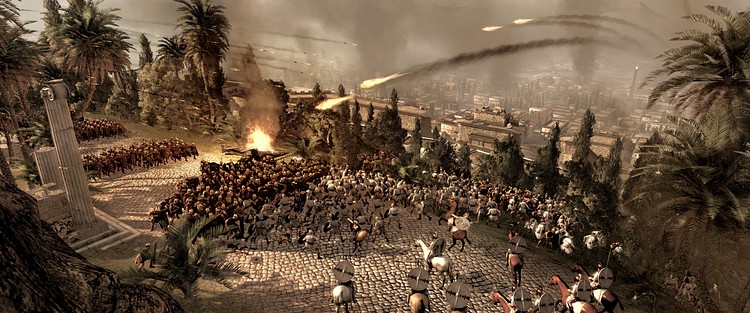 Cartago bajo asedio The Creative Assembly (Copyright) ](https://www.worldhistory.org/image/5180/carthage-under-siege/ "Carthage Under Siege")Útica ahora se convirtió en la capital de las provincias africanas de Roma y Cartago se mantuvo en ruina hasta el año 122 a.C. cuando Cayo Sempronio Graco, el [tribuno](https://www.worldhistory.org/trans/es/1-15521/tribuno/) romano, fundó ahí una pequeña colonia. La memoria de las Guerras Púnicas aún estaba fresca, y por ende, la colonia falló. [Julio César](https://www.worldhistory.org/trans/es/1-95/julio-cesar/) propuso y planeó la reconstrucción de Cartago y, cinco años después de su muerte, Cartago se levantó de nuevo. El poder ahora se trasladó de Útica a Cartago y permaneció como una importante colonia romana hasta la caída del [imperio](https://www.worldhistory.org/trans/es/1-99/imperio/).
### Historia Posterior
Cartago creció en prominencia a medida que crecía el [Cristianismo](https://www.worldhistory.org/trans/es/1-665/cristianismo/) y [Agustín de Hipona](https://www.worldhistory.org/trans/es/1-19185/agustin-de-hipona/) vivió ahí antes de ir a Roma. La ciudad continuó bajo la influencia romana a través del [Imperio Bizantino](https://www.worldhistory.org/trans/es/1-953/imperio-bizantino/) (anteriormente [el Imperio Romano](https://www.worldhistory.org/trans/es/1-100/el-imperio-romano/) de Oriente) quien la mantuvo contra los repetidos ataques de los [vándalos](https://www.worldhistory.org/trans/es/1-13434/vandalos/). En el año 698 d.C., los musulmanes derrotaron a las fuerzas bizantinas en la batalla de Cartago, destruyeron la ciudad completamente, y expulsaron a los bizantinos de África.
Después, fortificaron y desarrollaron la ciudad vecina de Túnez y la establecieron como el nuevo centro de comercio y gobernación de la región. Cartago todavía yace en ruinas en la actual Túnez y permanece como una importante atracción turística y sitio arqueológico. El contorno del gran puerto aún puede ser visto, así como también las ruinas de los hogares y palacios del tiempo cuando la ciudad de Cartago gobernaba el Mediterráneo.
#### Editorial Review
This human-authored definition has been reviewed by our editorial team before publication to ensure accuracy, reliability and adherence to academic standards in accordance with our [editorial policy](https://www.worldhistory.org/static/editorial-policy/).
## Bibliografía
- [Adkins, L & Adkins, R. A. *Handbook to Life in Ancient Rome.* Oxford University Press, 1998.](https://www.worldhistory.org/books/0195123328/)
- [Appian. *Roman History.* Harvard University Press, 1913.](https://www.worldhistory.org/books/0674990056/)
- [Durant, W. *Caesar and Christ.* Simon & Schuster, 1980.](https://www.worldhistory.org/books/0671115006/)
- [Grant, M. *Readings in the Classical Historians.* Scribner, 1993.](https://www.worldhistory.org/books/0684192454/)
- [Lewis, J. E. *The Mammoth Book of Eyewitness Ancient Rome.* Running Press, 2003.](https://www.worldhistory.org/books/078671168X/)
- [Matyszak, P. *The Enemies of Rome: From Hannibal to Attila the Hun.* Thames & Hudson, 2009.](https://www.worldhistory.org/books/0500287724/)
- [Mellor, R. *The Historians of Ancient Rome.* Routledge, 2012.](https://www.worldhistory.org/books/0415527163/)
- [Miles, R. *Carthage Must Be Destroyed: The Rise and Fall of an Ancient Civilization.* Penguin Books, 2012.](https://www.worldhistory.org/books/0143121294/)
- [Nardo, D. *Living in Ancient Rome.* Thompson/Gale Publishers, 2004.](https://www.worldhistory.org/books/0737714573/)
- [Warmington, B. H. *Carthage: A History.* Barnes & Noble Inc, 1999.](https://www.worldhistory.org/books/1566192102/)
## Sobre el autor
Joshua J. Mark no solo es cofundador de World History Encyclopedia, sino también es el director de Contenidos. Anteriormente fue profesor en el Colegio Marista de Nueva York, donde enseñó historia, filosofía, literatura y escritura. Ha viajado extensamente y vivió en Grecia y en Alemania.
- [Linkedin Profile](https://www.linkedin.com/pub/joshua-j-mark/38/614/339)
## Cronología
- **c. 814 BCE**: Traditional founding date for the Phoenician colony of [Carthage](https://www.worldhistory.org/carthage/) by [Tyre](https://www.worldhistory.org/Tyre/).
- **580 BCE - 376 BCE**: [Carthage](https://www.worldhistory.org/carthage/) and [Greece](https://www.worldhistory.org/greece/) fight for dominance in [Sicily](https://www.worldhistory.org/sicily/).
- **540 BCE**: A joint Carthaginian and [Cerveteri](https://www.worldhistory.org/Cerveteri/) force wins the [Battle](https://www.worldhistory.org/disambiguation/battle/) of the Sardinian Sea against the Phocaeans.
- **539 BCE**: [Etruscan](https://www.worldhistory.org/Etruscan_Civilization/) & Carthaginian alliance expels the Greeks from Corsica.
- **535 BCE**: [Battle](https://www.worldhistory.org/disambiguation/battle/) of Alalia. Carthaginian navy, in alliance with [Etruscans](https://www.worldhistory.org/Etruscan_Civilization/), defeated [Greek](https://www.worldhistory.org/disambiguation/greek/) ships off the island of Corsica.
- **510 BCE - 509 BCE**: First treaty between [Rome](https://www.worldhistory.org/Rome/) and [Carthage](https://www.worldhistory.org/carthage/).
- **500 BCE**: [Carthage](https://www.worldhistory.org/carthage/) expands into southern Spain.
- **480 BCE**: Tyrant of [Syracuse](https://www.worldhistory.org/syracuse/) Gelon defeats the Carthaginians at the [battle](https://www.worldhistory.org/disambiguation/battle/) of Himera.
- **480 BCE**: [Agrigento](https://www.worldhistory.org/agrigento/) defeats [Carthage](https://www.worldhistory.org/carthage/) at the [battle](https://www.worldhistory.org/disambiguation/battle/) of Himera.
- **406 BCE**: [Agrigento](https://www.worldhistory.org/agrigento/) is attacked and destroyed by [Carthage](https://www.worldhistory.org/carthage/).
- **405 BCE**: [Segesta](https://www.worldhistory.org/Segesta/) comes under Carthaginian control.
- **396 BCE**: The Carthaginian [city](https://www.worldhistory.org/city/) of Lilybaeum is founded on [Sicily](https://www.worldhistory.org/sicily/).
- **c. 341 BCE**: [Timoleon](https://www.worldhistory.org/Timoleon/) defeats a [Carthaginian army](https://www.worldhistory.org/Carthaginian_Army/) at the [battle](https://www.worldhistory.org/disambiguation/battle/) of Crimisus in [Sicily](https://www.worldhistory.org/sicily/).
- **338 BCE**: [Timoleon](https://www.worldhistory.org/Timoleon/) agrees a peace treaty with [Carthage](https://www.worldhistory.org/carthage/) over their control of [Sicily](https://www.worldhistory.org/sicily/).
- **311 BCE**: A [Carthaginian army](https://www.worldhistory.org/Carthaginian_Army/) defeats [Agathocles of Syracuse](https://www.worldhistory.org/Agathocles_of_Syracuse/) near [Gela](https://www.worldhistory.org/Gela/), [Sicily](https://www.worldhistory.org/sicily/).
- **310 BCE**: [Agathocles of Syracuse](https://www.worldhistory.org/Agathocles_of_Syracuse/) lands an army of 14,000 in North [Africa](https://www.worldhistory.org/disambiguation/africa/).
- **309 BCE**: [Syracuse](https://www.worldhistory.org/syracuse/) defeats a [Carthaginian army](https://www.worldhistory.org/Carthaginian_Army/) in [Sicily](https://www.worldhistory.org/sicily/) and kills their general Hamilcar.
- **309 BCE - 308 BCE**: [Agathocles of Syracuse](https://www.worldhistory.org/Agathocles_of_Syracuse/) successfuly campaigns in North [Africa](https://www.worldhistory.org/disambiguation/africa/) defeating Carthaginian armies and taking [Utica](https://www.worldhistory.org/Utica/) and Hippacra.
- **307 BCE**: [Carthage](https://www.worldhistory.org/carthage/) defeats the army of [Agathocles of Syracuse](https://www.worldhistory.org/Agathocles_of_Syracuse/) led by Archagathus while Agathocles is in [Sicily](https://www.worldhistory.org/sicily/).
- **306 BCE**: [Carthage](https://www.worldhistory.org/carthage/) and [Agathocles of Syracuse](https://www.worldhistory.org/Agathocles_of_Syracuse/) sign a peace treaty and divide [Sicily](https://www.worldhistory.org/sicily/) between them.
- **264 BCE**: The Mamertines at Messana on [Sicily](https://www.worldhistory.org/sicily/) call for Carthaginian and then [Roman](https://www.worldhistory.org/disambiguation/Roman/) help in defence against [Syracuse](https://www.worldhistory.org/syracuse/), sparking the [First Punic War](https://www.worldhistory.org/First_Punic_War/).
- **264 BCE - 241 BCE**: [First Punic War](https://www.worldhistory.org/First_Punic_War/). [Carthage](https://www.worldhistory.org/carthage/) cedes [Sicily](https://www.worldhistory.org/sicily/) to [Rome](https://www.worldhistory.org/Rome/).
- **c. 263 BCE**: Antaros and 3000 [Celts](https://www.worldhistory.org/celt/) fight with [Carthage](https://www.worldhistory.org/carthage/) in the [First Punic War](https://www.worldhistory.org/First_Punic_War/).
- **256 BCE**: [Rome](https://www.worldhistory.org/Rome/) lands an army of four legions on African soil at Clupea during the [First Punic War](https://www.worldhistory.org/First_Punic_War/).
- **255 BCE**: [Carthage](https://www.worldhistory.org/carthage/) sues for peace during the [First Punic War](https://www.worldhistory.org/First_Punic_War/) but the [Roman](https://www.worldhistory.org/disambiguation/Roman/) [consul](https://www.worldhistory.org/Consul/) Regulus' excessive demands are rejected.
- **255 BCE**: A Carthaginain army led by the mercenary Spartan commander Xanthippus defeats two [Roman](https://www.worldhistory.org/disambiguation/Roman/) legions near Tunis during the [First Punic War](https://www.worldhistory.org/First_Punic_War/).
- **255 BCE - 253 BCE**: [Roman](https://www.worldhistory.org/disambiguation/Roman/) fleets are wrecked by storms off Pachynus and Palinurus during the [First Punic War](https://www.worldhistory.org/First_Punic_War/).
- **249 BCE**: [Carthage](https://www.worldhistory.org/carthage/) defeats [Rome](https://www.worldhistory.org/Rome/) in a naval [battle](https://www.worldhistory.org/disambiguation/battle/) at Drepanum during the [First Punic War](https://www.worldhistory.org/First_Punic_War/).
- **249 BCE**: Antaros withdraws his support from [Carthage](https://www.worldhistory.org/carthage/).
- **247 BCE**: [Hamilcar Barca](https://www.worldhistory.org/Hamilcar_Barca/) raids southern [Italy](https://www.worldhistory.org/italy/) and then lands on [Sicily](https://www.worldhistory.org/sicily/) during the [First Punic War](https://www.worldhistory.org/First_Punic_War/).
- **247 BCE - 183 BCE**: Life of [Hannibal](https://www.worldhistory.org/hannibal/).
- **241 BCE - 238 BCE**: The rebellion of the mercenaries: Unpaid mercenaries under the leadership of Mathos and Spendios rebel against [Carthage](https://www.worldhistory.org/carthage/). Despite a peace treaty, [Rome](https://www.worldhistory.org/Rome/) seizes the opportunity to strip Carthage of Sardinia and Corsica.
- **237 BCE**: [Hamilcar Barca](https://www.worldhistory.org/Hamilcar_Barca/) arrives in southern Spain to expand [Carthage](https://www.worldhistory.org/carthage/)'s interests there. He makes his base at [Gades](https://www.worldhistory.org/Gades/) and founds Acra Leuce.
- **229 BCE**: Hasdrubal takes command of [Carthage](https://www.worldhistory.org/carthage/)'s armies in Spain.
- **226 BCE**: Hasdrubal signs an agreement with [Rome](https://www.worldhistory.org/Rome/) not to cross the Ebro river in Spain.
- **221 BCE**: [Hannibal](https://www.worldhistory.org/hannibal/) takes command of [Carthage](https://www.worldhistory.org/carthage/)'s armies in Spain.
- **219 BCE**: [Hannibal](https://www.worldhistory.org/hannibal/) crosses the Ebro river in Spain and sacks the [city](https://www.worldhistory.org/city/) of [Saguntum](https://www.worldhistory.org/Saguntum/), [Rome](https://www.worldhistory.org/Rome/)'s ally, sparking off the [Second Punic War](https://www.worldhistory.org/Second_Punic_War/).
- **Mar 218 BCE**: [Rome](https://www.worldhistory.org/Rome/) declares [war](https://www.worldhistory.org/disambiguation/War/) on [Carthage](https://www.worldhistory.org/carthage/) after [Hannibal](https://www.worldhistory.org/hannibal/) sacks [Saguntum](https://www.worldhistory.org/Saguntum/) in Spain. The [Second Punic War](https://www.worldhistory.org/Second_Punic_War/) begins.
- **Apr 218 BCE - May 218 BCE**: [Hannibal](https://www.worldhistory.org/hannibal/) leaves Spain to cross the Pyrenees and Alps into [Italy](https://www.worldhistory.org/italy/).
- **Nov 218 BCE**: [Hannibal](https://www.worldhistory.org/hannibal/) wins the [battle](https://www.worldhistory.org/disambiguation/battle/) of Ticinus.
- **Dec 218 BCE**: [Hannibal](https://www.worldhistory.org/hannibal/) wins the [battle](https://www.worldhistory.org/disambiguation/battle/) of Trebia.
- **Jun 217 BCE**: [Hannibal](https://www.worldhistory.org/hannibal/) wins the [battle](https://www.worldhistory.org/disambiguation/battle/) of Lake Trasimene.
- **216 BCE**: "[Hannibal](https://www.worldhistory.org/hannibal/) ante portas." Hannibal directly threatens the [city](https://www.worldhistory.org/city/) of [Rome](https://www.worldhistory.org/Rome/), but cannot advance due to lack of supplies and reinforcements.
- **Aug 216 BCE**: [Hannibal](https://www.worldhistory.org/hannibal/) wins the [battle of Cannae](https://www.worldhistory.org/Battle_of_Cannae/), the worst defeat in [Roman](https://www.worldhistory.org/disambiguation/Roman/) history.
- **215 BCE**: A [Carthaginian army](https://www.worldhistory.org/Carthaginian_Army/) led by Hasdrubal is defeated at the [battle](https://www.worldhistory.org/disambiguation/battle/) of Ibera in Spain.
- **212 BCE**: The Romans [conquer](https://www.worldhistory.org/warfare/) [Saguntum](https://www.worldhistory.org/Saguntum/) from the Carthaginians.
- **212 BCE**: A [Carthaginian army](https://www.worldhistory.org/Carthaginian_Army/) is defeated in [Sicily](https://www.worldhistory.org/sicily/) by a [Roman army](https://www.worldhistory.org/Roman_Army/) led by Marcellus. [Syracuse](https://www.worldhistory.org/syracuse/) falls to [Rome](https://www.worldhistory.org/Rome/) who now control the island.
- **211 BCE**: A [Carthaginian army](https://www.worldhistory.org/Carthaginian_Army/) defeats two [Roman](https://www.worldhistory.org/disambiguation/Roman/) consuls and their armies in the Tader valley, Spain.
- **209 BCE**: [Scipio Africanus](https://www.worldhistory.org/disambiguation/Scipio_Africanus/) captures the Carthaginian base and treasury [Carthago Nova](https://www.worldhistory.org/Carthago_Nova/) in southern Spain.
- **208 BCE**: [Scipio Africanus](https://www.worldhistory.org/disambiguation/Scipio_Africanus/) defeats a [Carthaginian army](https://www.worldhistory.org/Carthaginian_Army/) led by Hasdrubal at Baecula in Spain.
- **206 BCE**: [Scipio Africanus](https://www.worldhistory.org/disambiguation/Scipio_Africanus/) wins the [battle](https://www.worldhistory.org/disambiguation/battle/) of Ilipa in Spain.
- **206 BCE - 205 BCE**: The Romans [conquer](https://www.worldhistory.org/warfare/) [Gades](https://www.worldhistory.org/Gades/). End of the Carthaginian presence on the Iberian Peninsula.
- **204 BCE**: [Scipio Africanus](https://www.worldhistory.org/disambiguation/Scipio_Africanus/) sails to North [Africa](https://www.worldhistory.org/disambiguation/africa/) in the [Second Punic War](https://www.worldhistory.org/Second_Punic_War/).
- **204 BCE - 203 BCE**: [Scipio Africanus](https://www.worldhistory.org/disambiguation/Scipio_Africanus/) wins two battles and besieges [Utica](https://www.worldhistory.org/Utica/) in North [Africa](https://www.worldhistory.org/disambiguation/africa/).
- **203 BCE**: Carthaginian commander Mago is unable to join forces with [Hannibal](https://www.worldhistory.org/hannibal/) and his army is defeated in Cisalpine [Gaul](https://www.worldhistory.org/gaul/).
- **203 BCE**: [Scipio Africanus](https://www.worldhistory.org/disambiguation/Scipio_Africanus/) defeats a [Carthaginian army](https://www.worldhistory.org/Carthaginian_Army/) led by Hasdrubal in North [Africa](https://www.worldhistory.org/disambiguation/africa/).
- **203 BCE**: [Hannibal](https://www.worldhistory.org/hannibal/) is recalled from [Italy](https://www.worldhistory.org/italy/) to defend [Carthage](https://www.worldhistory.org/carthage/) against [Scipio Africanus](https://www.worldhistory.org/disambiguation/Scipio_Africanus/).
- **202 BCE**: [Hannibal](https://www.worldhistory.org/hannibal/) flees to Hadrumentum after losing the [battle](https://www.worldhistory.org/disambiguation/battle/) of Zama.
- **19 Oct 202 BCE**: [Battle](https://www.worldhistory.org/disambiguation/battle/) of Zama: [Scipio Africanus](https://www.worldhistory.org/disambiguation/Scipio_Africanus/) defeats [Hannibal](https://www.worldhistory.org/hannibal/), ending the [Second Punic War](https://www.worldhistory.org/Second_Punic_War/).
- **195 BCE**: Facing the threat of being handed to the Romans after the [Second Punic War](https://www.worldhistory.org/Second_Punic_War/), [Hannibal](https://www.worldhistory.org/hannibal/) flees to the [Seleucid](https://www.worldhistory.org/Seleucid_Empire/) court of Antiochus III and becomes his advisor.
- **c. 183 BCE**: As an ambassador to the [Hellenistic](https://www.worldhistory.org/Hellenic_World/) kingdom of Bithynia, [Titus Quinctius Flamininus](https://www.worldhistory.org/Titus_Quinctius_Flamininus/), the general who defeated [Macedon](https://www.worldhistory.org/macedon/), demands that [Hannibal](https://www.worldhistory.org/hannibal/) should be surrendered in [Roman](https://www.worldhistory.org/disambiguation/Roman/) hands. As king Prusias gives in, Hannibal commits suicide in the village of Libyssa, in order to escape captivity. The [Roman Senate](https://www.worldhistory.org/Roman_Senate/) did not approve of [Flamininus](https://www.worldhistory.org/Titus_Quinctius_Flamininus/)' action.
- **150 BCE**: A [Carthaginian army](https://www.worldhistory.org/Carthaginian_Army/) attacks Numidia, breaking the peace treaty agreed with [Rome](https://www.worldhistory.org/Rome/) and sparking the [Third Punic War](https://www.worldhistory.org/Third_Punic_War/).
- **149 BCE**: [Rome](https://www.worldhistory.org/Rome/) sends an army of 80,000 infantry and 4,000 cavalry to attack [Carthage](https://www.worldhistory.org/carthage/).
- **149 BCE - 146 BCE**: [Third Punic War](https://www.worldhistory.org/Third_Punic_War/).
- **148 BCE**: The [Roman](https://www.worldhistory.org/disambiguation/Roman/) siege of [Carthage](https://www.worldhistory.org/carthage/), in its second year, remains unsuccessful.
- **147 BCE**: [Scipio Africanus](https://www.worldhistory.org/disambiguation/Scipio_Africanus/) the Younger takes over command of the siege of [Carthage](https://www.worldhistory.org/carthage/) and builds a mole to block its harbour.
- **146 BCE**: End of the [Third Punic War](https://www.worldhistory.org/Third_Punic_War/). [Carthage](https://www.worldhistory.org/carthage/) is destroyed and its lands become the [Roman](https://www.worldhistory.org/disambiguation/Roman/) province [Africa](https://www.worldhistory.org/disambiguation/africa/).
- **146 BCE**: [Scipio Africanus](https://www.worldhistory.org/disambiguation/Scipio_Africanus/) the Younger sacks [Carthage](https://www.worldhistory.org/carthage/) and enslaves its population.
- **162 CE**: The Antonine Baths at [Carthage](https://www.worldhistory.org/carthage/) are completed.
## Enlaces externos
- [The Rise and Fall of Carthage](https://www.missedinhistory.com/podcasts/the-rise-and-fall-of-carthage.htm)
- [Timeline of Carthaginian History](http://spotlightongames.com/background/timeline.html)
- [YouTube](http://www.youtube.com/watch?v=ViabwPbCTJ0)
## Cita este trabajo
### APA
Mark, J. J. (2021, April 30). Cartago. (M. Guzman, Traductor). *World History Encyclopedia*.
### Chicago
Mark, Joshua J.. "Cartago." Traducido por Martin Guzman. *World History Encyclopedia*, April 30, 2021. .
### MLA
Mark, Joshua J.. "Cartago." Traducido por Martin Guzman. *World History Encyclopedia*, 30 Apr 2021, .
## Licencia y derechos de autor
Enviado por [Martin Guzman](https://www.worldhistory.org/user/misaac.guzman/ "User Page: Martin Guzman"), publicado el 30 April 2021. Consulta la fuente original para obtener información sobre derechos de autor. Por favor, ten en cuenta que el contenido vinculado con esta página puede tener términos de licencia diferentes.