---
title: Syracuse
author: Mark Cartwright
source: https://www.worldhistory.org/syracuse/
format: machine-readable-alternate
license: Creative Commons Attribution-NonCommercial-ShareAlike (https://creativecommons.org/licenses/by-nc-sa/4.0/)
updated: 2023-06-18
---
# Syracuse
_Authored by [Mark Cartwright](https://www.worldhistory.org/user/markzcartwright/)_
The [city](https://www.worldhistory.org/city/) of Syracuse is located on the east coast of [Sicily](https://www.worldhistory.org/sicily/) and was originally a [Greek](https://www.worldhistory.org/disambiguation/greek/) colony founded by [Corinth](https://www.worldhistory.org/corinth/) in 734 BCE. The city enjoyed a period of expansion and prosperity under the tyrant Gelon in the 5th century BCE, survived a two-year siege by Athenian forces from 415 to 413 BCE, and again prospered under the tyrant Dionysius in the 4th century BCE when the city controlled much of Sicily and large portions of southern [Italy](https://www.worldhistory.org/italy/).
### From Colony to Democracy
The colony was in fact first established on the small island of Ortygia, chosen for its natural harbours and spring water, but the community of early Greek settlers quickly spread to the main island, both settlements being linked by a man-made causeway. The aristocratic-led government achieved a period of prosperity which is evidenced in the [Archaic period](https://www.worldhistory.org/Archaic_Period/) by the city founding its own colonies of Helorus, Acrae, Camarina, and Casmanae. Also dating to this period are remains of 6th century BCE temples dedicated to [Zeus](https://www.worldhistory.org/zeus/), [Apollo](https://www.worldhistory.org/apollo/), and [Athena](https://www.worldhistory.org/athena/).
Democracy was established in the [polis](https://www.worldhistory.org/Polis/) following a popular uprising led by [Hippocrates](https://www.worldhistory.org/Hippocrates/). However, this was short-lived, for in c. 491 BCE the tyrant Gelon took power and, building up the greatest army in [Greece](https://www.worldhistory.org/greece/) and defeating the Carthaginians at the [battle](https://www.worldhistory.org/disambiguation/battle/) of Himera in 480 BCE, he established a lengthy period of peace which brought a golden age for Syracuse. The Greek city also gained something of a reputation as a cultural centre and such literary greats as [Aeschylus](https://www.worldhistory.org/Aeschylus/), Simonides, and [Pindar](https://www.worldhistory.org/Pindar/) all spent time in Syracuse. Hieron continued Gelon's expansionist policies by taking territory to the north which included [Tyche](https://www.worldhistory.org/Tyche/) and Neapolis. In addition, the opportunity was taken to re-construct the [temple](https://www.worldhistory.org/temple/) to Athena.
Following the [death](https://www.worldhistory.org/disambiguation/Death/) of Hieron, democracy was restored but at the cost of losing the territorial gains the Sicilian city had made. Similar in nature to [Athens](https://www.worldhistory.org/Athens/), the polis was governed by a council and popular assembly with an executive consisting of elected generals or *stratēgoi*. Wars against Athens from 427 to 424 BCE and again between 415 and 413 BCE tested the resilience of the democracy, but ultimately Syracuse would be victorious, and with further reforms by Diocles, the democratic nature of Syracuse's political structure was further strengthened.
### The Sicilian Expedition
Athens' attempted invasion of Sicily from 415 BCE was originally masterminded by the Athenian general [Alcibiades](https://www.worldhistory.org/Alcibiades/) and it would become one of the major conflicts in the Greek world. The invasion became known as the Sicilian Expedition, and the initial premise for Athens' attack was a response to a call for help by the ally polis of [Egesta](https://www.worldhistory.org/Segesta/). The Athenians and their allies formed a massive flotilla consisting of some 134 triremes which carried 5,100 hoplites and 480 archers. Cavalry was notably absent, but it was probably the intention of the Athenians to recruit locally on arrival in Sicily. In this respect, though, they were to be sorely disappointed with the level of local assistance offered, despite many [poleis](https://www.worldhistory.org/Polis/) being Athenian allies. The Syracusan response to the crisis seems to have been rather muddled; however, forces were sent from allies such as [Sparta](https://www.worldhistory.org/sparta/) and Corinth and the city set itself for a protracted resistance.
The Athenians attacked and established a beach head in the harbour of Syracuse, but their lack of cavalry meant they could not follow up this initial victory. Given breathing space, the Syracusans strengthened their fortifications. The Athenians, meanwhile, attempted to block off the city from the rest of the island by building a huge [wall](https://www.worldhistory.org/wall/). Things looked bleak for Syracuse but, just when needed, a relief force from Corinth led by the able commander Gylippus swung the initiative back with the defenders, and from 414 to 413 BCE they began to build counter walls to block the Athenian one. In 413 BCE the Athenians won a naval battle in the harbour but at the cost of losing their three forts on land to Gylippus' forces. Later in the year, the Syracusans won a naval battle by employing ramming tactics against the lighter Athenian ships which were unable to manoeuvre in the confined space of the harbour. However, in another twist, [Demosthenes](https://www.worldhistory.org/Demosthenes/) finally arrived from Athens with a relief force for the attackers and he promptly launched a night attack. Local knowledge of terrain proved invaluable, though, and the Syracusans won a decisive victory. A third and final naval battle was won by Syracuse which ended any further ambitions of the Athenians to continue the conflict. In a brutal retreat from the island, thousands of Athenian soldiers were killed or enslaved and the two generals [Nicias](https://www.worldhistory.org/Nicias/) and Demosthenes were executed. Syracuse had somehow survived its greatest threat to her independence and would go on to enjoy a great period of prosperity whilst Athens, although fighting on for another ten years, would ultimately lose the [Peloponnesian War](https://www.worldhistory.org/Peloponnesian_War/) against Sparta.
[ 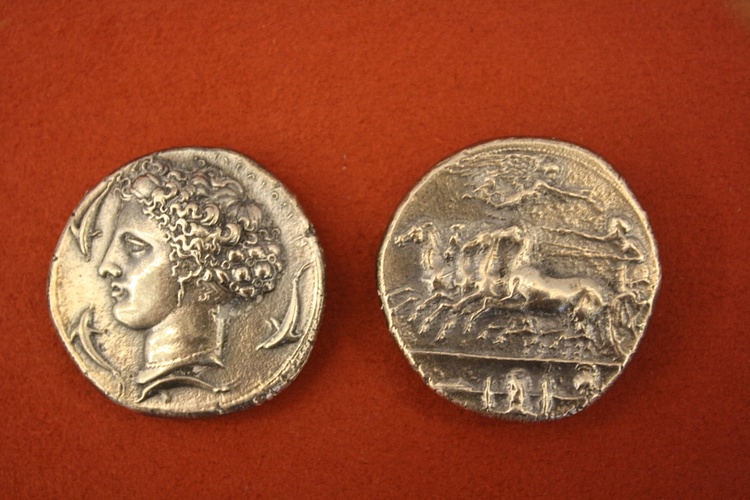 Syracuse Silver Decadrachm Mark Cartwright (CC BY-NC-SA) ](https://www.worldhistory.org/image/825/syracuse-silver-decadrachm/ "Syracuse Silver Decadrachm")### The Tyrants
A long period of tyranny was established in Syracuse with the arrival of Dionysius I (c. 430 - c. 367 BCE). Four wars against [Carthage](https://www.worldhistory.org/carthage/) rocked the early years of his tyranny, but from the early 4th century BCE the city enjoyed another period of prosperity. Fortifications were constructed which stretched a full 27 km around the city, and Syracuse could now claim control over most of Sicily and even parts of southern Italy. Dionysius was famous not only as a great military commander and politician but as a patron of the arts. He was also credited with innovative military tactics not previously employed by Greek armed forces - the use of artillery, catapult, siege-craft, and the quinquereme for example. He never achieved his ambition of kicking the Carthaginians out of Sicily but he did achieve lasting fame as one of the greatest leaders to grace the stage of history.
Dionysius was succeeded in c. 367 BCE by his son Dionysius II who ruled for a decade and found time to study under [Plato](https://www.worldhistory.org/plato/) before being overthrown by Dion in 356 BCE. Following a period of instability and decline in the city's fortunes, the Corinthian [Timoleon](https://www.worldhistory.org/Timoleon/) established an oligarchy in 344 BCE which lasted until 317 BCE when Agathocles seized power, declaring himself king in c. 305 BCE and reigning until his death in 289 BCE. Hicetus became tyrant for a decade starting in 288 BCE, during which time he lost another [war](https://www.worldhistory.org/disambiguation/War/) with Carthage. His successor, [Pyrrhus](https://www.worldhistory.org/pyrrhus/), was more successful but struggled to recall the heady days of Dionysius.
[ 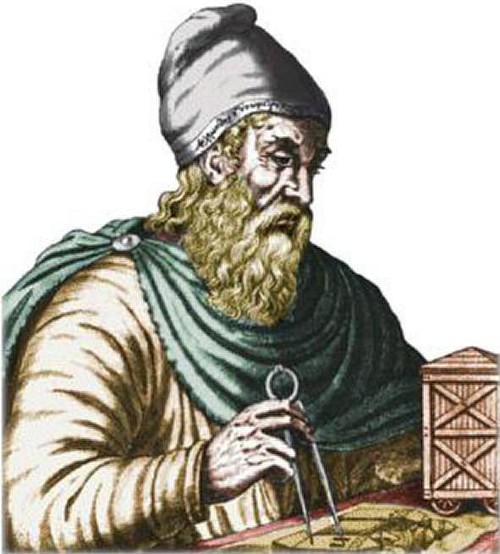 Archimedes Illustration Dr. Manuel (CC BY-SA) ](https://www.worldhistory.org/image/1335/archimedes-illustration/ "Archimedes Illustration")### [Hellenistic](https://www.worldhistory.org/Hellenic_World/) & [Roman](https://www.worldhistory.org/disambiguation/Roman/) Syracuse
A period of revival, not only commercially but also culturally speaking, was achieved under Hieron II, and new significant building projects included a massive [theatre](https://www.worldhistory.org/disambiguation/theatre/) (238-215 BCE), a huge stoa, and a 200 metre long altar to Zeus Eleutherius. However, Syracuse's position as a fully independent state was coming to an end, and when Hieronymus sided with Carthage against [Rome](https://www.worldhistory.org/Rome/), the fate of the city was sealed. After a long siege from 213 to 211 BCE, Syracuse was sacked by the Roman commander [Marcus Claudius Marcellus](https://www.worldhistory.org/Marcus_Claudius_Marcellus/). This was despite the Syracusans benefitting from the inventions of one of their famous sons, [Archimedes](https://www.worldhistory.org/Archimedes/), who created weapons such as the 'iron hand' which could pluck enemy soldiers from their positions and then drop them from a great height.
Still important in Roman times, the ancient city became the provincial capital, albeit also a *civitas decumana* and obliged to pay tax to Rome. In 21 BCE [Augustus](https://www.worldhistory.org/augustus/) created a *colonia* and the city was also beautified with a new square and [triumphal arch](https://www.worldhistory.org/Triumphal_Arch/) and benefitted from a new [aqueduct](https://www.worldhistory.org/aqueduct/) and [amphitheatre](https://www.worldhistory.org/amphitheatre/). The city continued as a significant settlement well into the 3rd century CE and impressive catacombs attest to its role as an important Christian centre up to the 7th century CE. In 878 CE the city was captured by Arabs, bringing to a close the city's long history as a bastion of Greek and Roman [culture](https://www.worldhistory.org/disambiguation/culture/).
#### Editorial Review
This human-authored definition has been reviewed by our editorial team before publication to ensure accuracy, reliability and adherence to academic standards in accordance with our [editorial policy](https://www.worldhistory.org/static/editorial-policy/).
## Bibliography
- [Campbell, B. (ed). *The Oxford Handbook of Warfare in the Classical World.* Oxford University Press, USA, 2013.](https://www.worldhistory.org/books/0195304659/)
- [Hornblower, S. *The Oxford Classical Dictionary.* Oxford University Press, USA, 2012.](https://www.worldhistory.org/books/0199545561/)
- [Kinzl, K.H. (ed). *A Companion to the Classical Greek World.* Wiley-Blackwell, 2010.](https://www.worldhistory.org/books/1444334123/)
- [Plutarch. *The Rise and Fall of Athens.* Penguin Classics, 1960.](https://www.worldhistory.org/books/0140441026/)
- [Strassler, R.B. , Richard Crawley, Victor Davis Hanson Thucydides. *The Landmark Thucydides\[Paperback\] \[1998\] 1 Ed. Thucydides, Robert B. Strassler, Richard..* Free Press, 2013.](https://www.worldhistory.org/books/B00CQ81V5M/)
## About the Author
Mark is WHE’s Publishing Director and has an MA in Political Philosophy (University of York). He is a full-time researcher, writer, historian and editor. Special interests include art, architecture and discovering the ideas that all civilizations share.
## Timeline
- **733 BCE**: [Corinth](https://www.worldhistory.org/corinth/) founds the colony of [Syracuse](https://www.worldhistory.org/syracuse/) in [Sicily](https://www.worldhistory.org/sicily/).
- **491 BCE - 478 BCE**: Gelon is tyrant of [Syracuse](https://www.worldhistory.org/syracuse/).
- **480 BCE**: Tyrant of [Syracuse](https://www.worldhistory.org/syracuse/) Gelon defeats the Carthaginians at the [battle](https://www.worldhistory.org/disambiguation/battle/) of Himera.
- **478 BCE - 467 BCE**: Hiero I is tyrant of [Syracuse](https://www.worldhistory.org/syracuse/).
- **474 BCE**: An [Etruscan](https://www.worldhistory.org/Etruscan_Civilization/) fleet is defeated by the navy of [Syracuse](https://www.worldhistory.org/syracuse/) at the [Battle](https://www.worldhistory.org/disambiguation/battle/) of Cumae.
- **415 BCE - 413 BCE**: Athenian expedition to attack [Syracuse](https://www.worldhistory.org/syracuse/).
- **405 BCE**: Dionysius becomes tyrant in [Syracuse](https://www.worldhistory.org/syracuse/), [Sicily](https://www.worldhistory.org/sicily/).
- **c. 398 BCE - c. 380 BCE**: [Plato](https://www.worldhistory.org/plato/) travels in [Egypt](https://www.worldhistory.org/egypt/), [Cyrene](https://www.worldhistory.org/cyrene/), [Italy](https://www.worldhistory.org/italy/), [Syracuse](https://www.worldhistory.org/syracuse/) and [Sicily](https://www.worldhistory.org/sicily/).
- **397 BCE**: Dionysius I of [Syracuse](https://www.worldhistory.org/syracuse/) employs wheeled seige towers and bolt throwers for the first time in [Greek warfare](https://www.worldhistory.org/Greek_Warfare/) at the seige of Motya.
- **384 BCE**: [Syracuse](https://www.worldhistory.org/syracuse/) attacks the ports of the [Etruscan](https://www.worldhistory.org/Etruscan_Civilization/) [city](https://www.worldhistory.org/city/) of [Cerveteri](https://www.worldhistory.org/Cerveteri/).
- **367 BCE**: Dionysius II becomes tyrant of [Syracuse](https://www.worldhistory.org/syracuse/), [Sicily](https://www.worldhistory.org/sicily/).
- **361 BCE - 360 BCE**: [Plato](https://www.worldhistory.org/plato/)'s second trip to [Syracuse](https://www.worldhistory.org/syracuse/).
- **360 BCE**: Final attempt by [Plato](https://www.worldhistory.org/plato/) to make Syracusan king a philosopher-king.
- **356 BCE**: Dion becomes tyrant of [Syracuse](https://www.worldhistory.org/syracuse/).
- **346 BCE**: Dionysius II is once again tyrant of [Syracuse](https://www.worldhistory.org/syracuse/).
- **344 BCE**: [Corcyra](https://www.worldhistory.org/corcyra/) contributes two ships to [Timoleon](https://www.worldhistory.org/Timoleon/)'s fleet which attacked [Syracuse](https://www.worldhistory.org/syracuse/).
- **344 BCE**: [Timoleon](https://www.worldhistory.org/Timoleon/) defeats Dionysius II of [Syracuse](https://www.worldhistory.org/syracuse/) and establishes an oligarchy government.
- **c. 330 BCE**: Agathocles is exiled from [Syracuse](https://www.worldhistory.org/syracuse/).
- **319 BCE**: [Agathocles of Syracuse](https://www.worldhistory.org/Agathocles_of_Syracuse/) declares himself strategos auotkrator.
- **317 BCE**: Agathocles takes power in [Syracuse](https://www.worldhistory.org/syracuse/).
- **311 BCE**: A [Carthaginian army](https://www.worldhistory.org/Carthaginian_Army/) defeats [Agathocles of Syracuse](https://www.worldhistory.org/Agathocles_of_Syracuse/) near [Gela](https://www.worldhistory.org/Gela/), [Sicily](https://www.worldhistory.org/sicily/).
- **310 BCE**: [Agathocles of Syracuse](https://www.worldhistory.org/Agathocles_of_Syracuse/) lands an army of 14,000 in North [Africa](https://www.worldhistory.org/disambiguation/africa/).
- **309 BCE**: [Syracuse](https://www.worldhistory.org/syracuse/) defeats a [Carthaginian army](https://www.worldhistory.org/Carthaginian_Army/) in [Sicily](https://www.worldhistory.org/sicily/) and kills their general Hamilcar.
- **309 BCE - 308 BCE**: [Agathocles of Syracuse](https://www.worldhistory.org/Agathocles_of_Syracuse/) successfuly campaigns in North [Africa](https://www.worldhistory.org/disambiguation/africa/) defeating Carthaginian armies and taking [Utica](https://www.worldhistory.org/Utica/) and Hippacra.
- **307 BCE**: Syracusan tyrant Agathocles sacks the [city](https://www.worldhistory.org/city/) of [Segesta](https://www.worldhistory.org/Segesta/).
- **307 BCE**: [Carthage](https://www.worldhistory.org/carthage/) defeats the army of [Agathocles of Syracuse](https://www.worldhistory.org/Agathocles_of_Syracuse/) led by Archagathus while Agathocles is in [Sicily](https://www.worldhistory.org/sicily/).
- **306 BCE**: Agathocles declares himself king of [Syracuse](https://www.worldhistory.org/syracuse/).
- **306 BCE**: [Carthage](https://www.worldhistory.org/carthage/) and [Agathocles of Syracuse](https://www.worldhistory.org/Agathocles_of_Syracuse/) sign a peace treaty and divide [Sicily](https://www.worldhistory.org/sicily/) between them.
- **300 BCE**: [Agathocles of Syracuse](https://www.worldhistory.org/Agathocles_of_Syracuse/) campaigns in [Italy](https://www.worldhistory.org/italy/) and captures Bruttium.
- **295 BCE**: [Agathocles of Syracuse](https://www.worldhistory.org/Agathocles_of_Syracuse/) captures Croton in southern [Italy](https://www.worldhistory.org/italy/).
- **289 BCE**: [Agathocles of Syracuse](https://www.worldhistory.org/Agathocles_of_Syracuse/) dies from poison or illness.
- **288 BCE**: Hicetus becomes tyrant of [Syracuse](https://www.worldhistory.org/syracuse/).
- **270 BCE - 215 BCE**: Hiero II is tyrant of [Syracuse](https://www.worldhistory.org/syracuse/).
- **214 BCE**: [Syracuse](https://www.worldhistory.org/syracuse/) joins the side of [Carthage](https://www.worldhistory.org/carthage/) in the [Second Punic War](https://www.worldhistory.org/Second_Punic_War/).
- **213 BCE - 212 BCE**: [Roman](https://www.worldhistory.org/disambiguation/Roman/) commander [Marcus Claudius Marcellus](https://www.worldhistory.org/Marcus_Claudius_Marcellus/) lays seige to and ultimately sacks [Syracuse](https://www.worldhistory.org/syracuse/).
- **211 BCE**: [Marcus Claudius Marcellus](https://www.worldhistory.org/Marcus_Claudius_Marcellus/) is given a [triumph](https://www.worldhistory.org/Roman_Triumph/) for his capture of [Syracuse](https://www.worldhistory.org/syracuse/) and victories in [Sicily](https://www.worldhistory.org/sicily/).
- **201 BCE**: [Syracuse](https://www.worldhistory.org/syracuse/) joins the [Roman Republic](https://www.worldhistory.org/Roman_Republic/), province of [Sicily](https://www.worldhistory.org/sicily/) is formed.
## Cite This Work
### APA
Cartwright, M. (2011, April 28). Syracuse. *World History Encyclopedia*.
### Chicago
Cartwright, Mark. "Syracuse." *World History Encyclopedia*, April 28, 2011. .
### MLA
Cartwright, Mark. "Syracuse." *World History Encyclopedia*, 28 Apr 2011, .
## License & Copyright
Submitted by [Mark Cartwright](https://www.worldhistory.org/user/markzcartwright/ "User Page: Mark Cartwright"), published on 28 April 2011. The copyright holder has published this content under the following license: [Creative Commons Attribution-NonCommercial-ShareAlike](https://creativecommons.org/licenses/by-nc-sa/4.0/deed.en). This license lets others remix, tweak, and build upon this content non-commercially, as long as they credit the author and license their new creations under the identical terms. When republishing on the web a hyperlink back to the original content source URL must be included. Please note that content linked from this page may have different licensing terms.