---
title: Sulla
author: Donald L. Wasson
source: https://www.worldhistory.org/sulla/
format: machine-readable-alternate
license: Creative Commons Attribution-NonCommercial-ShareAlike (https://creativecommons.org/licenses/by-nc-sa/4.0/)
updated: 2022-09-12
---
# Sulla
_Authored by [Donald L. Wasson](https://www.worldhistory.org/user/DWasson/)_
Lucius Cornelius Sulla (138-78 BCE) was a ruthless military commander, who first distinguished himself in the Numidian [War](https://www.worldhistory.org/disambiguation/War/) under the command of [Gaius Marius](https://www.worldhistory.org/Gaius_Marius/). His relationship with [Marius](https://www.worldhistory.org/Gaius_Marius/) soured during the conflicts that would follow and lead to a rivalry which would only end with Marius' [death](https://www.worldhistory.org/disambiguation/Death/). Sulla eventually seized control of the Republic, named himself dictator, and after eliminating his enemies, initiated crucial reforms. Believing he had left [Rome](https://www.worldhistory.org/Rome/) for the better, he retreated to his villa in 79 BCE, but his reign could not forestall the fall of the Republic.
### Early Life
Lucius Cornelius Sulla was born in 138 BCE to an old but not prominent [patrician](https://www.worldhistory.org/Patrician/) family. His only ancestor of any importance had been expelled from the [Roman Senate](https://www.worldhistory.org/Roman_Senate/). Unfortunately, the death of his mother would leave him penniless. However, he did not allow this misfortune to stop him and, while his career in politics began somewhat late, he still embarked on the usual political path, the *cursus honorum*. With success in the military and a timely inheritance, he quickly rose through the ranks of [quaestor](https://www.worldhistory.org/Quaestor/), [praetor](https://www.worldhistory.org/praetor/), and eventually [consul](https://www.worldhistory.org/Consul/). One historian said he appeared to be a man in a hurry.
His political career began in the usual manner when he was chosen by the commander and consul Gaius Marius to serve as his quaestor. Always believing himself to be lucky, it was in the Numidian War (112-105 BCE) where Sulla would distinguish himself when he helped secure the capture and surrender of the Numidian king [Jugurtha](https://www.worldhistory.org/Jugurtha/). Because the king's father had assisted [Hannibal](https://www.worldhistory.org/hannibal/) at the [Battle](https://www.worldhistory.org/disambiguation/battle/) of Zama in the [Second Punic War](https://www.worldhistory.org/Second_Punic_War/), Jugurtha and his family had long been enemies of Rome.
### Marius & Sulla
With the surrender of Jugurtha and the end of the war, Marius returned to Rome in [triumph](https://www.worldhistory.org/Roman_Triumph/) where he would be elected consul unprecedentedly for every year 104-101 BCE. After a brief celebration of his triumph, Marius marched northward – Sulla would join him – where he would defeat rebellious Germanic tribes at Aix-en-Provence (102 BCE) and Vercellae (101 BCE). Despite these victories over Jugurtha and the Germanic tribes, the two men would soon become archenemies, possibly because of jealousy on the part of Marius. The historian [Plutarch](https://www.worldhistory.org/plutarch/) in his *Lives* spoke of this jealousy and how Sulla had reveled in it after their return to Rome.
> For this Marius triumphed, but the glory of the enterprise, which through people's envy of Marius was ascribed to Sulla, secretly grieved him. And the truth is, Sulla himself was by nature vainglorious, and this being the first time that from a low and private condition he had risen to esteem amongst the citizens… (332)
After a series of well-placed bribes, Sulla would continue his climb on the political ladder by securing the position of *praetor urbanus in 97 BCE and later proconsul to [Cilicia](https://www.worldhistory.org/Cilicia/) where he would remain until 92 BCE.
[  Gaius Marius Franz Venhaus (CC BY-ND) ](https://www.worldhistory.org/image/6200/gaius-marius/ "Gaius Marius")### The [Social War](https://www.worldhistory.org/Social_War/)
The jealousy and hatred would only deepen between Marius and Sulla. The Social War or War of the Allies (91-88 BCE) saw Rome face a revolt among the [city](https://www.worldhistory.org/city/)'s previously loyal allies in [Italy](https://www.worldhistory.org/italy/) who demanded equal rights, namely citizenship. The war would end when Rome conceded to most of their demands. By establishing a reputation for ruthlessness and brutality in the war – he was present at the siege of [Pompeii](https://www.worldhistory.org/pompeii/) – Sulla became Rome's 'first' general, a distinction Marius had previously held. Plutarch wrote of an incident prior to Sulla's leaving to fight in the war. Soothsayers foretold that a man of great qualities would take the government in hand and "quiet the present troubles of the city" (332). Sulla believed himself to be this man.
> \[After the war\] Marius was unable to render any great service, and proved that military excellence requires a man's highest strength and vigour (sic). Sulla, on the other hand, did much that was memorable, and achieved the reputation of a great leader among his fellow-citizens, that of the greatest of leaders among his friends, and that of the most fortunate even among his enemies. (339)
Having served with distinction, Sulla was rewarded with his first consulship in 88 BCE, serving with his future son-in-[law](https://www.worldhistory.org/disambiguation/law/) Pompeius Rufus as his co-consul.
### The Mithridatic War
In the east Mithridates Eupator of Pontus was causing problems. In 104 BCE he had invaded the provinces of [Galatia](https://www.worldhistory.org/galatia/) and Paphlagonia. After an invasion of nearby Bithynia, he withdrew when issued a warning by the [Roman](https://www.worldhistory.org/disambiguation/Roman/) Senate. However, he soon disregarded the warning and attacked the three Roman legions sent against him; he had all Italian residents' property confiscated and ordered the locals to kill all Italians. The end result was economic chaos and bankruptcy for many in Rome. Sulla was given the command of the Roman forces to face Mithridates. However, the [tribune](https://www.worldhistory.org/Tribune/) Publius Sulpicius Rufus blocked the order and calling the elderly Marius out of retirement, awarded the command to him. Many believed the two men had struck a deal. Marius, who was nearly 70 at the time, entered the fray embittered, seeking vengeance.
[ 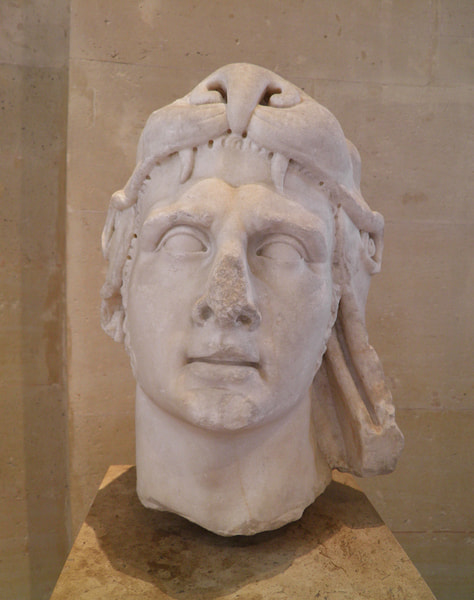 Mithridates VI Eupator of Pontus Carole Raddato (CC BY-SA) ](https://www.worldhistory.org/image/6199/mithridates-vi-eupator-of-pontus/ "Mithridates VI Eupator of Pontus")Sulla was irate. Not only was possible victory stolen from him but the spoils of war. Realizing that he had the support of the army – six legions or about 30,000 men – he marched on the unsuspecting Rome. Plutarch wrote:
> \[Sulla\] shouted orders to set fire to the houses, and seizing a blazing torch, led the way himself, and ordered his archers to use their fire-bolts and shoot them up at the roofs. This he did not from any calm calculation, but in a passion, and having surrendered to his anger the command over his actions … made his entry by the aid of fire, which made no distinction between the guilty and the innocent. (357-358)
Seizing command, his first act was to have Rufus killed; the tribune was found hiding in his villa. Luckily, fearing the wrath of Sulla, Marius escaped with his life to [Africa](https://www.worldhistory.org/disambiguation/africa/). Unfortunately, Sulla's officers (excluding his quaestor) soon deserted him. Sulla's good fortune could not last.
### Sulla, the Public Enemy
With fighting breaking out in the streets and the Senate against him, Sulla realized his best decision was to withdraw to the east. He escaped the city and with six legions chose to march against Mithridates. Marius returned to Rome – initiating five days of murder and plunder – where he was again declared consul only to die shortly afterwards, in 86 BCE. Many of Sulla's supporters were executed. The rebellious Sulla refused to obey a summons to return to the city to face a trial. At the urging of the consul Cinna, the Roman Senate declared him an enemy of the state and condemned him to death. Ignoring the wishes of Cinna and the Senate, Sulla continued eastward and not only defeated Mithridates but crushed a rebellion in [Greece](https://www.worldhistory.org/greece/). While in [Athens](https://www.worldhistory.org/Athens/), Sulla again earned his reputation for ruthlessness by granting his men permission to pillage and murder as they saw fit, eventually destroying the very groves where the great philosophers [Plato](https://www.worldhistory.org/plato/) and [Aristotle](https://www.worldhistory.org/aristotle/) had 'reflected on the human condition.' Even the ancient symbol of Athens, the [Acropolis](https://www.worldhistory.org/Acropolis/), was plundered. He would campaign in the east for five years.
Upon his return to Rome in 83 BCE, Sulla was joined by the commanders Caecilius Metellus Pius, Licinius [Crassus](https://www.worldhistory.org/Marcus_Licinius_Crassus/), and [Gnaeus Pompeius Magnus](https://www.worldhistory.org/pompey/). Together they would be victorious over those who remained loyal to the deceased Marius. In a final clash, Sulla defeated the opposition at the Colline Gates outside Rome. 3,000 would be taken prisoner while another 3,000 would surrender. They were all imprisoned at the Campus Martius until executed. Their bodies were unceremoniously thrown into the Tiber. It was said that the Tiber was littered with bodies; some 10,000 supposedly died. Wisely, the Senate acknowledged Sulla's victories in the east and was persuaded to name him dictator, granting him immunity for his past actions.
### Dictatorship
In one of his first actions, Sulla had Marius's ashes exhumed and thrown into the Tiber. Similarly, all of the former consul's supporters were executed. In total 80 senators and 2,600 *equites* were either executed or exiled; the Senate was left depleted. He posted proscription lists in the Forum, naming outlaws whose property would be confiscated. With victories in the east and success at Rome, Sulla felt truly lucky and in recognition of this fact added the word 'Felix' meaning either 'the fortunate one' or 'the favorite of the goddess [Venus](https://www.worldhistory.org/venus/)' to his name.
[  Lucius Cornelius Sulla Mary Harrsch (Photographed at the Palazzo Massimo, Rome) (CC BY-NC-SA) ](https://www.worldhistory.org/image/4012/lucius-cornelius-sulla/ "Lucius Cornelius Sulla")Although he sought the approval of the Senate, in reality, Sulla had unchecked powers to make or repeal laws. In 81 BCE, Sulla enacted a series of reforms which were considered as a restoration or 'sweeping away of clutter.' Because of his past hatred for the tribune Rufus, he curbed the powers of the tribunes by limiting their power of the veto; he raised the number of quaestors and praetors; he made quaestors members of the Senate to increase its numbers; and finally, passed stricter controls over persons with *imperium* outside Italy. Besides these and other reforms, he established new law courts and rebuilt both the Senate house and the [Temple](https://www.worldhistory.org/temple/) of [Jupiter](https://www.worldhistory.org/jupiter/), which had been struck by lightning or, according to another version, burned down. Throughout, he promised the citizens he would not diminish their rights. Even the skeptical [Cicero](https://www.worldhistory.org/Cicero/) approved of Sulla's ends, although he disliked the means. After granting land in Campania and [Etruria](https://www.worldhistory.org/Etruscan_Civilization/) to veterans of the army, he retired to his villa on the Bay of Naples in 79 BCE, where he died one year later. His epitaph read "No better friend, no worse enemy."
### Legacy
Sulla was seen as arrogant and ruthless, though personally claiming to have never sought tyranny. One historian stated that he demonstrated how the army was loyal an individual and not the state. Despite the presence of an ugly facial birthmark – the Athenians cruelly compared it to a mulberry tipped with oatmeal – he considered himself lucky. Although initially penniless, a wealthy widow left him her fortune. While history has considered him a callous commander, from his early childhood he loved [literature](https://www.worldhistory.org/literature/) and the arts, hanging around the theater wherever he went. His luck would carry him through victories against Jugurtha and the Germans as well as Mithridates. He rose through the ranks from quaestor to consul. Believing he had been betrayed in Rome, he escaped the city to the east only to return and become dictator. However, the reforms he initiated could not save the city from its future. With the death of [Caesar](https://www.worldhistory.org/disambiguation/caesar/) and the birth of an [empire](https://www.worldhistory.org/empire/) under [Augustus](https://www.worldhistory.org/augustus/), Rome would be reborn and continue as a prevailing power for another five centuries.
#### Editorial Review
This human-authored definition has been reviewed by our editorial team before publication to ensure accuracy, reliability and adherence to academic standards in accordance with our [editorial policy](https://www.worldhistory.org/static/editorial-policy/).
## Bibliography
- [Baker, S. *Ancient Rome.* BBC Books, 2006.](https://www.worldhistory.org/books/1846072840/)
- [Beard, M. *SPQR.* Liveright, 2016.](https://www.worldhistory.org/books/1631492225/)
- [Everitt, A. *Cicero.* Random House Trade Paperbacks, 2003.](https://www.worldhistory.org/books/037575895X/)
- [Everitt, A. *The Rise of Rome.* Random House Trade Paperbacks, 2012.](https://www.worldhistory.org/books/0812978153/)
- [Gwynn, D.M. *The Roman Republic.* Oxford University Press, 2012.](https://www.worldhistory.org/books/0199595119/)
- [Holland, T. *Rubicon.* Anchor, 2003.](https://www.worldhistory.org/books/1400078970/)
- [Hornblower, S. *The Oxford Classical Dictionary.* Oxford University Press, 2012.](https://www.worldhistory.org/books/0199545561/)
- Montefore, S.S. *History's Monsters.* Metro Books, 2008
- Plutarch. *Lives.*
## About the Author
Donald has taught Ancient, Medieval and U.S. History at Lincoln College (Normal, Illinois)and has always been and will always be a student of history, ever since learning about Alexander the Great. He is eager to pass knowledge on to his students.
## Timeline
- **138 BCE - 78 BCE**: Life of Lucius Cornelius [Sulla](https://www.worldhistory.org/sulla/).
- **107 BCE - 100 BCE**: [Gaius Marius](https://www.worldhistory.org/Gaius_Marius/) reforms the [Roman army](https://www.worldhistory.org/Roman_Army/).
- **91 BCE - 89 BCE**: [Social War](https://www.worldhistory.org/Social_War/) between [Rome](https://www.worldhistory.org/Rome/) and its Italian allies. Italians want [Roman Citizenship](https://www.worldhistory.org/article/859/roman-citizenship/) and equal share in power. Only won by Rome by granting the Italian wishes.
- **88 BCE**: Mithridates Rebellion and massacre of Latin speaking Ephesians by [Sulla](https://www.worldhistory.org/sulla/).
- **88 BCE**: Mithridates attacks and detroys the island of [Delos](https://www.worldhistory.org/delos/).
- **88 BCE - 87 BCE**: First Civil [War](https://www.worldhistory.org/disambiguation/War/) between [Marius](https://www.worldhistory.org/Gaius_Marius/) and [Sulla](https://www.worldhistory.org/sulla/). First march on [Rome](https://www.worldhistory.org/Rome/) by Sulla.
- **c. 87 BCE**: The second [battle of Chaeronea](https://www.worldhistory.org/Battle_of_Chaeronea/). The armies of [Mithridates VI](https://www.worldhistory.org/Mithridates_VI/) Eupator led by his general Archelaos, including a phalanx of freed slaves, was defeated by a [Roman army](https://www.worldhistory.org/Roman_Army/) led by Lucius Cornelius [Sulla](https://www.worldhistory.org/sulla/), in spite of the supremacy in cavalry of the Pontic army.
- **86 BCE**: The [Roman](https://www.worldhistory.org/disambiguation/Roman/) general [Sulla](https://www.worldhistory.org/sulla/) sacks [Athens](https://www.worldhistory.org/Athens/) and the port of [Piraeus](https://www.worldhistory.org/Piraeus/).
- **86 BCE**: Siege of [Athens](https://www.worldhistory.org/Athens/) by the [Roman](https://www.worldhistory.org/disambiguation/Roman/) general [Sulla](https://www.worldhistory.org/sulla/). [Agora](https://www.worldhistory.org/agora/) is destroyed.
- **84 BCE**: [Sulla](https://www.worldhistory.org/sulla/) mints new [silver](https://www.worldhistory.org/Silver/) and [gold](https://www.worldhistory.org/gold/) coins to pay his army.
- **83 BCE**: [Pompey](https://www.worldhistory.org/pompey/) fights under the [Roman](https://www.worldhistory.org/disambiguation/Roman/) dictator [Sulla](https://www.worldhistory.org/sulla/).
- **83 BCE - 82 BCE**: [Sulla](https://www.worldhistory.org/sulla/)'s second march on [Rome](https://www.worldhistory.org/Rome/). Mass Proscriptions.
- **82 BCE - 80 BCE**: [Volterra](https://www.worldhistory.org/Volterra/) is besieged and sacked by [Roman](https://www.worldhistory.org/disambiguation/Roman/) general [Sulla](https://www.worldhistory.org/sulla/).
- **81 BCE**: [Sulla](https://www.worldhistory.org/sulla/) significantly curbs the powers of the [Roman](https://www.worldhistory.org/disambiguation/Roman/) tribuni plebis.
- **80 BCE**: [Sulla](https://www.worldhistory.org/sulla/) sacks [Pompeii](https://www.worldhistory.org/pompeii/) following a rebellion and founds the 'Colony of [Venus](https://www.worldhistory.org/venus/)', resettling 4-5,000 [war](https://www.worldhistory.org/disambiguation/War/) veterans.
- **80 BCE**: [Sulla](https://www.worldhistory.org/sulla/) is persuaded to give [Pompey](https://www.worldhistory.org/pompey/) his first [triumph](https://www.worldhistory.org/Roman_Triumph/) in [Rome](https://www.worldhistory.org/Rome/).
- **80 BCE**: [Sulla](https://www.worldhistory.org/sulla/) moves the [Olympic Games](https://www.worldhistory.org/Olympic_Games/) to [Rome](https://www.worldhistory.org/Rome/) for a single Olympiad.
## Cite This Work
### APA
Wasson, D. L. (2016, December 20). Sulla. *World History Encyclopedia*.
### Chicago
Wasson, Donald L.. "Sulla." *World History Encyclopedia*, December 20, 2016. .
### MLA
Wasson, Donald L.. "Sulla." *World History Encyclopedia*, 20 Dec 2016, .
## License & Copyright
Submitted by [Donald L. Wasson](https://www.worldhistory.org/user/DWasson/ "User Page: Donald L. Wasson"), published on 20 December 2016. The copyright holder has published this content under the following license: [Creative Commons Attribution-NonCommercial-ShareAlike](https://creativecommons.org/licenses/by-nc-sa/4.0/deed.en). This license lets others remix, tweak, and build upon this content non-commercially, as long as they credit the author and license their new creations under the identical terms. When republishing on the web a hyperlink back to the original content source URL must be included. Please note that content linked from this page may have different licensing terms.