---
title: Sidon
author: Joshua J. Mark
source: https://www.worldhistory.org/sidon/
format: machine-readable-alternate
license: Creative Commons Attribution-NonCommercial-ShareAlike (https://creativecommons.org/licenses/by-nc-sa/4.0/)
updated: 2023-07-19
---
# Sidon
_Authored by [Joshua J. Mark](https://www.worldhistory.org/user/JPryst/)_
Sidon is the [Greek](https://www.worldhistory.org/disambiguation/greek/) name (meaning 'fishery') for the ancient Phoenician port [city](https://www.worldhistory.org/city/) of Sidonia (also known as Saida) in what is, today, Lebannon (located about 25 miles south of Beirut). Along with the city of [Tyre](https://www.worldhistory.org/Tyre/), Sidon was the most powerful [city-state](https://www.worldhistory.org/Polis/) of ancient [Phoenicia](https://www.worldhistory.org/phoenicia/) and first manufactured the purple dye which made Tyre famous and was so rare and expensive that the color purple became synonymous with royalty.
The area of Sidon was inhabited as early as 4,000 BCE and [Homer](https://www.worldhistory.org/homer/), in the 8th century, notes the skill of the Sidonians in producing glass. Glass production made Sidon both rich and famous and the city was known for being very cosmopolitan and 'progressive'. The Princess [Jezebel](https://www.worldhistory.org/jezebel/), who later would become Queen of [Israel](https://www.worldhistory.org/disambiguation/Israel/) (as related in the biblical Books of I and II Kings) was the daughter of the King of Sidon, Ethbaal in the 9th century BCE, and married King Ahab of Israel to cement ties between the two kingdoms. The city is mentioned a number of times throughout the [Bible](https://www.worldhistory.org/bible/) and both [Jesus](https://www.worldhistory.org/Jesus_Christ/) and St. [Paul](https://www.worldhistory.org/disambiguation/Paul/) are reported to have made visits there.
Sidon is considered the 'seat' of the Phoenician [Civilization](https://www.worldhistory.org/civilization/) in that most of the ships which would ply the seas and spread Phoenician [culture](https://www.worldhistory.org/disambiguation/culture/) were launched from this city's port. Sidon was overthrown during the [conquest](https://www.worldhistory.org/warfare/) of Phoenicia by [Alexander the Great](https://www.worldhistory.org/Alexander_the_Great/) in 332 BCE and, like the rest of the fractured Phoenician civilization, was eventually absorbed by [Rome](https://www.worldhistory.org/Rome/) and, finally, taken by the Arab Muslims in the 7th century CE.
### Wealth Through [Trade](https://www.worldhistory.org/disambiguation/trade/)
The city of Sidon grew in wealth through maritime trade. The [Phoenicians](https://www.worldhistory.org/phoenicia/) were known for their skill in ship-building and navigating the wide expanse of the [Mediterranean](https://www.worldhistory.org/disambiguation/mediterranean/) Sea. The historian Richard Miles writes:
> As early as the third millennium BCE, sailors from the Phoenician city of [Byblos](https://www.worldhistory.org/Byblos/) had developed ships whose curved hulls were able to meet the challenges of the sea, and were using those craft to deliver cargoes of cedarwood to [Egypt](https://www.worldhistory.org/egypt/). Over the following centuries, Byblos and other Phoenician states such as Sidon, Tyre, Arvad, and Beirut created an important niche for themselves by transporting luxury goods and bulk raw materials from overseas markets back to the [Near East](https://www.worldhistory.org/Near_East/). (28)
The popularity of Phoenician trade is attested to by artifacts manufactured at Sidon which have been found ranging from Egypt, throughout [Mesopotamia](https://www.worldhistory.org/Mesopotamia/), to Rome and Britain. The Phoenicians have been referred to as the `middlemen' of culture due to the cultural transference which accompanied their trade.
The goods of Sidon, in particular, were highly prized and the Egyptians are thought to have learned their skill in [faience](https://www.worldhistory.org/disambiguation/Faience/) manufacture from the Sidonians. So skillful were the glassmakers of Sidon that the invention of glass has been attributed to them.
The manufacture of dye, especially the purple dye made from the murex shellfish, produced cloth which was so expensive that only nobility could afford to purchase it and this, of course, contributed greatly to Sidon's wealth. This dye is what gave the Phoenicians their name from the Greeks, *Phoinkes*, meaning `the purple people' and although it would come to be commonly associated with the city of Tyre, its manufacture was originally at Sidon. Richard Miles states:
> The products for which the Phoenician [cities](https://www.worldhistory.org/city/) would become most renowned were luxuriously embroidered garments and cloth dyed in deepest purple. Their quality would be recognized in ancient [literature](https://www.worldhistory.org/literature/) from the Bible to Homer's [Odyssey](https://www.worldhistory.org/Odyssey/). The dye was obtained from the hypobranchial glands of two species of mollusc that proliferated in the region. Installations for the production of the dye have been found by archaeologists in a number of Phoenician towns. Although the stench that emanated from the rotting molluscs was so overpowering that the dye factories were located right on the edge of town, production was often on a huge scale, with the mound of discarded murex shells at Sidon measuring over 40 metres \[131 feet\] high. (30)
### [ 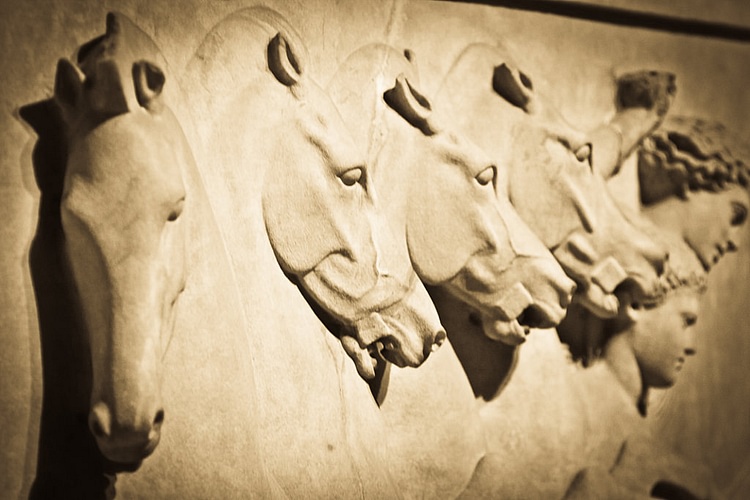 Lycian Sarcophagus, Sidon A.K. (Copyright) ](https://www.worldhistory.org/image/765/lycian-sarcophagus-sidon/ "Lycian Sarcophagus, Sidon")
### Competition with Tyre
The city flourished as part of a loose confederacy of city-states spread along the coast of the land of [Canaan](https://www.worldhistory.org/canaan/). Although they shared "a common linguistic, cultural, and religious inheritance, the region was very rarely politically united, with each city operating as a sovereign state ruled over by a king or local dynast" (Miles, 26). This brought Sidon into competition with the other states of Phoenicia for trade and, especially, with the city of Tyre.
In the 10th century BCE, the balance of power shifted to Tyre primarily due to the leadership of that city's kings, Abibaal and, after him, his son Hiram. Tyre forged trade agreements with the newly minted [kingdom of Israel](https://www.worldhistory.org/Kingdom_of_Israel/)-Judah and her [king David](https://www.worldhistory.org/King_David/). This agreement made Tyre wealthy and Sidon, trying to compete, entered into their own pacts with the kingdom of Israel including the marriage of the Sidonian princess Jezebel, daughter of Ethbaal, to King Ahab of Israel (a story famous from the Bible). Jezebel's insistence on maintaining her own [religion](https://www.worldhistory.org/religion/) and personal identity was an affront to a number of Ahab's subjects and, most notably, the prophet Elijah who denounced her. Jezebel and Ahab's rule was ended by a coup by the general Jehu and, with it, Sidonian trade agreements with Israel.
[ 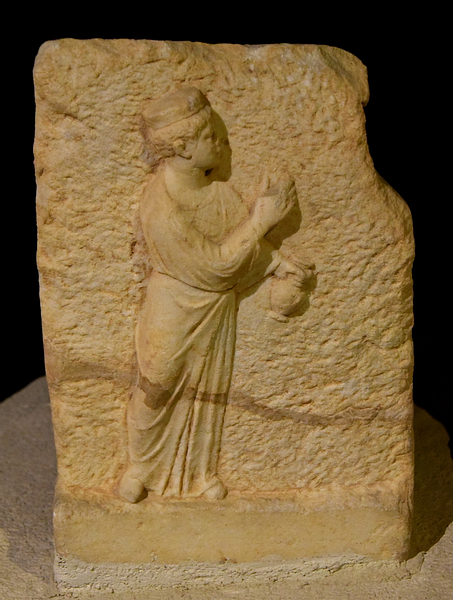 Votive Stele from Sidon Osama Shukir Muhammed Amin (Copyright) ](https://www.worldhistory.org/image/8781/votive-stele-from-sidon/ "Votive Stele from Sidon")### [Alexander](https://www.worldhistory.org/disambiguation/Alexander/) the Great & Sidon's Decline
Sidon was conquered by a number of different nations (along with the rest of Phoenicia) including the Syrians, the Persians and, finally, Alexander the Great in 332 BCE. Having heard of Alexander's exploits, and his campaign to topple [Darius](https://www.worldhistory.org/disambiguation/darius/) III (r. 336-330 BCE) of the [Achaemenid](https://www.worldhistory.org/disambiguation/Achaemenid/) [Persian Empire](https://www.worldhistory.org/disambiguation/Persian_Empire/), the Sidonians surrendered to him without a fight. The historian Worthington writes, "The people in Sidon even went as far as deposing their king, Straton II, because he was Darius's friend" (105). Sidon's efforts to placate Alexander were not mirrored by Tyre, however, which resisted the conqueror that same year and was finally sacked; its inhabitants were slaughtered and the survivors sold into slavery.
Following Alexander's [death](https://www.worldhistory.org/disambiguation/Death/), Sidon and the rest of Phoenicia fell under the rule of one of his generals and successors, [Seleucus I Nicator](https://www.worldhistory.org/Seleucos_I/) (r. 305-281 BCE), founder of the [Seleucid](https://www.worldhistory.org/Seleucid_Empire/) Dynasty. The region of Phoenicia, including Sidon of course, became increasingly Hellenized during Seleucus I's reign and remained so even after 64 BCE when the [Roman](https://www.worldhistory.org/disambiguation/Roman/) general [Pompey](https://www.worldhistory.org/pompey/) annexed the region to the [Roman Empire](https://www.worldhistory.org/Roman_Empire/). When the [empire](https://www.worldhistory.org/empire/) divided, Sidon became part of the eastern half which eventually became the [Byzantine Empire](https://www.worldhistory.org/Byzantine_Empire/). Earthquakes, and other natural disasters, as well as the [plague](https://www.worldhistory.org/disambiguation/plague/), decimated the region between c. 395 CE and the 7th century CE when the city was taken over by the Muslim Arabs.
#### Editorial Review
This human-authored definition has been reviewed by our editorial team before publication to ensure accuracy, reliability and adherence to academic standards in accordance with our [editorial policy](https://www.worldhistory.org/static/editorial-policy/).
## Bibliography
- [Durant, W. *Our Oriental Heritage.* Simon & Schuster, 1954.](https://www.worldhistory.org/books/B00005WJGO/)
- [Miles, R. *Carthage Must Be Destroyed.* Viking Adult, 2010.](https://www.worldhistory.org/books/B00BXUA19Q/)
- [Worthington, I. *Alexander the Great.* Routledge, 2004.](https://www.worldhistory.org/books/140580162X/)
## About the Author
Joshua J. Mark is World History Encyclopedia's co-founder and Content Director. He was previously a professor at Marist College (NY) where he taught history, philosophy, literature, and writing. He has traveled extensively and lived in Greece and Germany.
- [Linkedin Profile](https://www.linkedin.com/pub/joshua-j-mark/38/614/339)
## Timeline
- **c. 4000 BCE**: Founding of the [city](https://www.worldhistory.org/city/) of [Sidon](https://www.worldhistory.org/sidon/).
- **c. 1200 BCE - c. 800 BCE**: First wave of [Phoenician colonization](https://www.worldhistory.org/Phoenician_Colonization/) where largely trading-posts are founded throughout the [Mediterranean](https://www.worldhistory.org/disambiguation/mediterranean/).
- **c. 1101 BCE**: Traditional founding date for the Phoenician colony of [Utica](https://www.worldhistory.org/Utica/) by [Sidon](https://www.worldhistory.org/sidon/) (or [Tyre](https://www.worldhistory.org/Tyre/)).
- **c. 1000 BCE**: Ahiram becomes king of [Sidon](https://www.worldhistory.org/sidon/).
- **980 BCE**: Ittobaal becomes king of [Sidon](https://www.worldhistory.org/sidon/).
- **940 BCE**: Abibaal becomes king of [Sidon](https://www.worldhistory.org/sidon/).
- **920 BCE**: Yehimilk becomes king of [Sidon](https://www.worldhistory.org/sidon/).
- **900 BCE**: Elibaal becomes king of [Sidon](https://www.worldhistory.org/sidon/).
- **880 BCE**: Shiptibaal becomes king of [Sidon](https://www.worldhistory.org/sidon/).
- **c. 800 BCE - 600 BCE**: Second stage of [Phoenician colonization](https://www.worldhistory.org/Phoenician_Colonization/) where trading-posts become full colonies throughout the [Mediterranean](https://www.worldhistory.org/disambiguation/mediterranean/).
- **351 BCE**: Artaxerxes III sacks [Sidon](https://www.worldhistory.org/sidon/).
- **332 BCE**: [Alexander the Great](https://www.worldhistory.org/Alexander_the_Great/) sacks [Sidon](https://www.worldhistory.org/sidon/).
## External Links
- [Phoenician Encyclopedia: A Bequest Unearthed, Phoenicia and the Phoenicians, Punic, Canaanites -- Encyclopedia Phoeniciana](http://phoenicia.org/index.shtml)
- [Sidon in History](http://almashriq.hiof.no/lebanon/900/910/919/saida1/history.html)
## Cite This Work
### APA
Mark, J. J. (2009, September 02). Sidon. *World History Encyclopedia*.
### Chicago
Mark, Joshua J.. "Sidon." *World History Encyclopedia*, September 02, 2009. .
### MLA
Mark, Joshua J.. "Sidon." *World History Encyclopedia*, 02 Sep 2009, .
## License & Copyright
Submitted by [Joshua J. Mark](https://www.worldhistory.org/user/JPryst/ "User Page: Joshua J. Mark"), published on 02 September 2009. The copyright holder has published this content under the following license: [Creative Commons Attribution-NonCommercial-ShareAlike](https://creativecommons.org/licenses/by-nc-sa/4.0/deed.en). This license lets others remix, tweak, and build upon this content non-commercially, as long as they credit the author and license their new creations under the identical terms. When republishing on the web a hyperlink back to the original content source URL must be included. Please note that content linked from this page may have different licensing terms.