---
title: Qanat
author: Corey S. Vaughan
source: https://www.worldhistory.org/qanat/
format: machine-readable-alternate
license: Creative Commons Attribution-NonCommercial-ShareAlike (https://creativecommons.org/licenses/by-nc-sa/4.0/)
updated: 1970-01-01
---
# Qanat
_Authored by [Corey S. Vaughan](https://www.worldhistory.org/user/coreyvaughanski/)_
The qanat (called *foggara* in North [Africa](https://www.worldhistory.org/disambiguation/africa/) and the [Levant](https://www.worldhistory.org/levant/), *falaj* in the United Arab Emirates and Oman, *kariz* in Iran, and *puquios* in Peru) is an ancient Middle Eastern irrigation technique in which a long tunnel is dug into arid land that allows water from underground aquifers to be accessed for use by the local population, supporting large settlements in spite of hostile environmental conditions. Qanats begin as deep wells dug into elevated land and culminate in streams flowing through outlets into a human settlement. Outflows sustain settlements by providing water for crops and drinking water for the population. Powered only by gravity, these simple wonders of ancient [architecture](https://www.worldhistory.org/disambiguation/architecture/) allowed settlements in arid climates to have dependable access to water, sometimes for centuries at a time. Today, tens of thousands of qanats still function in around 35 countries across the globe.
### Origin & Spread of Qanats
*Qanat* is Arabic for 'conduit,' and is the most widely-used term for the irrigation system among English-speakers. The earliest examples of qanats have been found in ancient [Persia](https://www.worldhistory.org/Persia/), modern-day Iran, [Arabia](https://www.worldhistory.org/Arabia/), Iraq, and [Turkey](https://www.worldhistory.org/Asia_Minor/), with the most commonly-held view being that qanats are one of the [inventions and innovations of ancient Persia](https://www.worldhistory.org/article/1505/inventions--innovations-of-ancient-persia/) and were spread throughout the region during the expansion of the [Achaemenid Empire](https://www.worldhistory.org/Achaemenid_Empire/) (c. 550-330 BCE). This view was also held by the ancient [Greek](https://www.worldhistory.org/disambiguation/greek/) historian [Polybius](https://www.worldhistory.org/Polybius/), who wrote:
> They say that at the time when the Persians were the rulers of Asia they gave to those who conveyed a supply of water to places previously unirrigated the right of cultivating the land for five generations, and consequently as the Taurus has many large streams descending from it, people incurred great expense and trouble in making underground channels reaching a long distance, so that at the present day those who make use of the water do not know whence the channels derive their supply. (*The Histories* X.IV)
However, an emerging view is that qanats originated in Southern Arabia (modern-day Oman and UAE) and were then either spread into Persia (modern-day Iran) or developed in Persia independently. Regardless of the qanat's exact place of origin, archaeological evidence suggests that settlements as old as 1,000 BCE were dependent upon qanat systems of irrigation, meaning that qanats are at least 3,000 years old.
Historians disagree on the developmental trajectory of qanat technology throughout North Africa and the [Mediterranean](https://www.worldhistory.org/disambiguation/mediterranean/) region in the years following the [Achaemenid](https://www.worldhistory.org/disambiguation/Achaemenid/) [Empire](https://www.worldhistory.org/empire/), with some claiming independent development, some a Mediterranean path, and others a Saharan path. Those who claim that independent development occurred suggest that qanat technology was a natural response to the arid conditions found in North Africa, the Sahara Desert, and across the Middle East. This idea allows for technological diffusion as well, acknowledging the spread of qanats into [Europe](https://www.worldhistory.org/europe/) and throughout the Middle East as a result of connection.
The Mediterranean path of development suggests that [conquest](https://www.worldhistory.org/warfare/) and resettlement were the driving forces behind the spread of this technology. The Romans learned from the Persians, and later conquered North African territories, introducing the learned technology to these arid regions from across the Mediterranean. Meanwhile, Persians seeking refuge fled across the Sahara, bringing their technological advancements with them.
Finally, the Saharan path of development suggests that qanat technology spread westward into North Africa from the Achaemenids to [Egypt](https://www.worldhistory.org/egypt/) to Libya and Algeria, then finally northward into the [Roman Empire](https://www.worldhistory.org/Roman_Empire/) and continental Europe. Whatever the western trajectory of the technology may have been in the years following the Achaemenid Empire, scholars generally agree that qanats in the Americas were the result of Spanish [colonization](https://www.worldhistory.org/disambiguation/colonization/), and the eastern diffusion of qanats into Afghanistan, Pakistan, [China](https://www.worldhistory.org/china/), and [Japan](https://www.worldhistory.org/disambiguation/Japan/) was the result of interconnectedness along [trade](https://www.worldhistory.org/disambiguation/trade/) routes, particularly the [Silk Road](https://www.worldhistory.org/Silk_Road/).
Qanats are similar to other [aqueducts](https://www.worldhistory.org/aqueduct/) found in ancient civilizations in that they carry water through underground tunnels; however, they differ in that the source of a qanat's water supply is groundwater, rather than a lake, river, or spring. For example, the [Neo-Assyrian Empire](https://www.worldhistory.org/Neo-Assyrian_Empire/) (912-612 BCE) developed a river-fed system of aqueducts that even included the same type of vertical ventilation shafts found in qanats. Tunnels and canals were added to this system over time by famous kings such as [Ashurnasirpal II](https://www.worldhistory.org/Ashurnasirpal_II/), [Tiglath-Pileser III](https://www.worldhistory.org/Tiglath_Pileser_III/), [Esarhaddon](https://www.worldhistory.org/Esarhaddon/), and [Sennacherib](https://www.worldhistory.org/sennacherib/). Contemporaries of the Assyrians, such as [Israel](https://www.worldhistory.org/disambiguation/Israel/), also built similar underground aqueducts. In Israel, King Hezekiah oversaw the construction of a conduit supplied by an underground spring. Even the renowned [Roman](https://www.worldhistory.org/disambiguation/Roman/) aqueducts were mostly fed by springs and rivers until adopting qanat technology in their Middle Eastern and North African territories. It was the use of groundwater that separated qanats from their counterparts.
### Building Qanats
The sustainability and longevity of a qanat are owed to its design. In ancient Iran, qanats were built exclusively by *muqqanis*, professional traveling Persian craftsmen. These ancient architects would first identify an alluvial fan as a source of groundwater, then dig a 'mother well' to reach the water table. These wells often would be nearly 100 meters (328 ft) deep, with the deepest recorded well measuring at 300 meters (984 ft). If the aquifer yielded sufficient water, the *muqqanis* would begin plotting the course of the qanat from the mother well to the surface. The builders would take into account the gradient of a downhill slope so that water flow remained consistent but did not stir up sediment or damage the tunnel.
[ 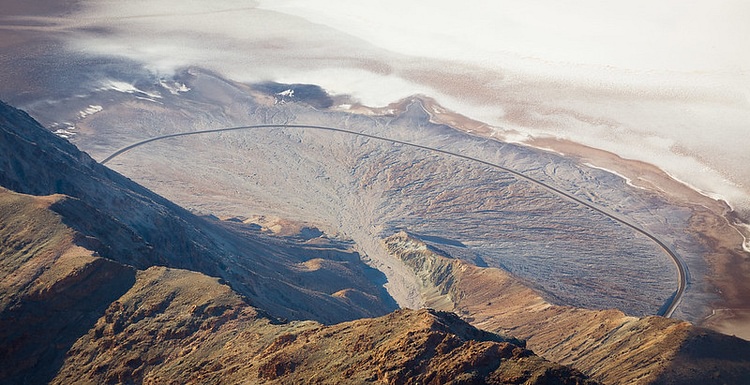 Alluvial Fan Andrew Smith (CC BY-SA) ](https://www.worldhistory.org/image/13364/alluvial-fan/ "Alluvial Fan")Once the course had been plotted all the way to the mouth of the tunnel, the *muqqanis* would begin digging ventilation shafts regularly along the charted course of the qanat. Not only did these shafts provide ventilation for the diggers but they also served as guides for the diggers as they excavated the tunnel. Excavation began at the mouth of the tunnel, where the walls were often reinforced with stone, and moved upstream, eventually reaching the mother well and the aquifer. Once the qanat had been completely excavated, construction was complete; however, the *muqqanis* continued to work, providing maintenance to ensure the qanat remained functional over time. Such techniques have remained the standard of qanat construction across the world for millennia, as recent qanats have been built using similar methods.
Qanats could be as short as 1 km (3,280 ft) or as long as 50 km (31 mi), but they always attracted settlers with a consistent water supply. In many cases, the qanat could be used to identify social status. The elites often settled the upper sections near the mother well, while the poor settled near the lower section, where water flows were lesser and water was more likely to be polluted by those upstream. Despite the drawbacks of being located near the mouth of the qanat, the poor could still rely on a consistent supply of water, as evaporation occurs at a much slower rate in underground conduits. This advantage, in addition to its dependence solely on gravity as an energy source, made the qanat an ideal solution for ancient settlements in arid climates. Its reliability and environmental sustainability have even brought it renewed attention from modern climate scientists.
### Impact of the Qanat
The Middle East is one of the driest areas in the world, containing regions where rainfall remains below 50 mm (1.9 in) annually. Such low levels of water supply are incapable of sustaining a growing population, which is why the Persians found such an innovative way to access groundwater. Despite advancements in technology over time, qanats have remained a reliable source of water for Iran from the first millennia BCE to the present time. Today, there are still over 30,000 qanats in Iran. Even now, these qanats bring substantial water supply to compensate for the lack of rainfall. For example, the Gonabad qanat system in Khorasan Province was built around the 6th century BCE by the Achaemenids, yet this long complex of tunnels, wells, and outlets remains in use today. Outlets extending from the Gonabad system can discharge up to 150 l/s (39 gal/s), allowing for the irrigation of 150 hectares (370 acres) of agricultural land. Likewise, over 3,000 qanats in Yazd are still functioning today. Some are over 1,000 years old. The Yazd qanats discharge around 340 million cubic meters (over 92 billion gal) of water each year, supplying around 25% of the province's total groundwater. This is an amazing accomplishment considering the 60 mm (2.4 in) of total rainfall that Yazd receives each year.
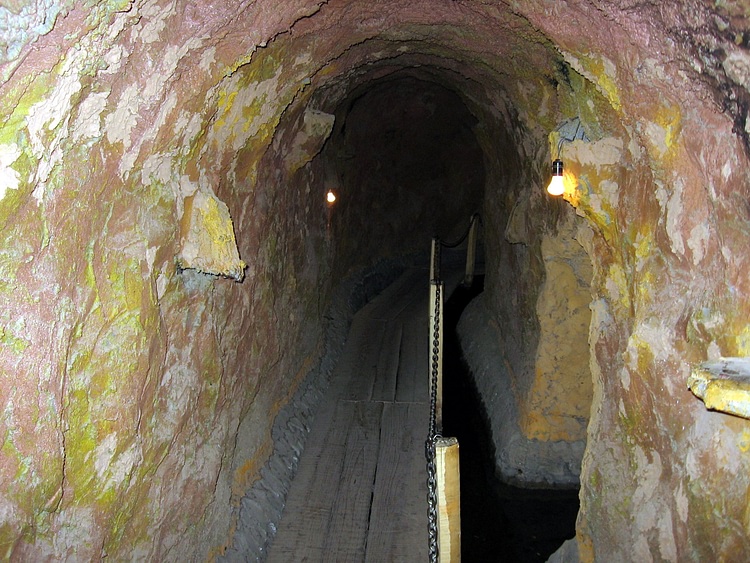
Qanats have also made an impact on water supply and irrigation in arid regions outside of Iran as well. One such example lies in the Turfan (or Turpan) Basin of Xinjiang, China. The Turfan Oasis qanat system provides water to the Turfan Basin from the Tianshan Mountains. The Turfan Basin, located in Western China, is a dry desert climate that averages only 17 mm (0.67 in) of rainfall annually. However, through the use of over 1,000 qanats, the Turfan Basin can receive an additional 150 million cubic meters (39 billion gal) each year. The constant water supply provided by the qanat system supports a sizable population and allows for substantial irrigation in an area that would be otherwise uninhabitable.
[  Turfan Water System Underground Channel Colegota (CC BY-SA) ](https://www.worldhistory.org/image/13363/turfan-water-system-underground-channel/ "Turfan Water System Underground Channel")### Legacy of the Qanat
The reliable supply of water made possible by qanat technology helped transform the Middle East and contributed to globalizing trade routes by allowing settlements and trading posts to be established in the arid regions of the Middle East, North Africa, and Western China. Additionally, qanats brought societal change through the establishment of the practice of sharing and managing water resources flowing from the qanat. Because of qanats, areas far removed from oceans and seas with scarce rainfall and river water also have been able to support population growth in an environmentally sustainable and energy-efficient way since ancient times, inspiring modern experts in their quest to help modern society adapt water production systems to meet the needs of an expanding global population.
#### Editorial Review
This human-authored definition has been reviewed by our editorial team before publication to ensure accuracy, reliability and adherence to academic standards in accordance with our [editorial policy](https://www.worldhistory.org/static/editorial-policy/).
## Bibliography
- Al-Tikriti, Walid Yasin. "The South-east Arabian Origin of the Falaj System." *Proceedings of the Seminar for Arabian Studies*, vol. 32 (2002), pp. 19-21.
- [Angelakis, Andreas N., Eustathios Chiotis, Saeid Eslamian, and Herbert Weingartner. *Underground Aqueducts Handbook.* CRC Press, 2016.](https://www.worldhistory.org/books/B01N6Y7935/)
- Boualem, Remini, and Kechad Rabah. "The Foggara in the Arab World." *Geographia Technica*, 1, (2012), pp. 1-7.
- Clerk, George, H.F. Cronin, F.H. Edmonds, and W.A. MacFadyen. "The Early History of Water-Supply: Discussion." *The Geographical Journal*, 99, no. 4 (April 1942), pp. 193-196.
- English, Paul Ward. "The Origin and Spread of Qanats in the Old World." *Proceedings of the American Philosophical Society*, 112, no. 3, (June 21, 1968), pp. 170-181.
- Laessøe, Jørgen. "The Irrigation System at Ulhu, 8th Century B.C." *Journal of Cuneiform Studies*, 5, no. 1 (1951), pp. 21-32.
- Lightfoot, Dale R. "The Origin and Diffusion of Qanats in Arabia: New Evidence from the Northern and Southern Peninsula." *The Geographical Journal*, 166, no. 3 (September 2000), pp. 215-226.
- Magee, Peter. "The Chronology and Environmental Background of Iron Age Settlement in Southeastern Iran and the Question of the Origin of the Qanat Irrigation System." *Iranica Antiqua*, 40, (May 2005), pp. 217-231.
- [Wilson, Andrew I. "Hydraulic Engineering and Water Supply." *The Oxford Handbook of Engineering and Technology in the Classical World* , edited by Peter Oleson, John. Oxford University Press, 2009, 285-318.](https://www.worldhistory.org/books/0199734852/)
- Wulff, H.E. "The Qanats of Iran." *Scientific American*, 218, no. 4, (April 1968), pp. 94-107.
## About the Author
A history educator and accomplished traveler who has split his adult life between the United States and China teaching history and enjoying family, friends, culture, research, and classic literature.
## Cite This Work
### APA
Vaughan, C. S. (2021, February 08). Qanat. *World History Encyclopedia*.
### Chicago
Vaughan, Corey S.. "Qanat." *World History Encyclopedia*, February 08, 2021. .
### MLA
Vaughan, Corey S.. "Qanat." *World History Encyclopedia*, 08 Feb 2021, .
## License & Copyright
Submitted by [Corey S. Vaughan](https://www.worldhistory.org/user/coreyvaughanski/ "User Page: Corey S. Vaughan"), published on 08 February 2021. The copyright holder has published this content under the following license: [Creative Commons Attribution-NonCommercial-ShareAlike](https://creativecommons.org/licenses/by-nc-sa/4.0/deed.en). This license lets others remix, tweak, and build upon this content non-commercially, as long as they credit the author and license their new creations under the identical terms. When republishing on the web a hyperlink back to the original content source URL must be included. Please note that content linked from this page may have different licensing terms.