---
title: Colossal Scarab
author: Osama Shukir Muhammed Amin
source: https://www.worldhistory.org/image/5363/colossal-scarab/
format: machine-readable-alternate
updated: 1970-01-01
---
# Colossal Scarab
_Authored by [Osama Shukir Muhammed Amin](https://www.worldhistory.org/user/OsamaSMAmin/)_
## Image File
[](https://www.worldhistory.org/uploads/images/5363.jpg)
## Image Caption
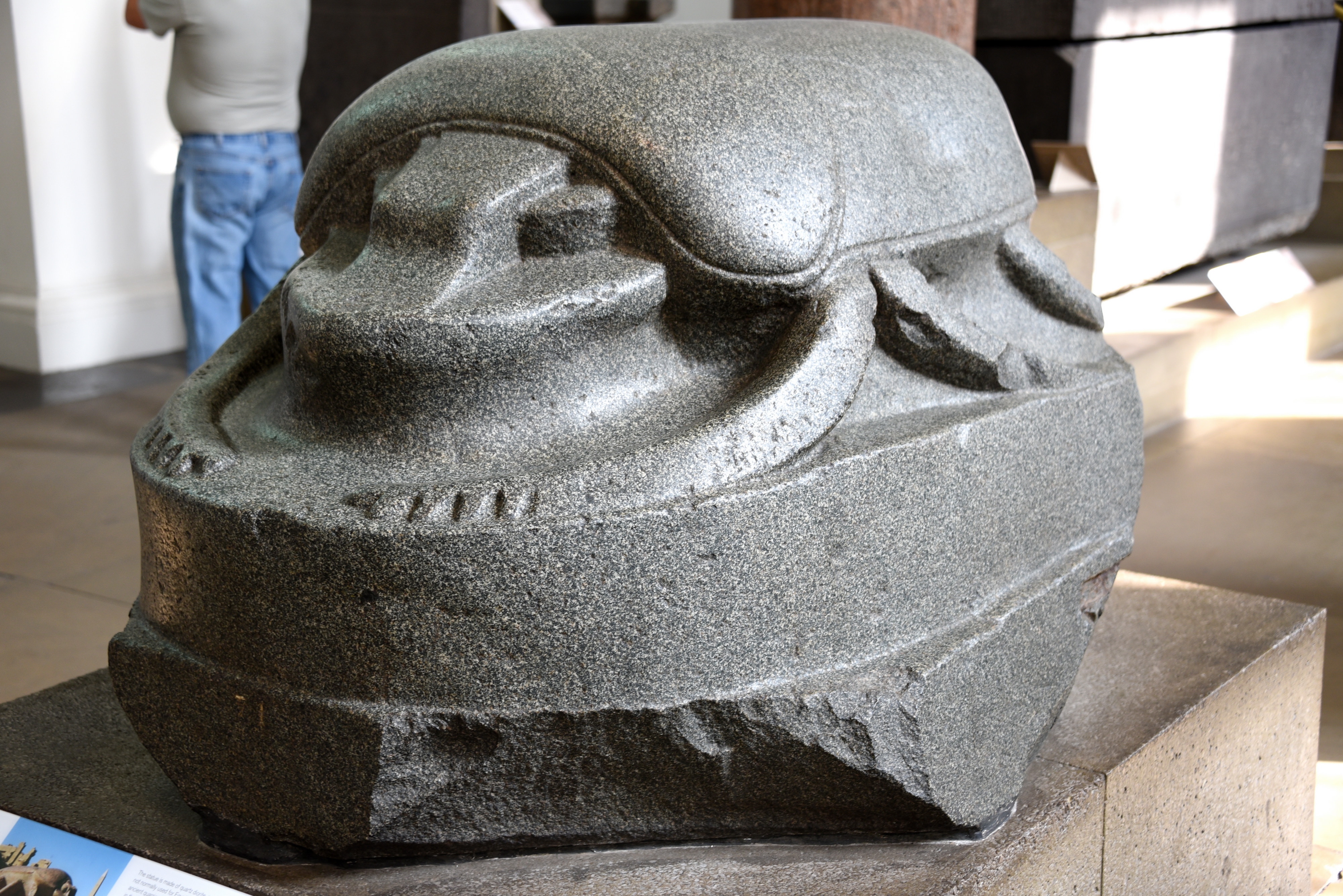
This is one of the largest representations of scarab beetles to survive. It also ranks among the last great statues of any pharaonic deity. The scarab represented Khepri, the form assumed by the sun-[god](https://www.worldhistory.org/God/) at dawn. The Egyptians noticed that scarabs hatch from buried dung-balls as if by self-creation. The sun-god was also believed to be self-creating, renewing his powers each night, before his rebirth at daybreak. Each sunrise was a repetition of god's first appearance at the dawn of time as the creator god [Amun](https://www.worldhistory.org/amun/). The statue is made of quartz diorite, a stone not normally used for [Egyptian](https://www.worldhistory.org/disambiguation/Egyptian/) [sculpture](https://www.worldhistory.org/disambiguation/Sculpture/). Three ancient quarries have been identified, deep in the Eastern Desert. Their exploitation is archeologically confirmed for the [Roman](https://www.worldhistory.org/disambiguation/Roman/) Period, but the subject and workmanship of this piece suggest that it was made a bit earlier, under the Ptolemies. Most likely, the scarab was originally set up in the [temple](https://www.worldhistory.org/temple/) of Atum at Heliopolis. In Roman times, it was moved, probably 1st to Alexandra and later to [Constantinople](https://www.worldhistory.org/Constantinople/) (modern-day Istanbul, [Turkey](https://www.worldhistory.org/Asia_Minor/)). [Ptolemaic Period](https://www.worldhistory.org/Ptolemaic_Dynasty/), 3rd or 2nd centuries BCE. From Istanbul, Turkey; probably from Heliopolis, temple of Atum, [Egypt](https://www.worldhistory.org/egypt/). (The British Museum, London).
#### Editorial Review
This human-authored image has been reviewed by our editorial team before publication to ensure accuracy, reliability and adherence to academic standards in accordance with our [editorial policy](https://www.worldhistory.org/static/editorial-policy/).
## About the Author
Associate Professor of Neurology and lover of the Cradle of Civilization, Mesopotamia. I'm very interested in Mesopotamian history and always try to take photos of archaeological sites and artifacts in museums, both in Iraq and around the world.
- [Facebook Profile](https://www.facebook.com/MRCPian)
- [Linkedin Profile](https://www.linkedin.com/in/osama-shukir-muhammed-amin/)
## Cite This Work
### APA
Amin, O. S. M. (2016, July 18). Colossal Scarab. *World History Encyclopedia*.
### Chicago
Amin, Osama Shukir Muhammed. "Colossal Scarab." *World History Encyclopedia*, July 18, 2016. .
### MLA
Amin, Osama Shukir Muhammed. "Colossal Scarab." *World History Encyclopedia*, 18 Jul 2016, .
## License & Copyright
Submitted by [Osama Shukir Muhammed Amin](https://www.worldhistory.org/user/OsamaSMAmin/ "User Page: Osama Shukir Muhammed Amin"), published on 18 July 2016. The copyright holder has published this content under the following license: [Copyright](http://en.wikipedia.org/wiki/Copyright). You cannot use, copy, distribute, or modify this item without explicit permission from the author. Please note that content linked from this page may have different licensing terms.