---
title: Clay Stove from Central Europe
author: Nathalie Choubineh
source: https://www.worldhistory.org/image/19757/clay-stove-from-central-europe/
format: machine-readable-alternate
license: Creative Commons Attribution-NonCommercial-ShareAlike (https://creativecommons.org/licenses/by-nc-sa/4.0/)
updated: 2024-12-10
---
# Clay Stove from Central Europe
_Authored by [Nathalie Choubineh](https://www.worldhistory.org/user/nathalie.choubineh/)_
## Image File
[](https://www.worldhistory.org/uploads/images/19757.jpg)
## Image Caption
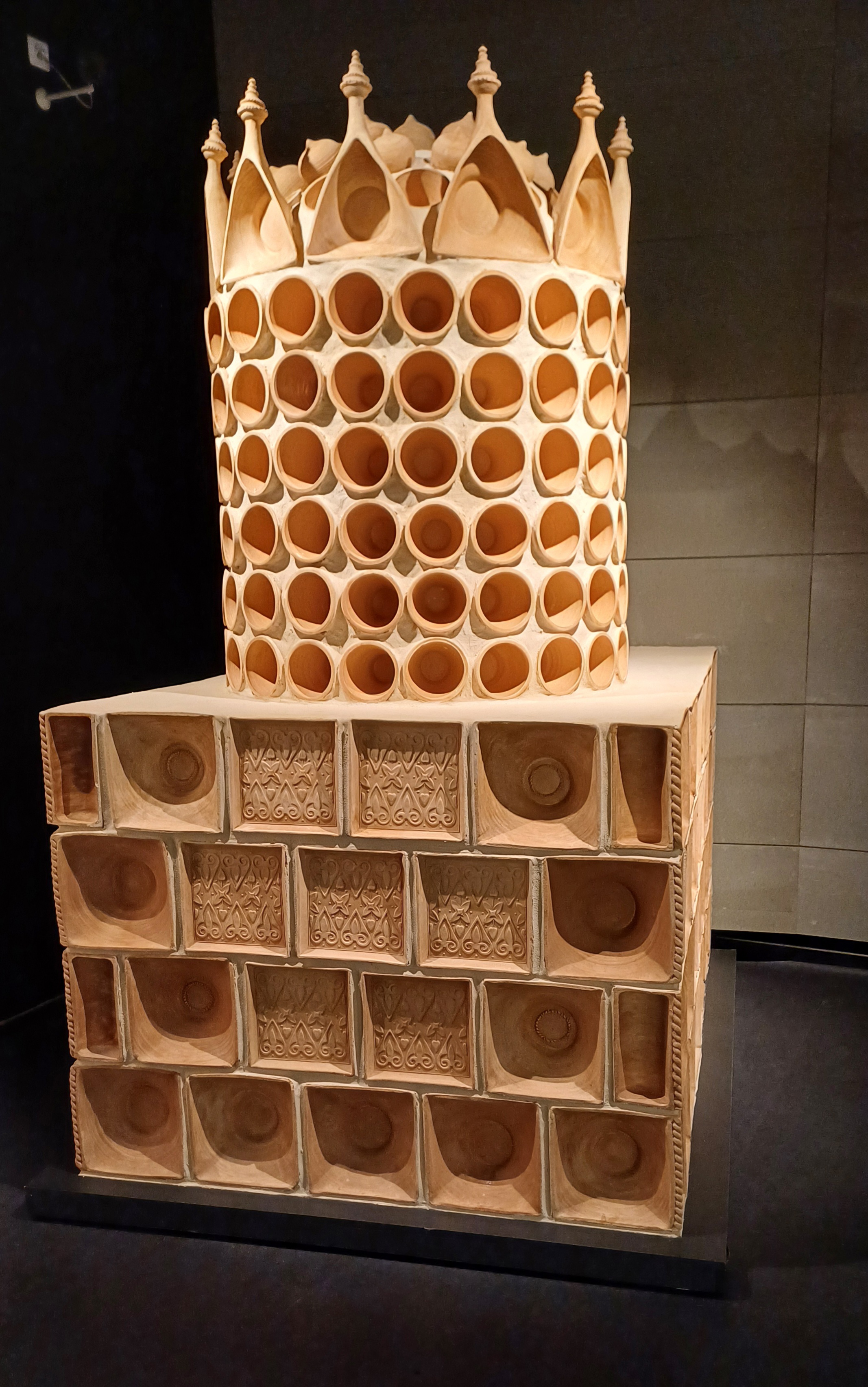
Replica of a 16th-century earthenware stove with decorative tiles from around Šenkvice.
Slovak National Museum, Bratislava.
Central European clay stoves emerged in the late medieval period as an evolution of the traditional dome-shaped ovens, which were typically built directly onto the ground. While the earlier ovens were multifunctional, serving purposes such as baking, cooking, drying, and heating, the new clay stoves were designed primarily for heating large indoor spaces like halls and chambers in grand private buildings, including mansions, castles, and palaces. One of the most notable features of these stoves is the decorative tiles, which often depict various forms of iconography and can be helpful in dating the stoves. The earlier tiles showcase a wide range of themes, including scenes of cavalry romances, folkloric stories, games, hunting, and biblical narratives, as well as images of animals, architectural elements, geometric patterns, and floral motifs. From the mid-16th century onwards, floral designs became increasingly prevalent as more complex narrative illustrations began to fade from popularity.
#### Editorial Review
This human-authored image has been reviewed by our editorial team before publication to ensure accuracy, reliability and adherence to academic standards in accordance with our [editorial policy](https://www.worldhistory.org/static/editorial-policy/).
## Bibliography
- [(PDF) Stove-tiles of Transylvania and Banat from the Beginnings up to the Year 1700 (English abstract) | Daniela Marcu Istrate - Academia.edu](https://www.academia.edu/31836027/Stove_tiles_of_Transylvania_and_Banat_from_the_Beginnings_up_to_the_Year_1700_English_abstract_ "(PDF) Stove-tiles of Transylvania and Banat from the Beginnings up to the Year 1700 (English abstract) | Daniela Marcu Istrate - Academia.edu"), accessed 6 Dec 2024.
## About the Author
Nathalie is a translator and independent researcher of dance in the ancient world with a focus on Ancient Greece and the Near East. She has published works in ancient dance, ethnomusicology, and literature. She loves learning and sharing knowledge.
- [Facebook Profile](https://www.facebook.com/nathalie.choubineh/)
- [Linkedin Profile](https://www.linkedin.com/in/nathalie-choubineh-035a8451/)
## External Links
- [About the museum | Slovak National Museum](https://www.snm.sk/en/museums/museum-of-history/museum-of-history/about-the-museum)
## Cite This Work
### APA
Choubineh, N. (2024, December 10). Clay Stove from Central Europe. *World History Encyclopedia*.
### Chicago
Choubineh, Nathalie. "Clay Stove from Central Europe." *World History Encyclopedia*, December 10, 2024. .
### MLA
Choubineh, Nathalie. "Clay Stove from Central Europe." *World History Encyclopedia*, 10 Dec 2024, .
## License & Copyright
Submitted by [Nathalie Choubineh](https://www.worldhistory.org/user/nathalie.choubineh/ "User Page: Nathalie Choubineh"), published on 10 December 2024. The copyright holder has published this content under the following license: [Creative Commons Attribution-NonCommercial-ShareAlike](https://creativecommons.org/licenses/by-nc-sa/4.0/deed.en). This license lets others remix, tweak, and build upon this content non-commercially, as long as they credit the author and license their new creations under the identical terms. When republishing on the web a hyperlink back to the original content source URL must be included. Please note that content linked from this page may have different licensing terms.