---
title: The Pleasure House, Stuttgart
author: Irina-Maria Manea
source: https://www.worldhistory.org/image/16046/the-pleasure-house-stuttgart/
format: machine-readable-alternate
license: Creative Commons Attribution-NonCommercial-ShareAlike (https://creativecommons.org/licenses/by-nc-sa/4.0/)
updated: 2022-07-06
---
# The Pleasure House, Stuttgart
_Authored by [Irina-Maria Manea](https://www.worldhistory.org/user/irinamaria.manea/)_
## Image File
[](https://www.worldhistory.org/uploads/images/16046.png)
## Image Caption
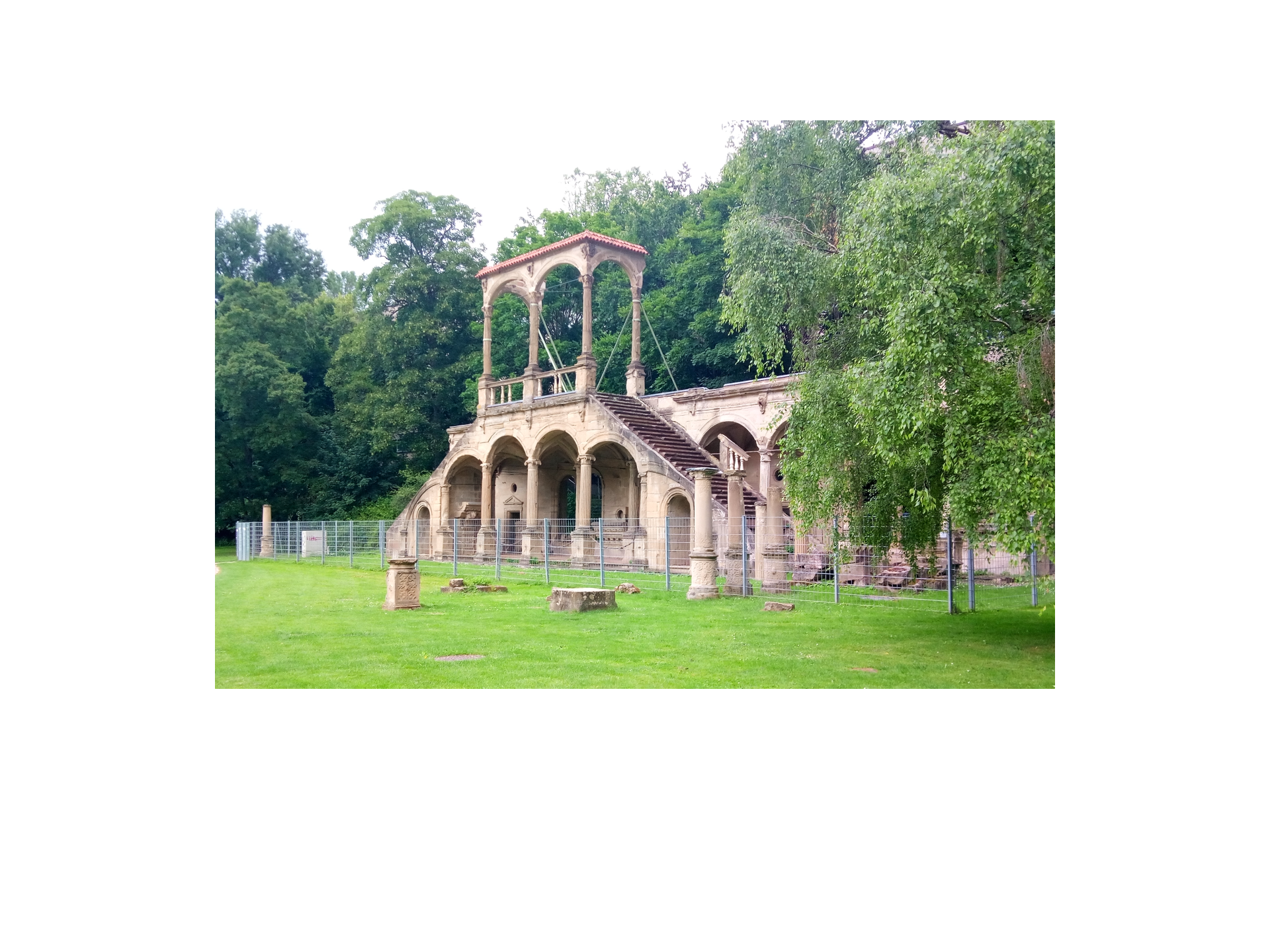
Ruins of the New Pleasure House (Lusthaus), Stuttgart [Palace](https://www.worldhistory.org/disambiguation/palace/) Garden.
One of the most important buildings of the German Renaissance, it underwent numerous conversions, which was followed by demolition in 1844/45. The remains were moved to the middle castle garden in 1904. In addition to hunting and [jousting](https://www.worldhistory.org/Jousting/) games, festivals and celebrations shaped the courtly [culture](https://www.worldhistory.org/disambiguation/culture/) of the 16th century. Wedding and court parties, balls and [theatre](https://www.worldhistory.org/disambiguation/theatre/) performances required a representative setting. Duke Ludwig von Württemberg (1554-1593) wanted a building that was solely dedicated to the "joys of earthly life". In addition, the building was intended to represent the dynasty of the House of Württemberg and to manifest their claim to power.
Construction work began in 1584, and the building was completed in 1593. The clearly structured building rose on a site that was difficult to overlook. Its richly ornamented tail gables surpassed the ridge of the neighbouring collegiate church. The New Lusthaus asserted itself as the largest and most modern building in the [city](https://www.worldhistory.org/city/). In front of each of the four corners of the building, there was a high tower, which identified the building as a stately structure. In addition, a filigree designed, all-round arcade surrounded the massive core building. The hall on the upper floor was of particular importance. With its [column](https://www.worldhistory.org/column/)-free span of over 20 meters, it was the largest festival space north of the Alps.
At the beginning of the 17th century, the Lusthaus shone in the splendour of large celebrations, but the turmoil of the [Thirty Years' War](https://www.worldhistory.org/Thirty_Years'_War/) ended the period of exuberance. After the end of the conflict, a new residential palace in the Baroque style was also to be built in Stuttgart. The Lusthaus occupied part of the building site. Due to the hall it contained, the Renaissance building was not to be demolished, but integrated into the new complex as an opera house. It only served its purpose to a limited extent. During the 18th century, several temporary conversions took place, which greatly altered the appearance of the building. At the court of King Wilhelm I (1781-1864), the [architecture](https://www.worldhistory.org/disambiguation/architecture/) of the Renaissance building contradicted his pietistic attitude. As a result, Wilhelm decided to demolish it in order to have a modern educational theatre built on the same spot. Architect Karl Friedrich Beisbarth, in charge of the demolition, recorded what he found in the form of drawings. In 1902, this new royal court theatre burned down completely. When the fire ruins were cleared, some stone testimonies of the former summer house that were believed to have been lost came to light.
#### Editorial Review
This human-authored image has been reviewed by our editorial team before publication to ensure accuracy, reliability and adherence to academic standards in accordance with our [editorial policy](https://www.worldhistory.org/static/editorial-policy/).
## About the Author
A curious and open mind, fascinated by the past. Historian with a keen interest in Norse myth and the Viking Age, as well as history teacher and language instructor. Originally from Bucharest, Romania, now residing in Hesse, Germany.
- [Facebook Profile](https://www.facebook.com/irinaskuld)
- [Linkedin Profile](https://www.linkedin.com/in/irinamariamanea/)
## Cite This Work
### APA
Manea, I. (2022, July 06). The Pleasure House, Stuttgart. *World History Encyclopedia*.
### Chicago
Manea, Irina-Maria. "The Pleasure House, Stuttgart." *World History Encyclopedia*, July 06, 2022. .
### MLA
Manea, Irina-Maria. "The Pleasure House, Stuttgart." *World History Encyclopedia*, 06 Jul 2022, .
## License & Copyright
Submitted by [Irina-Maria Manea](https://www.worldhistory.org/user/irinamaria.manea/ "User Page: Irina-Maria Manea"), published on 06 July 2022. The copyright holder has published this content under the following license: [Creative Commons Attribution-NonCommercial-ShareAlike](https://creativecommons.org/licenses/by-nc-sa/4.0/deed.en). This license lets others remix, tweak, and build upon this content non-commercially, as long as they credit the author and license their new creations under the identical terms. When republishing on the web a hyperlink back to the original content source URL must be included. Please note that content linked from this page may have different licensing terms.