---
title: Hatti
author: Joshua J. Mark
source: https://www.worldhistory.org/hatti/
format: machine-readable-alternate
license: Creative Commons Attribution-NonCommercial-ShareAlike (https://creativecommons.org/licenses/by-nc-sa/4.0/)
updated: 1970-01-01
---
# Hatti
_Authored by [Joshua J. Mark](https://www.worldhistory.org/user/JPryst/)_
The Hatti were an aboriginal people in central [Anatolia](https://www.worldhistory.org/Asia_Minor/) (present-day [Turkey](https://www.worldhistory.org/Asia_Minor/)) who first appeared in the area around the River Kizil Irmak. The prevailing understanding is that they were native to the land although it has been suggested they migrated to the area sometime prior to 2400 BCE. The region was known as `Land of the Hatti' from c. 2350 BCE until 630 BCE, attesting to the influence of the Hattian [culture](https://www.worldhistory.org/disambiguation/culture/) there. They spoke a language called Hattic and did not seem to have a written language of their own, using [cuneiform](https://www.worldhistory.org/cuneiform/) [script](https://www.worldhistory.org/script/) for [trade](https://www.worldhistory.org/disambiguation/trade/) dealings. As the region was heavily forested, the Hatti built their homes of wood and made their living through trade of timber, ceramics, and other resources. Their [religion](https://www.worldhistory.org/religion/) focused on the worship of a Mother Goddess who ensured their crops would grow and their livestock remain healthy. They kept domesticated animals and made clothing and blankets from sheep's wool. As an agrarian society, they also domesticated the fields and planted grains which they primarily lived on but also supplemented their diet through hunting. Since their religion was based on the concept that everything in nature was sacred and possessed a divine spirit, however, it does not seem that hunting for meat was a common practice and may have only been engaged in for specific festivals involving royalty.
Controlling a significant number of [city](https://www.worldhistory.org/city/) states and small kingdoms, they had established lucrative trade with the region of [Sumer](https://www.worldhistory.org/sumer/) (southern [Mesopotamia](https://www.worldhistory.org/Mesopotamia/)) by the year 2700 BCE. The historian Erdal Yavuz writes:
> Anatolia offered a mild climate with reliable and regular rainfall necessary for a regular agricultural production. Besides the timber and stone essential for construction, but deficient in Mesopotamia, Anatolia had rich mines which provided [copper](https://www.worldhistory.org/copper/), [silver](https://www.worldhistory.org/Silver/), iron, and [gold](https://www.worldhistory.org/gold/) (1).
Their trade with the [cities](https://www.worldhistory.org/city/) of Mesopotamia enriched the region and helped to develop their kingdom. The historian Marc Van De Mieroop includes the Hatti among the nations and nation-states in the diplomatic and trade consortium he refers to as The Club of the Great Powers. This `club', as Van De Mieroop designates it, included [Mitanni](https://www.worldhistory.org/Mitanni/), [Babylonia](https://www.worldhistory.org/babylon/), [Assyria](https://www.worldhistory.org/assyria/), Hatti, and [Egypt](https://www.worldhistory.org/egypt/), though by the time Kingdom of the Hatti was involved with international relations (c. 1500-1200 BCE), they were governed by the [Hittites](https://www.worldhistory.org/hittite/) and had already lost their language and culture.
In 2500 BCE the Hatti established their capital high on a hill at the city of Hattusa and held lands securely in the surrounding areas, administering laws and regulating trade in a number of neighboring states. Between c. 2334-2279 BCE the great [Sargon of Akkad](https://www.worldhistory.org/Sargon_of_Akkad/) invaded the region after sacking the city of [Ur](https://www.worldhistory.org/ur/) in 2330 BCE. He then turned his attention to Hattusa but failed to gain an advantage over the city's defenses which were especially strong in that it was located high on a well-defended and fortified plateau. Following [Sargon](https://www.worldhistory.org/disambiguation/sargon/)'s campaigns in the region, his grandson [Naram-Sin](https://www.worldhistory.org/Naram-Sin/) (2261-2224 BCE) continued his policies, fighting against the Hattic King Pamba late in the 23rd century BCE with as little success as his grandfather had. In spite of the constant harrassment from the Akkadians, Hattic art flourished around 2200 BCE and, by 2000 BCE, their [civilization](https://www.worldhistory.org/civilization/) was at its height with prosperous trading colonies established between Hattusa and their other city of Kanesh and, of course, continuing trade relations with Mesopotamia.
In 1700 BCE, the Kingdom of the Hatti was again invaded, this time by the Hittites, and the great city of Hattusa was stormed and destroyed by a king named Anitta from the neighboring Kingdom of Kussara. Excavations at the site show that the city was burned to the ground. King Anitta had such contempt for the city he had vanquished that he cursed the ground and further cursed whoever should re-build Hattusa and try to rule there. Even so, not long after, the city was re-built and re-populated by a later king of Kussara who called himself Hattusili. Van De Mieroop describes this, [writing](https://www.worldhistory.org/writing/):
> A ruler called Hattusili created the [Hittite](https://www.worldhistory.org/hittite/) state in the early or mid-seventeenth century. Heir to the throne of Kussara, he rapidly defeated his competitors in central Anatolia. Among his conquests was the city of Hattusa, located in the center of the region in a strategic and well-protected site thanks to its position on a hilltop. He made Hattusa his capital, and possibly changed his name to coincide with that of the city (121).
The name Hattusili means `One from Hattusa' but it is not clear whether the king took that name after the reconstruction of the city or he was already known by that designation. Through the famous document, The Edict of Telepinu (16th century BCE), which was a stipulation of laws and ordinances based on past precedents, modern scholars have learned much of the history of the rulers of the [Old Kingdom](https://www.worldhistory.org/disambiguation/Old_Kingdom/) of the Hittites (as Hatti is referenced) and know that Hattusili I was also known as `Man of Kussara'. It is likely, therefore, that he took his new name once he had occupied Hattusa. As there remain a scarcity of records from this period, scholars disagree over when Hattusili I took his name or why. It is also not known whether the city was re-built after Anitta's [conquest](https://www.worldhistory.org/warfare/) (and therefore Hattusili had to take it by force) or if Hattusili simply occupied the site and built on the ruins of the old city.
[ 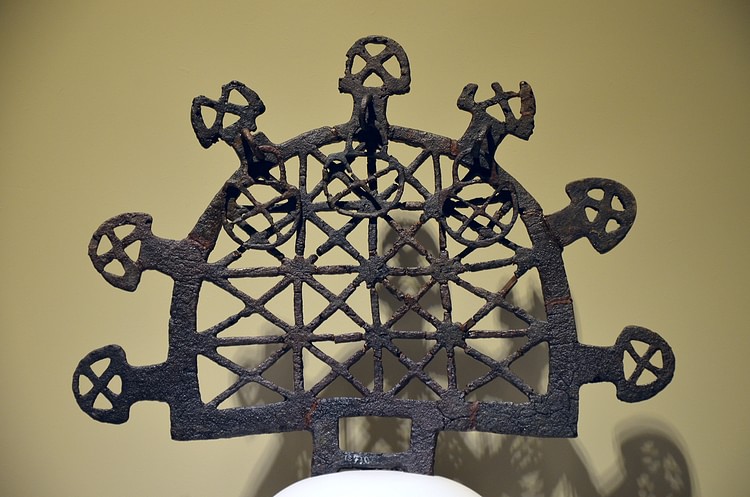 Hattian Ceremonial Standard Carole Raddato (CC BY-NC-SA) ](https://www.worldhistory.org/image/8173/hattian-ceremonial-standard/ "Hattian Ceremonial Standard")The lands of the Hatti were systematically conquered by the Hittites and the people merged into the culture of their conquerors. The Hittites were known as the Nesili to themselves and their contemporaries and the name `Hittite' comes from the Hebrew scribes who wrote the biblical narratives of the [Old Testament](https://www.worldhistory.org/Old_Testament/). They may have migrated to the region or, more probably, lived alongside the Hatti for many years before hostilities between the two peoples began. By 1650 BCE, the Hittites, under Hattusili I, defeated the last of the Hatti resistance and rose to complete dominance of the area. The Hatti region of Anatolia, however, was still known as the 'Land of the Hatti' until 630 BCE, as is known from references found in the writings of both the Egyptians and the Assyrians. The importance of the Land of the Hatti in international relations is attested to by The [Amarna Letters](https://www.worldhistory.org/Amarna_Letters/), cuneiform tablets found in the late 19th century CE in [Amarna](https://www.worldhistory.org/Amarna/), Egypt, which are correspondence between the [Egyptian](https://www.worldhistory.org/disambiguation/Egyptian/) Pharoah and the kings of Mitanni, Babylonia, Assyria, and Hatti. Van De Mieroop writes:
> The kings saw themselves as equals and addressed each other as brothers. They discussed diplomatic matters, especially the exchange of precious goods and of royal [women](https://www.worldhistory.org/disambiguation/women/), which reinforced the ties between them. While most of the letters were written in Babylonian, there were two in Hittite and one each in Hurrian and Assyrian. These Amarna letters cover a short period of at most thirty years from ca. 1365 to 1335, but it is certain that this type of correspondence was maintained throughout the period at several locations (135).
The artistic renderings from Hatti at this time depict the common people with longer noses and markedly different facial features than those of their leaders, clearly demonstrating the Hittite lords and their Hattic vassals. Whoever the Hatti originally were, or where they came from, remains a mystery in the modern day owing to the eventual merging of the two cultures and the lack of anceint records. By the time of Telepinu, the last king of the Hittite Old Kingdom (reigned c. 1525-1500 BCE), the Hatti were presented simply as a troublesome faction of the populace, not as a separate ethnic group. The civilization they founded may have provided the Hittites with an established culture, trade agreements, and agricultural advances, along with religion, but it is equally possible the Hittite culture already had such things in place when they first marched on Hattusa. The actual nature of the relationship between the Hatti and the Hittites remains a mystery in the modern day and waits on the discovery of ancient documentation to be resolved.
#### Editorial Review
This human-authored definition has been reviewed by our editorial team before publication to ensure accuracy, reliability and adherence to academic standards in accordance with our [editorial policy](https://www.worldhistory.org/static/editorial-policy/).
## Bibliography
- [Anatolian Civilizations by Erdal Yavuz](https://www.yeditepe.edu.tr/dotAsset/74057.pdf "Anatolian Civilizations by Erdal Yavuz"), accessed 24 Jan 2017.
- [Durant, W. *Our Oriental Heritage.* Simon & Schuster, 1954.](https://www.worldhistory.org/books/B00005WJGO/)
- [Stafford-Deitsch, J. *Kingdoms of Ruin.* I. B. Tauris, 2010.](https://www.worldhistory.org/books/1845117999/)
- [Van De Mieroop, M. *A History of the Ancient Near East ca. 3000 - 323 BC \[Blackwell History of the Ancient..* Blackwell Publishing, 2006.](https://www.worldhistory.org/books/1405149116/)
## About the Author
Joshua J. Mark is World History Encyclopedia's co-founder and Content Director. He was previously a professor at Marist College (NY) where he taught history, philosophy, literature, and writing. He has traveled extensively and lived in Greece and Germany.
- [Linkedin Profile](https://www.linkedin.com/pub/joshua-j-mark/38/614/339)
## Timeline
- **2700 BCE**: [Hatti](https://www.worldhistory.org/hatti/) people establish [trade](https://www.worldhistory.org/disambiguation/trade/) with the [city](https://www.worldhistory.org/city/) of [Sumer](https://www.worldhistory.org/sumer/).
- **2500 BCE**: The [city](https://www.worldhistory.org/city/) of Hattusa is established as Hattic capital of surrounding city-states.
- **c. 2320 BCE**: [Sargon of Akkad](https://www.worldhistory.org/Sargon_of_Akkad/) invades the Hattic region, fails to take Hattusa.
- **c. 2200 BCE**: Art flourishes in the Hattic [city](https://www.worldhistory.org/city/) states.
- **c. 2000 BCE**: The [culture](https://www.worldhistory.org/disambiguation/culture/) of the [Hatti](https://www.worldhistory.org/hatti/) reaches its height.
- **c. 1700 BCE**: The [Hittites](https://www.worldhistory.org/hittite/) invade the region of the [Hatti](https://www.worldhistory.org/hatti/) and begin a systematic campaign against them. The great [city](https://www.worldhistory.org/city/) of Hattusa is sacked and destroyed.
- **1650 BCE**: Under the [Hittite](https://www.worldhistory.org/hittite/) Warrior-King Hattusili, campaigns are carried to completion subjugating the [Hatti](https://www.worldhistory.org/hatti/). Hattusa is re-built as the Hittite capital. The Hatti are assimilated into the Hittite [culture](https://www.worldhistory.org/disambiguation/culture/).
## Cite This Work
### APA
Mark, J. J. (2012, January 20). Hatti. *World History Encyclopedia*.
### Chicago
Mark, Joshua J.. "Hatti." *World History Encyclopedia*, January 20, 2012. .
### MLA
Mark, Joshua J.. "Hatti." *World History Encyclopedia*, 20 Jan 2012, .
## License & Copyright
Submitted by [Joshua J. Mark](https://www.worldhistory.org/user/JPryst/ "User Page: Joshua J. Mark"), published on 20 January 2012. The copyright holder has published this content under the following license: [Creative Commons Attribution-NonCommercial-ShareAlike](https://creativecommons.org/licenses/by-nc-sa/4.0/deed.en). This license lets others remix, tweak, and build upon this content non-commercially, as long as they credit the author and license their new creations under the identical terms. When republishing on the web a hyperlink back to the original content source URL must be included. Please note that content linked from this page may have different licensing terms.