---
title: Ancient Egypt
author: Joshua J. Mark
source: https://www.worldhistory.org/egypt/
format: machine-readable-alternate
license: Creative Commons Attribution-NonCommercial-ShareAlike (https://creativecommons.org/licenses/by-nc-sa/4.0/)
updated: 2025-02-04
---
# Ancient Egypt
_Authored by [Joshua J. Mark](https://www.worldhistory.org/user/JPryst/)_
Egypt is a country in North [Africa](https://www.worldhistory.org/disambiguation/africa/), on the [Mediterranean](https://www.worldhistory.org/disambiguation/mediterranean/) Sea, and is home to one of the oldest civilizations on earth. The name 'Egypt' comes from the [Greek](https://www.worldhistory.org/disambiguation/greek/) *Aegyptos* which was the Greek pronunciation of the ancient [Egyptian](https://www.worldhistory.org/disambiguation/Egyptian/) name 'Hwt-Ka-Ptah' ("Mansion of the Spirit of Ptah"), originally the name of the [city](https://www.worldhistory.org/city/) of [Memphis](https://www.worldhistory.org/Memphis_(Ancient_Egypt)/).
Memphis was the first capital of Egypt and a famous religious and [trade](https://www.worldhistory.org/disambiguation/trade/) center; its high status is attested to by the Greeks alluding to the entire country by that name. To the [ancient Egyptians](https://www.worldhistory.org/collection/162/the-ancient-egyptians/) themselves, their country was simply known as *Kemet,* which means 'Black Land', so named for the rich, dark soil along the [Nile](https://www.worldhistory.org/nile/) River where the first settlements began. Later, the country was known as *Misr* which means 'country', a name still in use by Egyptians for their nation in the present day. Egypt thrived for thousands of years (from c. 8000 BCE to c. 30 BCE) as an independent nation whose [culture](https://www.worldhistory.org/disambiguation/culture/) was famous for great cultural advances in every area of human knowledge, from the arts to [science](https://www.worldhistory.org/science/) to technology and [religion](https://www.worldhistory.org/religion/). The great monuments which ancient Egypt is still celebrated for reflect the depth and grandeur of [Egyptian culture](https://www.worldhistory.org/Egyptian_Culture/) which influenced so many ancient civilizations, among them [Greece](https://www.worldhistory.org/greece/) and [Rome](https://www.worldhistory.org/Rome/).
One of the reasons for the enduring popularity of Egyptian culture is its emphasis on the grandeur of the human experience. Their great monuments, tombs, temples, and artwork all celebrate life and stand as reminders of what once was and what human beings, at their best, are capable of achieving. Although ancient Egypt in popular culture is often associated with [death](https://www.worldhistory.org/disambiguation/Death/) and mortuary rites, something even in these speaks to people across the ages of what it means to be a human being and the power and purpose of remembrance.
To the Egyptians, life on earth was only one aspect of an eternal journey. The soul was immortal and was only inhabiting a body on this physical plane for a short time. At death, one would meet with judgment in the Hall of Truth and, if justified, would move on to an eternal paradise known as The [Field of Reeds](https://www.worldhistory.org/Field_of_Reeds/) which was a mirror image of one's life on earth. Once one had reached paradise one could live peacefully in the company of those one had loved while on earth, including one's pets, in the same neighborhood by the same stream, beneath the very same trees one thought had been lost at death. This eternal life, however, was only available to those who had lived well and in accordance with the will of the gods in the most perfect place conducive to such a goal: the land of Egypt.
Egypt has a long history which goes back far beyond the written word, the stories of the gods, or the monuments which have made the culture famous. Evidence of overgrazing of cattle, on the land which is now the Sahara Desert, has been dated to about 8000 BCE. This evidence, along with artifacts discovered, points to a thriving agricultural [civilization](https://www.worldhistory.org/civilization/) in the region at that time. As the land was mostly arid even then, hunter-gatherer nomads sought the cool of the water source of the Nile River Valley and began to settle there sometime prior to 6000 BCE.
[ 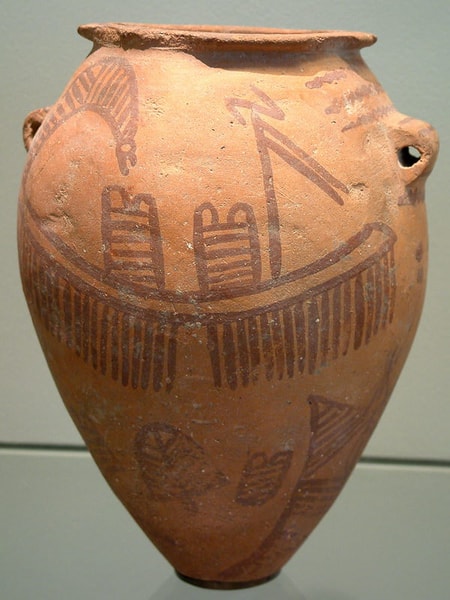 Naqada II pottery Guillaume Blanchard (CC BY-SA) ](https://www.worldhistory.org/image/3985/naqada-ii-pottery/ "Naqada II pottery")Organized farming began in the region c. 6000 BCE and communities known as the Badarian Culture began to flourish alongside the river. Industry developed at about this same time as evidenced by [faience](https://www.worldhistory.org/disambiguation/Faience/) workshops discovered at Abydos dating to c. 5500 BCE. The Badarian were followed by the Amratian, the Gerzean, and the Naqada cultures (also known as Naqada I, Naqada II, and Naqada III), all of which contributed significantly to the development of what became Egyptian civilization. The written history of the land begins at some point between 3400 and 3200 BCE when hieroglyphic script is developed by the Naqada Culture III. By 3500 BCE mummification of the dead was in practice at the city of Hierakonpolis and large stone tombs built at Abydos. The city of [Xois](https://www.worldhistory.org/Xois/) is recorded as being already ancient by 3100-2181 BCE as inscribed on the famous Palermo Stone. As in other cultures worldwide, the small agrarian communities became centralized and grew into larger urban centers.
### Early History of Egypt
The [Early Dynastic Period in Egypt](https://www.worldhistory.org/Early_Dynastic_Period_In_Egypt/) (c. 3150 - c. 2613 BCE) saw the unification of the north and south kingdoms under the king [Menes](https://www.worldhistory.org/Menes/) (also known as Meni or Manes) of Upper Egypt who conquered Lower Egypt in c. 3118 BCE or c. 3150 BCE. This version of the early history comes from the *Aegyptica* (History of Egypt) by the ancient historian Manetho who lived in the 3rd century BCE under the [Ptolemaic Dynasty](https://www.worldhistory.org/Ptolemaic_Dynasty/) (323-30 BCE). Although his chronology has been disputed by later historians, it is still regularly consulted on dynastic succession and the early history of ancient Egypt.
[ ![Narmer Palette [Two Sides]](https://www.worldhistory.org/img/r/p/750x750/4412.jpg?v=1763087296-1721384182) Narmer Palette \[Two Sides\] Unknown Artist (Public Domain) ](https://www.worldhistory.org/image/4412/narmer-palette-two-sides/ "Narmer Palette [Two Sides]")Manetho's work is the only source which cites Menes and the [conquest](https://www.worldhistory.org/warfare/), and it is now thought that the man referred to by Manetho as 'Menes' was the king [Narmer](https://www.worldhistory.org/Narmer/) who peacefully united Upper and Lower Egypt under one rule. Identification of Menes with Narmer is far from universally accepted, however, and Menes has been as credibly linked to the king Hor-Aha (c. 3100-3050 BCE) who succeeded him. An explanation for Menes' association with his predecessor and successor is that 'Menes' is an honorific title meaning "he who endures" and not a personal name and so could have been used to refer to more than one king. The claim that the land was unified by military campaign is also disputed as the famous [Narmer Palette](https://www.worldhistory.org/Narmer_Palette/), depicting a military victory, is considered by some scholars to be royal propaganda. The country may have first been united peacefully, but this seems unlikely.
Geographical designation in ancient Egypt follows the direction of the Nile River and so Upper Egypt is the southern region and Lower Egypt the northern area closer to the Mediterranean Sea. Narmer ruled from the city of Heirakonopolis and then from Memphis and Abydos. Trade increased significantly under the rulers of the [Early Dynastic](https://www.worldhistory.org/disambiguation/Early_Dynastic/) Period in Egypt and elaborate mastaba tombs, precursors to the later [pyramids](https://www.worldhistory.org/pyramid/), developed in [Egyptian burial](https://www.worldhistory.org/Egyptian_Burial/) practices which included increasingly elaborate mummification techniques.
### The Gods
From the [Predynastic Period in Egypt](https://www.worldhistory.org/Predynastic_Period_in_Egypt/) (c. 6000 - c. 3150 BCE) a belief in the gods defined the Egyptian culture. An early Egyptian creation myth tells of the [god](https://www.worldhistory.org/God/) Atum who stood in the midst of swirling chaos before the beginning of time and spoke creation into existence. Atum was accompanied by the eternal force of *[heka](https://www.worldhistory.org/Heka/)* (magic), personified in the god Heka and by other spiritual forces which would animate the world. *Heka* was the primal force which infused the universe and caused all things to operate as they did; it also allowed for the central value of the Egyptian culture: *[ma'at](https://www.worldhistory.org/Ma'at/)*, harmony and balance.
All of the gods and all of their responsibilities went back to *ma'at* and *heka*. The sun rose and set as it did and the moon traveled its course across the sky and the [seasons](https://www.worldhistory.org/Horae/) came and went in accordance with balance and order which was possible because of these two agencies. *Ma'at* was also personified as a deity, the goddess of the ostrich feather, to whom every king promised his full abilities and devotion. The king was associated with the god [Horus](https://www.worldhistory.org/Horus/) in life and [Osiris](https://www.worldhistory.org/osiris/) in death based upon a myth which became the most popular in Egyptian history.
[  Egyptian God Osiris A.K. (Copyright) ](https://www.worldhistory.org/image/775/egyptian-god-osiris/ "Egyptian God Osiris")Osiris and his sister-wife [Isis](https://www.worldhistory.org/isis/) were the original monarchs who governed the world and gave the people the gifts of civilization. Osiris' brother, Set, grew jealous of him and murdered him but he was brought back to life by Isis who then bore his son Horus. Osiris was incomplete, however, and so descended to rule the underworld while Horus, once he had matured, avenged his father and defeated Set. This myth illustrated how order triumphed over chaos and would become a persistent motif in [Egyptian religion](https://www.worldhistory.org/Egyptian_Religion/), mortuary rituals, and religious texts, and art. There was no period in which the gods did not play an integral role in the daily lives of the Egyptians and this is clearly seen from the earliest times in the country's history.
### The [Old Kingdom](https://www.worldhistory.org/disambiguation/Old_Kingdom/)
During the period known as the [Old Kingdom of Egypt](https://www.worldhistory.org/Old_Kingdom_of_Egypt/) (c. 2613-2181 BCE), [architecture](https://www.worldhistory.org/disambiguation/architecture/) honoring the gods developed at an increased rate and some of the most famous monuments in Egypt, such as the pyramids and the [Great Sphinx of Giza](https://www.worldhistory.org/Great_Sphinx_of_Giza/), were constructed. The king [Djoser](https://www.worldhistory.org/Djoser/), who reigned c. 2670 BCE, built the first Step [Pyramid](https://www.worldhistory.org/pyramid/) at Saqqara c. 2670, designed by his chief architect and physician [Imhotep](https://www.worldhistory.org/imhotep/) (c. 2667-2600 BCE) who also wrote one of the first medical texts describing the treatment of over 200 different diseases and arguing that the cause of disease could be natural, not the will of the gods. The [Great Pyramid](https://www.worldhistory.org/Great_Pyramid_of_Giza/) of Khufu (last of [the Seven Wonders](https://www.worldhistory.org/The_Seven_Wonders/) of the ancient world) was constructed during his reign (2589-2566 BCE) with the pyramids of Khafre (2558-2532 BCE) and Menkaure (2532-2503 BCE) following.
[  The Pyramids, Giza, Egypt Shellapic76 (CC BY) ](https://www.worldhistory.org/image/5687/the-pyramids-giza-egypt/ "The Pyramids, Giza, Egypt")The grandeur of the pyramids on the [Giza](https://www.worldhistory.org/giza/) plateau, as they originally would have appeared, sheathed in gleaming white limestone, is a testament to the power and wealth of the rulers during this period. Many theories abound regarding how these monuments and tombs were constructed, but modern architects and scholars are far from agreement on any single one. Considering the technology of the day, some have argued, a monument such as the [Great Pyramid of Giza](https://www.worldhistory.org/Great_Pyramid_of_Giza/) should not exist. Others claim, however, that the existence of such buildings and tombs suggest superior technology which has been lost to time.
There is absolutely no evidence that the monuments of the Giza plateau - or any others in Egypt - were built by slave labor nor is there any evidence to support a historical reading of the biblical Book of Exodus. Most reputable scholars today reject the claim that the pyramids and other monuments were built by slave labor, although slaves of different nationalities certainly did exist in Egypt and were employed regularly in the mines. Egyptian monuments were considered public works created for the state and used both skilled and unskilled Egyptian workers in construction, all of whom were paid for their labor. Workers at the Giza site, which was only one of many, were given a ration of [beer](https://www.worldhistory.org/Beer/) three times a day and their housing, tools, and even their level of health care have all been clearly established.
### The [First Intermediate Period](https://www.worldhistory.org/disambiguation/First_Intermediate_Period/) & the [Hyksos](https://www.worldhistory.org/Hyksos/)
The era known as the [First Intermediate Period of Egypt](https://www.worldhistory.org/First_Intermediate_Period_of_Egypt/) (2181-2040 BCE) saw a decline in the power of the central government following its collapse. Largely independent districts with their own governors developed throughout Egypt until two great centers emerged: Hierakonpolis in Lower Egypt and [Thebes](https://www.worldhistory.org/disambiguation/Thebes/) in Upper Egypt. These centers founded their own dynasties which ruled their regions independently and intermittently fought with each other for supreme control until c. 2040 BCE when the Theban king Mentuhotep II (c. 2061-2010 BCE) defeated the forces of Hierakonpolis and united Egypt under the rule of Thebes.
The stability provided by Theban rule allowed for the flourishing of what is known as the [Middle Kingdom](https://www.worldhistory.org/disambiguation/Middle_Kingdom/) (2040-1782 BCE). The Middle Kingdom is considered Egypt's 'Classical Age' when art and culture reached great heights and Thebes became the most important and wealthiest city in the country. According to the historians Oakes and Gahlin, "the Twelfth Dynasty kings were strong rulers who established control not only over the whole of Egypt but also over Nubia to the south, where several fortresses were built to protect Egyptian trading interests" (11). The first standing army was created during the Middle Kingdom by the king Amenemhat I (c. 1991-1962 BCE) the [temple](https://www.worldhistory.org/temple/) of [Karnak](https://www.worldhistory.org/Karnak/) was begun under Senruset I (c. 1971-1926 BCE), and some of the greatest and [Egyptian literature](https://www.worldhistory.org/Egyptian_Literature/) and art was produced. The 13th Dynasty, however, was weaker than the 12th and distracted by internal problems which allowed for a foreign people known as the Hyksos to gain power in Lower Egypt around the Nile Delta.
The Hyksos are a mysterious people, most likely from the area of [Syria](https://www.worldhistory.org/syria/)/[Palestine](https://www.worldhistory.org/palestine/), who first appeared in Egypt c. 1800 and settled in the town of Avaris. While the names of the Hyksos kings are Semitic in origin, no definite ethnicity has been established for them. The Hyksos grew in power until they were able to take control of a significant portion of Lower Egypt by c. 1720 BCE, rendering the Theban Dynasty of Upper Egypt almost a vassal state.
[  Map of Ancient Egypt Tina Ross (Copyright) ](https://www.worldhistory.org/image/12990/map-of-ancient-egypt/ "Map of Ancient Egypt")This era is known as The [Second Intermediate Period of Egypt](https://www.worldhistory.org/Second_Intermediate_Period_of_Egypt/) (c. 1782 - c. 1570 BCE). While the Hyksos (whose name simply means 'foreign rulers') were hated by the Egyptians, they introduced a great many improvements to the culture such as the composite bow, the horse, and the [chariot](https://www.worldhistory.org/chariot/) along with crop rotation and developments in [bronze](https://www.worldhistory.org/disambiguation/bronze/) and ceramic works. At the same time the Hyksos controlled the ports of Lower Egypt, by 1700 BCE the Kingdom of [Kush](https://www.worldhistory.org/Kush/) had risen to the south of Thebes in Nubia and now held that border. The Egyptians mounted a number of campaigns to drive the Hyksos out and subdue the Nubians, but all failed until prince Ahmose I of Thebes (c. 1570-1544 BCE) succeeded and unified the country under Theban rule.
### The [New Kingdom](https://www.worldhistory.org/disambiguation/New_Kingdom/) & the [Amarna Period](https://www.worldhistory.org/Amarna_Period_of_Egypt/)
Ahmose I initiated what is known as the period of the [New Kingdom of Egypt](https://www.worldhistory.org/New_Kingdom_of_Egypt/) (c. 1570 - c. 1069 BCE) which again saw great prosperity in the land under a strong central government. The title of *[pharaoh](https://www.worldhistory.org/pharaoh/)* for the ruler of Egypt comes from the period of the New Kingdom; earlier monarchs were simply known as kings. Many of the Egyptian sovereigns best known today ruled during this period and the majority of the great structures of [Egyptian architecture](https://www.worldhistory.org/Egyptian_Architecture/) such as the Ramesseum, [Abu Simbel](https://www.worldhistory.org/Abu_Simbel/), the temples of Karnak and Luxor, and the tombs of the Valley of the Kings and Valley of the Queens were either created or greatly enhanced during this time.
Between 1504-1492 BCE the pharaoh Thutmose I (Tuthmosis I) consolidated his power and expanded the boundaries of Egypt to the Euphrates River in the north, Syria and Palestine to the west, and Nubia to the south. His reign was followed by Queen [Hatshepsut](https://www.worldhistory.org/hatshepsut/) (1479-1458 BCE) who greatly expanded trade with other nations, most notably the Land of [Punt](https://www.worldhistory.org/punt/). Her 22-year reign was one of peace and prosperity for Egypt.
[  Portrait of Queen Hatshepsut Rob Koopman (CC BY-SA) ](https://www.worldhistory.org/image/572/portrait-of-queen-hatshepsut/ "Portrait of Queen Hatshepsut")Her successor, [Thutmose III](https://www.worldhistory.org/Thutmose_III/) (Tuthmosis III), carried on her policies (although he tried to eradicate all memory of her as, it is thought, he did not want her to serve as a role model for other [women](https://www.worldhistory.org/disambiguation/women/) since only males were considered worthy to rule) and, by the time of his death in 1425 BCE, Egypt was a great and powerful nation. The prosperity led to, among other things, an increase in the brewing of beer in many different varieties and more leisure time for sports. Advances in [medicine](https://www.worldhistory.org/disambiguation/medicine/) led to improvements in health.
Bathing had long been an important part of the daily Egyptian's regimen as it was encouraged by their religion and modeled by their clergy. At this time, however, more elaborate baths were produced, presumably more for leisure than simply hygiene. The Kahun Gynecological Papyrus, concerning women's health and contraceptives, had been written c. 1800 BCE and, during this period, seems to have been made extensive use of by doctors. Surgery and dentistry were both practiced widely and with great skill, and beer was prescribed by physicians for ease of symptoms of over 200 different maladies.
[  Kahun Gynaecological Papyrus Francis Llewellyn Griffith (Public Domain) ](https://www.worldhistory.org/image/6367/kahun-gynaecological-papyrus/ "Kahun Gynaecological Papyrus")In 1353 BCE the pharaoh Amenhotep IV succeeded to the throne and, shortly after, changed his name to [Akhenaten](https://www.worldhistory.org/Akhenaten/) (`living spirit of Aten') to reflect his belief in a single god, Aten. The Egyptians, as noted above, traditionally believed in many gods whose importance influenced every aspect of their daily lives. Among the most popular of these deities were [Amun](https://www.worldhistory.org/amun/), Osiris, Isis, and [Hathor](https://www.worldhistory.org/Hathor/). The cult of Amun, at this time, had grown so wealthy that the priests were almost as powerful as the pharaoh. Akhenaten and his queen, [Nefertiti](https://www.worldhistory.org/Nefertiti/), renounced the traditional religious beliefs and customs of Egypt and instituted a new religion based upon the recognition of one god.
His religious reforms effectively cut the power of the priests of Amun and placed it in his hands. He moved the capital from Thebes to [Amarna](https://www.worldhistory.org/Amarna/) to further distance his rule from that of his predecessors. This is known as The Amarna Period (1353-1336 BCE) during which Amarna grew as the capital of the country and polytheistic religious customs were banned.
Among his many accomplishments, Akhenaten was the first ruler to decree statuary and a temple in honor of his queen instead of only for himself or the gods and used the money which once went to the temples for public works and parks. The power of the clergy declined sharply as that of the central government grew, which seemed to be Akhenaten's goal, but he failed to use his power for the best interest of his people. The [Amarna Letters](https://www.worldhistory.org/Amarna_Letters/) make clear that he was more concerned with his religious reforms than with foreign policy or the needs of the people of Egypt.
His reign was followed by his son, the most recognizable Egyptian ruler in the modern day, [Tutankhamun](https://www.worldhistory.org/Tutankhamun/), who reigned from c. 1336 - c. 1327 BCE. He was originally named Tutankhaten to reflect the religious beliefs of his father but, upon assuming the throne, changed his name to Tutankhamun to honor the ancient god Amun. He restored the ancient temples, removed all references to his father's single deity, and returned the capital to Thebes. His reign was cut short by his death and, today, he is most famous for the intact grandeur of his [tomb](https://www.worldhistory.org/tomb/), discovered in 1922 CE, which became an international sensation at the time.
[ 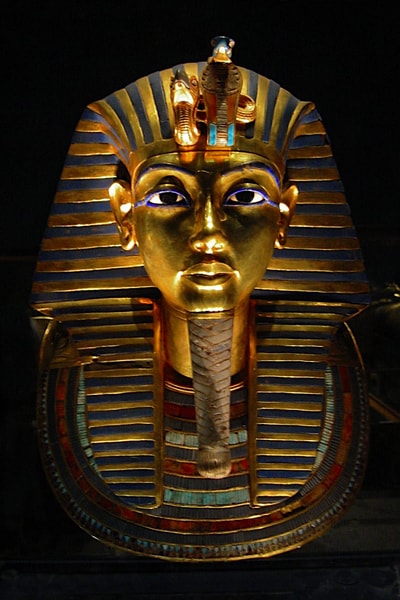 Death Mask of Tutankhamun Richard IJzermans (CC BY-NC-SA) ](https://www.worldhistory.org/image/1048/death-mask-of-tutankhamun/ "Death Mask of Tutankhamun")The greatest ruler of the New Kingdom, however, was [Ramesses II](https://www.worldhistory.org/Ramesses_II/) (also known as [Ramesses](https://www.worldhistory.org/disambiguation/ramesses/) the Great, 1279-1213 BCE) who commenced the most elaborate building projects of any Egyptian ruler and who reigned so efficiently that he had the means to do so. Although the famous [Battle](https://www.worldhistory.org/disambiguation/battle/) of [Kadesh](https://www.worldhistory.org/Kadesh/) of 1274 BCE (between Ramesses II of Egypt and Muwatalli II of the [Hittites](https://www.worldhistory.org/hittite/)) is today regarded as a draw, Ramesses considered it a great Egyptian victory and celebrated himself as a champion of the people, and finally as a god, in his many public works.
His temple of [Abu](https://www.worldhistory.org/disambiguation/Abu/) Simbel (built for his queen Nefertari) depicts the battle of Kadesh and the smaller temple at the site, following Akhenaten's example, is dedicated to Ramesses' favorite queen Nefertari. Under the reign of Ramesses II, the first peace treaty in the world (The Treaty of Kadesh) was signed in 1258 BCE and Egypt enjoyed almost unprecedented affluence as evidenced by the number of monuments built or restored during his reign.
Ramesses II's fourth son, [Khaemweset](https://www.worldhistory.org/Khaemweset/) (c. 1281 - c. 1225 BCE), is known as the "First Egyptologist" for his efforts in preserving and recording old monuments, temples, and their original owner's names. It is largely due to Khaemweset's initiative that Ramesses II's name is so prominent at so many ancient sites in Egypt. Khaemweset left a record of his own efforts, the original builder/owner of the monument or temple, and his father's name as well.
[ 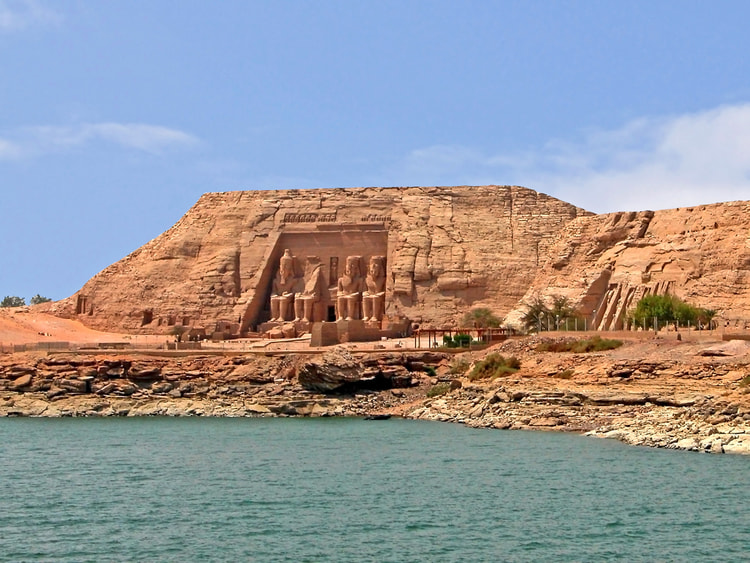 Abu Simbel Panorama Dennis Jarvis (CC BY-SA) ](https://www.worldhistory.org/image/1008/abu-simbel-panorama/ "Abu Simbel Panorama")Ramesses II became known to later generations as 'The Great Ancestor' and reigned for so long that he outlived most of his children and his wives. In time, all of his subjects had been born knowing only Ramesses II as their ruler and had no memory of another. He enjoyed an exceptionally long life of 96 years, over double the average lifespan of an ancient Egyptian. Upon his death, it is recorded that many feared the end of the world had come as they had known no other pharaoh and no other kind of Egypt.
### The Decline of Egypt & the Coming of [Alexander the Great](https://www.worldhistory.org/Alexander_the_Great/)
One of his successors, Ramesses III (1186-1155 BCE), followed his policies but, by this time, Egypt's great wealth had attracted the attention of the [Sea Peoples](https://www.worldhistory.org/Sea_Peoples/) who began to make regular incursions along the coast. The Sea Peoples, like the Hyksos, are of unknown origin but are thought to have come from the southern [Aegean](https://www.worldhistory.org/aegean/) area. Between 1276-1178 BCE the Sea Peoples were a threat to Egyptian security. Ramesses II had defeated them in a naval battle early in his reign as had his successor Merenptah (1213-1203 BCE). After Merenptah's death, however, they increased their efforts, sacking Kadesh, which was then under Egyptian control, and ravaging the coast. Between 1180-1178 BCE Ramesses III fought them off, finally defeating them at the Battle of Xois in 1178 BCE.
Following the reign of Ramesses III, his successors attempted to maintain his policies but increasingly met with resistance from the people of Egypt, those in the conquered territories, and, especially, the priestly class. In the years after Tutankhamun had restored the old religion of Amun, and especially during the great time of prosperity under Ramesses II, the priests of Amun had acquired large tracts of land and amassed great wealth which now threatened the central government and disrupted the unity of Egypt. By the time of Ramesses XI (1107-1077 BCE), the end of the 20th Dynasty, the [Egyptian government](https://www.worldhistory.org/Egyptian_Government/) had become so weakened by the power and corruption of the clergy that the country again fractured and central administration collapsed, initiating the so-called [Third Intermediate Period of Egypt](https://www.worldhistory.org/Third_Intermediate_Period_of_Egypt/) c. 1069-525 BCE.
[  Map of the Third Intermediate Period Jeff Dahl (CC BY-SA) ](https://www.worldhistory.org/image/596/map-of-the-third-intermediate-period/ "Map of the Third Intermediate Period")Under the Kushite King Piye (752-722 BCE), Egypt was again unified and the culture flourished, but beginning in 671 BCE, the Assyrians under [Esarhaddon](https://www.worldhistory.org/Esarhaddon/) began their invasion of Egypt, conquering it by 666 BCE under his successor [Ashurbanipal](https://www.worldhistory.org/Ashurbanipal/). Having made no long-term plans for control of the country, the Assyrians left it in ruin in the hands of local rulers and abandoned Egypt to its fate. Egypt rebuilt and refortified, however, and this is the state the country was in when [Cambyses II](https://www.worldhistory.org/Cambyses_II/) of [Persia](https://www.worldhistory.org/Persia/) struck at the Battle of Pelusium in 525 BCE. Knowing the reverence the Egyptians held for cats (who were thought living representations of the popular goddess [Bastet](https://www.worldhistory.org/Bastet/)), Cambyses II ordered his men to paint cats on their shields and to drive cats, and other animals sacred to the Egyptians, in front of the army toward Pelusium. The Egyptian forces surrendered and the country fell to the Persians. It would remain under Persian occupation until the coming of [Alexander](https://www.worldhistory.org/disambiguation/Alexander/) the Great in 332 BCE.
Alexander was welcomed as a liberator and conquered Egypt without a fight. He established the city of [Alexandria](https://www.worldhistory.org/alexandria/) and moved on to [conquer](https://www.worldhistory.org/warfare/) [Phoenicia](https://www.worldhistory.org/phoenicia/) and the rest of the [Persian Empire](https://www.worldhistory.org/disambiguation/Persian_Empire/). After his death in 323 BCE his general, [Ptolemy I](https://www.worldhistory.org/Ptolemy_I/) Soter, brought his body back to Alexandria and founded the Ptolemaic Dynasty (323-30 BCE). The last of the Ptolemies was [Cleopatra VII](https://www.worldhistory.org/Cleopatra_VII/) who committed suicide in 30 BCE after the defeat of her forces (and those of her consort [Mark Antony](https://www.worldhistory.org/Mark_Antony/)) by the Romans under [Octavian](https://www.worldhistory.org/augustus/) [Caesar](https://www.worldhistory.org/disambiguation/caesar/) at the [Battle of Actium](https://www.worldhistory.org/Battle_of_Actium/) (31 BCE). Egypt then became a province of the [Roman Empire](https://www.worldhistory.org/Roman_Empire/) (30 BCE-476 CE) then of the [Byzantine Empire](https://www.worldhistory.org/Byzantine_Empire/) (c. 527-646 CE) until it was conquered by the Arab Muslims under Caliph [Umar](https://www.worldhistory.org/Umar/) in 646 CE and fell under Islamic rule. [  Artist's Depiction of an Excavation in Egypt Mohawk Games (Copyright) ](https://www.worldhistory.org/image/12919/artists-depiction-of-an-excavation-in-egypt/ "Artist's Depiction of an Excavation in Egypt")The glory of Egypt's past, however, was rediscovered during the 18th and 19th centuries CE and has had a profound impact on the present-day's understanding of ancient history and the world. Historian Will Durant expresses a sentiment felt by many:
> The effect or remembrance of what Egypt accomplished at the very dawn of history has influence in every nation and every age. 'It is even possible', as Faure has said, 'that Egypt, through the solidarity, the unity, and the disciplined variety of its artistic products, through the enormous duration and the sustained power of its effort, offers the spectacle of the greatest civilization that has yet appeared on the earth.' We shall do well to equal it. (217)
Egyptian Culture and history has long held a universal fascination for people; whether through the work of early archeologists in the 19th century CE (such as Champollion who deciphered the [Rosetta Stone](https://www.worldhistory.org/Rosetta_Stone/) in 1822 CE) or the famous discovery of the Tomb of Tutankhamun by Howard Carter in 1922 CE. The ancient Egyptian belief in life as an eternal journey, created and maintained by divine magic, inspired later cultures and later religious beliefs. Much of the iconography and the beliefs of Egyptian religion found their way into the new religion of [Christianity](https://www.worldhistory.org/christianity/) and many of their symbols are recognizable today with largely the same meaning. It is an important testimony to the power of the Egyptian civilization that so many works of the imagination, from films to books to paintings even to religious belief, have been and continue to be inspired by its elevating and profound vision of the universe and humanity's place in it.
#### Editorial Review
This human-authored definition has been reviewed by our editorial team before publication to ensure accuracy, reliability and adherence to academic standards in accordance with our [editorial policy](https://www.worldhistory.org/static/editorial-policy/).
## Bibliography
- [Bunson, M. *The Encyclopedia of Ancient Egypt.* Gramercy Books, 1991.](https://www.worldhistory.org/books/B01NH04966/)
- [David, R. *Handbook to Life in Ancient Egypt.* Oxford University Press, 2003.](https://www.worldhistory.org/books/0816050341/)
- [Flinders, Sir W. M. (William Matthew Flinders) Petrie. *The Religion of Ancient Egypt.* Public Domain Books, 2009.](https://www.worldhistory.org/books/B002RKTANY/)
- [Gods and Goddesses](http://www.ancientegypt.co.uk/gods/home.html "Gods and Goddesses"), accessed 1 Dec 2016.
- [Nardo, D. *Living in Ancient Egypt.* Thompson/Gale, 2004.](https://www.worldhistory.org/books/1601526385/)
- [Oakes, L. and Gahlin, L. *Ancient Egypt.* Hermes House, London, 2008.](https://www.worldhistory.org/books/1591431093/)
- [Shaw, I. *The Oxford History of Ancient Egypt.* Oxford University Press, 2006.](https://www.worldhistory.org/books/B000OKSGJ8/)
- [Strudwick, H. *The Encyclopedia of Ancient Egypt.* Metro Books, 2006.](https://www.worldhistory.org/books/B01MS1KVAK/)
- [Wilkinson, R. H. *The Complete Gods and Goddesses of Ancient Egypt.* Thames & Hudson, 2003.](https://www.worldhistory.org/books/0500051208/)
## About the Author
Joshua J. Mark is World History Encyclopedia's co-founder and Content Director. He was previously a professor at Marist College (NY) where he taught history, philosophy, literature, and writing. He has traveled extensively and lived in Greece and Germany.
- [Linkedin Profile](https://www.linkedin.com/pub/joshua-j-mark/38/614/339)
## Timeline
- **c. 6000 BCE**: [Nile](https://www.worldhistory.org/nile/) River Valley first inhabited.
- **c. 6000 BCE**: [Burial](https://www.worldhistory.org/burial/) of the dead in [Egypt](https://www.worldhistory.org/egypt/).
- **c. 6000 BCE**: Earliest [Egyptian](https://www.worldhistory.org/disambiguation/Egyptian/) mastabas dug at Saqqara.
- **5500 BCE**: Oldest [faience](https://www.worldhistory.org/disambiguation/Faience/) workshop in [Egypt](https://www.worldhistory.org/egypt/) founded at Abydos.
- **5000 BCE**: Organised farming begins in [Egypt](https://www.worldhistory.org/egypt/).
- **c. 4000 BCE**: Depictions of gods and afterlife on walls of [Egyptian](https://www.worldhistory.org/disambiguation/Egyptian/) tombs.
- **c. 3414 BCE - c. 3100 BCE**: [Xois](https://www.worldhistory.org/Xois/) founded as a [city](https://www.worldhistory.org/city/) during the 1st Dynasty.
- **c. 3200 BCE**: Hieroglyphic [script](https://www.worldhistory.org/script/) developed in [Egypt](https://www.worldhistory.org/egypt/).
- **c. 3200 BCE - c. 3000 BCE**: Probable dates for creation of [Narmer Palette](https://www.worldhistory.org/Narmer_Palette/).
- **c. 3150 BCE**: King [Menes](https://www.worldhistory.org/Menes/) unifies [Egypt](https://www.worldhistory.org/egypt/) through [conquest](https://www.worldhistory.org/warfare/).
- **c. 3150 BCE - c. 3100 BCE**: Reign of [Menes](https://www.worldhistory.org/Menes/), a.k.a. [Narmer](https://www.worldhistory.org/Narmer/), first king who is thought to have unified Upper and Lower [Egypt](https://www.worldhistory.org/egypt/).
- **3150 BCE - 2613 BCE**: [Early Dynastic Period in Egypt](https://www.worldhistory.org/Early_Dynastic_Period_In_Egypt/). First Kings.
- **3100 BCE - 2181 BCE**: [Xois](https://www.worldhistory.org/Xois/) inscribed on Palermo Stone as an ancient [city](https://www.worldhistory.org/city/) during the 5th Dynasty.
- **c. 3000 BCE**: [Trade](https://www.worldhistory.org/disambiguation/trade/) already established between [Syria](https://www.worldhistory.org/syria/) and [Egypt](https://www.worldhistory.org/egypt/).
- **c. 2670 BCE**: Reign of King [Djoser](https://www.worldhistory.org/Djoser/) in [Egypt](https://www.worldhistory.org/egypt/), builder of the first [pyramid](https://www.worldhistory.org/pyramid/).
- **c. 2670 BCE - c. 2650 BCE**: The Step [Pyramid](https://www.worldhistory.org/pyramid/) is built by [Imhotep](https://www.worldhistory.org/imhotep/) under reign of King [Djoser](https://www.worldhistory.org/Djoser/).
- **2667 BCE - 2648 BCE**: [Imhotep](https://www.worldhistory.org/imhotep/) in [Egypt](https://www.worldhistory.org/egypt/) writes medical texts describing diagnosis and treatment of 100 diseases and 48 injuries.
- **c. 2667 BCE - c. 2600 BCE**: Attributed dates of [Imhotep](https://www.worldhistory.org/imhotep/)'s medical and architectural achievements.
- **c. 2613 BCE - c. 2181 BCE**: The Period of the [Old Kingdom of Egypt](https://www.worldhistory.org/Old_Kingdom_of_Egypt/).
- **c. 2560 BCE**: The [Great Pyramid of Giza](https://www.worldhistory.org/Great_Pyramid_of_Giza/) is constructed by [Pharaoh](https://www.worldhistory.org/pharaoh/) Khufu (Cheops).
- **c. 2500 BCE**: The [Great Sphinx of Giza](https://www.worldhistory.org/Great_Sphinx_of_Giza/) is built.
- **c. 2181 BCE - c. 2040 BCE**: [First Intermediate Period](https://www.worldhistory.org/disambiguation/First_Intermediate_Period/) in [Egypt](https://www.worldhistory.org/egypt/).
- **2064 BCE - 1986 BCE**: Twin Dynasty Wars in [Egypt](https://www.worldhistory.org/egypt/).
- **1800 BCE**: [Bronze](https://www.worldhistory.org/disambiguation/bronze/) working introduced to [Egypt](https://www.worldhistory.org/egypt/).
- **c. 1800 BCE**: The Kahun Gynecological Papyrus deals with [women](https://www.worldhistory.org/disambiguation/women/)'s health and contraception.
- **1783 BCE**: Avaris is built and set as capital of [Hyksos](https://www.worldhistory.org/Hyksos/).
- **c. 1782 BCE - c. 1570 BCE**: [Second Intermediate Period](https://www.worldhistory.org/disambiguation/Second_Intermediate_Period/) in [Egypt](https://www.worldhistory.org/egypt/).
- **1700 BCE**: The Kingdom of [Kush](https://www.worldhistory.org/Kush/) is formed to the south of [Egypt](https://www.worldhistory.org/egypt/).
- **1650 BCE - 1550 BCE**: [Xois](https://www.worldhistory.org/Xois/) serves as capital of the 14th Dynasty.
- **c. 1600 BCE**: The Edwin Smith Papyrus, an [Egyptian](https://www.worldhistory.org/disambiguation/Egyptian/) medical text, is written, supposedly as a copy of [Imhotep](https://www.worldhistory.org/imhotep/)'s earlier work.
- **c. 1570 BCE**: Ahmose I defeats and expels the [Hyksos](https://www.worldhistory.org/Hyksos/) from [Egypt](https://www.worldhistory.org/egypt/) and destroy their capital Avaris.
- **c. 1570 BCE - c. 1069 BCE**: The [New Kingdom of Egypt](https://www.worldhistory.org/New_Kingdom_of_Egypt/).
- **c. 1550 BCE - 1070 BCE**: Composition of the [Egyptian Book of the Dead](https://www.worldhistory.org/Egyptian_Book_of_the_Dead/).
- **1504 BCE - 1492 BCE**: [Egyptian empire](https://www.worldhistory.org/Egyptian_Empire/) reaches greatest extent under Thutmose I.
- **1500 BCE**: [Egyptian empire](https://www.worldhistory.org/Egyptian_Empire/) extends to the Euphrates.
- **1479 BCE - 1458 BCE**: Queen [Hatshepsut](https://www.worldhistory.org/hatshepsut/) rules [Egypt](https://www.worldhistory.org/egypt/).
- **c. 1458 BCE**: [Kadesh](https://www.worldhistory.org/Kadesh/) and Megiddo lead a Canaanite alliance against the [Egyptian](https://www.worldhistory.org/disambiguation/Egyptian/) invasion by [Thutmose III](https://www.worldhistory.org/Thutmose_III/).
- **1458 BCE - 1425 BCE**: Reign of [Thutmose III](https://www.worldhistory.org/Thutmose_III/) in [Egypt](https://www.worldhistory.org/egypt/).
- **c. 1457 BCE**: [Battle](https://www.worldhistory.org/disambiguation/battle/) of Megiddo: [Thutmose III](https://www.worldhistory.org/Thutmose_III/) of [Egypt](https://www.worldhistory.org/egypt/) defeats a coalition of [Canaan](https://www.worldhistory.org/canaan/), [Kadesh](https://www.worldhistory.org/Kadesh/), [Mitanni](https://www.worldhistory.org/Mitanni/), and Megiddo led by Durusha, king of Kadesh.
- **c. 1386 BCE - c. 1353 BCE**: Reign of [Amenhotep III](https://www.worldhistory.org/Amenhotep_III/) of [Egypt](https://www.worldhistory.org/egypt/).
- **1353 BCE - c. 1336 BCE**: Reign of [Akhenaten](https://www.worldhistory.org/Akhenaten/), [Tutankhamun](https://www.worldhistory.org/Tutankhamun/)'s father, 'Heretic King' of [Egypt](https://www.worldhistory.org/egypt/).
- **c. 1336 BCE - c. 1327 BCE**: Reign of [Tutankhamun](https://www.worldhistory.org/Tutankhamun/) with [Ankhsenamun](https://www.worldhistory.org/Ankhsenamun/) as queen.
- **c. 1334 BCE**: [Tutankhamun](https://www.worldhistory.org/Tutankhamun/) initiates religious reforms returning [Egypt](https://www.worldhistory.org/egypt/) to traditional belief structure.
- **1327 BCE - 1323 BCE**: Reign of Ay in [Egypt](https://www.worldhistory.org/egypt/).
- **c. 1320 BCE**: Commander-in-Chief of the Army, [Horemheb](https://www.worldhistory.org/Horemheb/), succeeds Ay as ruler of [Egypt](https://www.worldhistory.org/egypt/)
- **c. 1320 BCE - 1292 BCE**: Reign of [Horemheb](https://www.worldhistory.org/Horemheb/) in [Egypt](https://www.worldhistory.org/egypt/), [Tutankhamun](https://www.worldhistory.org/Tutankhamun/)'s name erased from record.
- **c. 1303 BCE**: Birth of [Ramesses II](https://www.worldhistory.org/Ramesses_II/) of [Egypt](https://www.worldhistory.org/egypt/).
- **1295 BCE - 1294 BCE**: The reign of [Ramesses](https://www.worldhistory.org/disambiguation/ramesses/) I in [Egypt](https://www.worldhistory.org/egypt/).
- **1295 BCE - 1188 BCE**: The 19th Dynasty of [Egypt](https://www.worldhistory.org/egypt/).
- **1294 BCE - 1279 BCE**: The reign of Seti I in [Egypt](https://www.worldhistory.org/egypt/).
- **1279 BCE - 1212 BCE**: Reign of [Ramesses II](https://www.worldhistory.org/Ramesses_II/) (The Great) in [Egypt](https://www.worldhistory.org/egypt/).
- **1274 BCE**: [Battle](https://www.worldhistory.org/disambiguation/battle/) of [Kadesh](https://www.worldhistory.org/Kadesh/) between [Pharaoh](https://www.worldhistory.org/pharaoh/) [Ramesses II](https://www.worldhistory.org/Ramesses_II/) of [Egypt](https://www.worldhistory.org/egypt/) and King Muwatalli II of the [Hittites](https://www.worldhistory.org/hittite/).
- **c. 1264 BCE - c. 1244 BCE**: Probable dates for the construction of [Abu Simbel](https://www.worldhistory.org/Abu_Simbel/).
- **1258 BCE**: The Treaty of [Kadesh](https://www.worldhistory.org/Kadesh/) between Egyptians and [Hittites](https://www.worldhistory.org/hittite/). The world's first peace treaty.
- **c. 1244 BCE - c. 1224 BCE**: Other probable dates for the construction of [Abu Simbel](https://www.worldhistory.org/Abu_Simbel/).
- **1184 BCE - 1153 BCE**: Reign of [Ramesses](https://www.worldhistory.org/disambiguation/ramesses/) III, [Pharaoh of Egypt](https://www.worldhistory.org/collection/25/pharaoh-of-egypt/).
- **1180 BCE**: The [Sea Peoples](https://www.worldhistory.org/Sea_Peoples/) begin increased incursions into [Egypt](https://www.worldhistory.org/egypt/).
- **1180 BCE - 1178 BCE**: [Ramesses](https://www.worldhistory.org/disambiguation/ramesses/) III of the 20th Dynasty fortifies [Xois](https://www.worldhistory.org/Xois/) against the threat of the invading [Sea Peoples](https://www.worldhistory.org/Sea_Peoples/).
- **1178 BCE**: [Ramesses](https://www.worldhistory.org/disambiguation/ramesses/) III defends [Egypt](https://www.worldhistory.org/egypt/) from the [Sea Peoples](https://www.worldhistory.org/Sea_Peoples/) on the shores at [Xois](https://www.worldhistory.org/Xois/), defeating them completely.
- **c. 1069 BCE - 525 BCE**: [Third Intermediate Period](https://www.worldhistory.org/Third_Intermediate_Period_of_Egypt/) in [Egypt](https://www.worldhistory.org/egypt/).
- **750 BCE**: Iron working is introduced to [Egypt](https://www.worldhistory.org/egypt/).
- **712 BCE - 671 BCE**: [Egypt](https://www.worldhistory.org/egypt/) is ruled by the Kushite dynasty.
- **671 BCE**: Second [Egyptian](https://www.worldhistory.org/disambiguation/Egyptian/) Campaign, Assyrian army successfully captures [Memphis](https://www.worldhistory.org/Memphis_(Ancient_Egypt)/) and conquers [Egypt](https://www.worldhistory.org/egypt/).
- **671 BCE**: [Egypt](https://www.worldhistory.org/egypt/) is conquered by [Assyria](https://www.worldhistory.org/assyria/).
- **667 BCE - 665 BCE**: [Ashurbanipal](https://www.worldhistory.org/Ashurbanipal/) wages [war](https://www.worldhistory.org/disambiguation/War/) in [Egypt](https://www.worldhistory.org/egypt/) to put down rebellions.
- **664 BCE**: Psamtik I becomes Pharoah in [Egypt](https://www.worldhistory.org/egypt/).
- **653 BCE**: [Egypt](https://www.worldhistory.org/egypt/) expels Assyrians.
- **601 BCE**: [Nebuchadnezzar II](https://www.worldhistory.org/Nebuchadnezzar_II/) of [Babylon](https://www.worldhistory.org/babylon/) unsuccessfully attempts to invade [Egypt](https://www.worldhistory.org/egypt/).
- **c. 525 BCE**: [Imhotep](https://www.worldhistory.org/imhotep/) is deified in [Egypt](https://www.worldhistory.org/egypt/).
- **525 BCE**: [Cambyses II](https://www.worldhistory.org/Cambyses_II/) of [Persia](https://www.worldhistory.org/Persia/) takes the [city](https://www.worldhistory.org/city/) of Pelusium, conquers [Egypt](https://www.worldhistory.org/egypt/).
- **525 BCE - 404 BCE**: [Persia](https://www.worldhistory.org/Persia/) conquers [Egypt](https://www.worldhistory.org/egypt/).
- **520 BCE**: [Darius](https://www.worldhistory.org/disambiguation/darius/) of [Persia](https://www.worldhistory.org/Persia/) links the [Nile](https://www.worldhistory.org/nile/) and the Red Sea by a canal.
- **c. 398 BCE - c. 380 BCE**: [Plato](https://www.worldhistory.org/plato/) travels in [Egypt](https://www.worldhistory.org/egypt/), [Cyrene](https://www.worldhistory.org/cyrene/), [Italy](https://www.worldhistory.org/italy/), [Syracuse](https://www.worldhistory.org/syracuse/) and [Sicily](https://www.worldhistory.org/sicily/).
- **341 BCE**: The Persians complete [conquest](https://www.worldhistory.org/warfare/) of [Egypt](https://www.worldhistory.org/egypt/).
- **332 BCE**: [Alexander the Great](https://www.worldhistory.org/Alexander_the_Great/) conquers [Phoenicia](https://www.worldhistory.org/phoenicia/) and turns toward [Egypt](https://www.worldhistory.org/egypt/).
- **331 BCE**: [Egypt](https://www.worldhistory.org/egypt/) is conquered by [Alexander the Great](https://www.worldhistory.org/Alexander_the_Great/) without resistance.
- **Jan 331 BCE**: [Alexander the Great](https://www.worldhistory.org/Alexander_the_Great/) founds [Alexandria](https://www.worldhistory.org/alexandria/) at the port town of Rhakotis in [Egypt](https://www.worldhistory.org/egypt/).
- **323 BCE**: [Death of Alexander the Great](https://www.worldhistory.org/article/2366/death-of-alexander-the-great/).
- **323 BCE - 282 BCE**: Rule of [Ptolemy I](https://www.worldhistory.org/Ptolemy_I/) Soter.
- **323 BCE - 31 BCE**: The [Hellenistic](https://www.worldhistory.org/Hellenic_World/) Age. [Greek](https://www.worldhistory.org/disambiguation/greek/) thought and [culture](https://www.worldhistory.org/disambiguation/culture/) infuses with indigenous people.
- **305 BCE - 285 BCE**: Reign of [Ptolemy I](https://www.worldhistory.org/Ptolemy_I/) in [Egypt](https://www.worldhistory.org/egypt/), who initiated the Great Library.
- **300 BCE**: [Ptolemy I](https://www.worldhistory.org/Ptolemy_I/) founds the Museum of [Alexandria](https://www.worldhistory.org/alexandria/).
- **282 BCE - 246 BCE**: Reign of [Ptolemy II](https://www.worldhistory.org/Ptolemy_II_Philadelphus/) in [Egypt](https://www.worldhistory.org/egypt/), development of Library at [Alexandria](https://www.worldhistory.org/alexandria/).
- **277 BCE - 276 BCE**: 4,000 [Celts](https://www.worldhistory.org/celt/) are employed in [Egypt](https://www.worldhistory.org/egypt/) under [Ptolemy II](https://www.worldhistory.org/Ptolemy_II_Philadelphus/).
- **259 BCE**: [Celts](https://www.worldhistory.org/celt/) in [Egypt](https://www.worldhistory.org/egypt/) fail to overthrow [Ptolemy II](https://www.worldhistory.org/Ptolemy_II_Philadelphus/) and are starved to [death](https://www.worldhistory.org/disambiguation/Death/) on an island.
- **247 BCE**: The [Lighthouse of Alexandria](https://www.worldhistory.org/Lighthouse_of_Alexandria/) (Pharos) is completed.
- **217 BCE**: 14,000 [Celts](https://www.worldhistory.org/celt/) serve under [Ptolemy](https://www.worldhistory.org/disambiguation/Ptolemy/) IV in his victory at Raphia over the [Seleucid](https://www.worldhistory.org/Seleucid_Empire/) King Antiochus III.
- **c. 69 BCE - 12 Aug 30 BCE**: Life of [Cleopatra VII](https://www.worldhistory.org/Cleopatra_VII/) of [Egypt](https://www.worldhistory.org/egypt/).
- **47 BCE**: [Cleopatra VII](https://www.worldhistory.org/Cleopatra_VII/) is sole ruler of [Egypt](https://www.worldhistory.org/egypt/); she presents herself as the goddess [Isis](https://www.worldhistory.org/isis/).
- **30 BCE**: [Egypt](https://www.worldhistory.org/egypt/) becomes province of the [Roman Empire](https://www.worldhistory.org/Roman_Empire/).
- **30 BCE**: [Death](https://www.worldhistory.org/disambiguation/Death/) of [Cleopatra VII](https://www.worldhistory.org/Cleopatra_VII/), end of the [Ptolemaic Dynasty](https://www.worldhistory.org/Ptolemaic_Dynasty/) in [Egypt](https://www.worldhistory.org/egypt/).
- **30 BCE - 14 CE**: Reign of [Augustus](https://www.worldhistory.org/augustus/) [Caesar](https://www.worldhistory.org/disambiguation/caesar/) in [Rome](https://www.worldhistory.org/Rome/), restoration of [Roman](https://www.worldhistory.org/disambiguation/Roman/) province of [Alexandria](https://www.worldhistory.org/alexandria/).
- **30 BCE - 476 CE**: [Egypt](https://www.worldhistory.org/egypt/) remains a province of the [Roman Empire](https://www.worldhistory.org/Roman_Empire/).
- **c. 1 CE**: First non-stop voyages from [Egypt](https://www.worldhistory.org/egypt/) to [India](https://www.worldhistory.org/india/).
- **c. 50 CE - c. 60 CE**: Establishment of various Christian communities in the Eastern [Mediterranean](https://www.worldhistory.org/disambiguation/mediterranean/), [Greece](https://www.worldhistory.org/greece/), [Egypt](https://www.worldhistory.org/egypt/), and at least the [city](https://www.worldhistory.org/city/) of [Rome](https://www.worldhistory.org/Rome/).
- **232 CE**: Emperor [Maximinus Thrax](https://www.worldhistory.org/Maximinus_Thrax/) commands a legion in [Egypt](https://www.worldhistory.org/egypt/).
- **c. 527 CE - 646 CE**: The [Byzantine Empire](https://www.worldhistory.org/Byzantine_Empire/) controls [Egypt](https://www.worldhistory.org/egypt/).
- **646 CE**: The Arab Muslims [conquer](https://www.worldhistory.org/warfare/) [Egypt](https://www.worldhistory.org/egypt/) under Caliph [Umar](https://www.worldhistory.org/Umar/).
## Questions & Answers
### Where did the name of Egypt come from?
"Egypt" comes from the Greek name "Aegyptos" which was their pronunciation of the Egyptian name for the city of Memphis.
### How old is the Egyptian culture?
Egyptian culture dates back to c. 6000 BCE during the Pre-Dynastic Period but the land was settled before then and some level of civilization already established.
### Is Egypt an African country?
Egypt is located in North Africa and so is considered an African country.
### Who built the pyramids?
The pyramids were built by Egyptian skilled and non-skilled workers either for pay or as part of community service owed to the king. They were not built by slaves.
## External Links
- [Stories My Mummy Told Me](http://storiesmymummytoldme.com/)
- [How to make a mummy - Len Bloch](http://ed.ted.com/lessons/how-to-make-a-mummy-len-bloch)
- [episode 6: The Pros and Cons of Wisdom](http://literatureandhistory.com/index.php/episode-006-the-pros-and-cons-of-wisdom)
- [Discovering Ancient Egypt hieroglyphs pharaohs pyramids mummification](https://discoveringegypt.com/)
- [44 Ancient Egypt Facts That Separate Myth From Truth](https://allthatsinteresting.com/interesting-ancient-egypt-facts)
- [Ancient Egypt Military](http://www.ancientmilitary.com/ancient-egypt-military.htm)
- [The Oriental Institute of the University of Chicago](http://oi.uchicago.edu/research/computer-laboratory/archaeological-site-photography-egypt)
- [Egyptian Life](http://www.ancientegypt.co.uk/life/home.html)
- [The Ancient Egypt Site](http://www.ancient-egypt.org/)
- [Ancient History in depth: Ancient Egyptian Magic](http://www.bbc.co.uk/history/ancient/egyptians/magic_01.shtml)
- [History: Egyptians](http://www.bbc.co.uk/history/ancient/egyptians/)
- [List of Rulers of Ancient Egypt and Nubia | Lists of Rulers | Heilbrunn Timeline of Art History | The Metropolitan Museum of Art](https://www.metmuseum.org/toah/hd/phar/hd_phar.htm)
## Cite This Work
### APA
Mark, J. J. (2009, September 02). Ancient Egypt. *World History Encyclopedia*.
### Chicago
Mark, Joshua J.. "Ancient Egypt." *World History Encyclopedia*, September 02, 2009. .
### MLA
Mark, Joshua J.. "Ancient Egypt." *World History Encyclopedia*, 02 Sep 2009, .
## License & Copyright
Submitted by [Joshua J. Mark](https://www.worldhistory.org/user/JPryst/ "User Page: Joshua J. Mark"), published on 02 September 2009. The copyright holder has published this content under the following license: [Creative Commons Attribution-NonCommercial-ShareAlike](https://creativecommons.org/licenses/by-nc-sa/4.0/deed.en). This license lets others remix, tweak, and build upon this content non-commercially, as long as they credit the author and license their new creations under the identical terms. When republishing on the web a hyperlink back to the original content source URL must be included. Please note that content linked from this page may have different licensing terms.