---
title: Athletics, Leisure, and Entertainment in Ancient Rome
author: Steven Fife
source: https://www.worldhistory.org/article/98/athletics-leisure-and-entertainment-in-ancient-rom/
format: machine-readable-alternate
license: Creative Commons Attribution-NonCommercial-ShareAlike (https://creativecommons.org/licenses/by-nc-sa/4.0/)
updated: 1970-01-01
---
# Athletics, Leisure, and Entertainment in Ancient Rome
_Authored by [Steven Fife](https://www.worldhistory.org/user/stevenfife_06/)_
Although much of ancient [Roman](https://www.worldhistory.org/disambiguation/Roman/) life revolved around *negotium* (work and business), there was also time available for *otium* (leisure). Ranging from swimming to playing board games to attending [theatre](https://www.worldhistory.org/disambiguation/theatre/) performances, athletics and forms of entertainment enjoyed by Romans in ancient times were not much different from those that exist today.
One of the most popular recreational areas in [Rome](https://www.worldhistory.org/Rome/) was the Campus Martius, a vast floodplain that acted as a playground for the youth of Rome. Here, they engaged in a variety of sports and activities, including jumping, wrestling, boxing, racing, and throwing. Roman girls and [women](https://www.worldhistory.org/disambiguation/women/) generally did not participate in these activities.
[  Cavalry Sports Helmet Carole Raddato (CC BY-SA) ](https://www.worldhistory.org/image/2425/cavalry-sports-helmet/ "Cavalry Sports Helmet")**Swimming:** Swimming was one of the favorite activities of Roman boys, and it was widely practiced in the Tiber River, next to the Campus Martius. Most [Roman baths](https://www.worldhistory.org/Roman_Baths/) were also equipped with plunge pools, in which swimming was enjoyed. There are some accounts of women who knew how to swim in ancient times.
**Horseback Riding:** Every Roman was expected to be a good equestrian, so horseback riding was a preferred activity of Roman boys from a young age.
**Wrestling and Boxing:** Wrestling and boxing were popular sports that were usually practiced in the *palaestra* (a central field) of Roman baths. Both helped to improve overall fitness and build strength and stamina, and they were generally enjoyed by many Romans. Because there were no such things as boxing gloves, athletes tightly wrapped their hands in layers of cloth.
**Running:** Running was another favorite activity in ancient Rome. Boys competed in footraces with one another on the Campus Martius, which provided an ideal location for this activity.
**Hunting and Fishing:** Hunting was one of the oldest and most popular sports among the Roman elite, and boys often accompanied their fathers on hunting expeditions in order to teach them marksmanship. In the country, fishing was among the favorite pastimes.
**Ball Games:** During their exercises, Romans also participated in a variety of sporting activities involving balls, including handball, soccer, field hockey, catch games, and perhaps even dodge ball. These usually took place in the *palaestra* or *sphaerista* (ball-courts). There are some accounts of females participating in ball games.
[ 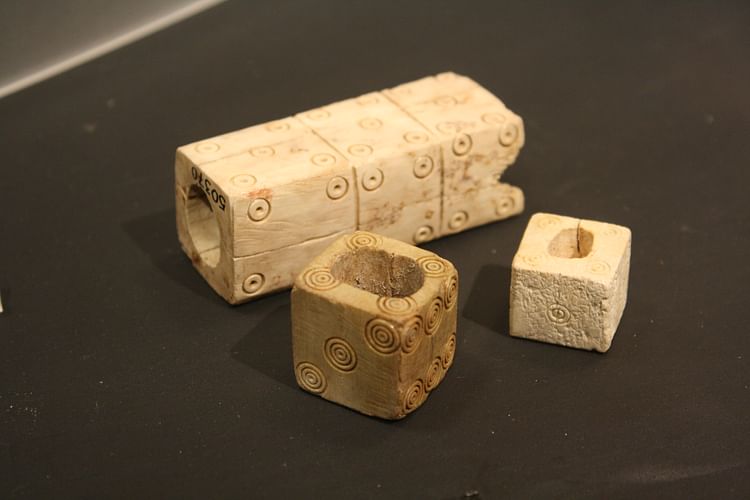 Roman Dice Mark Cartwright (CC BY-NC-SA) ](https://www.worldhistory.org/image/1204/roman-dice/ "Roman Dice")**Board Games:** Ancient Romans played a wide variety of board games, including dice (*Tesserae*), Knucklebones (*Tali* or *Tropa*) Roman Chess (*Latrunculi*), Roman Checkers (*Calculi*), Tic-tac-toe (*Terni Lapilli*), and Roman backgammon (*Tabula*).
**Public Entertainment:** There were several other activities to keep the people of Rome content and to prevent uprisings, such as [chariot](https://www.worldhistory.org/chariot/) races at the [Circus Maximus](https://www.worldhistory.org/Circus_Maximus/), musical and theatrical performances, public executions, beast hunts, and gladiatorial combat. Rome's most famous [amphitheatre](https://www.worldhistory.org/amphitheatre/), the [Colosseum](https://www.worldhistory.org/Colosseum/), could accommodate up to 50,000 spectators. There are also accounts of the arena being flooded to hold naval battles (called *Naumachia*) for the public to watch. These forms of entertainment, all of which were massive public spectacles, were a distinct and important part of ancient Roman [culture](https://www.worldhistory.org/disambiguation/culture/).
#### Editorial Review
This human-authored article has been reviewed by our editorial team before publication to ensure accuracy, reliability and adherence to academic standards in accordance with our [editorial policy](https://www.worldhistory.org/static/editorial-policy/).
## Bibliography
- [Roman Ball Games](http://www.aerobiologicalengineering.com/wxk116/Roman/BallGames/ "Roman Ball Games"), accessed 1 Dec 2016.
- [Roman Board Games](http://www.aerobiologicalengineering.com/wxk116/Roman/BoardGames/ "Roman Board Games"), accessed 1 Dec 2016.
- Nigel B. Crowther. *Sport in Ancient Times.* Westport, CT: Praeger Publishers, 2007
## Cite This Work
### APA
Fife, S. (2012, January 18). Athletics, Leisure, and Entertainment in Ancient Rome. *World History Encyclopedia*.
### Chicago
Fife, Steven. "Athletics, Leisure, and Entertainment in Ancient Rome." *World History Encyclopedia*, January 18, 2012. .
### MLA
Fife, Steven. "Athletics, Leisure, and Entertainment in Ancient Rome." *World History Encyclopedia*, 18 Jan 2012, .
## License & Copyright
Submitted by [Steven Fife](https://www.worldhistory.org/user/stevenfife_06/ "User Page: Steven Fife"), published on 18 January 2012. The copyright holder has published this content under the following license: [Creative Commons Attribution-NonCommercial-ShareAlike](https://creativecommons.org/licenses/by-nc-sa/4.0/deed.en). This license lets others remix, tweak, and build upon this content non-commercially, as long as they credit the author and license their new creations under the identical terms. When republishing on the web a hyperlink back to the original content source URL must be included. Please note that content linked from this page may have different licensing terms.