---
title: Ten Noble and Notorious Women of Ancient Greece
author: Joshua J. Mark
source: https://www.worldhistory.org/article/737/ten-noble-and-notorious-women-of-ancient-greece/
format: machine-readable-alternate
license: Creative Commons Attribution-NonCommercial-ShareAlike (https://creativecommons.org/licenses/by-nc-sa/4.0/)
updated: 2023-03-25
---
# Ten Noble and Notorious Women of Ancient Greece
_Authored by [Joshua J. Mark](https://www.worldhistory.org/user/JPryst/)_
[Women in ancient Greece](https://www.worldhistory.org/article/927/women-in-ancient-greece/), outside of [Sparta](https://www.worldhistory.org/sparta/), had almost no rights and no political or legal power. Even so, some [women](https://www.worldhistory.org/disambiguation/women/) broke through the social and cultural restrictions to make their [mark](https://www.worldhistory.org/disambiguation/Mark/) on history. All of the women did so at great personal risk and in defiance of the cultural norms of the time.
There were, no doubt, many notable women in ancient [Greece](https://www.worldhistory.org/greece/), but history books are usually silent on female accomplishments. According to the scholar and novelist Helena P. Schrader, this is because:
> [Herodotus](https://www.worldhistory.org/herodotus/) and other ancient [Greek](https://www.worldhistory.org/disambiguation/greek/) historians are far more likely to mention Persian queens than the wives of Greeks – not because Persian women were more powerful than their Greek counterparts, but because Persians had several wives, and so it was sometimes useful to record by which of them a certain Persian figure had been born. Since Greeks had only one legitimate wife, there was no need for such clarification when it came to prominent Greek citizens. (1)
Every so often, however, certain women performed deeds that the male writers of history simply could not ignore. Women such as Queen [Gorgo of Sparta](https://www.worldhistory.org/Gorgo_of_Sparta/) (l. c. 490 BCE) and [Aspasia of Miletus](https://www.worldhistory.org/Aspasia_of_Miletus/) (l. 470-410/400 BCE) have always been well known for their own achievements and for their association with famous men like the Spartan king [Leonidas](https://www.worldhistory.org/disambiguation/Leonidas/) (r. 490-480 BCE) and the Athenian statesman [Pericles](https://www.worldhistory.org/pericles/) (l. 495-429 BCE), but there were many more who led interesting lives and performed heroic acts and who remain lesser-known in the modern day.
[  Aspasia Surrounded by Greek Philosophers Michel Corneille the Younger (Public Domain) ](https://www.worldhistory.org/image/2941/aspasia-surrounded-by-greek-philosophers/ "Aspasia Surrounded by Greek Philosophers")Except for dramatic or religious representations, women were usually absent from the accounts of ancient Greek historians. The following list, while clearly omitting many women of lasting importance, represents the few whose accomplishments could not be ignored by the patriarchal historians who recorded ancient Greek history. The female philosopher [Hypatia of Alexandria](https://www.worldhistory.org/Hypatia_of_Alexandria/) (l. c. 370-415 CE) is only omitted from this list because she lived and worked in [Alexandria](https://www.worldhistory.org/alexandria/), [Egypt](https://www.worldhistory.org/egypt/) at a later date than the others. The present list includes:
- Hydna of Scione
- Anyte of [Tegea](https://www.worldhistory.org/Tegea/)
- [Telesilla of Argos](https://www.worldhistory.org/Telesilla_of_Argos/)
- Phryne of Thespinae
- Arete of [Cyrene](https://www.worldhistory.org/cyrene/)
- [Hipparchia of Maroneia](https://www.worldhistory.org/Hipparchia_of_Maroneia/)
- Timycha of Sparta
- Philaenis of [Samos](https://www.worldhistory.org/samos/)
- Agnodice of [Athens](https://www.worldhistory.org/Athens/)
- Thargelia of Miletus
Each of these women contributed significantly to the disciplines later associated with them or to [culture](https://www.worldhistory.org/disambiguation/culture/) generally even though their names have, in large part, been lost to history.
### Hydna of Scione
Hydna of Scione (l. 5th century BCE) was trained to swim by her father, Scyllis of Scione, a diving instructor and expert swimmer who taught the art of swimming for a living. He instructed his daughter from a young age, and she became well known for her ability to dive deeply and swim long distances. When the Persians invaded Greece in 480 BCE, they sacked Athens and marched across the mainland after defeating the Greeks at [Thermopylae](https://www.worldhistory.org/thermopylae/).
The Persian navy then sought to destroy the rest of the Greek force in the naval [battle](https://www.worldhistory.org/disambiguation/battle/) at [Salamis](https://www.worldhistory.org/disambiguation/Salamis/). If the Persians won at Salamis, Greece would be lost. Hydna and her father dove beneath the Persian ships and cut their moorings, causing these ships to drift and run aground or damage other vessels. This feat is even more impressive when one considers that, in order to perform it, Hydna and Scyllis had to swim ten miles into the sea in the middle of a storm. Their story comes from the Greek historian Pausanius in his *Description of Greece*, 10.19.1, and he further relates that, for their heroism, statues of them were erected at [Delphi](https://www.worldhistory.org/delphi/) following the Persian defeat.
### Anyte of Tegea
Anyte of Tegea (l. 3rd century BCE) was one of the female poets listed by [Antipater](https://www.worldhistory.org/disambiguation/Antipater/) of [Thessalonica](https://www.worldhistory.org/Thessalonica/) as one of the Nine Earthly [Muses](https://www.worldhistory.org/muse/) (with others such as [Sappho of Lesbos](https://www.worldhistory.org/Sappho_of_Lesbos/) and Telesilla of [Argos](https://www.worldhistory.org/argos/)). Anyte was among the first poets of Greece to emphasize the natural world in her work (as opposed to supernatural subjects such as the gods) and to write the epigram. She was best known for her epitaphs, especially those for animals.
These were not her only artistic contributions, however, and her poetry was so impressive that it was compared in ancient Greece to the works of [Homer](https://www.worldhistory.org/homer/). Her epitaphs for pets were very popular, and she was much sought after to write them. An example is this one for a pet dog:
> You died, Maira, near your many-rooted home at Locri, swiftest of noise-loving hounds;
> A spotted-throated viper darted his cruel venom into your light-moving limbs.
Another poem is written as an epitaph for a locust and a cicada for whom a young girl constructed a [tomb](https://www.worldhistory.org/tomb/):
> Myro, a girl, letting fall a child's tears, raised this little tomb for the locust that sang in the seed-land and for the oak-dwelling cicada; implacable [Hades](https://www.worldhistory.org/Hades/) holds their double song.
More of Anyte's works survive in the present day than any other female Greek poet and are still admired as they were by her contemporaries. She is thought to have run a school for the study of poetry in the Peloponnesus though the exact location is unknown. Anyte was later attached to a legend in which it was said she once had a dream that the [god](https://www.worldhistory.org/God/) of healing, [Asclepius](https://www.worldhistory.org/Asclepius/), told her to deliver a message to a man named Phalysius who was going blind.
[ 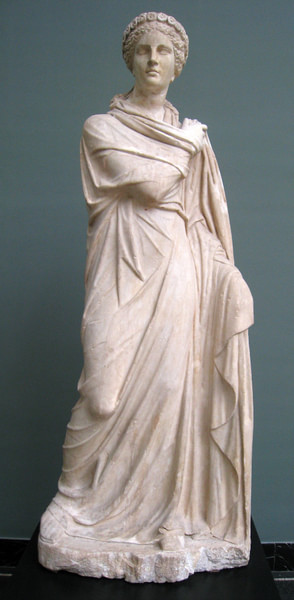 Polymnia - Muse of Hymns ChrisO (CC BY-SA) ](https://www.worldhistory.org/image/6203/polymnia---muse-of-hymns/ "Polymnia - Muse of Hymns")She woke and found a sealed [writing](https://www.worldhistory.org/writing/) tablet she had never seen before resting by her bed and, at her own expense, traveled a significant distance to deliver it to Phalysius. His eyes were healed, and when he opened the message, it instructed him to give Anyte 2,000 [gold](https://www.worldhistory.org/gold/) coins, which he promptly did. Whether there was any truth to the story is not as important as the message it would have imparted to its hearers: when the gods tell one to do something, one should do it.
### Telesilla of Argos
Of the poets listed with Anyte in Antipater's list of earthly muses is Telesilla of Argos (l. 5th century BCE) who, though famous for her poetry, became more so for defending her home [city](https://www.worldhistory.org/city/) against the invading Spartans in 494/493 BCE. After Cleomenes I of Sparta (r. c. 519 - 490 BCE) decimated the Argive forces at Sepeia and, later, at the Sanctuary of Argus, he marched on the city of Argos. Telesilla took down the ornamental arms from temples in the city, raided the armory for whatever was left, and equipped a force of the city's women with arms and armor. She then organized the city for defense and marched out to meet the Spartans, inflicting heavy losses.
Cleomenes recognized that he was facing an impossible situation: if he defeated her, he would have no honor in slaughtering women, while if they defeated him, Sparta would have been beaten by a band of girls, so he prudently withdrew his army, and Argos was saved. Modern-day historians still debate the truth of this account, but it was repeated by many ancient sources and is considered entirely plausible by a number of scholars today.
### Phryne of Thespiae
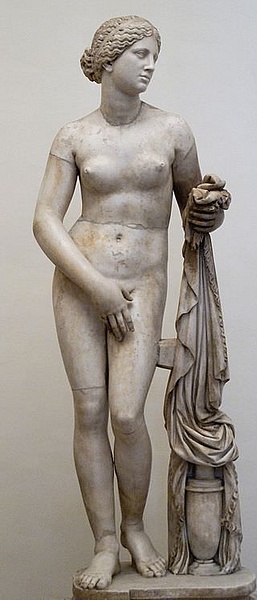
Phryne of Thespiae (l. c. 370-c. 316 BCE) was a famous courtesan of Athens, best known for the court case she won by baring her breasts. Her actual name was Mnesarete ("commemorating virtue"), but she was called Phryne ("toad") because of the yellow complexion of her skin. Ancient writers such as Athenaeus praise her extraordinary beauty, and she was the model for many artists and sculptors in Athens, including chiefly posing as [Aphrodite](https://www.worldhistory.org/Aphrodite/) (the existing statue, Aphrodite of Knidos, is thought to be modeled on her). The court case surrounded the charge of impiety, and it has been suggested that, whatever Phryne did, it had something to do with the Eleusinian Mysteries (initiation rites for the cult of [Demeter](https://www.worldhistory.org/demeter/) and [Persephone](https://www.worldhistory.org/persephone/)). It could be, like [Alcibiades](https://www.worldhistory.org/Alcibiades/), that she had taken the sacred [Kykeon](https://www.worldhistory.org/Kykeon/) (potentially psychoactive drink) for a private party with friends, but this is only conjecture (though, it seems, not out of character).
Her lover Hypereides, a famous orator, defended her in court and spoke eloquently, but it seemed as though the judges were going to condemn her. At this point, Hypereides disrobed Phryne, and the judges were so struck by her beauty that she was acquitted. The truth of this story, like that of Telesilla's defense of Argos, has been debated for centuries. Some claim that the earliest account of the trial makes no mention of Phryne disrobing and that it was a later invention created to mock the Athenian court; some claim that it was Phryne herself, not Hypereides, who removed her clothes and that she also undid her hair to show herself in the likeness of Aphrodite.
Whatever happened, she was acquitted and went on living a life of luxury as one of the most beautiful and sought-after women of Athens. She became wealthy enough to live as she pleased and even offered to rebuild the walls of [Thebes](https://www.worldhistory.org/disambiguation/Thebes/), which [Alexander the Great](https://www.worldhistory.org/Alexander_the_Great/) had destroyed, if the people would consent to her inscription reading, "Destroyed by [Alexander](https://www.worldhistory.org/disambiguation/Alexander/), Restored by Phryne the Courtesan", but the Thebans refused her offer.
[  Aphrodite of Knidos Marie-Lan Nguyen (Public Domain) ](https://www.worldhistory.org/image/2940/aphrodite-of-knidos/ "Aphrodite of Knidos")### Arete of Cyrene
Arete of Cyrene (l. 4th century BCE) was a philosopher of the Cyrenaic School and the daughter of the hedonist philosopher [Aristippus of Cyrene](https://www.worldhistory.org/Aristippus_of_Cyrene/) (l. c. 435-356 BCE) who grew up influenced by his teachings. There is some dispute among historians as to whether it was Aristippus or his grandson of the same name who founded the Cyrenaic School, but since ancient sources claim that Arete took over the school upon Aristippus' [death](https://www.worldhistory.org/disambiguation/Death/), it would appear to be the former.
Like her father, she is said to have held to the [philosophy](https://www.worldhistory.org/philosophy/) of "I possess, I am not possessed", by which she meant that one could have as many worldly goods as one wished as long as one's life was not controlled by those possessions. One could, for example, have a house and many beautiful objects furnishing and adorning it, but one should recognize such things as possessions which, perhaps, once belonged to another before and will certainly belong to someone else after one's death or change in circumstance.
One should, therefore, pursue pleasure and enjoy the things of this world without allowing those things to control one's life and freedom of movement. Arete of Cyrene is said to have written over 40 books, none of which survive in the present day. She also appears to have been a single mother who raised Aristippus-the-Younger in the hedonistic philosophy and home-schooled him. He would later take over the operation of the Cyrenaic School after Arete's death.
### Hipparchia of Maroneia
Another female philosopher was Hipparchia of Maroneia (l. c. 320 - 280 BCE), whose austere life and teachings stood in complete contrast to the hedonism of Arete of Cyrene. Hipparchia came to Athens as a teenager with her family and fell in love with the Cynic philosopher [Crates of Thebes](https://www.worldhistory.org/Crates_of_Thebes/) (l. c. 360 - 280 BCE) who lived there. Her brother, Metrocles (l. c. 4th century BCE), was one of Crates' students and introduced them. Hipparchia was drawn to the simplicity of the Cynic lifestyle, which emphasized complete honesty, independence, rejection of luxury and pleasure, and living life in accordance with nature.
Hipparchia became so deeply attached to Crates himself that she rejected the suitors her parents encouraged and said that she would either marry Crates or kill herself. Crates was, at this time, an elderly man, and her parents asked him to convince Hipparchia to marry someone her own age and live a more traditional life. Crates is said to have disrobed before Hipparchia and said to her, "Here is the bridegroom and these are his possessions - choose accordingly", which only made Hipparchia love him more.
[  Fresco of Hipparchia & Crates Unknown (Public Domain) ](https://www.worldhistory.org/image/14088/fresco-of-hipparchia--crates/ "Fresco of Hipparchia & Crates")They consummated the marriage in public on the porch of a building in downtown Athens. This was in keeping with the Cynic philosophy that one should shamelessly do in public what one does in private because, if there is nothing wrong with what one is doing, there should be no shame in performing the action in front of others. She wore men's clothes and traveled and taught with Crates, bearing him two children.
When he died, she may have taken over teaching his students in Athens and was said to have written a number of books which are no longer extant. She is the only female philosopher included at length in Diogenes Laertius' work *The Lives and Opinions of Eminent Philosophers* (3rd century CE) alongside men like [Socrates](https://www.worldhistory.org/socrates/) and [Plato](https://www.worldhistory.org/plato/).
### Timycha of Sparta
Timycha of Sparta (l. 4th century BCE) was yet another female philosopher who traveled with her husband, Myllias of Croton, and a band of Pythagoreans. She became a symbol of courage in the face of adversity. The philosophy of [Pythagoras](https://www.worldhistory.org/Pythagoras/) emphasized the immortality of the soul and the sacredness of life and so Pythagoreans were strict vegetarians but were prohibited from eating beans. The precise reason for this is unclear, but it is thought that perhaps they believed that the shape of the bean, especially the fava bean, served as a conduit for souls to return to earth.
Reincarnation (known to them as the Transmigration of Souls) was a fundamental belief of the Pythagoreans, and it was thought that the souls of the living came back from the underworld through the earth and, especially, through bean fields. This knowledge, like most of Pythagoras' teachings, was reserved only for those who were initiated into the mysteries and was not to be revealed to just anyone. One day, Timycha (who was six months pregnant at the time) and her band of philosophers were invited to the court of Dionysius the Elder to discuss their philosophy but, following the tenets of their belief, they rejected the tyrant's invitation because they did not believe he was true in his intentions.
Dionysius, insulted, sent some of his soldiers to bring them forcibly to the court. The philosophers could have easily escaped by running through a nearby bean field but, because of their religious beliefs, they could not do this and so were all killed resisting the soldiers except for Timycha and Myllias. These two were captured and brought before Dionysius. He was intrigued when he heard they refused to enter the bean field to escape and questioned Timycha repeatedly. When she would not answer him, he had her tortured and then brought back to him where she is said to have bitten off her tongue and spat it out at his feet in defiance. What happened to her and Myllias after that incident is not known, but they were most likely executed. She was referenced by later Pythagoreans as a model of courage and [martyr](https://www.worldhistory.org/martyr/) for the cause.
### Philaenis of Samos
Philaenis of Samos (l. 4th century BCE) was a courtesan who became famous for writing a manual on lesbian sexual positions and the proper etiquette for courting a member of the same or opposite sex. Her work no longer survives but is cited by later authors. The term "lesbian" to denote a homosexual woman did not exist in ancient times and only originates later when people began to identify homosexual women with [Sappho](https://www.worldhistory.org/Sappho_of_Lesbos/) of the island of [Lesbos](https://www.worldhistory.org/lesbos/) because of her intimate female-oriented love poems (although, in fact, there is no other evidence that Sappho was homosexual).
[ 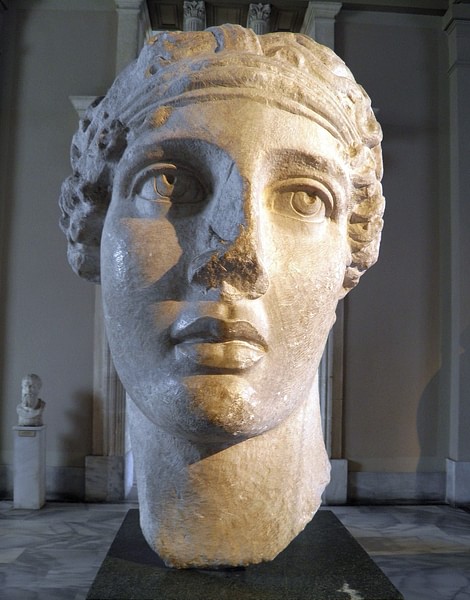 Sappho of Lesbos, Smyrna Carole Raddato (CC BY-SA) ](https://www.worldhistory.org/image/2345/sappho-of-lesbos-smyrna/ "Sappho of Lesbos, Smyrna")In Philaenis' time, a gay woman was known as a tribad (from the word "tribo" meaning "to rub, referring to women's sexual activity with each other). Her work is said to have covered the best sexual positions, perfumes, cosmetics, means of inducing abortions, the art of kissing, and the art of seduction, including how to make successful passes.
Written in the style of *The Histories* of Herodotus - a kind of History of Sex - her book was very popular and widely read even though people seem to have publicly condemned it. Their disapproval had less to do with the subject matter than that a woman had written it. The writer Vicki Leon, author of *Uppity Women in Ancient Times*, writes:
> Isn't it always the case - the yearbook with your dorky picture survives for decades but the love-letters get thrown out! It was the same in ancient times: we have landfill amounts of dull material from dozens of male philosophers. But what about the works of steamy writer Philaenis? A bare nothing. And a real pity, too, because she gained notoriety for writing the first illustrated book on lesbian sexual matters - in verse no less. (185)
### Agnodice of Athens
Philaenis' work may have been considered scandalous at the time but not nearly as shocking as the life of Agnodice (l. 4th century BCE), who was the first female doctor in ancient Athens and whose challenge to the male-dominated profession changed the laws regarding women practicing [medicine](https://www.worldhistory.org/disambiguation/medicine/). Women had always been allowed to perform the services of midwives and could even attend patients until it was alleged that they were helping their female patients procure abortions. After that, women were not allowed to practice medicine, and the penalty for doing so was death.
Agnodice cut her hair and disguised herself as a man in order to study medicine and even traveled to Egypt, where women were held in higher regard and could be doctors, in order to learn her craft. Still in her guise as a man, she returned to Athens and began to treat people. She became so popular among female patients (who knew she was a woman) that she was accused by a group of men (who thought she was a man) of seducing them. She was put on trial in the Areopagus and, in defending herself against the charge, revealed she was a woman. The men then threatened to execute her for breaking the [law](https://www.worldhistory.org/disambiguation/law/) by practicing medicine while pretending to be a man.
[ 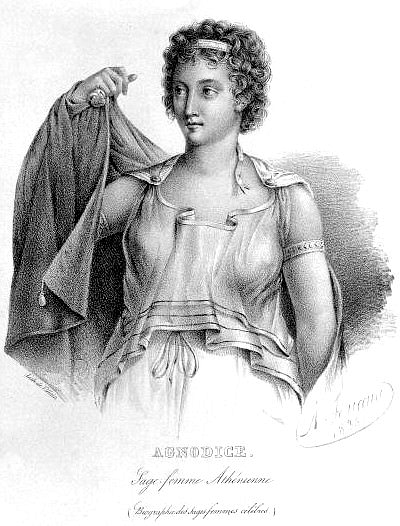 Agnodice Missvain (Public Domain) ](https://www.worldhistory.org/image/2942/agnodice/ "Agnodice")She was saved by her female patients who shamed the court into acquitting her. It seems as though they pointed out how Agnodice had been successfully practicing medicine for some time now and that the male doctors were simply jealous. After her trial, the laws were changed so that women could practice medicine equally with men.
### Thargelia of Miletus
Another woman of note was the courtesan Thargelia of Miletus who, according to Athenaeus, was remarkably beautiful, clever, and charming. She was married 14 times in her life although the reason for, and duration of, these unions is not recorded. She was a pro-Persian Greek in an anti-[Persian culture](https://www.worldhistory.org/disambiguation/Persian_Culture/) and, according to [Plutarch](https://www.worldhistory.org/plutarch/), swayed many influential men to consider the Persian cause seriously during the time when [Persia](https://www.worldhistory.org/Persia/) was moving to [conquer](https://www.worldhistory.org/warfare/) Greece (480 BCE).
She was so seductive that, again according to Plutarch, no man could resist her and she was able to draw from the information which she then passed on to the Persians. Accordingly, she became known as a conspirator and enemy to the cause of Greek freedom, and her name was afterwards synonymous with "traitor" in the same way that the name of [Benedict Arnold](https://www.worldhistory.org/Benedict_Arnold/) is in the modern day in the United States of America.
She lived in [Thessaly](https://www.worldhistory.org/disambiguation/Thessaly/) and had many clients and, through them, she spread the Persian agenda throughout the region. She was the antithesis of women like Hydna of Scione or Gorgo of Sparta who risked their lives or lost their husbands in the cause of Greek freedom. At the same time, however, it should be noted that there were many Greeks who favored Persian rule, as it seemed more stable than the constant squabbling and fighting between the Greek city-states, and so it was not as though Thargelia was a lone voice for the Persian cause at the time.
### Conclusion
There are many other impressive women of interest in the ancient histories of Greece who are also mentioned by the writers of their time. The athlete Pherenike of [Rhodes](https://www.worldhistory.org/Rhodes/), for example, disguised herself as a man in order to train her sons for the [Olympics](https://www.worldhistory.org/Olympic_Games/) and the Spartan princess Cynisca hired men to drive the chariots pulled by horses she had trained, becoming the first woman to win at the Olympics Games.
Some women were able to rise above the restrictions society placed upon them (as in the case of Arete or Telesilla) and others were able to work within the system to live as they wanted to (such as Phryne and Thargelia). Although the ancient historians chose not to dwell on the accomplishments of women, these women had such an impact on their society that there was no way they could be ignored.
#### Editorial Review
This human-authored article has been reviewed by our editorial team before publication to ensure accuracy, reliability and adherence to academic standards in accordance with our [editorial policy](https://www.worldhistory.org/static/editorial-policy/).
## Bibliography
- [Athenaeus Of Naucratis; Georgius \[Georg\] Kaibel (Ed. ). *Athenaeus' Deipnosophistae.* B. G. Teubner, 1887.](https://www.worldhistory.org/books/B009R8XAKI/)
- [Diodorus Siculus. *Histories.* Harvard University Press, 1933.](https://www.worldhistory.org/books/0674993071/)
- [Gaius Julius Hyginus. *Fabulae Romanae.* Longman Publishing Group, 2014.](https://www.worldhistory.org/books/B00E32IWNS/)
- [Hipparchia: Internet Encyclopedia of Philosophy](http://www.iep.utm.edu/hipparch/ "Hipparchia: Internet Encyclopedia of Philosophy"), accessed 1 Dec 2016.
- [Leon, V. *Uppity Women of Ancient Times.* Fine Communications, 1998.](https://www.worldhistory.org/books/1567312497/)
- [Leonidas and Gorgo of Sparta by Helena P. Schrader](http://sparta-leonidas-gorgo.com/gorgo.html "Leonidas and Gorgo of Sparta by Helena P. Schrader"), accessed 23 May 2021.
- [Pausanias. *Pausanias.* Harvard University Press, 1935.](https://www.worldhistory.org/books/0674993292/)
- [Plutarch. *Plutarch's Lives Volume 1.* Modern Library, 2001.](https://www.worldhistory.org/books/0375756760/)
- [Plutarch. *Plutarch's Lives, Volume 2.* Modern Library, 2001.](https://www.worldhistory.org/books/0375756779/)
- [Snyder, J. M. *The Woman and the Lyre.* Southern Illinois University Press, 1991.](https://www.worldhistory.org/books/0809317060/)
- [The Poems of Anyte](http://elfinspell.com/ClassicalTexts/Poetry/AnyteOfTegea-Sappho/Aldington-Anyte.html "The Poems of Anyte"), accessed 1 Dec 2016.
- [Waterfield, R. *Herodotus: The Histories.* Oxford University Press, 2008.](https://www.worldhistory.org/books/0226327728/)
## About the Author
Joshua J. Mark is World History Encyclopedia's co-founder and Content Director. He was previously a professor at Marist College (NY) where he taught history, philosophy, literature, and writing. He has traveled extensively and lived in Greece and Germany.
- [Linkedin Profile](https://www.linkedin.com/pub/joshua-j-mark/38/614/339)
## Questions & Answers
### Who was the most famous woman of ancient Greece?
There were many famous women of ancient Greece but among the best-known are Aspasia of Miletus, Sappho of Lesbos, Agnodice of Athens, Telesilla of Argos, and Hypatia of Alexandria.
### What made a woman of ancient Greece famous?
Women of ancient Greece became well-known by performing acts associated with males such as heroic military feats, literary compositions, philosophical works, or by exemplifying a virtue associated with femininity.
### What rights did women have in ancient Greece?
Women's rights in ancient Greece varied with each city-state. Women of Athens had very few rights while women of Sparta had far greater autonomy.
### How do we know about the accomplishments of women in ancient Greece?
We know about the accomplishments of women in ancient Greece through their own works or through references to them by male writers.
## External Links
- [In Our Time, Sappho](https://www.bbc.co.uk/programmes/b05pqsk4)
- [Women in Classical Greece | Essay | The Metropolitan Museum of Art | Heilbrunn Timeline of Art History](https://www.metmuseum.org/toah/hd/wmna/hd_wmna.htm)
- [Ancient Girls - Girl Museum](https://www.girlmuseum.org/project/ancient-girls/?gclid=Cj0KCQjwt_qgBhDFARIsABcDjOe5UhgWC8cQuPbli5YiuckdxHBEOMu4LNxpEiNbF2KhLFFqQKWsQD0aAuZyEALw_wcB)
- [Women in Ancient Greece: The Role of Women in the Classical Period](https://greektraveltellers.com/blog/role-women-ancient-greece-classical-period)
## Cite This Work
### APA
Mark, J. J. (2014, August 20). Ten Noble and Notorious Women of Ancient Greece. *World History Encyclopedia*.
### Chicago
Mark, Joshua J.. "Ten Noble and Notorious Women of Ancient Greece." *World History Encyclopedia*, August 20, 2014. .
### MLA
Mark, Joshua J.. "Ten Noble and Notorious Women of Ancient Greece." *World History Encyclopedia*, 20 Aug 2014, .
## License & Copyright
Submitted by [Joshua J. Mark](https://www.worldhistory.org/user/JPryst/ "User Page: Joshua J. Mark"), published on 20 August 2014. The copyright holder has published this content under the following license: [Creative Commons Attribution-NonCommercial-ShareAlike](https://creativecommons.org/licenses/by-nc-sa/4.0/deed.en). This license lets others remix, tweak, and build upon this content non-commercially, as long as they credit the author and license their new creations under the identical terms. When republishing on the web a hyperlink back to the original content source URL must be included. Please note that content linked from this page may have different licensing terms.