---
title: The USSR's Great Famine of 1932-3
author: Mark Cartwright
source: https://www.worldhistory.org/article/3021/the-ussrs-great-famine-of-1932-3/
format: machine-readable-alternate
license: Creative Commons Attribution-NonCommercial-ShareAlike (https://creativecommons.org/licenses/by-nc-sa/4.0/)
updated: 2026-11-05
---
# The USSR's Great Famine of 1932-3
_Authored by [Mark Cartwright](https://www.worldhistory.org/user/markzcartwright/)_
The USSR's Great Famine of 1932-3 was caused by a combination of aggressive requisitioning of foodstuffs by the state, the sale of grain abroad, persecution of farmers, and the general mismanagement of the countryside following Joseph [Stalin's collectivisation of agriculture](https://www.worldhistory.org/article/3018/stalins-collectivisation-of-agriculture/) from 1929. Historians continue to debate whether the famine, especially in Ukraine, was entirely engineered or merely exacerbated by Stalin's brutal policies of repression and the general economic incompetence of the Soviet state. Over nine million people died as a direct result of the famine, which in some regions lasted until 1934.
[  15th Anniversary of Holodomor Postcard Ukrainian Youth Association (Public Domain) ](https://www.worldhistory.org/image/22323/15th-anniversary-of-holodomor-postcard/ "15th Anniversary of Holodomor Postcard")### The Great Upheaval: Collectivisation
From 1929, Joseph Stalin (1878-1953) set about revolutionising the countryside across the USSR. Aiming to produce a surplus of foodstuffs that could help fund industrialisation and also wishing to stamp the authority of the ruling Communist Party on the peasantry, Stalin's collectivisation of [agriculture](https://www.worldhistory.org/disambiguation/Agriculture/) was a disaster for ordinary citizens.
The collectivisation process began in January 1929 and saw the forced collectivisation of small farms into large cooperatives (*kolkhozy*) or purely state-run farms (*sovkhozy*). The idea was that economies of scale would result, particularly through the increased use of mechanised machines like tractors. In 1928, only 1% of the USSR's agricultural land was farmed using tractors instead of draught animals. In addition, collectivisation would ensure that the wealthier farmers, demonised as *kulaks* by the state, would no longer be able to withhold their harvests and so adversely influence the [economy](https://www.worldhistory.org/disambiguation/economy/). Those outside the collective farms still had to give produce to the state, face higher taxes than the collective farms, and were heavily fined for not meeting required quotas.
Farmers resisted the collectivisation process because they lost their land and independence. Many protested by slaughtering their livestock, keeping back produce, sabotaging the new farms, and stealing equipment. Collectivisation was made even more inefficient by widespread corruption and the fact that individuals were typically selected to manage collective farms because of their status in the Communist Party, this despite most having little or no practical experience of farming.
Despite the tremendous problems, Stalin did not back down from collectivisation; quite the opposite, he gave local authorities carte blanche to quash any opposition in a brutal round of repression that was called 'dekulakisation'. Around one million farmers were exiled and forced to work as labourers in remote Gulag camps in regions like Siberia, where they performed menial tasks like chopping wood. By 1933, around 2 million farmers had been forcibly relocated.
[ 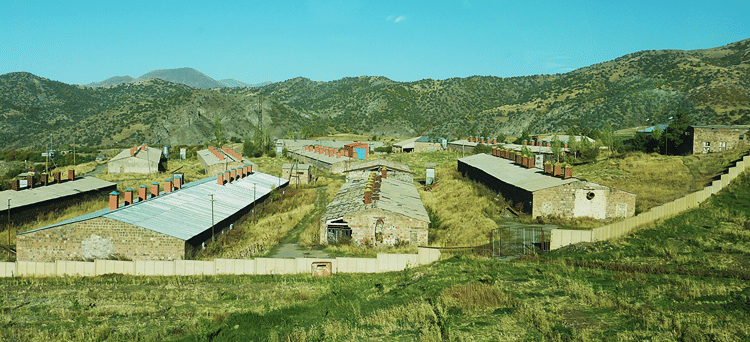 Soviet Collective Farm, Armenia Moreau.henri (CC BY-SA) ](https://www.worldhistory.org/image/22300/soviet-collective-farm-armenia/ "Soviet Collective Farm, Armenia")From 1929 to 1931, "20 million individual farms were amalgamated into 250,000 collectives" (Brown, 393). By 1932, 61.5% of rural households were part of a collective farm; by 1935, the figure had risen to 83%. The effect on foodstuff production was significant. The state target for grain fell short by around 50%. By 1933, "the numbers of cattle, pigs, and sheep were less than half what they had been in 1928" (Freeze, 350). One of the worst-hit areas was Ukraine, known as the breadbasket of the USSR for its high agricultural yields. The crisis was compounded by farmers running out of seed grain after years of overusing their stock in order to meet overly ambitious targets.
### The Broken Breadbasket: Ukraine
Stalin was convinced that Ukraine was a hotbed of national resistance to Communist Party rule. The Soviet leader was deeply suspicious of this country within the USSR and believed that wealthier [peasants](https://www.worldhistory.org/disambiguation/Peasants/) here were particularly against collectivisation. Fully aware of Ukraine's contribution to the state's food stores, Stalin insisted on ambitious targets here. Ukraine had provided 27% of the USSR's grain in 1930. In 1931, the target was increased to 38%. Unfortunately, that year saw a poor harvest, but Stalin would not relent, and Ukrainian farmers were still expected to meet their quota. To do so, Ukraine had to give up 42% of its total grain production. Grain and other foodstuffs were seized from farms across the region. The requisitioning was carried out despite the protests of local party officials and farmers trying to hide their grain in such unlikely places as cemeteries.
Ukraine's harvest was essentially used to fill up the shortfall in agricultural targets in other areas of the USSR and to sell abroad – millions of tons of grain continued to be sold by the Communist government to foreign states throughout the famine of 1932-3.
[ 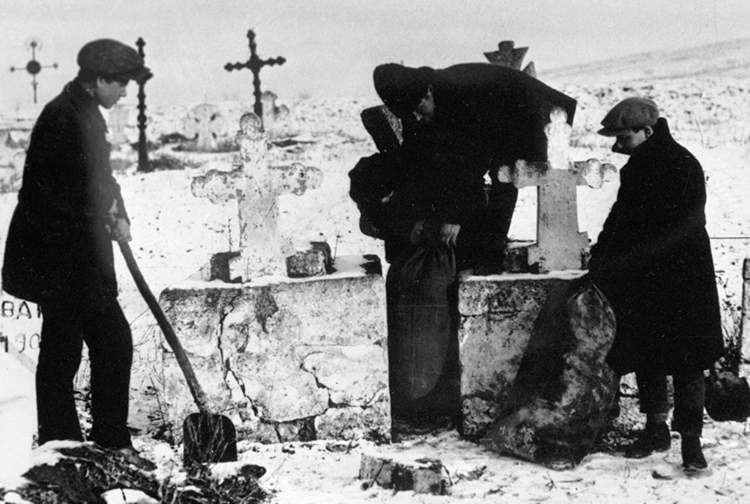 Requisitioning Hidden Grain, Ukraine Max Alpert (CC BY-SA) ](https://www.worldhistory.org/image/22311/requisitioning-hidden-grain-ukraine/ "Requisitioning Hidden Grain, Ukraine")The consequence of requisitioning was that not enough food remained in Ukraine to feed the population. A drought in the spring of 1932 made matters worse. This time, Stalin relented on the expected quota for Ukrainian grain that year, but not by much, permitting a shortfall of around a million tons as the target was reduced from 7.7 million to 6.6 million tons. Even this reduced target could not be met. Stalin responded by imposing new punishments. For example, stealing grain of any quantity could lead to a prison sentence of 10 years. 55,000 people were found guilty of such a crime; 2,110 of them were executed.
Through the winter of 1932-3, Ukrainians found themselves in the middle of a famine. Still, state officials hunted out the last reserves of grain. Alisa Maslo lived in the village of Targan, and she gives the following harrowing account:
> They went from house to house and they took away everything to the last grain…and this included ours. And they really left the family to certain famine [death](https://www.worldhistory.org/disambiguation/Death/). And so my grandma dies and then one of my brothers…my mother was lying in bed swollen with hunger…my other brother died. And I told my mother that 'we're the only two left', that my brother was also dead. Up came the cart and the man took my brother and dragged him to the cart., and then my own live mother. I started crying and the man said, 'Go to the orphanage where at least you'll get some soup. She will die anyway, why should I come here a second time?' And so I became an orphan.
> (McGill, 46)
[ 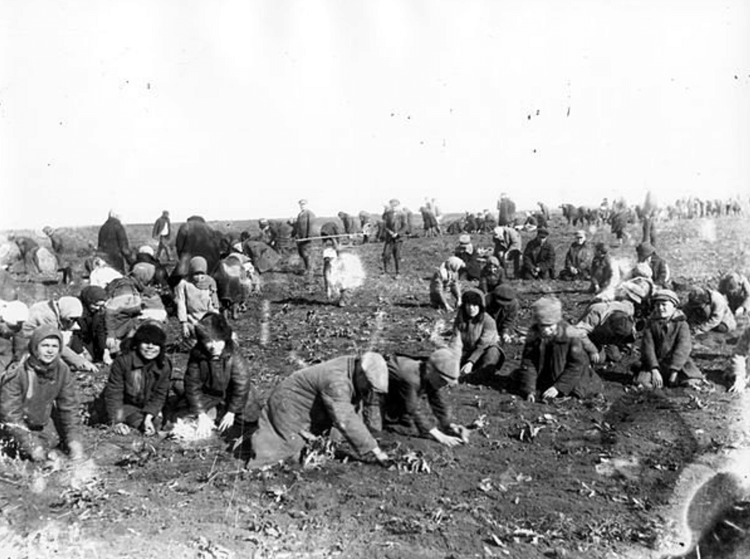 Collective Farmers Digging up Frozen Potatoes, 1933 Mark Nikitovich Zheleznyak (Public Domain) ](https://www.worldhistory.org/image/22322/collective-farmers-digging-up-frozen-potatoes-1933/ "Collective Farmers Digging up Frozen Potatoes, 1933")People resorted to eating rotten food, animals like horses and dogs, birds, grass, and even the bark of trees. The situation was so bad that many Ukrainians resorted to cannibalism in order to survive; there were cases of families killing and eating their weakest children. The historian T. Snyder notes in his book *Bloodlands* the following official Soviet report on cannibalism:
> In the face of starvation, some families divided, parents turning against children, and children against one another. As the state police, the OGPU, found itself obliged to record, in Soviet Ukraine, "Families kill their weakest members, usually children, and use the meat for eating." Countless parents killed and ate their children and then died of starvation later anyway. One mother cooked her son for herself and her daughter. One 6-year-old girl, saved by other relatives, last saw her father when he was sharpening a knife to slaughter her. Other combinations were, of course, possible. One family killed their daughter-in-[law](https://www.worldhistory.org/disambiguation/law/), and fed her head to the pigs, and roasted the rest of the body…at least 2,505 people were sentenced for cannibalism in the years 1932 and 1933 in Ukraine, although the actual number of cases was most certainly greater.
> (Quoted in Berlatsky, 103)
The situation in Ukraine and elsewhere was worsened by the poor state of the [railways](https://www.worldhistory.org/disambiguation/Railways/). All too often, the problem of famine in one region could not be alleviated by the movement of a surplus in another region because the transport system was so antiquated and slow that food rotted before it could reach its destination. Some historians have suggested that food was deliberately withheld from certain regions, notably Ukraine, in order to subdue its population to Communist rule, while other scholars suggest that clear evidence of what would, in effect, be a policy of genocide is lacking, and requisitioning, sheer incompetence, and a lack of investment were the primary causes of the famines (Suny, 40). Certainly, the sale of 1.8 and 1.7 million tons of grain abroad in 1932 and 1933, respectively, would surely have saved many lives if kept in the USSR. Requisitioning had perhaps been the most important cause of the famine, but it is worth bearing in mind that this was done not only to gain foreign currency to fund industrialisation but also to feed the ballooning urban populations who otherwise would also have starved.
[  Starving People, Kharkiv, 1933 Alexander Wienerberger (Public Domain) ](https://www.worldhistory.org/image/22321/starving-people-kharkiv-1933/ "Starving People, Kharkiv, 1933")### Death & Denial
The Soviet authorities did not officially recognise the existence of the famine. This position meant no internal measures could be made to alleviate the crisis and no foreign aid could be received. Stalin himself refused to believe the reports of his own inspectors. Those officials who tried to alert their superiors to the reality of the situation were often removed from their positions; some were even sent off to labour camps. Few international journalists were allowed in the USSR, but one who gained entry was Malcolm Muggeridge, who visited Ukraine and reported:
> The fields are neglected and full of weeds, no cattle are to be seen anywhere and few horses, only the military and OGPU are well fed, the rest of the population obviously starving, obviously terrorised.
> (McGill, 47).
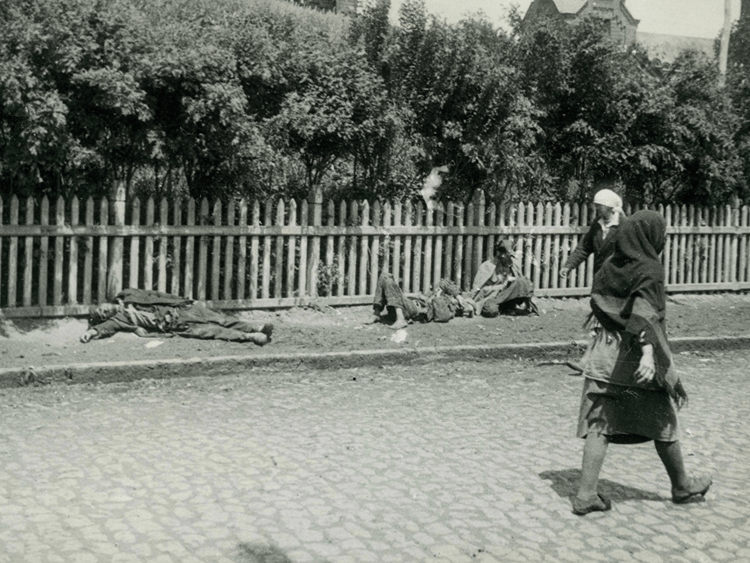
Around 5 million Ukrainians died in the famine and around 4 million elsewhere in the USSR, particularly in the North Caucasus, the southern Urals, Kazakhstan, and the lower and middle Volga regions. Productivity was so poor that rationing was required for foodstuffs across the USSR, and this did not end until 1935. Scarcity of even the most basic goods like bread led to prices rising far faster than wages did.
### Aftermath
For those who survived the Great Famine, the vast majority of farmers were permanently reduced to living harsh lives of subsistence because of collectivisation. Stalin did achieve at least a partial victory in establishing much more state control in rural communities where official surveillance and restrictions of movement became a norm of everyday life. Collectivisation also permitted rural labour to be released – around 10 million people between 1928 and 1933 – for Stalin's push for a fully industrialised state. Nevertheless, the widespread peasant resistance had necessitated the granting of "certain concessions, such as the legalization of private plots and the exclusion of domestic animals from the collective" (Freeze, 351).
[ 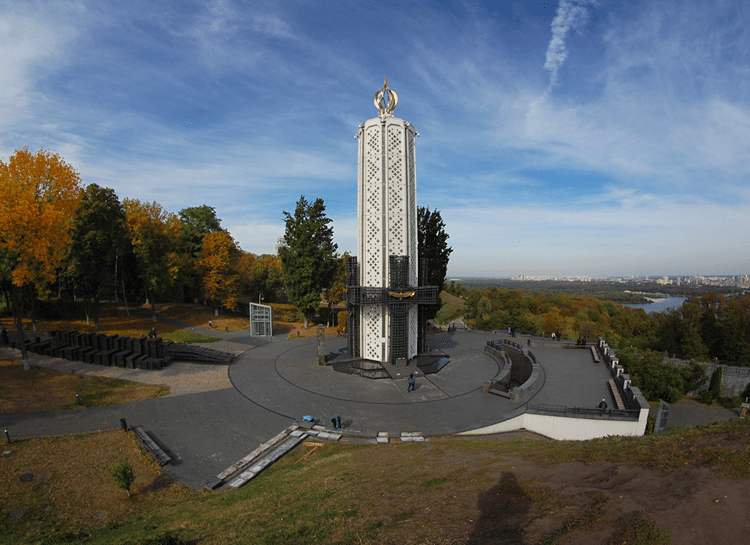 Holodomor Memorial, Kyiv SergKh78 (CC BY-SA) ](https://www.worldhistory.org/image/22324/holodomor-memorial-kyiv/ "Holodomor Memorial, Kyiv")The worst upheavals of the collectivisation process settled down in the mid-1930s. There was a good harvest in the autumn of 1933. Rationing was ended two years later. Some progress was made in establishing a more efficient railway system that could distribute food better. 1935 was the first year that grain output was greater than it had been before collectivisation began, but the harsh winter of 1937-8 and consequent poor harvest brought back rationing of foodstuffs and disrupted the railways.
Stalin's Great Purge (aka the Great Terror, 1936-8), where thousands of people suspected of disloyalty both inside and outside the Communist Party were arrested and executed, further hampered the economic recovery. The Soviet leader continued to blame saboteurs, real or imagined, in volatile regions like Ukraine for the failures of collectivisation, and he responded to the food crisis with yet more repression, the closing of borders within the USSR, and generally laying the blame everywhere except at the door of the government. Not until the collapse of the USSR in 1991 was a more honest assessment of this turbulent period made.
In the 21st century, the government of Ukraine has persistently called for the famine of 1932-3, what Ukrainians call the *Holodomor*, to be recognised as genocide. A memorial to victims of the famine in Ukraine stands today in the capital, Kyiv.
#### Editorial Review
This human-authored article has been reviewed by our editorial team before publication to ensure accuracy, reliability and adherence to academic standards in accordance with our [editorial policy](https://www.worldhistory.org/static/editorial-policy/).
## Bibliography
- [Berlatsky, Noah. *Stalin's Great Purge.* Greenhaven Press, 2012.](https://www.worldhistory.org/books/B00MMP7ZHM/)
- [Brown, Archie et al. *The Cambridge Encyclopedia of Russia and the Former Soviet Union.* Cambridge University Press, 1994.](https://www.worldhistory.org/books/0521355931/)
- [Conquest, Robert. *The Great Terror.* Oxford University Press, U.S.A., 2007.](https://www.worldhistory.org/books/0195317009/)
- [Freeze, Gregory L. *Russia.* Oxford University Press, 2009.](https://www.worldhistory.org/books/0199560412/)
- [McGill, D. *Stalin - The Five-Year Plans and Collectivisation Advanced Topic Master.* Philip Allan, 2022.](https://www.worldhistory.org/books/B01K9ASTDU/)
- [Suny, Ronald Grigor. *The Cambridge History of Russia.* Cambridge University Press, 2015.](https://www.worldhistory.org/books/1107660998/)
- [Tucker, Robert C. *Stalin in Power.* W W Norton & Co Inc, 1990.](https://www.worldhistory.org/books/039302881X/)
- [Ward, Chris. *Stalin's Russia.* Bloomsbury Academic, 1999.](https://www.worldhistory.org/books/0340731516/)
## About the Author
Mark is WHE’s Publishing Director and has an MA in Political Philosophy (University of York). He is a full-time researcher, writer, historian and editor. Special interests include art, architecture and discovering the ideas that all civilizations share.
## Cite This Work
### APA
Cartwright, M. (2026, November 05). The USSR's Great Famine of 1932-3. *World History Encyclopedia*.
### Chicago
Cartwright, Mark. "The USSR's Great Famine of 1932-3." *World History Encyclopedia*, November 05, 2026. .
### MLA
Cartwright, Mark. "The USSR's Great Famine of 1932-3." *World History Encyclopedia*, 05 Nov 2026, .
## License & Copyright
Submitted by [Mark Cartwright](https://www.worldhistory.org/user/markzcartwright/ "User Page: Mark Cartwright"), published on 05 November 2026. The copyright holder has published this content under the following license: [Creative Commons Attribution-NonCommercial-ShareAlike](https://creativecommons.org/licenses/by-nc-sa/4.0/deed.en). This license lets others remix, tweak, and build upon this content non-commercially, as long as they credit the author and license their new creations under the identical terms. When republishing on the web a hyperlink back to the original content source URL must be included. Please note that content linked from this page may have different licensing terms.