---
title: Why Japan's Kamikaze Attacks Failed in WWII
author: Mark Cartwright
source: https://www.worldhistory.org/article/2988/why-japans-kamikaze-attacks-failed-in-wwii/
format: machine-readable-alternate
license: Creative Commons Attribution-NonCommercial-ShareAlike (https://creativecommons.org/licenses/by-nc-sa/4.0/)
updated: 2026-09-10
---
# Why Japan's Kamikaze Attacks Failed in WWII
_Authored by [Mark Cartwright](https://www.worldhistory.org/user/markzcartwright/)_
*Kamikaze* attacks were made by Japanese servicemen throughout the final, desperate year of the Second World [War](https://www.worldhistory.org/disambiguation/War/) (1939-45). Planes, piloted rockets, and boats were packed with explosives with the intention of causing maximum damage to the enemy, but with no realistic chances of survival for the pilots. These extraordinary tactics were deemed necessary as the only way to prevent an Allied invasion of [Japan](https://www.worldhistory.org/disambiguation/Japan/). Far less successful than hoped due to a plethora of Allied defensive response measures, the 4,000 *kamikaze* pilots who gave their lives were, nevertheless, honoured, revered, and remembered in their home country as young men willing to make the ultimate sacrifice to defend their homeland.
[  Japan's Kamikaze Warfare (1944–1945) Simeon Netchev (CC BY-NC-ND) ](https://www.worldhistory.org/image/21937/japans-kamikaze-warfare-1944-1945/ "Japan's Kamikaze Warfare (1944–1945)")### The Kamikaze Name
The name *kamikaze* means 'divine winds,' and its origins lie in the failure of the [Mongol invasions of Japan, 1274 and 1281](https://www.worldhistory.org/article/1415/the-mongol-invasions-of-japan-1274-and-1281/). [Kublai Khan](https://www.worldhistory.org/Kublai_Khan/)'s huge invasion fleets, besides being rebuffed by courageous [samurai](https://www.worldhistory.org/Samurai/), were seriously damaged by typhoon storms. The Japanese credited these storms as being of divine origin, especially because, as a last resort, prayers for assistance had been made to the [Shinto](https://www.worldhistory.org/Shinto/) [god](https://www.worldhistory.org/God/) of war, [Hachiman](https://www.worldhistory.org/Hachiman/). The name *kamikaze* was revived during WWII's Pacific War since Japan faced a similar invasion threat, this time from the US and Allied armed forces. Desperate measures were once again required if Japan was to be saved from foreign occupation.
*Kamikaze* became the new popular name for missions where Japanese servicemen conducted attack missions from which they hoped to inflict maximum damage upon the enemy but which would almost certainly end in their own [death](https://www.worldhistory.org/disambiguation/Death/). The Japanese services officially called these attack groups *Tokko* or *Tokkotai*, which was an abbreviation of *Tokubetiu Kogeki*, meaning 'Special Attack Units.'
Westerners quickly equated the *kamikaze* attacks with suicide missions. However, for the Japanese themselves, the link between *kamikaze* and suicide was not so emphatic. Lieutenant General Kawabe explains the difference:
> We believed our spiritual conviction in victory would balance any scientific advantage \[of the Allies\]…You call our *Kamikaze* attacks "suicide attacks". This is a misnomer, and we felt very badly about your calling them "suicide attacks". They were in no sense suicide. The pilot did not start out on his mission with the intention of committing suicide. He looked upon himself as a human bomb which could destroy a certain part of the enemy fleet for his country. They considered it a glorious thing, while a "suicide" may not be so glorious.
> (Largas, 38)
[ 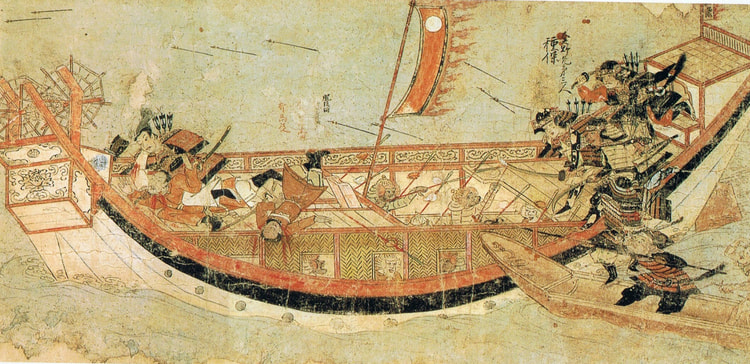 Japanese Samurai Attack Mongol Ships Unknown Artist (Public Domain) ](https://www.worldhistory.org/image/10980/japanese-samurai-attack-mongol-ships/ "Japanese Samurai Attack Mongol Ships")### The Pilots
*Kamikaze* pilots were at first volunteers. Their choice was regarded as highly honourable, and they were feted as national heroes. Pilots were motivated by the idea that they were serving the Japanese emperor, widely regarded as a semidivine figure. The unofficial anthem of the Imperial Japanese Navy, *Umi Yukaba*, even had the following lines:
> Across the sea, corpses in the water,
> Across the mountain, corpses in the field.
> I shall die for the Emperor.
> I shall never look back.
> (Leckie, 93)
To die for Japan's emperor and national security was considered a great honour and was closely tied with the idea of *bushido*. This was the name of the code of honour followed by samurai warriors, those martial experts who dominated Japanese [warfare](https://www.worldhistory.org/warfare/) from the 10th century. *Bushido* is, in fact, a romanticised idea that was only developed in the 17th century, when samurai had already become largely ceremonial in function. In samurai [literature](https://www.worldhistory.org/literature/) of that period, it is frequently stated that *bushido* is 'a way of dying.' Whether true samurai were really as chivalrous as *bushido* suggests is irrelevant here, since the ideas the code promoted, such as austerity, loyalty, and self-discipline, were ideal for adoption by the *kamikaze* pilots of the mid-20th century.
Historian R. Leckie here summarises the pre-flight ceremonies of *kamikaze* pilots:
> …\[they\] were hailed as saviours: wined, dined, photographed, lionized. Many of them attended their own funerals before taking off on their last mission. Farewell feasts were held in their honor…Solemn samurai ceremonies were conducted, and many toasts of sake drunk…the concept of the suicide-savior had so captivated the nation from schoolgirls to Emperor Hirohito himself that the slightest word of criticism would have been regarded as treason.
> (18)
*Kamikaze* pilots famously wore a *hachimaki* headband of folded white cloth with the rising sun of Japan's national flag in the centre. The *hachimaki* symbolised perseverance and courage.
[ 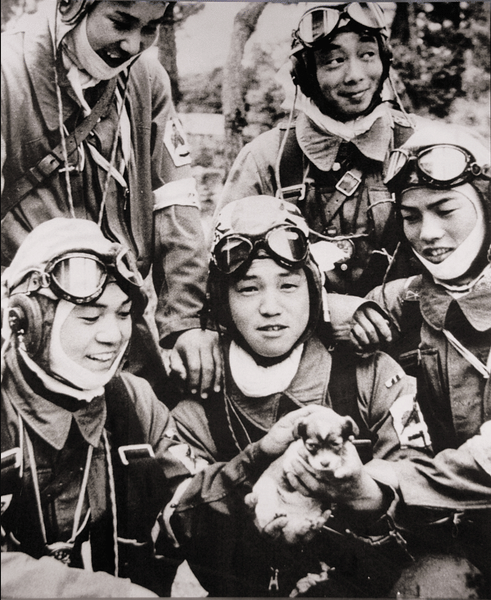 Japanese Kamikaze Pilots Unknown Photographer (Public Domain) ](https://www.worldhistory.org/image/22116/japanese-kamikaze-pilots/ "Japanese Kamikaze Pilots")Despite the propaganda that exaggerated the effectiveness of *kamikaze* strikes, it did become difficult to find volunteers towards the end of the war, as recounted here by Captain Nakajima:
> At the beginning we were able to select from the large number of people who volunteered. But as the war situation deteriorated and when the attack planes had to take off from Japan proper, when Japan itself was under attack, we needed a large number of Special Attack pilots. And then it could not be that all of them were volunteers but may have included those who did not actually desire to volunteer and those who were sort of dragged in by their comrades and persuaded to volunteer.
> (Holmes, 493)
Officially, all *kamikaze* pilots were volunteers, but in practice, as noted in the above quote, coercion existed to various degrees. Nevertheless, many pilots did go willingly on their one-way mission, their imaginations captured by the romance of it all, as expressed here by one *kamikaze* pilot:
> When I fly the skies
> What a fine [burial](https://www.worldhistory.org/burial/) place
> Would be the top of a cloud.
> (Leckie, 187)
[ 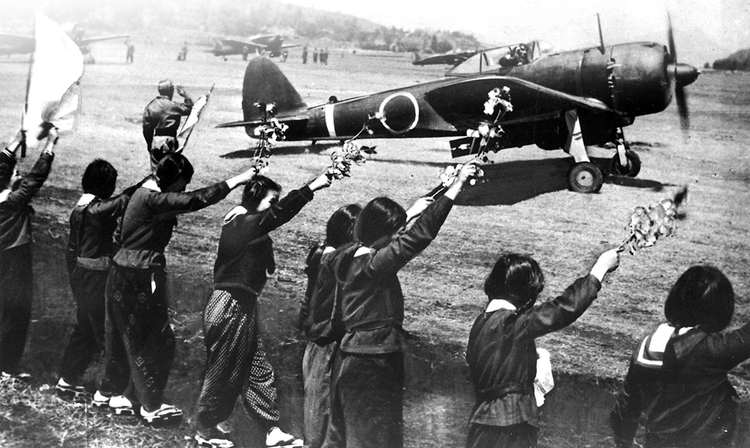 Waving off a Kamikaze Pilot Hayakawa (Public Domain) ](https://www.worldhistory.org/image/22115/waving-off-a-kamikaze-pilot/ "Waving off a Kamikaze Pilot")Others volunteered to make the ultimate sacrifice but were not overjoyed at the necessity, as one pilot wrote:
> I say frankly, I do not die willingly. I die not without regret. My country's future leaves me uneasy…I am terribly distressed.
> (*ibid*)
There were, too, an increasing number of cases of pilots who returned to their base with an excuse of some sort for not carrying out their mission, for example, poor weather obscuring the target, losing their way en route, or experiencing a mechanical failure.
### The Form of Kamikaze Attacks
The first *kamikaze* group was created by Vice Admiral Onishi Takijiro (1891-1945) of the 1st Air Fleet. He formed a unit of 24 volunteer airmen. The first ship to be struck by a *kamikaze* pilot was the heavy cruiser HMS *Australia* on 21 October 1944, although those on board did not realise the crash had been deliberate. *Australia* was part of the US fleet in the Philippines. *Kamikaze* missions were first identified for what they were four days later in the [Battle](https://www.worldhistory.org/disambiguation/battle/) of the Philippines, when Japanese pilots attacked the escort carriers USS *Santee* and USS *Suwannee*.
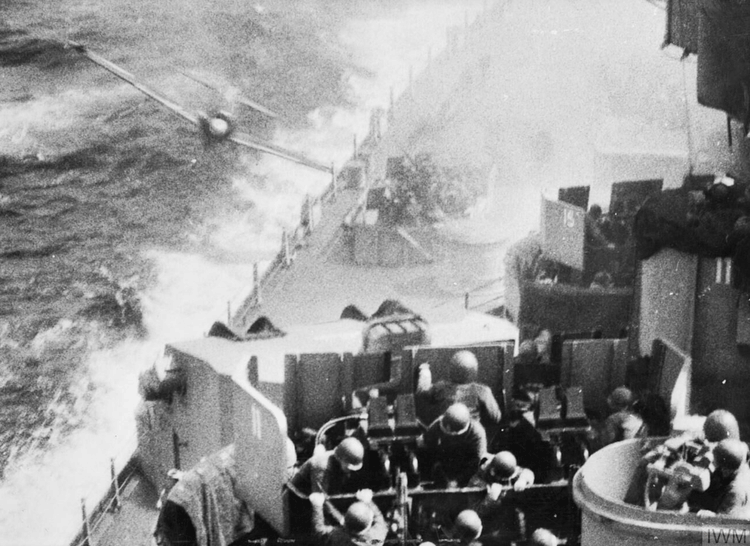
In these missions, volunteer pilots deliberately flew their aircraft, which were typically modified to carry a heavier-than-usual bomb load such as a single 551-lb (250-kg) bomb, directly into targets like warships. Mitsubishi A6M Zeros were most commonly used; indeed, around 650 Zeros were used in *kamikaze* missions throughout the war, although any type of aircraft could be so deployed, especially obsolete ones incapable of defending themselves anyway against the newer Allied fighters. More rarely, Nakajima B5N torpedo bombers were fitted with massive 1,760 lb (800 kg) bombs, while the twin-engined Mitsubishi G4M bomber was used to carry a single *Baka* bomb (see below). Better fighters were often deployed to escort the slower *kamikaze* aircraft to their final destination.
[ 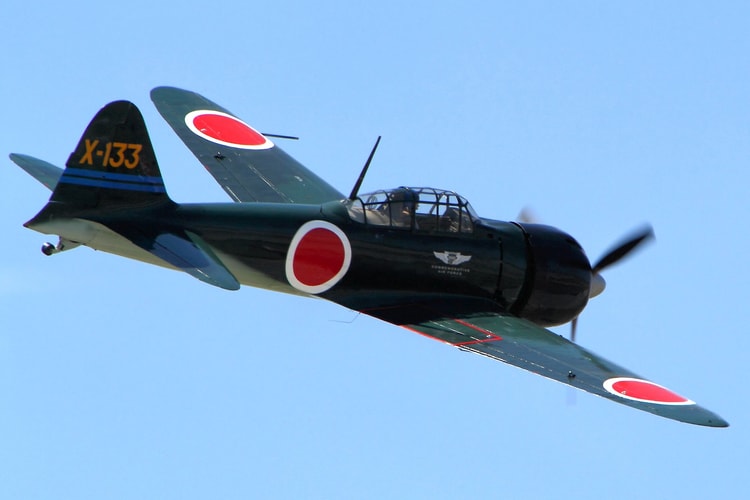 Mitsubishi A6M Zero in Flight Airwolfhound (CC BY-SA) ](https://www.worldhistory.org/image/22005/mitsubishi-a6m-zero-in-flight/ "Mitsubishi A6M Zero in Flight")The reason why fighters were used for *kamikaze* missions much more than other types of aircraft is here explained by Captain Tadashi Nakajima:
> The reason was that Japan had fewer and fewer bombing planes, attack planes, and we had to rely on fighter planes. However, of course, fighter pilots were not trained in bombing attacks and therefore it was felt that the only way to solve this was to have these fighter pilots ram themselves, plane and body together, into the enemy ships.
> (Holmes, 485).
Any target belonging to the enemy was considered legitimate. The most highly prized target was aircraft carriers, but the air defences of these and other large warships meant they were rarely sunk or even badly damaged. A much more common target was ships that could not defend themselves, such as fuel tankers. Even hospital ships, contrary to the Geneva Convention, were targeted. The hospital ship *Comfort* was struck in April 1945 by a *kamikaze* plane, an attack that killed 30 and wounded another 33 on board, many of them patients.
### Rockets, Boats, & Submarines
*Kamikaze* attacks did not just employ fighter planes. There was the *Baka* bomb, a small aircraft propelled by a rocket system (but still piloted to its target by a human), which contained a nose packed with 2,600 lbs (1,200 kg) or more of explosives. The name *Baka*, which was the US servicemen's nickname using a Japanese word for this device, translates as 'idiot'. The Japanese themselves gave these suicide machines the more poetic name of *ohka* ('cherry blossom') or *jinrai* ('thunderbolt').
[ 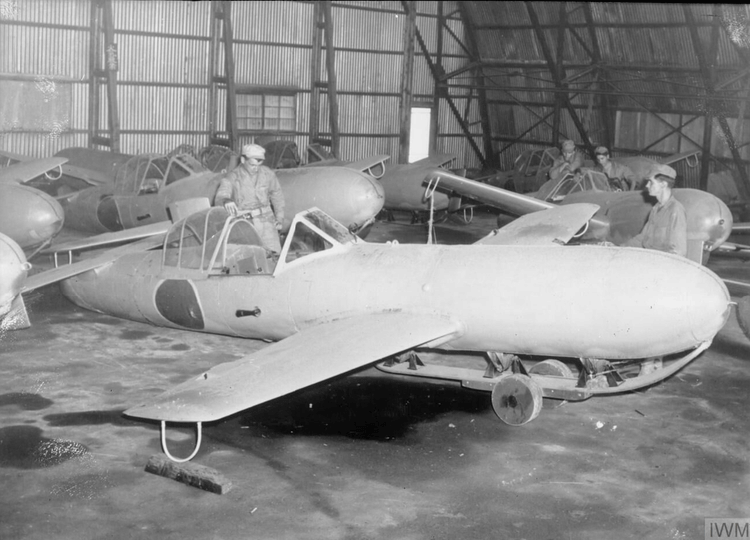 Japanese Baka Bomb Imperial War Museums (CC BY-NC-SA) ](https://www.worldhistory.org/image/22117/japanese-baka-bomb/ "Japanese Baka Bomb")The *Baka* bomb was taken to its target, attached to a mother plane, and released to make the last 12 miles (19 km) or so on its own. The *Baka* bomb could reach an impressive top speed of 580 mph (933 km) in a dive, which made it difficult to shoot down, but this was also a weakness, since it meant the pilot had great difficulty controlling its direction. *Baka* bombs, first used in action in March 1945, were not particularly successful, as, for example, at the [Battle of Okinawa](https://www.worldhistory.org/article/2984/battle-of-okinawa/), only one Allied ship was sunk by such a weapon.
Other *kamikaze* methods included hitting enemy ships using small boats packed with explosives, midget submarines, and human torpedoes. The explosive motor boat, called by the Japanese Navy *Shinyo*, meaning 'sea-quake', varied in length from around 16 to 21 feet (5 to 6 m). A variation was the similar-sized *Maru-ni*, which dropped depth charges to damage enemy submarines.
Midget submarines were used by many navies during WWII, but the Japanese navy employed *kamikaze* versions. The *Kairyu* ('Sea Dragon') measured 56 feet (17 m) in length and was operated by two men. The larger *Koryu* ('Scaly Dragon') measured 86 feet (26.2 m) and had a crew of between two and five men. These submarines delivered torpedoes at close range or had their bows packed with explosives for direct contact with an enemy ship.
Finally, human torpedoes, which again were employed by other navies, were adapted for *kamikaze* missions. Called a *Kaiten* ("conger"), the torpedo was enlarged to permit a man to sit upright and see through a small coning tower from where he could direct the aim of the weapon. Human torpedoes were deployed for the first time in November 1944 and in the [Battle of Iwo Jima](https://www.worldhistory.org/article/2982/battle-of-iwo-jima/), and again at Okinawa. Although they did claim some enemy shipping, none of the above methods were particularly successful.
[  Kamikaze Zero & USS Missouri Imperial War Museums (CC BY-NC-SA) ](https://www.worldhistory.org/image/22002/kamikaze-zero--uss-missouri/ "Kamikaze Zero & USS Missouri")### Successful Defence Against Kamikaze Attacks
The *kamikaze* attacks were extremely difficult to counter, not least because it was not always clear in the heat of action that an aircraft or boat was going to be used this way. Lieutenant Frank Manson describes the problem:
> …you can't tell what the pilot's going to do at the last minute, whether he's going to veer off, what his judgement is going to be like, whether he's going to try to hit the water-line, whether he's going to try to hit the bridge, or whether he's going to hit your ship or one close by. But it's a human bomb, that's what it is, and it's got a man's brain in it.
> (Holmes, 493)
*Kamikaze* attacks were often performed in groups. Several planes would attack a single target, each one coming from a different direction and at a different angle of descent. Lieutenant Manson was on board the destroyer USS *Laffey* when it was attacked by *kamikaze* pilots (but not sunk):
> This attack went on for seventy to ninety minutes…There were twenty-six planes that made suicide attacks against our ship and seven of the planes were shot down by our gunners and fifteen managed to miss the ship and we were actually hit, direct hit, by four.
> (Holmes, 494)
Over the course of the Battle of Okinawa, around 1,900 *kamikaze* attacks were made on the Allied ships. These waves of attacks were called by the Japanese military *kikusui* or 'floating chrysanthemums', after one of the most treasured flowers in Japanese [culture](https://www.worldhistory.org/disambiguation/culture/). Nevertheless, the Allies won this key battle of the Pacific War.
[ 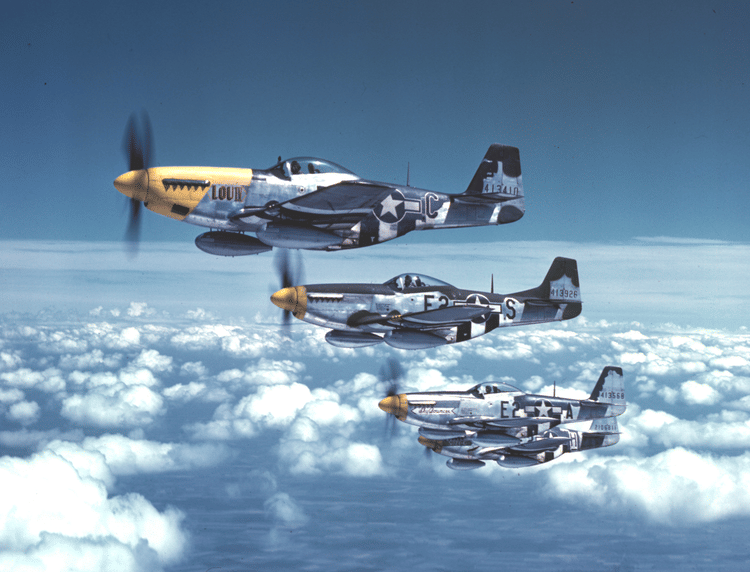 P-51 Mustangs, 1944 USAAF - IWM (Public Domain) ](https://www.worldhistory.org/image/21949/p-51-mustangs-1944/ "P-51 Mustangs, 1944")The battle to stop *kamikaze* pilots reaching their targets became more efficient over time as Allied fighter defence of shipping was better organised and more intense. Picket warships were deployed to use their radar as an early warning system for the main fleet to the rear. Anti-aircraft fire from the naval ships began to use automated gunsights that could follow fast-moving targets. Special explosive rounds with proximity fuses were developed, which literally blew the incoming aircraft out of the sky.
Allied bombers specifically targeted Japanese airfields, destroying the *kamikaze* planes before they could take off and ensuring the airstrips would not be operational again any time soon. This was a crucial development, since Japanese aircraft carriers were never used to launch *kamikaze* planes, although they did sometimes transport these aircraft from one land base to another. On top of all those advantages, the vital statistic was that Japan had hundreds of *kamikaze* aircraft, but they faced *thousands* of Allied fighters protecting their home ships below.
### Assessment
Over 4,000 Japanese pilots died in *kamikaze* missions during the war. Ultimately, the *kamikaze* campaign was not effective. The Allies continued to push Japanese forces right back to the home islands. Overall, 47 Allied ships were sunk and 300 damaged by *kamikaze* pilots, but this number was relatively small in the grand scheme of the Pacific War. Eleven US aircraft carriers were struck by *kamikaze* planes during the Pacific War, but, thanks to excellent naval repair teams, most were back in action in just a few months.
Importantly, even if a *kamikaze* plane got through the defences and hit a warship, the typical bomb size of 551 lb and the fact it hit the target only at the speed the plane was flying (rather than the much higher velocity it would have achieved if dropped from altitude) meant that it was rare that a *kamikaze* pilot managed to penetrate to the lower decks and sink a larger ship. Most damage was limited to superstructures and upper decks, which could be repaired relatively quickly.
[ 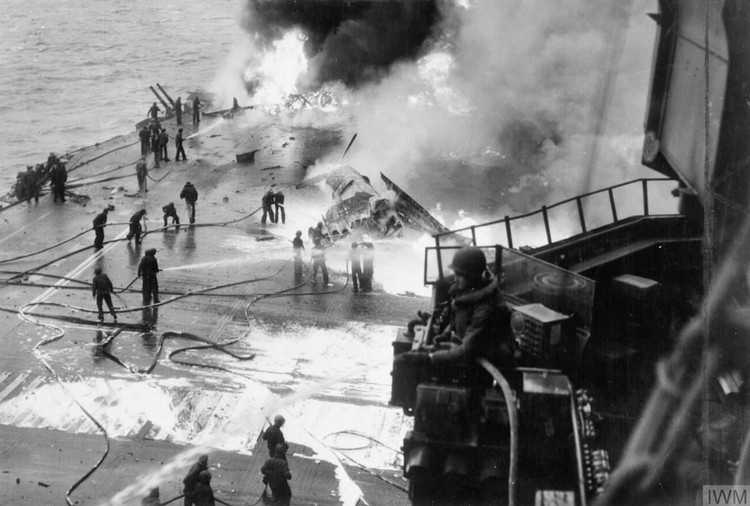 Kamikaze Damage, USS Saratoga Mark Cartwright (CC BY-NC-SA) ](https://www.worldhistory.org/image/22118/kamikaze-damage-uss-saratoga/ "Kamikaze Damage, USS Saratoga")The *kamikaze* tactic was most successful early on, before the Allies realised pilots were deliberately crashing their aircraft even though they were undamaged. At the Battle of the Philippines, when *kamikaze* attacks were first used in significant numbers, 27% of the attacks caused damage to Allied ships. At the Battle of Okinawa, the last major battle of the war, the success rate had fallen to just 15%. Even those that managed to penetrate the defences typically damaged only minor shipping, such as fuel tankers, cargo vessels, and less well-defended support vessels, all of which could be much more easily replaced than aircraft carriers and battleships.
The most telling fact of all when assessing the effectiveness of the *kamikaze* missions is that Allied fleets were in no way impeded in their relentless encirclement of Japan. The flower of the Japanese military's youth had been expended for nothing. Allied victory in WWII came in August 1945, not from sea-level operations, but with the dropping of two atomic bombs on Hiroshima and Nagasaki from an altitude that *kamikaze* pilots would have struggled to ever reach.
#### Editorial Review
This human-authored article has been reviewed by our editorial team before publication to ensure accuracy, reliability and adherence to academic standards in accordance with our [editorial policy](https://www.worldhistory.org/static/editorial-policy/).
## Bibliography
- [Boatner, Mark. *The Biographical Dictionary of World War II.* Presidio Press, 1996.](https://www.worldhistory.org/books/0891415483/)
- [Dear, I. C. B. & Foot, M. R. D. *The Oxford Companion to World War II.* Oxford University Press, 1995.](https://www.worldhistory.org/books/0198662254/)
- [Holmes, Richard. *The World at War.* Ebury Press, 2026.](https://www.worldhistory.org/books/0091917514/)
- [Lardas, Mark & Tooby, Adam. *The Kamikaze Campaign 1944–45.* Osprey Publishing, 2022.](https://www.worldhistory.org/books/1472848446/)
- [Marston, Daniel & Marston, Daniel. *The Pacific War.* Osprey Publishing, 2010.](https://www.worldhistory.org/books/B01DPPTNAE/)
- [Smurthwaite, David. *The Pacific War Atlas 1941-1945.* Facts on File, 2000.](https://www.worldhistory.org/books/0816032858/)
## About the Author
Mark is WHE’s Publishing Director and has an MA in Political Philosophy (University of York). He is a full-time researcher, writer, historian and editor. Special interests include art, architecture and discovering the ideas that all civilizations share.
## External Links
- [The Divine Wind: Japan's Kamikaze Pilots of World War II ...](https://www.nationalww2museum.org/war/articles/japans-kamikaze-pilots-wwii)
- [Battle of Okinawa | The National WWII Museum | New Orleans](https://www.nationalww2museum.org/war/topics/battle-of-okinawa)
- [Operation Ten-Go: April 6 – June 22, 1945](https://www.history.navy.mil/content/history/museums/nmusn/explore/photography/wwii/wwii-pacific/okinawa/operation-ten-go.html)
- [How effective was the Japanese kamikaze campaign?](https://www.iwm.org.uk/history/second-world-war/war-against-japan/how-effective-was-the-japanese-kamikaze-campaign)
## Cite This Work
### APA
Cartwright, M. (2026, September 10). Why Japan's Kamikaze Attacks Failed in WWII. *World History Encyclopedia*.
### Chicago
Cartwright, Mark. "Why Japan's Kamikaze Attacks Failed in WWII." *World History Encyclopedia*, September 10, 2026. .
### MLA
Cartwright, Mark. "Why Japan's Kamikaze Attacks Failed in WWII." *World History Encyclopedia*, 10 Sep 2026, .
## License & Copyright
Submitted by [Mark Cartwright](https://www.worldhistory.org/user/markzcartwright/ "User Page: Mark Cartwright"), published on 10 September 2026. The copyright holder has published this content under the following license: [Creative Commons Attribution-NonCommercial-ShareAlike](https://creativecommons.org/licenses/by-nc-sa/4.0/deed.en). This license lets others remix, tweak, and build upon this content non-commercially, as long as they credit the author and license their new creations under the identical terms. When republishing on the web a hyperlink back to the original content source URL must be included. Please note that content linked from this page may have different licensing terms.