---
title: The History of the Inquisition: The Catholic Church's Battle Against Deviance
author: Rebecca Denova
source: https://www.worldhistory.org/article/2960/the-history-of-the-inquisition/
format: machine-readable-alternate
license: Creative Commons Attribution-NonCommercial-ShareAlike (https://creativecommons.org/licenses/by-nc-sa/4.0/)
updated: 2026-08-05
---
# The History of the Inquisition: The Catholic Church's Battle Against Deviance
_Authored by [Rebecca Denova](https://www.worldhistory.org/user/rdenova/)_
The Inquisition was the official institution of the medieval Catholic Church that established ecclesiastical judges to investigate and judge divergent opinions and practices that went against what became "systematic Catholic theology." An inquisition was a Catholic judicial procedure in which ecclesiastical judges could initiate, investigate and try cases in their jurisdiction. Popularly, the Inquisition became the name for various medieval and [Reformation](https://www.worldhistory.org/disambiguation/Reformation/)-era state-organized tribunals whose aim was to combat heresy, apostasy, blasphemy, [alchemy](https://www.worldhistory.org/Alchemy/), witchcraft, and customs considered to be deviant, using this judicial procedure.
[ 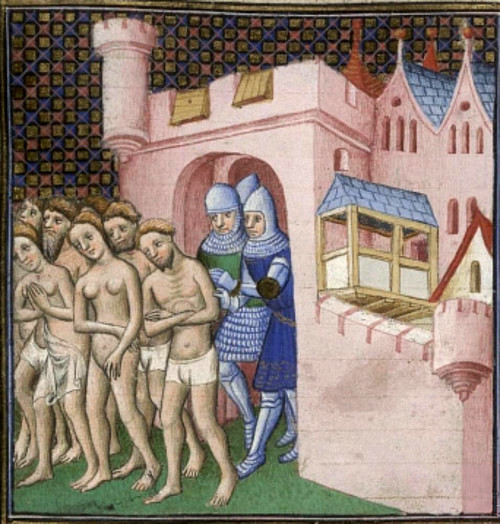 Expulsion of the Cathars from Carcassonne Unknown Artist (Public Domain) ](https://www.worldhistory.org/image/9344/expulsion-of-the-cathars-from-carcassonne/ "Expulsion of the Cathars from Carcassonne")### Origins
The origins of what became [Christianity](https://www.worldhistory.org/christianity/) began in the 1st century CE with stories of the ministry of [Jesus of Nazareth](https://www.worldhistory.org/Jesus_Christ/), an itinerant preacher in the manner of the prophets of [Israel](https://www.worldhistory.org/disambiguation/Israel/). His followers claimed that he was the anticipated "messiah," the "anointed one" of the [God](https://www.worldhistory.org/God/) of Israel who would usher in his "kingdom on earth." The first disciples, and [Paul the Apostle](https://www.worldhistory.org/Paul_the_Apostle/), took this message beyond [Jerusalem](https://www.worldhistory.org/jerusalem/) and established communities in the eastern provinces of the [Roman Empire](https://www.worldhistory.org/Roman_Empire/) and then [Italy](https://www.worldhistory.org/italy/). But the decades passed and the "kingdom did not arrive."
In the interim, believers, now named "Christians" (*chriano*i, "followers of christos, the "anointed one" in [Greek](https://www.worldhistory.org/disambiguation/greek/)), were given dictates from church leaders on how to lead a moral life, and how to follow the gender roles and social conventions of the commandments of the God of Israel. By the middle of the 1st century, a problem arose. Jews had unique identity-markers of circumcision and their own dietary laws. Should the Gentile believers be required to undergo circumcision, and other rules of [Judaism](https://www.worldhistory.org/disambiguation/judaism/) in order to be admitted to the new movement? These groups were designated as "Jewish-Christians" ([Torah](https://www.worldhistory.org/Torah/)-observant) and "Gentile-Christians."
A major meeting was called in Jerusalem. James, the brother of [Jesus](https://www.worldhistory.org/Jesus_Christ/), dictated a letter that was allegedly sent to all the communities:
> It is my judgment, therefore, that we should not make it difficult for the Gentiles who are turning to God. Instead we should write to them, telling them to abstain from food polluted by idols, from sexual immorality, from the meat of strangled animals and from blood. For the [law](https://www.worldhistory.org/disambiguation/law/) of [Moses](https://www.worldhistory.org/Moses/) has been preached in every [city](https://www.worldhistory.org/city/) from the earliest times and is read in the synagogues on every Sabbath.
"Food polluted by idols . . . " most likely referred to the left-over meat from sacrifices at the temples that was distributed or sold in the public meat markets. Avoiding "the meat of strangled animals and from blood . . . " Jewish rules against eating any animal that had died in the wild because meat had to be drained of blood. Jews had their own butchers in [cities](https://www.worldhistory.org/city/) because of these requirements. Abstaining from "sexual immorality . . . " meant not following the dominant [culture](https://www.worldhistory.org/disambiguation/culture/) with its high-rate of adultery and divorce in the [Roman](https://www.worldhistory.org/disambiguation/Roman/) [Empire](https://www.worldhistory.org/empire/). Not explicitly stated, Gentile believers did not have to undergo circumcision. The prophets of Israel had claimed that in the "kingdom," some Gentiles would be saved, but as believing Gentiles; they did not have to convert to Judaism.
[ 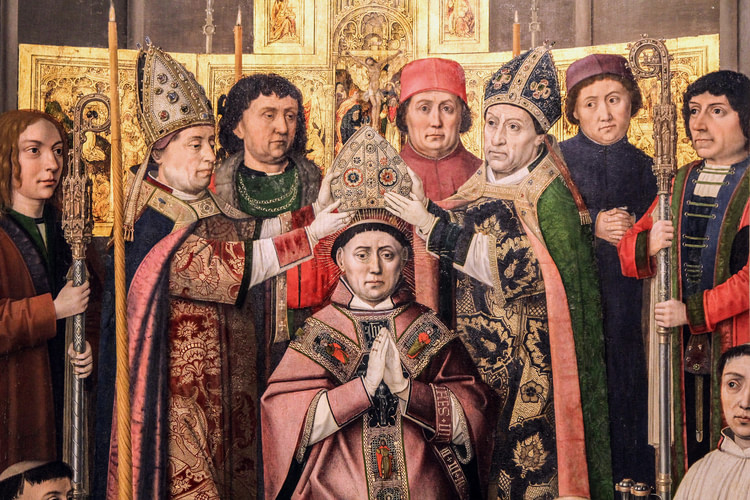 Saint Augustine Ordained a Bishop Fr Lawrence Lew, O.P. (CC BY-NC-ND) ](https://www.worldhistory.org/image/15543/saint-augustine-ordained-a-bishop/ "Saint Augustine Ordained a Bishop")### Institutional Innovations
By the 70's and 80's, Christian communities had developed hierarchy with the rule of bishops. The model was the administration of city-states with their assemblies, and Roman rule in the provinces. A bishop was equivalent to a magistrate who oversaw law and order in a section of the province, called a diocese. A second level of administration was with deacons, those who helped distribute charity to the members. Together, the levels constituted the clergy. But in a movement where equality was assumed for everyone, why should the members listen to the clergy?
The bishops and deacons were elevated by requiring that bishops and deacons remain celibate and chaste. Celibacy was not entering into a legal contract of marriage and chastity was not indulging in sexual intercourse. This gave the clergy a sense of being "holy ones." It also considered them as "living martyrs," for having sacrificed a normal life of family and children.
During the 2nd century CE, a group of Bishops known retrospectively as "the Church Fathers," began the process that led to the eventual separation from Judaism to a new [religion](https://www.worldhistory.org/religion/), Christianity. They wrote treatises describing the concepts and rituals. At the time, there was no central authority such as the later Vatican; there were dozens of different Christian communities throughout the cities of the Empire. These writings became Christian "dogma."
[ 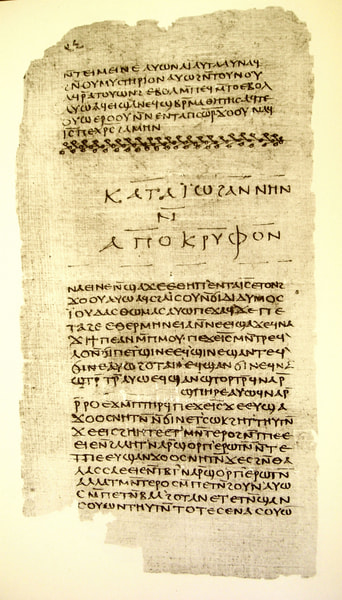 Gospel of Thomas Unknown author (Public Domain) ](https://www.worldhistory.org/image/13815/gospel-of-thomas/ "Gospel of Thomas")### Orthodox v. Heresy
In the first two centuries, there were dozens of different stories and interpretations of the story of Jesus. A group collectively termed, "[Gnostics](https://www.worldhistory.org/Gnosticism/)," claimed to have "secret knowledge" (the Greek word, *gnosis*) of different views of Jesus, his divine nature, and why he came to earth. In criticizing the Gnostics, the Church Fathers created the concepts of "orthodoxy" and "heresy." Orthodoxy meant "correct belief." Heresy was derived from the Greek *haeresis*, a term to describe the teachings of the schools of [philosophy](https://www.worldhistory.org/philosophy/). Heresy became "incorrect belief and practice." But these concepts are two sides of the same [coin](https://www.worldhistory.org/coinage/). Heretics do not describes themselves as such. They claim to have the correct concepts and rituals.
Heresy at this level was punished with "ex-communication," expulsion from the community. A charge of heresy meant that the person could not participate in church rituals, such as "communion." With no central authority, some "heretics" simply left and created their own churches in various cities. From the ancient world to the modern, "heresy" remains the defining criteria for various divergent views, particularly for those who ultimately get into Heaven or Hell in the afterlife.
### Emperor [Constantine](https://www.worldhistory.org/disambiguation/Constantine/)
The Emperor [Constantine I](https://www.worldhistory.org/Constantine_I/) (reign 306-337 CE) converted to Christianity in 312 CE. As head of the Empire, but now also the head of the Church, he had the authority to dictate the parameters of the new faith. In striving for unity, he called for a meeting at Nicaea, outside of the new capital of [Constantinople](https://www.worldhistory.org/Constantinople/), later called Istanbul after [Islam](https://www.worldhistory.org/islam/) conquered the city.
[ 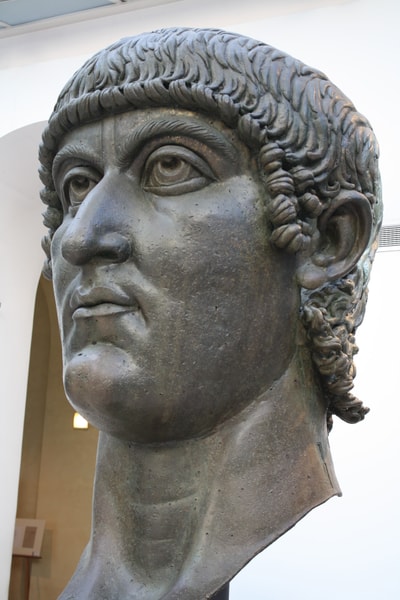 Constantine I Mark Cartwright (CC BY-NC-SA) ](https://www.worldhistory.org/image/2571/constantine-i/ "Constantine I")Constantine invited bishops from all over the empire, paying for housing them and their entourages. This is when the complicated doctrine of "the [Trinity](https://www.worldhistory.org/Trinity/)" was created, the unity of three aspects of the godhead, the Father, the Son, and the Holy Spirit. While there, he created the "creed," what all Christians should believe and practice. Orthodoxy and heresy were now determined by adherence to Constantine's creed. Any deviation was considered a critique against the emperor. It was interpreted as not wanting the empire to prosper, the equivalent of treason. Treason always carried a [death](https://www.worldhistory.org/disambiguation/Death/) penalty; heretics were considered traitors and executed in the arenas.
[Augustine](https://www.worldhistory.org/disambiguation/Augustine/) (354-439), the Bishop of Hippo in North [Africa](https://www.worldhistory.org/disambiguation/africa/), argued against any groups who did not agree with his views. He took the unprecedented step of appealing to Emperor Honorus in 410 to send in the legions. All divergent views of anyone were subject to execution and their churches dismantled. The slaughter was so severe, even Augustine objected.
### The Inquisition
The problem of heresy did not go away. The Second and Third Lateran Councils (1139, 1179), prescribed imprisonment and confiscation of property as punishment for heretics and threatened to excommunicate princes who failed to punish them. During the 12th century, Christian sects known as the Albigenses in Southern France, the Cathari, and the Waldenses in the Balkans, were accused of teaching [Gnostic](https://www.worldhistory.org/Gnosticism/)-like doctrines. This led to a special crusade in these regions to destroy them, known as the [Albigensian Crusade](https://www.worldhistory.org/Albigensian_Crusade/).
The Episcopal Inquisition was formally instituted by Pope Gregory IX in 1231. Gregory mandated that heretics be sought out and tried before a church court. This task became entrusted to the Dominican and Franciscan orders. The independent authority of the Inquisitors was a frequent cause of friction with the local clergy and bishops. The Church “could not stain its hands with blood,” so the questioning and subsequent exection was the responsibility of the local police forces. Infamous for its notoriously harsh procedures (including torture), the Inquisition was defended during the Middle Ages by appeal to Biblical practices and to Augustine, “Compel them to come in . . .”. In Luke 18, some [Pharisees](https://www.worldhistory.org/Pharisees/), and even his disciples, criticized Jesus for giving blessings to crowds who brought their children. "Then Jesus called for the children and said to the disciples, 'Let the children come to me. Don’t stop them! For the Kingdom of God belongs to those who are like these children. I tell you the truth, anyone who doesn’t receive the Kingdom of God like a child will never enter it.'”
[ 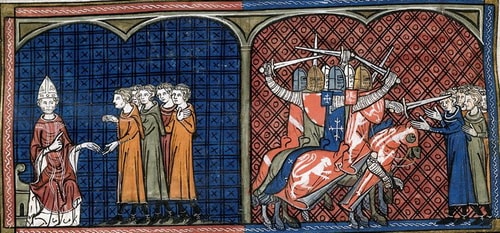 Pope Innocent III & the Albigensian Crusade Unknown Artist (Public Domain) ](https://www.worldhistory.org/image/9343/pope-innocent-iii--the-albigensian-crusade/ "Pope Innocent III & the Albigensian Crusade")When the Inquisitors arrived in a city, a period of grace was given for any heretic to renounce his/her beliefs. Denunciations could be made by anyone, including other heretics. The court conducted an interrogation and attempted to gain a confession. The accused was tortured by burning with live coals, cutting off fingers, toes, tongues, testicles and breasts, or the *strappado*, stretching on a vertical rack. The only way to stop the torture was to sign a confession, but which then confirmed one's guilt. The standard execution was burning at the stake. The audience were “witnesses” that the heretic had been punished.
Notable victims of the Inquisition included the order of the [Knights Templar](https://www.worldhistory.org/Knights_Templar/), the French patriot [Joan of Arc](https://www.worldhistory.org/Joan_of_Arc/), and the astronomer [Galileo Galilei](https://www.worldhistory.org/Galileo_Galilei/). [Galileo](https://www.worldhistory.org/Galileo_Galilei/) followed some other astronomers who taught that the earth was not the center of the universe. Galileo was saved when he later recanted his views.
The Inquisition grew to include alchemy, witchcraft, blasphemy, sexual immorality, and infanticide, particularly charged against those who still held to the remnants of paganism. Lucifer, the Devil, was believed to be behind all of these sins. The ancient concept of “possession by demons,” was revitalized through Lucifer and his many agents.
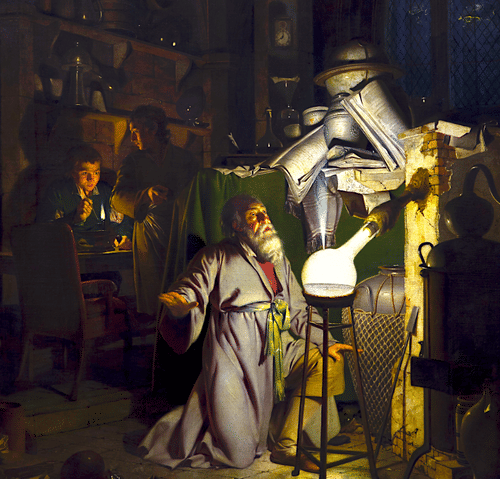
Alchemy was the attempt to change base metals into [gold](https://www.worldhistory.org/gold/). This was often accompanied by "magic elixirs," libations that would assure long-life. Both were condemned as heresy, upending the concept that God was the creator of all things and their natures, and upended Gods' dictates to limit human life, "three scores and ten" after the flood.
[  The Alchemist by Wright Joseph Wright (Public Domain) ](https://www.worldhistory.org/image/17809/the-alchemist-by-wright/ "The Alchemist by Wright")In medieval Jewish folklore, and then Christianity, the premier witch was the first wife of Adam, Lilith, who seduced him into sexual intercourse. A witch was deemed an incubus, a female who had been possessed by having sexual intercourse with the Devil or least one of his demons. The semen of the Devil was what gave witches the power to “fly by night” and perform magic. Witches were often beautiful and voluptuous, who then visited men at night. They became a succubus by stealing the semen of a man, draining his life’s energy and producing other demons. This ultimately led to poor health, financial ruination, and death.
In the 15th century, two Inquisitors, Heinrich Kramer, and James Sprenger, created *The Malleus Maleficarum*, also known as “The Witches Hammer". This was a “scientific" manual that listed the many ways witches could be identified. For example, one way to tell a witch was to examine the number of moles on her body, scars left from the Devil’s possession of her. The number of witches burned after the late 15th century was greater than the number of heretics, with some estimations of 60,000.
### "Dunking"
Initially, devience was judged through "trials by ordeal," where God was the judge of innocence. Witches were tested by "dunking," either having them thrown into a river, or sitting on a diving-board device where they were repeatedly "dunked" in rivers. As witches shunned baptism, it was believed that the water would reject them, and they would float to the top and thus were deemed guilty. If they drowned, it meant that they were actually innocent, but of course, they were by then dead anyway. "Trials by Ordeal" were eliminated in [England](https://www.worldhistory.org/disambiguation/england/) when [Henry III of England](https://www.worldhistory.org/Henry_III_of_England/) (reign 1216-72) created his new concept of government in establishing the origins of the English Parliament.
[ 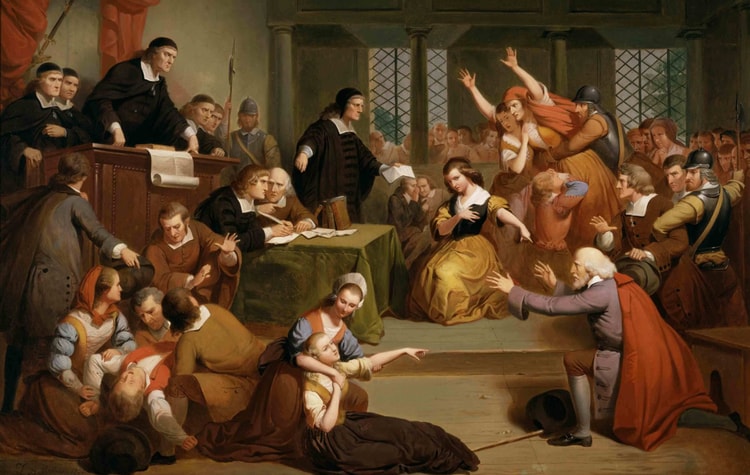 Witch Trial of George Jacobs Thomkins H. Matteson (Public Domain) ](https://www.worldhistory.org/image/13773/witch-trial-of-george-jacobs/ "Witch Trial of George Jacobs")The Inquisition against demon possession by witches was carried to the American colonies. Not as extensive as in [Europe](https://www.worldhistory.org/europe/), the most famous case was the [Salem Witch Trials](https://www.worldhistory.org/Salem_Witch_Trials/) in Massachusetts of 1692 and 1693. Two hundred people were accused, with 30 found guilty and executed by hanging. Salem remains a huge tourist event on Halloween, and now includes venders and astrologists for Wicca and New Age movements.
### The Spanish Inquisition
In the 7th century, the Muslims of Morocco and North Africa invaded and conquered Spain. Known as “the flowering of culture,” Jews, Christians, and Moors, (the name for Muslims in Spain) often met in town-hall public debates, discoursing on the interpretation of scriptures. In the 15th century, Ferdinand II of Aragon and [Isabella I of Castile](https://www.worldhistory.org/Isabella_I_of_Castile/) married and were traditional Catholic conservatives loyal to the Pope in [Rome](https://www.worldhistory.org/Rome/). They set out to “reconquer” Spain from the Moors, based in the city of Granada (the [Reconquista](https://www.worldhistory.org/Reconquista/)). They also sought to eliminate the Jews of Spain. The head Inquisitor, Tomas de Torquemada, developed a special relationship of authority with the crown. In addition to heretics, he extended persecution to the Marranos (converts from Judaism), and Moriscos (converts from Islam) who had been Christians for generations. Torquemada accused them of secretly continuing to practice their original faith. Jews and Muslims and their converted off-shoots were expelled from Spain in October,1492.
### Auto de fe
An *auto de fe*, from the Portuguese or Spanish, meant "act of faith." It was carried out in the public plazas, with a procession of church and civil leaders. At this ceremony, a heretic had one final chance to recant. The ceremony included:
- A solemn procession of the accused, emphasizing his suffering through torture.
- The signs of contrition, wearing special garments, or crossing oneself with the sign of the cross.
- A mass emphasizing obedience to the Church.
- The reading of the charges.
### Racial Characteristics
This period was when Europeans began establishing “colonies” through global exploration. Exposure to other people and races provided the “scientific” study of different races, such as measuring the craniums, brows, hair texture and skin color of different people. This was combined with Torquemada’s theory that behavior was “in the blood,” physical, racial impurities that were handed down to their descendants. In other words, their “conversion” would always be suspect. As Europeans began the period of colonialism of other world cultures, they encountered indigenous populations and applied racial theories to these cultures. The job of Christian missions was to constantly monitor native behavior and enforce Christian concepts and social conventions.
[  Joan of Arc in Orleans Jean-Jacques Sherrer (Public Domain) ](https://www.worldhistory.org/image/11998/joan-of-arc-in-orleans/ "Joan of Arc in Orleans")Inquisitional heresy could change over time depending upon the ruling government. For example, Joan of Arc was convicted of heresy in 1531 by an English court and burned at the stake. But in 1456, an Inquisitorial court of France reinvestigated the trial and overturned it, declaring that it was “tainted by deceit and procedural orders.” Joan was restored as a patron saint of France.
In the Spanish and Portuguese colonies in the Americas, each country had different Inquisitional methods for determining heresy. This was particularly related to Christian missions which were established to convert and educate the enslaved indigenous native tribes. Those who rebelled or resisted were charged and condemned as heretics by Inquisition courts, while others were freed from slavery and converted to Christianity.
### End of the Inquisition in the 19th & 20th Centuries
By decree of [Napoleon Bonaparte](https://www.worldhistory.org/Napoleon_Bonaparte/)'s government in 1797, the Inquisition in Venice was abolished in 1806. Subsequent Napoleonic rulers abolished it in the Hispanic Americas between 1813-1825, in Portugal in 1821, and in Spain by 1825. In Italy, the Vatican controlled the Papal States of central Italy. But the Papal States were lost in the Franco-Prussian wars in 1870. Nominally restored at various times, the full restoration took place during the dictatorship of [Benito Mussolini](https://www.worldhistory.org/Benito_Mussolini/) (1922-43) and involved the intervention of Pope Pius XI. The Vatican City was recognized as an independent state under the sovereignty of the Holy See. In return, the Vatican recognized Victor Emmanuel III as the king of Italy, with Mussolini as the prime minister. Italy agreed to give financial compensation for the loss of the Papal States. The functions of the Inquisition were retained and named the Congregation for the Doctrine of the Faith in 1965.
Reflection on the Inquisitorial activity of the Catholic Church began to be seriously undertaken in the period of preparation for the Great Jubilee of 2000, on the initiative of Pope John [Paul](https://www.worldhistory.org/disambiguation/Paul/) II. He called for repentance for "examples of thought and action that are in fact a source of anti-witness and scandal." In 2000, during the celebration of the Jubilee, the John Paul II, on behalf of the entire Catholic Church and all Christians, apologized for these acts and many others. This included sins against the Jews, the dignity of [women](https://www.worldhistory.org/disambiguation/women/) ,and theological and racial minorities. The modern Vatican still examines and investigates charges of "heresy." The punishment includes "de-frocking," and “ex-communication."
#### Editorial Review
This human-authored article has been reviewed by our editorial team before publication to ensure accuracy, reliability and adherence to academic standards in accordance with our [editorial policy](https://www.worldhistory.org/static/editorial-policy/).
## Bibliography
- Fltecher, J. (ed). *On the Spanish Inquisition.* Imperium Press, 2022
- Homza, Lou Ann. *The Inquisition in the New World: The History and Legacy of the Inquisition after Spain and Portugal Colonized the Americas Spanish Inquisition, 1478-1614 .* Hackett Publishing Company, 2019
- Murphy, Cullen. *God's Jury: The Inquisition and the Making of the Modern World .* Mariner Books, 2013
## About the Author
Rebecca I. Denova, Ph.D. is Emeritus Professor of Early Christianity in the Department of Religious Studies, University of Pittsburgh. She has recently completed a textbook, "The Origins of Christianity and the New Testament" (Wiley-Blackwell)
## Cite This Work
### APA
Denova, R. (2026, August 05). The History of the Inquisition: The Catholic Church's Battle Against Deviance. *World History Encyclopedia*.
### Chicago
Denova, Rebecca. "The History of the Inquisition: The Catholic Church's Battle Against Deviance." *World History Encyclopedia*, August 05, 2026. .
### MLA
Denova, Rebecca. "The History of the Inquisition: The Catholic Church's Battle Against Deviance." *World History Encyclopedia*, 05 Aug 2026, .
## License & Copyright
Submitted by [Rebecca Denova](https://www.worldhistory.org/user/rdenova/ "User Page: Rebecca Denova"), published on 05 August 2026. The copyright holder has published this content under the following license: [Creative Commons Attribution-NonCommercial-ShareAlike](https://creativecommons.org/licenses/by-nc-sa/4.0/deed.en). This license lets others remix, tweak, and build upon this content non-commercially, as long as they credit the author and license their new creations under the identical terms. When republishing on the web a hyperlink back to the original content source URL must be included. Please note that content linked from this page may have different licensing terms.