---
title: Friedrich Gentz's Stance on the French Revolution: The Fusion of Berlin Enlightenment and British Conservatism
author: Ambika Natarajan
source: https://www.worldhistory.org/article/2956/friedrich-gentzs-stance-on-the-french-revolution/
format: machine-readable-alternate
license: Creative Commons Attribution-NonCommercial-ShareAlike (https://creativecommons.org/licenses/by-nc-sa/4.0/)
updated: 2026-08-04
---
# Friedrich Gentz's Stance on the French Revolution: The Fusion of Berlin Enlightenment and British Conservatism
_Authored by [Ambika Natarajan](https://www.worldhistory.org/user/ambika/)_
The story of the [French Revolution](https://www.worldhistory.org/French_Revolution/) is incomplete without the Prussian-Austrian diplomat and writer Friedrich von Gentz (1764-1832). It was Gentz who provided the best-known German translation of [Edmund Burke](https://www.worldhistory.org/Edmund_Burke/)’s *Reflections on the Revolution in France*. This work reveals Gentz as a French Revolution reactionary and a conservative of the Burkean lineage. However, such a characterization is a very simplistic portrayal of this complex figure from the past.
[ 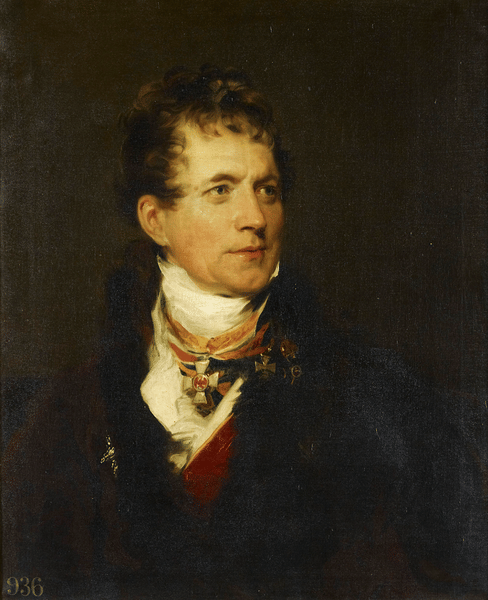 Portrait of Friedrich von Gentz Thomas Lawrence (Public Domain) ](https://www.worldhistory.org/image/22006/portrait-of-friedrich-von-gentz/ "Portrait of Friedrich von Gentz")The French Revolution was a complex event that created complicated personalities. Gentz was one such complicated product constructed by the Revolution and, in turn, he sought to influence the outcomes of the Revolution through his diplomatic and [writing](https://www.worldhistory.org/writing/) activities. For Gentz, the Revolution presented a contradiction between the humane ideals it claimed to defend and the violence of its actual manifestation.
Gentz’s exposure to the rationalistic Enlightenment climate of Berlin informed much of his early opinions of the French Revolution. In the 18th century, Berlin, the capital of Prussia and the place of Gentz’s childhood, was under the rule of the Hohenzollern king [Frederick II](https://www.worldhistory.org/Frederick_II/), commonly known as Frederick, the Great. Frederick II’s rule began with considerable enthusiasm, but, by the 1780s he had become an outdated baroque king in the age of Enlightenment. [The Enlightenment](https://www.worldhistory.org/The_Enlightenment/), or the *Aufklärung* as it was called in the German speaking states, had become increasingly sophisticated because of philosophers such as [Immanuel Kant](https://www.worldhistory.org/Immanuel_Kant/), Christian Garve, and [Moses](https://www.worldhistory.org/Moses/) Mendelssohn who wrote about the relationships between ethics and the government. These philosophers brought under question the rule and privilege of a few hundred aristocrats over thousands of people, especially when it was obvious that individual ethics were suspended for the retention of the ruler’s authority. As a result, Frederick II, by the time of his [death](https://www.worldhistory.org/disambiguation/Death/) in 1786, did not enjoy much enthusiasm from his subjects. Gentz’s intellectual development took place in the salons of Frederick’s Berlin and amidst prominent figures of the *Aufklärung* in universities. In the salons and social clubs of the time, Gentz mingled with people and ideas vibrant with the rationalism of the Enlightenment and the relaxed morals of the period.
It was Kant who contributed most to Gentz’s intellectual sophistication. When Gentz entered the University of Konigsberg in 1783, he did so under the tutelage of Kant who was then already a well-known philosopher, having published his masterpiece *Critique of Pure Reason* in 1781. Gentz’s university education exposed him to the Berlin Enlightenment thinkers who left an indelible [mark](https://www.worldhistory.org/disambiguation/Mark/) on his intellect and opened him to the possibilities of [Jean-Jacques Rousseau](https://www.worldhistory.org/Jean-Jacques_Rousseau/)’s ideas. By 1789, Gentz was of the view that reason and liberty were the most important aspects of human nature. He believed that political systems within and diplomatic relations without the borders of a country should be based on these values, and the ruler in such a political system was authorized by the people and consequently was answerable to the people. In 1791, he described the French Revolution as the, “first practical [triumph](https://www.worldhistory.org/Roman_Triumph/) of [philosophy](https://www.worldhistory.org/philosophy/), the first example of a form of government which is founded on principles and upon a consistent, logical system.” (Reiff, 57).
[ 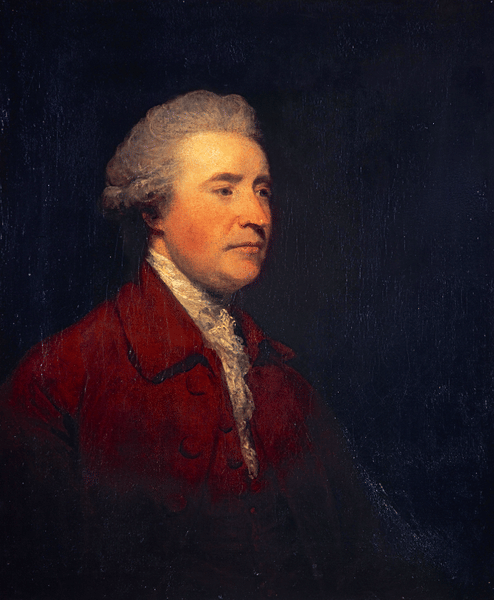 Edmund Burke, 1774 Joshua Reynolds (Public Domain) ](https://www.worldhistory.org/image/18326/edmund-burke-1774/ "Edmund Burke, 1774")In early 1791, the French Revolution was still, for Gentz, a practical application of a brilliant idea and he was its ardent supporter. But in spring 1791, Gentz first encountered Edmund Burke’s *Reflections on the Revolution in France* in its German translation. The translation was published in Vienna by a book publisher and amateur philosopher Joseph Stahel and appeared in the early months of 1791, a few months after the publication of Burke’s *Reflections* in London in 1790. Although clumsy and poorly written, the translation conveyed the major themes of the work well. Gentz read it, at first, with hostility towards its contents and clearly disagreed with Burke’s argument. However, by 1792, the French Revolution had embarked on a road of violence and terror that Gentz found alarming.
Gentz’s admiration for his close friend Wilhelm von Humboldt, who increasingly disfavoured the revolution, also stirred his misgivings for the Revolutionaries’ cause. By 1791, Humboldt, who had once been an ardent supporter of the French Revolution, had started to become sceptical of it. Gentz was affected by his friend’s shift of opinion and, by the end of that year, he was in the anti-Revolutionary camp as well. In that year, Gentz began to work on translating Burke’s *Reflections*. This work, titled *Betrachtungen über die französische Revolution nach dem Englischen des Herrn Burke*, was published in 1792. Gentz’s clear shift from his position as a pro-Revolutionary to an anti-Revolutionary was set by this time. It is evident that in December 1792, he thought of the French Revolution as a threat to the peace and security of all nations. Burke’s translation, therefore, consolidated his position in Germany as an anti-Revolutionary, and he would remain so for the rest of his life.
Still, Gentz was in no way an uncritical student of Burke. When his political stance changed in 1791, Burke’s arguments certainly drew admiration from Gentz. However, his admiration was never one of blind, indiscriminating devotion. Gentz was first and foremost a Kantian. What caused Gentz’s scepticism towards the French Revolution was the terrorism it unleashed. He was against the excesses of pillaging, massacres, and vandalism, but he was not against the principles the Revolution claimed to embrace, that is, of reason and liberty. As the Revolution progressed, though, it came to represent for him the very thing it was supposed to fight against: injustice and oppression. Gentz’s admiration for Burke, thus, stemmed from his agreement with him on certain fundamental points. He accepted Burke’s stand on the importance of history and tradition and the futility of fixating on abstract concepts to construct a real political system.
[  An Allegory of the Revolution Nicolas Henri Jeaurat de Bertry (Public Domain) ](https://www.worldhistory.org/image/16013/an-allegory-of-the-revolution/ "An Allegory of the Revolution")The folly of the French Revolution was, according to Gentz, its lack of moderation, its vengeful frenzy and the total absence of political common-sense. In the tract, *The Origin and Principles of the [American Revolution](https://www.worldhistory.org/American_Revolution/) Compared with The Origin and Principles of the French Revolution*, which he published in 1800, Gentz asserted this position. He argued that, as opposed to the American Revolution, the French Revolution began as an offensive [war](https://www.worldhistory.org/disambiguation/War/) not as a defensive war. The offensive side of war showed no moderation and as a result turned more frenzied, uncontrollable and violent when it should have become milder.
Many historians have argued that *Reflections* was the key text that fuelled Berlin’s counter-Enlightenment thinkers who arose in this period to resist the French Revolution. Historian Johnathan Green points out that the text that drove this counter movement was not *Reflections* but Gentz’s German translation of it as it was unlikely that Berliners would have read the original *Reflections*. This distinction is crucial, Green argues, since Gentz’s translation is very different from the original. Burke from the start was against the French Revolution on moral and political grounds while Gentz was disillusioned by it and therefore opposed it. But Gentz did not inherit Burke’s conservatism. Neither did he inherit Burke’s revulsion towards the Enlightenment that pervades the original text. Gentz was a grandchild of the Enlightenment. Therefore, by 1792, while Gentz was in fierce agreement with the general intents and purposes of *Reflections*, he was not convinced by its aspersions towards the Enlightenment. As Green asserts, Gentz believed that the strength of *Reflections* lied in the importance it placed on history, tradition, and moderation, but it was lacking in philosophical sophistication and rigor which Gentz willingly provided in his translation.
What Gentz achieves in his translation, then, Green claims, is a super-imposition of Kantian rationalism upon Burke’s *Reflections*. In 1793, Gentz was one of the most vibrant voices against the French Revolution. He regularly submitted political essays and articles to various journals and magazines for publication. He also translated Burke’s *Reflections* for the enlightened educated intelligentsia of the day. He did not present Burke as a traditionalist and an anti-Enlightenment individual, but at the same time, he retained the authenticity of Burke’s main arguments. This balance, he accomplished, with extensive footnotes and clarifications that accounted for the extended length of his translation. In other words, Gentz brought the philosophical erudition of the Enlightenment to his translation of Burke’s *Reflections*. He mined the best qualities of British traditionalism, that of moderation, respect for established institutions, tradition, and pragmatism, and wielded from it a diplomatic tool to inform the “balance of power” politics in Central [Europe](https://www.worldhistory.org/europe/) for rest of the 19th century.
Working alongside the Austrian foreign minister Klemens von Metternich, Gentz used his skills as a publicist to align with forces of conservatism to negotiate Austrian foreign diplomacy. Gentz, therefore, emerges as a unique figure in German histories. He brought to the public German sphere a kind of thinking which combined the philosophy of the Berlin Enlightenment with British conservatism.
#### Editorial Review
This human-authored article has been reviewed by our editorial team before publication to ensure accuracy, reliability and adherence to academic standards in accordance with our [editorial policy](https://www.worldhistory.org/static/editorial-policy/).
## Bibliography
- Getnz, Friedrich. *Briefe an König Friedrich Wilhelm II von Preußen.* Berlin, 1792
- Allen Green, Johnathan. "“Fredrich Gentz’s Translation of Burke’s Reflections,”." *The Historical Journal*, 57, 2014, pp. 639-659.
- Gentz, Friedrich. *The Origin and Principles of the American Revolution Compared with The Origin and Principles of the French Revolution.* 1800
- Mann, Golo. *Secretary of Europe: The Life of Friedrich Gentz, Enemy of Napoleon.* Yale University Press, 1946
- Reiff, Paul F. *Friedrich Gentz, an Opponent of the French Revolution and Nepoleon.* University of Illinois, 1912
- Sweet, Paul R. *Friedrich von Gentz: Defender of the Old Order .* Greenwood Press, 1941
## About the Author
Dr. Ambika Natarajan is a Visiting Faculty at the University of Mumbai-Department of Atomic Energy, Centre for Excellence in Basic Sciences, Mumbai, India. She specializes in the history of Habsburg Central Europe.
## External Links
- [Friedrich Gentz on Revolutions](https://kirkcenter.org/history/friedrich-gentz-on-revolutions/)
- [Friedrich Gentz, an opponent of the French Revolution and ...](https://archive.org/details/friedrichgentzop00reifrich)
## Cite This Work
### APA
Natarajan, A. (2026, August 04). Friedrich Gentz's Stance on the French Revolution: The Fusion of Berlin Enlightenment and British Conservatism. *World History Encyclopedia*.
### Chicago
Natarajan, Ambika. "Friedrich Gentz's Stance on the French Revolution: The Fusion of Berlin Enlightenment and British Conservatism." *World History Encyclopedia*, August 04, 2026. .
### MLA
Natarajan, Ambika. "Friedrich Gentz's Stance on the French Revolution: The Fusion of Berlin Enlightenment and British Conservatism." *World History Encyclopedia*, 04 Aug 2026, .
## License & Copyright
Submitted by [Ambika Natarajan](https://www.worldhistory.org/user/ambika/ "User Page: Ambika Natarajan"), published on 04 August 2026. The copyright holder has published this content under the following license: [Creative Commons Attribution-NonCommercial-ShareAlike](https://creativecommons.org/licenses/by-nc-sa/4.0/deed.en). This license lets others remix, tweak, and build upon this content non-commercially, as long as they credit the author and license their new creations under the identical terms. When republishing on the web a hyperlink back to the original content source URL must be included. Please note that content linked from this page may have different licensing terms.