---
title: Key German Weapons of World War I
author: Mark Cartwright
source: https://www.worldhistory.org/article/2860/key-german-weapons-of-world-war-i/
format: machine-readable-alternate
license: Creative Commons Attribution-NonCommercial-ShareAlike (https://creativecommons.org/licenses/by-nc-sa/4.0/)
updated: 2025-12-10
---
# Key German Weapons of World War I
_Authored by [Mark Cartwright](https://www.worldhistory.org/user/markzcartwright/)_
Superior weapons can win wars, and during the First World [War](https://www.worldhistory.org/disambiguation/War/) (1914-18) all sides attempted to gain an advantage over the enemy by producing more and more destructive devices that could be used effectively on land, at sea, and in the air. Germany produced such effective weapons as the Luger pistol, the MG08 machine gun, the Mauser rifle, the [U-boat](https://www.worldhistory.org/U-Boat/) submarine, and the Zeppelin airship. In the end, Germany lost the war and, in many instances, the fierce competition with the Allies for the best weaponry, but here, we review some of the innovations used by the German armed forces, which proved so effective that many were still being used when the Second World War began in 1939.
[  Fokker D VII, 1918 Unknown Photographer (CC BY-NC-SA) ](https://www.worldhistory.org/image/21439/fokker-d-vii-1918/ "Fokker D VII, 1918")### Luger Pistol
The self-loading Luger pistol, designed by George Luger, has become an iconic weapon of the German armed forces of the 20th century. Its less catchy official name was the Parabellum-Pistole Modell 1908 (P08). First used by the army of Switzerland from 1900, it was adopted by the German Navy from 1904 and then the German Army from 1908. The Luger was also used by other national armies, notably that of Bulgaria. The gun fired a 9-mm (0.35-inch) Parabellum cartridge, seven of which could fit into the magazine inside the butt. The weapon earned a deserved reputation for being well-made, reliable, and well-balanced. Around 1.6 million Lugers were made during WWI alone, and they continued to be used in WWII.
[  WWI Luger Pistol Imperial War Museums (CC BY-NC-SA) ](https://www.worldhistory.org/image/21435/wwi-luger-pistol/ "WWI Luger Pistol")### Mauser Rifle
The Mauser Gewehr 98 rifle, widely known simply as the "Mauser", was "one of the most successful and widely copied rifles ever produced" (Bruce, 250). A tough and accurate rifle with a solid bolt action and a deserved reputation for reliability and low maintenance, the weapon fired 7.92-mm (0.3 in) cartridges from a five-cartridge magazine. In service with the German Army from 1898, the Mauser became the standard rifle for German infantry soldiers during WWI and was used by other armies, notably that of the [Ottoman Empire](https://www.worldhistory.org/Ottoman_Empire/). A sniper's version fitted with an optical sight was also commonly used in the trenches of the Western Front.
### MG08 Machine Gun
The machine gun proved to be one of the most devastating weapons of the war, particularly effective when used by defenders against an infantry charge or by shock troops attacking an enemy position using surprise. The revolutionary Maxim machine gun was invented in 1884 by Hiram Maxim in the United States. The German Army was an early adopter of this type of weapon. The Maschinengewehr 08 (MG08) was a German derivative of the Maxim, and it became the standard-issue gun in this category throughout WWI. The MG08 could fire 300 7.92-mm (0.3 in) cartridges a minute; with a muzzle booster, the firing rate could be increased to 450 rpm. The cartridges were fed to the gun using a canvas belt. The barrel was water-cooled, which allowed for a prolonged period of firing, and the weapon could be set on a tripod for stability. Right from the start of the war, a German army regiment was equipped with six MG08s. A lighter version of the weapon was the Maschinengewehr 08/15, 130,000 of which were built during WWI, nearly double that of the MG08. Both types of machine guns saw service well into the 1930s.
[  German MG 08/15 Machine Gun Imperial War Museums (CC BY-NC-SA) ](https://www.worldhistory.org/image/21436/german-mg-0815-machine-gun/ "German MG 08/15 Machine Gun")From the MG08 and 08/15, a new anti-aircraft machine-gun was developed, the LMG08/15, which became widely known as the Spandau after its place of manufacture. The lighter LMG08/15 was also mounted on German aircraft, as were the similar Parabellum machine-guns. Finally, the first submachine gun – a handheld version of the larger machine gun types – was developed by Hugo Schmeisser for use in 1918, the Bergmann Maschinenpistole 18/I. It could fire 500 rounds a minute (although the magazine held only 32 bullets) and was cooled by cutting holes in the barrel, a distinctive look of many submachine guns thereafter. This weapon would revolutionise infantry weaponry but came a little too late to dramatically affect the outcome of WWI. The potential of the submachine gun was certainly recognised by the Allies, who forbade German armed forces from possessing them following the [1918 armistice with Germany](https://www.worldhistory.org/article/2833/the-1918-armistice-with-germany/).
### Stick Grenade
Grenades had been used in previous conflicts, notably the Russo-Japanese War (1904-5), but in the First World War, they were further developed and much more widely used. The German version was a stick grenade (*Steilhandgranate*), that is, the explosive device housed in a tin or steel canister was attached to a hollow wooden handle, which meant it could be thrown further than other types of grenades. The cylinder often had a clip so that it could be attached to a soldier's belt. The device weighed 29 oz (820 g). To arm the grenade, a small [metal](https://www.worldhistory.org/disambiguation/metal/) cover at the base of the handle was unscrewed, and a wire then pulled. There were two standard fuse times: 5.5 or 7 seconds (helpfully indicated on the side of the canister). The stick grenade became a familiar sight as millions were made every month. The British called the German stick grenade a ‘potato masher' as it resembled this ubiquitous kitchen device. The design was kept intact for German-made grenades used in the Second World War.
[  German WWI Stick Grenade Imperial War Museums (CC BY-NC-SA) ](https://www.worldhistory.org/image/21437/german-wwi-stick-grenade/ "German WWI Stick Grenade")### Big Artillery
Artillery became one of the most widely used weapons in WWI, but the German Army decided bigger was better when it came to bombarding the enemy. The German industrial company Krupp manufactured two huge howitzers, each with a 42-cm bore that could fire a shell weighing 1,786 lbs (810 kg) a distance of 10,000 yards (9,144 m).
These two guns, the largest used in the war up to that point, were nicknamed ‘Big Bertha' in a rather unflattering reference to the daughter of Alfred Krupp, Baroness Bertha Krupp. Weighing in at 43 tons each, the guns were so large they could only be moved around when dismantled. They were used in earnest at the siege of Liège and the siege of Namur on the Western Front. The guns caused utter devastation and surprised everyone at how quickly they did so. The Big Berthas were then moved to the Eastern Front to continue their success. The guns remained effective until 1917, but by then the interior of the barrels had worn down, and so their accuracy was significantly compromised.
A gun with an even longer range than the Big Berthas was the extraordinary Paris Gun, the largest artillery piece ever built up to that point in history. The weapon weighed over 142 tons and had a barrel 21 cm (8.3 in) in diameter. Enjoying only a brief period of service between March and August 1918, this mighty artillery piece had to be transported on a specially-built and extremely unwieldy carriage. The weapon was only suitable for hitting a large target like a town, and so it was first positioned in the Forest of Crépy, 130 km (80 mi) from Paris (easily within the gun's range), before being moved further west. The Paris Gun fired 367 shells at the French capital, killing 256 people and injuring another 620. The bombardment had no concrete effect on the wider war. In reality, this gun was simply too big to be useful; its shells were relatively small, accuracy was poor, and the barrel was quickly worn out. The German Army destroyed the Paris Gun before it fell into enemy hands in the closing stages of the war.
[  Model of Big Bertha Howitzer Rama (CC BY-SA) ](https://www.worldhistory.org/image/21438/model-of-big-bertha-howitzer/ "Model of Big Bertha Howitzer")### Airplanes
The German Air Force utilised a bewildering array of aircraft throughout WWI as it tried to outdo the enemy in performance and firepower. Its most famous and effective ace was Rittmeister (Captain) Manfred von Richthofen (1892-1918). Richthofen most often flew a red single-seat Albatros DI to DIII and then a Fokker DR 1. The Albatros DIII had a Mercedes engine and twin Spandau machine guns; its use on the Western Front in the spring of 1918 inflicted heavy losses on the Allies, a period known as 'Bloody April'. Other manufacturers of aircraft used by the German Air Force included AEG, Aviatik, Brandenburg (whose team included the noted designer Ernst Heinkel), Gotha (which specialised in bombers), Junkers (which continued to build aircraft in WWII), Pfalz (whose innovative aircraft had their guns concealed within the fuselage), and Rumpler (which produced the CIV, one of the fastest fighters of the war).
The Fokker DVII was perhaps the most famous German fighter plane in the war. The best engine was provided by BMW, which gave 185 hp and allowed the biplane to climb 1,500 metres (5,000 ft) in just 16 minutes. This Fokker, 760 of which were built during the war, was capable of making very tight turns without stalling, a typical problem of aircraft of this period. Such was the Allies' admiration for the Fokker DVII, the armistice of 1918 insisted Germany hand over all of these aircraft.
[  German Fokker Triplanes, WWI Imperial War Museums (CC BY-NC-SA) ](https://www.worldhistory.org/image/21441/german-fokker-triplanes-wwi/ "German Fokker Triplanes, WWI")### U-Boats
The German name for their submarines was U-boat, short for *Unterseeboot* (undersea boat). At the beginning of the war, the German Navy had only 20 operational submarines, but the fleet was quickly expanded to catch up with the Allied fleets. By 1917, Germany had 140 U-boats. Different classes of submarines were used for different purposes, such as conducting coastal patrols or laying mines. Following the stalemate of the [Battle of Jutland](https://www.worldhistory.org/article/2853/battle-of-jutland/) (May-June 1916), Germany turned to submarines as a means to attack enemy shipping and to try and break the Allied blockade of the North Sea. Free to roam the seas and difficult to detect, U-boats could sink enemy ships – naval or merchant – far out in the Atlantic Ocean. A typical U-boat, powered by either a diesel engine (when on the surface) or twin electric engines (underwater), had a top speed of 17 knots and carried six self-propelled torpedoes. The crew of up to 39 men lived in decidedly cramped and polluted conditions.
U-boats caused havoc in the Atlantic sea lanes. The most successful was the U-35, which sank an incredible 224 ships during WWI. At first, U-boats attacked enemy ships without warning (unrestricted submarine [warfare](https://www.worldhistory.org/warfare/)), but, on 7 May 1915, when the passenger liner [RMS Lusitania](https://www.worldhistory.org/RMS_Lusitania/) was sunk off [Ireland](https://www.worldhistory.org/disambiguation/Ireland/) and 1,200 civilians lost their lives, the international outrage led to restrictions being imposed on U-boat commanders. As the war went on and the blockade tightened on Germany, unrestricted submarine warfare was resumed in February 1917, one of the reasons the United States finally entered the war.
[ 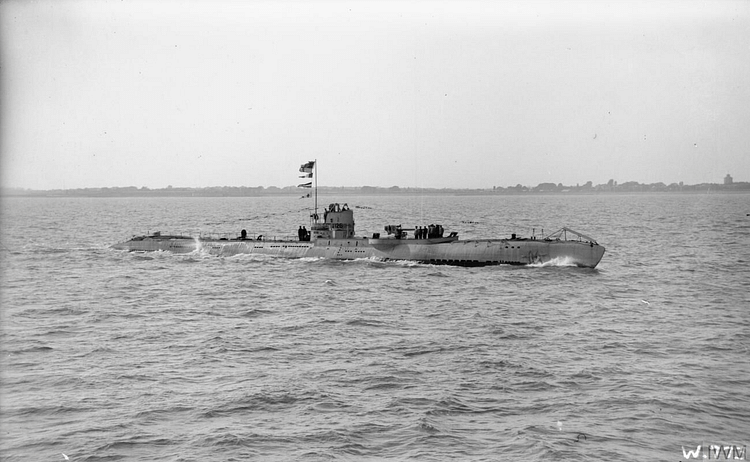 WWI Captured U-Boat Imperial War Museums (CC BY-NC-SA) ](https://www.worldhistory.org/image/20461/wwi-captured-u-boat/ "WWI Captured U-Boat")Eventually, the Allies presented effective countermeasures to submarines, such as ships taking more erratic routes, the use of armed convoys and aircraft to protect merchant ships, and the use of devices like the contact mine and the depth charge, effectively a timed bomb dropped into the sea. The convoy system was perhaps the most effective countermeasure. Of 88,000 ships that crossed the Atlantic as part of a convoy during the war, only 436 were hit by a torpedo. This allowed the construction of Allied shipping to outstrip losses at sea and vital supplies to reach [Europe](https://www.worldhistory.org/europe/).
Despite U-boats sinking over 5,000 Allied ships during the conflict, Germany could not win this war with submarines alone. Nevertheless, the weapon was revisited by Nazi Germany in WWII when, once again, U-boats, this time hunting in large ‘wolf packs', caused a great loss of life and material at sea.
[  WWI Zeppelin Leaving its Hangar Unknown Photographer (CC BY-NC-SA) ](https://www.worldhistory.org/image/20750/wwi-zeppelin-leaving-its-hangar/ "WWI Zeppelin Leaving its Hangar")### Zeppelins
Zeppelins were much like Germany's [giant](https://www.worldhistory.org/Giants/) guns, a weapon that seemed impressive on paper and certainly carried some psychological impact, but, in the end, turned out to be unsuccessful in achieving any strategic purpose. Airships were used by Germany for reconnaissance missions and to bomb targets in enemy territory, including Paris, London, and even [Scotland](https://www.worldhistory.org/disambiguation/Scotland/). Bombing raids, usually conducted at night, targeted key infrastructure like [railways](https://www.worldhistory.org/disambiguation/Railways/) and docks, dropping both explosive and incendiary bombs. For the first time in warfare, it was possible to bypass a nation's armed forces and attack the civilian population directly, opening up a new 'front', what became known as the home front. The bombing raids caused damage and 4,000 casualties across Europe, and of 117 airships in service, only 39 'Zeppelins' were ever shot down. Nevertheless, due to technical and numerical limitations and the threat from ever-improving airplanes, the Zeppelins, despite all the propaganda issued throughout the conflict, actually did little lasting damage, either to infrastructures or civilian morale. The real legacy of wartime airships was the technological advances that made intercontinental passenger flights possible in the 1920s and '30s. The [transatlantic Zeppelins](https://www.worldhistory.org/article/2752/the-transatlantic-zeppelins/), in particular, offered a new and glamorous glimpse into the future of air travel.
#### Editorial Review
This human-authored article has been reviewed by our editorial team before publication to ensure accuracy, reliability and adherence to academic standards in accordance with our [editorial policy](https://www.worldhistory.org/static/editorial-policy/).
## Bibliography
- [Bruce, Anthony. *An Illustrated Companion to the First World War.* Michael Joseph, 1989.](https://www.worldhistory.org/books/0718127811/)
- [Keegan, John. *The First World War.* Vintage, 2000.](https://www.worldhistory.org/books/0375700455/)
- [Simkins, Peter. *The First World War, Vol. 2.* Routledge, 2003.](https://www.worldhistory.org/books/0415968429/)
- [Voices of the First World War: Weapons of War | Imperial War Museums](https://www.iwm.org.uk/history/voices-of-the-first-world-war-weapons-of-war "Voices of the First World War: Weapons of War | Imperial War Museums"), accessed 9 Dec 2025.
- [Williams, Tim. *Conflict and Tension First World War.* Independently published, 2024.](https://www.worldhistory.org/books/B0DLBHNZNK/)
- [Winter, Jay. *The Cambridge History of the First World War.* Cambridge University Press, 2016.](https://www.worldhistory.org/books/1316601439/)
- [Yorke, Trevor. *The Trench.* Countryside Books, 2014.](https://www.worldhistory.org/books/1846743176/)
## About the Author
Mark is WHE’s Publishing Director and has an MA in Political Philosophy (University of York). He is a full-time researcher, writer, historian and editor. Special interests include art, architecture and discovering the ideas that all civilizations share.
## External Links
- [What impact did the First World War have on aircraft and aerial warfare? | IWM](https://www.iwm.org.uk/learning/resources/what-impact-did-the-first-world-war-have-on-aircraft-and-aerial-warfare)
- [Military Technology in World War I | Articles & Essays](https://www.loc.gov/collections/world-war-i-rotogravures/articles-and-essays/military-technology-in-world-war-i/)
- [Weapons of the Western Front](https://www.nam.ac.uk/explore/weapons-western-front)
## Cite This Work
### APA
Cartwright, M. (2025, December 10). Key German Weapons of World War I. *World History Encyclopedia*.
### Chicago
Cartwright, Mark. "Key German Weapons of World War I." *World History Encyclopedia*, December 10, 2025. .
### MLA
Cartwright, Mark. "Key German Weapons of World War I." *World History Encyclopedia*, 10 Dec 2025, .
## License & Copyright
Submitted by [Mark Cartwright](https://www.worldhistory.org/user/markzcartwright/ "User Page: Mark Cartwright"), published on 10 December 2025. The copyright holder has published this content under the following license: [Creative Commons Attribution-NonCommercial-ShareAlike](https://creativecommons.org/licenses/by-nc-sa/4.0/deed.en). This license lets others remix, tweak, and build upon this content non-commercially, as long as they credit the author and license their new creations under the identical terms. When republishing on the web a hyperlink back to the original content source URL must be included. Please note that content linked from this page may have different licensing terms.