---
title: Roman Women in Business
author: Laura K.C. McCormack
source: https://www.worldhistory.org/article/2726/roman-women-in-business/
format: machine-readable-alternate
license: Creative Commons Attribution-NonCommercial-ShareAlike (https://creativecommons.org/licenses/by-nc-sa/4.0/)
updated: 2025-05-19
---
# Roman Women in Business
_Authored by [Laura K.C. McCormack](https://www.worldhistory.org/user/laura.d4b/)_
[Roman](https://www.worldhistory.org/disambiguation/Roman/) [women](https://www.worldhistory.org/disambiguation/women/) faced legal, ideological, and cultural limitations in several areas of their lives; deep-rooted traditions regarding the [role of women in the Roman world](https://www.worldhistory.org/article/659/the-role-of-women-in-the-roman-world/) resulted in pre-conceived views which saw women characterised by weakness in judgement and mental incapacity.
The statesman [Cato the Elder](https://www.worldhistory.org/Cato_the_Elder/) (234-149 BCE), in a speech to the [Roman Senate](https://www.worldhistory.org/Roman_Senate/) in 195 BCE, stated that [Rome](https://www.worldhistory.org/Rome/)'s ancestors were unwilling to allow women undertake any business, even private business, without the authorisation of a guardian because a woman was compelled to be permanently under male authority, whether that was the authority under the *potestas* of her father, the *manus* of her husband, or guardianship known as *tutela mulierum*.
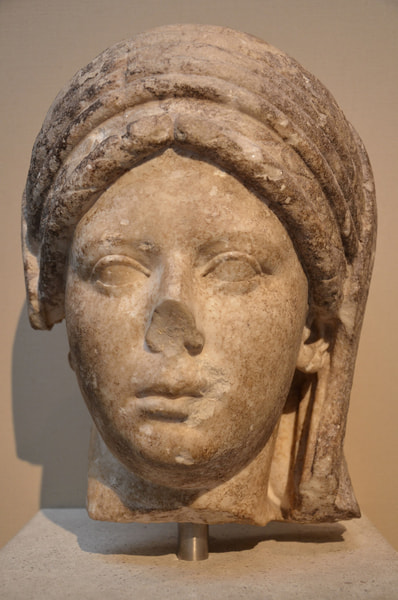
[  Marble Bust of a Roman Woman Osama Shukir Muhammed Amin (Copyright) ](https://www.worldhistory.org/image/6001/marble-bust-of-a-roman-woman/ "Marble Bust of a Roman Woman")### Guardianship
*Tutela mulierum* was the guardianship of a woman who was able to own property in her own right (*[sui](https://www.worldhistory.org/Sui_Dynasty/) iuris*), that is, independent of paternal authority or a husband's *manus (*a marriage where her property was given over to her husband). The guardian's function was to protect any money or property the woman may have inherited. The guardian did not administer the property, but he had to endorse major legal and financial transactions on the woman's behalf. For a period of time, there was also a certain category of guardians known as *tutores legitimi;* these guardians were typically the woman's nearest relative in the paternal line and exercised more effective power. In a worst case scenario, this power was also open to misuse and could see estates be effectively frozen for the benefit of guardians themselves. The practice of *tutores legitimi* was abolished by the [Roman emperor](https://www.worldhistory.org/Roman_Emperor/) [Claudius](https://www.worldhistory.org/claudius/) (r. 41-54 CE).
In 9 CE, Emperor [Augustus](https://www.worldhistory.org/augustus/) (r. 27 BCE to 14 CE) introduced the [law](https://www.worldhistory.org/disambiguation/law/) *ius liberorum*, which released freeborn women who had given birth to three children from the guardianship of *tutela mulierum*. Part of [Augustus' political, social, and moral reforms](https://www.worldhistory.org/article/116/augustus-political-social--moral-reforms/), this law was intended to encourage marriage and reproduction. The introduction of this law also indicates how the *tutela mulierum* was seen as sufficiently restrictive for its removal to be considered a significant incentive for women. Modern scholarship notes that, in a sense, 'guardianship' was arranged in a manner by which a woman's property transactions could always be checked by a male, usually a relative by blood or marriage, even when she was technically independent.
Due to the dangers of [childbirth in ancient Rome](https://www.worldhistory.org/article/2423/childbirth-in-ancient-rome/) and the high infant mortality, fertility rates needed to be high, and women indeed had several pregnancies in an effort to establish a family. We can assume that a good number of freeborn women fulfilled the criterion of having three children, although we cannot know exactly what those numbers were.
There are mixed scholarly opinions on Augustus' *ius liberorum*, some modern scholarship suggesting that this law was a watershed in the emancipation of women, whilst opposing scholarly opinion suggests that women in the [Roman Republic](https://www.worldhistory.org/Roman_Republic/) were already enjoying an emancipation and that Augustan law actually offered a legal recognition to what was in fact social practice. Certainly, this legislation had the potential to grant greater legal and financial freedom to a broader group of women, allowing them to deal with their property as they chose. This privilege constituted a significant legal innovation in that previously the only women free from this guardianship were the [Vestal Virgins](https://www.worldhistory.org/Vestal_Virgin/), Augustus' sister, [Octavia](https://www.worldhistory.org/disambiguation/Octavia/), and his wife, [Livia Drusilla](https://www.worldhistory.org/Livia_Drusilla/), by special grant in 35 BCE.
[  Vestal Virgin, British Museum Carole Raddato (CC BY-SA) ](https://www.worldhistory.org/image/2682/vestal-virgin-british-museum/ "Vestal Virgin, British Museum")However, despite these innovations, many women remained under guardianship. The late 2nd-century Roman jurist Gaius (130-180 CE) stated that the argument that women were weak-minded and subject to deception and therefore should be overseen by the authority of guardians is specious rather than true. He argued that there appears to be no worthwhile reason any woman should be in guardianship after reaching the age of maturity. Gaius remarked that women of a legal age conduct business in fact themselves, and in some cases, the guardian might give his consent only for form's sake (*Inst*. 1.190).
Several factors were playing an important part in increasing the economic power of woman in Roman society: the weakening of paternal power (*patria potestas*), the changing emphasis on *tutela mulierum* through legislation, and marriage '*cum manus'* being replaced with '*sine manus*'. A woman who had married '*cum manus*' would come under her husband's power; this was similar to *patria potestas* in that she was in the postion of daughter to her husband. Marriage '*cum manus*' entailed transfer of the woman's rights of her property and administration to her husband. On his [death](https://www.worldhistory.org/disambiguation/Death/), her rights of succession were equal to her children. Marriage '*sine manus*' saw the wife remain under the authority of her father. '*Sine manus*' meant that she kept her original familial ties and through them her right to succession from her father. The woman also kept her own property, and she remained in this type of marriage, legally independent from her husband.
### Women in Business
Women could supplement any inheritances over their lifetime through investment projects and commerce. [Cicero](https://www.worldhistory.org/Cicero/)'s friend, Caereillia, and [Pliny the Younger](https://www.worldhistory.org/Pliny_the_Younger/)'s (61/62 -113 CE) mother-in-law, Pompeia Celerina, are examples of women building up their portfolios; both engaged in speculative buying and loans to build up their considerable fortunes. Upper-class women had accumulated such a considerable amount of property that during the civil wars of the Republic, the [Second Triumvirate](https://www.worldhistory.org/Second_Triumvirate/) turned to the 1400 wealthiest women's assets to meet the pressing needs for revenue. The suggestion of funding the [war](https://www.worldhistory.org/disambiguation/War/) from the women's accumulataed wealth was met with intense and angry disapproval; one woman of this group, Hortensia, daughter of the famous orator and advocate Quintus Hortensius Hortalus (114 BCE to 50 CE), did the unthinkable as a female by defending the position of these women publicly before the Triumvirate in the [Roman Forum](https://www.worldhistory.org/Roman_Forum/), and she was successsful.
[  Hortensia before the Second Triumvirate POP (Public Domain) ](https://www.worldhistory.org/image/20460/hortensia-before-the-second-triumvirate/ "Hortensia before the Second Triumvirate")Women who were operating businesses may have managed their affairs personally, at least to the stage where they would have then required authorisation. Some women may have chosen to be represented by professional managers, *institores* who were usually slaves or freedpersons. Employing a manager also protected a woman from accusations of impropriety as business would have required interactions with other men; the use of a manager allowed her to operate in a manner compatible with traditional Roman values.
Banking tablets from the Archive of the Sulpicii of Puteoli (modern Pozzuoli) provide records of financial and commercial transactions dating from between 21 and 61 CE. 23 of these wax tablets record legal transactions carried out by women, indicating that women borrowed money and went to court for it. Some of these tablets present evidence for the businesses of senatorial women, including Domitia Lepida, who became the aunt of Emperor [Nero](https://www.worldhistory.org/Nero/). She was the owner of estates including famous villas at Baiae and Ravenna. Domitia Lepida also owned plots of land on which grain storehouses were built, financed by private investors. The banking records show the rent of a stall in a storehouse (*TPSulp*. 46). Caesia Priscilla is also named; she appears to be upper middle class, and her credit with the bank was impressive; Caesia's financial transactions, loans, and remittance deposits amount ot 24,000 sestertii.
Roman women are increasingly found as owners of landed property; investments were made in land and urban properties in different areas of [Italy](https://www.worldhistory.org/italy/), and these were sold or leased for commercial and manufacturing ventures. The funerary stone of Iunia Libertas, dated to the 1st-2nd century CE, records that she had managed to acquire a substantial property portfolio; she bequeathed the income from her garden apartments and shops to her former slaves. Terentia, wife of the statesman [Marcus Tullius Cicero](https://www.worldhistory.org/Cicero/) (106-43 BCE), owned woodlands and leased public land, probably for farming. Terentia's dowry included an apartment block in Rome, which she rented out; Cicero remarked, as a compliment, that she conducted business 'like a man'. The scholar Marcus Terentius Varro (116-27 BCE) writes of his aunt, who had small farm holdings which catered to a specialist market; she turned a profit by breeding birds for important occasions in Rome. Further evidence of women doing business is provided by the historian, [Plutarch](https://www.worldhistory.org/plutarch/) (46 CE to after 119 CE); he acknowledges the business acumen of dictator Lucius Cornelius [Sulla](https://www.worldhistory.org/sulla/)'s daughter, Cornelia Fausta, who, he notes, made a smart profit on the sale of a property, selling it for three times the purchase price ([Marius](https://www.worldhistory.org/Gaius_Marius/) 34.2). Interestingly, in a *responsum* of Emperor [Caracalla](https://www.worldhistory.org/Caracalla/) (198-217 CE), which concerned an elaborate property deal, we find that the buyer and the seller are both women, with the seller providing the financing for the transaction.
### Industry
Businesswomen are found in several areas of commerce, including wine production and export, lead pipe production, maritime [trade](https://www.worldhistory.org/disambiguation/trade/), shipping loans, and brick making. The production of bricks was one of the most vital manufacturing industries in Roman times, with evidence of export towards the main [cities](https://www.worldhistory.org/city/) of the [Mediterranean](https://www.worldhistory.org/disambiguation/mediterranean/). Brick production was typically carried out in workshops on large estates owned by a wealthy proprietor who had access to or owned clay beds. The bricks produced from these clay fields were stamped with the name of the owner of the clay bed from which the raw material was sourced and the name of the manager of the brick production. These brick stamps provide us with the names of both male and female owners of clay beds. During the first three centuries CE, about one-third of the known owners of clay bed areas were women.
One such *domina* was Domitia Lucilla the Younger, mother of [Marcus Aurelius](https://www.worldhistory.org/Marcus_Aurelius/) (r. 161-180 CE). Domitia, as the only heir, inherited clay beds from her grandfather, father, and uncle, respectively. These clay beds were so extensive that she could contract them out to several brick-makers. Archaeological evidence shows that nearly two-thirds of the large bricks found in the arches of the Villa of Sette Bassi in Rome originated from the brick yards of Domitia Lucilla. A stamped brick referring to her Terentian clay beds also refers to the workshop of Statia Primilla, where bricks were produced (*CIL*. XV 630). It is known that Domitia Lucilla also had 23 *officinatores*, managers of brick production, working for her. Domitia Lucilla's bricks have also been found in the [Trajan](https://www.worldhistory.org/trajan/) Market, the [Pantheon](https://www.worldhistory.org/Pantheon/), and the [Colosseum](https://www.worldhistory.org/Colosseum/). The Ashmolean Museum in Oxford has a collection of bricks from Portus, the main harbour of ancient Rome, some with the stamp of Domitia Lucilla the Younger.
Evidence of other women in this business includes Antonia Manliola (2nd century CE), who employed 3-4 *officinatores,* and Flavia Seia Isaurica, who operated her business for an exceptionally long period (at least between 115 and 141 CE) and employed at least 10 *officinatores*. The analysis of brick stamps shows that women in brick production were equal to men in terms of the scale of the business conducted.
In the Istrian region of modern Croatia, Roman landowners cultivated, harvested, and processed olives; they also had their own oil presses, cellars for storage, and ceramic workshops. A villa near the hill of Loron outside Parentium (modern Poreč) was likely owned at one time by the Roman businesswoman Calvia Crispinilla circa 70 CE. Calvia Crispinilla was of the court of Nero and the wife of Clodius Macer. Calvia was engaged in a successful oil production and possibly export business. Several olive oil [amphorae](https://www.worldhistory.org/Amphora/) were recovered from Poetovio in the Adriatic; on the necks of two amphorae containing Istrian oil, stamps bear the name of Calvia Crispinilla.
[  Amphorae Packed for Transportation Mark Cartwright (CC BY-NC-SA) ](https://www.worldhistory.org/image/5525/amphorae-packed-for-transportation/ "Amphorae Packed for Transportation") ### Conclusion
Roman women played an important role in the Roman [economy](https://www.worldhistory.org/disambiguation/economy/). Women on all levels of society could engage in commercial activities suited to their financial means and station in life. Women in upper-class society may have been curtailed by the legal and cultural limitations, however, businesswomen managed to operate within the confines of social and legal demands and restrictions. Modern scholarship notes that a woman's supposed 'weakness of judgement' is repeatedly asserted in rhetorical [literature](https://www.worldhistory.org/literature/) from Cicero onwards, and it certainly does not correspond to reality, as many women did and could competently handle their affairs. The legislation of Augustus went some way to weakening the practise of the guardianship of women, and by the 3rd century CE, the jurist Ulpian wrote that there was no question that women could conduct business and be involved in litigation about it (3.5 3.1).
#### Editorial Review
This human-authored article has been reviewed by our editorial team before publication to ensure accuracy, reliability and adherence to academic standards in accordance with our [editorial policy](https://www.worldhistory.org/static/editorial-policy/).
## Bibliography
- [Bruun, Christer & Edmondson, Jonathan. *The Oxford Handbook of Roman Epigraphy.* Oxford University Press, 2017.](https://www.worldhistory.org/books/0190860308/)
- [Cohen, Edward E. *Roman Inequality.* Oxford University Press, 2023.](https://www.worldhistory.org/books/0197687342/)
- [Dillon, Matthew & Garland, Lynda. *Ancient Rome.* Routledge, 2015.](https://www.worldhistory.org/books/0415726999/)
- [Dixon, Suzanne. *Reading Roman Women.* Bristol Classical Press, 2001.](https://www.worldhistory.org/books/0715629816/)
- [Eva Jakab. "Financial Transactions by Women in Puteoli." *New Frontiers*, edited by Paul du Plessis. Edinburgh University Press, 1970, 123-150.](https://www.worldhistory.org/books/B01MR1EHRQ/)
- [Fiona McHardy. *Women's Influence on Classical Civilization.* Routledge, 1789.](https://www.worldhistory.org/books/B01K0RQV96/)
- [GARDNER, Jane F. *Women in Roman Law and Society.* Indiana University Press, 1995.](https://www.worldhistory.org/books/B0028ARXD2/)
- J.F. Gardner. "Women in Business Life: Some Evidence from Puteoli." *Female Networks and the Public Sphere in Roman Society.*, edited by P. Setala. Institutum Romanum Finlandiae, 1999, 11-27.
- Kit Morrell. "Tutela Mulierum and the Augustan Marriage Laws ." *Eugesta*, 2020.
- [Nordic Symposium on Wom. *Aspects of Women in Antiquity.* Astrom, 1998.](https://www.worldhistory.org/books/9170811881/)
- [Winter, Bruce W. *Roman Wives, Roman Widows.* Wm. B. Eerdmans-Lightning Source, 2003.](https://www.worldhistory.org/books/0802849717/)
## About the Author
I studied Greek and Roman Classics, earning a BA in Classics and Philosophy and an MA in Classics. I have worked on projects which include Life in Roman Britain, Roman Death and Grieving, Women in Ancient Rome, the Lives of Young People in Ancient Rome.
## Cite This Work
### APA
McCormack, L. K. (2025, May 19). Roman Women in Business. *World History Encyclopedia*.
### Chicago
McCormack, Laura K.C.. "Roman Women in Business." *World History Encyclopedia*, May 19, 2025. .
### MLA
McCormack, Laura K.C.. "Roman Women in Business." *World History Encyclopedia*, 19 May 2025, .
## License & Copyright
Submitted by [Laura K.C. McCormack](https://www.worldhistory.org/user/laura.d4b/ "User Page: Laura K.C. McCormack"), published on 19 May 2025. The copyright holder has published this content under the following license: [Creative Commons Attribution-NonCommercial-ShareAlike](https://creativecommons.org/licenses/by-nc-sa/4.0/deed.en). This license lets others remix, tweak, and build upon this content non-commercially, as long as they credit the author and license their new creations under the identical terms. When republishing on the web a hyperlink back to the original content source URL must be included. Please note that content linked from this page may have different licensing terms.