---
title: Legions of Judea
author: Donald L. Wasson
source: https://www.worldhistory.org/article/1943/legions-of-judea/
format: machine-readable-alternate
license: Creative Commons Attribution-NonCommercial-ShareAlike (https://creativecommons.org/licenses/by-nc-sa/4.0/)
updated: 1970-01-01
---
# Legions of Judea
_Authored by [Donald L. Wasson](https://www.worldhistory.org/user/DWasson/)_
Judea was initially dependent on its neighbor [Syria](https://www.worldhistory.org/syria/) for military support until it received a [Roman](https://www.worldhistory.org/disambiguation/Roman/) legion of its own in 70 CE after the [Great Jewish Revolt of 66 CE](https://www.worldhistory.org/article/823/the-great-jewish-revolt-of-66-ce/). [Legio X Fretensis](https://www.worldhistory.org/Legio_X_Fretensis/) was stationed at remains of the burned [city](https://www.worldhistory.org/city/) of [Jerusalem](https://www.worldhistory.org/jerusalem/), serving as the resident legion. A second legion, Legio VI Ferrata was added in 117 CE and stationed at Caparcotna.
[  Legio X Fretensis Inscription on a Sword Belt Carole Raddato (CC BY-NC-SA) ](https://www.worldhistory.org/image/14451/legio-x-fretensis-inscription-on-a-sword-belt/ "Legio X Fretensis Inscription on a Sword Belt")### Formation & First Jewish Revolt
Judea came under Roman control in 63 BCE but was governed by client kings dependent on Roman support. In 6 CE, during the reign of the [Roman emperor](https://www.worldhistory.org/Roman_Emperor/) [Augustus](https://www.worldhistory.org/augustus/) (r. 27 BCE to 14 CE), it became the province of [Judaea](https://www.worldhistory.org/disambiguation/judaea/) and was ruled by a Roman governor with the capital of [Caesarea](https://www.worldhistory.org/disambiguation/Caesarea/), located on the [Mediterranean](https://www.worldhistory.org/disambiguation/mediterranean/) coast. The legions of Judea did not protect the East from external threats like the [legions of Syria](https://www.worldhistory.org/article/1921/legions-of-syria/). Instead, their major challenge came internally, namely the nationalistic and religious ideals of its people.
Normally, the Romans were tolerant of a province's religious practices; however, this was not true for the people of Judaea. The continued presence of the Romans and the strict ideals of the Jewish people were incompatible, resulting in the First Jewish Revolt in 66 CE. The revolt was initiated by the brutality and greed of the Roman procurator, or governor, of the province, Gessius Florus, in 64 CE. Arriving with two cohorts of the III Gallica, he was given the responsibility of subduing recent rioting as well as increasing the revenue from the province. Repeated protests against Florus' actions went unanswered by [Rome](https://www.worldhistory.org/Rome/). Cestius Gallus, governor of Syria, finally reacted to the continued rioting and complaints, but the rebellion had already grown out of control, costing the III Gallica over 1500 legionaries. Gallus went on the offensive with the legions XII Fulminata, IV Scythica, VI Ferrata, and X Fretensis. After destroying the city of Jotapata, the [Roman army](https://www.worldhistory.org/Roman_Army/) approached Jerusalem but, after a five-day siege, failed to capture the city, losing over 5,600 men in the process. The Romans had lost control of Judaea. Gallus' [death](https://www.worldhistory.org/disambiguation/Death/) soon afterwards and the failure to capture Jerusalem forced the Roman emperor [Nero](https://www.worldhistory.org/Nero/) (r. 54-68 CE) to appoint the future emperor [Titus](https://www.worldhistory.org/disambiguation/Titus/) Flavius Vespasianus (r. 69-79 CE) and his son Titus (r. 79-81 CE) to take command.
[Vespasian](https://www.worldhistory.org/Vespasian/) arrived in Judaea with the legions V Macedonica, XV Apollinaris, X Fretensis, and the remainder of the III Gallica – the depleted legion would eventually be transferred to Moesia. The [cities](https://www.worldhistory.org/city/) of Gabara, Jotapata (after a 47-day siege), Tiberias, Gamala, Taricheae, and Jericho all fell. However, the political climate in Rome forced Vespasian to postpone his offensive. In 69-71 CE, Titus was given the arduous task of capturing the heavily-walled city of Jerusalem. Titus commanded Legio V Macedonica, Legio XII Fulminata, and Legio XV Apollinaris – Legio X Fretensis arrived the following day. [Roman siege warfare](https://www.worldhistory.org/Roman_Siege_Warfare/) tactics were used, siege towers and battering rams were put in place. It took four months for the city to finally fall – the death toll was one million and 70,000 were taken prisoner. The city was burned to the ground but not before the looting ended. According to historian Stephen Dando-Collins' account in his *Legions of Rome*, blood flowed like water, and "It was a portrait of hell" (354).
[  The Siege and Destruction of Jerusalem David Roberts (1796-1864) (Public Domain) ](https://www.worldhistory.org/image/4032/the-siege-and-destruction-of-jerusalem/ "The Siege and Destruction of Jerusalem")Following the fall of Jerusalem, the Romans, under the command of Lucilius Bassus, would besiege Machaerus in 71 CE, leaving it a smoldering ruin. In 73 CE, legions under the command of Lucius Flavius Silva took [Masada](https://www.worldhistory.org/Masada/). Fearing the consequences of a Roman siege, the leaders of the city killed their families and then killed themselves. When the X Fretensis finally entered, they found nothing but silence. Cohorts of the legion would remain at Masada for the next 40 years.
### Second Jewish Revolt
Some historians claim [the Bar-Kochba Revolt](https://www.worldhistory.org/The_Bar-Kochba_Revolt/) was the result of Emperor [Hadrian](https://www.worldhistory.org/hadrian/)'s (r. 117-138 CE) attitude towards Judaea. The temperament of the Jewish people had never changed after the failure of the first revolt. Although a small settlement had grown around the fortress of the X Fretensis, Jerusalem, the symbol of their heritage and faith, remained a ruin. After visiting the old city, the emperor ordered a new city, Aelia Capitolina, be built on its site. It was immediately given *colonia* status (the highest status of a Roman city). To add to the insult, a [temple](https://www.worldhistory.org/temple/) dedicated to the Roman [god](https://www.worldhistory.org/God/) [Jupiter](https://www.worldhistory.org/jupiter/) was also erected; the old Temple Mount had been removed. Retiring legionaries were invited to settle in the new city. Old customs such as circumcision were banned. The Jewish residents were incensed by the emperor's actions – a pagan temple and foreign settlers were too much to tolerate. A second revolt, led by Simon Bar Kochba, appeared to be the only answer.
[ 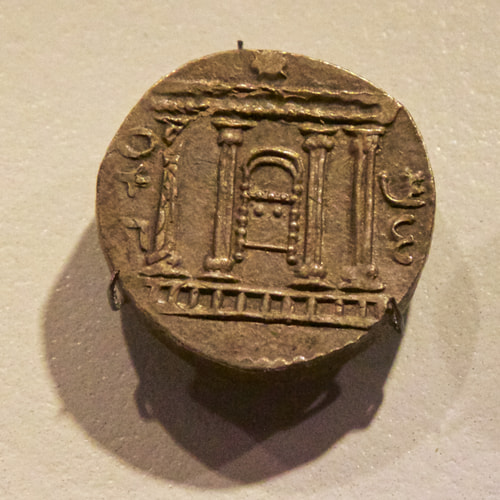 Bar Kochba Coin Nick Thompson (CC BY-NC-SA) ](https://www.worldhistory.org/image/9140/bar-kochba-coin/ "Bar Kochba Coin")All of the signs of a potential revolt were ignored by Rome. In 132 CE, the revolt became real when the X Fretensis at old Jerusalem and the VI Ferrata at Caparcotna were caught off guard. Hadrian called upon Sextus Severus, governor of [Britain](https://www.worldhistory.org/disambiguation/Britain/), to take command with the legions V Macedonica, III Cyrenaica, II Traiana, III Gallica, and XI Claudia joining him. Bar Kochba made his headquarters at Bethar. After two years of fighting, Bethar remained the last city to be taken. Legio V Macedonica and Legio XI Claudia laid siege to the city. According to Dando-Collins, "With the fall of Bethar and massacre of all those within its walls, the Second Jewish Revolt had come to its bloody conclusion" (437).
Hadrian ordered that all Jews were banned from entering or approaching the old Jerusalem site. Although some Jewish people remained, others were killed, exiled, or enslaved. Historian Barry Strauss in his *Ten Caesars* wrote that during the time of [Constantine I](https://www.worldhistory.org/Constantine_I/) (r. 306-337 CE), Jerusalem was rebuilt, but not as a Jewish city, rather as a Christian one. Syria Palestina was rebranded as the Christian Holy Land, the center of Christian pilgrimage.
### Legio X Fretensis
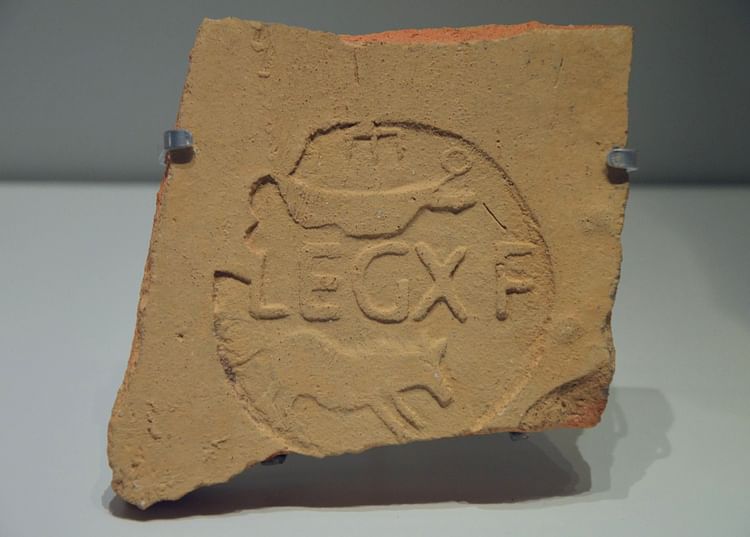
The legion X Fretensis (emblem: bull, warship, and dolphin; birth sign: Taurus) may have been founded by [Julius Caesar](https://www.worldhistory.org/Julius_Caesar/) (100-44 BCE) around 61 BCE and served with him throughout the Gallic Wars and the Civil Wars that followed. According to his own writings, the 10th was his favorite legion. However, since legions at that time were known by number and not a name, some believe the tenth of his Gallic accounts was not the X Fretensis. There are those who claim the legion was formed during [Octavian](https://www.worldhistory.org/augustus/)'s rise to power. The legion's emblem of the dolphin implies that some of its members may have served as marines during the [Battle of Actium](https://www.worldhistory.org/Battle_of_Actium/) in 31 BCE.
In contrast, those who credit [Caesar](https://www.worldhistory.org/disambiguation/caesar/) as the legion's founder cite his accounts of the Gallic Wars. In a meeting with the Suebi king Ariovistus, Caesar brought along "…the Tenth, knowing well that on these he could rely; should any emergency then arise, he would have round him an absolutely devoted bodyguard" (*[Conquest](https://www.worldhistory.org/warfare/) of [Gaul](https://www.worldhistory.org/gaul/)*, 31). Historians agree that after Caesar's death, a tenth legion fought with Octavian. Afterwards, it was transferred to the East and stationed at Zeugma, guarding the Euphrates crossing. Later, when [Germanicus](https://www.worldhistory.org/Germanicus/) (15 BCE to 19 CE) arrived as commander of the army of the East in 17 CE, the legion was stationed at its winter quarters of Cyrrhus.
The 10th was one of the [legions of the Parthian Wars](https://www.worldhistory.org/article/1764/legions-of-the-parthian-wars/) led by Gnaeus Corbulo in 58 CE when he marched into [Armenia](https://www.worldhistory.org/armenia/) from Cappadocia. The legions quickly conquered the city of Volandum where all adult males were executed. After taking Artaxata ([Artashat](https://www.worldhistory.org/Artashat/)), he ordered all citizens to leave and had the city burned to the ground. Following the surrender of [Tigranocerta](https://www.worldhistory.org/Tigranocerta/), Corbulo withdrew to Syria, but the Armenian peace was short-lived. In 62 CE, [Parthia](https://www.worldhistory.org/disambiguation/Parthia/) reasserted its claim to Armenia. In response to Corbulo's appeal, Rome sent the overconfident Caesennius Paetus to help. [Tacitus](https://www.worldhistory.org/tacitus/) wrote how the 4th, 12th, and 5th legions were with Paetus on his disastrous incursion into Armenia while "the third, sixth and tenth legions and the old soldiery of Syria remained with Corbulo" (*Annals*, 15.60.) In the end, Corbulo was able to defeat the Parthians and renegotiate a treaty from a position of strength; Parthia withdrew from Armenia.
While the legion's participation in the Second Jewish [War](https://www.worldhistory.org/disambiguation/War/) is unclear, the X Fretensis found itself embroiled in the First Jewish War. Having provided cohorts to Gallus' failed siege of Jerusalem, the whole legion joined Vespasian and served with him, taking the cities of Gabara and Jotapata among others. Later, the X Fretensis was with Titus and his siege of Jerusalem. The legion fought with Silva in the siege of Masada in 73 CE. Much later, the 10th participated in [Trajan](https://www.worldhistory.org/trajan/)'s (r. 98-117 CE) campaign and may have been with both [Lucius Verus](https://www.worldhistory.org/Lucius_Verus/) (r. 161-169 CE) and [Septimius Severus](https://www.worldhistory.org/Septimius_Severus/) (193-211 CE) against the Parthians. However, the legion supported the claimant Pescennius Niger against Severus in 193 CE. There is some evidence it served under [Marcus Aurelius](https://www.worldhistory.org/Marcus_Aurelius/) (r. 161-180 CE) in his Marcomanni campaign. The legion remained in Jerusalem until the 3rd century CE.
[  Stamp of Legio X Fretensis Carole Raddato (CC BY-NC-SA) ](https://www.worldhistory.org/image/14448/stamp-of-legio-x-fretensis/ "Stamp of Legio X Fretensis")### Legio VI Ferrata
The legion VI Ferrata (emblem: bull; birth sign: Gemini) probably served under [Julius](https://www.worldhistory.org/disambiguation/Julius/) Caesar in Gaul and in the subsequent Civil Wars against [Pompey](https://www.worldhistory.org/pompey/) (106-48 BCE). The historian [Suetonius](https://www.worldhistory.org/Suetonius/) (c. 69 to c. 130/140 CE) in his *Twelve Caesars* wrote of the 6th legion at the [Battle](https://www.worldhistory.org/disambiguation/battle/) of Dyrrhachium in 48 BCE: "A single cohort of the Sixth Legion held a fort against four Pompeian legions for [hours](https://www.worldhistory.org/Horae/), though almost every man had been repeatedly wounded by arrow shot …. "(*Twelve Caesars, Divus Julius*, 68). According to some sources, the 6th followed him into battle at Pharsalus and Zela.
However, according to Dando-Collins, the 6th has a more puzzling beginning. It could have originally been part of Pompey's army in Spain and was loaned to Caesar for his campaign in Gaul. The legion was returned to Pompey by 50 CE, and after the wars erupted between Pompey and Caesar in 49 CE, the 6th surrendered to Caesar in Spain. Some cohorts escaped and fought with Pompey in [Greece](https://www.worldhistory.org/greece/). After Pompey's defeat at the [Battle of Pharsalus](https://www.worldhistory.org/article/697/the-battle-of-pharsalus/), cohorts of the 4th and 6th fled to North [Africa](https://www.worldhistory.org/disambiguation/africa/). Fewer than 1,000 legionaries of the 6th remained. These men joined Caesar and fought with him at Zela and against Pompey's sons in Spain. The cohorts of the 6th at the Battle of Thapsus in North Africa in 46 BCE became the VI Victrix, fighting with Octavian in his Cantabrian Wars. Following Caesar's death, the VI Ferrata fought for [Mark Antony](https://www.worldhistory.org/Mark_Antony/) (83-30 BCE) at Actium but afterwards joined Octavian's standing army. Later, the legion was sent to Syria to be stationed at Raphanaea.
The 6th was with Corbulo while Paetus marched unsuccessfully into Armenia. During the First Jewish War, the legion provided four cohorts to Corbulo's failed siege of Jerusalem. After Vespasian was declared emperor, the Syrian governor Licinius Mucianus led a force, including VI Ferrata, towards [Italy](https://www.worldhistory.org/italy/) only to be delayed at Moesia to fight against Sarmatian raiders from across the Danube. The legion finally reached Rome and aided in controlling the city until the arrival of Vespasian. The legion also participated in Trajan's Parthian campaign of 111-116 CE, and it was eventually transferred to Judaea and stationed at Caparcotna. Evidence shows that the 6th supported both Lucius Verus and Marcus Aurelius’ in their respective campaigns. In 193 CE, the legion was loyal to Septimius Severus. Although the legion spent some time in [Arabia](https://www.worldhistory.org/Arabia/), it ended its existence at Caparcotna.
#### Editorial Review
This human-authored article has been reviewed by our editorial team before publication to ensure accuracy, reliability and adherence to academic standards in accordance with our [editorial policy](https://www.worldhistory.org/static/editorial-policy/).
## Bibliography
- [BERRY JOANNE/POLLARD. *The Complete Roman Legions /anglais.* THAMES HUDSON, 2012.](https://www.worldhistory.org/books/0500291837/)
- [Carlos Gómez (Editor). *The Encyclopedia of the Ancient Roman Empire.* Amber Books Ltd, 2019.](https://www.worldhistory.org/books/1782746943/)
- [Dando-Collins, Stephen. *Legions of Rome.* St. Martins Press, 2010.](https://www.worldhistory.org/books/1250004713/)
- [Jack Watkins (editor). *The Greatest Battles in History.* Amber Books Ltd, 2017.](https://www.worldhistory.org/books/1782745440/)
- [Strauss, Barry. *Masters of Command.* Simon & Schuster, 2013.](https://www.worldhistory.org/books/1439164495/)
- [Strauss, Barry. *Ten Caesars.* Simon & Schuster, 2020.](https://www.worldhistory.org/books/1451668848/)
- [Tacitus. *Complete Works of Tacitus.* Modern Library.](https://www.worldhistory.org/books/0075536390/)
## About the Author
Donald has taught Ancient, Medieval and U.S. History at Lincoln College (Normal, Illinois)and has always been and will always be a student of history, ever since learning about Alexander the Great. He is eager to pass knowledge on to his students.
## Cite This Work
### APA
Wasson, D. L. (2022, February 16). Legions of Judea. *World History Encyclopedia*.
### Chicago
Wasson, Donald L.. "Legions of Judea." *World History Encyclopedia*, February 16, 2022. .
### MLA
Wasson, Donald L.. "Legions of Judea." *World History Encyclopedia*, 16 Feb 2022, .
## License & Copyright
Submitted by [Donald L. Wasson](https://www.worldhistory.org/user/DWasson/ "User Page: Donald L. Wasson"), published on 16 February 2022. The copyright holder has published this content under the following license: [Creative Commons Attribution-NonCommercial-ShareAlike](https://creativecommons.org/licenses/by-nc-sa/4.0/deed.en). This license lets others remix, tweak, and build upon this content non-commercially, as long as they credit the author and license their new creations under the identical terms. When republishing on the web a hyperlink back to the original content source URL must be included. Please note that content linked from this page may have different licensing terms.