---
title: Legions of Noricum, Raetia & Dacia
author: Donald L. Wasson
source: https://www.worldhistory.org/article/1878/legions-of-noricum-raetia--dacia/
format: machine-readable-alternate
license: Creative Commons Attribution-NonCommercial-ShareAlike (https://creativecommons.org/licenses/by-nc-sa/4.0/)
updated: 2025-12-16
---
# Legions of Noricum, Raetia & Dacia
_Authored by [Donald L. Wasson](https://www.worldhistory.org/user/DWasson/)_
The provinces Noricum, Raetia, and [Dacia](https://www.worldhistory.org/dacia/) served as a buffer protecting [Roman Empire](https://www.worldhistory.org/Roman_Empire/) against any possible outside threat. However, the region posed several internal problems for [Rome](https://www.worldhistory.org/Rome/): Pannonia and its ally Dalmatia rebelled against [Roman](https://www.worldhistory.org/disambiguation/Roman/) occupancy, causing a three-year [war](https://www.worldhistory.org/disambiguation/War/), and Moesia was invaded by the Dacians during the reigns of both [Domitian](https://www.worldhistory.org/domitian/) (r. 81-96 CE) and [Trajan](https://www.worldhistory.org/trajan/) (r. 98-117 CE).
Lastly, during the 2nd and 3rd centuries CE, the region was repeatedly invaded by the [Goths](https://www.worldhistory.org/Goths/), [Alemanni](https://www.worldhistory.org/alemanni/), and Marcomanni. While Noricum, Raetia, and Dacia provided a buffer between Rome and the Germanic tribes to the north, in time, they succumbed to the invaders they were supposed to keep out.
[ 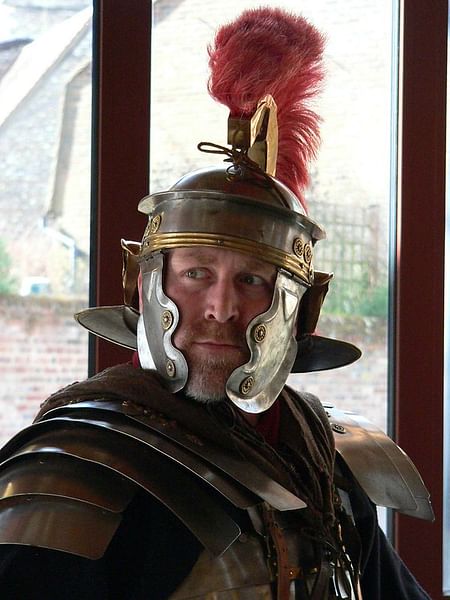 Roman Officer from Legio XIII Gemina Mary Harrsch (CC BY-NC-SA) ](https://www.worldhistory.org/image/14904/roman-officer-from-legio-xiii-gemina/ "Roman Officer from Legio XIII Gemina")### The Province of Noricum
Located in the eastern Alps between Raetia and Pannonia, its ideal location south of the Danube and rich deposits of iron ore and [gold](https://www.worldhistory.org/gold/) made Noricum a valuable asset to the coffers of the Roman [Empire](https://www.worldhistory.org/empire/). The discovery of gold in the 2nd century BCE had drawn Roman settlers into the region only to be quickly expelled by the native Taurisci. However, Roman merchants continued to conduct business through small trading settlements. Always viewed as an ally, the region was finally conquered in 16 BCE during the reign of [Roman emperor](https://www.worldhistory.org/Roman_Emperor/) [Augustus](https://www.worldhistory.org/augustus/) (r. 27 BCE to 14 CE). However, unlike other provinces, it did not receive a legion of its own – Legio Italica II – until the reign of [Marcus Aurelius](https://www.worldhistory.org/Marcus_Aurelius/) (161-180 CE). The province was later divided into two – Noricum Ripensis and Noricum [Mediterranean](https://www.worldhistory.org/disambiguation/mediterranean/) – by [Diocletian](https://www.worldhistory.org/Diocletian/) (284-305 CE). It was invaded by northern Germanic tribes and abandoned in the 5th century CE.
### Legio II Italica
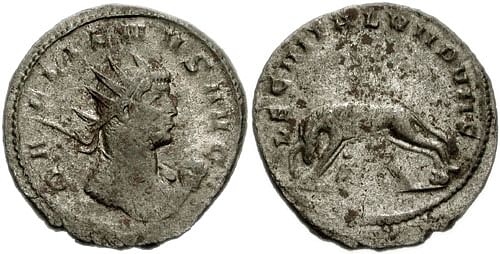
Legio II Italica (emblem: wolf; birth sign: Capricorn) was raised by Marcus Aurelius in [Italy](https://www.worldhistory.org/italy/) along with Legio III Italica for his campaign against the Marcomanni of 164-165 CE, earning the name Italica. There is some confusion concerning its first base. While some historians contend it to be Ločica (Lotschitz) in Dalmatia, others claim it to be Aquileia in northeastern Italy. Regardless, the legion's primary function was to guard the route from Pannonia to Aquileia against threats from Germanic invaders. Both legions are believed to have served with [Pertinax](https://www.worldhistory.org/Pertinax/) (r. 193 CE) in his war against the Marcomanni. Stationed briefly at Albing (modern Austria), Legio II Italica finally found a permanent base at Lauriacum (modern Enns, Austria), the home of the Noricum governor.
The legion supported [Septimius Severus](https://www.worldhistory.org/Septimius_Severus/) (193-211 CE) in both his claim to the Roman throne and his war against the pretenders Pescennius Niger and Clodius Albinus. Although sources are unsure, II Italica may have served with the emperor [Maximinus Thrax](https://www.worldhistory.org/Maximinus_Thrax/) (r. 235-238 CE) in his Dacian Wars of 235- 236 CE. The legion later supported [Gallienus](https://www.worldhistory.org/Gallienus/) (r. 253-268 CE) against the pretender [Postumus](https://www.worldhistory.org/Postumus/), self-proclaimed emperor of the Gallic Empire, receiving the title *Pia V Fidelis* ("Five Times Dutiful and Loyal"). There is some evidence a unit of the legion was with [Constantine I](https://www.worldhistory.org/Constantine_I/) (r. 306-337 CE) at the [Battle](https://www.worldhistory.org/disambiguation/battle/) of the Milvian Bridge in 312 CE. According to historian Stephen Dando-Collins, during a reorganization of the [Roman army](https://www.worldhistory.org/Roman_Army/), the legion became a part of the *comitatenses* under the command of the Duke of Pannonia and Noricum Ripensis. Like its province, it would eventually succumb to Gothic invaders.
[  Legio II Italica Panairjdde (CC BY-SA) ](https://www.worldhistory.org/image/14903/legio-ii-italica/ "Legio II Italica")### The Province of Raetia
The province of Raetia was annexed to the Roman Empire in 15 BCE by the Roman commander and future emperor [Tiberius](https://www.worldhistory.org/Tiberius/) (r. 14-37 CE). Like its neighbor Noricum, it did not receive a permanent legion of its own – Legio III Italica – until the reign of Marcus Aurelius. In 233 CE, the province was invaded and ravaged by the Alemanni from southwestern Germany. Later, during the [Crisis of the Third Century](https://www.worldhistory.org/Crisis_of_the_Third_Century/), the [Franks](https://www.worldhistory.org/Franks/) and Alemanni invaded [Roman Gaul](https://www.worldhistory.org/Roman_Gaul/), Raetia and northern Italy in 259 CE. The result was the formation of the Gallic Empire under Postumus.
### Legio III Italica
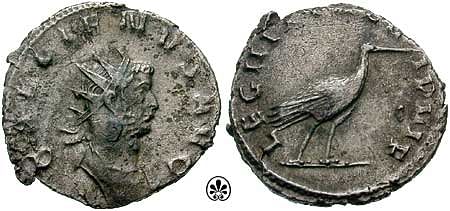
Legio III Italica (emblem: stork; birth sign: Capricorn) was raised by Marcus Aurelius in Italy for his war against the Marcomanni. Its first base is unknown, possibly Aquileia, but it served as part of a mobile reserve commanded by Quintus Adventus during Marcus Aurelius' campaign. Temporarily based at Eining in Noricum around 172 CE, the legion was transferred to Castra Regina (modern Regensburg) in Raetia in 179 CE, where it remained until the 5th century CE. Like its sister legion, it was with Pertinax in the Marcomannic Wars. After the [death](https://www.worldhistory.org/disambiguation/Death/) of Pertinax, the legion supported Septimius Severus in his claim to the throne. Later, the legion was with [Caracalla](https://www.worldhistory.org/Caracalla/) (r. 198-217 CE) in his Parthian campaign. There is some evidence III Italica was with [Gordian III](https://www.worldhistory.org/Gordian_Emperors/) (r. 238-244 CE) against the [Sasanian Empire](https://www.worldhistory.org/Sasanian_Empire/) in 244 CE. Like II Italica, it was later reduced to *comitatenses*.
[  Legio III Italica Panairjdde (CC BY-SA) ](https://www.worldhistory.org/image/14905/legio-iii-italica/ "Legio III Italica")### The Province of Dacia
Until 85 CE, the territory of Dacia never posed a serious threat to its neighbors. This changed when [Decebalus](https://www.worldhistory.org/Decebalus/) assumed the throne. In that year, he and his army crossed the Danube and entered unprovoked into the Roman province of Moesia. The [legions of the Dacian Wars](https://www.worldhistory.org/article/1772/legions-of-the-dacian-wars/) finally brought the region into the Roman Empire in 106 CE, and Dacian gold paid for the Forum of Trajan. Two legions were permanently stationed in Dacia: Legio V Macedonica and Legio XIII Gemina. The border of Dacia was difficult to defend against Germanic invaders, so Emperor [Aurelian](https://www.worldhistory.org/Aurelian/) (r. 270-275 CE) resettled the Roman citizens and redrew its borders. Taking land from Moesia and Noricum, he created Dacia Ripensis and Dacia Mediterranean.
### Legio V Macedonica
The origin of Legio V Macedonica (emblem: bull; birth sign: unknown) is unclear. It reportedly served with [Octavian](https://www.worldhistory.org/augustus/) at the Battle of Mutina in 43 BCE. From 30 BCE to 6 CE, it was based in Macedonia, hence the name Macedonica. In 6 CE, it was transferred to Oescus in Moesia (in modern Bulgaria). It may have participated in Emperor [Claudius](https://www.worldhistory.org/claudius/)' (r. 41-54 CE) annexation of Thrace. In 62 CE, the legion was transferred to the army of Caesennius Paetus in Cappadocia for his war in [Armenia](https://www.worldhistory.org/armenia/), but it was left in Pontus while the overconfident Paetus only took two legions with him. Afterwards, the V Macedonica would follow Domitius Corbulo in his successful Armenian campaign. In his *Annals* the historian [Tacitus](https://www.worldhistory.org/tacitus/) wrote of the Armenian war:
> … and thus, the legions were divided: the fourth and twelfth legions (IV Scythica and XII Fulminata), with the fifth which had lately been raised in Moesia and the auxiliaries from Pontus, [Galatia](https://www.worldhistory.org/galatia/) and Cappadocia, were under the command of Paetus… (*Annals* 15.6.)
The V Macedonica would see action with [Vespasian](https://www.worldhistory.org/Vespasian/)'s son [Titus](https://www.worldhistory.org/disambiguation/Titus/) (r. 79-81) in the First Jewish War following the [Great Jewish Revolt of 66 CE](https://www.worldhistory.org/article/823/the-great-jewish-revolt-of-66-ce/) and at the [siege of Jerusalem in 70 CE](https://www.worldhistory.org/article/1993/the-siege-of-jerusalem-in-70-ce/). Returning to Moesia, the legion was with both Domitian and Trajan in the Dacian Wars. The future emperor [Hadrian](https://www.worldhistory.org/hadrian/) (r. 117-138 CE) served as an officer in both the V Macedonica and Legio II Adiutrix. Later, stationed a Troesmis in Lower Moesia (modern Romania), the legion guarded the northwest coast of the Black Sea and the Greek cities on the Crimea.
[ 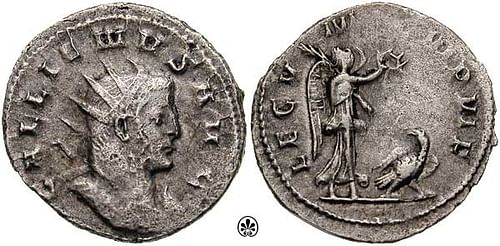 Legio V Macedonica Panairjdde (CC BY-SA) ](https://www.worldhistory.org/image/14902/legio-v-macedonica/ "Legio V Macedonica")In 135 CE, the legion was in [Palestine](https://www.worldhistory.org/palestine/) where it helped suppress [the Bar-Kochba Revolt](https://www.worldhistory.org/The_Bar-Kochba_Revolt/) and aid in the siege of Bethar. After [Lucius Verus](https://www.worldhistory.org/Lucius_Verus/)' (r. 161-169 CE) campaign against [Parthia](https://www.worldhistory.org/disambiguation/Parthia/), the legion participated in Marcus Aurelius' war against the Marcomanni. Later, the V Macedonica was stationed at Potaissa in Dacia. It supported Septimius Severus, with a cohort of the legion accompanying him as he marched into Rome. In 274 CE, when Dacia was surrounded by barbaric invaders, the legion withdrew to Oescus.
### Legio XIII Gemina
Legio XIII Gemina (emblem: lion; birth sign: Capricorn) was formed by [Julius Caesar](https://www.worldhistory.org/Julius_Caesar/) (100-44 BCE) for his campaign against the Belgae in 57 BCE and followed him for the remainder of the Gallic Wars, crossing the [Rubicon](https://www.worldhistory.org/disambiguation/Rubicon/) with him in 49 BCE. In the preface of his book *Rubicon*, Tom Holland writes of the 13th legion:
> Lined up in full marching order, soldiers from the 13th legion stood massed in the dark. ... For eight years they had been following the governor of [Gaul](https://www.worldhistory.org/gaul/) on campaign after bloody campaign, through snow, through summer heat, to the margins of the world. (xiii)
The legion was disbanded only to be reconstituted by Octavian in 41 BCE, fighting with him against Sextus [Pompey](https://www.worldhistory.org/pompey/) in [Sicily](https://www.worldhistory.org/sicily/). It is unknown whether or not XIII Gemina was with the future emperor at the [Battle of Actium](https://www.worldhistory.org/Battle_of_Actium/) in 31 BCE; however, it was later combined with disgraced legions in 30 BCE, obtaining the name Gemina. It was with Drusus in his German campaign of 20-15 BCE. After serving with Tiberius in his Raetian campaign of 15 BCE, it was transferred to Ljubljana in Pannonia until 6 CE when it was with Tiberius and his suppression of the Pannonian Revolt.
[ 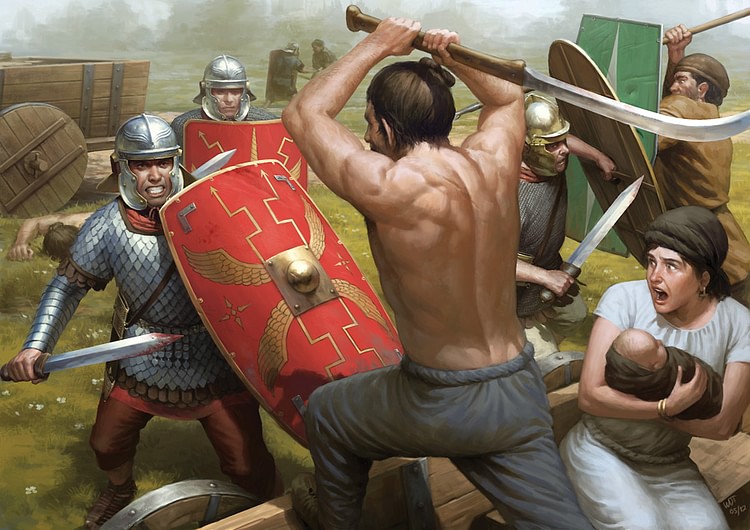 Romans Fighting Dacian & Germanic Warrriors Ancient Warfare Magazine / Karwansaray Publishers (Copyright) ](https://www.worldhistory.org/image/11766/romans-fighting-dacian--germanic-warrriors/ "Romans Fighting Dacian & Germanic Warrriors")After the [Battle of Teutoburg Forest](https://www.worldhistory.org/article/1010/battle-of-teutoburg-forest/) where [Publius Quinctilius Varus](https://www.worldhistory.org/Publius_Quinctilius_Varus/) lost three legions in 9 CE, the XIII Gemina was transferred to Moguntiacum (modern Mainz, Germany) before moving to Vindobona (modern Vienna, Austria) to serve with [Germanicus](https://www.worldhistory.org/Germanicus/). During the [Year of the Four Emperors](https://www.worldhistory.org/Year_of_the_Four_Emperors/) in 69 CE, the legion supported [Otho](https://www.worldhistory.org/Otho/) and served with him at the First Battle of Bedriacum against [Vitellius](https://www.worldhistory.org/Vitellius/), where it was defeated by [Legio V Alaudae](https://www.worldhistory.org/Legio_V_Alaudae/) and later accused of cowardice. Afterwards, the legion was with Vespasian's army at the Second Battle of Bedriacum and Cremona. Following Vitellius' defeat, the legion was stationed again at Vindobona, where it served with Domitian in his Dacian Wars and at the Roman victory at the Battle of Tapae. The legion was with Trajan and his Dacian campaign and followed Hadrian against the Sarmatians. Stationed briefly in Apulum (in modern Romania), the XIII Gemina was in Palestine during the suppression of the Second Jewish Revolt of 132-135 CE.
The legion participated in the Marcomannic Wars under Marcus Aurelius and fought against the Dacians under [Commodus](https://www.worldhistory.org/commodus/) (r. 180-192 CE). It supported Septimius Severus in 193 CE and joined with him against the claimant Pescennius Niger. Little is known of the legion afterwards except it was in Dacia until the province was abandoned by the Romans.
#### Editorial Review
This human-authored article has been reviewed by our editorial team before publication to ensure accuracy, reliability and adherence to academic standards in accordance with our [editorial policy](https://www.worldhistory.org/static/editorial-policy/).
## Bibliography
- [Adrian Goldsworthy. *Pax Romana.* Yale University Press, 2016.](https://www.worldhistory.org/books/1799986160/)
- [Dando-Collins, Stephen. *Legions of Rome.* Thomas Dunne Books, 2012.](https://www.worldhistory.org/books/1250004713/)
- [Grant, Michael. *The Roman Emperors.* Barnes & Noble Books, 1997.](https://www.worldhistory.org/books/0760700915/)
- [Pollard, Nigel & Berry, Joanne. *The Complete Roman Legions.* Thames & Hudson, 2012.](https://www.worldhistory.org/books/0500251835/)
- [Scarre, Chris. *Chronicle of the Roman Emperors.* Thames & Hudson, 1995.](https://www.worldhistory.org/books/0500050775/)
- [Sommer, Michael. *The Complete Roman Emperor.* Thames & Hudson, 2010.](https://www.worldhistory.org/books/0500251673/)
- [Tacitus, Cornelius. *The Complete Works of Tacitus.* Modern Library.](https://www.worldhistory.org/books/1420947141/)
- [Tom Holland. *Rubicon.* Anchor, 2005.](https://www.worldhistory.org/books/1400078970/)
## About the Author
Donald has taught Ancient, Medieval and U.S. History at Lincoln College (Normal, Illinois)and has always been and will always be a student of history, ever since learning about Alexander the Great. He is eager to pass knowledge on to his students.
## Cite This Work
### APA
Wasson, D. L. (2021, November 24). Legions of Noricum, Raetia & Dacia. *World History Encyclopedia*.
### Chicago
Wasson, Donald L.. "Legions of Noricum, Raetia & Dacia." *World History Encyclopedia*, November 24, 2021. .
### MLA
Wasson, Donald L.. "Legions of Noricum, Raetia & Dacia." *World History Encyclopedia*, 24 Nov 2021, .
## License & Copyright
Submitted by [Donald L. Wasson](https://www.worldhistory.org/user/DWasson/ "User Page: Donald L. Wasson"), published on 24 November 2021. The copyright holder has published this content under the following license: [Creative Commons Attribution-NonCommercial-ShareAlike](https://creativecommons.org/licenses/by-nc-sa/4.0/deed.en). This license lets others remix, tweak, and build upon this content non-commercially, as long as they credit the author and license their new creations under the identical terms. When republishing on the web a hyperlink back to the original content source URL must be included. Please note that content linked from this page may have different licensing terms.