---
title: Discovering the Glories of Persia
author: Carole Raddato
source: https://www.worldhistory.org/article/1871/discovering-the-glories-of-persia/
format: machine-readable-alternate
license: Creative Commons Attribution-NonCommercial-ShareAlike (https://creativecommons.org/licenses/by-nc-sa/4.0/)
updated: 1970-01-01
---
# Discovering the Glories of Persia
_Authored by [Carole Raddato](https://www.worldhistory.org/user/FollowingHadrian/)_
Iran, or [Persia](https://www.worldhistory.org/Persia/) as it was formerly known, is a country with a long and rich history stretching back thousands of years and where many civilisations thrived. With 24 historical sites registered on the UNESCO World Heritage List and each with its own story to tell, Iran offers an incredible variety of archaeological and cultural wonders.
There is no shortage of wonderful places to explore in Iran from ziggurats to ancient palaces, Zoroastrian temples, sublime mosques, Christian monasteries, and beautiful Persian gardens.
[  Huma Birds Carole Raddato (CC BY-SA) ](https://www.worldhistory.org/image/11327/huma-birds/ "Huma Birds")Iran still lies far off the beaten track for most travellers, and the negative portrayal of the country in the western [media](https://www.worldhistory.org/disambiguation/media/) has discouraged many people from visiting. It is a pity because Iran hosts some of the world's oldest cultural monuments and is one of the friendliest countries on earth. In April 2019, I went on a two-week archaeological tour with Travel the Unknown, a travel agent based in the United Kingdom that specialised in "off the beaten track" travel for small groups (its activity ceased due to the ongoing COVID-19 pandemic).
Our "Glory of Persia" [archaeology](https://www.worldhistory.org/Archaeology/) tour took us to Iran's four ancient capitals: [Susa](https://www.worldhistory.org/susa/), Ecbatana, [Pasargadae](https://www.worldhistory.org/Pasargadae/), and of course, [Persepolis](https://www.worldhistory.org/persepolis/). We traced the roots of the Elamites (c. 3200 to c. 539 BCE), the [Achaemenid Empire](https://www.worldhistory.org/Achaemenid_Empire/) (553-312 BCE), [Parthia](https://www.worldhistory.org/disambiguation/Parthia/) (247 BCE to 224 CE), and the [Sasanian Empire](https://www.worldhistory.org/Sasanian_Empire/) (224-651 CE), the last [Persian empire](https://www.worldhistory.org/disambiguation/Persian_Empire/) before the Arab invasion in the 7th century CE. Most of the classical tours of Iran go to Tehran, Isfahan, Shiraz, Persepolis, and Yazd, but we ventured off the beaten path to visit the lesser-known ancient sites.
#### Magazine Syndication
[](https://www.karwansaraypublishers.com/pages/ancient-history?tap_a=88561-7cbe2d&tap_s=1481998-1eac29 "Ancient History Magazine")### Ancient History Magazine
FREE SHIPPING WORLDWIDE This article was first published in Ancient History Magazine and republished with permission. Ancient History looks at every aspect of the ancient world: you'll find articles covering politics, society, literature, language, religion, economics, and art - all in one magazine! [Get the Magazine](https://www.karwansaraypublishers.com/pages/ancient-history?tap_a=88561-7cbe2d&tap_s=1481998-1eac29)
.button_container {
margin-top: 1em;
}
.sponsor.book h3 {
text-transform: none;
margin-top: 0px;
margin-bottom: 15px;
font-family: "Libre Baskerville", "Palatino Linotype", "Book Antiqua", Palatino, serif;
}
.sponsor_message {
margin-left: 190px;
font-family: Karla, Arial, Helvetica, sans-serif;
line-height: 140%;
min-height: 200px;
}
.sponsor.book {
padding: 10px 0px 25px 0px;
margin: 25px 0px;
border-top: 1px dotted #dadada;
border-bottom: 1px dotted #dadada;
}
.sponsor.book .key_art {
margin-top: 0px;
margin-bottom: 10px;
float: left;
border: 1px solid #f3f3f3;
}
.sponsor h4 {
font-weight: normal;
text-transform: uppercase;
color: silver;
margin-bottom: 10px;
margin-top: 0px;
font-family: Karla,Arial,Helvetica,sans-serif;
font-size: 13px;
padding: 0;
}
.sponsor_book_author {
color: silver;
margin: -10px 0px 20px;
}
@media (max-width: 1199px) {
.sponsor.book .key_art {
float: none;
width: 100%;
}
.sponsor.book .sponsor_message {
margin-left: 0px;
}
.sponsor.book h3 {
margin-top: 20px;
margin-bottom: 10px;
}
}
@media (max-width: 767px) {
}
### Tehran
We began our visit to Iran with a tour of Tehran's National Museum, a beautiful brick building influenced by the Sasanian vaults of the famous archway of [Ctesiphon](https://www.worldhistory.org/ctesiphon/) in Iraq. The museum has a rich collection of exhibits spanning the country's long history from early prehistory to the [Achaemenid](https://www.worldhistory.org/disambiguation/Achaemenid/) and later periods. It contains many archaeological finds from excavations all over Iran, including Persepolis, Susa, and other significant sites.
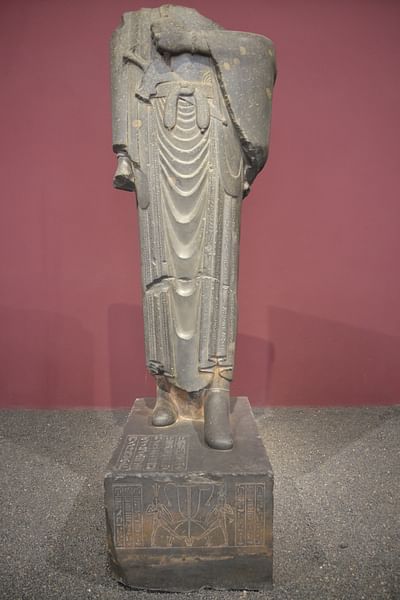
One of the museum's gems is an exquisite bas-relief [sculpture](https://www.worldhistory.org/disambiguation/Sculpture/) from Persepolis depicting a seated king, [Darius I](https://www.worldhistory.org/Darius_I/) (r. 522-486 BCE), or [Xerxes I](https://www.worldhistory.org/Xerxes_I/) (r. 486-465 BCE), receiving an audience. The other highlights include a statue of Darius from Susa, a column with a bull-shaped capital from Persepolis, and silver vessels from the Sasanian period. After we visited the museum, we strolled through the streets of Tehran, had our first Persian meal, and enjoyed the superb views of the [city](https://www.worldhistory.org/city/)'s skyline against the snow-capped mountains.
[  Headless Statue of Darius the Great Carole Raddato (CC BY-NC-SA) ](https://www.worldhistory.org/image/10554/headless-statue-of-darius-the-great/ "Headless Statue of Darius the Great")### Hamadan & Kermanshah
On our second day, we left the capital to reach Hamadan, considered the cradle of Iranian history and [civilisation](https://www.worldhistory.org/civilization/). It is here, in the Zagros mountains of central-west Iran, that Hegmataneh, the first Median capital, was founded in the 8th century BCE. [Cyrus the Great](https://www.worldhistory.org/Cyrus_the_Great/) (d. 530 BCE) defeated the last Median king, Astyages (585-550 BCE), in 550 BCE, and Hegmataneh became the summer residence of the Achaemenid court.
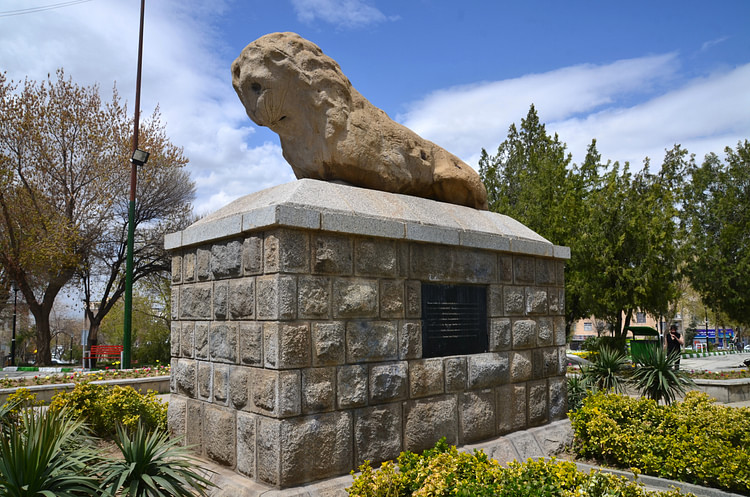
The city was taken by [Alexander the Great](https://www.worldhistory.org/Alexander_the_Great/) (l. 356-323 BCE) in 330 BCE and was renamed Ecbatana. A testimony to [Alexander](https://www.worldhistory.org/disambiguation/Alexander/)'s presence is an intriguing statue of a lion standing in the centre of the city believed to have been erected in honour of his close companion, [Hephaestion](https://www.worldhistory.org/Hephaestion/) (356-324 BCE), who died there in 324 BCE. Ecbatana later became one of the capitals of the [Parthian Empire](https://www.worldhistory.org/Parthia_(Empire)/).
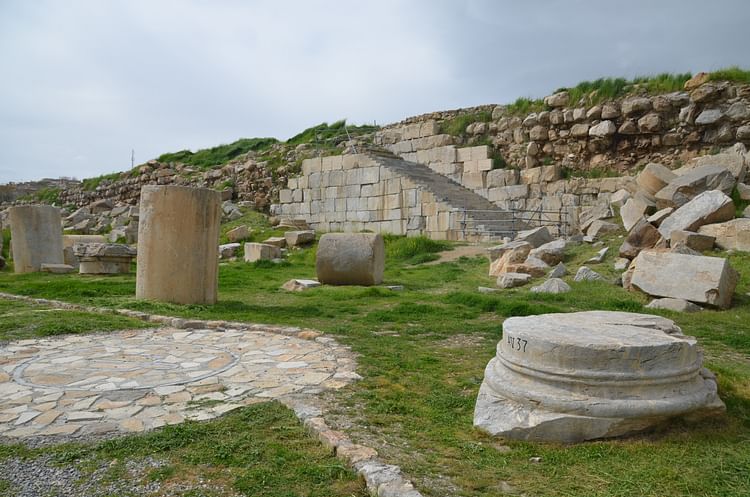
[  Stone Lion of Hamadan, Iran Carole Raddato (CC BY-NC-SA) ](https://www.worldhistory.org/image/14763/stone-lion-of-hamadan-iran/ "Stone Lion of Hamadan, Iran")The next day, we headed south towards Kermanshah, stopping at the [Temple](https://www.worldhistory.org/temple/) of [Anahita](https://www.worldhistory.org/Anahita/) at Kangavar. The temple was a major sanctuary erected to the goddess of water and fertility, who was worshipped in [ancient Persian religion](https://www.worldhistory.org/Ancient_Persian_Religion/) alongside [Ahura Mazda](https://www.worldhistory.org/Ahura_Mazda/). The vast temple dates back to the [Seleucid](https://www.worldhistory.org/Seleucid_Empire/) or Parthian eras and was built of enormous stone blocks. It has an imposing entrance that echoes the Apadana at Persepolis. Unfortunately, most of the building lies in ruins, but the remains scattered around the site help us imagine how massive this structure must have been 2,000 years ago.
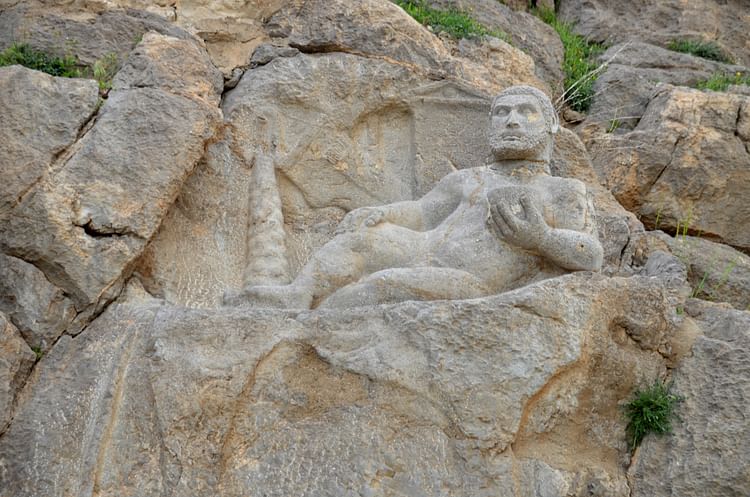
[  Temple of Anahita at Kangavar, Iran Carole Raddato (CC BY-NC-SA) ](https://www.worldhistory.org/image/11831/temple-of-anahita-at-kangavar-iran/ "Temple of Anahita at Kangavar, Iran")Further south, we explored the scenic cliff of Behistun, which bears the famous bas-relief sculpted by [Darius the Great](https://www.worldhistory.org/Darius_I/) in 521 BCE as propaganda for his victory over the nine kings who had rebelled against him. The [Behistun Inscription](https://www.worldhistory.org/Behistun_Inscription/) was crucial to deciphering the [cuneiform](https://www.worldhistory.org/cuneiform/) [script](https://www.worldhistory.org/script/) as it includes the same text written in three languages: Old Persian, [Elamite](https://www.worldhistory.org/elam/), and [Akkadian](https://www.worldhistory.org/disambiguation/akkadian/). In addition to the Achaemenid relief, there are three Parthian carvings and a Seleucid carving showing a reclining [Hercules](https://www.worldhistory.org/hercules/).
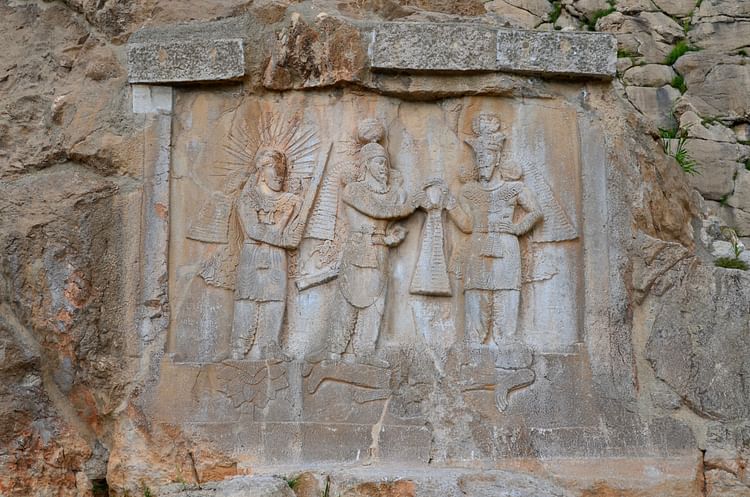
[  Bisotun Hercules, Iran Carole Raddato (CC BY-NC-SA) ](https://www.worldhistory.org/image/14769/bisotun-hercules-iran/ "Bisotun Hercules, Iran")Day five saw our first encounter with the Sasanians! A few kilometres northeast of Kermanshah lies the Sasanian site of Taq-e Bostan, with its outstanding bas-reliefs carved into the base of a cliff. The first of these reliefs shows the investiture of Ardashir II (r. 379-383 CE), receiving the sacred crown from his predecessor [Shapur II](https://www.worldhistory.org/Shapur_II/) (r. 309-379 CE) or Ahura Mazda. The king is standing on top of the [Roman emperor](https://www.worldhistory.org/Roman_Emperor/) Julian the Apostate (r. 361-363 CE), whom he defeated in 363 CE. The other two carvings are sheltered in a grotto. The biggest one depicts the coronation of [Kosrau II](https://www.worldhistory.org/Khosrow_II/) (r. 590-628 CE), the last great Sasanian king, who is shown on horseback in full [battle](https://www.worldhistory.org/disambiguation/battle/) armour. The other niche has king Shapur III (r. 383-388 BCE) and his grandfather Shapur II, depicted leaning on their swords.
[  Investiture of Ardashir II Carole Raddato (CC BY-NC-SA) ](https://www.worldhistory.org/image/14770/investiture-of-ardashir-ii/ "Investiture of Ardashir II")### Susa, [Chogha Zanbil](https://www.worldhistory.org/Chogha_Zanbil/), & Shushtar
The next day was one I had been particularly looking forward to, as we were about to visit the ancient site of Susa, the nearby Chogha Zanbil [ziggurat](https://www.worldhistory.org/ziggurat/), and the Sasanian water mills at Shushtar. However, recent flooding had cast some uncertainty over the day's programme because some of the main roads in the region had been closed for weeks. It was with a certain amount of relief that we arrived at the first stop of the day in Susa. Inhabited since the end of the 5th millennium BCE, Susa was one of the main Elamite [cities](https://www.worldhistory.org/city/) before becoming the capital of the Persian Achaemenid [Empire](https://www.worldhistory.org/empire/) in the 4th century BCE.
[  Palace of Darius in Susa Carole Raddato (CC BY-NC-SA) ](https://www.worldhistory.org/image/10552/palace-of-darius-in-susa/ "Palace of Darius in Susa")Darius the Great made Susa one of his residences and remodelled the city's urban centre by constructing a [palace](https://www.worldhistory.org/disambiguation/palace/) complex. The remains at Susa date back to this period and are dispersed on two hills. They consist of the Apadana and the [Acropolis](https://www.worldhistory.org/Acropolis/) mound, on which stands a 19th-century castle built by French excavators. Many artefacts from Susa have found their way to the Louvre in [Paris](https://www.worldhistory.org/disambiguation/paris/), but Susa's on-site museum hosts a few interesting pieces.
[  The Apadana of the Palace of Darius in Susa Carole Raddato (CC BY-NC-SA) ](https://www.worldhistory.org/image/10553/the-apadana-of-the-palace-of-darius-in-susa/ "The Apadana of the Palace of Darius in Susa")During our visit to Susa, a local guide informed us that the road to Chogha Zanbil, 30 kilometres (17 miles) away, had just reopened so we would be able to visit. Chogha Zanbil is a magnificent, 3300-year-old ancient Elamite complex. The principal element of this complex is an enormous brick ziggurat, a large stepped pyramidal temple dedicated to the Elamite divinity Inshushinak, the protector and patron [god](https://www.worldhistory.org/God/) of Susa. The Chogha Zanbil ziggurat is considered the best-preserved of its kind and is the finest surviving testimony to the once-great Elamite civilisation. Chogha Zanbil became the first Iranian site inscribed on the UNESCO World Heritage List in 1979.
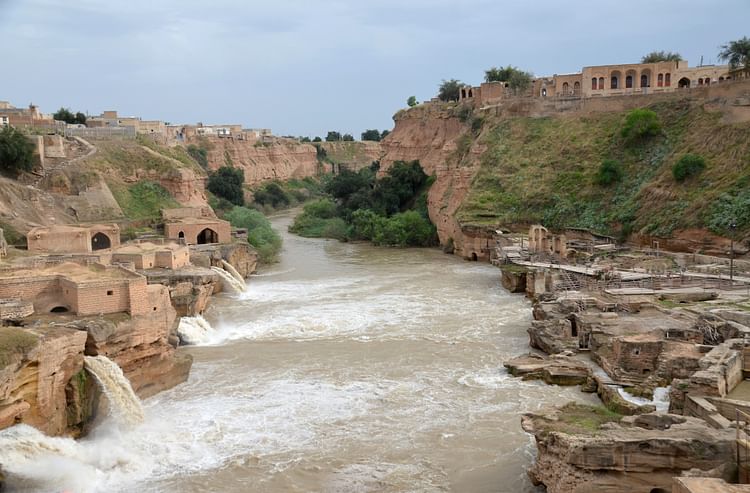
[  Chogha Zanbil Ziggurat, Iran Carole Raddato (CC BY-NC-SA) ](https://www.worldhistory.org/image/10669/chogha-zanbil-ziggurat-iran/ "Chogha Zanbil Ziggurat, Iran")We finished the day with a visit to the Shushtar Hydraulic System. Dating to the Sasanian era, this extraordinary piece of engineering is composed of a series of dams, canals, tunnels, and watermills that form a sophisticated irrigation system. The mills, one of which is still functioning, were used to grind wheat and barley. Approximately two kilometres (1.24 mi) away from the dam are the remains of the easternmost [Roman](https://www.worldhistory.org/disambiguation/Roman/) bridge.
[  Shushtar Hydraulic System, Iran Carole Raddato (CC BY-NC-SA) ](https://www.worldhistory.org/image/14759/shushtar-hydraulic-system-iran/ "Shushtar Hydraulic System, Iran")### Bishapur, Shiraz, & Firuzabad
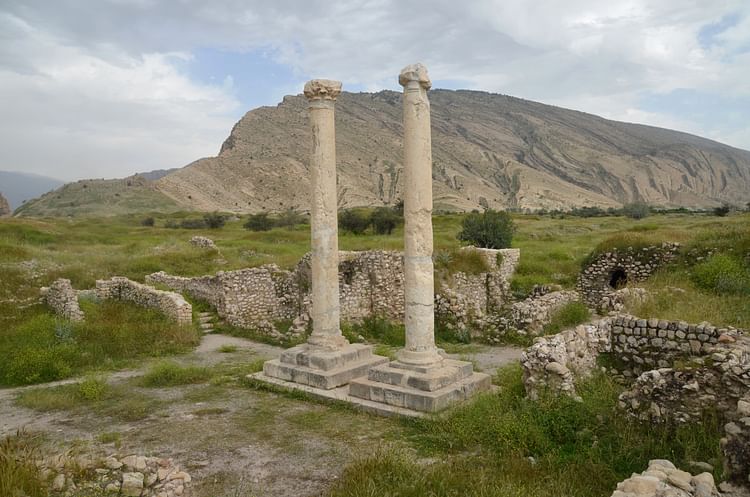
After a night in Ahvaz, we spent a big chunk of the day driving towards Shiraz. The mountain scenery made for a pleasant drive despite the many [hours](https://www.worldhistory.org/Horae/) it took us to reach our only visit of the day in Bishapur. The site is known for its Sasanian-era bas-reliefs and the ruins of what was once a royal city. Bishapur was built in 266 CE on the order of [Shapur I](https://www.worldhistory.org/Shapur_I/) (r. 240-270 CE) by Roman soldiers who had been captured after the defeat of the Roman emperor [Valerian](https://www.worldhistory.org/valerian/) (r. 253-260 CE).
[  Bishapur, Iran Carole Raddato (CC BY-NC-SA) ](https://www.worldhistory.org/image/14761/bishapur-iran/ "Bishapur, Iran")The Sasanian king also had the sides of the nearby gorge decorated with huge historical reliefs commemorating his triple [triumph](https://www.worldhistory.org/Roman_Triumph/) over [Rome](https://www.worldhistory.org/Rome/). The six reliefs show scenes such as Shapur enslaving Valerian. The site was declared a UNESCO World Heritage site in June 2018 as part of the "[Sasanid](https://www.worldhistory.org/Sasanian_Empire/) Archaeological Landscape of Fars Region."
[ 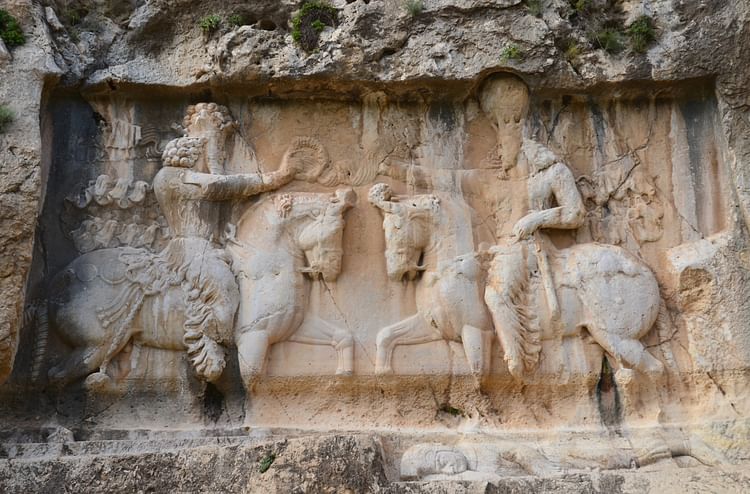 Carving of King Bahram I at Bishapur, Iran Carole Raddato (CC BY-NC-SA) ](https://www.worldhistory.org/image/14760/carving-of-king-bahram-i-at-bishapur-iran/ "Carving of King Bahram I at Bishapur, Iran")The following day was spent exploring the main sights of the beautiful city of Shiraz. With a history dating back 4,000 years, Shiraz has been an important trading centre and the heartland of Persian [culture](https://www.worldhistory.org/disambiguation/culture/) for millennia. But above all, Shiraz is the city of poetry, of Saadi (l. 1210 to c. 1291 CE) and [Hafez Shiraz](https://www.worldhistory.org/Hafez_Shiraz/) (l. 1315-1390 CE). The popularity of these famous poets is such in [Persian literature](https://www.worldhistory.org/Persian_Literature/) that their memorial tombs have become major pilgrimage sites for Iranians. Shiraz is also home to exquisite mosques and beautiful gardens.
My favourite sight was the Nasir al-Molk Mosque (also known as the Pink Mosque) with its pink tiles and stained-glass windows. This mosque is, undoubtedly, the most photographed building in Shiraz. The light shines through its colourful vitrines at sunrise, creating a kaleidoscope of patterned dots of light on its carpeted floor.
[  Nasir al-Mulk Mosque, Iran Herbert karim masihi (CC BY-NC-SA) ](https://www.worldhistory.org/image/14762/nasir-al-mulk-mosque-iran/ "Nasir al-Mulk Mosque, Iran")On day nine, we took an excursion to Firuzabad, an ancient Sasanian city located 120 kilometres (74 mi) south of Shiraz. About 20 kilometres (12.4 mi) from Firuzabad, the road enters an impressive gorge, overlooked by the fortifications of a Sasanian castle, built about 100 metres (328 ft) above the road by [Ardashir I](https://www.worldhistory.org/Ardashir_I/) (r. 224-240 CE), the founder of the Sasanian Empire. A bit farther on are the remains of a beautiful Sasanian bridge and a bas-relief carved into the rock face showing the celebration of Ardashir I's victory over the Parthian king Artabanus IV (r. 213-224 CE). Nearby is the enormous palace of Ardashir, which was built on a plain overlooking a small natural lake.
[ 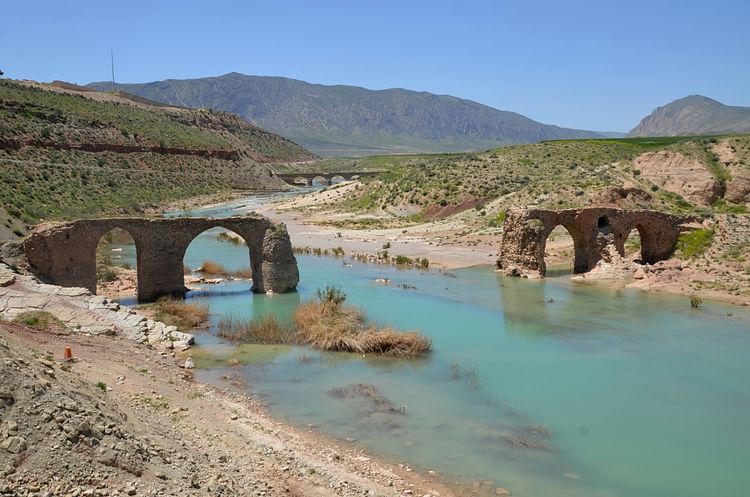 Sasanian Kavar Bridge, Iran Carole Raddato (CC BY-NC-SA) ](https://www.worldhistory.org/image/14772/sasanian-kavar-bridge-iran/ "Sasanian Kavar Bridge, Iran")A few kilometres farther on are the ruins of the palace of Ardashir I with its distinctive barrel-vaulted rooms and a large courtyard. Firuzabad is also part of the "Sasanid Archaeological Landscape of Fars Region."
[ 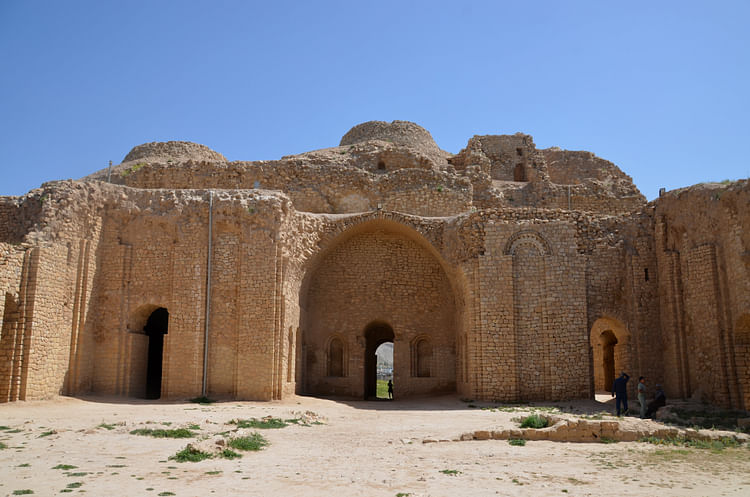 Palace of Ardashir, Iran Carole Raddato (CC BY-NC-SA) ](https://www.worldhistory.org/image/14774/palace-of-ardashir-iran/ "Palace of Ardashir, Iran")### Persepolis, Naqsh-e Rostam, & Pasargadae
Finally, we had the chance to see Persepolis and the [tomb](https://www.worldhistory.org/tomb/) of [Cyrus](https://www.worldhistory.org/disambiguation/Cyrus/) the Great. Persepolis is undoubtedly the most famous of all the archaeological sites in Iran. Founded around 518 BCE by Darius the Great, the site served as the ceremonial capital of the Achaemenid Empire. It was intended and designed as a showcase for the empire, as it was here that ambassadors from all over the Persian world, from Ethiopia to [Elam](https://www.worldhistory.org/elam/), would congregate each year to offer tribute to the king. However, [Artaxerxes I](https://www.worldhistory.org/Artaxerxes_I/) (r. 465-424 BCE) did not complete the tremendous task of building such a complex until about 100 years later.
[ 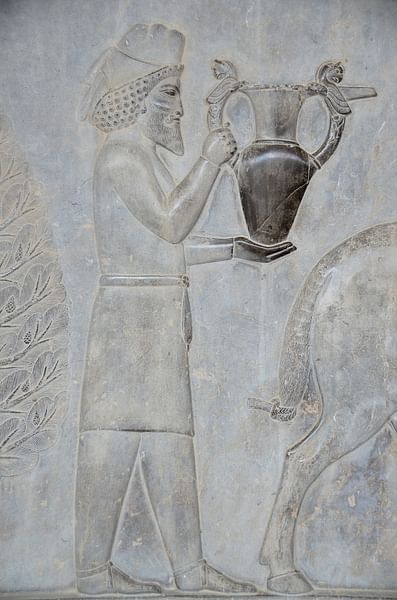 Armenian Tribute Bearer from Persepolis Carole Raddato (CC BY-NC-SA) ](https://www.worldhistory.org/image/14777/armenian-tribute-bearer-from-persepolis/ "Armenian Tribute Bearer from Persepolis")Our guide decided to hire an on-site archaeologist to help us fully appreciate the ruins. Upon entering Persepolis, we were immediately confronted by an impressive [wall](https://www.worldhistory.org/wall/) about 15 metres (49 ft) tall – an artificial terrace built on the complex. As we climbed the monumental staircase, the rest of the site was progressively revealed to us in all its splendour. We found ourselves face to face with two massive winged bulls that decorated the Gate of All Nations built by [Xerxes](https://www.worldhistory.org/Xerxes_I/) I.
[  Gate of All Nations, Persepolis Carole Raddato (CC BY-NC-SA) ](https://www.worldhistory.org/image/14775/gate-of-all-nations-persepolis/ "Gate of All Nations, Persepolis")From the south door of the Gate of All Nations, we proceeded directly to the eastern staircase of the Apadana, adorned with finely crafted friezes depicting the procession of dignitaries bringing valuable gifts as tribute to the king. We then walked through Apadana Palace, a great audience hall where the king received foreign delegations. Six rows of six columns, some 20 metres tall (65.6 ft) with animal-headed capitals stood in this immense hall. The palace of Darius has remained well-preserved and is the more striking of the two. We finished our visit by climbing up to the rock tombs to enjoy a panoramic view of Persepolis.
[ 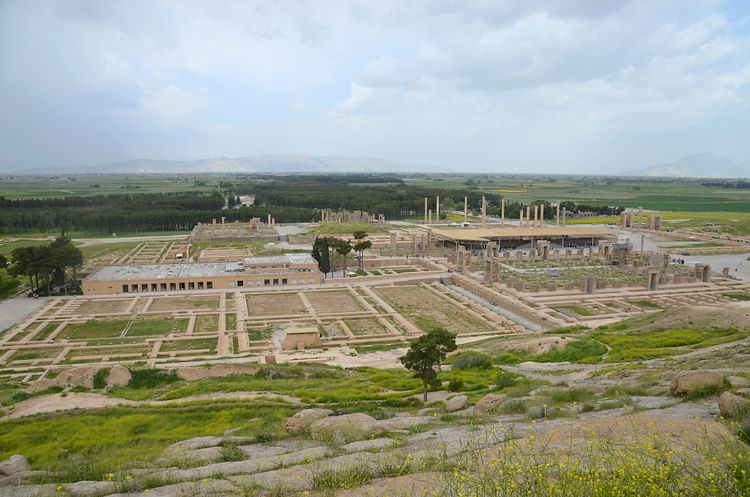 Panoramic View of Persepolis Carole Raddato (CC BY-NC-SA) ](https://www.worldhistory.org/image/14776/panoramic-view-of-persepolis/ "Panoramic View of Persepolis")We then headed to the nearby site of Naqsh-e Rostam, the necropolis of the Achaemenid Dynasty, where monumental royal tombs were cut out of the rock. The site features four [burial](https://www.worldhistory.org/burial/) tombs of Achaemenid kings believed to be those of Darius I, Xerxes I, Artaxerxes I, Darius II [Ochus](https://www.worldhistory.org/Ochus/) (r. 423-404 BCE), and eight Sasanian reliefs depicting vivid scenes of imperial conquests and royal ceremonies. The other important Achaemenid monument at Naqsh-e Rostam is a stone structure whose original purpose has been discussed for several decades.
[  Achaemenid Royal Tombs Carole Raddato (CC BY-SA) ](https://www.worldhistory.org/image/11957/achaemenid-royal-tombs/ "Achaemenid Royal Tombs")We saw more Sasanian reliefs at Naqsh-e Rajab, where four limestone rockface inscriptions and bas-reliefs feature the investitures of Ardashir I and Shapur I, as well as Shapur's military victory over the [Roman army](https://www.worldhistory.org/Roman_Army/).
[  Equestrian Relief of Shapur I Carole Raddato (CC BY-NC-SA) ](https://www.worldhistory.org/image/14780/equestrian-relief-of-shapur-i/ "Equestrian Relief of Shapur I")We rounded up the day with a visit to Pasargadae, the earliest capital of the Achaemenid Empire, founded by Cyrus the Great in the 6th century BCE. The ruins are less well-preserved than those of Persepolis, but the site is home to the famous Tomb of Cyrus. Pasargadae also provides the earliest example of the Persian "Chahar Bagh," a traditional and sophisticated form of Persian gardens.
[ 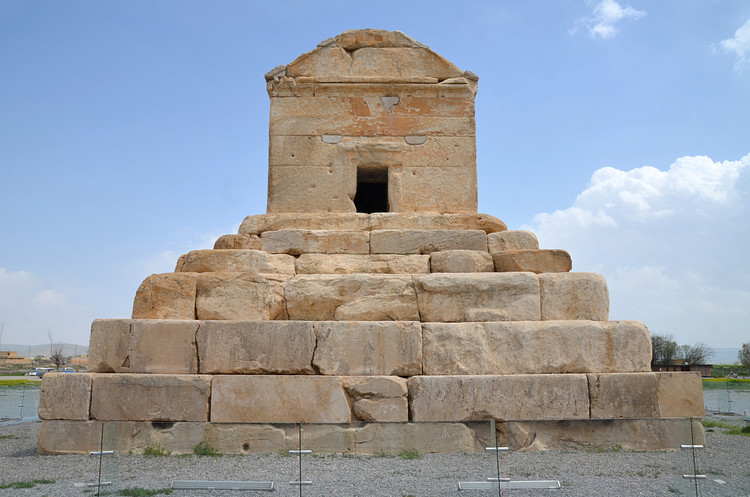 Tomb of Cyrus the Great, Iran Carole Raddato (CC BY-NC-SA) ](https://www.worldhistory.org/image/14779/tomb-of-cyrus-the-great-iran/ "Tomb of Cyrus the Great, Iran")### Yazd, Meybod, Na’in, Isfahan, & Kashan
Our next stop, the city of Yazd, is the centre of Iran's small Zoroastrian community, where the flame of the Zoroastrian [Fire Temple](https://www.worldhistory.org/Fire_Temple/) is said to have burned for 1,500 years. We visited the Zoroastrian Towers of Silence, which are circular, raised structures built by Zoroastrians for excarnation – that is, for dead bodies to be exposed to the sun and scavenging birds, thus preventing them from being contaminated by demons. The towers were used until the 1970s.
[ 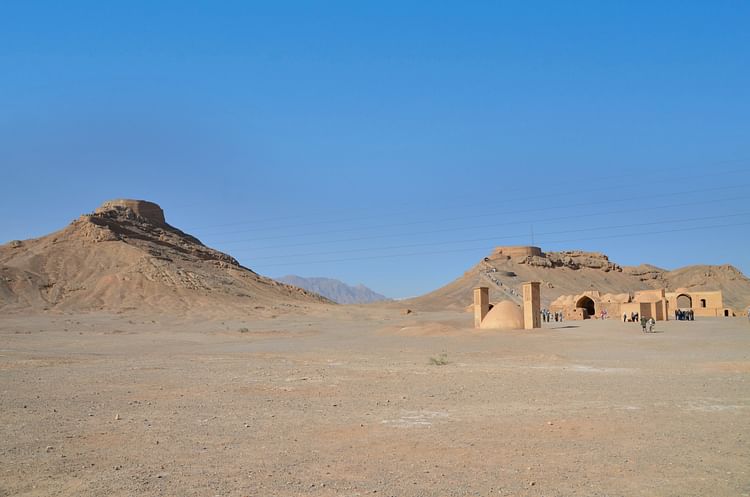 Zoroastrian Towers of Silence in Yazd Carole Raddato (CC BY-NC-SA) ](https://www.worldhistory.org/image/14781/zoroastrian-towers-of-silence-in-yazd/ "Zoroastrian Towers of Silence in Yazd")The desert city of Yazd is one of the most picturesque Middle Eastern cities. Its well-preserved mud-brick houses, distinctive *badgirs* (wind towers), and numerous historical sites make it a "don't miss" destination in Iran.
[ 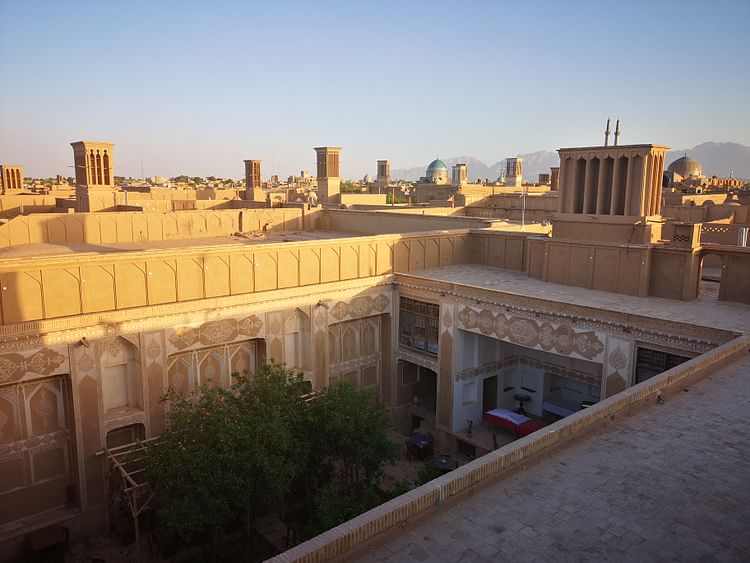 Yazd, Iran Carole Raddato (CC BY-NC-SA) ](https://www.worldhistory.org/image/14782/yazd-iran/ "Yazd, Iran")The next day we visited Meybod, another beautiful desert town composed of mud-brick buildings dating back 1,800 years. Then we continued to Na'in to visit the Castle of Narenj, a fire temple from the Parthian and Sasanian eras, before going on to Isfahan. Once the dazzling capital of the Seljuk and Safavid dynasties, Isfahan is renowned for its beauty and splendour, which has given rise to the proverb "Isfahan is half the world." We spent a whole day sightseeing, visiting the main sites, and walking through the historic bazaar and across the UNESCO-listed Naqsh-e Jahan Square, one of the largest in the world.
[ 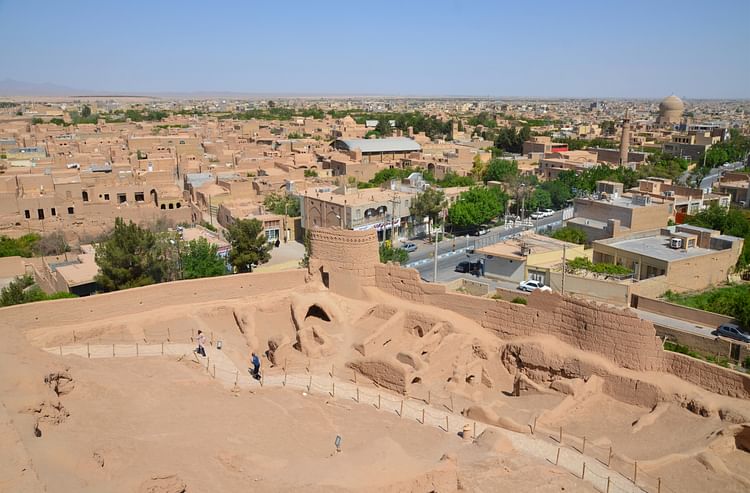 View of Meybod from Narin Castle, Iran Carole Raddato (CC BY-NC-SA) ](https://www.worldhistory.org/image/14785/view-of-meybod-from-narin-castle-iran/ "View of Meybod from Narin Castle, Iran")[ 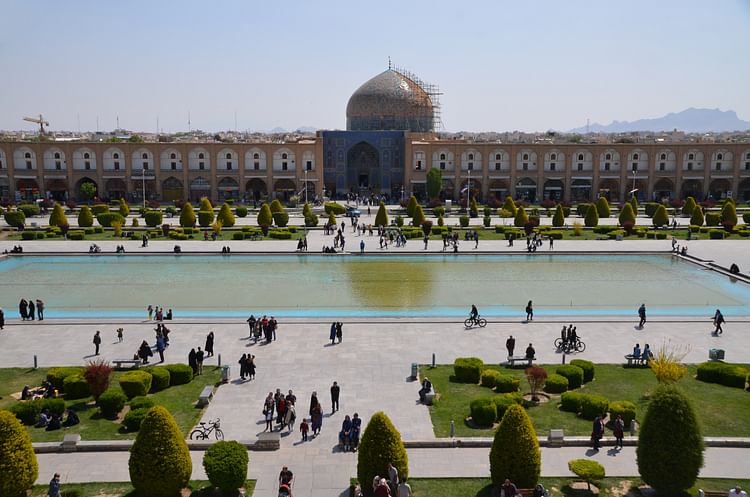 Naqsh-e Jahan Square, Isfahan Carole Raddato (CC BY-NC-SA) ](https://www.worldhistory.org/image/14783/naqsh-e-jahan-square-isfahan/ "Naqsh-e Jahan Square, Isfahan")Our last day in Iran was spent at Kashan to explore the city, visiting the Fin Garden, a traditional house with a Persian garden, and the Sialk Mounds, a ziggurat dating back to the 3rd millennium BCE, before returning to Tehran.
[ 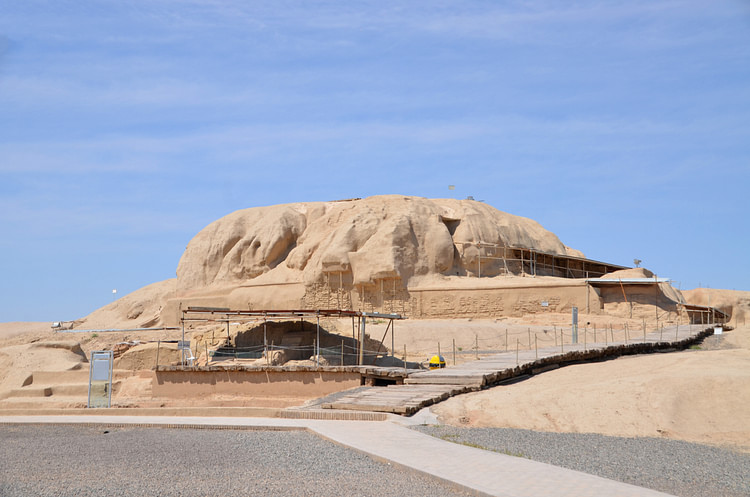 Tepe Sialk, Iran Carole Raddato (CC BY-NC-SA) ](https://www.worldhistory.org/image/14786/tepe-sialk-iran/ "Tepe Sialk, Iran")The fantastic hospitality of the Iranian people, along with the impressive offering of historical sites, beautiful landscapes, and delicious food, makes Iran one of tourism's most underrated holiday destinations. To travel to Iran is to travel through time, although there is not enough time to see it all in one visit. Iran is a vast country, and I hope to return one day to explore it more.
***This article was originally printed in [Issue 25](https://www.karwansaraypublishers.com/ancient-history-magazine/ahm-shop/digital-back-issues/ahm-25-pdf.html) of Ancient History Magazine.***
#### Editorial Review
This human-authored article has been reviewed by our editorial team before publication to ensure accuracy, reliability and adherence to academic standards in accordance with our [editorial policy](https://www.worldhistory.org/static/editorial-policy/).
## Bibliography
- [Amanat, Abbas. *Iran.* Yale University Press, 2019.](https://www.worldhistory.org/books/0300248938/)
- [Daryaee, Touraj. *Sasanian Persia.* I.B. Tauris, 2013.](https://www.worldhistory.org/books/1780763786/)
- [Donald N. Wilber. *Persepolis.* 27Books, 1989.](https://www.worldhistory.org/books/0878500626/)
- [Farrokh, Kaveh. *Shadows in the Desert.* Osprey Publishing, 2007.](https://www.worldhistory.org/books/1846031087/)
## About the Author
Carole maintains the popular ancient history photo-blog Following Hadrian, where she travels the ancient world in the footsteps of Emperor Hadrian.
- [Facebook Profile](https://www.facebook.com/FollowingHadrian)
- [X/Twitter Profile](https://twitter.com/carolemadge)
## Cite This Work
### APA
Raddato, C. (2021, November 05). Discovering the Glories of Persia. *World History Encyclopedia*.
### Chicago
Raddato, Carole. "Discovering the Glories of Persia." *World History Encyclopedia*, November 05, 2021. .
### MLA
Raddato, Carole. "Discovering the Glories of Persia." *World History Encyclopedia*, 05 Nov 2021, .
## License & Copyright
Submitted by [Carole Raddato](https://www.worldhistory.org/user/FollowingHadrian/ "User Page: Carole Raddato"), published on 05 November 2021. The copyright holder has published this content under the following license: [Creative Commons Attribution-NonCommercial-ShareAlike](https://creativecommons.org/licenses/by-nc-sa/4.0/deed.en). This license lets others remix, tweak, and build upon this content non-commercially, as long as they credit the author and license their new creations under the identical terms. When republishing on the web a hyperlink back to the original content source URL must be included. Please note that content linked from this page may have different licensing terms.