---
title: The Christian Concept of Human Sexuality as Sin
author: Rebecca Denova
source: https://www.worldhistory.org/article/1815/the-christian-concept-of-human-sexuality-as-sin/
format: machine-readable-alternate
license: Creative Commons Attribution-NonCommercial-ShareAlike (https://creativecommons.org/licenses/by-nc-sa/4.0/)
updated: 1970-01-01
---
# The Christian Concept of Human Sexuality as Sin
_Authored by [Rebecca Denova](https://www.worldhistory.org/user/rdenova/)_
In the ancient world, human sexuality was crucial for the survival of the tribe and clan as well as pleasurable, a gift from the gods. Thousands of native cults emphasized fertility through rituals and prayers, and ancient gods were depicted with matching goddesses who produced offspring. There was a broad acceptance of the benefits of human sexuality; procreation ensured the survival of the community. Portraits of gods and goddesses were either nude or scantily, emphasized the male and female attributes and their roles in fertility.
[ 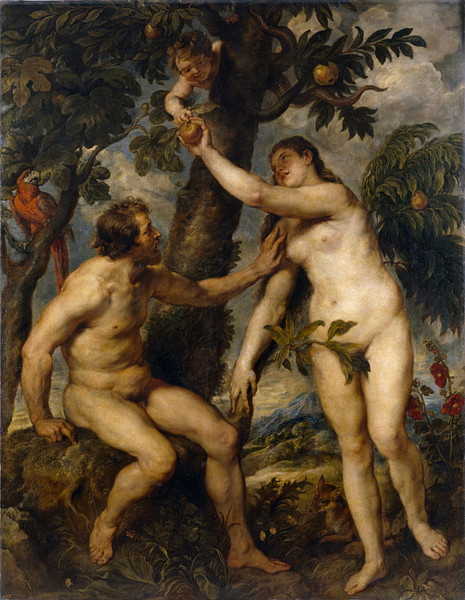 Adam & Eve Peter Paul Rubens (Public Domain) ](https://www.worldhistory.org/image/7876/adam--eve/ "Adam & Eve")Each family member had religious duties, with the primary focus on the preparation for their eventual roles in procreation. Through procreation, the traditions of the ancestors could be passed from generation to generation. These duties were presented as [law](https://www.worldhistory.org/disambiguation/law/) codes, and all cultures validated them as originating from the divine. [Christianity](https://www.worldhistory.org/christianity/) followed this same pattern when it developed its own rules of behavior for “the Christian life.”
### The Church Fathers
In the middle of the second century CE, after the [separation of Christianity from Judaism](https://www.worldhistory.org/article/1785/the-separation-of-christianity-from-judaism/), a group of Christian leaders and bishops (all Gentile converts), retroactively termed the "Church Fathers" wrote letters and treatises that eventually became Christian doctrine. When the [Roman Empire](https://www.worldhistory.org/Roman_Empire/) began to persecute Christians for their crime of atheism ("disbelief in the gods"), Christian writers appealed to the [Roman emperor](https://www.worldhistory.org/Roman_Emperor/) to prove that Christians were nevertheless good citizens.
They did this by comparing native lifestyles to those of the Christians. This was an age-old process to formulate one’s worldview by pointing out the flaws of the others, and Christians had ample material to work with. The perceived tyranny of [Rome](https://www.worldhistory.org/Rome/) was also criticized by other writers. For various reasons, Christians claimed that the root of all this evil was found in their idolatry which created behavioral and sexual deviance. This is why the [literature](https://www.worldhistory.org/literature/) of this period appears to be almost obsessive on the topics of sex and human sexuality.
The Church Fathers were influenced by their education and experiences:
- their training in the schools of [Roman](https://www.worldhistory.org/disambiguation/Roman/) and [Greek philosophy](https://www.worldhistory.org/Greek_Philosophy/)
- their familiarity with the Jewish Scriptures
- their interaction with Greco-Roman lifestyles
Schools of [philosophy](https://www.worldhistory.org/philosophy/) ("the love of wisdom") analyzed the relationship between the physical body and the soul, now understood as the essence of the person which originated with the highest [god](https://www.worldhistory.org/God/). The urges of the flesh, the body, should not control one’s life. Rather a focus on the mind (the higher elements of life) should take precedence. They applied the analogy of athletic training in their discourses. Based upon the [Greek](https://www.worldhistory.org/disambiguation/greek/) term *ascesis* ("discipline"), they taught that men should train the body against excessive behavior in eating, drinking, and sexual activity. The concept is known as asceticism, not indulging the desires of the body.
[  Marble Head of a Philosopher Metropolitan Museum of Art (Copyright) ](https://www.worldhistory.org/image/12885/marble-head-of-a-philosopher/ "Marble Head of a Philosopher")It was vitally important to control the passions (the concept of *apathea*), particularly when it involved sexual intercourse. The moment of sexual orgasm was considered the most deviant loss of control in men. This did not mean that the schools taught against the importance of procreation. Most of them condoned marriage to populate the [city](https://www.worldhistory.org/city/)-states. However, intercourse should be confined to marriage and not indulged outside of the marriage contract.
The schools of philosophy also taught [medicine](https://www.worldhistory.org/disambiguation/medicine/) and medical theories. The way in which they understood gender and gender roles was "in the blood". Men had hot blood, which made them active; [women](https://www.worldhistory.org/disambiguation/women/) had cold blood, making them passive. The ancients knew the basics of sexual intercourse, but they believed that a woman could only get pregnant on her back, as the receptacle for the semen. All physical traits were understood to come from the semen; the uterus was simply an incubator to nurture the fetus until birth.
### The Books of the Prophets & A Conflict of Lifestyles
The history of the Jews included several national disasters such as the Assyrian [conquest](https://www.worldhistory.org/warfare/) in 722 BCE and the Babylonian conquest and destruction of the [Temple](https://www.worldhistory.org/temple/) in 587 BCE. The Prophets of [Israel](https://www.worldhistory.org/disambiguation/Israel/) explained that God has used foreign nations to punish Israel for the great sin of permitting idolatry in the land. Because idolatry involved fertility deities, they utilized sexual metaphors and analogies. The term for this in the Jewish Scriptures was *pornea*, "sexual immorality" (and the source of the modern word 'pornography'). Technically, the term meant illicit sexual unions and referred to incest codes or the degree of kinship permitted in marriage. For the Prophets, idolatry led to sexual immorality, which led to [death](https://www.worldhistory.org/disambiguation/Death/) (the violence of the national disasters).
When [Alexander the Great](https://www.worldhistory.org/Alexander_the_Great/) (r. 336-323 BCE) conquered the Middle East and introduced [Greek culture](https://www.worldhistory.org/disambiguation/Greek_Culture/), some Jews reacted to [Greek religion](https://www.worldhistory.org/Greek_Religion/) and lifestyles. They critiqued the open sexuality of Greek [culture](https://www.worldhistory.org/disambiguation/culture/) as morally deficient and leading to corruption. Some Jews created standard vice-lists to describe Gentiles (non-Jews). [Paul the Apostle](https://www.worldhistory.org/Paul_the_Apostle/) utilized these common lists in his teachings:
> Or do you not know that wrongdoers will not inherit the kingdom of God? Do not be deceived: Neither the sexually immoral nor idolaters nor adulterers nor men who have sex with men nor thieves nor the greedy nor drunkards nor slanderers nor swindlers will inherit the kingdom of God. (1 Corinthians 6:9-10).
These vice-lists became standard in Christian critique of the dominant culture. By the 1st century CE, ancient religious cults known as Mysteries were popular. The Mysteries ([Demeter](https://www.worldhistory.org/demeter/), [Dionysus](https://www.worldhistory.org/Dionysos/), Magna Mater, Bona Dea) had initiation rituals, where participants swore to keep the rituals a secret. Social conventions were temporarily set aside, women openly drank wine, and even slaves were welcomed. Outsiders claimed that these rites included secret, divergent sexual behavior and drunkenness. The Greek word *orgia* originally meant "religious rituals", but it was now used by Christians to describe all native religious festivals as deviant orgies.
[ 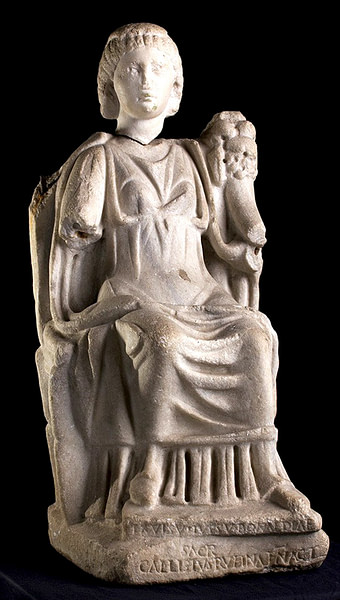 Marble Statuette of Bona Dea Andrea Pancotti (CC BY-SA) ](https://www.worldhistory.org/image/12742/marble-statuette-of-bona-dea/ "Marble Statuette of Bona Dea")This concept of ancient pagan lifestyles still resonates in modern views and Hollywood depictions. However, it is important to recognize that Christian literature on the pagans was polemical; arguments to make a point. We can still be startled by ancient attitudes to sexuality, especially among the rich and famous in Rome. But polemic is not evidence. Most non-Christians continued to follow the social codes in their roles to marry and procreate for the benefit of the community.
Nevertheless, the Church Fathers adopted the term "sexual immorality" (*pornea*) as a generic description of Greco-Roman lifestyles, which led to condemnation in the afterlife. Most English Bibles translate "sexual immorality" as "fornication", derived from the Latin *forne* ("arches") which was a reference for the way street prostitutes carried out their business under the arches. Fornication became a byword for any sexual intercourse outside of marriage.
### The Sin of Eve & All Women
Dominant views of women in ancient Rome included the idea that women would always try to seduce men so that they could control or dominate them. Being weaker, seduction (their clothes, make-up, and sexual behavior) were the only tools women had. Christian writers also reflected on the source of this inherent nature of women and they reinterpreted the events that led to the fall in the [Garden of Eden](https://www.worldhistory.org/Garden_of_Eden/).
[  Temptation & Expulsion from Paradise, Sistine Chapel Michelangelo (Public Domain) ](https://www.worldhistory.org/image/12754/temptation--expulsion-from-paradise-sistine-chapel/ "Temptation & Expulsion from Paradise, Sistine Chapel")Genesis explained how evil entered the world through the sin of disobedience by Adam and Eve. Christians began to assign the blame for the fall on Eve alone. Originally a narrative plot character in Genesis, the serpent was now deemed the Devil. Utilizing iconography from the fertility god [Pan](https://www.worldhistory.org/Pan/), the Devil seduced Eve with his huge phallus. God had created intercourse as the means for procreation, but through Eve’s own seduction and then her seduction of Adam, lust entered the garden and became embedded in human intercourse.
A bishop of North [Africa](https://www.worldhistory.org/disambiguation/africa/), Tertullian (160-225 CE), had much to say about women and sexuality:
> And do you not know that you are Eve? God’s sentence hangs still over all your sex and his punishment weighs down upon you. You are the devil’s gateway; you are she who first violated the forbidden tree and broke the law of God. It was you who coaxed your way around him whom the Devil had not the force to attack. With what ease you shattered that image of God: Man! Because of the death you merited, even the Son of God had to die (*On the Apparel of Women*, Chapter 1).
In Tertullian’s view, this sin of lust was why God had to send Christ into the world to die and atone for this first sin. As Christ atoned for the sin of Adam, the sin of Eve was atoned for in the life of Mary, [Jesus](https://www.worldhistory.org/Jesus_Christ/)’s mother. The 2nd century CE produced stories of Mary’s background, that she was raised by priests in the Temple where she never encountered evil, and Mary became elevated as a perpetual virgin and the ideal model for all women.
As a necessary evil, the Church Fathers had rules for human intercourse. Only one position was allowed: man on top, woman on the bottom. Any other form indicated that the goal was not procreation, but lust. When later Christian missionaries encountered indigenous people in the Americas, Africa, and Asia, they taught them the 'correct' way to have sex; this is where the name 'missionary position' comes from. Sexual intercourse could only take place in a legal Christian marriage, and intercourse could only be performed when the woman was fertile. Once a woman entered menopause or if she was barren after several years, all sexual activity had to stop.
### Celibacy & Chastity
As an independent [religion](https://www.worldhistory.org/religion/) in the 2nd century CE, Christianity established an institutional hierarchy with the elections of bishops ("overseers"), but there was no central authority such as the later Vatican that designated universal concepts and rituals; each community held various teachings of their own. Among these communities were [Gnostic](https://www.worldhistory.org/Gnosticism/) Christians. *Gnosis* meant "knowledge", and they claimed that they had secret knowledge on both the nature of Christ as well as his teachings. Most Gnostic systems claimed that human bodies had been created by an evil, lesser god. They taught that [Jesus Christ](https://www.worldhistory.org/Jesus_Christ/) never had a human body; he only appeared in human form to teach us.
To eliminate the creation of evil bodies, [Gnostics](https://www.worldhistory.org/Gnosticism/) were the first ascetics to practice celibacy and chastity. Celibacy was technically never entering a marriage contract, while chastity was never indulging in human sexuality. The Church Fathers reacted against such teachings with the innovative concepts of orthodoxy ("correct belief") and heresy ("divergent beliefs"). Nevertheless, the Church Fathers borrowed some of the Gnostic ideas in their institutional hierarchy and adopted the twin concepts of celibacy and chastity for Christian clergy. This elevated the clergy above others, as it was considered a living sacrifice. Bishops sacrificed a normal life of marriage and children to devote themselves to the church. It provided an aura of holiness to Christian leaders, untainted with the sins of sexuality.
Now [writing](https://www.worldhistory.org/writing/) in Latin, the Church Fathers utilized the terms 'concupiscence' ("strong desire") and 'continence' ("restraint"). Treatises were written on the details of promoting asceticism, which included the diet. Eating meat led to an animal nature, while drinking wine led to sexual urges. Controlling and restraining the urges of the body became the ideal for the spiritual life.
The Apostle [Paul](https://www.worldhistory.org/disambiguation/Paul/) believed that the kingdom of God was imminent and that all social conventions would be upended. He told engaged couples to stay as they are and not to marry and taught widows not to seek a second marriage. The Church Fathers took the teachings of Paul as universal precepts and created the innovation of life-long virginity as the ideal for all men and especially women. Christians were now urged to hand over 'excess' daughters to devote their lives to the church at a young age. When Christians began to build churches (basilicas), one of the ways to conceptualize them as sacred space was through the physical presence of these virgins in each community. Widows were not to remarry and were expected to contribute to the charitable work of Christian communities through the funds they inherited.
[  St. Catherine's Monastery, Sinai Marc!D (CC BY-NC-ND) ](https://www.worldhistory.org/image/7758/st-catherines-monastery-sinai/ "St. Catherine's Monastery, Sinai")Christian monasticism began with Anthony of [Egypt](https://www.worldhistory.org/egypt/) (c. 250 CE) when he moved to the desert to devote his life to God. Others soon followed, and the creation of monasteries and convents provided institutions for communal living. Monastics also believed in asceticism, disciplining the body, particularly against the temptations of the Devil. Known as "the Desert Fathers and Mothers", their literature details their struggles against the Devil and his agents, who tempted them with images of great banquets and seductive women. The monastics became ideal models of using prayer to discipline the urges of the body.
### [Augustine](https://www.worldhistory.org/disambiguation/Augustine/) & Original Sin
[Augustine of Hippo](https://www.worldhistory.org/Augustine_of_Hippo/) (354-430 CE) was a bishop in North Africa where he established his own monastery. His *Confessions* is described as the first autobiography in the West. Prior to his conversion to Christianity (386 CE), he had openly lived with a woman for 15 years. Choosing to be a celibate bishop, Augustine had no problem with the physical side of sex. However, he could not stop thinking about it, and this led to reflections on why humans commit evil and sin when they know right from wrong.
In a famous passage in *Confessions*, Augustine related that when he was a teenager, he and a group of his friends stole fruit from a neighbor’s tree. They were not poor, and they were not hungry. Why did they do this? Like so many Christian writers, Augustine turned to Genesis and the fall in Eden for an answer. After the creation "Adam and his wife were both naked, and they felt no shame" (Genesis 2:25), but after the serpent enters the story and Adam and Eve disobey God, "the eyes of both of them were opened, and they realized they were naked; so they sewed fig leaves together and made coverings for themselves" (Genesis 3:7). When God came to look for them, they were hiding because they were naked and ashamed. In other words, between the two passages, something 'evil' had happened—passionate sexual intercourse.
[  Adam & Eve Engraving by Dürer Metropolitan Museum of Art (Copyright) ](https://www.worldhistory.org/image/12855/adam--eve-engraving-by-durer/ "Adam & Eve Engraving by Dürer")But did God not create genitals? Did not God command "be fruitful and multiply" (Genesis 9:7) Yes, Augustine said, but originally, this activity was to be simply a natural function of humans, like walking or eating. The sin was not so much disobedience, but the introduction of lust into intercourse. Genesis associated their act with the shame of losing control of their passions, the shame of their nakedness, and this act was responsible for human death. In addition to guilt, Augustine added a unique element to the sin of lust. As the progenitors of all humans, the first act of intercourse left a black stain on the fetus, the [mark](https://www.worldhistory.org/disambiguation/Mark/) of the Original Sin. This stain was passed on to all descendants because all fetuses are conceived through intercourse. So why do humans commit evil? We cannot help it; we inherited it.
According to Augustine, God originally created free will in humans, but it was lost at that moment in Eden through the sin of lust. Their descendants no longer have the capacity to freely choose good over evil; this freedom was overtaken by the power of sin, now manifest in the body. Because we are conceived in sin, Augustine referred to humankind as the condemned masses. Baptism was the initiation ritual for admittance into the community, but it did not fully eliminate the human proclivity for evil. Adopting the idea from Paul, the only thing that can save humans from condemnation was the grace of God. Grace in this sense is derived from the Greek *charis*, which means "gift". God’s gift to humankind was sending Christ to lead the way to salvation, the forgiveness of our sins. This was truly a gift because humans could never achieve salvation on their own merits.
Augustine forever changed the interpretation of the story of Adam and Eve. It should be noted that there is no description of sex in the Garden of Eden; they have their first children after they are expelled from Eden. Nevertheless, his version became standard in Western literature and art.
### The Legacy of Christian Views of Human Sexuality
The formative years of Christianity experienced persecution, famine, plagues, dynastic upheavals, wars, and barbarian invasions. Then as now, people attempted to understand all these disasters through a religious lens. In Augustine's view, evil exists because of the loss of free will; sin is the inability to resist temptation. Matter itself is not evil, but overindulgence in matter (the sins of the flesh) is. Humans are held responsible for evil, and they will be judged by God. His proposed solution is faith in Christ and the practice of self-discipline.
Augustine’s writings spread through [Europe](https://www.worldhistory.org/europe/) and became foundational for the [medieval church](https://www.worldhistory.org/Medieval_Church/). The rules and regulations for Christian behavior became canonized as originating in sins of the body. [Martin Luther](https://www.worldhistory.org/Martin_Luther/) (1483-1546), an ex-Augustinian monk, applied his teaching to the [Protestant Reformation](https://www.worldhistory.org/Protestant_Reformation/). As nation-states emerged in the modern period, civil laws encoded many of these rules of behavior in their constitutions. The inheritance of these ideas remains embedded in modern discourse on the uses and abuses of the body.
#### Editorial Review
This human-authored article has been reviewed by our editorial team before publication to ensure accuracy, reliability and adherence to academic standards in accordance with our [editorial policy](https://www.worldhistory.org/static/editorial-policy/).
## Bibliography
- [Brown, Peter. *The Body and Society.* Columbia University Press, 2008.](https://www.worldhistory.org/books/0231144075/)
- [Harper, Kyle. *From Shame to Sin.* Harvard University Press, 2016.](https://www.worldhistory.org/books/0674660013/)
## About the Author
Rebecca I. Denova, Ph.D. is Emeritus Professor of Early Christianity in the Department of Religious Studies, University of Pittsburgh. She has recently completed a textbook, "The Origins of Christianity and the New Testament" (Wiley-Blackwell)
## Cite This Work
### APA
Denova, R. (2021, August 27). The Christian Concept of Human Sexuality as Sin. *World History Encyclopedia*.
### Chicago
Denova, Rebecca. "The Christian Concept of Human Sexuality as Sin." *World History Encyclopedia*, August 27, 2021. .
### MLA
Denova, Rebecca. "The Christian Concept of Human Sexuality as Sin." *World History Encyclopedia*, 27 Aug 2021, .
## License & Copyright
Submitted by [Rebecca Denova](https://www.worldhistory.org/user/rdenova/ "User Page: Rebecca Denova"), published on 27 August 2021. The copyright holder has published this content under the following license: [Creative Commons Attribution-NonCommercial-ShareAlike](https://creativecommons.org/licenses/by-nc-sa/4.0/deed.en). This license lets others remix, tweak, and build upon this content non-commercially, as long as they credit the author and license their new creations under the identical terms. When republishing on the web a hyperlink back to the original content source URL must be included. Please note that content linked from this page may have different licensing terms.