---
title: Legions of Britain
author: Donald L. Wasson
source: https://www.worldhistory.org/article/1753/legions-of-britain/
format: machine-readable-alternate
license: Creative Commons Attribution-NonCommercial-ShareAlike (https://creativecommons.org/licenses/by-nc-sa/4.0/)
updated: 1970-01-01
---
# Legions of Britain
_Authored by [Donald L. Wasson](https://www.worldhistory.org/user/DWasson/)_
After the [Roman emperor](https://www.worldhistory.org/Roman_Emperor/) [Claudius](https://www.worldhistory.org/claudius/) (r. 41-54 CE) successfully conquered [Britain](https://www.worldhistory.org/disambiguation/Britain/) in 43 CE, four legions were left there to maintain the peace: XIV Gemina, II Augusta, IX Hispana, and XX Valeria Victrix. However, by the end of the decade, XIV Gemina was replaced by II Adiutrix.
[ 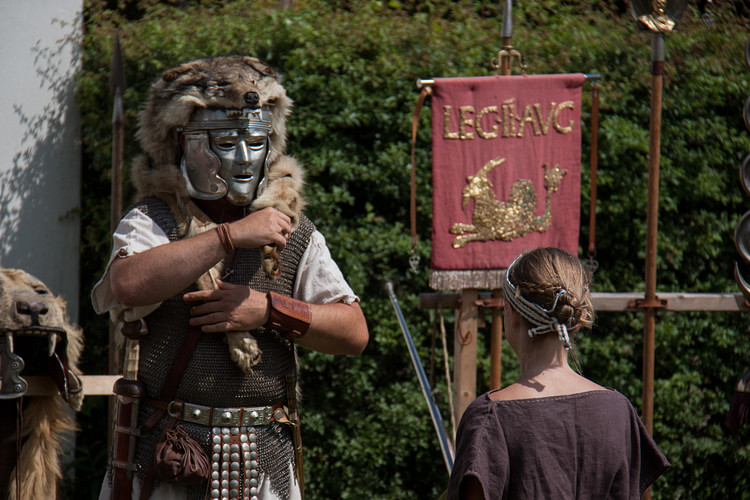 Legio II Augusta Reenactment Hans Splinter (CC BY-ND) ](https://www.worldhistory.org/image/14043/legio-ii-augusta-reenactment/ "Legio II Augusta Reenactment")Gradually, the legions expanded [Roman](https://www.worldhistory.org/disambiguation/Roman/) control west into Wales and northward to [Scotland](https://www.worldhistory.org/disambiguation/Scotland/), but despite the continued presence of legionaries, Britain never fully accepted [Rome](https://www.worldhistory.org/Rome/)'s authority. A clear indication of this was the [Boudicca](https://www.worldhistory.org/Boudicca/) Revolt of 60 CE where four cohorts of IX Hispana were ambushed and wiped out.
Under the command of Petilius Cerialis, II Adiutrix took part in his campaign against the [Celtic](https://www.worldhistory.org/celt/) Brigantes and in Agricola’s 79-84 CE campaign in Scotland before being recalled to the Danube in 87 CE. Temporarily, only three legions remained in [Roman Britain](https://www.worldhistory.org/Roman_Britain/) until VI Victrix arrived in 122 CE. Attempts to [conquer](https://www.worldhistory.org/warfare/) Scotland led to the building of [Hadrian's Wall](https://www.worldhistory.org/Hadrians_Wall/) (122 CE) and the [Antonine Wall](https://www.worldhistory.org/Antonine_Wall/) (140s CE). As a result of the [Crisis of the Third Century](https://www.worldhistory.org/Crisis_of_the_Third_Century/), invasions, and various other problems that plagued the [Western Roman Empire](https://www.worldhistory.org/Western_Roman_Empire/) in the 3rd and 4th centuries CE, the ability to control the island waned. By the end of Roman occupation, only one legion, VI Victrix remained, and the province was abandoned in 410 CE.
### Legion Names & Emblems
There is little consistency in the naming and numbering of the legions. Some legions were named after a successful campaign, others, in the case of [Vespasian](https://www.worldhistory.org/Vespasian/) and [Trajan](https://www.worldhistory.org/trajan/), after the imperial family. Prior to the [Marian Reforms](https://www.worldhistory.org/article/1598/marian-reforms/), each legion carried five standards. [Marius](https://www.worldhistory.org/Gaius_Marius/) (157-86 BCE) changed that, giving each legion one common standard, the [silver](https://www.worldhistory.org/Silver/) (later [gold](https://www.worldhistory.org/gold/)) eagle. Later, each legion would adopt its own standard and emblem, which generated a sense of identity, unity, and pride.
The emblem that adored a [Roman legionary](https://www.worldhistory.org/Roman_Legionary/)’s shield varied but was often either an animal (bull and boar) or a bird (eagle). However, there were a number of unique emblems such as [Legio II Augusta](https://www.worldhistory.org/Legio_II_Augusta/)'s [Pegasus](https://www.worldhistory.org/Pegasus/) or II Parthica's [Centaur](https://www.worldhistory.org/centaur/). A legion’s birth sign represented the month in which it was organized. Since many of the legions were founded in the winter months, Capricorn was a common birth sign.
### Legio II Augusta
The founding of Legio II Augusta (emblem: Pegasus; birth sign: Capricorn) is a point of contention. It was may have been founded either by [Caesar](https://www.worldhistory.org/disambiguation/caesar/) (l. 100-44 BCE) around 48 BCE and used in [Mark Antony](https://www.worldhistory.org/Mark_Antony/)’s [Battle](https://www.worldhistory.org/disambiguation/battle/) of Mutina in 43 BCE or by [Pompey the Great](https://www.worldhistory.org/pompey/) (l. 106-48 BCE) for his campaigns in Spain. Some sources suggest it was formed by [Augustus](https://www.worldhistory.org/augustus/) (r. 27 BCE - 14 CE) - hence the name Augusta - and was one of the seven legions that joined him in his Cantabrian campaign. The legion would remain in Spain until after the disastrous [Battle of Teutoburg Forest](https://www.worldhistory.org/article/1010/battle-of-teutoburg-forest/) in 9 CE when [Publius Quinctilius Varus](https://www.worldhistory.org/Publius_Quinctilius_Varus/) lost three legions, and then it was relocated to Upper Germany with a base camp at Moguntiacum (modern-day Mainz). Like other legions, the II Augusta would serve with [Germanicus](https://www.worldhistory.org/Germanicus/) (l. 15 BCE - 19 CE) against the Chatti. Afterwards, the legion was moved to Argentoratum (modern-day Strasbourg) and, in 21 CE, helped suppress a rebellion in [Gaul](https://www.worldhistory.org/gaul/) led by [Julius](https://www.worldhistory.org/disambiguation/Julius/) Sacrovir.
In 43 CE, the legion participated in the invasion of Britain under the leadership of future emperor Vespasian (r. 69-79 CE). In the next four years, it partook in 30 battles, capturing at least 20 towns. Although the legion had success in its early campaigns, even occupying the Isle of Wright, it did not participate in the suppression of Boudicca's rebels. Supposedly, the camp prefect ignored orders to support the provincial governor [Suetonius](https://www.worldhistory.org/Suetonius/) Paulinus; the camp prefect later committed suicide.
[ 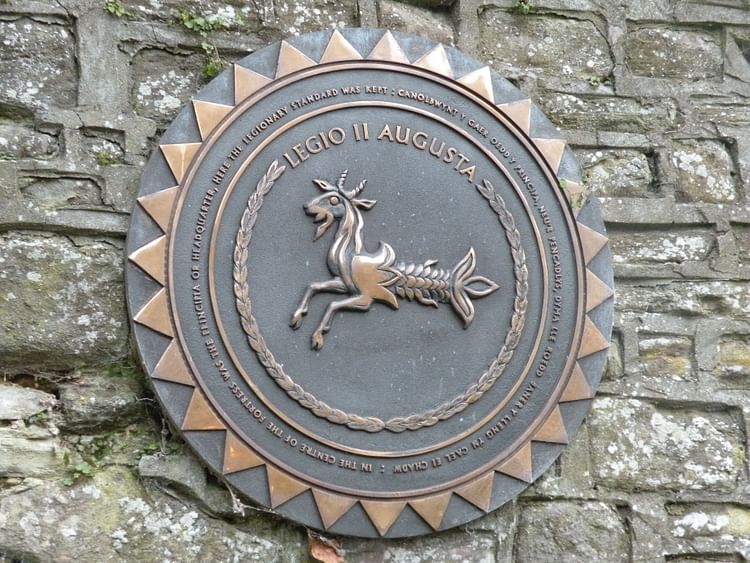 Legio II Augusta Plaque Chatsam (CC BY-SA) ](https://www.worldhistory.org/image/1116/legio-ii-augusta-plaque/ "Legio II Augusta Plaque")In 69 CE, cohorts of the II Augusta fought with [Otho](https://www.worldhistory.org/Otho/) and later [Vitellius](https://www.worldhistory.org/Vitellius/) against Vespasian during the [Year of the Four Emperors](https://www.worldhistory.org/Year_of_the_Four_Emperors/). With Vitellius’ defeat eminent, the legion wisely chose to support their former commander Vespasian. After the cohorts returned to Britain, governor Julius Frontinus (74-78 CE) saw the need to pacify Wales and lodged a series of campaigns. Legio II Augusta was assigned to a new fortress at Isca Silurum where it would maintain as a base for the next 200 years. From 77 to 84 ce cohorts of the legion would move northward and campaign with the new governor Gnaeus Julius Agricola. Although it was present at the Battle of Mons Graupius in 83 CE, it did not participate.
After 122 CE, the legion participated in the construction of [Hadrian](https://www.worldhistory.org/hadrian/)'s [Wall](https://www.worldhistory.org/wall/) and later the Antonine Wall. In 192 CE, Emperor [Commodus](https://www.worldhistory.org/commodus/) (r. 180-192 CE) died bringing about a civil [war](https://www.worldhistory.org/disambiguation/War/) among possible contenders, and Britain’s governor, Clodius Albinus, took several cohorts with him to battle [Septimius Severus](https://www.worldhistory.org/Septimius_Severus/) (r. 193-211), only to be defeated. Later, Severus led an expedition into Scotland; however, his sons [Caracalla](https://www.worldhistory.org/Caracalla/) and Geta abandoned the incursion. Around 290 CE, the legion returned to fight in Scotland against the [Picts](https://www.worldhistory.org/picts/) and Scots, but little is known about it after the 3rd century CE.
### Legio VI Victrix
Although Legio VI Victrix (emblem: bull; birth sign: Gemini) was possibly part of [Pompey](https://www.worldhistory.org/pompey/)’s army, most agree it was founded by [Octavian](https://www.worldhistory.org/augustus/) during the civil war, taking part in his siege at Perusia in 41 BCE and in the [Battle of Actium](https://www.worldhistory.org/Battle_of_Actium/) in 31 BCE. After being stationed in Hispania Terraconensis, it participated in Augustus’ campaign in the Cantabrian War and afterwards was given the *cognomen* of Hispaniensis.
In 68 CE, the legion proclaimed the governor of Spain, Servius Sulpicius [Galba](https://www.worldhistory.org/Galba/), the "legate of the Senate and the Roman people". With the newly formed VII Gemina, Galba marched to Rome, leaving VI Victrix behind. With the [death](https://www.worldhistory.org/disambiguation/Death/) of [Nero](https://www.worldhistory.org/Nero/) (r. 54-68 CE), the [Roman Senate](https://www.worldhistory.org/Roman_Senate/) named Galba emperor. However, he could not hold onto the throne and was assassinated in January 69 CE, initiating the Year of the Four Emperors. Legio VI Victrix remained in Spain until 70 CE when Vespasian sent it, along with other legions, to assist Petillius Cerialis in suppressing the [Batavian Revolt](https://www.worldhistory.org/article/286/the-batavian-revolt/).
[ 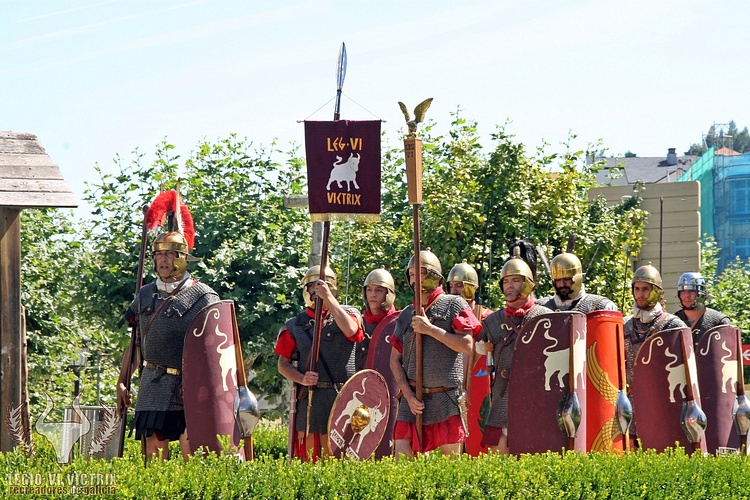 Legio VI Victrix Reenactors Recreadores de Galicia (CC BY-NC-ND) ](https://www.worldhistory.org/image/14044/legio-vi-victrix-reenactors/ "Legio VI Victrix Reenactors")Under Vespasian, the legion remained in Lower Germany and helped rebuild the fortress at Novaesium (modern Neuss) which had been destroyed by the Batavians. In 89 CE, they joined I Minervia, X Gemina, and XXII Primigenia to defeat the governor of Upper Germany who had rebelled against Emperor [Domitian](https://www.worldhistory.org/domitian/) (r. 81-96 CE), receiving the cognomen Pia Fidelis Domitiana; the Domitiana would be removed after the emperor’s assassination. Later, Novaesium was abandoned, and the legion was transferred to Xanten, replacing XXII Primigenia. Part of the legion may have participated in Trajan’s campaign in the Dacian Wars (101-106 CE).
In 122 CE Emperor Hadrian (r. 117-138 CE) went to Britain, taking with him the governor of Lower Germany, Aulus Platorius Nepos, and VI Victrix to work on Hadrian’s Wall but also to construct a bridge across the River Tyne and later build the Antonine Wall.
In 191 CE, Clodius Albinus became governor of Britain. In 193 CE, declaring himself emperor, he took the legion into Gaul to do battle against Septimius Severus. After Albinus’ defeat, the legion returned to Britain. When Severus arrived in Britain to battle the rebelling Scottish tribes, the legion moved northward with him, eventually earning the title [Britannicus](https://www.worldhistory.org/Britannicus/) Pia Fidelis. In the end, the legion was the last to leave Britain. Little is known after the legion left Britain although historian Stephen Dando-Collins writes that the legion fought with [Stilicho](https://www.worldhistory.org/Stilicho/) in 401 CE and met its demise against [Alaric](https://www.worldhistory.org/Alaric/) in 410 CE.
### [Legio IX Hispana](https://www.worldhistory.org/Legio_IX_Hispana/)
Like many other legions, Legio IX Hispana’s origin (emblem: bull; birth sign: Capricorn) is unclear. Caesar had a Ninth legion while campaigning in Gaul, but it was disbanded around 45 BCE. Later, Octavian founded a legion from veterans of the old Ninth. This new legion may have served with him in Macedonia at the Battle of [Philippi](https://www.worldhistory.org/Philippi/) in 42 BCE, earning the title Macedonica. Legio IX Hispana campaigned with Augustus in the Cantabrian wars, earning the title Hispaniensis (stationed in Spain), which was later modified to Hispana (Spanish). After a short time in Spain, the legion was transferred to the Balkans, and by 14 CE, it was in Pannonia where, along with other legions, mutinied, protesting poor conditions. Six years later the legion was sent to [Africa](https://www.worldhistory.org/disambiguation/africa/) where they fought Numidian rebels alongside the III Augusta, returning to Pannonia in 22 CE.
In 42 CE, the Ninth accompanied the Pannonia governor Aulus Plautius on the invasion of Britain, crossing the channel in 43 CE. Little is known of its first two decades in Britain, but in 61 CE, the legion under the command of Petillius Cerialis confronted Boudicca's rebels. Although Cerialis and some cavalry escaped, the infantry was routed. Cohorts from XXI Rapax replaced the lost legionaries.
[ 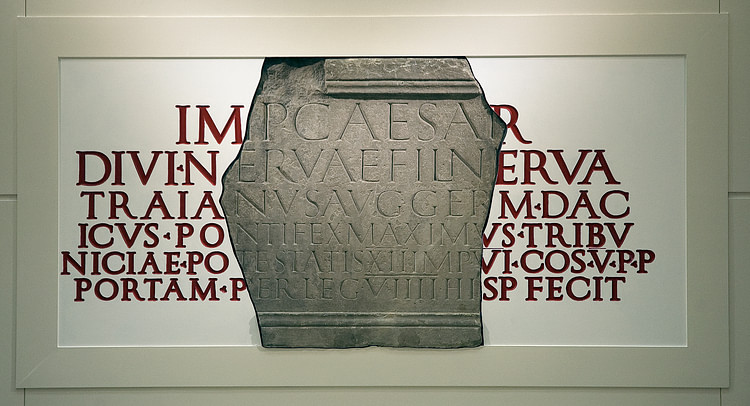 Fragment of Legio IX Hispana Tablet York Museums Trust Staff (CC BY-SA) ](https://www.worldhistory.org/image/14045/fragment-of-legio-ix-hispana-tablet/ "Fragment of Legio IX Hispana Tablet")During the Year of the Four Emperors, cohorts of the Ninth supported Vitellius, serving with him on his march to Rome and at the second Battle of Bedriacum. In 71 CE, Cerialis returned to Britain as its governor where he campaigned against the Brigantes. When Cerialis was replaced by Agricola, the Ninth went with the new governor on his campaigns in Scotland (77-84 CE) where the legion was attacked and defeated by Caledonian tribes. Historian [Tacitus](https://www.worldhistory.org/tacitus/) wrote of the legion’s defeat at the hands of the Caledonians:
> ….they suddenly changed their plans, and with their whole force attacked by night the ninth legion, as being the weakest, and cutting down the sentries, who were asleep or panic-stricken, they broke into the camp. (692)
Cohorts of the Ninth, along with other legions, campaigned under the command of Lucius Aelianus against the Chatti, and in 83 CE, under the command of Gaius Rufus fought in the Dacian Wars. The following years are unclear for the legion. It may have been destroyed in either 119 CE or later – possibly the Jewish Revolt of 131-135 CE. Historian Duncan Campbell claims the legion was destroyed in [Armenia](https://www.worldhistory.org/armenia/) in 161 CE.
### XX Valeria Victrix
The founding of Legio XX Valeria Victrix (emblem: boar; birth sign: Capricorn) is unclear. Historian Stephen Dando-Collins claims it originally came from Caesar’s enlistments in the civil wars, but there is indication that it served under both Octavian and [Mark](https://www.worldhistory.org/disambiguation/Mark/) [Antony](https://www.worldhistory.org/Mark_Antony/). In 6 CE, the legion was transferred from its base in Illyricum to Carnuntum on the Danube, preparing for [Tiberius](https://www.worldhistory.org/Tiberius/)’ (r. 14-37 CE) battle against the Marcomanni. Although the campaign was abandoned, cohorts of the Valeria Victrix did engage some of the rebels, winning its commander Valerius Messalinus triumphal honors. From 6 to 9 CE, the legion fought with Germanicus in the Pannonian Wars. After the Varian disaster, the legion was transferred to the Rhine where, along with other [legions of the Rhine frontier](https://www.worldhistory.org/article/1738/legions-of-the-rhine-frontier/), it secured the borders of the [empire](https://www.worldhistory.org/empire/) against any potential German intrusion. It was one of the four legions in 14 CE that protested poor conditions, pay, and treatment. In 15 CE, the legion was with Germanicus when he fought the Chatti.
[ 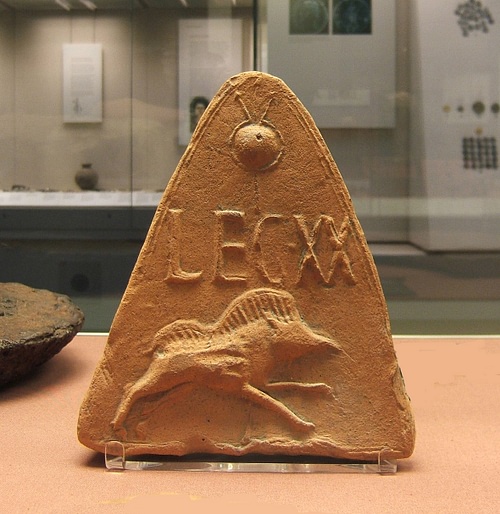 Symbol of Legion XX AgTigress (CC BY-SA) ](https://www.worldhistory.org/image/14046/symbol-of-legion-xx/ "Symbol of Legion XX")While some believe the Twentieth may have been with [Caligula](https://www.worldhistory.org/Caligula/) in his “invasion” of Britain, it did cross the channel under Claudius in 43 CE. However, until its engagement against Boudicca's rebels, little is known of the legion’s activities. Like other legions in Britain, the Twentieth supported Vitellius during the Year of Four Emperors and sent cohorts to assist him. In 70 CE, Vespasian sent Gnaeus Agricola to command the legion and impose discipline – the legion under Marcus Coelius had been disloyal and possibly mutinous. On Agricola’s solution, Tacitus wrote that the legion "had been slow to take the new oath of allegiance, and the retiring officer of which was reported to be acting disloyally" (681). He added that Agricola hoped that "…he had found rather than made an obedient soldiery" (681). Troublemakers were transferred to II Adiutrix.
In 77 CE, Agricola returned to Britain as governor and took part of the Twentieth northward to build forts and camps, and in 84 CE, the legion fought against the Caledonians in the Battle of Mons Graupius. Evidence shows that the legion participated in the construction of both Hadrian's Wall and the Antonine Wall. The legion sided with Clodius Albinus in his claim to be the emperor against Septimius Severus. XX Valeria Victrix withdrew from Britain near the end of the fourth century, but little else is clear except it may have been destroyed by either the [Franks](https://www.worldhistory.org/Franks/) or [Vandals](https://www.worldhistory.org/Vandals/).
#### Editorial Review
This human-authored article has been reviewed by our editorial team before publication to ensure accuracy, reliability and adherence to academic standards in accordance with our [editorial policy](https://www.worldhistory.org/static/editorial-policy/).
## Bibliography
- [Campbell, Duncan B & Delf, Brian. *Roman Legionary Fortresses 27 BC–AD 378.* Osprey Publishing, 2006.](https://www.worldhistory.org/books/1841768952/)
- [Dando-Collins, Stephen. *Legions of Rome.* Thomas Dunne Books, 2012.](https://www.worldhistory.org/books/1250004713/)
- [Goldsworthy, Adrian. *Complete Roman Army .* Thames & Hudson, 2011.](https://www.worldhistory.org/books/0500288992/)
- Nigel Rodgers & Hazel Dodge. *Roman Empire.* Metro Books, 2006
- [Paul Bidwell. *Roman Forts in Britain.* B. T. Batsford, 1997.](https://www.worldhistory.org/books/0752441078/)
- [Pollard, Nigel & Berry, Joanne. *The Complete Roman Legions.* Thames & Hudson, 2012.](https://www.worldhistory.org/books/0500251835/)
- [Scarre, Chris. *Chronicle of the Roman Emperors.* Thames & Hudson, 2012.](https://www.worldhistory.org/books/0500289891/)
- Suetonius. *The Twelve Caesars.* Penguin Classics
- Tacitus. *The Complete Works of Tacitus.* The Modern Library
## About the Author
Donald has taught Ancient, Medieval and U.S. History at Lincoln College (Normal, Illinois)and has always been and will always be a student of history, ever since learning about Alexander the Great. He is eager to pass knowledge on to his students.
## Cite This Work
### APA
Wasson, D. L. (2021, May 18). Legions of Britain. *World History Encyclopedia*.
### Chicago
Wasson, Donald L.. "Legions of Britain." *World History Encyclopedia*, May 18, 2021. .
### MLA
Wasson, Donald L.. "Legions of Britain." *World History Encyclopedia*, 18 May 2021, .
## License & Copyright
Submitted by [Donald L. Wasson](https://www.worldhistory.org/user/DWasson/ "User Page: Donald L. Wasson"), published on 18 May 2021. The copyright holder has published this content under the following license: [Creative Commons Attribution-NonCommercial-ShareAlike](https://creativecommons.org/licenses/by-nc-sa/4.0/deed.en). This license lets others remix, tweak, and build upon this content non-commercially, as long as they credit the author and license their new creations under the identical terms. When republishing on the web a hyperlink back to the original content source URL must be included. Please note that content linked from this page may have different licensing terms.