---
title: Top 5 Roman Sites in Southern Spain
author: Carole Raddato
source: https://www.worldhistory.org/article/1741/top-5-roman-sites-in-southern-spain/
format: machine-readable-alternate
license: Creative Commons Attribution-NonCommercial-ShareAlike (https://creativecommons.org/licenses/by-nc-sa/4.0/)
updated: 2023-12-08
---
# Top 5 Roman Sites in Southern Spain
_Authored by [Carole Raddato](https://www.worldhistory.org/user/FollowingHadrian/)_
Almost 700 years of continuous [Roman](https://www.worldhistory.org/disambiguation/Roman/) occupation have left impressive traces in the Spanish landscape. Spain was then known as 'Hispania' and is now a fascinating location for the archaeological traveller.
[ 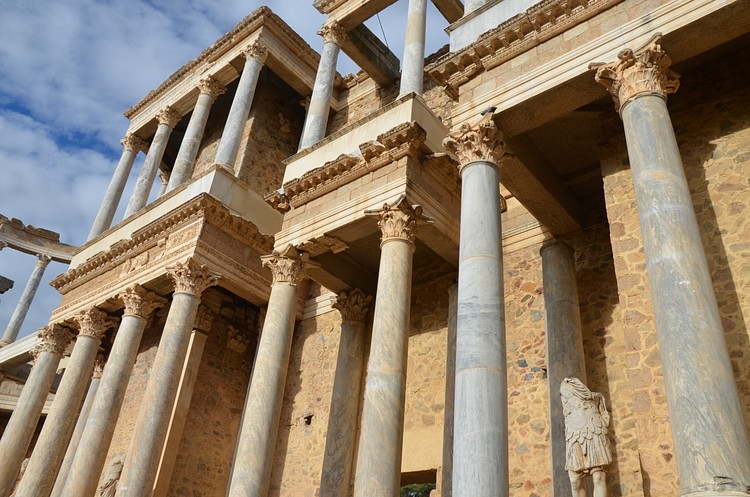 Stage Building of the Theatre of Augusta Emerita (Mérida, Spain) Carole Raddato (CC BY-NC-SA) ](https://www.worldhistory.org/image/13889/stage-building-of-the-theatre-of-augusta-emerita-m/ "Stage Building of the Theatre of Augusta Emerita (Mérida, Spain)")The Spanish provinces were amongst the first to be conquered by [Rome](https://www.worldhistory.org/Rome/) in its relentless expansion through the [Mediterranean](https://www.worldhistory.org/disambiguation/mediterranean/). As part of their struggle against [Carthage](https://www.worldhistory.org/carthage/), the Romans invaded the Iberian peninsula and, thanks to the strategic military prowess of general [Scipio Africanus](https://www.worldhistory.org/disambiguation/Scipio_Africanus/) (l. 236-183 BCE), were successful in concluding the [Second Punic War](https://www.worldhistory.org/Second_Punic_War/) (218-201 BCE). There followed almost 200 years of intermittent [warfare](https://www.worldhistory.org/warfare/) with the [Celtic](https://www.worldhistory.org/celt/) and Iberian tribes before Rome succeeded in establishing direct rule over the whole peninsula under [Augustus](https://www.worldhistory.org/augustus/) (r. 27 BCE - 14 CE).
The south of Spain was fertile and ideal for export wine, olive oil and *garum* (fermented fish sauce). The [economy](https://www.worldhistory.org/disambiguation/economy/) was based mainly on [agriculture](https://www.worldhistory.org/disambiguation/Agriculture/) and livestock, along with mining. This economy formed the basis of the native Iberians living in the valley of the Guadalquivir. The Romans soon transformed the southern provinces of Spain into one of Rome's wealthiest and best-organised colonies. Some of the country's most important [cities](https://www.worldhistory.org/city/) were founded by the Romans, and two of Rome's greatest emperors, [Trajan](https://www.worldhistory.org/trajan/) (r. 98-117 CE) and [Hadrian](https://www.worldhistory.org/hadrian/) (r. 117-138 CE), were of Spanish origin. Their legacy is still visible today.
Here is our list of the five most important and impressive Roman ruins you should visit in southern Spain.
### 1. Mérida
The Archaeological Ensemble of Mérida in Extremadura is considered one of Spain's biggest and most important sites. Included in the prestigious UNESCO World Heritage list since 1993, the small town of Mérida has preserved many traces of one of the most important Roman cities of the peninsula. Augusta Emerita was established by Augustus in 25 BCE as a Roman colony for retired Italian soldiers and became the capital of the recently created province of Lusitania (which included much of the western part of Spain and Portugal). The [city](https://www.worldhistory.org/city/) was situated near a crossing of the Guadiana River (the Flumen Anas of the Romans) and at the junction of several roads leading to other important cities, including Hispalis (Seville), Olisippo (Lisbon), and Corduba (Córdoba).
[ 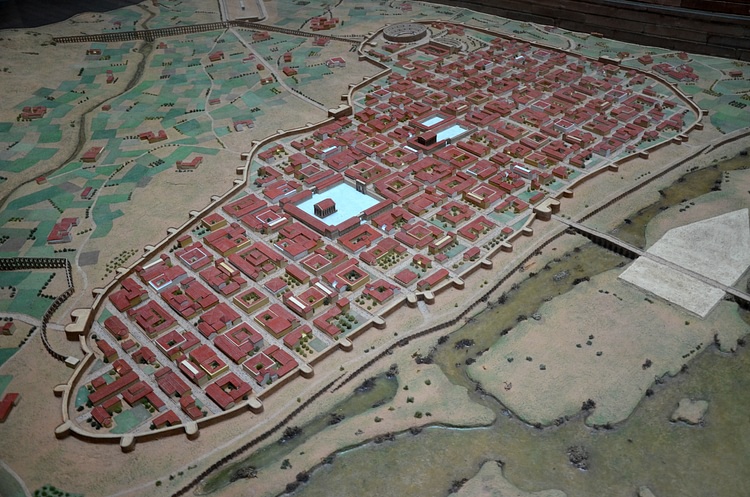 Scale Model of Augusta Emerita (Mérida, Spain) Carole Raddato (CC BY-NC-SA) ](https://www.worldhistory.org/image/13886/scale-model-of-augusta-emerita-merida-spain/ "Scale Model of Augusta Emerita (Mérida, Spain)")Mérida preserves more ancient Roman monuments than any other city in Spain, including a [theatre](https://www.worldhistory.org/disambiguation/theatre/), an [amphitheatre](https://www.worldhistory.org/amphitheatre/), three [aqueducts](https://www.worldhistory.org/aqueduct/), a [temple](https://www.worldhistory.org/temple/), the remains of an arch, as well as the longest of all surviving Roman bridges and the finest surviving [circus](https://www.worldhistory.org/disambiguation/Circus/).
**The Bridge over the Guadiana River**
The bridge over the river Guadiana is considered one of the finest examples of [Roman engineering](https://www.worldhistory.org/Roman_Engineering/) in Spain and is one of the longest surviving bridges from antiquity. It consists of 60 arches (three of which are buried on the southern bank), and its original span is estimated at over 755 metres (2,542 ft). The bridge allowed for communication with one of the main arteries of the colony, the *decumanus maximus*, the east-west main street typical of Roman towns.
[  Roman Bridge, Mérida Carole Raddato (CC BY-SA) ](https://www.worldhistory.org/image/2428/roman-bridge-merida/ "Roman Bridge, Mérida")**The Theatre**
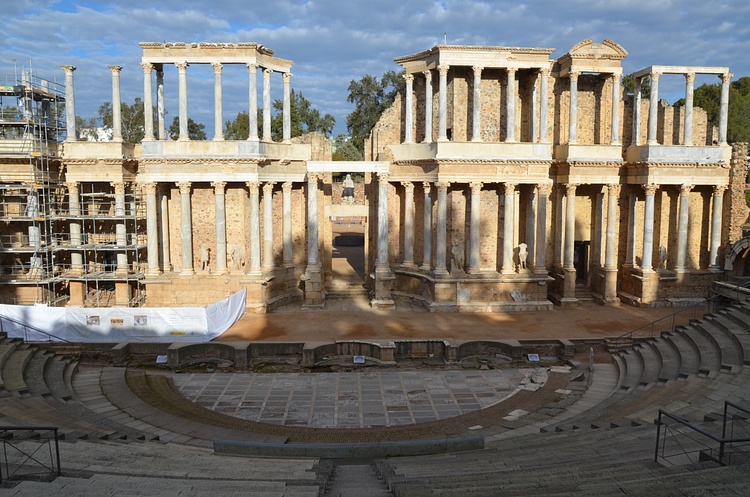
The theatre is the most important Roman monument in Mérida and the best example of its kind to be found in western [Europe](https://www.worldhistory.org/europe/). Its construction began c. 15 BCE, and an inscription indicates that Roman [consul](https://www.worldhistory.org/Consul/) [Marcus Agrippa](https://www.worldhistory.org/Marcus_Agrippa/) (63-12 BCE) was the main instigator for building it. It could hold up to 6,000 people and was remodelled several times throughout history, with major restorations taking place in the 2nd century CE.
[  Roman Theatre of Augusta Emerita (Mérida, Spain) Carole Raddato (CC BY-NC-SA) ](https://www.worldhistory.org/image/13888/roman-theatre-of-augusta-emerita-merida-spain/ "Roman Theatre of Augusta Emerita (Mérida, Spain)")**The Amphitheatre**
The amphitheatre was built next to the theatre in 8 BCE for gladiatorial contests and staged beast-hunts. It could hold up to 15,000 people. The elliptical building was of considerable dimensions and measured 126 by 103 metres (413 by 337 ft) The sand-covered arena contained a cruciform *fossa bestiaria,* where animals were kept before entering the arena.
[ 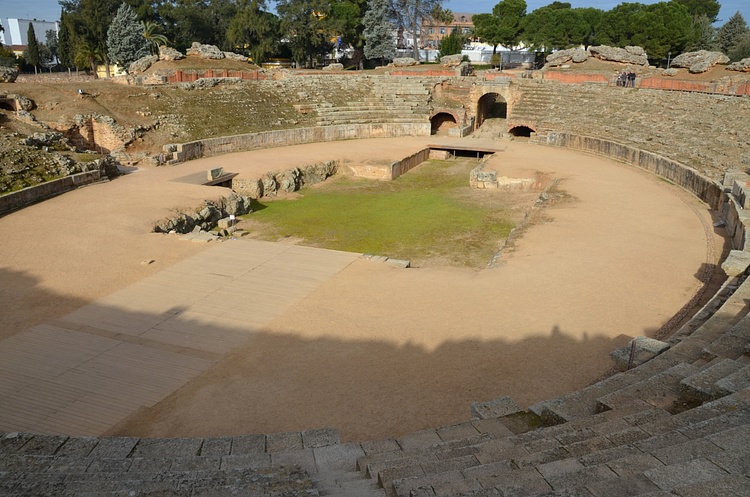 Roman Amphitheatre of Augusta Emerita (Mérida, Spain) Carole Raddato (CC BY-NC-SA) ](https://www.worldhistory.org/image/13887/roman-amphitheatre-of-augusta-emerita-merida-spain/ "Roman Amphitheatre of Augusta Emerita (Mérida, Spain)")The amphitheatre's podium was decorated with marble plaques and frescoes alluding to the games, some of which are exhibited in the National Museum of [Roman Art](https://www.worldhistory.org/Roman_Art/).
[  Roman Hunter with Lioness Painting Carole Raddato (CC BY-NC-SA) ](https://www.worldhistory.org/image/8818/roman-hunter-with-lioness-painting/ "Roman Hunter with Lioness Painting")**The Circus**
About 400 metres (1312 ft,) to the east of the amphitheatre are the remains of the circus, built at the beginning of the 1st century CE shortly after the city's foundation. It was used for two-horse and four-horse [chariot](https://www.worldhistory.org/chariot/) racing and was modelled on the [Circus Maximus](https://www.worldhistory.org/Circus_Maximus/) in Rome. Measuring 440 metres (1140 ft) in length and 114 metres (374 ft) in width, it is one of the largest and best-preserved examples of a Roman circus. It could accommodate up to 30,000 spectators. An inscription suggests that it was restored in the 4th century CE.
[  Roman Circus of Mérida Carole Raddato (CC BY-NC-SA) ](https://www.worldhistory.org/image/8833/roman-circus-of-merida/ "Roman Circus of Mérida")**The 'Temple of [Diana](https://www.worldhistory.org/diana/)'**
The erroneously named Temple of Diana was part of the municipal forum and was probably dedicated to the Imperial cult. It was preserved by having many of its columns enclosed in the walls of a 16th-century noble house. The temple was made of granite and must have been adorned with stucco or marble. Corinthian columns surrounded it. Nearby are the ruins of a portico, decorated with *clipei* (circular medallions) depicting [Jupiter](https://www.worldhistory.org/jupiter/) [Ammon](https://www.worldhistory.org/disambiguation/Ammon/) and [Medusa](https://www.worldhistory.org/Medusa/), which fronted onto the forum.
[  Temple of Diana, Augusta Emerita Carole Raddato (CC BY-NC-SA) ](https://www.worldhistory.org/image/8752/temple-of-diana-augusta-emerita/ "Temple of Diana, Augusta Emerita")[ 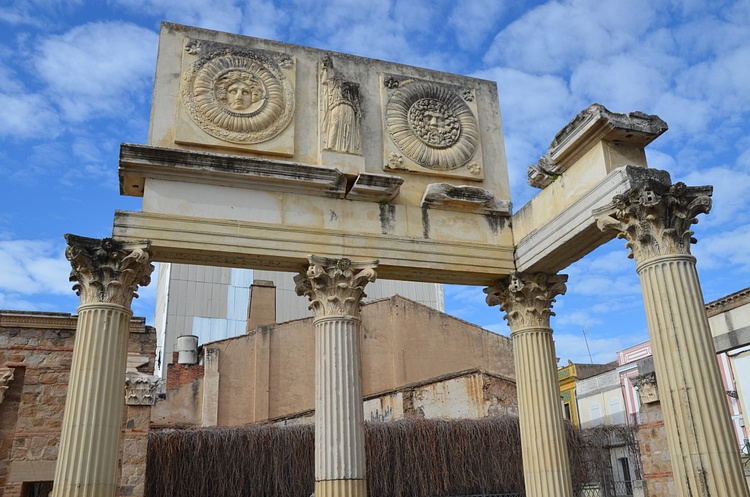 Portico in Augusta Emerita (Mérida, Spain) Carole Raddato (CC BY-NC-SA) ](https://www.worldhistory.org/image/13890/portico-in-augusta-emerita-merida-spain/ "Portico in Augusta Emerita (Mérida, Spain)")**The 'Los Milagros' [Aqueduct](https://www.worldhistory.org/aqueduct/)**
The colony had water supplied through three aqueducts. The remains of the best-preserved aqueduct called 'Los Milagros' (The Miracles) are located north of the city and consist of 38 arched pillars standing 25 metres (82 ft) high along a course of some 830 metres (2,720 ft).
[  Los Milagros Aqueduct, Mérida Carole Raddato (CC BY-SA) ](https://www.worldhistory.org/image/2427/los-milagros-aqueduct-merida/ "Los Milagros Aqueduct, Mérida")**The Mithraeum House**
This building was found fortuitously in the early 1960s. It takes its name from the discovery in its vicinity of some statues that must have come from a *Mithraeum* (a temple built to honour the [god](https://www.worldhistory.org/God/) Mithras). The whole house was built around three collonaded courts with an interior garden and a central pool. The frescoes indicate a 1st century CE origin for the house. The quality of the floor mosaics is very high, and its most fascinating one is the cosmological [mosaic](https://www.worldhistory.org/Mosaic/) that once covered the floor on the *triclinium*. The complex has been recently roofed and renovated.
[ 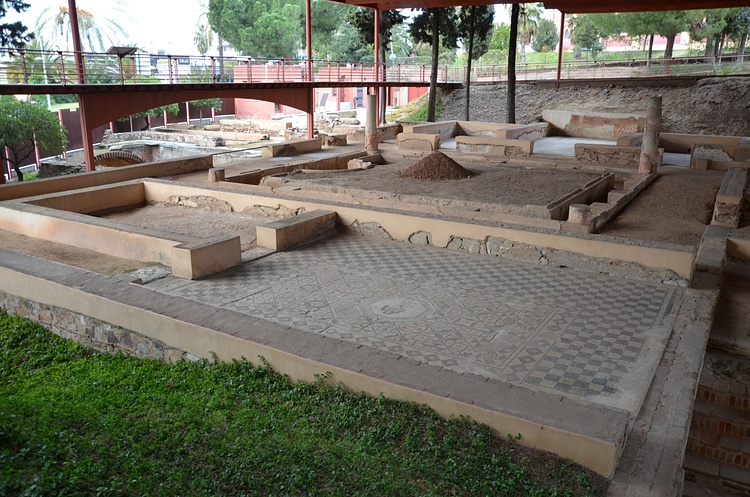 Mithraeum House, Augusta Emerita Carole Raddato (CC BY-NC-SA) ](https://www.worldhistory.org/image/13891/mithraeum-house-augusta-emerita/ "Mithraeum House, Augusta Emerita")Most of the finds are in the National Museum of Roman Art in the city (Museo Nacional de Arte Romano), built over a section of Roman road and a house. Inaugurated in 1986, the magnificent building, reflecting certain aspects of [Roman architecture](https://www.worldhistory.org/Roman_Architecture/), occupies some 5000 m² (53819 ft²). Currently, the museum houses more than 36,000 pieces, including [Roman mosaics](https://www.worldhistory.org/article/498/roman-mosaics/), sculptures, epigraphs, and inscriptions, showing all aspects of everyday life in a Roman colony.
[ 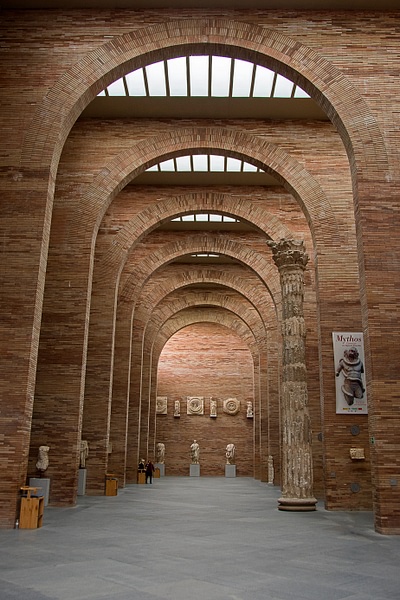 National Museum of Roman Art in Mérida, Spain Anual (CC BY-NC-SA) ](https://www.worldhistory.org/image/13892/national-museum-of-roman-art-in-merida-spain/ "National Museum of Roman Art in Mérida, Spain")### 2. Italica
The ruins of the ancient city of Italica are located in Andalucia, 9 kilometres (5.5 mi) north of Seville. It was the earliest Roman settlement in Spain, founded in 206 BCE by the Roman general [Scipio](https://www.worldhistory.org/disambiguation/Scipio/) Africanus following his victory against the Carthaginians. The city reached its height in the 2nd century CE and was the birthplace of the emperor Trajan (and possibly Hadrian). Today, Italica is a wonderfully preserved example of a Roman city, with broad paved streets, a stunning amphitheatre, and luxurious houses with a wide variety of mosaic floors.
[ 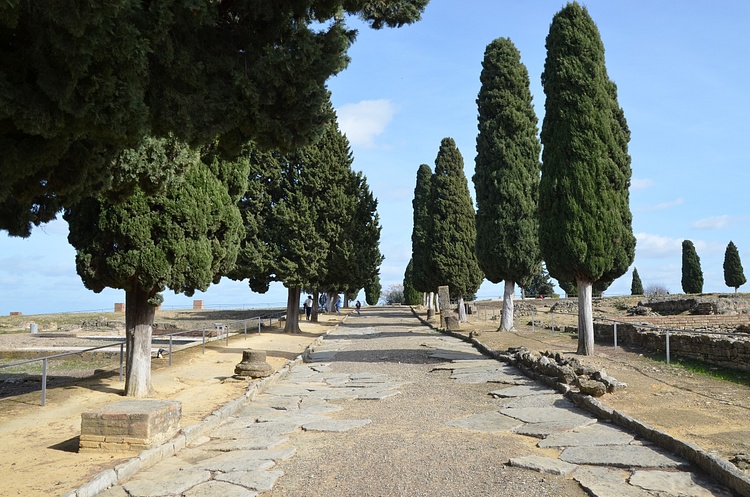 Cardo Maximus of Italica, Spain Carole Raddato (CC BY-NC-SA) ](https://www.worldhistory.org/image/13896/cardo-maximus-of-italica-spain/ "Cardo Maximus of Italica, Spain")Much of the earliest neighbourhood established by Scipio now lies beneath the modern town of Santiponce. The ruins of the monuments the visitor sees today date to the time of Hadrian, who bestowed imperial largesse on the city. Under his reign in the 2nd century CE, Italica enjoyed an intense period of architectural development with the construction of new public and private buildings.
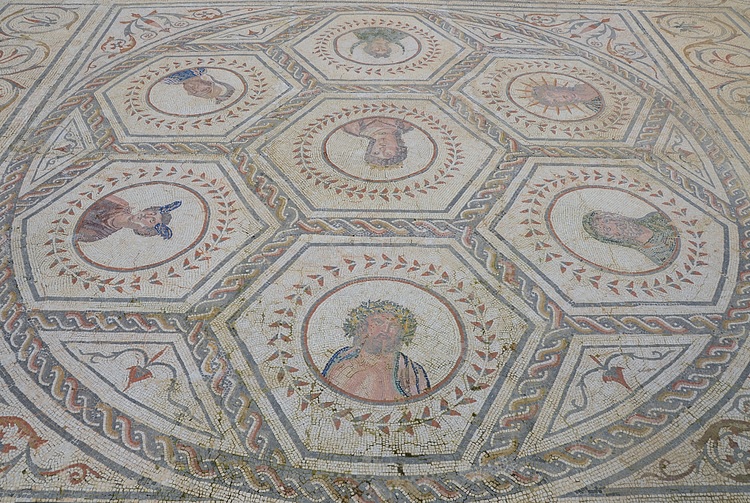
[ 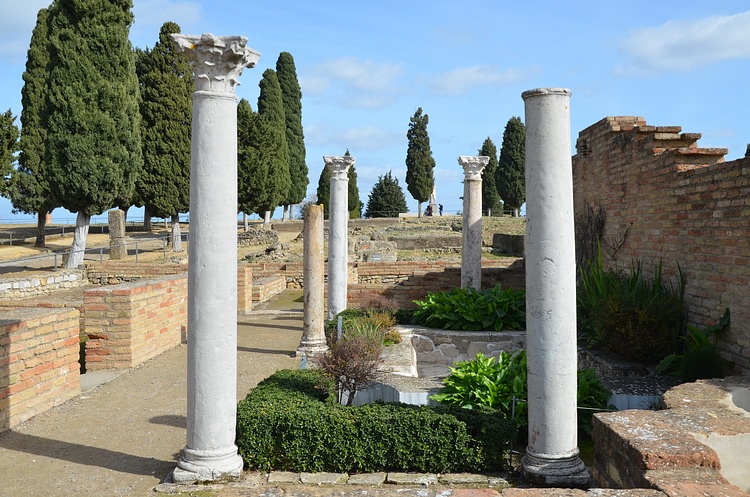 House of the Birds, Italica (Spain) Carole Raddato (CC BY-NC-SA) ](https://www.worldhistory.org/image/13894/house-of-the-birds-italica-spain/ "House of the Birds, Italica (Spain)")About 20 intricate mosaics lie amongst the uncovered ruins still in situ, and their decorative themes provided the name for many of the buildings that can be visited, including the House of the Birds, the Building of the [Neptune](https://www.worldhistory.org/Neptune/) Mosaic, and the House of the Planetarium, with a mosaic depicting the gods who gave their names to the days of the week.
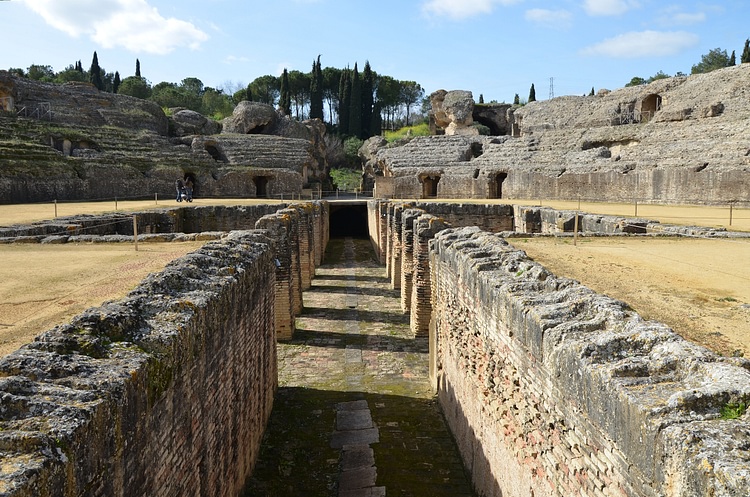
[  Mosaic with Busts of the Planetary Deities, Italica (Spain) Carole Raddato (CC BY-NC-SA) ](https://www.worldhistory.org/image/13895/mosaic-with-busts-of-the-planetary-deities-italica/ "Mosaic with Busts of the Planetary Deities, Italica (Spain)")The amphitheatre of Italica was one of the largest in the [Empire](https://www.worldhistory.org/empire/), measuring 160 by 137 metres (525 by 450 ft). It could accommodate some 25,000 spectators.
[  Roman Amphitheatre of Italica (Spain) Carole Raddato (CC BY-NC-SA) ](https://www.worldhistory.org/image/13893/roman-amphitheatre-of-italica-spain/ "Roman Amphitheatre of Italica (Spain)")Many of the treasures unearthed at Italica are displayed in the Archaeological Museum of Seville (Museo Arqueológico de Sevilla) and the [Palace](https://www.worldhistory.org/disambiguation/palace/) of the Countess of Lebrija (Palacio de Lebrija) in Seville.
### 3. Baelo Claudia
The ruined Roman town of Baelo Claudia is one of Andalucía's most important Roman archaeological sites. Its majestic location on the shores of the Strait of Gibraltar, opposite the coast of Tangiers, offers astonishing views over the bay and Morocco. The coastal town, settled at the end of the 2nd century BCE, was an important centre of the fish-salting industry and served as the main port of embarkment for North [Africa](https://www.worldhistory.org/disambiguation/africa/).
[ 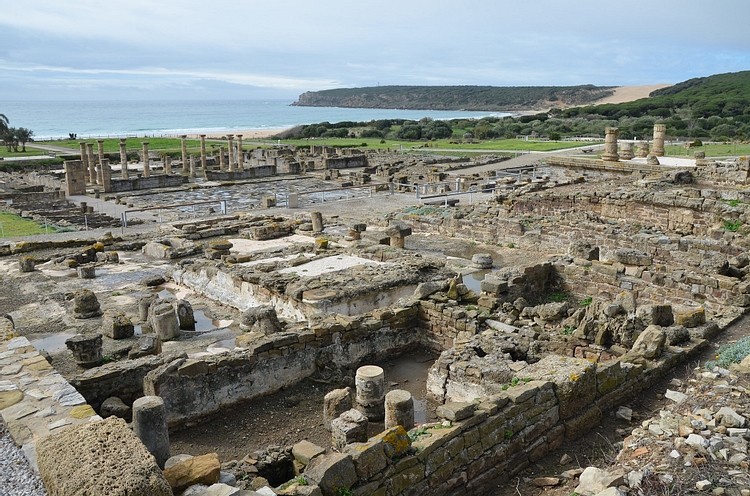 Baelo Claudia, Spain Carole Raddato (CC BY-SA) ](https://www.worldhistory.org/image/4644/baelo-claudia-spain/ "Baelo Claudia, Spain")The archaeological remains of Baelo Claudia today include a theatre, temples, a paved forum with a basilica and a market, thermal baths, and a large fish-salting factory for the manufacture of *garum*, the widely popular fish sauce of the Romans.
[ 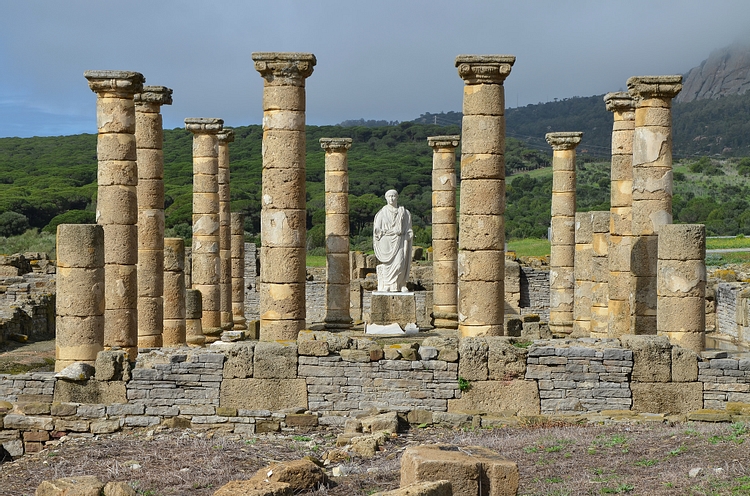 Basilica of Baelo Claudia, Spain Carole Raddato (CC BY-SA) ](https://www.worldhistory.org/image/4643/basilica-of-baelo-claudia-spain/ "Basilica of Baelo Claudia, Spain")Baelo Claudia experienced a period of urban expansion during the rule of [Roman emperor](https://www.worldhistory.org/Roman_Emperor/) [Claudius](https://www.worldhistory.org/claudius/) (r. 41-54 CE), who raised the city to the level of a Roman *municipium* with Roman rights. It was also at this time that Baelo received the name of Claudia. The town acquired a large forum with monumental public buildings, three aqueducts guaranteeing water supply to the population, and two factories for the production of *garum*. The economic peak was maintained well into the 2nd century CE. However, it started to decline at the beginning of the 3rd century CE, perhaps due to an [earthquake](https://www.worldhistory.org/disambiguation/earthquake/).
[ 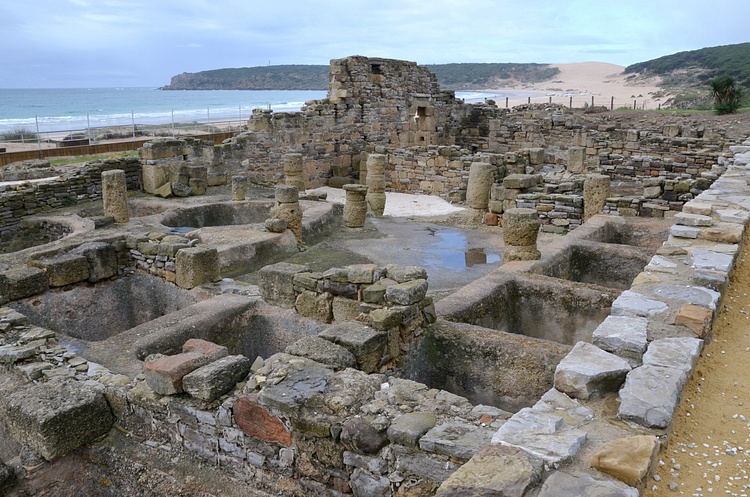 Garum Factory, Baelo Claudia Carole Raddato (CC BY-NC-SA) ](https://www.worldhistory.org/image/13908/garum-factory-baelo-claudia/ "Garum Factory, Baelo Claudia")There is a good on-site museum and a visitors' centre.
### 4. Munigua
Munigua is one of the most remote archaeological sites in Spain, situated in the heart of the Sierra Morena, 50 kilometres (30 mi) northeast of Seville. Known as Municipium Flavium Muniguense to the Romans, the town has its origins going back to the pre-Roman period. Evidence of human occupation extends from the mid-4th century BCE to the 8th century CE. The buildings visible today were built during the Roman period, between the 1st and the 3rd centuries CE, when the town experienced an era of prosperity.
[ 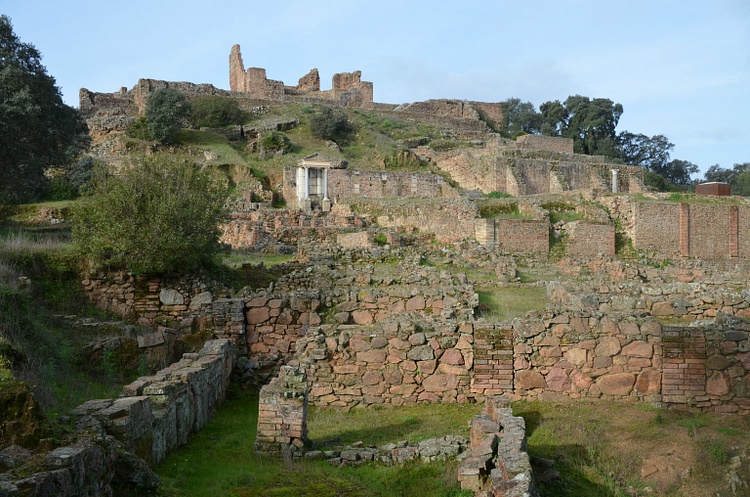 Munigua, Spain Carole Raddato (CC BY-NC-SA) ](https://www.worldhistory.org/image/13911/munigua-spain/ "Munigua, Spain")Lavish Roman-style houses and public buildings—forums, basilica, [Roman baths](https://www.worldhistory.org/Roman_Baths/), temples—were built up a steep hill with a large temple at the top. The most remarkable ruin is of the terraced sanctuary on the slope of the hill with reinforced buttresses at the rear, giving it the appearance of a fortress.
[ 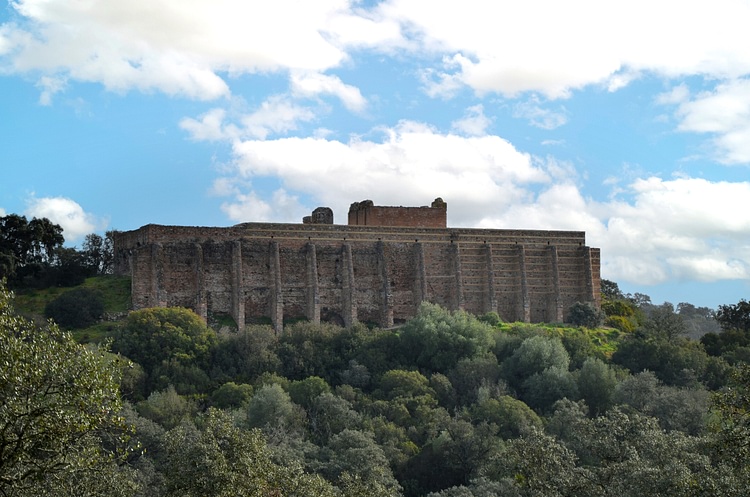 Terraced Sanctuary of Munigua, Spain Carole Raddato (CC BY-NC-SA) ](https://www.worldhistory.org/image/13912/terraced-sanctuary-of-munigua-spain/ "Terraced Sanctuary of Munigua, Spain")The site is not directly accessible by road. It can be approached by a dirt track that begins at Villanueva del Rio y Minas. It may not be easy to get to the site, but it is definitely worth the effort.
### 5. Córdoba
Córdoba, along with Seville and Granada, is one of the three most visited cities of Andalusia. First an Iberian settlement, Córdoba became a Roman outpost, an Arab capital, and a city eventually conquered by the Catholic Kingdom of Castile in the 1200s. Its incredibly charming historic centre is registered on the UNESCO Heritage List.
[  Roman Bridge of Córdoba, Spain Carole Raddato (CC BY-NC-SA) ](https://www.worldhistory.org/image/13913/roman-bridge-of-cordoba-spain/ "Roman Bridge of Córdoba, Spain")Established on the right bank of the Guadalquivir river in the 2nd century BCE, Córdoba (Roman Colonia Patricia Corduba) became the capital of the Roman province of Baetica and acquired great importance during the Augustan period (27 BCE - 14 CE). Roman philosophers such as [Seneca](https://www.worldhistory.org/Seneca/) the Younger (4 BCE - 65 CE) and poets such as Lucan (39-65 CE) came from Córdoba. The most famous ancient monument of the city is the Roman bridge across the Guadalquivir. Other buildings include a partially reconstructed temple, a mausoleum, and Emperor Maximian's Palace (r. 286-305 CE).
[ 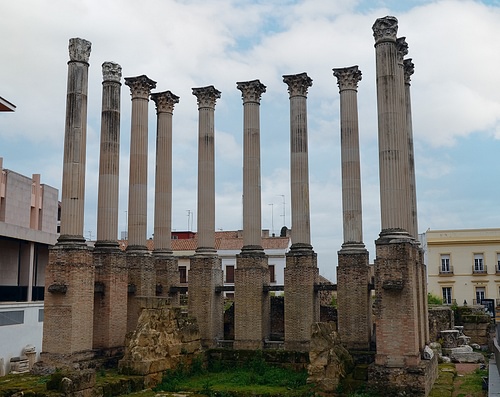 Roman Temple in Córdoba Carole Raddato (CC BY-NC-SA) ](https://www.worldhistory.org/image/13916/roman-temple-in-cordoba/ "Roman Temple in Córdoba")The Archaeological Museum (Museo Arqueológico de Córdoba), housed in the 16th-century noble palace of Jerónimo Páez, traces Córdoba's rich history, from pre-Roman times to the period of Arabic rule. It is particularly rich in both its Roman and Arab holdings, displayed in eight rooms and three courtyards, with descriptions in English and Spanish. In the basement are the excavated remains of the city's Roman theatre, which were discovered in 1994 during the construction of an annexe for the museum.
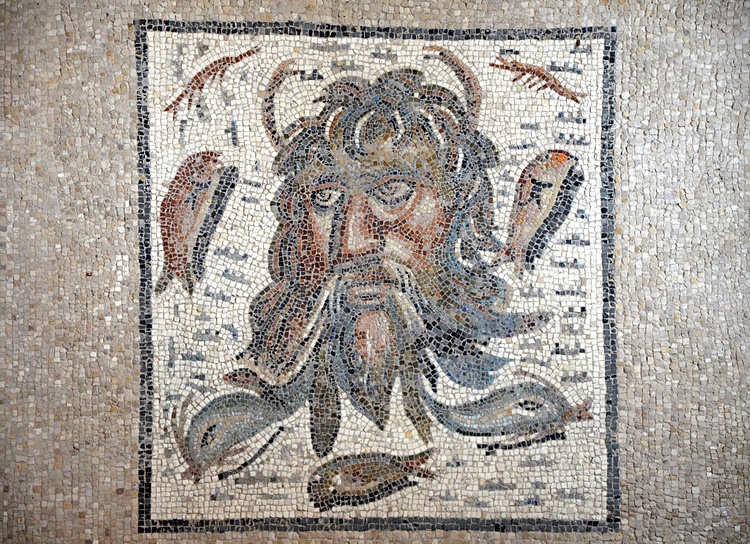
A series of exquisite mosaics from the 2nd and 3rd century CE are displayed in the Hall of the Mosaics of the Alcázar de los Reyes Cristianos, a medieval Moorish palace and castle located in the historic centre of Córdoba. The mosaics were discovered in 1959 during excavation work under the Plaza de la Corredera. They once belonged to a wealthy Roman mansion.
[  Oceanus Mosaic Carole Raddato (CC BY-NC-SA) ](https://www.worldhistory.org/image/13915/oceanus-mosaic/ "Oceanus Mosaic")Other Roman sites in southern Spain to consider visiting:
- Carmona's amphitheatre and necropolis ([info](https://www.andalucia.org/en/carmona-cultural-tourism-anfiteatro-romano))
- Roman Ruins at Acinipo ([info](https://www.andalucia.org/en/ronda-cultural-tourism-conjunto-arqueologico-de-acinipo))
- Roman Villa of Fuente [Alamo](https://www.worldhistory.org/article/2805/the-alamo/) ([info](https://www.andalucia.org/en/puente-genil-cultural-tourism-villa-romana-de-fuente-alamo))
- Municipal History Museum of Écija ([info](https://museo.ecija.es/))
#### Editorial Review
This human-authored article has been reviewed by our editorial team before publication to ensure accuracy, reliability and adherence to academic standards in accordance with our [editorial policy](https://www.worldhistory.org/static/editorial-policy/).
## Bibliography
- [Collins, Roger. *Spain.* Oxford University Press, 1998.](https://www.worldhistory.org/books/0192853007/)
- [Curchin, Leonard. *Roman Spain .* Routledge, 2015.](https://www.worldhistory.org/books/0415740320/)
- Velázquez Jiménez Agustín (Author), Barrera Antón José Luis de la (Author), Álvarez Martínez José María (Author), Babyl Traducciones (Translator). *Mérida.* Editorial Everest, 2006
## About the Author
Carole maintains the popular ancient history photo-blog Following Hadrian, where she travels the ancient world in the footsteps of Emperor Hadrian.
- [Facebook Profile](https://www.facebook.com/FollowingHadrian)
- [X/Twitter Profile](https://twitter.com/carolemadge)
## Cite This Work
### APA
Raddato, C. (2021, April 29). Top 5 Roman Sites in Southern Spain. *World History Encyclopedia*.
### Chicago
Raddato, Carole. "Top 5 Roman Sites in Southern Spain." *World History Encyclopedia*, April 29, 2021. .
### MLA
Raddato, Carole. "Top 5 Roman Sites in Southern Spain." *World History Encyclopedia*, 29 Apr 2021, .
## License & Copyright
Submitted by [Carole Raddato](https://www.worldhistory.org/user/FollowingHadrian/ "User Page: Carole Raddato"), published on 29 April 2021. The copyright holder has published this content under the following license: [Creative Commons Attribution-NonCommercial-ShareAlike](https://creativecommons.org/licenses/by-nc-sa/4.0/deed.en). This license lets others remix, tweak, and build upon this content non-commercially, as long as they credit the author and license their new creations under the identical terms. When republishing on the web a hyperlink back to the original content source URL must be included. Please note that content linked from this page may have different licensing terms.