---
title: Social, Political & Economic Landscapes in Kautilya's Arthashastra
author: Disha Ray
source: https://www.worldhistory.org/article/1561/social-political--economic-landscapes-in-kautilyas/
format: machine-readable-alternate
license: Creative Commons Attribution-NonCommercial-ShareAlike (https://creativecommons.org/licenses/by-nc-sa/4.0/)
updated: 1970-01-01
---
# Social, Political & Economic Landscapes in Kautilya's Arthashastra
_Authored by [Disha Ray](https://www.worldhistory.org/user/raydisha.03/)_
The *[Arthashastra](https://www.worldhistory.org/Arthashastra/)* (or *Arthaśāstra*) is one of the oldest surviving treatises on statecraft. There is considerable debate about the dating and authorship of the text; it underwent compilation, recension, and redaction several times over the centuries and is likely to have been a witness of religious and ideological transformations, political and socio-economic changes. As a *śāstra*, it purports to be authoritative and comprehensive and treats its knowledge as eternal, unchanging, and universally applicable. Many scholars have examined the text as the “science of politics” whereas others have seen it as the “science of political [economy](https://www.worldhistory.org/disambiguation/economy/)”, “the [science](https://www.worldhistory.org/science/) of material gain” etc. Thomas Trautmann described it as the science of running a state, where kingship is identified with wealth. The text itself explains various meanings of the word '*artha*'- as the source of livelihood, the earth inhabited by human beings, and the means of protection and acquisition of the earth.
[  Ashoka Dharma (CC BY) ](https://www.worldhistory.org/image/8299/ashoka/ "Ashoka")The *Arthashastra* as a treatise on statecraft is not an isolated one in the tradition of this expert knowledge. The author explicitly mentions that his text is a compilation of the works of former teachers and throughout the text engages with the advice and arguments of these former experts. Corroborating this with the mention of various *arthaśāstras* in epics like *[Mahabharata](https://www.worldhistory.org/Mahabharata/)*, it has been argued that the *Arthashastra* relied on pre-existing texts but much cannot be inferred about its relation with these because none of them has survived independently. [Mark](https://www.worldhistory.org/disambiguation/Mark/) McClish argues that the origin of the text was sometime in the late centuries of the 1st millennium BCE and its final form may have taken shape by the 3rd-4th century CE.
Later texts draw significantly on the *Arthashastra.* The author of the *Kamandakiya Nitisara* offers salutation to the author of the *Arthashastra* for compiling the *nītiśāstras* and relies so heavily on it that scholars have often described it as a “summary of the *Arthashastra*”. Some historians point out that this *Nitisara* focuses more on foreign policy and [warfare](https://www.worldhistory.org/warfare/) and excludes the parts on administration and [law](https://www.worldhistory.org/disambiguation/law/). It is believed that the latter text was meant to be used by kings who could not manage to read the *Arthashastra* as they were preoccupied with the affairs of the state. There is also a Tamil text, *Tirukkural,* possibly from the 4th-5th century CE, that owes a lot to the *Arthashastra*.
### Content
We must remember that Kauṭilya's *Arthashastra* does not provide us with a clear picture of social constitution, economic elements, or political developments. The primary concern of the text is the working of a state with the king at the apex. Hence, our reconstruction would be bound by the depiction of the state and its association with other aspects of society.
The 15 books of the *Arthashastra* revolve around one central figure - the king. Be it controlling the production of a wide range of goods, laying down rules for leisure activities, or prescribing food ration for every individual, Kauṭilya left no stones unturned to bring every possible aspect of the state and the lives of its subjects under the ambit of the king's control. He warns that without a king there will be *matsyanyāya* (Law of the Fish) that is weaker beings are devoured by stronger ones and hence a state cannot afford to be kingless.
The *Arthashastra* puts forward the *saptanga* theory of the state being comprised of seven constituent elements:
- the king
- ministers
- countryside
- fort
- treasury
- army
- ally
The pre-eminence of the king perhaps stemmed from the fact that he has the power to acquire and protect productive territory and tax the people living in it. Kauṭilya advises the king to use *daṇḍa* (punishment) neither too harshly nor too leniently in order to be honoured. The *Arthashastra* speaks about a wide range of topics and as if putting together a “textbook for kings”, it elucidates on almost all possible aspects that one can think of, such as:
- the training of a prince
- recruiting and appointing officials
- resolving public disputes
- pursuing criminals
- maintaining troops and spies
- conquering areas by defeating other kings.
### Economy
The economic landscape of the *Arthashastra* is [agriculture](https://www.worldhistory.org/disambiguation/Agriculture/)-centred. We find not just methods of agricultural expansion and details of taxation but considerable information about the granary, the storehouse of forest products, the armoury, and most importantly the treasury of the state and an overseer appointed to look after each of them. It must be noted that Kauṭilya showed [grave](https://www.worldhistory.org/burial/) concern about the *kośa* or treasury (and emphasized upon the means of the accumulation of wealth throughout the text) as he believed that the wealth determined the undertakings by the king and in turn the welfare of the state.
[ 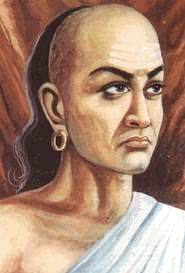 Kautilya Unknown (CC BY-NC-SA) ](https://www.worldhistory.org/image/2137/kautilya/ "Kautilya")The treatise gives us a detailed account of wages of all kinds of people and taxes to be collected. Regarding the fiscal policy, Kauṭilya describes different sources of revenue for the state. The state-controlled the production and distribution of various groups but did not completely restrict private individuals from manufacturing and selling various products. A. L. Basham argued that the Kauṭilyan state resembled a sort of state socialism. The fact that Kauṭilya makes it the duty of the state to look after the certain disadvantaged groups has made several scholars argue that it represented a welfare state.
### **Society**
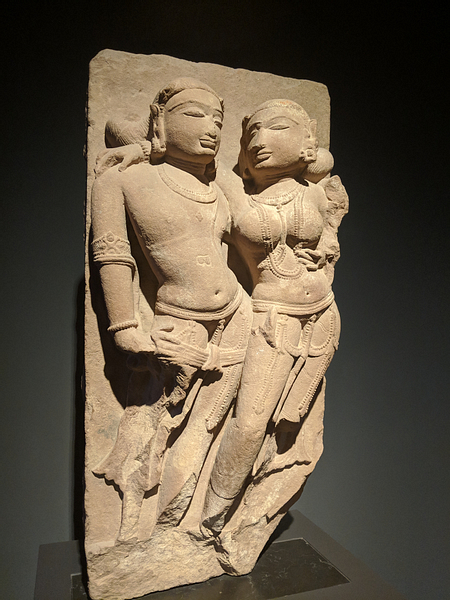
Kauṭilya speaks at length about the king and the ministers of the state but several other working classes are also talked about. Let us look at two groups that find mention in the text but have hardly ever received limelight in this treatise or other historical accounts. The *Arthaśāstra* contains data on [women](https://www.worldhistory.org/disambiguation/women/) from various backgrounds. Skilled artisans, spies of the state, female slaves, prostitutes, farmers earned their livelihood and paid taxes to the state. Prostitution was seen as an occupation and several categories of prostitutes are mentioned in the text. There were officials appointed to look into the affairs involved in these professions and the institutions that aided their smooth working. Suvira Jaiswal argues that Megasthenes' account of female bodyguards protecting the king was confirmed by Kauṭilya as the king's bed was surrounded by a troop of women archers. With the tendency of the text to control all aspects of the state and the lives of the subjects, it lays down rules of marriage, divorce and inheritance of property, punishments and crimes against and by women. Thus, the text may not tell us the perspective of women but in many ways gives us a glimpse into the variety of female experiences during that period.
[  Amorous Indian Couple Relief Jan van der Crabben (CC BY-NC-SA) ](https://www.worldhistory.org/image/9729/amorous-indian-couple-relief/ "Amorous Indian Couple Relief")The other group, perhaps quite unrelated to the first, is the forest communities. Separated from so-called civilized society, they are known as *mlechchajāti*. Aloka Parasher Sen argues that since agriculture was the dominant mode of production, settlement of new villages was seen as crucial in order to expand the areas of cultivation. For this purpose, the states and guilds cleared forests lands and displaced the *āṭavika* through the force of arms or direct negotiations. Not only was the forest seen as an important resource, but even the labour and knowledge of these groups is also something that the state can use profitably. Kauṭilya thus also recommends techniques of bringing forest tribes into the class society and hiring them as army auxiliaries and spies.
### Foreign Policy & [War](https://www.worldhistory.org/disambiguation/War/)
Intricately related to the expansion of the state is Kauṭilya's perception of [ancient Indian warfare](https://www.worldhistory.org/Indian_Warfare/). His theory of warfare comprised of a set of rigid principles which could guarantee success. Kauṭilya is concerned not just by the war between states but also the intra-state wars or the rise of rebellions. He suggests extra taxation during emergencies but warns against it in the long run as he perceives internal security depends on the contentment of the subjects.
Kauṭilya lays down six measures of foreign policy in the 7th book and elucidates in the conduct of each:
- peace
- war
- staying quiet
- marching
- seeking shelter
- dual policy.
He advises that during decline one must try to make peace and when prospering, one should make war and provides techniques to deal with weaker, equal and stronger kings. He gives the theory of the circle of kings and recognizing friendly and unfriendly elements so that the king may bring regions under his rule and become the sovereign of the “four corners of the earth”.
### *Arthashastra* & *Dharmahastra*
The intertextuality between Manu's *Manava Dharmashastra* and the *Arthashastra* of Kauṭilya has been studied by several scholars who have taken up the daunting task of analysing the style, structure, and contents of both these texts to understand their relations and contradictions and most importantly to reconstruct a picture of the society then. Many scholars argue that some sections of the *Arthashastra* are older than Manu's text by citing the presence of not just parallel texts but a common and unusual vocabulary. Olivelle has also argued that unlike the *Arthashastra*, the *Manava Dharmashastra* was written by a single individual who borrowed heavily from the *Arthashastra*'s material on king, government, law and judiciary, but integrated the material into his own organizational scheme, presenting a unique text within the literary tradition of *Dharmashastras*. There is also a structural similarity between the seventh chapter of Manu and the *Arthashastra*.
Wendy Doniger brings forth the contradiction that underlies the *Arthashastra* and the laws of Manu and highlights the subtle subversion of *dharma* by the *Arthashastra*. She explains that ideas from Manu were stitched into *Arthashastra* often leading to a pro-Brahmanic and pro-dharmic revision of the text. She cites examples like the difference in the harshness of punishment for the verbal abuse of Brahmins according to the *Manava Dharmashastra* and the *Arthashastra* to show how the latter trod lightly in its critique of *dharma*. Doniger argues that this pervasive un-dharmic agenda was made possible by coating it with a thin veneer of *dharma* and disregarding rather than challenging the power of Brahmins.
Regarding the *Manava Dharmashastra* and *Arthashastra*, we may ask what was the scope of dissent against *dharma* in ancient [India](https://www.worldhistory.org/india/)? Was the world beyond the one that people knew about more important than achieving material well-being in this world or was it the other way round? When two authoritative texts laid down contradicting rules and punishments, which text superseded the other and why? And finally, if we assume that the different members of the priestly class wrote these texts and the monarchs read them carefully, to what extent were the common men and women (possibly illiterate) affected by what was laid down in these treatises?
#### Editorial Review
This human-authored article has been reviewed by our editorial team before publication to ensure accuracy, reliability and adherence to academic standards in accordance with our [editorial policy](https://www.worldhistory.org/static/editorial-policy/).
## Bibliography
- [Political Brahmanism and the State: A Compositional History of the Arthaśāstra](https://repositories.lib.utexas.edu/handle/2152/10568 "Political Brahmanism and the State: A Compositional History of the Arthaśāstra"), accessed 5 Jun 2020.
- [Date of Kautalya](https://www.jstor.org/stable/44082682?seq=1 "Date of Kautalya"), accessed 5 Jun 2020.
- [Female Images in the Arthasastra of Kautilya](https://www.jstor.org/stable/3518338?seq=1 "Female Images in the Arthasastra of Kautilya"), accessed 5 Jun 2020.
- [Kautilya's ‘Arthashastra’ and the legalism of Lord Shang.](https://www.jstor.org/stable/41933478?seq=1 "Kautilya's ‘Arthashastra’ and the legalism of Lord Shang."), accessed 5 Jun 2020.
- [Kauṭilya and the Arthaśāstra: A statistical investigation of the authorship and evolution of the text.](https://books.google.co.in/books/about/Kau%E1%B9%ADilya_and_the_Artha%C5%9B%C4%81stra.html?id=v3iDAAAAMAAJ&redir_esc=y "Kauṭilya and the Arthaśāstra: A statistical investigation of the authorship and evolution of the text."), accessed 5 Jun 2020.
- [Material culture and philology: semantics of mining in ancient India](https://www.jstor.org/stable/10.7817/jameroriesoci.132.1.0023?seq=1 "Material culture and philology: semantics of mining in ancient India"), accessed 5 Jun 2020.
- [Of tribes, hunters and barbarians: Forest dwellers in the Mauryan period](https://journals.sagepub.com/doi/abs/10.1177/025764309801400202?journalCode=siha "Of tribes, hunters and barbarians: Forest dwellers in the Mauryan period"), accessed 5 Jun 2020.
- [Quotations from the Kauṭilīya-Arthaśāstra](https://www.jstor.org/stable/pdf/596873.pdf?seq=1 "Quotations from the Kauṭilīya-Arthaśāstra"), accessed 5 Jun 2020.
- [Readings in Kautilya's Arthasastra](https://www.amazon.com/Readings-Kautilyas-Arthasastra-B-P-Sinha/dp/B004S3W4J0 "Readings in Kautilya's Arthasastra"), accessed 5 Jun 2020.
- [The Arthaśāstra: Selections from the Classic Indian Work on Statecraft](https://www.amazon.in/Arthasastra-Selections-Classic-Statecraft-Classics/dp/1603848487 "The Arthaśāstra: Selections from the Classic Indian Work on Statecraft"), accessed 5 Jun 2020.
- [The Attitude of Kauṭilya to Araṇya.](https://www.jstor.org/stable/20723009?seq=1 "The Attitude of Kauṭilya to Araṇya."), accessed 5 Jun 2020.
- [The Culture and Civilisation of Ancient India in Historical Outline](https://books.google.co.in/books/about/The_Culture_and_Civilisation_of_Ancient.html?id=Quk_M98wyAMC "The Culture and Civilisation of Ancient India in Historical Outline"), accessed 5 Jun 2020.
- [The Dependence of Manu's Seventh Chapter on Kauṭilya's Arthaśāstra](https://www.jstor.org/stable/10.7817/jameroriesoci.134.2.241?seq=1 "The Dependence of Manu's Seventh Chapter on Kauṭilya's Arthaśāstra"), accessed 5 Jun 2020.
- [The Economic History of India up to AD 1200: Trends and Prospects](https://www.jstor.org/stable/3596250?seq=1 "The Economic History of India up to AD 1200: Trends and Prospects"), accessed 5 Jun 2020.
- [The History of the Arthaśāstra by Mark McClish](https://www.cambridge.org/core/books/history-of-the-arthasastra/051E3A722C5339D78EC9B57897827BCD "The History of the Arthaśāstra by Mark McClish"), accessed 5 Jun 2020.
- [The Kautilīya Arthaśāstra Part II: An English Translation with Critical and Explanatory Notes (2nd ed)](https://books.google.co.in/books/about/The_Kautil%C4%ABya_Artha%C5%9B%C4%81stra_An_English.html?id=ri89AQAAIAAJ&redir_esc=y "The Kautilīya Arthaśāstra Part II: An English Translation with Critical and Explanatory Notes (2nd ed)"), accessed 5 Jun 2020.
- [The Position of Women In Kauṭilya's Arthaśāstra.](https://www.jstor.org/stable/44252408?seq=1 "The Position of Women In Kauṭilya's Arthaśāstra."), accessed 5 Jun 2020.
- [A. S. Altekar. *State and Government in Ancient India.* Motilal Banarsidass, 2015.](https://www.worldhistory.org/books/8120810090/)
- [A.L. Basham. *The Wonder That Was India.* Sidgwick & Jackson, 2000.](https://www.worldhistory.org/books/0283992573/)
- [D. D. Kosambi. *COLLECTORS - Ancient India A History of it Culture and Civilization First American..* Pantheon Books a division of Random House, 1965.](https://www.worldhistory.org/books/B00FVZV7U6/)
- [Drekmeier, Charles. *Kingship and Community in Early India.* Stanford University Press, 1962.](https://www.worldhistory.org/books/0804701148/)
- [Olivelle, Patrick. *King, Governance, and Law in Ancient India.* Oxford University Press, 2016.](https://www.worldhistory.org/books/0190644125/)
- [Ram Sharan Sharma. *Aspects of Political Ideas and Institutions in Ancient India.* Motilal Banarsidass, 2015.](https://www.worldhistory.org/books/8120808983/)
- [Thomas R. Trautmann & Gurcharan Das (Intro.). *Arthashastra.* Penguin/Portfolio, 2016.](https://www.worldhistory.org/books/0143426184/)
## About the Author
Disha is an undergraduate student of History at St. Stephen's College, University of Delhi.
- [Facebook Profile](https://www.facebook.com/https://www.facebook.com/disha.)
- [Linkedin Profile](https://www.linkedin.com/linkedin.com/in/disha-ray-b59aa)
## Cite This Work
### APA
Ray, D. (2020, June 04). Social, Political & Economic Landscapes in Kautilya's Arthashastra. *World History Encyclopedia*.
### Chicago
Ray, Disha. "Social, Political & Economic Landscapes in Kautilya's Arthashastra." *World History Encyclopedia*, June 04, 2020. .
### MLA
Ray, Disha. "Social, Political & Economic Landscapes in Kautilya's Arthashastra." *World History Encyclopedia*, 04 Jun 2020, .
## License & Copyright
Submitted by [Disha Ray](https://www.worldhistory.org/user/raydisha.03/ "User Page: Disha Ray"), published on 04 June 2020. The copyright holder has published this content under the following license: [Creative Commons Attribution-NonCommercial-ShareAlike](https://creativecommons.org/licenses/by-nc-sa/4.0/deed.en). This license lets others remix, tweak, and build upon this content non-commercially, as long as they credit the author and license their new creations under the identical terms. When republishing on the web a hyperlink back to the original content source URL must be included. Please note that content linked from this page may have different licensing terms.