---
title: Torcello – Tracing the First Settlers of the Venetian Lagoon
author: Wanda Marcussen
source: https://www.worldhistory.org/article/1473/torcello---tracing-the-first-settlers-of-the-venet/
format: machine-readable-alternate
license: Creative Commons Attribution-NonCommercial-ShareAlike (https://creativecommons.org/licenses/by-nc-sa/4.0/)
updated: 2025-06-12
---
# Torcello – Tracing the First Settlers of the Venetian Lagoon
_Authored by [Wanda Marcussen](https://www.worldhistory.org/user/wanda.marcussen/)_
Venice was one of the most powerful empires in maritime history. It is now a leading tourist attraction and a must-visit for anyone interested in history and cross-cultural influence. People are drawn to this picturesque [city](https://www.worldhistory.org/city/) to see the canals, ride gondolas, taste delicious Italian food and, of course, visit St. [Mark](https://www.worldhistory.org/disambiguation/Mark/)'s Square (*Piazza San Marco*), St. Mark's Basilica (*Basilica di San Marco*), and the Doge's [Palace](https://www.worldhistory.org/disambiguation/palace/). Here, you can be immersed in history, art, and [architecture](https://www.worldhistory.org/disambiguation/architecture/).
Many visitors are eager to learn about Venice at the height of its power, particularly its political system, the powerful families, and the city's impressive maritime fleet. But few seek to learn about the origins of this city constructed in the middle of a muddy lagoon.
[  Wall at the Museo di Torcello Wanda Marcussen (CC BY-NC-SA) ](https://www.worldhistory.org/image/11415/wall-at-the-museo-di-torcello/ "Wall at the Museo di Torcello")Those who wish to trace the origins of Venice and discover more about the first settlers in the Venetian lagoon - who they were and why they started settling in this (at first sight) illogical location - are recommended to take a day trip to the charming island of Torcello. Torcello can be reached by boat from Venice and was the first inhabited site in the lagoon dating back to around 400 - 500 BCE. You can study traces of these first settlers and visit the museum and churches that still stand as a testament to the once flourishing [trade](https://www.worldhistory.org/disambiguation/trade/) port located at this almost abandoned island.
### The First Settlers
The Venetian lagoon is located on the coast of north-eastern [Italy](https://www.worldhistory.org/italy/), enclosed from the Adriatic Sea. It is believed that the lagoon was inhabited for millennia by itinerant fishermen and salt workers before people started to move out to the island and establish [cities](https://www.worldhistory.org/city/). The first permanent settlers arrived around the time of the [fall of the Western Roman Empire](https://www.worldhistory.org/article/835/fall-of-the-western-roman-empire/) (5th century CE). The mainland inhabitants of Altinum (modern-day Altino) and other [Roman](https://www.worldhistory.org/disambiguation/Roman/) cities searched for security on the marshy islands in the lagoon from the invading [Hun](https://www.worldhistory.org/Huns/) and Lombard armies who gradually conquered much of the Italian mainland during the 5th and 6th centuries CE.
The [Huns](https://www.worldhistory.org/Huns/) arrived in the 5th century CE, while (according to tradition) the [Lombards](https://www.worldhistory.org/Lombards/) started their invasion of northern Italy in 568 CE. The new island dwellers settled on the islands of Torcello, Burano, Murano, Mazzorbo, Ammiano, and Costanziaco. These islands were under the authority of the [Byzantine Empire](https://www.worldhistory.org/Byzantine_Empire/), and the local authority was moved to the islands after the Lombards achieved political control over the mainland after their [conquest](https://www.worldhistory.org/warfare/) of Oderzo in 641 CE.
The religious authority was also moved to the islands in this period and [Paul](https://www.worldhistory.org/disambiguation/Paul/) the Bishop of Altino moved the seat of the bishopric to Torcello in 638 CE. He brought with him many of the most significant relics and religious objects, including the relics of Saint Heliodorus of Altino (332 - 390 CE). Many religious buildings from this period were built on the island. Few of them are still standing, but the oldest church in the whole lagoon - the Cathedral of Santa Maria Assunta, built in the 7th century CE - is still in use and can be visited.
[  Santa Fosca Church, Torcello Wanda Marcussen (CC BY-NC-SA) ](https://www.worldhistory.org/image/11418/santa-fosca-church-torcello/ "Santa Fosca Church, Torcello")Torcello flourished as a trading port from the 7th century CE when much of its commercial activity was based on salt mines. At its peak, it is believed that the island was inhabited by approximately 20,000 people, and the island was a more powerful trading center than her younger sister, Venice. Development came to a halt during the 11th century CE when more of the commercial production and trade was centralized and moved to Venice. The number of inhabitants at Torcello started to decrease, even more so from the 14-15th centuries CE. It is believed that sludge-filled canals and malaria caused the once flourishing island's fall from its prominent position in the lagoon. With the fall of Torcello, many of its inhabitants moved to the neighboring islands and the bishopric was moved to Murano in 1689 CE. The city of Venice gradually developed from the formation of the Republic of Venice in 697 CE through the Middle Ages and became the definitive maritime power in the lagoon and much of the [Mediterranean](https://www.worldhistory.org/disambiguation/mediterranean/).
### Torcello
If you arrive at Torcello by public transport, you will land at the *Vaporetto* (water bus) dock. From here, it will take a couple of minutes of walking before you reach the little historic center on the island. The walk itself is beautiful and gives the visitor a very nice first impression of the idyllic island. You will walk along one of the few remaining canals of the Torcello, and also pass a Devil's Bridge (*Ponte del Diavolo)*. This bridge is one of only two bridges in the lagoon which is still standing without a guardrail. On your walk, you will also pass several tempting restaurants, which are popular with the local Venetians who seek to escape the tourist masses in the city.
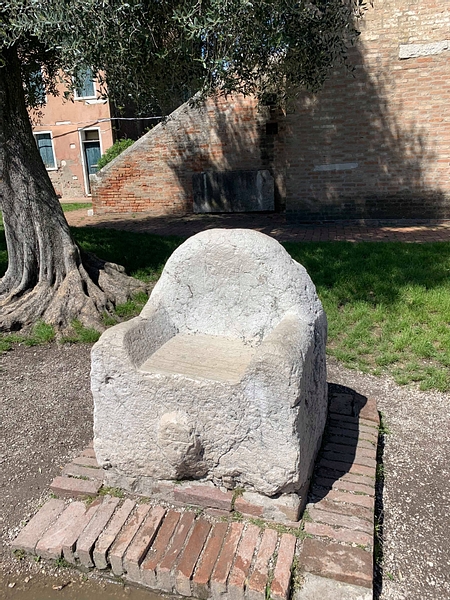
[ 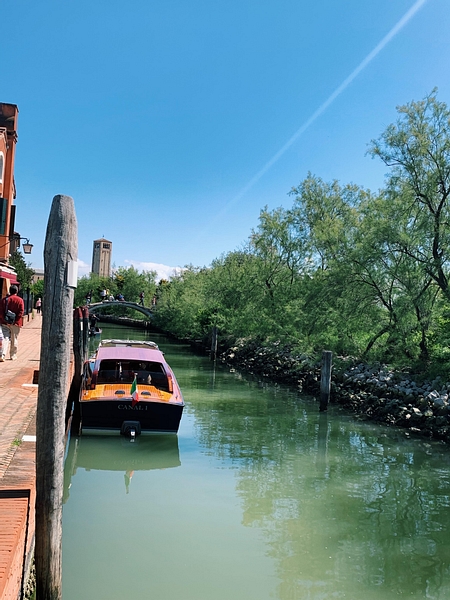 Torcello Canal Wanda Marcussen (CC BY-NC-SA) ](https://www.worldhistory.org/image/11413/torcello-canal/ "Torcello Canal")The ”center” of Torcello is a shadow of the former trade port, but there is still lots to explore and there is a nice museum where you can study different archaeological finds and art. On your way into the museum, you will see what is believed to be a stone throne. According to legend, the ”Attila's Throne” belonged to [Attila](https://www.worldhistory.org/disambiguation/Attila/), king of the Huns (r. 434 – 453 CE), but this is disputed and rejected by most historians. Visitors, however, are still fascinated by the mysterious throne and the legends surrounding it. You can sit on the throne while envisioning what the life of Attila or any of the early inhabitants of Torcello might have looked like during the Migration Period (c. 300 – 700 CE) when the lagoon area was first settled.
In the [museum](https://museoditorcello.cittametropolitana.ve.it/en), you can study finds and different artifacts from the island's long history. One of the older finds from the island and the Venetian lagoon region is [pottery](https://www.worldhistory.org/pottery/) dating from the end of the 1st century BCE. As mentioned, there was no permanent settlement before the fall of the [Roman Empire](https://www.worldhistory.org/Roman_Empire/), but the people living on the coast and around the lagoon are believed to have been familiar with the islands and spent time here long before they were forced to move out of the lagoon.
[  Attila’s Throne Wanda Marcussen (CC BY-NC-SA) ](https://www.worldhistory.org/image/11414/attilas-throne/ "Attila’s Throne")In the archaeological section, there are also finds from the region around Altino. Here you can study [burial](https://www.worldhistory.org/burial/) artifacts and statues from the 2nd and 3rd centuries CE, as well as [Greek](https://www.worldhistory.org/disambiguation/greek/) statues and votives from between 400-300 BCE, and [Egyptian](https://www.worldhistory.org/disambiguation/Egyptian/) statues from 800-600 BCE, as well as several [Etruscan](https://www.worldhistory.org/Etruscan_Civilization/) objects. The archaeological section is a small collection, but it is nevertheless filled with beautiful and interesting artifacts that help place the settlement historically within the social and cultural development around the Mediterranean during antiquity and the Early Middle Ages (5th - 10th centuries CE). In the medieval and modern section, there is a collection of religious objects and beautiful art as well as documents and other finds that showcase the island's previous social life and cultural legacy.
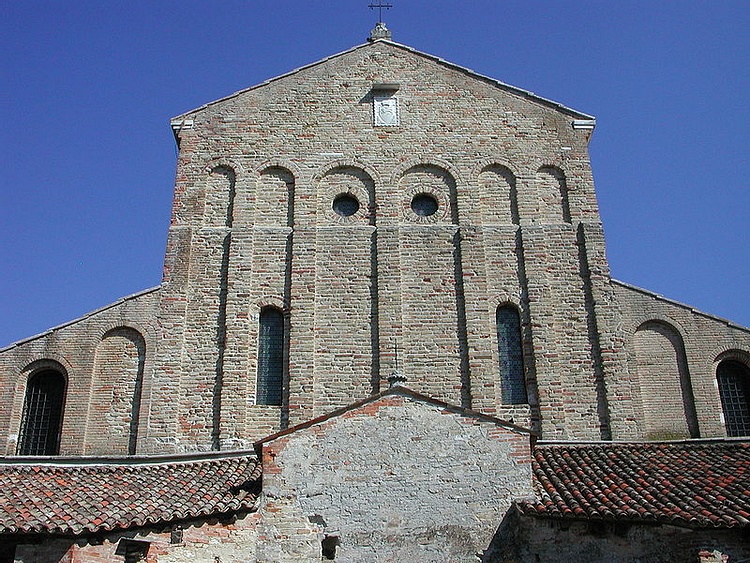
After visiting the museum you only need to walk a few steps to the small *piazza* to enter the Cathedral of Santa Maria Assunta, which as mentioned, is the oldest building in the Venetian Lagoon. It is possible to buy a ticket which gives you entrance to all the sites around the little square. So after buying your ticket at the museum, you are free to enter the cathedral and the bell tower. The Cathedral of Santa Maria Assunta, a basilica church, was established in 639 CE, but the church you can visit today was mainly constructed during the early 11th century CE. However, the beautiful pulpit in marble is from the original church from the 7th century CE. The basilica is also famous for its glittering [Byzantine](https://www.worldhistory.org/disambiguation/Byzantine/) [mosaic](https://www.worldhistory.org/Mosaic/) dating from the 11th century CE. Especially eye-catching is the mosaic of the Madonna and child in the main apse.
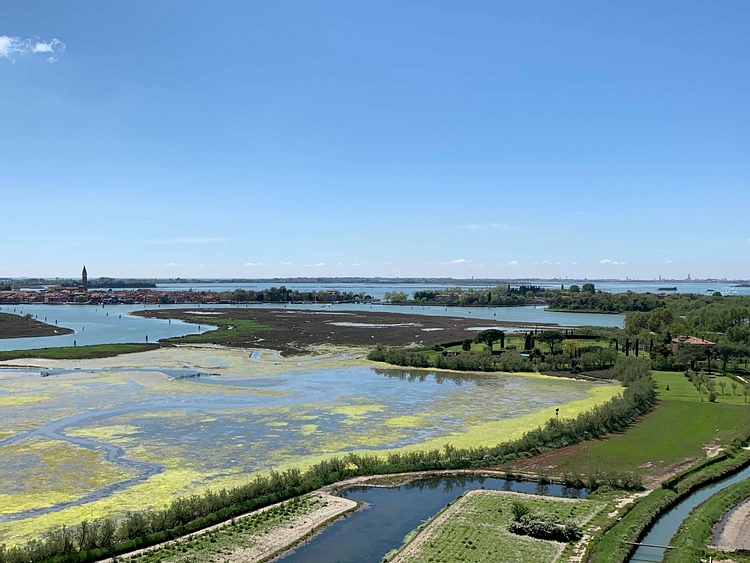
[  Main Apse Mosaic, Church of Santa Maria Assunta, Torcello Remi Mathis (CC BY-NC-SA) ](https://www.worldhistory.org/image/11411/main-apse-mosaic-church-of-santa-maria-assunta-tor/ "Main Apse Mosaic, Church of Santa Maria Assunta, Torcello")Next to the Basilica is the Santa Fosca Church. This church was constructed during the 11th and 12th centuries CE, and its ground construction is modeled after a Greek cross. It is a more modest church than its close neighbor, but still captivatingly beautiful with colonnades and delicate Byzantine interior. Behind the cathedral and church, there is a trail that will take you to the bell tower. If you want to get a great view of the lagoon, you can climb the bell tower - but watch your step as you climb to the top, as the passage is narrow and steep. Watching the lagoon from this spot, with Burano quite close and Venice in the distance, you can envision what the view might have looked like at the peak of the Venetian republic, with majestic *palazzi* (palaces), churches, and monasteries on land encircled by the many canals, and trading ships filling the shallow waters of the lagoon.
[  Venetian Lagoon Wanda Marcussen (CC BY-NC-SA) ](https://www.worldhistory.org/image/11416/venetian-lagoon/ "Venetian Lagoon")### The Other Islands & Transportation from Venice
Torcello is not only worth visiting for its historical significance and fascinating sites but also the beautiful and serene landscape. Before you leave, consider taking a long walk on the island and/or having a lovely lunch at one of the many nice restaurants, with authentic Italian cuisine (of course), while soaking up the atmosphere. The most famous restaurant is[ Locanda Cipriani](https://www.locandacipriani.com/en/), popular amongst celebrities, tourists, and locals. Sit down in the restaurant's beautiful garden and enjoy the view of the church and cathedral while sipping a glass of red wine.
[  Church of Santa Maria Assunta, Torcello Riccardo Speziari (CC BY-NC-SA) ](https://www.worldhistory.org/image/11410/church-of-santa-maria-assunta-torcello/ "Church of Santa Maria Assunta, Torcello")Alternatively, there are also many nice restaurants on the other islands in the lagoon. If you want to combine your trip with some of the other islands, it is definitely recommended to visit both Burano, the colorful island famous for its long tradition of lace-making, and Murano, the most popular of the islands where you can study the art of glass blowing.
[ 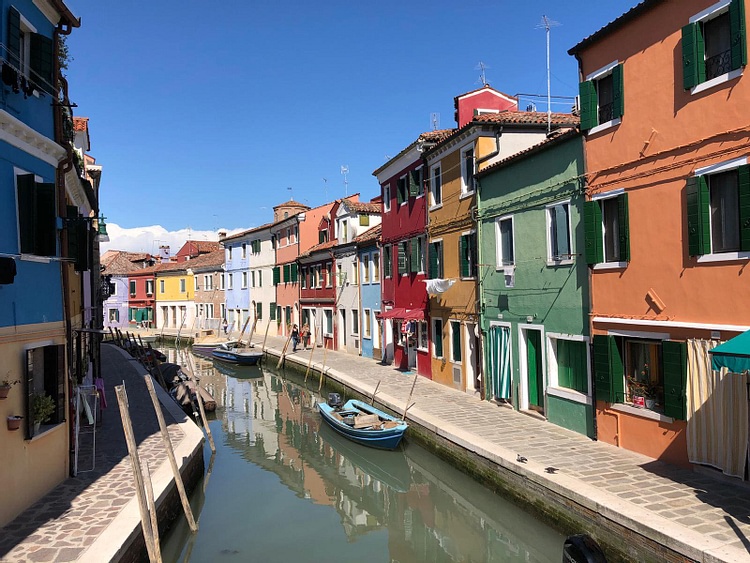 Burano Wanda Marcussen (CC BY-NC-SA) ](https://www.worldhistory.org/image/11417/burano/ "Burano")You can reach Torcello and the other islands either by public transport or by signing up for guided tours. If you wish to travel by *Vaporetto*, you can leave from the stops at Fondamenta Nuovo with Line 12 or you can take Line 14 from San Zaccaria to Burano and change there to Line 9 for Torcello. The *Vaporetto* between Burano and Torcello takes five minutes and leaves every half hour until 20:30 or 8:30 pm. The boat ride from Venice to Torcello or Burano takes approximately 50 minutes. It is also possible to rent a private boat, which will give you more freedom to move around the islands as you wish.
#### Editorial Review
This human-authored article has been reviewed by our editorial team before publication to ensure accuracy, reliability and adherence to academic standards in accordance with our [editorial policy](https://www.worldhistory.org/static/editorial-policy/).
## Bibliography
- [Introducing Venice - Torcello](https://www.introducingvenice.com/torcello "Introducing Venice - Torcello"), accessed 13 Nov 2019.
- [La Città metropolitana di Venezia al servizio del cittadino](http://museoditorcello.provincia.venezia.it/ "La Città metropolitana di Venezia al servizio del cittadino"), accessed 13 Nov 2019.
- [Museo di Torcello](https://museotorcello.servizimetropolitani.ve.it/en/the-museum/ "Museo di Torcello"), accessed 13 Nov 2019.
- [Venice - History](https://www.britannica.com/place/Venice/History "Venice - History"), accessed 13 Nov 2019.
## About the Author
Wanda Marcussen is a doctoral research fellow in environmental history at the University of Oslo. Her academic interest includes climate history, marine environmental history, and cultural heritage studies.
- [Facebook Profile](https://www.facebook.com/wanda.marcussen)
- [Linkedin Profile](https://www.linkedin.com/in/wandamarcussen/)
## Cite This Work
### APA
Marcussen, W. (2019, November 13). Torcello – Tracing the First Settlers of the Venetian Lagoon. *World History Encyclopedia*.
### Chicago
Marcussen, Wanda. "Torcello – Tracing the First Settlers of the Venetian Lagoon." *World History Encyclopedia*, November 13, 2019. .
### MLA
Marcussen, Wanda. "Torcello – Tracing the First Settlers of the Venetian Lagoon." *World History Encyclopedia*, 13 Nov 2019, .
## License & Copyright
Submitted by [Wanda Marcussen](https://www.worldhistory.org/user/wanda.marcussen/ "User Page: Wanda Marcussen"), published on 13 November 2019. The copyright holder has published this content under the following license: [Creative Commons Attribution-NonCommercial-ShareAlike](https://creativecommons.org/licenses/by-nc-sa/4.0/deed.en). This license lets others remix, tweak, and build upon this content non-commercially, as long as they credit the author and license their new creations under the identical terms. When republishing on the web a hyperlink back to the original content source URL must be included. Please note that content linked from this page may have different licensing terms.