---
title: Authority in Ancient Rome: Auctoritas, Potestas, Imperium, and the Paterfamilias
author: Jesse Sifuentes
source: https://www.worldhistory.org/article/1472/authority-in-ancient-rome-auctoritas-potestas-impe/
format: machine-readable-alternate
license: Creative Commons Attribution-NonCommercial-ShareAlike (https://creativecommons.org/licenses/by-nc-sa/4.0/)
updated: 1970-01-01
---
# Authority in Ancient Rome: Auctoritas, Potestas, Imperium, and the Paterfamilias
_Authored by Jesse Sifuentes_
Authority in ancient [Rome](https://www.worldhistory.org/Rome/) was complex, and as one can expect from Rome, full of tradition, myth, and awareness of their own storied history. Perhaps the ultimate authority was *imperium,* the power to command the [Roman army](https://www.worldhistory.org/Roman_Army/). *Potestas* was legal power belonging to the various roles of political offices. There was also *auctoritas*, a kind of intangible social authority tied to reputation and status. In the everyday [Roman](https://www.worldhistory.org/disambiguation/Roman/) household, the absolute authority was the father, known as the *paterfamilias*. In this article, we will examine these various types of authority which spanned across centuries and covered all facets of Roman life - from the household to public politics to the battlefield.
[  Silver Denarius of Trajan (Reverse Side) Jesse Sifuentes (CC BY-NC-SA) ](https://www.worldhistory.org/image/11444/silver-denarius-of-trajan-reverse-side/ "Silver Denarius of Trajan (Reverse Side)")### Auctoritas
The Latin term *auctoritas* is vital to understanding the politics and the social structure of ancient Rome. Read a biography of [Cicero](https://www.worldhistory.org/Cicero/) (l. 106-43 BCE), [Julius Caesar](https://www.worldhistory.org/Julius_Caesar/) (l. 100-44 BCE) or [Augustus](https://www.worldhistory.org/augustus/) (l. 63 BCE - 14 CE), and you will be certain to come across the word, *auctoritas*. However, the term cannot simply be translated to "authority". The best viable translation would be "social authority, reputation, and status". It was different than legal authority, which was translated as *potestas*. It was also different than military authority, which was called *imperium*. Rather, *auctoritas* was an intangible prestige; it was partly earned and partly inherent. It could be earned by valor and braveness in the battlefield, perhaps as a commander, declared *imperator* or "victorious commander" by his soldiers after a series of victories. It could also be earned by obtaining the most prestigious political magistracies, such as *[consul](https://www.worldhistory.org/Consul/)*, the highest office of ancient Rome. But it was also inherited because one had to have a noble bloodline, ancient family name, and far-reaching social and political connections.
A member of the [Roman Senate](https://www.worldhistory.org/Roman_Senate/) seeking higher office and prestige usually would have to possess *auctoritas* in order to get far. Even in court, the *auctoritas* of the defendant played a major factor. Having deep social connections and *auctoritas* meant that someone important would defend you on their behalf in court, increasing your chances of being acquitted. For example, both Cicero and Augustus harnessed their social authority and reputation to successfully defend their friends and associates in court, whether it was out of genuine friendship or as a favor to build a political alliance.
The historian Adrian Goldsworthy tells an interesting tale of [Pompey](https://www.worldhistory.org/pompey/) (l. 106-48 BCE) in 62 BCE, after having carried out an extremely successful military campaign, defeating [Mithridates VI](https://www.worldhistory.org/Mithridates_VI/) of Pontus (l. 135-63 BCE). Pompey, before he entered the [city](https://www.worldhistory.org/city/) of Rome, in an effort to dispel the fears of the Roman people who were terrified that he would become a tyrant with his command over so many legions, laid down his command and demobilized the troops. Pompey was sure that even though he "no longer held formal power or controlled an army" he could "rely on that intangible thing the Romans called *auctoritas*" (Goldsworthy, *Augustus*, 45).
For even more context, Cicero once dismissively spoke of a very young and inexperienced [Octavian](https://www.worldhistory.org/augustus/) as having "plenty of confidence, but too little *auctoritas*" (Goldsworthy, Augustus, 104). Contrast that with an older Octavian upon entering Rome, after having defeated [Mark Antony](https://www.worldhistory.org/Mark_Antony/) and [Cleopatra](https://www.worldhistory.org/disambiguation/cleopatra/) in the [Battle of Actium](https://www.worldhistory.org/Battle_of_Actium/). At that point, Octavian was the adopted son of [Julius](https://www.worldhistory.org/disambiguation/Julius/) [Caesar](https://www.worldhistory.org/disambiguation/caesar/), *consul* that year, commander of multiple legions, declared *imperator* by his soldiers, and thanks to his connection to posthumously deified Julius Caesar, could now trace his ancestry back to the goddess [Venus](https://www.worldhistory.org/venus/), the demigod [Aeneas](https://www.worldhistory.org/Aeneas/), and [Romulus and Remus](https://www.worldhistory.org/Romulus_and_Remus/). At that point, it was undeniable that Octavian's *auctoritas* was sky-high.
[  Augustus of Prima Porta Andreas Wahra (original), new version by Till Niermann (CC BY-SA) ](https://www.worldhistory.org/image/97/augustus-of-prima-porta/ "Augustus of Prima Porta")While on the subject of adoption, another type of authority was that of the *paterfamilias* (father of the household), the supreme authority within every Roman home. Roman tradition gave the father absolute power over everyone within his home, even the power of life and [death](https://www.worldhistory.org/disambiguation/Death/) if he saw fit. Although it was not often enforced in the later period of the [Roman Republic](https://www.worldhistory.org/Roman_Republic/), it was nevertheless a power the *paterfamilias* could wield. The role of the father was absolute. They were responsible for raising the next generation that would go on to run for office and become the next great men of Rome. From a young age, "boys began to spend more time with their fathers, accompanying them about the business… Boys saw their fathers meet and greet other senators… They began to learn who had the most influence in the Senate and why. From an early age, they saw the great affairs of the Republic being conducted…" (Goldsworthy, *Caesar*, 38).
The role of the *paterfamilias* was so important that one of the greatest honors a magistrate - usually a *consul* or emperor - could receive was *Pater Patriae*, meaning "Father of the Country". The title originally belonged to [Romulus](https://www.worldhistory.org/Romulus_and_Remus/) for founding Rome, therefore being the parent of Rome. Cicero received the honor in 63 BCE when he crushed the conspirators in the Catiline Conspiracy. It was also conferred to Augustus in 2 BCE by the Senate for restoring peace and stability to Rome. Later on, future emperors would also receive the honor, such as [Trajan](https://www.worldhistory.org/trajan/) (r. 98-117 CE) and [Hadrian](https://www.worldhistory.org/hadrian/) (r. 117-138 CE).
[  Silver Denarius of Trajan (Obverse Side) Jesse Sifuentes (CC BY-NC-SA) ](https://www.worldhistory.org/image/11443/silver-denarius-of-trajan-obverse-side/ "Silver Denarius of Trajan (Obverse Side)")### Imperium
*Imperium* compared to *auctoritas* is more straightforward and tangible, however it is not without its peculiarities. *Imperium* is the authority held by magistrates and promagistrates to command the Roman army. It can be viewed as the supreme form of legal power, which was given to magistrates such as *consuls*, *praetors*, and *proconsuls*. There were essentially two types of *imperium*: formal and delegated.
To better give a sense of the weight behind the word, let us examine the prophetic appearance of the word *imperium* in [Virgil](https://www.worldhistory.org/virgil/)'s *[Aeneid](https://www.worldhistory.org/The_Aeneid/)*, written at the time of Augustus. [Jupiter](https://www.worldhistory.org/jupiter/), the equivalent of [Zeus](https://www.worldhistory.org/zeus/) in [Roman religion](https://www.worldhistory.org/Roman_Religion/), gives a prophecy that foretells the birth of the mighty [Roman Empire](https://www.worldhistory.org/Roman_Empire/). Virgil (70-19 BCE) writes:
> Then Romulus, proud in the tawny hide
> Of the wolf who nursed him, will continue
> The lineage, build the walls of [Mars](https://www.worldhistory.org/Mars/),
> And call the people, after his own name,
> Romans. For these I set no limits
> In time or space, and have given to them
> **Eternal [empire](https://www.worldhistory.org/empire/), world without end**. (Latin: ***imperium sine fine***)
> (Virgil, translation: Stanley Lombardo, *[The Aeneid](https://www.worldhistory.org/The_Aeneid/)*, 10)
This was *imperium* in a greater sense than mere military authority. Jupiter granted Rome the right to empire, power, and control without end over the world. It is with this context that we can properly view the term. For the Romans, the right to *imperium* over the world was a [god](https://www.worldhistory.org/God/)-given right.
*Consuls* formally held *imperium* as part of their legal executive authority. Holding the highest political office, the *consul* possessed *imperium* over the greatest portion of legions and was in charge of the areas that were of the utmost importance. For instance, if the most pressing matter during a *consul's* term was a hostile northern tribe raiding and looting Italian [cities](https://www.worldhistory.org/city/), then the *consul* would be the commander of the army and would deal with the matter at hand. Usually, this would culminate in the defeat and ultimately the 'pacification' of the hostile tribe.
*Imperium* could also be delegated. Promagistrates, such as a *proconsul*, were chosen and were delegated *imperium* by the elected magistrates of that year, using the Senate as an advisory council in their decision-making. The *proconsul* was usually an ex-*consul* and acted on behalf of the current *consul* and was a provincial governor. They would govern the Roman province they were assigned for the duration of their term, during which they had near-total autonomy and *imperium* over their legions. Since travel times between a province like Hispania (modern-day Spain) and Rome were so great, a *proconsul* was not expected to send a messenger back to Rome to ask for permission for military decisions. That was unrealistic and not feasible, so they acted as the ultimate authority in their province. Look at Julius Caesar during his time as *proconsul*; he conquered [Gaul](https://www.worldhistory.org/gaul/) in a successful eight-year-long military campaign in which he had total control and responsibility for his legions.
[ 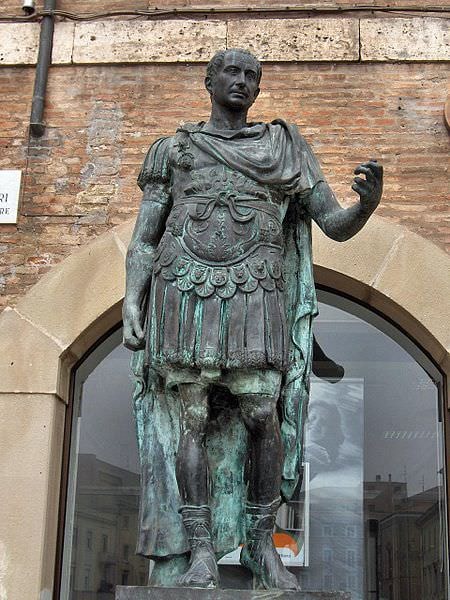 Julius Caesar Georges Jansoone (CC BY-NC-SA) ](https://www.worldhistory.org/image/2737/julius-caesar/ "Julius Caesar")One peculiarity about *imperium* was where one could hold it. Surprisingly enough, the one place it could not be held was within Rome itself. The formal boundaries of Rome (called the *pomerium*) were sacrosanct and therefore all army commanders, no matter how successful and no matter how much *auctoritas*, had to lay down their *imperium* just outside the borders of the city before entering. This was problematic for some corrupt commanders who fearing retaliation and legal consequences for their unscrupulous actions as *proconsul* would be completely vulnerable upon entering Rome because they no longer controlled a massive army. Crossing the formal boundaries of Rome with one's *imperium* and legions was illegal, a dangerous provocation, and sometimes a declaration of [war](https://www.worldhistory.org/disambiguation/War/).
*Imperium* during the time of Augustus and the Principate (Empire rather than Republic) would only change slightly in concept, but greatly in actual practice. In concept, the title and the prestige of a *consul* or *proconsul* remained, but in practice, their total military authority was no more; they were subordinate to the [Roman emperor](https://www.worldhistory.org/Roman_Emperor/) in every way. One of the powers that Augustus had as emperor was "*maius imperium proconsular*… proconsular power that was superior to all other proconsuls" (Goldsworthy, *Augustus*, 497). Another change during the Principate was that Augustus was granted the right to hold this supreme proconsular *imperium* even within the sacrosanct formal boundaries of Rome. This gave Augustus military command over every single province in the empire, no matter where he was residing at the time.
### Potestas
While *auctoritas* was tied to many different aspects and *imperium* was a formidable and sometimes dangerous authority, *potestas* was the legal authority of a political office. Out of the various types of authority in ancient Rome, this was perhaps the most straightforward because it was defined in the [law](https://www.worldhistory.org/disambiguation/law/) itself. To narrow our scope, we will examine the *potestas* of three of the most important Roman political offices: *consul*, *[praetor](https://www.worldhistory.org/praetor/)*, and [tribune](https://www.worldhistory.org/Tribune/).
Being the highest political office, the *potestas* of the *consul* was vast; they could propose laws, preside over the Senate, and have military command over the legions. Two *consuls* were elected every year by the Popular Assembly (*Comitia* *Cenuriata*). Each *consul* had to be at least 42 years old, served a single-year term, and could not serve consecutive terms. By mere virtue of attaining the consulship, he had elevated status and reputation (*auctoritas*) by reaching the most prestigious and sought-after magistracy, far-reaching legal power (*potestas*), and military authority (*imperium*) over the majority of the Roman legions in the areas that were in dire need of military intervention.
During the Republic, the *praetor urbanus* was second only to the *consuls*. They were elected right after the *consuls* by the same Popular Assembly. *Praetors* were usually given a court to preside over. The trials were performed on elevated platforms in the Forum for the public to witness. The legal power of the *praetors* was second to the *consuls*, they too were given *imperium* over legions and would carry out military campaigns of lesser importance. Furthermore, if a situation arose requiring military action when the *consuls* were away fighting another war, then the *praetor* would be called upon to rise to the occasion.
[  The Curia Chris Ludwig (Copyright) ](https://www.worldhistory.org/image/491/the-curia/ "The Curia")Next was the tribune of the plebs; this role was only available to [plebeians](https://www.worldhistory.org/Plebeians/). A tribune's person was sacrosanct. It was a crime to physically harm the tribune in any way. A tribune could veto the act of any magistrate and present laws to the Popular Assembly. Upon further examination, the *potestas* of the tribune of the plebs (*tribunicia potestas*) was immense, so much so that in the year 23 BCE, when Augustus resigned from the consulship, he sought out and obtained the *potestas* of a tribune in order to ensure that his legal power remained supreme and uncontested. In other words, even the emperor himself required the *potestas* of a tribune.
### Conclusion
Often, the types of authority were intertwined such as a military and legal authority. For example, in the case of the chief magistrates – *consuls* and *praetors* - the command over the legions (*imperium*) was the ultimate embodiment of their legal power (*potestas*). The intangible *auctoritas* helped one climb the political ladder and cement political alliances to reach positions where they could obtain *imperium* and *potestas*. Each type of authority played a key role within the city of Rome itself and across its imperial provinces. Commanders exercised their *imperium* and gained new territory for an expanding empire, the legislative and administrative *potestas* of the various magistrates in the [Roman government](https://www.worldhistory.org/Roman_Government/) was necessary for Rome to flourish, and the *auctoritas* of an individual could influence important decisions and shape political life.
These roles largely remained stable for hundreds of years during the Roman Republic. From the *imperium* of [Scipio Africanus](https://www.worldhistory.org/disambiguation/Scipio_Africanus/) (236 - 183 BCE) in 3rd century BCE when he defeated [Hannibal](https://www.worldhistory.org/hannibal/) (247-183 BCE) in the [Second Punic War](https://www.worldhistory.org/Second_Punic_War/) to the revolutionary legislative land reforms of the tribunes, [Tiberius](https://www.worldhistory.org/Tiberius/) (169/164 - 133 BCE) and [Gaius Gracchus](https://www.worldhistory.org/Gracchi_Brothers/) (160/153 - 121 BCE), in the 2nd century BCE, to the immense reputation of Cicero whose *auctoritas* gave him incredible authority and influence in the Senate in the 1st century BCE. These roles would only be thrown off balance during the turmoil of the Late Republic - a time of triumvirates, dictators, and civil wars. The role of military authority would also change in Imperial Rome, beginning with Augustus in 27 BCE, during which *imperium* would no longer truly belong to *consuls*, *praetors*, and *proconsular* commanders but would belong solely to the emperor (*princeps*). Throughout the centuries, the various types of authority were the engine that powered the social and political structure of ancient Rome.
#### Editorial Review
This human-authored article has been reviewed by our editorial team before publication to ensure accuracy, reliability and adherence to academic standards in accordance with our [editorial policy](https://www.worldhistory.org/static/editorial-policy/).
## Bibliography
- [Pater patriae | ancient Roman title](https://www.britannica.com/topic/pater-patriae "Pater patriae | ancient Roman title"), accessed 5 Nov 2019.
- [Goldsworthy, A. *Augustus.* Yale University Press, 2015.](https://www.worldhistory.org/books/0300216661/)
- [Goldsworthy, A. *Caesar.* Yale University Press, 2008.](https://www.worldhistory.org/books/0300126891/)
- [P. Vergilius Maro. *Aeneid.* Hackett Publishing Company, Inc., 2005.](https://www.worldhistory.org/books/0872207315/)
## Cite This Work
### APA
Sifuentes, J. (2019, November 05). Authority in Ancient Rome: Auctoritas, Potestas, Imperium, and the Paterfamilias. *World History Encyclopedia*.
### Chicago
Sifuentes, Jesse. "Authority in Ancient Rome: Auctoritas, Potestas, Imperium, and the Paterfamilias." *World History Encyclopedia*, November 05, 2019. .
### MLA
Sifuentes, Jesse. "Authority in Ancient Rome: Auctoritas, Potestas, Imperium, and the Paterfamilias." *World History Encyclopedia*, 05 Nov 2019, .
## License & Copyright
Original article by **Jesse Sifuentes**. Submitted by [Jesse Sifuentes](https://www.worldhistory.org/user/UTrezzoto/ "User Page: Jesse Sifuentes"), published on 05 November 2019. The copyright holder has published this content under the following license: [Creative Commons Attribution-NonCommercial-ShareAlike](https://creativecommons.org/licenses/by-nc-sa/4.0/deed.en). This license lets others remix, tweak, and build upon this content non-commercially, as long as they credit the author and license their new creations under the identical terms. When republishing on the web a hyperlink back to the original content source URL must be included. Please note that content linked from this page may have different licensing terms.